
Skip to Content Facebook Feature Image

seqWell Launches AgriPrep™ Library Prep Kit for Low Coverage Whole Genome Sequencing

Business

seqWell Launches AgriPrep™ Library Prep Kit for Low Coverage Whole Genome Sequencing
Business

Business

seqWell Launches AgriPrep™ Library Prep Kit for Low Coverage Whole Genome Sequencing

2026-01-06 22:08 Last Updated At:01-07 13:20

BEVERLY, Mass.--(BUSINESS WIRE)--Jan 6, 2026--

seqWell, a global provider of genomic library and multiplexing workflow solutions, today announced the launch of AgriPrep™ Library Prep Kit, the newest addition to its next-generation TnX™ transposase product portfolio. AgriPrep is designed to facilitate adoption of low-pass whole genome sequencing (LP-WGS) & SKIM-sequencing approaches that provide genome-wide insights at a fraction of the cost of WGS.

This press release features multimedia. View the full release here: https://www.businesswire.com/news/home/20260106673432/en/

AgriPrep is a tagmentation-based library preparation technology powered by seqWell’s one-step ExpressPlex workflow, a simple 100-minute workflow requiring only 30 minutes of hands-on time. Availability of up to 3072 built-in indexes, protocol simplicity, and the ease of automation enable the ultra-high throughput scalability required for agrigenomic applications such as parentage analysis, genomic selection, trait mapping, and variant discovery.

Joris Parmentier, Associate Portfolio Director NGS at LGC Biosearch Technologies, commented, “We have been trialing the seqWell AgriPrep method in our NGS service lab for low-pass whole genome sequencing and have been impressed by the workflow simplicity and the resulting cost-savings. The method shows promise for high throughput workflows in combination with the appropriate automation, and up- and downstream technology compatibility."

“The rapid adoption of AgriPrep by small and large service providers and Agricultural Biotechnology companies pays tribute to the scope of the previously unmet need for affordable and scalable library prep within agrigenomics,” said Jack Leonard, co-founder and CTO at seqWell. “We believe relieving the NGS library prep bottleneck will have far reaching impacts on the conversion from microarrays to low-pass WGS bringing with it a wealth of actionable insights for more informed breeding and cultivation decision making.”

seqWell will be highlighting AgriPrep at the upcoming Plant and Animal Genome Conference (PAG33), taking place in San Diego from January 9 -14, 2026. seqWell conference activities include:

About seqWell
seqWell creates scalable genomics technologies that simplify library preparation workflows and help scientists to unlock transformative discoveries with sequencing. seqWell technology is focused on a novel, next-generation transposase, TnX™, to drive the scalability and high-performance needs of tagmentation and advance NGS. seqWell offers a range of library prep products and fragmentation workflows that allow customers to quickly and easily scale their short- and long-read sequencing initiatives. Learn more at www.seqwell.com or follow us on Linkedin.
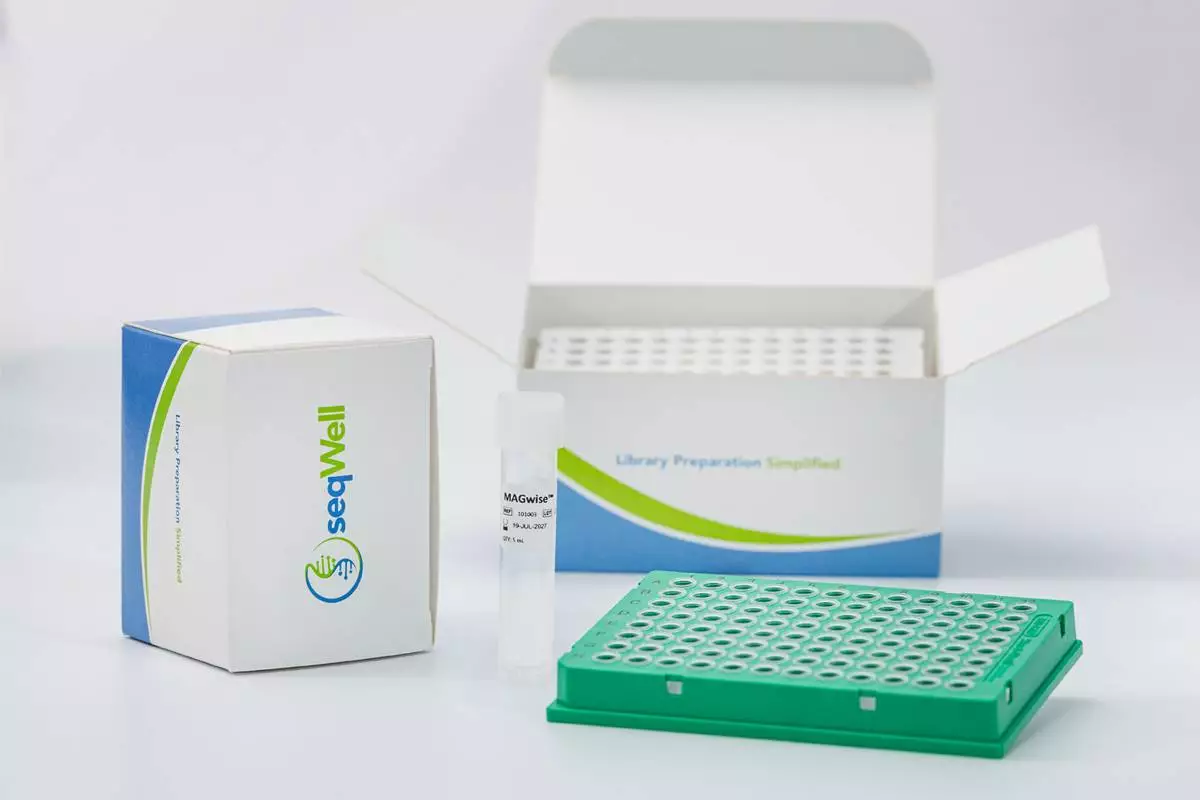
AgriPrep Library Prep Kit is designed to facilitate adoption of low-pass sequencing & SKIM-sequencing of plant and animal genomes at a fraction of the cost of WGS. AgriPrep is a tagmentation-based library preparation technology powered by seqWell’s one-step ExpressPlex workflow, a simple 100-minute workflow requiring only 30 minutes of hands-on time. Availability of up to 3072 built-in indexes, protocol simplicity, and the ease of automation enable the ultra-high throughput scalability required for agrigenomic applications such as parentage analysis, genomic selection, trait mapping, and variant discovery.


AgriPrep Library Prep Kit is designed to facilitate adoption of low-pass sequencing & SKIM-sequencing of plant and animal genomes at a fraction of the cost of WGS. AgriPrep is a tagmentation-based library preparation technology powered by seqWell’s one-step ExpressPlex workflow, a simple 100-minute workflow requiring only 30 minutes of hands-on time. Availability of up to 3072 built-in indexes, protocol simplicity, and the ease of automation enable the ultra-high throughput scalability required for agrigenomic applications such as parentage analysis, genomic selection, trait mapping, and variant discovery.

Millions of people around the world celebrated Orthodox Christmas on Wednesday, nearly two weeks after much of the world marked the holy day.

Certain Eastern Orthodox churches, including those in Russian and other traditions, follow the ancient Julian calendar. It runs 13 days later than the Gregorian calendar, used by Catholic and Protestant churches as well as by much of the secular world for everyday use.

The Ethiopian Orthodox Church and some other Oriental Orthodox churches — which are distinct from Eastern Orthodox but share many traditions — also celebrated Christmas on Wednesday.

Other Eastern Orthodox, including those in the Greek tradition, celebrate Christmas on the same Dec. 25 date as Catholic and Protestant churches.

Most Orthodox agree that Dec. 25 is the date of Christmas, or the Feast of the Nativity, as they call it. The question is whether Dec. 25 falls on Dec. 25 or Jan. 7.

That requires a little unpacking.

The ancient church in the Roman Empire set its religious feasts based on the Julian calendar, but after more than a millennium, that calendar had increasingly gotten out of alignment with the solar year.

Sixteenth century Pope Gregory XIII approved a revised, more astronomically precise calendar, which bears his name. It abruptly shifted the calendar several days forward to make up for lost time (literally) and added a more precise calculation of leap years. Protestant churches eventually followed the Catholic lead in adopting the calendar, as did secular governments.

All Eastern Orthodox kept to the old calendar until 1923, when an inter-Orthodox gathering adopted a revised Julian calendar that essentially mirrors the Gregorian. Most (but not all) churches in the Greek Orthodox tradition have adopted this, as have those in Romanian, Bulgarian and other traditions.

But the Russian Orthodox Church, the largest communion in Eastern Orthodoxy, has stayed on the old calendar, observing Christmas on Jan. 7 on the new calendar, as have Serbian, Georgian and some other Orthodox. Some Orthodox in Ukraine have begun to observe Christmas on Dec. 25, while others have retained the Jan. 7 observance.

One notable exception is the Armenian Orthodox tradition, which observes Christmas on Jan. 6.

In the United States, observances vary. Churches in the Greek and Antiochian traditions observed Christmas on Dec. 25. Some churches in the Slavic tradition, including Serbian and smaller Russian churches, observe it on Jan. 7.

Traditions vary, but typically the big worship service is the night before. In Serbian Orthodox churches, worship often begins with a short outdoor ceremony involving the burning of an oak branch or young oak tree, accompanied by a full-throated proclamation of the birth of Christ.

Associated Press religion coverage receives support through the AP’s collaboration with The Conversation US, with funding from Lilly Endowment Inc. The AP is solely responsible for this content.

In this photo released by Russian Orthodox Church Press Service, Russian Orthodox Patriarch Kirill delivers the Orthodox Christmas service in the Christ the Saviour Cathedral in Moscow, on Wednesday, Jan. 7, 2026. (Igor Palkin/Russian Orthodox Church Press Service via AP)

In this photo released by Russian Orthodox Church Press Service, Russian Orthodox Patriarch Kirill delivers the Orthodox Christmas service in the Christ the Saviour Cathedral in Moscow, on Wednesday, Jan. 7, 2026. (Igor Palkin/Russian Orthodox Church Press Service via AP)

Palestinian Orthodox worshippers attend Christmas Mass at the Orthodox Church of St. Porphyrius in Gaza City Wednesday, Jan. 7, 2026. (AP Photo/Jehad Alshrafi)

Palestinian Orthodox worshippers attend Christmas Mass at the Orthodox Church of St. Porphyrius in Gaza City Wednesday, Jan. 7, 2026. (AP Photo/Jehad Alshrafi)

People look through a frosted plastic tent into a Christmas crib installed near Kazansky Cathedral during Orthodox Christmas celebrations in St. Petersburg, Russia, Wednesday, Jan. 7, 2026. (AP Photo/Dmitri Lovetsky)

People look through a frosted plastic tent into a Christmas crib installed near Kazansky Cathedral during Orthodox Christmas celebrations in St. Petersburg, Russia, Wednesday, Jan. 7, 2026. (AP Photo/Dmitri Lovetsky)

Georgian children take part in a religious procession to the Holy Trinity Cathedral to mark Orthodox Christmas in Tbilisi, Georgia, Wednesday, Jan. 7, 2026, with the building of Georgian Parliament on the left. (AP Photo/Shakh Aivazov)

Georgian children take part in a religious procession to the Holy Trinity Cathedral to mark Orthodox Christmas in Tbilisi, Georgia, Wednesday, Jan. 7, 2026, with the building of Georgian Parliament on the left. (AP Photo/Shakh Aivazov)

Georgians with national flags take part in a religious procession to the Holy Trinity Cathedral to mark Orthodox Christmas in Tbilisi, Georgia, Wednesday, Jan. 7, 2026. (AP Photo/Shakh Aivazov)

Georgians with national flags take part in a religious procession to the Holy Trinity Cathedral to mark Orthodox Christmas in Tbilisi, Georgia, Wednesday, Jan. 7, 2026. (AP Photo/Shakh Aivazov)

Recommended Articles