SANTA ROSA, Calif.--(BUSINESS WIRE)--Jan 6, 2026--
Keysight Technologies, Inc. (NYSE: KEYS) today introduced Keysight AI Software Integrity Builder, a new software solution designed to transform how AI-enabled systems are validated and maintained to ensure trustworthiness. As regulatory scrutiny increases and AI development becomes increasingly complex, the solution delivers transparent, adaptable, and data-driven AI assurance for safety-critical environments such as automotive.
This press release features multimedia. View the full release here: https://www.businesswire.com/news/home/20260106374754/en/
AI systems operate as complex, dynamic entities, yet their internal decision processes often remain opaque. This lack of transparency creates significant challenges for industries, such as automotive, that must demonstrate safety, reliability, and regulatory compliance. Developers struggle to diagnose dataset or model limitations, while emerging standards — such as ISO/PAS 8800 for automotive and EU AI Act — mandate explainability and validation without prescribing clear methods. Fragmented toolchains further complicate engineering workflows and heighten the risk of conformance gaps.
Keysight AI Software Integrity Builder introduces a unified, lifecycle-based framework that answers the critical question: “What is happening inside the AI system, and how do I ensure it behaves safely in deployment?” The solution equips engineering teams with the evidence needed for regulatory conformance and enables continuous improvement of AI models. Unlike fragmented toolchains that address isolated aspects of AI testing, Keysight’s integrated approach spans dataset analysis, model validation, real-world inference testing, and continuous monitoring.
Core capabilities of Keysight AI Software Integrity Builder include:
While open-source tools and vendor solutions typically address only isolated aspects of AI testing, Keysight closes the gap between training and deployment. The solution not only validates what a model has learned, but also how it performs in operational scenarios — an essential requirement for high-risk applications such as autonomous driving.
Thomas Goetzl, Vice President and General Manager of Keysight's Automotive & Energy Solutions, said: “AI assurance and functional safety of AI in vehicles are becoming critical challenges. Standards and regulatory frameworks define the objectives, but not the path to achieving a reliable and trustworthy AI deployment. By combining our deep expertise in test and measurement with advanced AI validation capabilities, Keysight provides customers with the tool to build trustworthy AI systems backed by safety evidence and aligned with regulatory requirements.”
With AI Software Integrity Builder, Keysight empowers engineering teams to move from fragmented testing to a unified AI assurance strategy , enabling them to deploy AI systems that are not only performant but also transparent, auditable, and compliant by design.
Resources
About Keysight Technologies
At Keysight (NYSE: KEYS), we inspire and empower innovators to bring world-changing technologies to life. As an S&P 500 company, we’re delivering market-leading design, emulation, and test solutions to help engineers develop and deploy faster, with less risk, throughout the entire product life cycle. We’re a global innovation partner enabling customers in communications, industrial automation, aerospace and defense, automotive, semiconductor, and general electronics markets to accelerate innovation to connect and secure the world. Learn more at Keysight Newsroom and www.keysight.com.
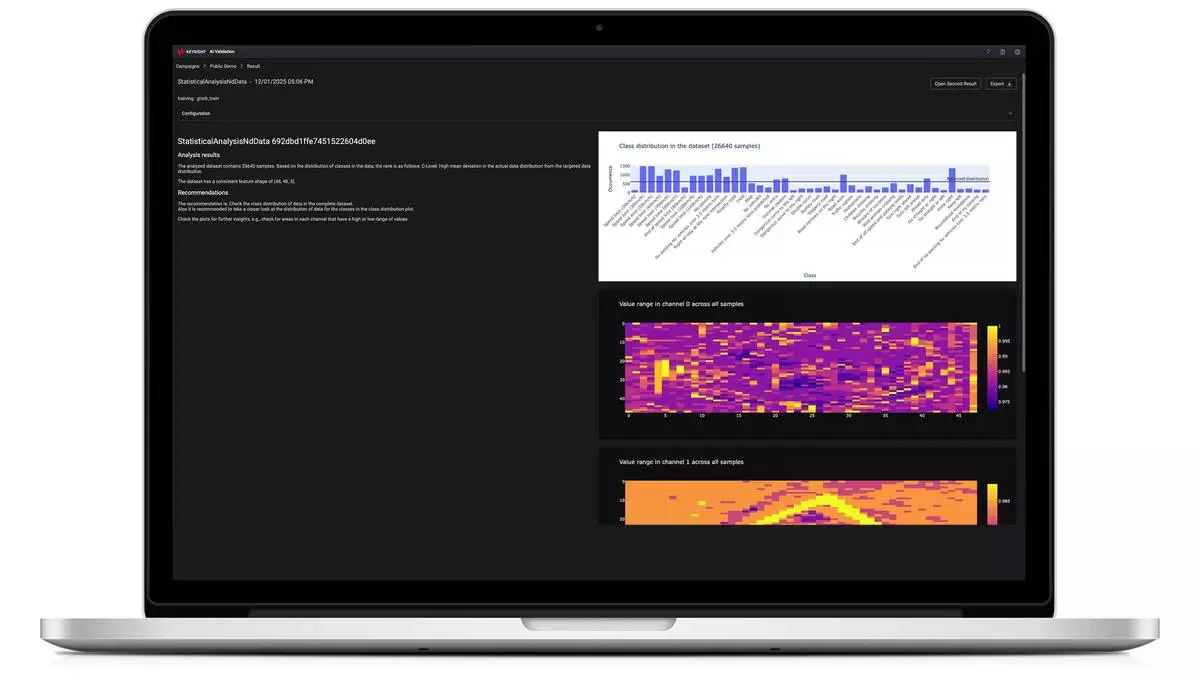
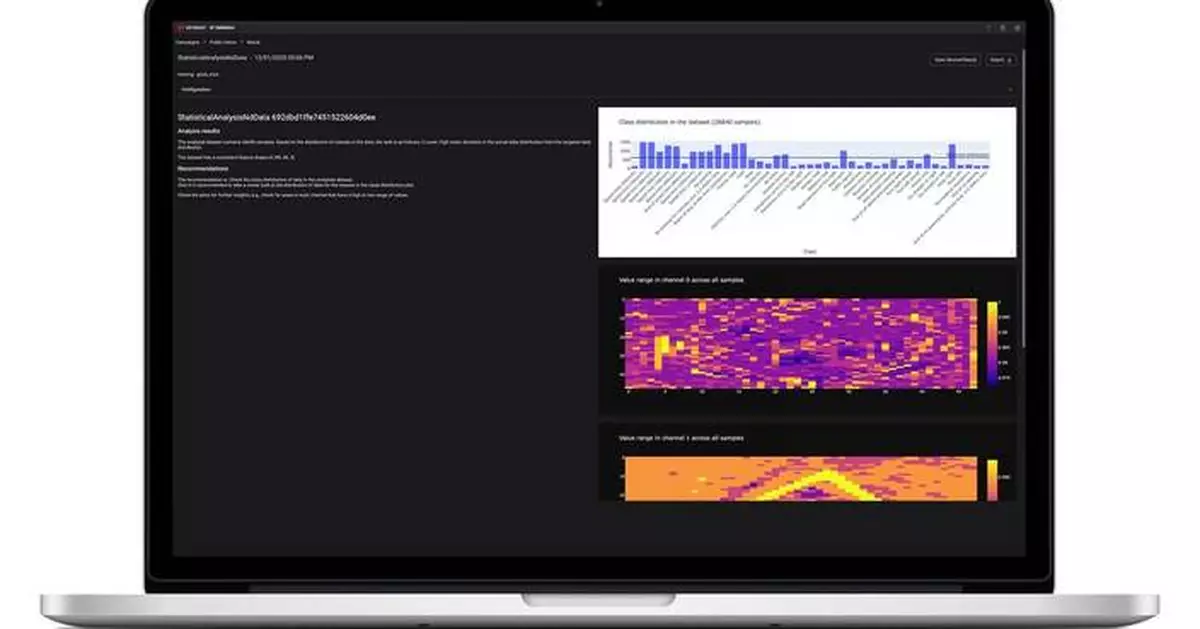
Keysight AI Software Integrity Builder transforms how AI-enabled systems are validated and maintained, ensuring trustworthiness in safety-critical environments.
Millions of people around the world celebrated Orthodox Christmas on Wednesday, nearly two weeks after much of the world marked the holy day.
Certain Eastern Orthodox churches, including those in Russian and other traditions, follow the ancient Julian calendar. It runs 13 days later than the Gregorian calendar, used by Catholic and Protestant churches as well as by much of the secular world for everyday use.
The Ethiopian Orthodox Church and some other Oriental Orthodox churches — which are distinct from Eastern Orthodox but share many traditions — also celebrated Christmas on Wednesday.
Other Eastern Orthodox, including those in the Greek tradition, celebrate Christmas on the same Dec. 25 date as Catholic and Protestant churches.
Most Orthodox agree that Dec. 25 is the date of Christmas, or the Feast of the Nativity, as they call it. The question is whether Dec. 25 falls on Dec. 25 or Jan. 7.
That requires a little unpacking.
The ancient church in the Roman Empire set its religious feasts based on the Julian calendar, but after more than a millennium, that calendar had increasingly gotten out of alignment with the solar year.
Sixteenth century Pope Gregory XIII approved a revised, more astronomically precise calendar, which bears his name. It abruptly shifted the calendar several days forward to make up for lost time (literally) and added a more precise calculation of leap years. Protestant churches eventually followed the Catholic lead in adopting the calendar, as did secular governments.
All Eastern Orthodox kept to the old calendar until 1923, when an inter-Orthodox gathering adopted a revised Julian calendar that essentially mirrors the Gregorian. Most (but not all) churches in the Greek Orthodox tradition have adopted this, as have those in Romanian, Bulgarian and other traditions.
But the Russian Orthodox Church, the largest communion in Eastern Orthodoxy, has stayed on the old calendar, observing Christmas on Jan. 7 on the new calendar, as have Serbian, Georgian and some other Orthodox. Some Orthodox in Ukraine have begun to observe Christmas on Dec. 25, while others have retained the Jan. 7 observance.
One notable exception is the Armenian Orthodox tradition, which observes Christmas on Jan. 6.
In the United States, observances vary. Churches in the Greek and Antiochian traditions observed Christmas on Dec. 25. Some churches in the Slavic tradition, including Serbian and smaller Russian churches, observe it on Jan. 7.
Traditions vary, but typically the big worship service is the night before. In Serbian Orthodox churches, worship often begins with a short outdoor ceremony involving the burning of an oak branch or young oak tree, accompanied by a full-throated proclamation of the birth of Christ.
Associated Press religion coverage receives support through the AP’s collaboration with The Conversation US, with funding from Lilly Endowment Inc. The AP is solely responsible for this content.
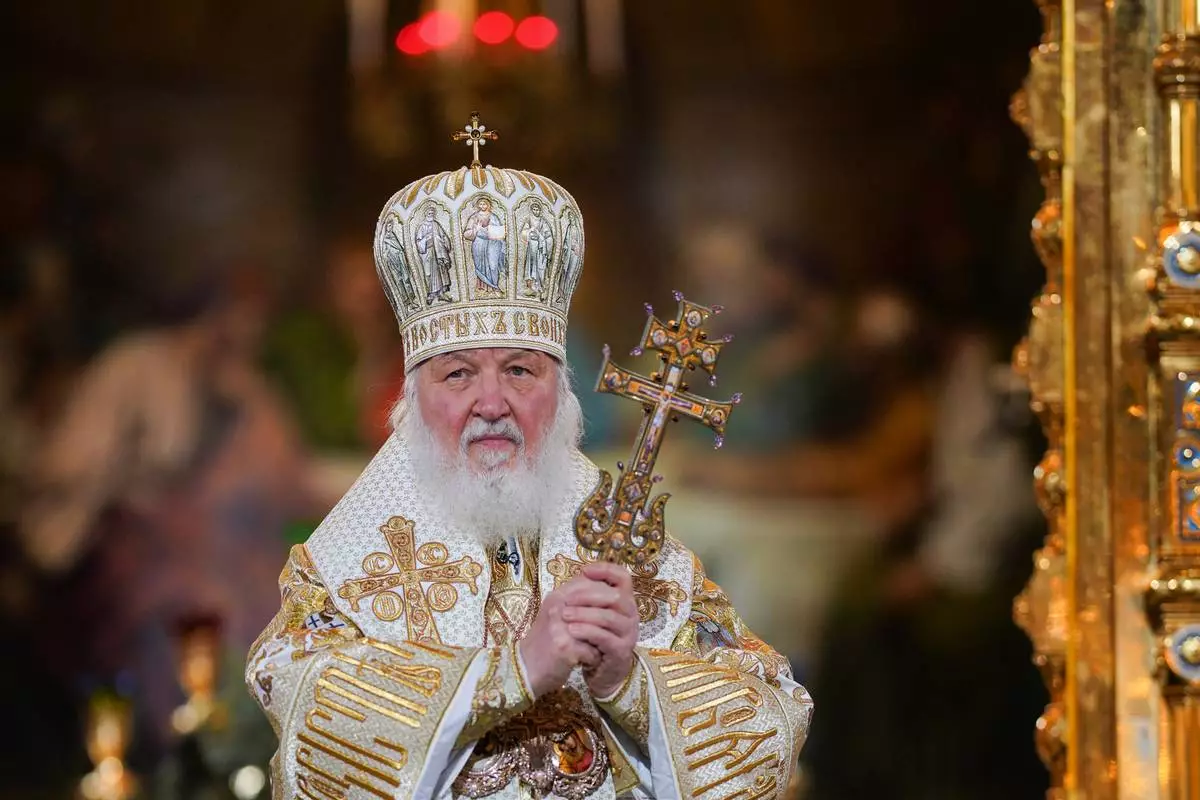
In this photo released by Russian Orthodox Church Press Service, Russian Orthodox Patriarch Kirill delivers the Orthodox Christmas service in the Christ the Saviour Cathedral in Moscow, on Wednesday, Jan. 7, 2026. (Igor Palkin/Russian Orthodox Church Press Service via AP)
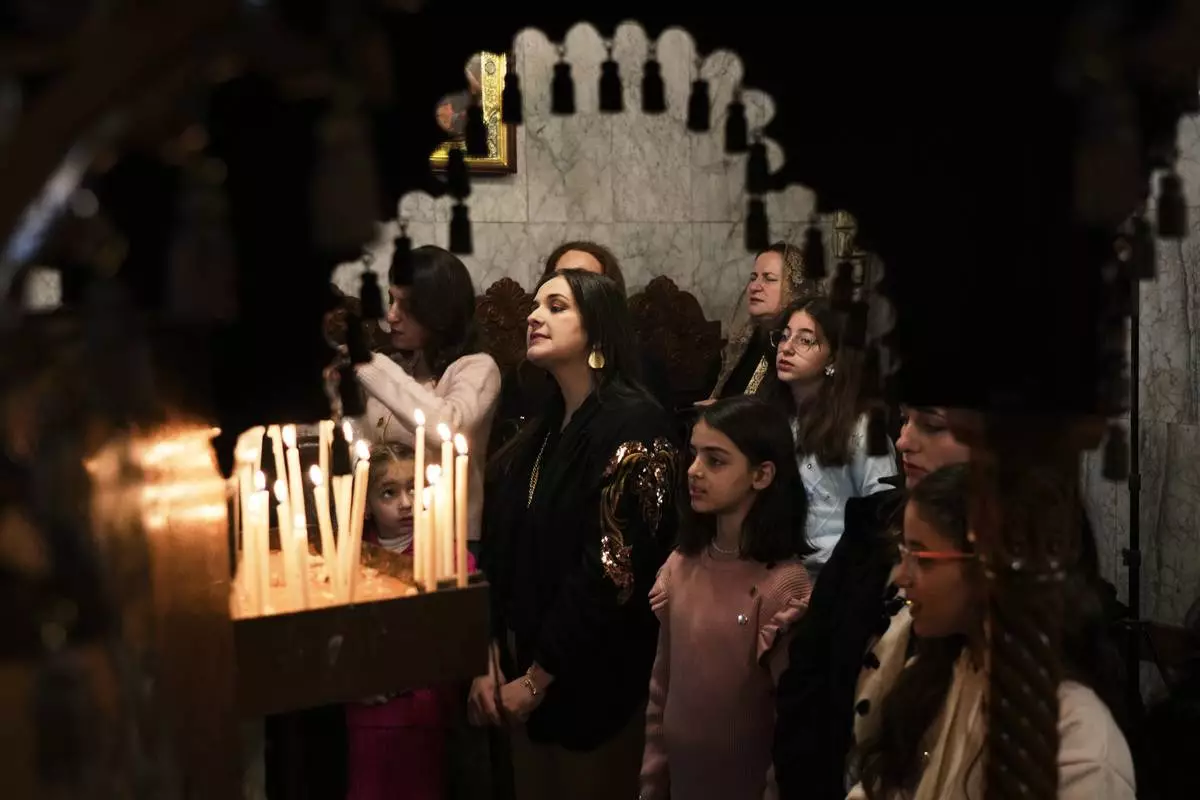
Palestinian Orthodox worshippers attend Christmas Mass at the Orthodox Church of St. Porphyrius in Gaza City Wednesday, Jan. 7, 2026. (AP Photo/Jehad Alshrafi)
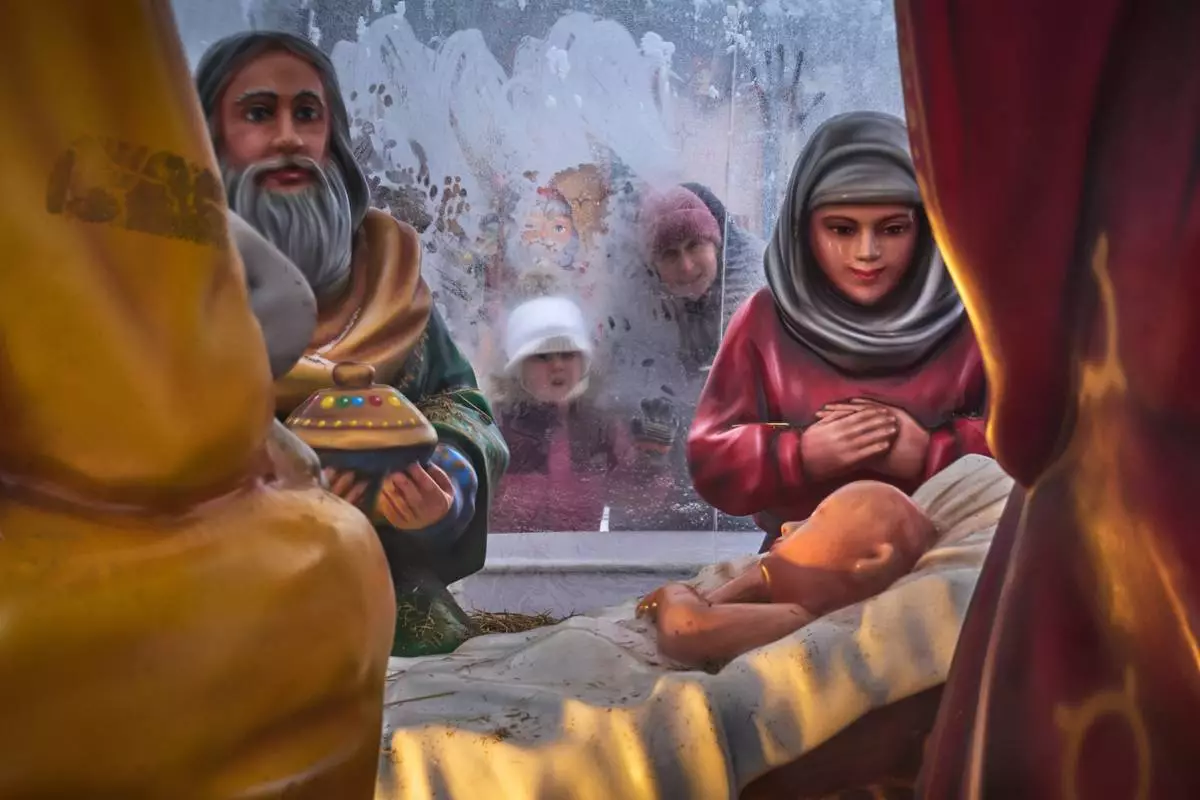
People look through a frosted plastic tent into a Christmas crib installed near Kazansky Cathedral during Orthodox Christmas celebrations in St. Petersburg, Russia, Wednesday, Jan. 7, 2026. (AP Photo/Dmitri Lovetsky)
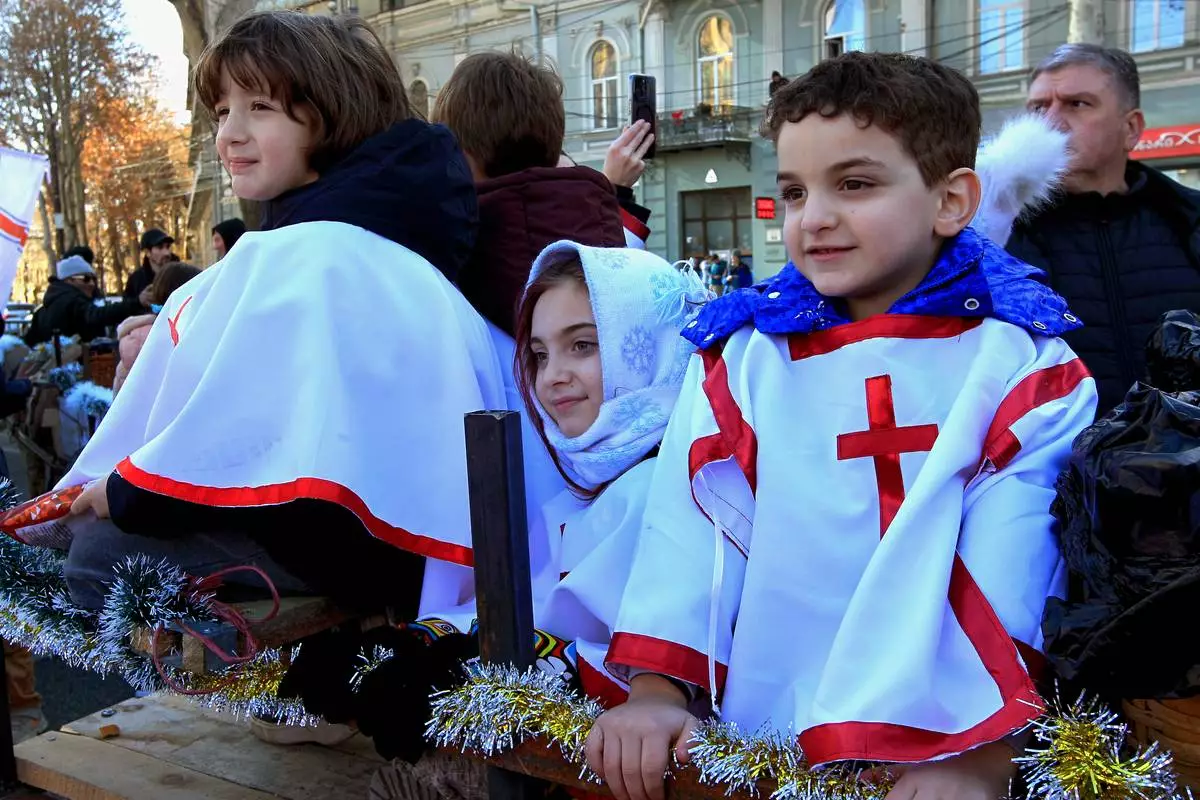
Georgian children take part in a religious procession to the Holy Trinity Cathedral to mark Orthodox Christmas in Tbilisi, Georgia, Wednesday, Jan. 7, 2026, with the building of Georgian Parliament on the left. (AP Photo/Shakh Aivazov)
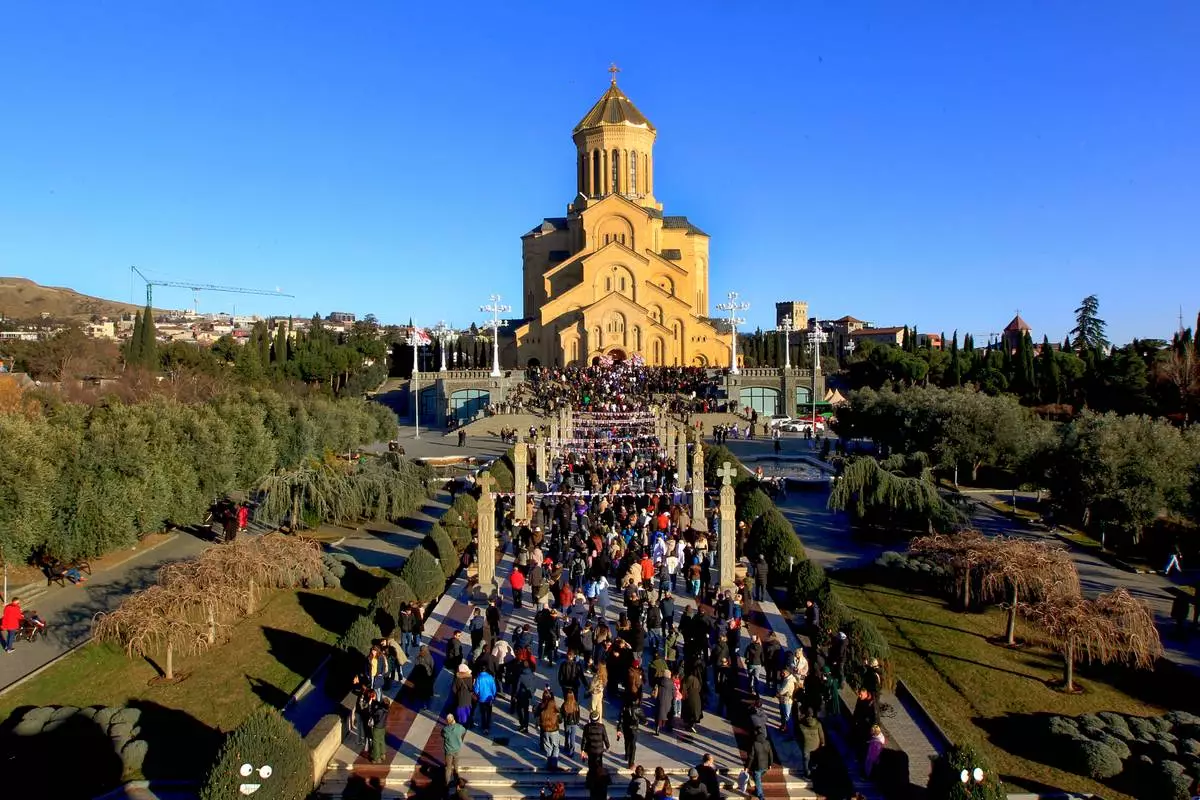
Georgians with national flags take part in a religious procession to the Holy Trinity Cathedral to mark Orthodox Christmas in Tbilisi, Georgia, Wednesday, Jan. 7, 2026. (AP Photo/Shakh Aivazov)