LOUISVILLE, Colo.--(BUSINESS WIRE)--Jan 6, 2026--
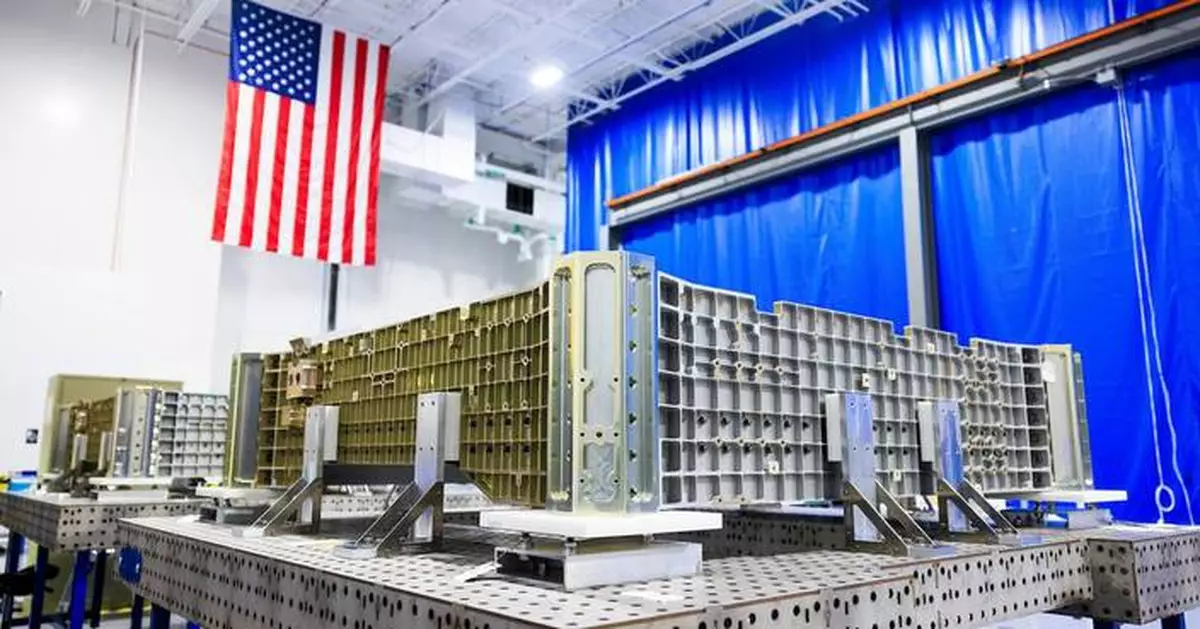
Sierra Space, a proven defense-tech company delivering solutions for the nation’s most critical missions and advancing the future of security in space, announced today the completion of the first nine satellite structures, Plane 1 of the 18 total satellites Sierra Space is contracted to deliver for the Space Development Agency’s (SDA) Tranche 2 Tracking Layer (T2TRK) program. Achieved three months ahead of schedule, this milestone underscores Sierra Space’s ability to meet key program milestones with efficiency and precision, helping to ensure that the T2TRK program remains on track for delivery and launch readiness.
This press release features multimedia. View the full release here: https://www.businesswire.com/news/home/20260106077628/en/
“We stood up our high-rate manufacturing facility, Victory Works, to meet the demanding requirements of our customer,” said Erik Daehler, Senior Vice President of Sierra Space Defense. “To go from a successful Critical Design Review to completing the Plane 1 satellite structures—three months ahead of schedule—is a powerful validation of our investment in scalable infrastructure. Our team is energized as we move into the next phase of Plane 1 development, focusing on assembly, integration, and testing, while also beginning the satellite structure build for Plane 2, the remaining nine satellites of the 18-satellite constellation for SDA.”
The next stage currently planned for Plane 1 is a transition to the assembly, integration, and testing (AI&T) phase, during which components, subsystems, and payloads are expected to be integrated and subjected to rigorous testing to verify performance and readiness for deployment.
“As we move closer to delivering this capability, every phase of development is essential to ensuring mission success,” added Daehler. “We believe the Tranche 2 Tracking Layer will provide unmatched missile tracking capabilities for SDA and its mission partners, and we remain committed to meeting each milestone with precision and speed.”
Building on this momentum, Sierra Space is also preparing to expand its capabilities to meet future demands for advanced fire-control and missile defense tracking systems.
“This mission is too important to not be continuously evolving,” said John Wagner, Sierra Space Vice President of Strategy and Business Development. “We are scaling our production capabilities and advancing our detection technologies, including the next generation of fire-control missile defense sensors. We believe our infrastructure, expertise, and track record position us to support the Department of War’s evolving needs for advanced tracking and missile defense.”
Sierra Space is contracted to deliver two orbital planes of satellites—18 in total—equipped with advanced infrared sensors to detect and track ballistic, hypersonic, and next-generation missile threats.
Sierra Space’s progress highlights its ability to combine commercial agility with deep defense expertise, delivering advanced solutions that meet the Department of War’s priorities. With over 30 years of spaceflight heritage and a track record of supporting more than 500 missions, Sierra Space continues to lead the way in building resilient mission systems for national security and allied partners.
About Tranche 2
The Tranche 2 Tracking Layer’s 54 satellites will build upon the Tranche 1 Tracking Layer capabilities with a select number of satellite vehicles that will incorporate fire control missile defense infrared sensors that can generate fire control quality tracks to provide preliminary missile defense mission capabilities in support of warfighter missions around the globe.
The Tracking Layer is focused on delivering a global constellation of infrared missile warning and missile tracking satellites that integrate with the Transport Layer’s low-latency meshed communication network, enabling advanced missile tracking from proliferated low-Earth orbit. Once completely fielded, the Tranche 2 constellation will consist of approximately 270 operational Transport and Tracking Layer satellites.
About Sierra Space
Headquartered in Colorado, Sierra Space is an industry-leading defense-tech space company. We design, manufacture, and deliver satellites, spacecraft and space subsystems including reusable spaceplanes, hypersonic technologies, propulsion systems, and infrastructure for the nation’s most critical missions.
With more than three decades of space flight heritage, expansive classified and unclassified infrastructure and disruptive cutting-edge technology, Sierra Space is trusted by National Security, civil and commercial customers. Our flight-proven technologies advance our customers’ missions, including safeguarding our nation, protecting space-based assets, and enabling the next generation of space exploration and economic development.
Sierra Space is dedicated to defining the new era of space defense, strengthening deterrence today and preserving freedom of action for generations to come.
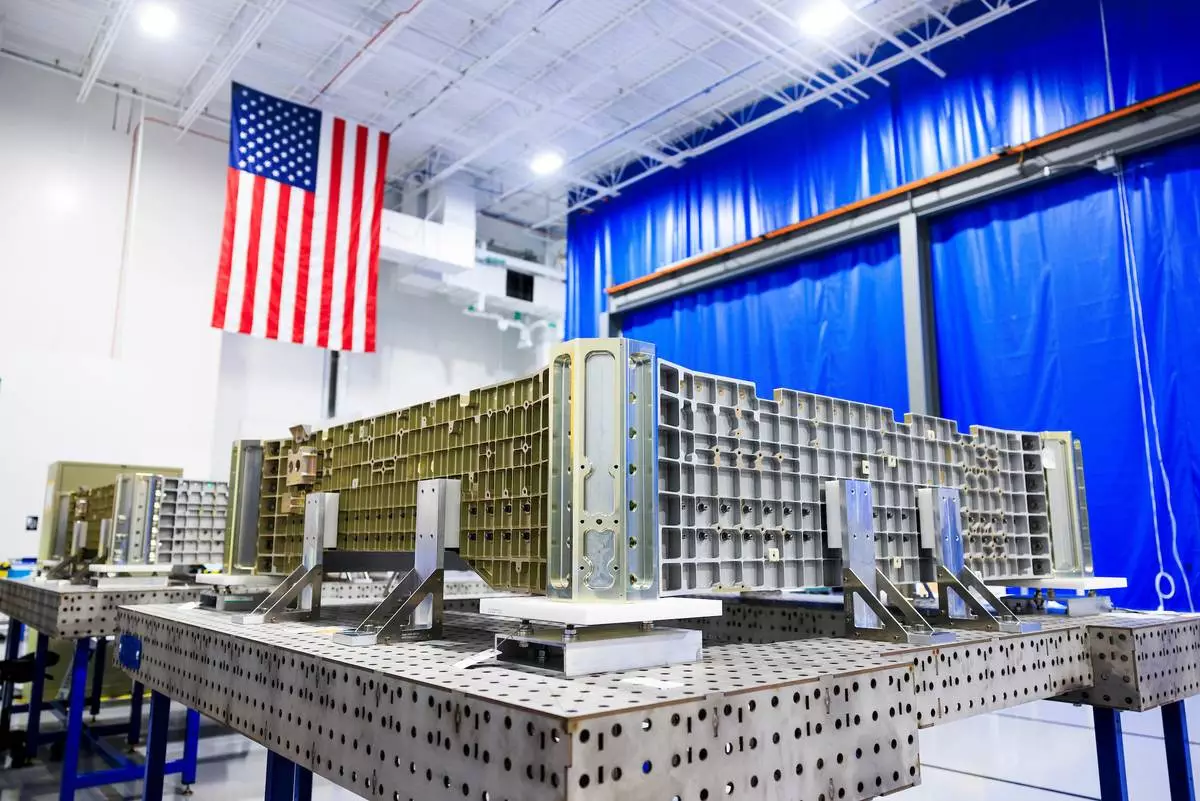
Victory Works SDA satellite assembly line in Colorado. (Photo: Sierra Space)
TENERIFE, Spain (AP) — The head of the World Health Organization sought Saturday to reassure worried residents of the Spanish island of Tenerife that they are not in danger from the anticipated arrival there of a hantavirus-stricken cruise ship, issuing a direct message to them.
The Dutch-flagged MV Hondius, with more than 140 passengers and crew on board, is headed to Spain's Canary Islands, off the coast of West Africa, and is expected to arrive at the island of Tenerife in the early hours of Sunday.
WHO Director-General Tedros Adhanom Ghebreyesus, along with Spain’s Health Minister Monica Garcia and Interior Minister Fernando Grande-Marlaska, are to head to the island Saturday to coordinate the disembarkation. of passengers and some crew.
Some residents on the island have said they do not want the ship to dock there, fearing the transmission of the virus. On board the cruise ship, some of the Spanish passengers have voiced concern about how they will be received once on land.
“I know you are worried. I know that when you hear the word “outbreak” and watch a ship sail toward your shores, memories surface that none of us have fully put to rest. The pain of 2020 is still real, and I do not dismiss it for a single moment,” Tedros said in a direct message to the people of Tenerife.
“But I need you to hear me clearly: This is not another COVID. The current public health risk from hantavirus remains low. My colleagues and I have said this unequivocally, and I will say it again to you now,” he added.
Three people have died since the outbreak, and five passengers who left the ship are infected with hantavirus, a virus which can cause life-threatening illness.
Hantavirus is usually spread by the inhalation of contaminated rodent droppings and isn’t easily transmitted between people. But the Andes virus detected in the cruise ship outbreak may be able to spread between people in rare cases. Symptoms usually show between one and eight weeks after exposure.
The WHO, Spanish authorities and cruise company Oceanwide said Saturday that nobody on board the Hondius is currently showing symptoms of the virus.
“WHO continues to actively monitor the situation, coordinate support and next steps and will keep Member States and the public updated accordingly. So far, the risk for the population of Canary Islands and globally remains low,” Tedros posted earlier on X.
Spanish Health Minister Monica Garcia said passengers and some crew would disembark in Tenerife under strict health protocols.
Everyone disembarking will first be medically checked to ensure they are not showing any symptoms, while people will only be taken off the ship if a flight is already in Tenerife waiting to fly them off the island, Garcia said during a news conference in Madrid. There are currently people of more than 20 different nationalities on board.
Both the U.S. and the U.K. have agreed to send planes to evacuate their citizens from the cruise ship.
Those disembarking will not take any luggage with them, Garcia said, and will be allowed to disembark with only a small item of hand luggage containing essential items, a cellphone, charger and documentation.
Some crew, as well as the body of a passenger who died onboard, will not disembark, Garcia said. They will remain on board as the Hondius then sets sail for the Netherlands, where it will undergo disinfection, the minister added.
All Spanish passengers will be transferred to a medical facility and quarantined, she said. Oceanwide has listed 13 Spanish passengers and one Spanish crew member on board.
According to a letter sent by the Dutch foreign and health ministers to parliament late Friday, Spain has activated the EU civil protection mechanism for a medical evacuation plane equipped for high-consequence infectious disease to be on standby.
If anyone falls ill, the medics on board the ship will inform Spanish authorities, and the evacuation plane “will be sent to Tenerife so that the sick person can be quickly transported by air to the European mainland.”
The Dutch government will work with Spanish authorities and the ship company to arrange repatriation of Dutch passengers and crew as soon as possible after arrival in Tenerife, subject to medical conditions and advice from the European Centre for Disease Prevention and Control, the letter said. Those without symptoms will go into home quarantine for six weeks and be monitored by local health services.
As the ship is Dutch-flagged, the Netherlands may also temporarily accommodate people of other nationalities and monitor them in quarantine, it said.
Health authorities across four continents were tracking down and monitoring more than two dozen passengers who disembarked before the deadly outbreak was detected. They were also scrambling to trace others who may have come into contact with them.
On April 24, nearly two weeks after the first passenger had died on board, more than two dozen people from at least 12 different countries left the ship without contact tracing, Dutch officials and the ship’s operator have said.
It wasn’t until May 2 that health authorities first confirmed hantavirus in a passenger.
On Friday, the WHO said a flight attendant on a plane briefly boarded by an infected cruise passenger had tested negative for hantavirus. Her possible infection had raised concerns about the virus’ potential transmissibility.
The KLM flight attendant was working on a plane headed from Johannesburg to Amsterdam on April 25, and had later fallen ill.
The cruise passenger briefly aboard that flight — a Dutch woman whose husband died on the ship — was too ill to stay on the international flight to Europe and was taken off in Johannesburg, where she died.
Becatoros reported from Sparta, Greece. Associated Press writer Angela Charlton in Paris contributed to this report.
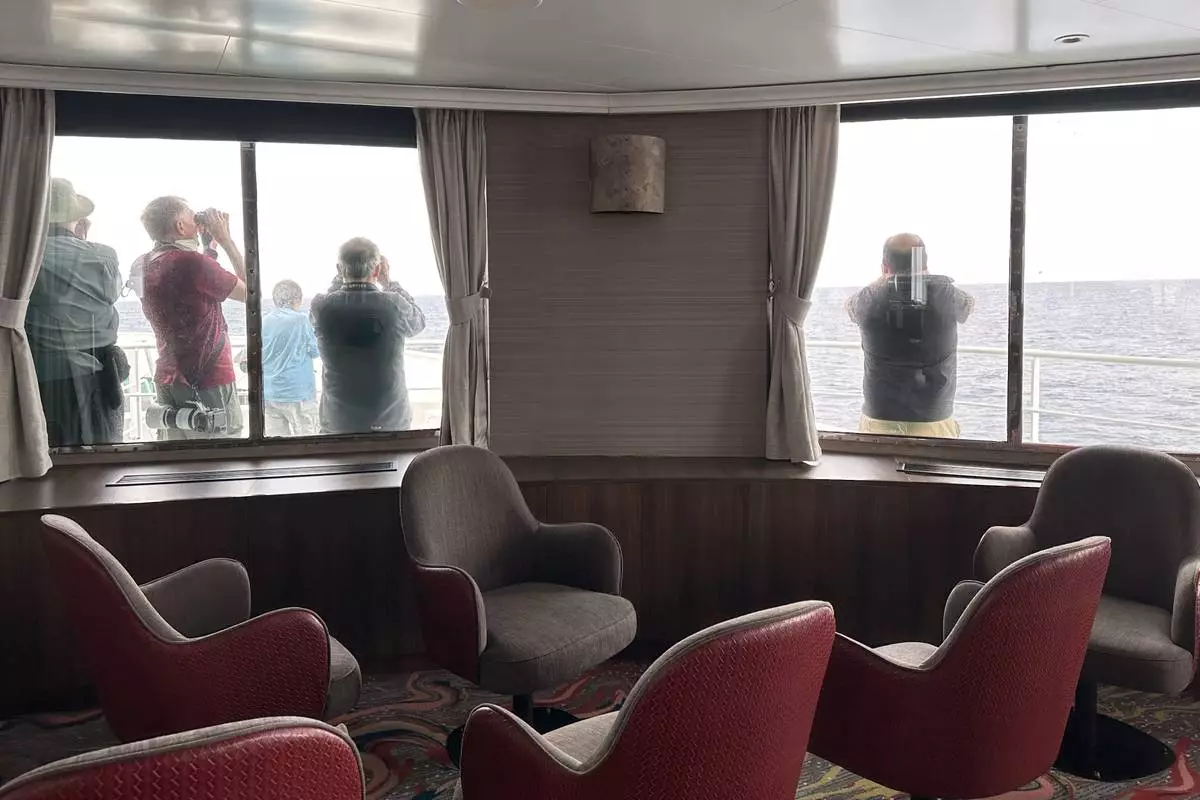
Passengers on the hantavirus-stricken cruise ship, MV Hondius, scan the horizon with binoculars during their voyage to Spain's port of Tenerife, May 6, 2026. (AP Photo)
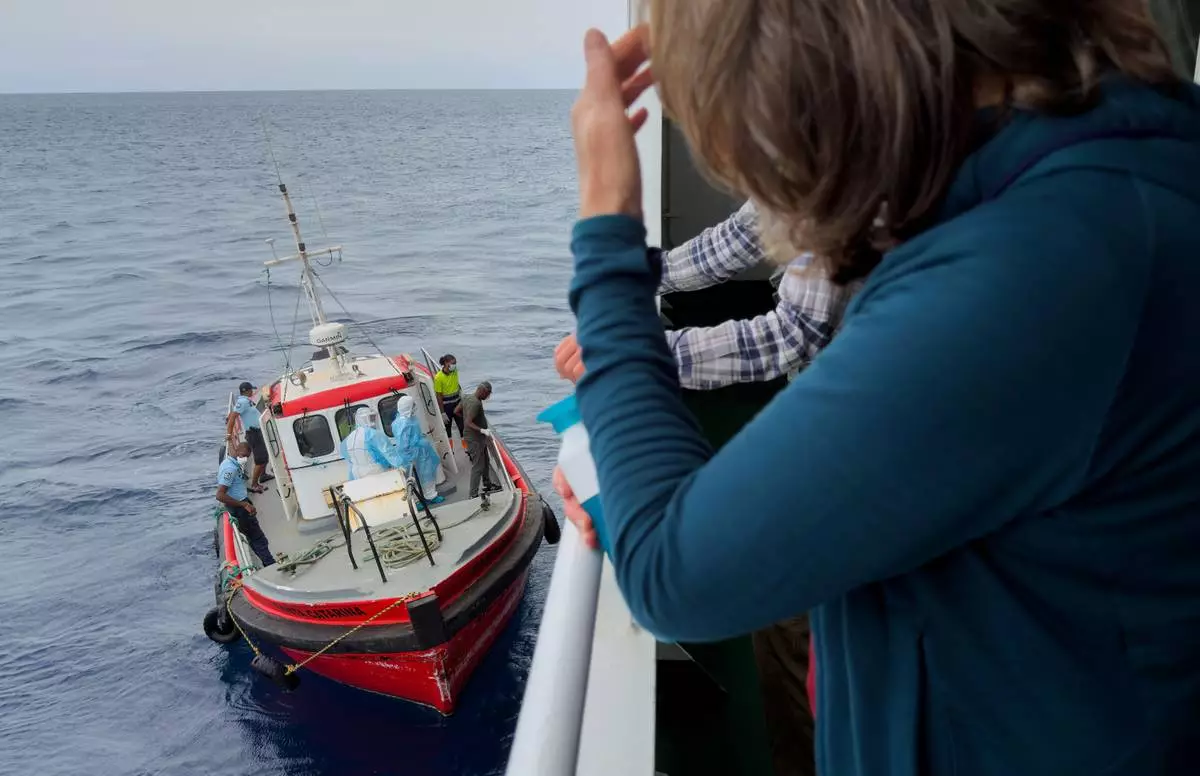
Passengers on the the hantavirus-stricken cruise ship, MV Hondius, watch epidemiologists board the boat in Praia, during their voyage to Spain's port of Tenerife, May 6, 2026. (AP Photo)
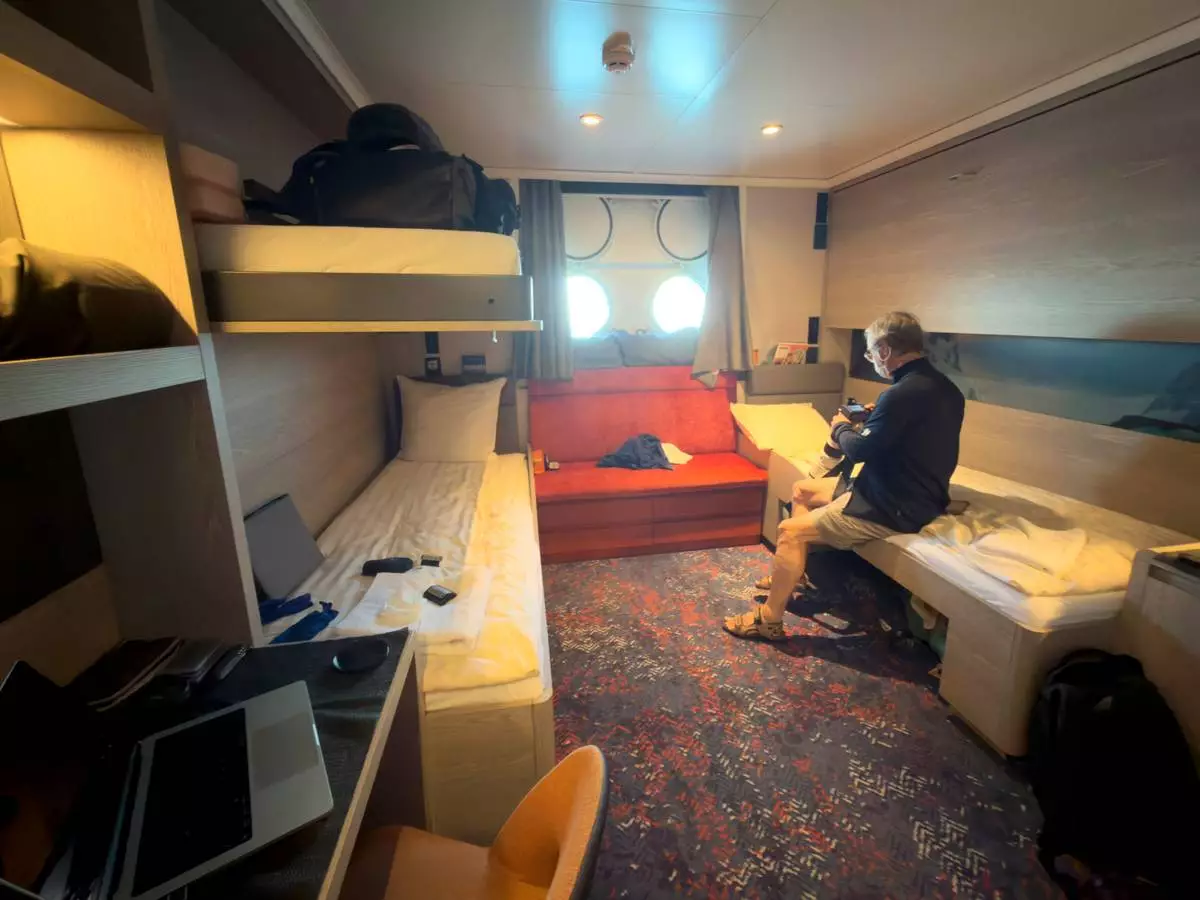
A passenger checks his camera inside his cabin on the hantavirus-stricken cruise ship, MV Hondius, during the voyage to Spain's port of Tenerife, May 6, 2026. (AP Photo)
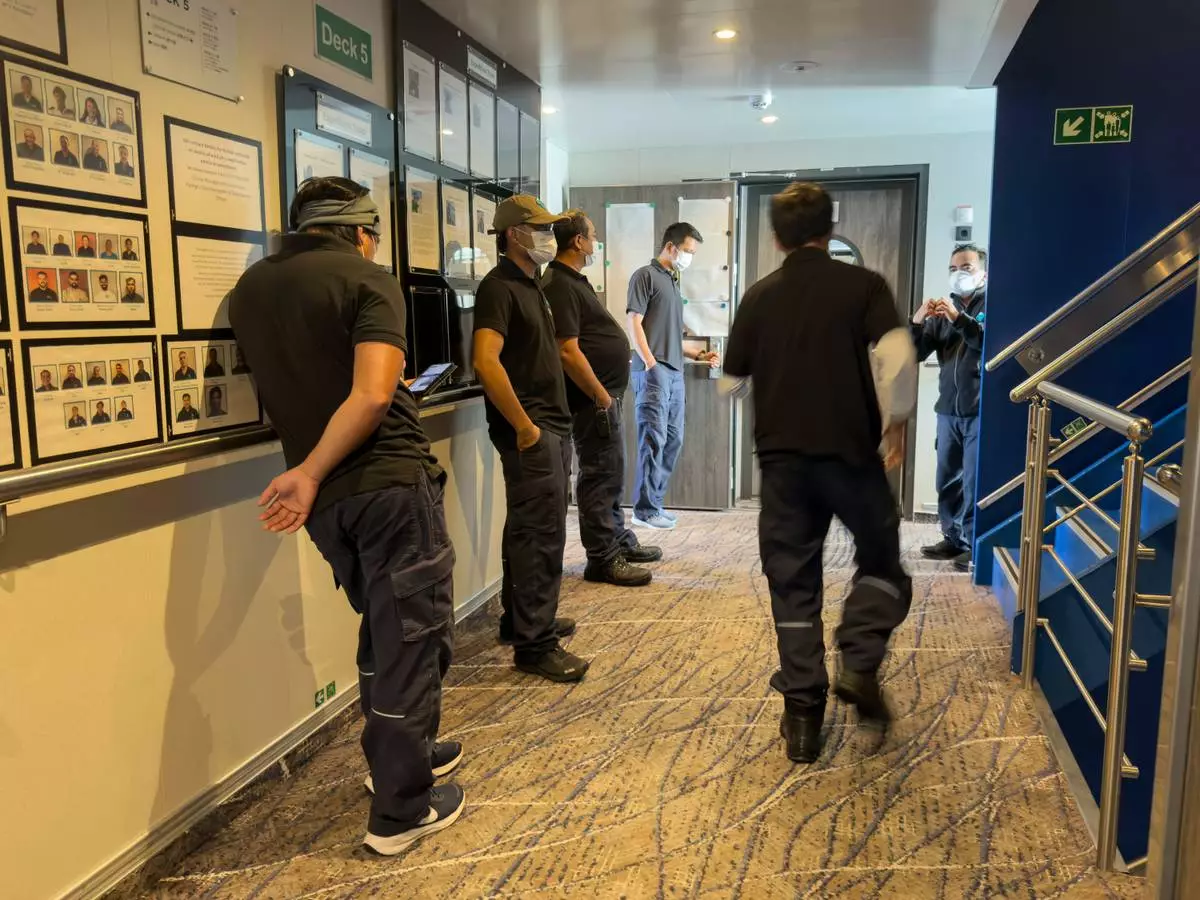
Crew members of the hantavirus-stricken cruise ship, MV Hondius, wait their turns for a first interview with epidemiologists, during the voyage to Spain's port of Tenerife, May 6, 2026. (AP Photo)
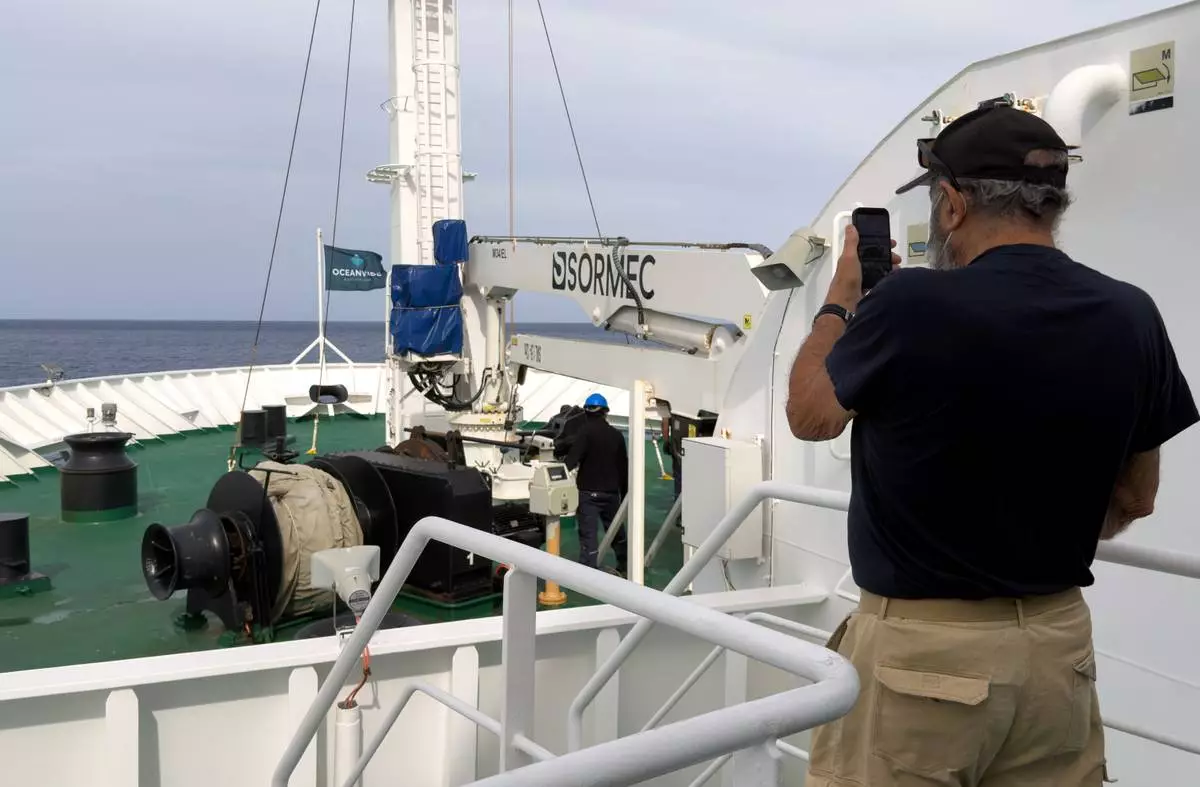
A passenger on the the hantavirus-stricken cruise ship, MV Hondius, takes a photo of the ship's weighing anchor in Praia, during the voyage to Spain's port of Tenerife, May 6, 2026. (AP Photo)