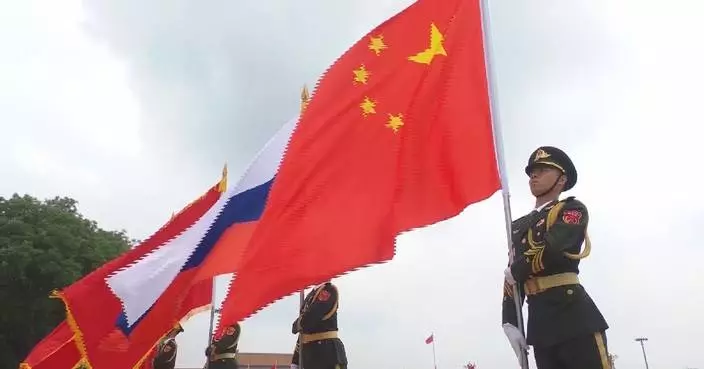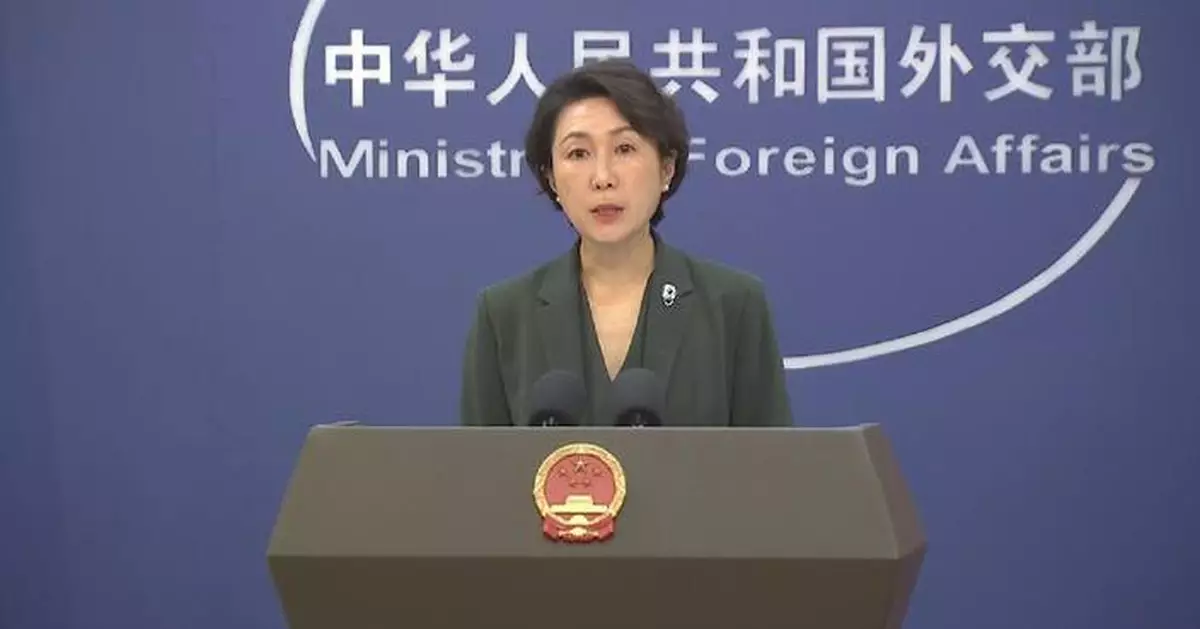
China's decision to strengthen export control on dual-use items to Japan is fully legitimate, reasonable and lawful, said Mao Ning, spokeswoman for the Ministry of Foreign Affairs, at a regular briefing in Beijing on Wednesday.
China has decided to prohibit the export of all dual-use items to Japanese military users, for Japan's military use, and for any other end-users and end-use purposes that help enhance Japan's military capabilities, effective as of Tuesday, according to the Ministry of Commerce on Tuesday.
Organizations or individuals from any country or region that violate the above provisions by transferring or supplying relevant dual-use items originating from China to organizations or individuals in Japan will be held legally accountable, it said.
"I would like to point out that Prime Minister Sanae Takaichi's erroneous remarks regarding Taiwan infringe upon China's sovereignty and territorial integrity, blatantly interfere in China's internal affairs, threatening China with the use of force. To safeguard national security and interests and fulfill international obligations such as non-proliferation, China has taken measures in accordance with laws and regulations, which are entirely legitimate, reasonable, and lawful. We urge the Japanese side to face up to the root cause, reflect on and address its wrongdoings, and retract Prime Minister Sanae Takaichi's erroneous remarks," said Mao.
Dual-use items are goods, technologies or services that could be used for either civil purposes or military purposes, or to contribute to an increase in military potential, especially in the design, development, production or use of weapons of mass destruction and their means of delivery.
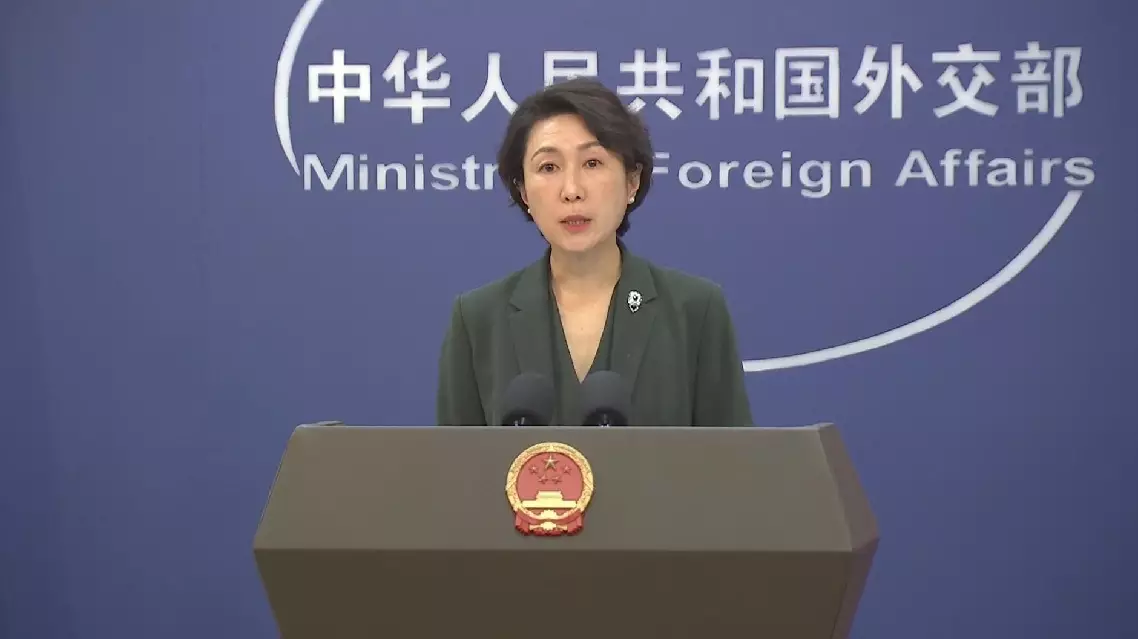
China's export control on dual-use items to Japan legitimate, lawful: spokeswoman

China's two major power grid operators -- the State Grid Corporation of China (State Grid) and China Southern Power Grid (CSG) -- reported a surge in investment in the first quarter of 2026, underscoring efforts to strengthen infrastructure construction and support high-quality socioeconomic development in China.
The State Grid said it completed fixed-asset investment worth 129 billion yuan (about 18.77 billion U.S. dollars) in the first three months of this year, up 37 percent the corresponding period of the previous year. The spending has driven more than 250 billion yuan (36 billion U.S. dollars) of investment across the wider industrial chain.
Key projects such as the Panxi ultra-high-voltage (UHV) alternating current (AC) line and the Anhui-Hubei back-to-back direct current (DC) project have seen ground broken for their construction, while several west-to-east power transmission projects have been upgraded.
Investment in connecting renewable energy generation to the grid was reported to have exceeded 10 billion yuan (1.45 billion U.S. dollars) from January to March, a year-on-year rise of more than 50 percent.
The CSG also reported robust growth in investment in the three-month period, with fixed-asset investment reaching 38.45 billion yuan (5.58 billion U.S. dollars), up about 50 percent from a year earlier.
Among its achievements, the company completed and commissioned 80 key projects, including the 220 kV cross-sea power grid interconnection project, which was officially put into operation on March 20. The project ended years of grid isolation on the Weizhou Island in south China by linking it to the main power system of the Guangxi Zhuang Autonomous Region.
The construction of 17 other major energy projects, including one linking the power grid of the Xizang Autonomous Region in southwest China with that of Guangdong Province in south China, is advancing rapidly. These projects are expected to bolster regional industries, the maritime economy, digital collaboration and the transition to green energy.
"By accelerating major project construction, investment during the 15th Five-Year Plan period (2026-2030) is expected to approach 1 trillion yuan (145 billion U.S. dollars), driving a further 2 trillion yuan (290 billion U.S. dollars) of investment across upstream and downstream industries," said Dong Yanle, deputy general manager of the Engineering Construction Department under the China Southern Power Grid.
China ramps up power grid investment in January-March to boost growth