Skip to Content Facebook Feature Image

Prent Corporation Named Dove 1 for 2026 Special Olympics Airlift Arrivals, Leading the Way in Championing Athletes’ Journeys

Business

Prent Corporation Named Dove 1 for 2026 Special Olympics Airlift Arrivals, Leading the Way in Championing Athletes’ Journeys
Business

Business

Prent Corporation Named Dove 1 for 2026 Special Olympics Airlift Arrivals, Leading the Way in Championing Athletes’ Journeys

2026-01-08 00:00 Last Updated At:01-09 15:34

WICHITA, Kan.--(BUSINESS WIRE)--Jan 7, 2026--

Textron Aviation Inc., a Textron Inc. (NYSE: TXT) company, today announced Prent Corporation will serve as Dove 1 for the 2026 Special Olympics Airlift arrivals, marking the very first aircraft to land at St. Paul Downtown Airport Holman Field on Friday, June 19. This historic arrival will officially launch the nationwide mission to transport athletes and coaches to the Special Olympics USA Games in Minnesota’s Twin Cities.

This press release features multimedia. View the full release here: https://www.businesswire.com/news/home/20260107230753/en/

As the first arrival Dove, Prent Corporation will be the first to fly Special Olympics athletes and coaches to the Games, setting the tone for hundreds of volunteer pilots and aircraft owners who will follow. The designation symbolizes leadership and a deep commitment to lifting champions to new heights.

“By helping launch this journey for the athletes, Prent is sending a powerful message that every individual deserves to be celebrated and supported,” said Ron Draper, president and CEO, Textron Aviation. “We’re grateful for their leadership in making this moment unforgettable for the athletes and their families.”

Organized by Textron Aviation, the Special Olympics Airlift mobilizes volunteer Cessna, Beechcraft and Hawker aircraft owners and pilots to create the world’s largest peacetime airlift. This extraordinary event gives athletes a once-in-a-lifetime VIP experience. Aircraft donors —known by their Dove callsigns — contribute their aircraft, crew, fuel and time. During the Airlift, Doves receive priority handling from the Federal Aviation Administration across the National Airspace System.

“Supporting the Special Olympics Airlift as Dove 1 is a true honor and privilege,” said Joseph Pregont, Executive Chairman, Prent Corporation. “These athletes embody courage, determination, and joy — and it is inspiring to witness their journey to the Games and to be a small part of their adventure. As a family-owned company rooted in community and purpose, we’re honored to play a role in lifting these remarkable individuals and their families. We hope our involvement inspires others to join this incredible mission and celebrate the spirit of unity and achievement.”

Textron Aviation is calling on aircraft owners and operators to join Prent Corporations and become Doves on Friday, June 19, 2026, and Saturday, June 27, 2026. Since its inception in 1987, the Airlift has transported more than 10,000 athletes and coaches to the USA Games, thanks to the generosity of Cessna, Beechcraft and Hawker customers. The event exemplifies the power of aviation and community coming together for a greater cause.

Everybody needs a lift every now and then. Become a Dove for this monumental nationwide aviation event by visiting airlift.txtav.com.

About Textron Aviation

We inspire the journey of flight. For more than 95 years, Textron Aviation Inc., a Textron Inc. company, has empowered our collective talent across the Beechcraft, Cessna and Hawker brands to design and deliver the best aviation experience for our customers. With a range that includes everything from business jets, turboprops, and high-performance pistons, to special mission, military trainer and defense products, Textron Aviation has the most versatile and comprehensive aviation product portfolio in the world and a workforce that has produced more than half of all general aviation aircraft worldwide. Customers in more than 170 countries rely on our legendary performance, reliability and versatility, along with our trusted global customer service network, for affordable and flexible flight. For more information, visit www.txtav.com.

About Prent Corporation

Headquartered in Janesville, Wisconsin, USA — with additional manufacturing facilities in Texas, Mexico, Costa Rica, Puerto Rico, Malaysia, Denmark and China — Prent Corporation is the world’s leading designer and producer of custom thermoformed packages for the medical device industry. The company has received an unprecedented 16 WorldStar medical packaging awards. To learn more about Prent Corporation, visit www.prent.com.

About Textron Inc.

Textron Inc. is a multi-industry company that leverages its global network of aircraft, defense, industrial and finance businesses to provide customers with innovative solutions and services. Textron is known around the world for its powerful brands such as Bell, Cessna, Beechcraft, Pipistrel, Jacobsen, Kautex, Lycoming, E-Z-GO, and Textron Systems. For more information, visit: www.textron.com.

About Special Olympics USA Games

The 2026 Special Olympics USA Games—scheduled for June 19-27, 2026, across Minnesota’s Twin Cities with sports competitions at the University of Minnesota and the National Sports Center in Blaine—is a national celebration of inclusivity, changing perceptions and the ability of the human spirit rising above limitations. The USA Games, with co-presenting partners Jersey Mike’s Subs and United Healthcare, will be one of the biggest U.S. sporting events of the year, drawing tens of thousands of fans to celebrate the ability of over 3,000 incredible athletes from all 50 states as they compete in 16 Olympic-type team and individual sports. As a state with a long history of championing diversity, equity and inclusion, the USA Games now bring an unrivaled opportunity to spark new energy around the Special Olympics movement and create a lasting legacy of positive change.
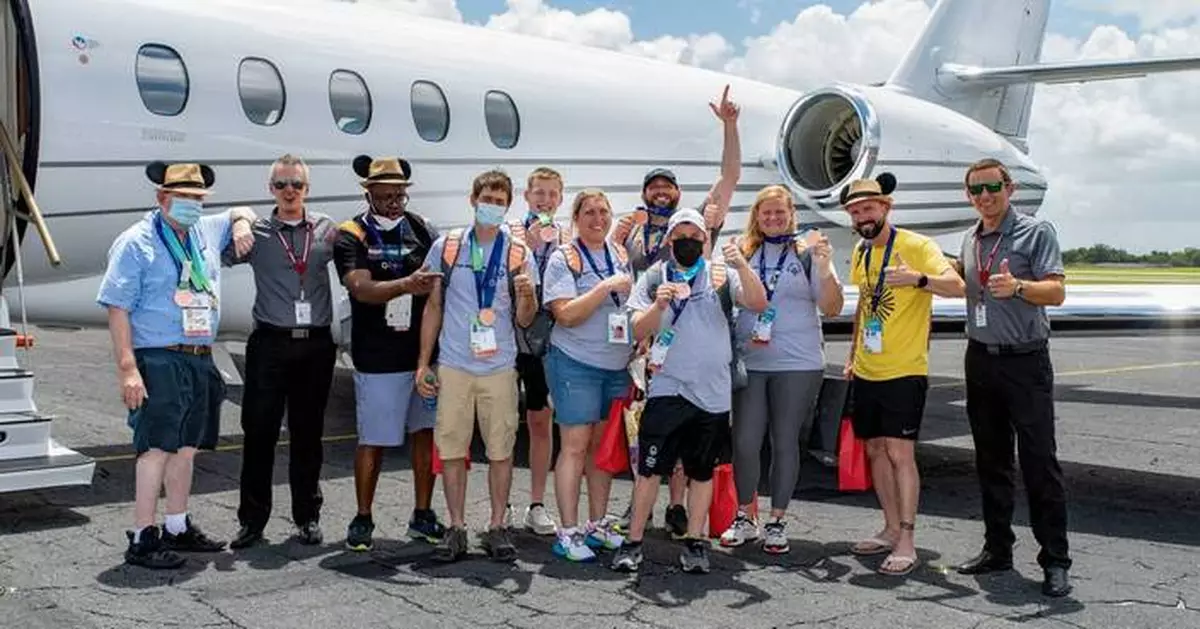
Prent Corporation named Dove 1 for 2026 Special Olympics Airlift arrivals, leading the way in championing athletes’ journeys (Photo credit: Textron Aviation).
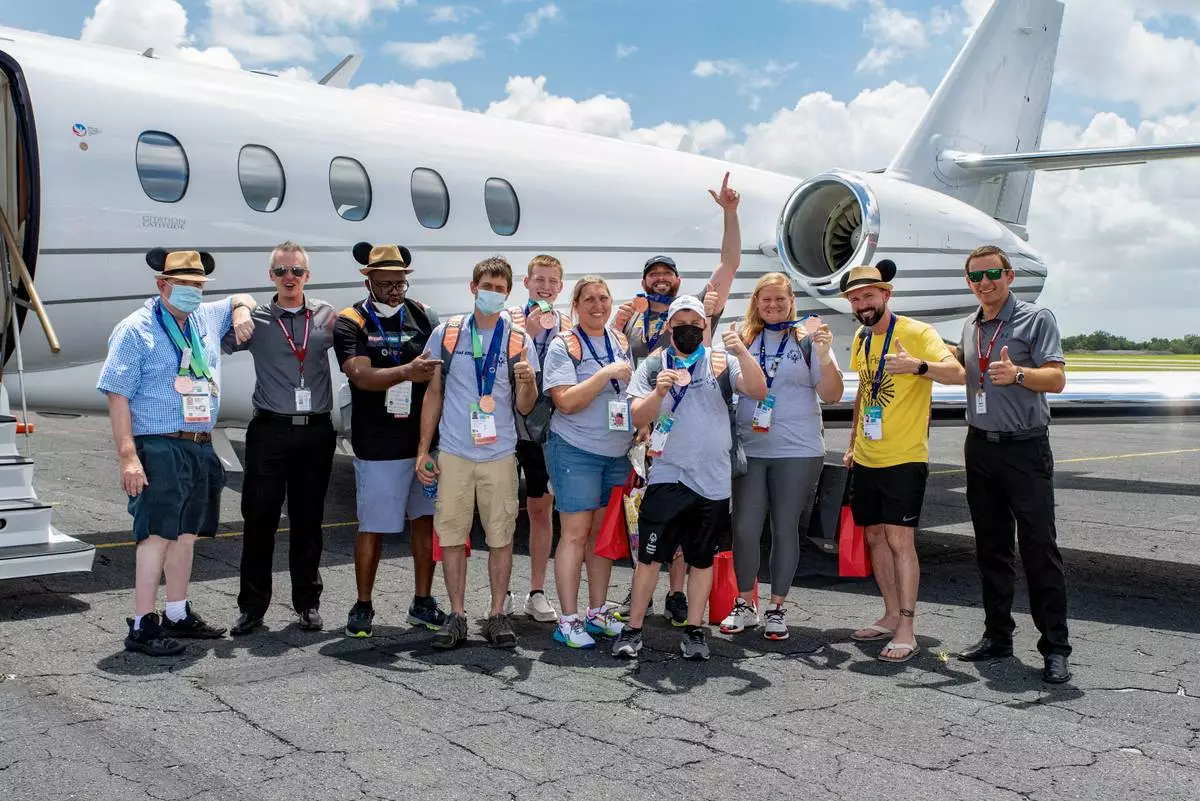
Prent Corporation named Dove 1 for 2026 Special Olympics Airlift arrivals, leading the way in championing athletes’ journeys (Photo credit: Textron Aviation).

CAPE CANAVERAL, Fla. (AP) — NASA’s Artemis II astronauts fired their engines and blazed toward the moon Thursday night, breaking free of the chains that have trapped humanity in shallow laps around Earth in the decades since Apollo.

The so-called translunar ignition came 25 hours after liftoff, putting the three Americans and a Canadian on course for a lunar fly-around early next week. Their Orion capsule bolted out of orbit around Earth right on cue and chased after the moon to nearly 250,000 miles (400,000 kilometers) away.

It was the first such engine firing for a space crew since Apollo 17 set out on that era’s final moonshot on Dec. 7, 1972. NASA said that preliminary reports indicate it went well.

“Humanity has once again shown what we are capable of, and it’s your hopes for the future that carry us now on this journey around the moon,” said Canadian astronaut Jeremy Hansen.

He said they were glued to the windows to take in the view, calling it “phenomenal."

NASA had the Artemis II crew stick close to home for a day to test their capsule’s life-support systems before clearing them for lunar departure.

Now committed to the moon, the Artemis II test flight is the opening act for NASA’s grand plans for a moon base and sustained lunar living.

Commander Reid Wiseman, pilot Victor Glover, Christina Koch and Hansen will dash past the moon then hang a U-turn and zip straight home without stopping on land. In the process, they will become the farthest humans have ever traveled from Earth, breaking the Apollo 13 distance record set in 1970. They also may become the fastest during their reentry at flight’s end on April 10.

Glover, Koch and Hansen already have made history as the first Black, the first woman and the first non-U.S. citizen to launch to the moon. Apollo’s 24 lunar travelers were all white men.

To set the mood for the day’s main event, Mission Control woke up the crew with John Legend’s “Green Light” featuring Andre 3000 and a medley of NASA teams cheering them.

“We are ready to go,” Glover said.

Mission Control gave the final go-ahead minutes before the critical engine firing, telling the astronauts that they were embarking on “humanity’s lunar homecoming arc” to bring them back to Earth.

The engine accelerated them to 24,000 mph (38,000 kph) to shove them out of Earth's orbit.

Koch replied: “With this burn to the moon, we do not leave Earth. We choose it.”

The next major milestone will be Monday’s lunar flyby.

Orion will zoom 4,000 miles (6,400 kilometers) beyond the moon before turning back, providing unprecedented and illuminated views of the lunar far side, at least for human eyes. The cosmos will even treat the Artemis II astronauts to a total solar eclipse as the moon temporarily blocks the sun from their perspective.

While awaiting their orbital departure earlier Thursday, the astronauts savored the views of Earth from tens of thousands of miles high. Koch told Mission Control that they can make out the entire coastlines of continents and even the South Pole, her old stomping ground.

“It is just absolutely phenomenal,” radioed Koch, who spent a year at an Antarctic research station before joining NASA.

NASA is counting on the test flight to kickstart the entire Artemis program and lead to a moon landing by two astronauts in 2028. Orion’s toilet may need some design tweaks before that happens.

The so-called lunar loo malfunctioned as soon as the Artemis crew reached orbit Wednesday evening. Mission Control guided astronaut Koch through some plumbing tricks and she finally got it going, but not before having to resort to using contingency urine storage bags.

Controllers also managed to bump up the cabin temperature. It was so cold earlier in the flight that the astronauts had to dig into their suitcases for long-sleeved clothes.

The contingency urine bags came in handy later in the day. Mission Control ordered the crew to fill a bunch of the empty bags with water from the capsule’s dispenser. A valve issue arose with the dispenser following liftoff, and NASA wanted plenty of drinking water on hand for the crew in case the problem worsened. The astronauts used straws and syringes to fill the pouches with more than 2 gallons (7 liters) worth before pivoting to the moon.

The Associated Press Health and Science Department receives support from the Howard Hughes Medical Institute’s Department of Science Education and the Robert Wood Johnson Foundation. The AP is solely responsible for all content.

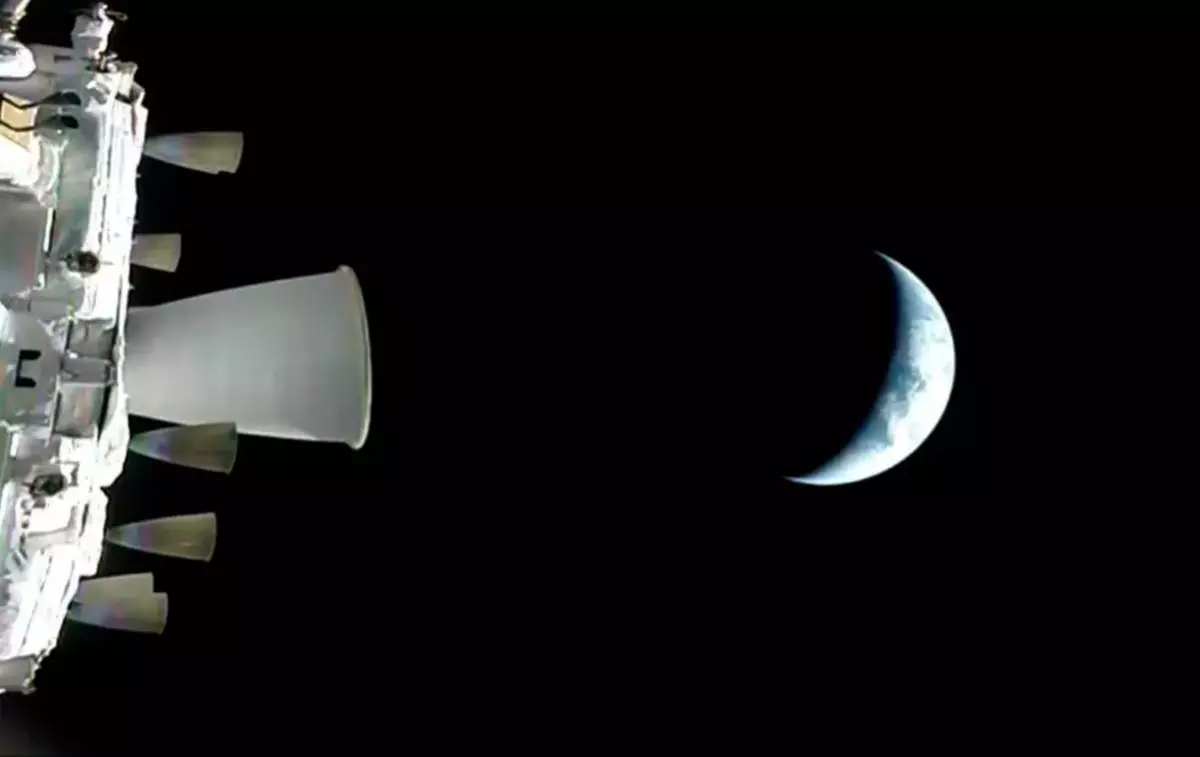
In this photo provided by NASA, a view of the Earth from NASA's Orion spacecraft as it orbits above the planet during the Artemis II test flight, on Thursday, April 2, 2026. (NASA via AP)

In this photo provided by NASA, a view of the Earth from NASA's Orion spacecraft as it orbits above the planet during the Artemis II test flight, on Thursday, April 2, 2026. (NASA via AP)

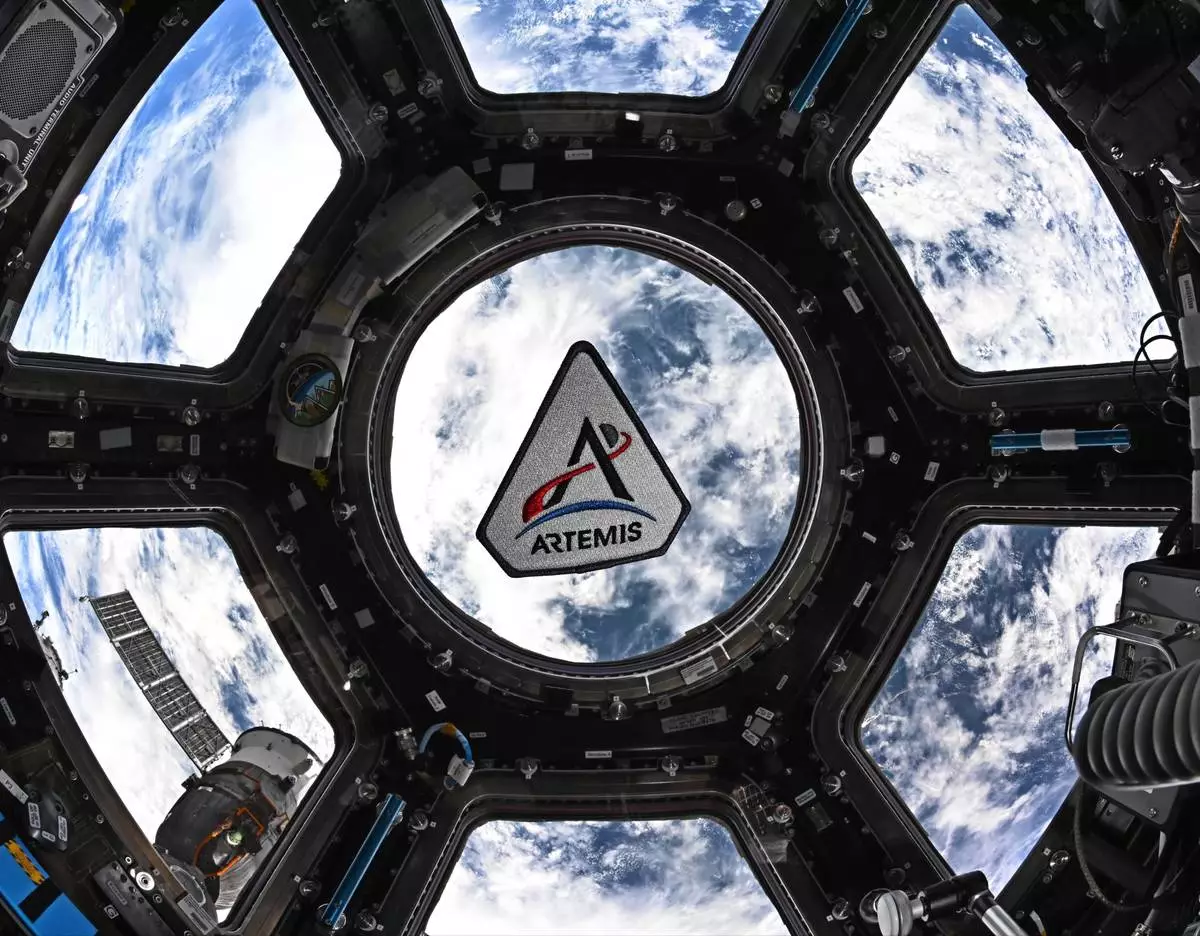
In this photo provided by NASA, an Artemis program patch floating in the International Space Station's cupola, on March 30, 2026. (Jessica Meir/NASA via AP)

In this photo provided by NASA, an Artemis program patch floating in the International Space Station's cupola, on March 30, 2026. (Jessica Meir/NASA via AP)

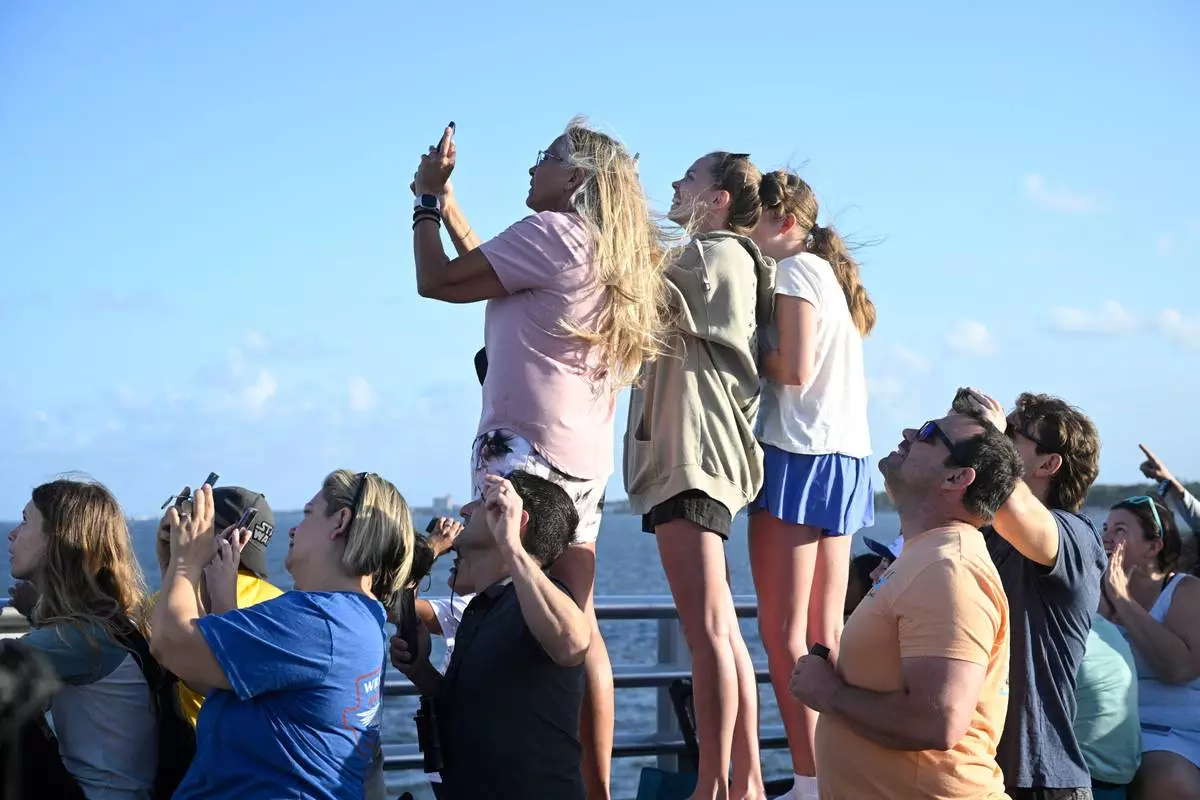
Spectators view NASA's Artemis II moon rocket launch from the A. Max Brewer Bridge, Wednesday, April 1, 2026, in Titusville, Fla. (AP Photo/Phelan M. Ebenhack)

Spectators view NASA's Artemis II moon rocket launch from the A. Max Brewer Bridge, Wednesday, April 1, 2026, in Titusville, Fla. (AP Photo/Phelan M. Ebenhack)

Spectators view NASA's Artemis II moon rocket launch from the A. Max Brewer Bridge, Wednesday, April 1, 2026, in Titusville, Fla. (AP Photo/Phelan M. Ebenhack)

Spectators view NASA's Artemis II moon rocket launch from the A. Max Brewer Bridge, Wednesday, April 1, 2026, in Titusville, Fla. (AP Photo/Phelan M. Ebenhack)

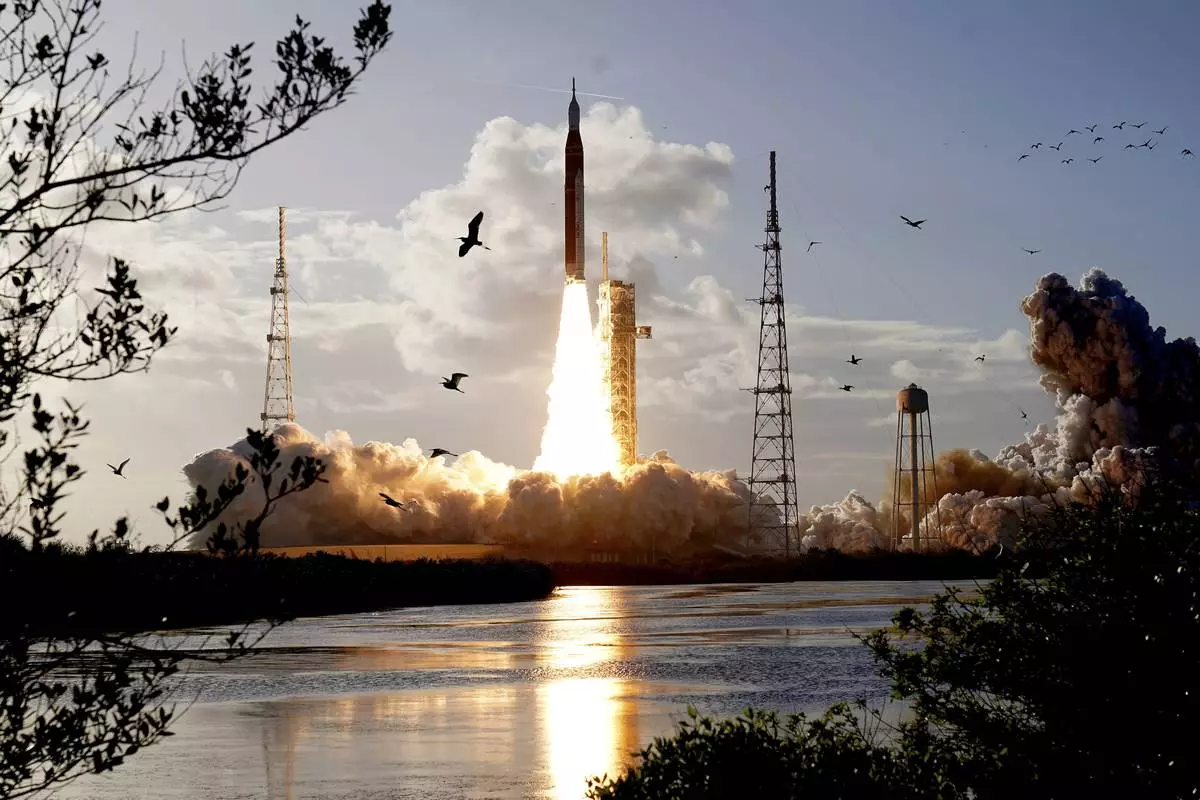
NASA's Artemis II moon rocket lifts off from the Kennedy Space Center's Launch Pad 39-B Wednesday, April 1, 2026, in Cape Canaveral, Fla. (AP Photo/Chris O'Meara)

NASA's Artemis II moon rocket lifts off from the Kennedy Space Center's Launch Pad 39-B Wednesday, April 1, 2026, in Cape Canaveral, Fla. (AP Photo/Chris O'Meara)

NASA's Artemis II moon rocket lifts off from the Kennedy Space Center's Launch Pad 39-B Wednesday, April 1, 2026, in Cape Canaveral, Fla. (AP Photo/Chris O'Meara)

NASA's Artemis II moon rocket lifts off from the Kennedy Space Center's Launch Pad 39-B Wednesday, April 1, 2026, in Cape Canaveral, Fla. (AP Photo/Chris O'Meara)

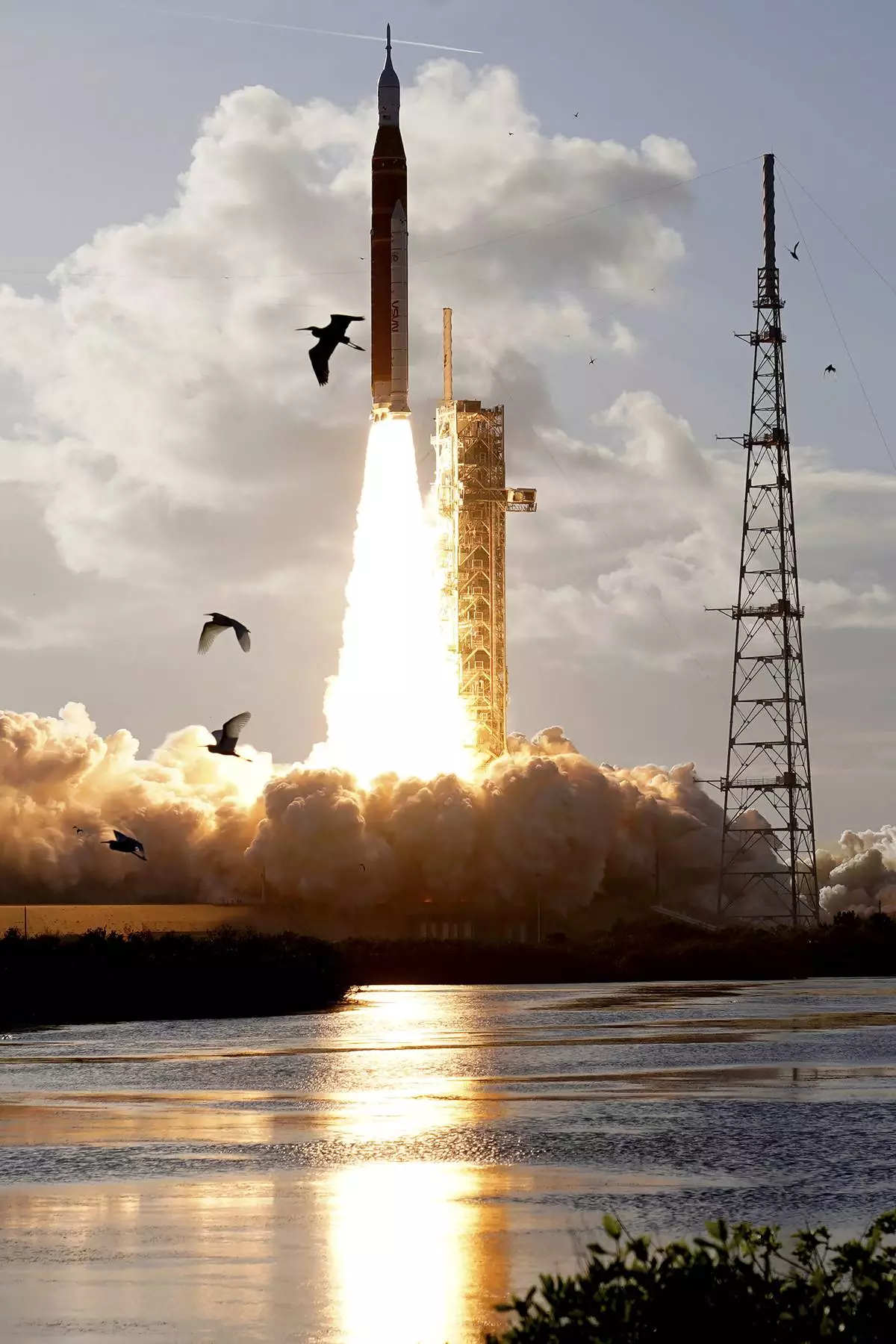
NASA's Artemis II moon rocket lifts off from the Kennedy Space Center's Launch Pad 39-B Wednesday, April 1, 2026, in Cape Canaveral, Fla. (AP Photo/John Raoux)

NASA's Artemis II moon rocket lifts off from the Kennedy Space Center's Launch Pad 39-B Wednesday, April 1, 2026, in Cape Canaveral, Fla. (AP Photo/John Raoux)

Recommended Articles