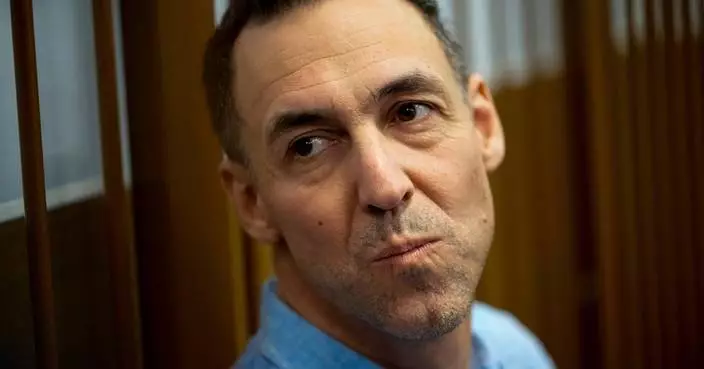
WASHINGTON (AP) — President Donald Trump abruptly changed his tone Wednesday about his Colombian counterpart, Gustavo Petro, saying they had exchanged a friendly phone call and he’d even invited the leader of the South American country to the White House.
“It was a Great Honor to speak with the President of Colombia, Gustavo Petro, who called to explain the situation of drugs and other disagreements that we have had,” Trump posted on his social media site. “I appreciated his call and tone, and look forward to meeting him in the near future.”
He wrote that the upcoming meeting would take place at the White House.
That came mere days after Trump said in the wake of the U.S. operation to oust Venezuelan President Nicolás Maduro over the weekend that “Colombia is very sick too” and accused Petro of ”making cocaine and selling it to the United States."
In comments to reporters aboard Air Force One on Sunday, Trump added of Petro, “He’s not going to be doing it very long, let me tell you.” Asked whether U.S. intervention was possible, Trump responded, ”Sounds good to me.”
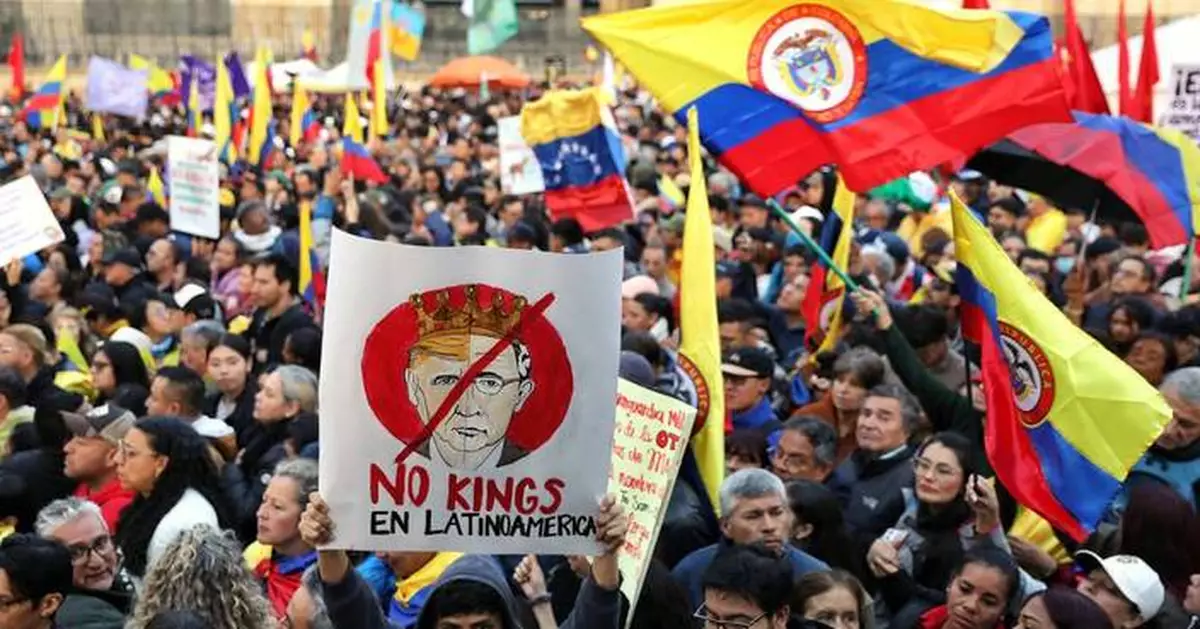
Later Wednesday, addressing thousands of protesters that he had mobilized to rally against U.S. military threats, Petro said he had spoken with Trump for roughly one hour.
“I talked about two things: Venezuela and the issue of drug trafficking,” he told the crowd in downtown Bogotá, where demonstrators had just minutes earlier chanted slogans against the United States at Petro’s behest.
Petro explained to the audience that Colombian politicians allegedly linked to narco-trafficking misled the U.S. president about Petro’s record to turn Trump against him.
“Those (people) are responsible for this crisis — let’s call it diplomatic for now, verbal for now — that has erupted between the U.S. and Colombia,” he said.
Trump now suddenly warming to Petro is especially surprising since Colombia’s president called the U.S. operation in Venezuela an “abhorrent” violation of Latin American sovereignty. He also suggested it was committed by “enslavers” and constituted a “spectacle of death” comparable to Nazi Germany’s 1937 carpet bombing of Guernica, Spain.
Colombia has long been among America’s staunchest Latin American allies, a pillar of Washington’s counternarcotics strategy abroad. For three decades, the U.S. has worked closely with Colombia, the world’s largest producer of cocaine, to arrest drug traffickers, fend off rebel groups and boost economic development in rural areas.
Still, before Trump's conciliatory post, tensions had been rising between the U.S. and Colombia for months.
The Trump administration imposed sanctions in October on Petro, his family and a member of his government over accusations of involvement in the global drug trade. Colombia is considered the epicenter of the world’s cocaine trade.
Trump began his monthslong pressure campaign on Maduro by ordering dozens of lethal strikes on alleged drug smuggling boats launched from Venezuela in the Caribbean. He eventually expanded the operations to also target suspected vessels in the eastern Pacific that came from Colombia.
The U.S. in September added Colombia, the top recipient of American assistance in the region, to a list of nations failing to cooperate in the drug war for the first time in almost 30 years. The designation led to a slashing of U.S. assistance to the country.
“He has cocaine mills and cocaine factories," Trump said of Petro on Sunday. "He’s not going to be doing it.”
__
Associated Press writer Isabel DeBre in Buenos Aires, Argentina, contributed to this report.
__
This story has been updated to correct the spelling of the Colombian president's name.
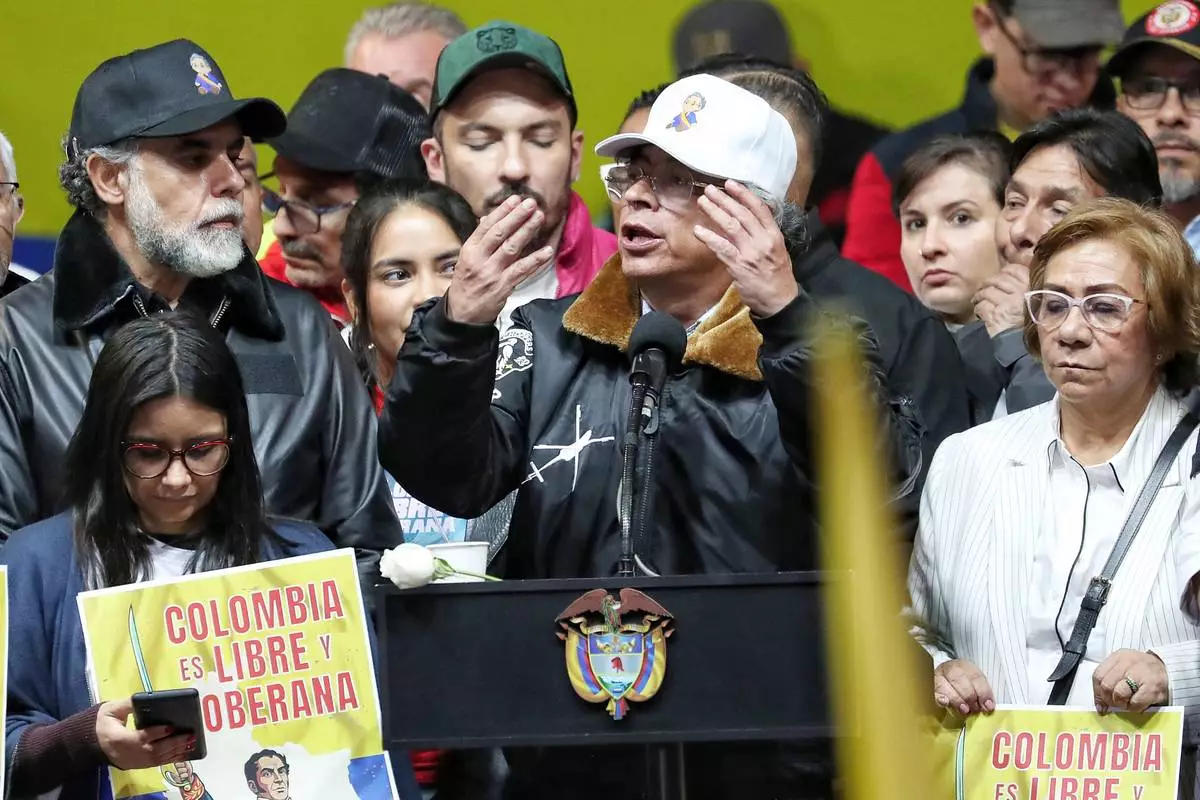
Colombian President Gustavo Petro addresses supporters in a rally he called to protest comments by U.S. President Donald Trump, in Bogota, Colombia, Wednesday, Jan. 7, 2026. (AP Photo/Santiago Saldarriaga)
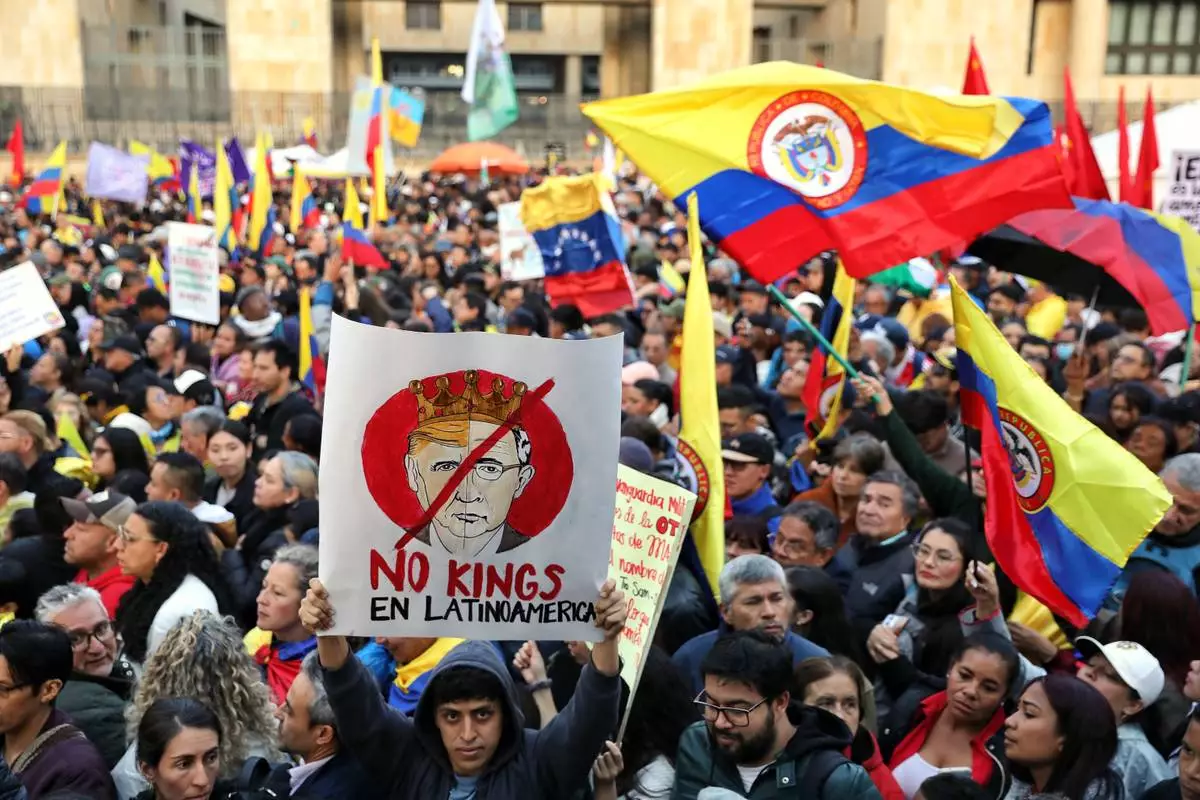
Supporters of Colombian President Gustavo Petro attend a rally he called to protest comments by U.S. President Donald Trump, in Bogota, Colombia, Wednesday, Jan. 7, 2026. (AP Photo/Santiago Saldarriaga)
Minneapolis was on edge Thursday following the fatal shooting of a woman by an Immigration and Customs Enforcement officer taking part in the Trump administration’s latest immigration crackdown, with schools canceling classes and activities as a safety precaution and Minnesota’s governor calling for people to remain calm.
As dawn began to break, scores of people bundled up in heavy coats gathered in a parking lot near the Bishop Henry Whipple Federal Building at Fort Snelling. The building houses several federal agencies, including an immigration court. The crowd was chanting and holding American flags and signs calling on ICE to leave Minnesota.
State and local officials demanded ICE leave after an officer shot 37-year-old Renee Nicole Macklin Good in the head. Homeland Security Secretary Kristi Noem said agents are not going anywhere.
The Latest:
Beyond Minneapolis, citizens also took to the streets or were expected to do so in New York City, Seattle, Detroit, Washington, D.C., Los Angeles, San Antonio, New Orleans and Chicago.
Protests are also scheduled in smaller cities later this week in Arizona, North Carolina, and New Hampshire.
Renee Nicole Macklin Good was a 37-year-old mother of three who had recently moved to Minnesota.
She was a U.S. citizen born in Colorado and appears to never have been charged with anything involving law enforcement beyond a traffic ticket.
In social media accounts, Macklin Good described herself as a “poet and writer and wife and mom.” She said she was currently “experiencing Minneapolis,” displaying a pride flag emoji on her Instagram account. A profile picture posted to Pinterest shows her smiling and holding a young child against her cheek, along with posts about tattoos, hairstyles and home decorating.
▶ Read more about who Macklin Good was
The fatal shooting of a woman by a federal immigration officer in Minneapolis on Wednesday has thrust a long-running and deeply contested question back into the national spotlight: When is a law enforcement officer justified in using lethal force against someone in a moving vehicle?
At the center of the debate are policies that for years have limited when officers may fire at vehicles, generally barring gunfire at fleeing cars unless the driver poses an imminent threat of deadly force beyond the vehicle itself. Those restrictions, embraced by many police departments and reflected in federal guidance, were intended to curb what experts long warned was among the most dangerous and unpredictable uses of lethal force.
▶ Read more about why police agencies moved to restrict shootings at moving vehicles
Patrick Riley was one of the people who came out Thursday morning at the federal building to express outrage after the death of Macklin Good on Wednesday.
“We are peacefully demonstrating. We’re trying to let this organization know that they’re not welcome,” said Riley.
Riley questioned why the Trump administration had made the Minneapolis area such a high priority.
“Why this big flood here now? This is our place. This is our country. This is our freedom to to protest,” Riled added.
Police at one point threw devices releasing smoke to break up the crowd, which carried signs and shouted profanities at them.
The crowd was directed farther away from the entrance as the protest reached the two-hour mark on Thursday.
In a post on the Facebook pages of the Red Lake Band of Chippewa Indians tribal council and the tribe’s embassy in Minneapolis, the council said tribal citizens should expect ICE agents to detain and harm them.
“We all need to be careful, and we must assume that ICE will not protect us,” the post stated. “We realize that we will not receive compassionate treatment by anyone associated with the Trump administration.”
In the warning to citizens, the tribal council said it sees the “obvious purpose of ICE is to terrorize Americans who do not agree with the administration’s policies, and actions” and called for “an end to the president’s blatant lies.”
There are about 8,000 Red Lake Band of Chippewa Indians citizens in the Twin Cities and surrounding areas, according to the post. The council asked tribal members to document interactions with ICE by contacting the tribe directly. The tribe’s embassy in Minneapolis has also been closed for the rest of the week.
Protesters are carrying signs and chanting, including some signs that say, “ICE Out Now,” “We deserve to be safe in our community,” and “Resist Fascism.”
Chants include “We Keep Us Safe,” “ICE Out Now,” “ICE Go Home,” “Quit Your Job” and “Justice Now!”
Scores of people bundled up in heavy coats gathered as dawn began to break Thursday in a parking lot near the Bishop Henry Whipple Federal Building at Fort Snelling. The building houses several federal agencies, including an immigration court.
The crowd was chanting and holding American flags and signs calling on ICE to leave Minnesota.
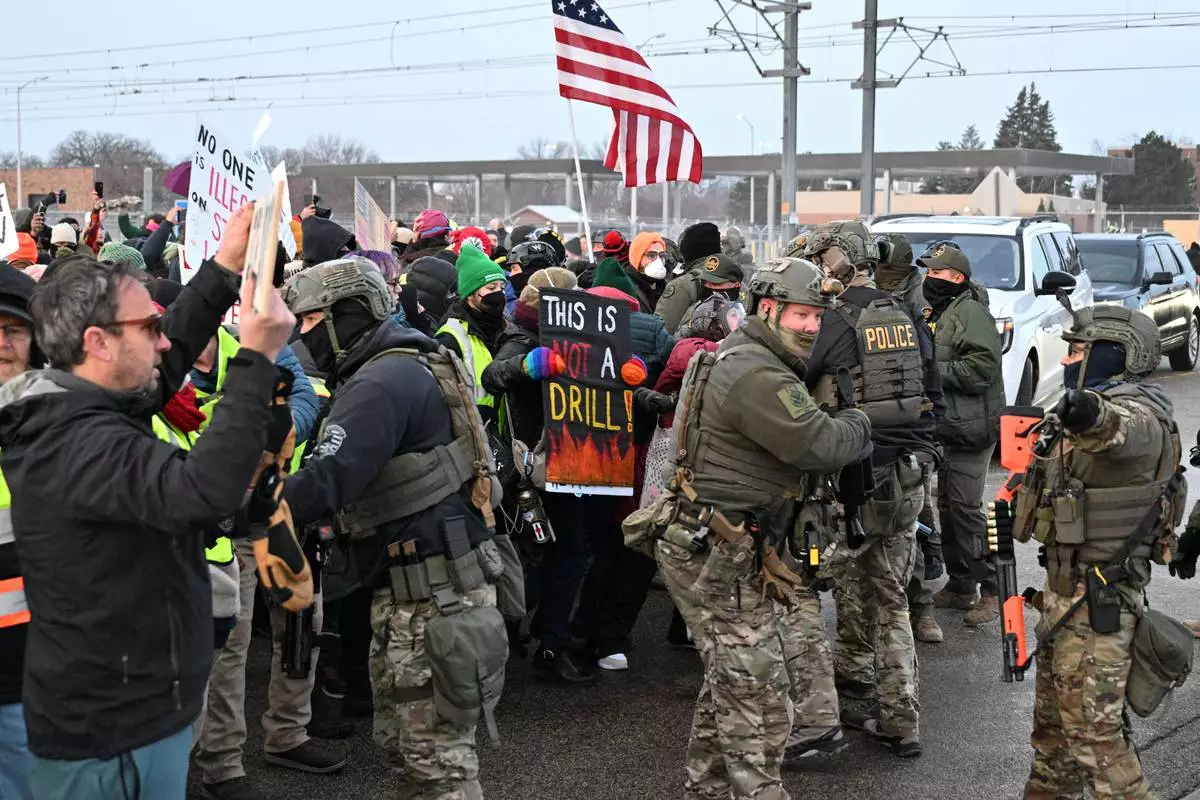
Protesters confront federal agents outside the Bishop Henry Whipple Federal Building, Thursday, Jan. 8, 2026, in Minneapolis, Minn. (AP Photo/Tom Baker)
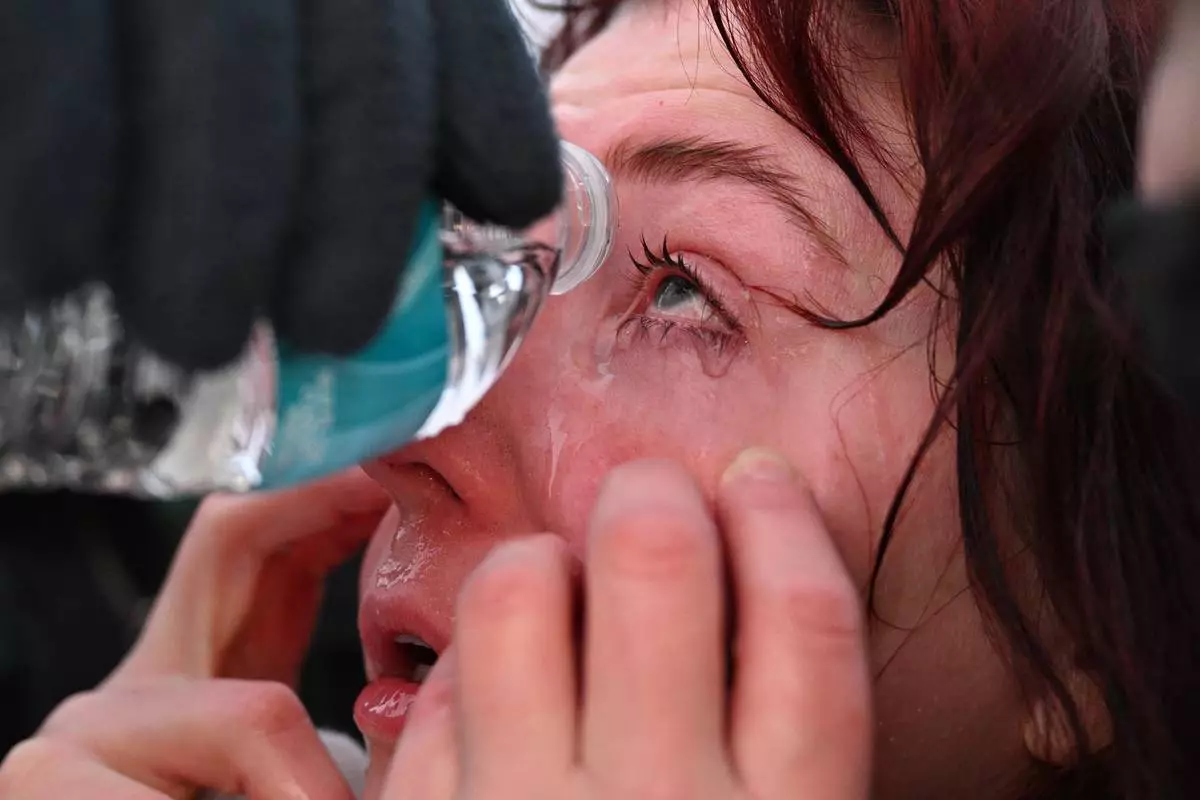
A protester receives aid after confronting law enforcement outside the Bishop Henry Whipple Federal Building, Thursday, Jan. 8, 2026, in Minneapolis, Minn. (AP Photo/Tom Baker)
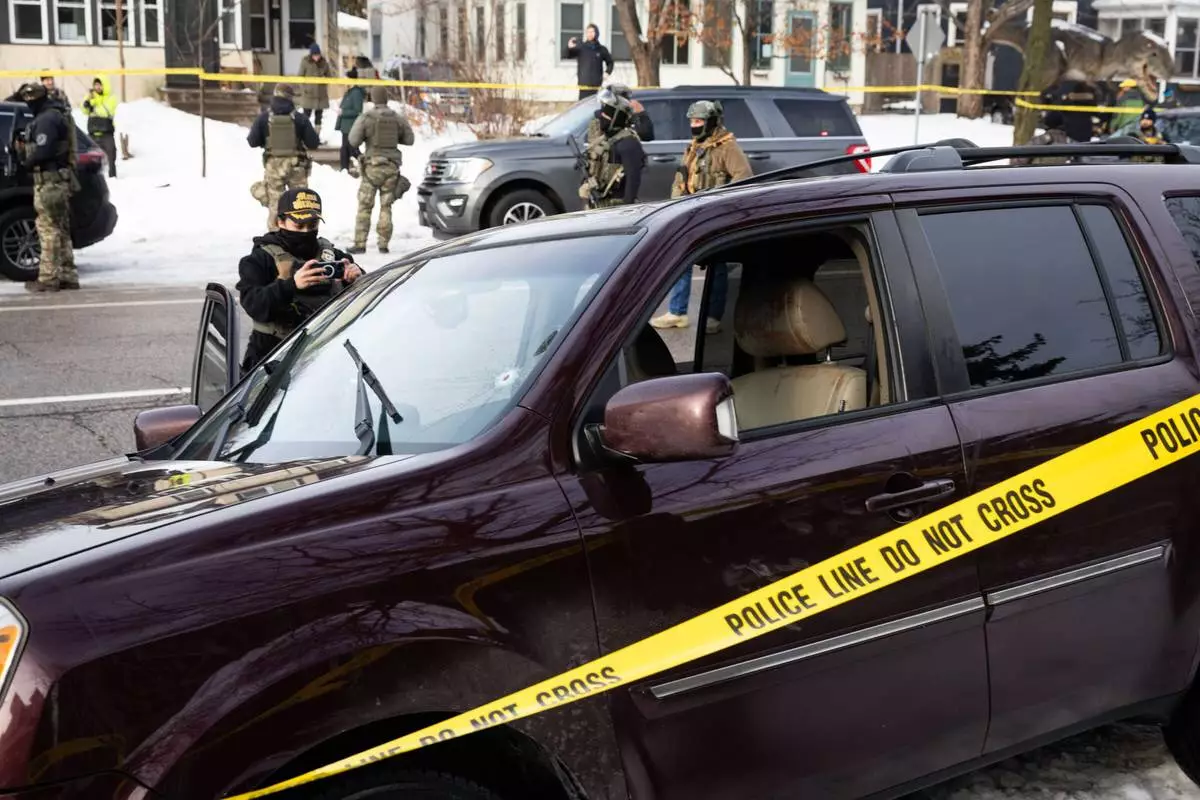
A bullet hole and blood stains are seen in a crashed vehicle on at the scene of a shooting in Minneapolis on Wednesday, Jan. 7, 2026. (Ben Hovland/Minnesota Public Radio via AP)
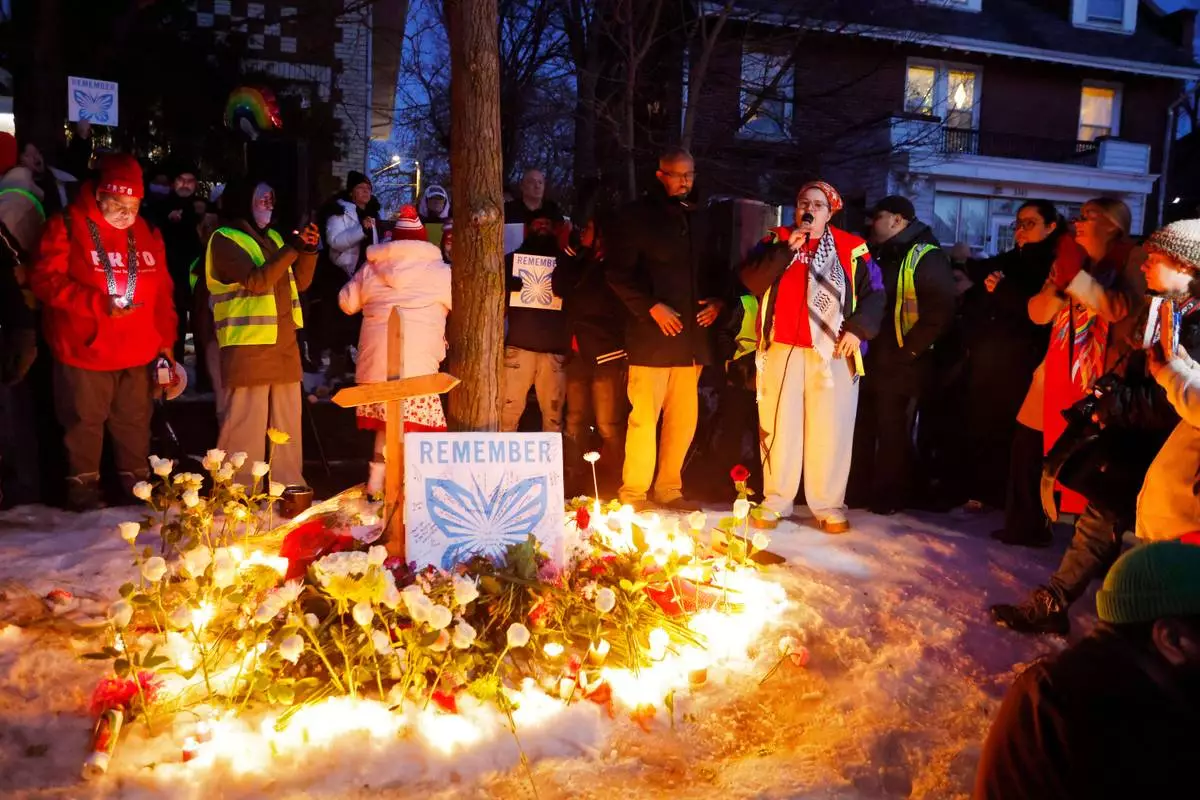
People gather for a vigil after an Immigration and Customs Enforcement officer shot and killed a woman earlier in the day, Wednesday, Jan. 7, 2026, in Minneapolis. (AP Photo/Bruce Kluckhohn)
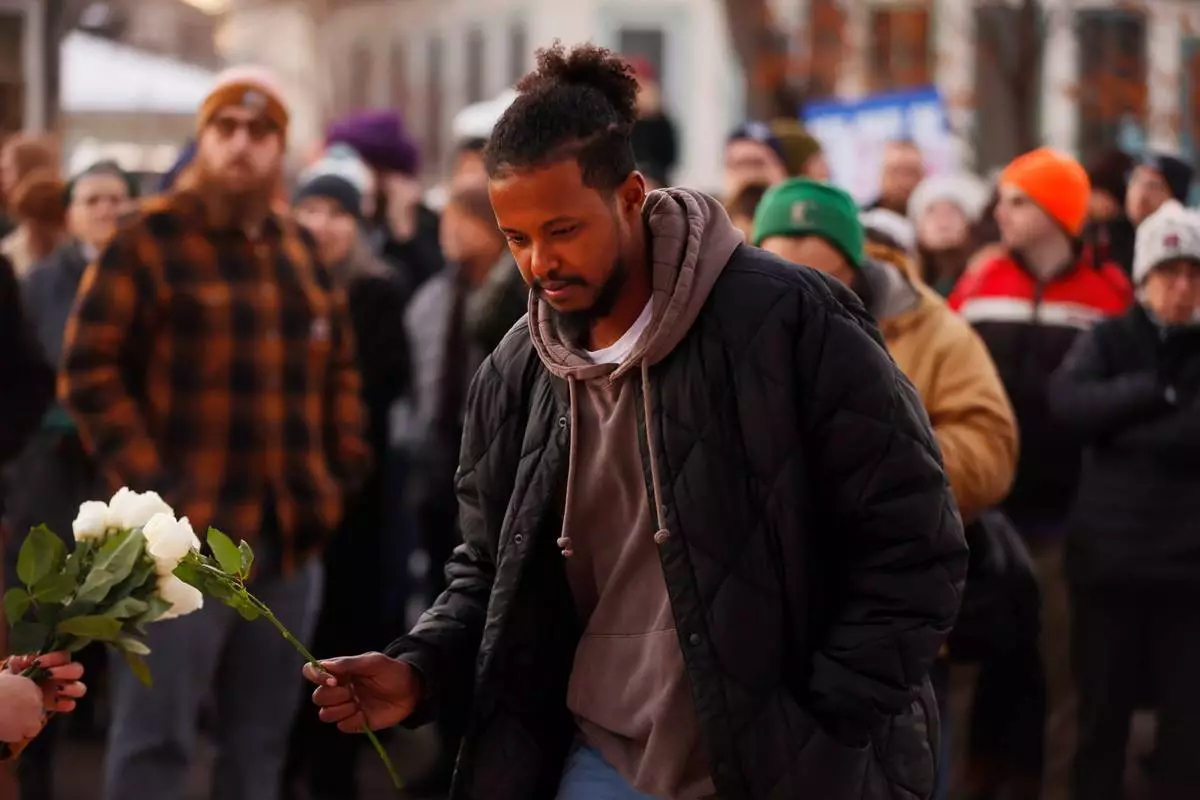
People gather for a vigil after an Immigration and Customs Enforcement officer shot and killed a woman earlier in the day, Wednesday, Jan. 7, 2026, in Minneapolis. (AP Photo/Bruce Kluckhohn)
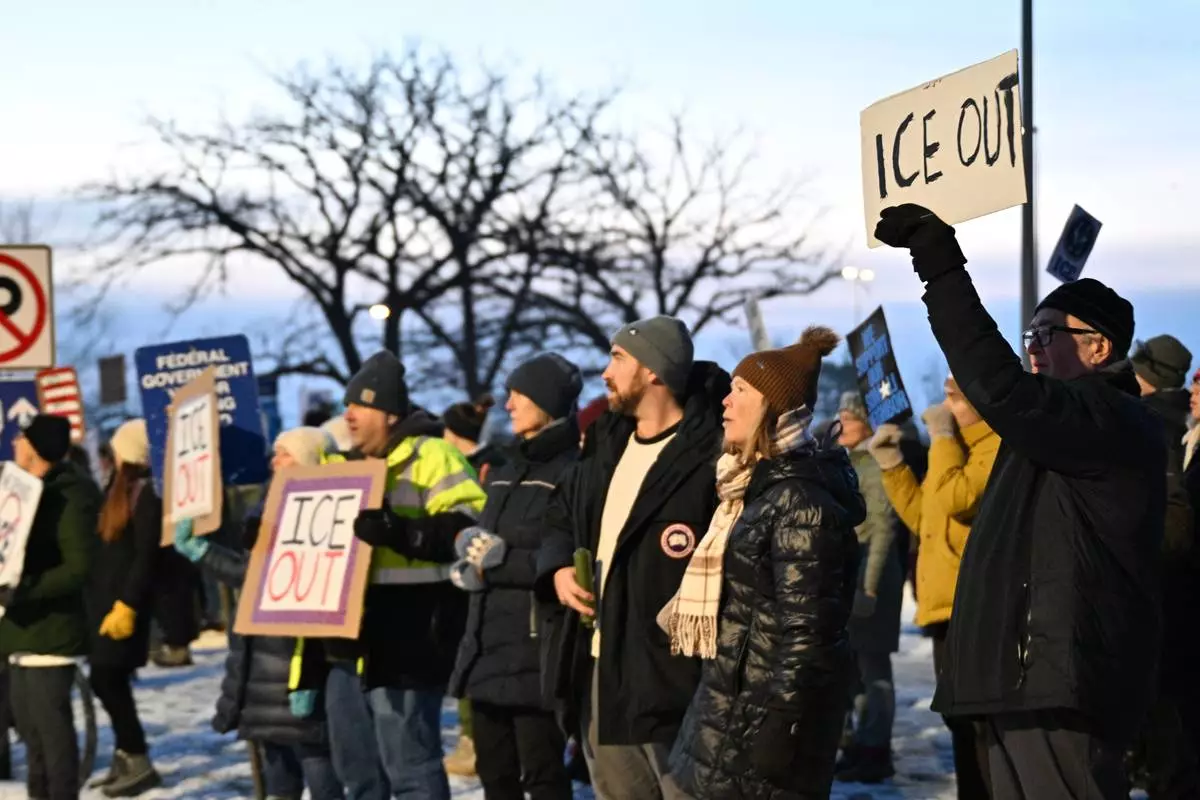
Protesters gather outside the Bishop Henry Whipple Federal Building, Thursday, Jan. 8, 2026, in Minneapolis, Minn. (AP Photo/Tom Baker)