Ombudsman announces results of direct investigation operation into Government's work on landslide prevention and mitigation and management of government slopes
The following is issued on behalf of the Office of The Ombudsman:
The Ombudsman, Mr Jack Chan, today (January 8) announced the completion of a direct investigation operation into the work of the Government of the Hong Kong Special Administrative Region on landslide prevention and mitigation as well as management of government slopes, with 32 major recommendations for improvements made to the Civil Engineering and Development Department (CEDD), the Lands Department (LandsD), the Highways Department (HyD), the Water Supplies Department (WSD) and the Architectural Services Department (ArchSD).
On November 14, 2024, the Office of The Ombudsman (the Office) announced the launch of a direct investigation operation into the Government's monitoring and regulation of slope safety. Given the extent and complexity of the topic, the Office decided to initiate two direct investigation operations under a series approach to focus on the different aspects involved more effectively. While the first direct investigation operation announced by the Office today examines in detail the Government's landslide prevention and mitigation work, and its management of government man-made slopes, the second operation to be completed and announced later will focus on the authorities' determination of slope maintenance responsibility and risk management of private man-made slopes.
Mr Chan said, "Hong Kong is densely populated and characterised by its hilly terrain and scarcity of land. Coupled with the increasing occurrence of extreme weather events, the risk of severe landslides is indeed a significant hazard, posing potential threats to the public's daily activities, lives and property.
"Since the establishment of the Geotechnical Engineering Office in 1977, the CEDD has endeavoured to enhance slope resilience against severe weather through a comprehensive slope safety system. The landslide risk in Hong Kong has been substantially lowered compared with the early years. This is an achievement as a result of the CEDD's immense efforts over the past decades. The Office highly commends the CEDD's work. We are also pleased to note that the current-term Government has introduced multiple forward-looking measures to continuously strengthen the overall capacity in coping with extreme weather through four key strategies, namely advance preparedness, enhanced early warning, decisive emergency response and speedy recovery. Meanwhile, the current-term Government vigorously applies innovative technologies, including the development of a Smart Slope Catalogue, to ensure that landslide prevention and mitigation work keep pace with the times.
"As global climate change intensifies, slope safety in Hong Kong will face new challenges and risks. The CEDD should continuously keep up with an innovative spirit and strive for excellence, in order to safeguard the monitoring and regulation of slope safety. As regards the four departments with maintenance responsibility for the majority of government man-made slopes (namely the LandsD, the HyD, the WSD and the ArchSD), we consider these departments to have carried out slope maintenance and repairs in accordance with their respective purview and the technical guide issued by the CEDD, and have arranged emergency inspections and repairs after landslide incidents. Nevertheless, we still find room for improvement on the part of all departments concerned in the safety management of natural hillside catchments and government man-made slopes, as well as interdepartmental collaboration."
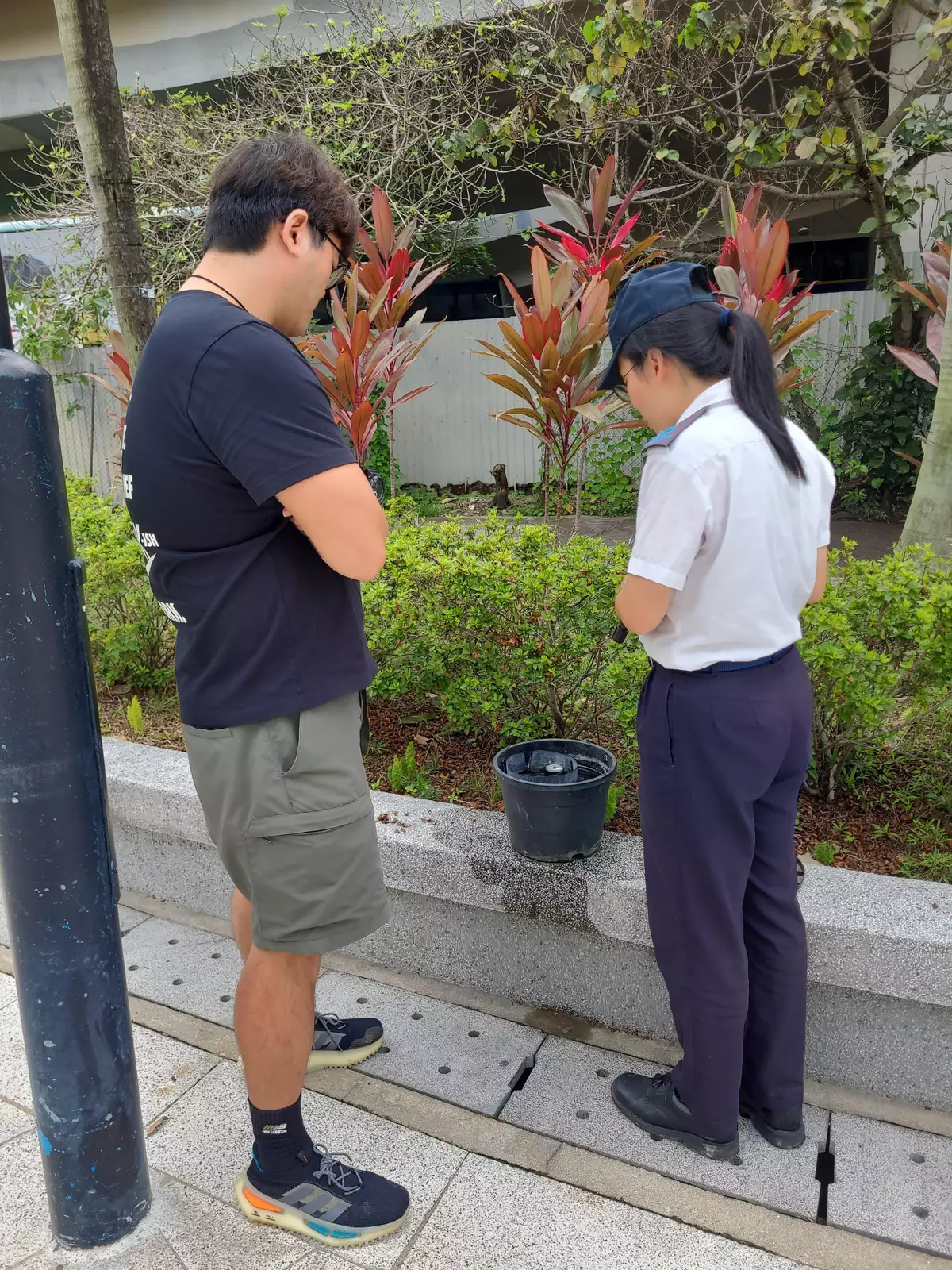
Around 60 per cent of Hong Kong's land area is covered by natural hillsides. There are also a vast number of man-made slopes. As of December 2024, there were around 61 000 registered man-made slopes across Hong Kong, comprising around 38 600 government man-made slopes, 15 800 private man-made slopes and 6 300 man-made slopes with mixed maintenance responsibility. During the investigation, investigators of the Office examined a large volume of data (including Hong Kong's landslide data from more than 35 years since 1989, and data on relevant works and studies undertaken by the CEDD since 2010 under the Landslip Prevention and Mitigation Programme), as well as more than 50 landslide incidents involving natural hillside catchments or government man-made slopes. In addition to scrutinising documents, investigators also shadowed departmental staff in conducting seven site visits to acquire a comprehensive understanding on the CEDD's work on landslide prevention and mitigation, and slope maintenance audits, as well as how various maintenance departments carry out maintenance inspections to government man-made slopes under their purview.
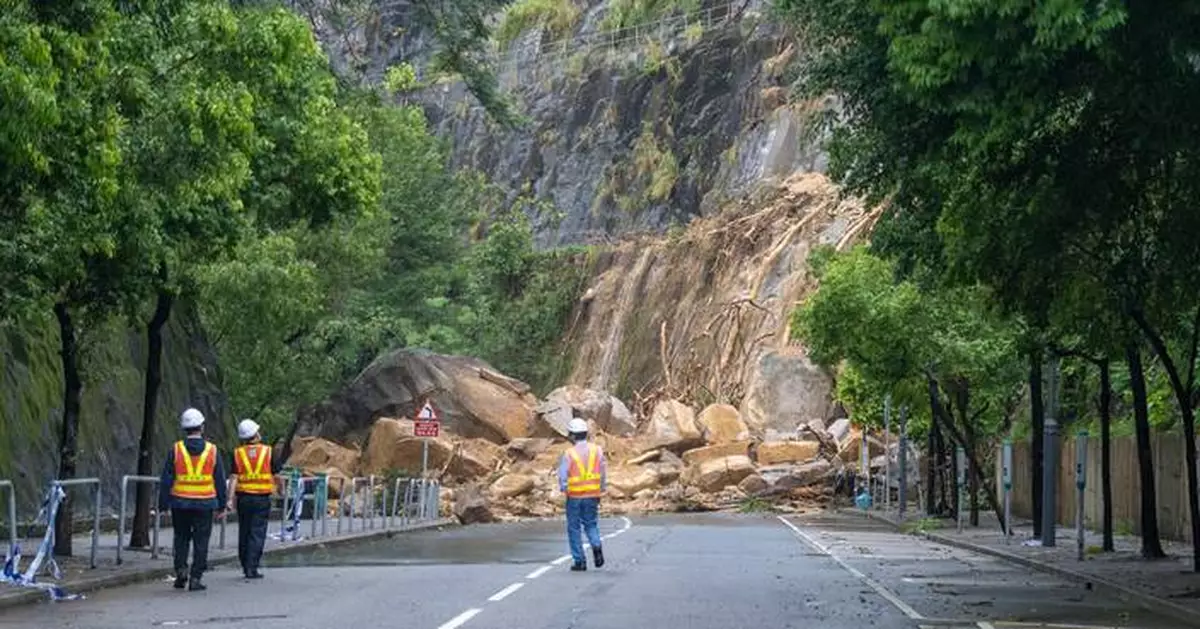
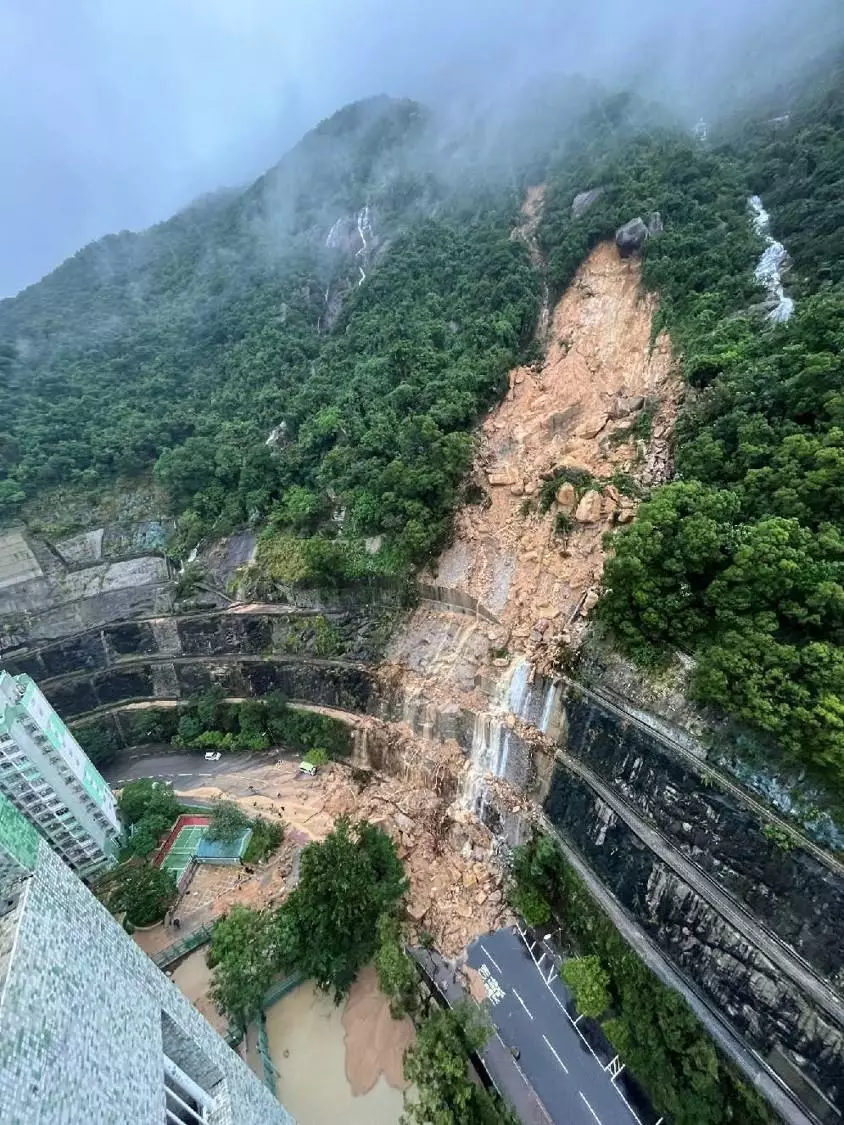
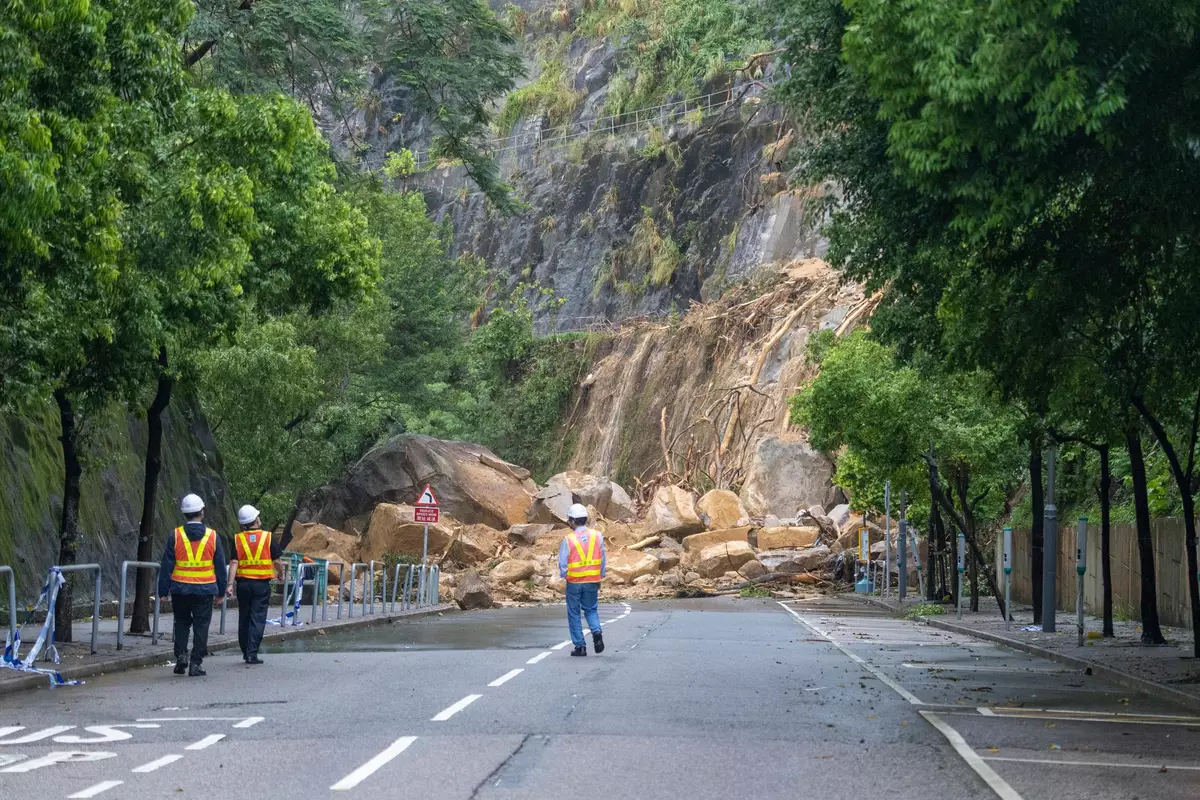
Over the past decade (2015 to 2024), an annual average of around 214 landslides was recorded in Hong Kong, nearly one-third below the annual average of around 300 landslides between 1989 and 2014. While natural hillside catchments generally do not require regular inspections or maintenance, the CEDD identifies those with higher potential risks for inclusion in the Programme to carry out risk mitigation works. Between 2015 and 2024, nearly 25 per cent of landslides involved natural hillside catchments. Upon review of nine serious landslides that occurred since 2008, the Office found that most involved natural hillside catchments. A majority of them had not been included in the Programme before the incidents, or even if they had already been so included, they were accorded a relatively low priority such that the actual study and design of the works had yet to commence by a consultancy contract of the programme before the incidents.
As for government man-made slopes, among the landslides that occurred between 2015 and 2024, more than 40 per cent involved government man-made slopes and around 5 per cent involved private man-made slopes. As there are far more government man-made slopes than private ones, the higher number of incidents involving government man-made slopes is understandable. However, discounting the actual difference in the number of incidents involving the two kinds of slopes, the Office found that the failure rate (Note 1) of government man-made slopes (annual rate from 0.1 to 0.6 per cent) was still higher than that of private man-made slopes (annual rate from 0.03 to 0.3 per cent) by one to three times between 2020 and 2024. Undeniably, the failure rates of both government and private man-made slopes remained at a very low level of less than 1 per cent each year. In addition, the consequence-to-life category (Note 2) of nearly 80 per cent of the government man-made slopes with landslides was either the lower category 2 or 3. Nevertheless, the Office considers that the higher failure rate of government man-made slopes compared to private ones still warrants the Government's continuous attention.
Furthermore, having reviewed those relatively more serious landslides involving government man-made slopes since 2014, the Office found that some of the slopes recorded repeated landslides within three years since the first incident, and that a particular slope even recorded four landslides at different parts within five years. Although the consequence-to-life category of all these government slopes with repeated landslides was not the highest category 1, and not every incident was large in scale, the recurrence of incidents inevitably raises concerns about the potential risks and structural safety of these slopes.
Mr Chan said, "The Office is pleased to learn that during our investigation, the CEDD proactively proposed improvement measures, including increasing the annual targets of the Programme progressively within three years from 2025, with the number of natural hillside catchments for risk mitigation works increased from 30 to 40 and that of government man-made slopes for upgrading works increased from 150 to 200. The CEDD has also identified three natural hillside catchments with similar geological conditions as Yiu Hing Road, Shau Kei Wan and included them in the Programme for assessment and risk mitigation works. In addition, the department will prioritise man-made slopes with greater potential impact on people's livelihood, especially those adjacent to the sole vehicular access, and systematically include them in the Programme for upgrading works.
"Summing up our findings, we recommend that the CEDD adopt measures to further enhance slope safety management. Meanwhile, all relevant departments should continue to deepen collaboration, foster exchanges of views and sharing of experiences so that their landslide prevention and mitigation work can be carried out more precisely and effectively. Finally, although the current landslide risk is substantially lower than decades ago, the authorities must remain vigilant in the face of slope degradation and the threat of extreme rainfall, and be well prepared for tough times. Landslide prevention and mitigation works are crucial for slope safety, yet call for the public's understanding for the inconvenience inevitably caused during the works period. I appeal to members of the public to support the Government's landslide prevention and mitigation work and work together to safeguard public safety."
Overall, the Office has made 32 recommendations to the CEDD, the LandsD, the HyD, the WSD and the ArchSD regarding the implementation of the Programme, safety management of natural hillside catchments and government man-made slopes, application of technologies and interdepartmental collaboration. The Office is pleased to note that the departments above have accepted all the recommendations.
The Office's major recommendations for improvement to the departments include:
- The CEDD should actively explore the feasibility of expediting risk mitigation works for the three natural hillside catchments already included in the Programme which have similar geological conditions as Yiu Hing Road, Shau Kei Wan;
- The CEDD should continue with its regular review on any room to optimise the current selection criteria of natural hillside catchments for inclusion in the Programme, so that those with potential risks can be identified earlier;
- The CEDD should continue to take note of any considerable differences in the failure rates between government and private man-made slopes, examine the underlying causes and formulate proper counter-measures where necessary;
- If its examination reveals any areas for improvement in the maintenance of government man-made slopes on the part of the maintenance departments, the CEDD should continue to issue technical guidelines for their compliance;
- The CEDD should continue with its regular review on any room to optimise the current selection criteria of government man-made slopes for inclusion in the Programme for upgrading works (for example, allowing more flexibility in prioritising slopes with repeated landslides under the programme according to actual circumstances);
- The CEDD should continue to enhance the management of landslide prevention and mitigation works and slope maintenance audits as well as the planning of post-landslide response actions through the gradual increase of slope monitoring and management data, coupled with AI and big-data analytics;
- The CEDD should explore expanding the scope of slope maintenance audits to include post-incident investigations and response actions involving government man-made slopes, with a view to reviewing the performance of maintenance departments from multiple perspectives and identifying possible areas for improvement, thereby learning from experience and nipping landslide risks in the bud; and
- All relevant departments (including the LandsD, the HyD, the WSD and the ArchSD) may make use of the Centralised Slope Maintenance Database being developed by the CEDD and the Smart Slope Catalogue for data analytics to monitor the latest situations of slope maintenance, share common maintenance issues, and assess the impact of heavy rainfall on slopes. This should facilitate their planning of routine maintenance inspections and special inspections after adverse weather events, leading to higher efficiency.
The full investigation report is available on the website of the Office of The Ombudsman at www.ombudsman.hk for public information.
Note 1: (Number of government or private man-made slopes with landslides/Total number of government or private man-made slopes) × 100 per cent.
Note 2: The consequence-to-life category reflects the potential severity of casualties in the event of slope failure. It is classified into three levels from highest to lowest: category 1, category 2 and category 3.
Ombudsman announces results of direct investigation operation into Government's work on landslide prevention and mitigation and management of government slopes Source: HKSAR Government Press Releases
Ombudsman announces results of direct investigation operation into Government's work on landslide prevention and mitigation and management of government slopes Source: HKSAR Government Press Releases