SYDNEY (AP) — England's players and management are undergoing a performance review following the 4-1 Ashes series defeat in Australia, with England Wales Cricket Board chief executive Richard Gould vowing to “implement the necessary changes" over coming months.
Gould issued a statement after England's five-wicket loss in the fifth test Thursday, highlighting disappointment in the campaign after the squad traveled to Australia with high expectations of ending a long drought Down Under.
The planning, tactics and preparation of head coach Brendon McCullum and cricket director Rob Key will be part of the review, along with “individual performances and behaviors” and the team's ability to adapt and react to conditions.
“This Ashes tour began with significant hope and anticipation, and it is therefore deeply disappointing that we have been unable to fulfill our ambition," Gould said. “While there were moments of strong performance and resilience, including a hard-fought victory in the fourth test in Melbourne, we were not consistent enough across all conditions and phases of the contest.”
Gould said the cricket board was “determined to improve quickly” as the team prepares for the Twenty20 Cricket World Cup in India and Sri Lanka next month.
England captain Ben Stokes said the performances were “so far below the level that this team can operate at."
He suggested one reason might the ability of opposing teams to counteract England's attack-at-all costs ”Bazball" approach, which is a vast departure tactically from conventional test cricket.
“We are now playing against teams who have answers to the style of cricket that we have been playing over quite a long period of time,” Stokes said. "In the first couple of years (under McCullum), teams found it difficult to try and come up with anything to combat the way that we played.
“But there’s moments in games throughout the (Ashes) series, and even before that, where we’ve almost gifted the flow of the game back to the opposition.”
Stokes said England had to be prepared to rethink its approach, having lost 14 test of the 28 test matches it has played since the beginning of 2024.
“When a trend is happening on a consistent basis in the way that you don’t want it to happen, that’s when you do need to go back and go look at the drawing board and make some adjustments,” he said.
McCullum, the main architect of England's aggressive batting approach that the tourists started the tour with, said he'd be open to minor changes but not a complete overhaul.
“You’ve got to have conviction in your methods,” he told the BBC. "You’re not against evolution and progress, but you’ve got to have conviction in what you believe in.
“It’s about nipping and tucking to try and get a better version of your style and your beliefs.”
McCullum said he'd “see what happens” with the review “but I firmly believe in how we go about trying to build this team and progress on what we’ve done.”
One person in McCullum's corner will be his captain.
“If something ever comes to it, I’ll be asked for my opinion and he’ll be getting my full support,” Stokes said. "I absolutely love working with Baz, he’s a great man and he’s a very, very, very good coach.”
Australia retained the Ashes with wins in Perth, Brisbane and Adelaide, before England's drought-breaking win in the fourth test in Melbourne made it 3-1 ahead of the test at the Sydney Cricket Ground.
Australia has won four consecutive home Ashes series since England's last win here in 2010-11.
England struggled this tour with injuries to key bowlers Jofra Archer and Mark Wood, a heavy workload for skipper Ben Stokes which meant he couldn't bowl on the last day of the series, and a consistently flawed approach to batting in pressure situations.
England's fielding was also problematic across the series, with a reported 17 catches put down at a cost of hundreds of runs.
AP cricket: https://apnews.com/hub/cricket
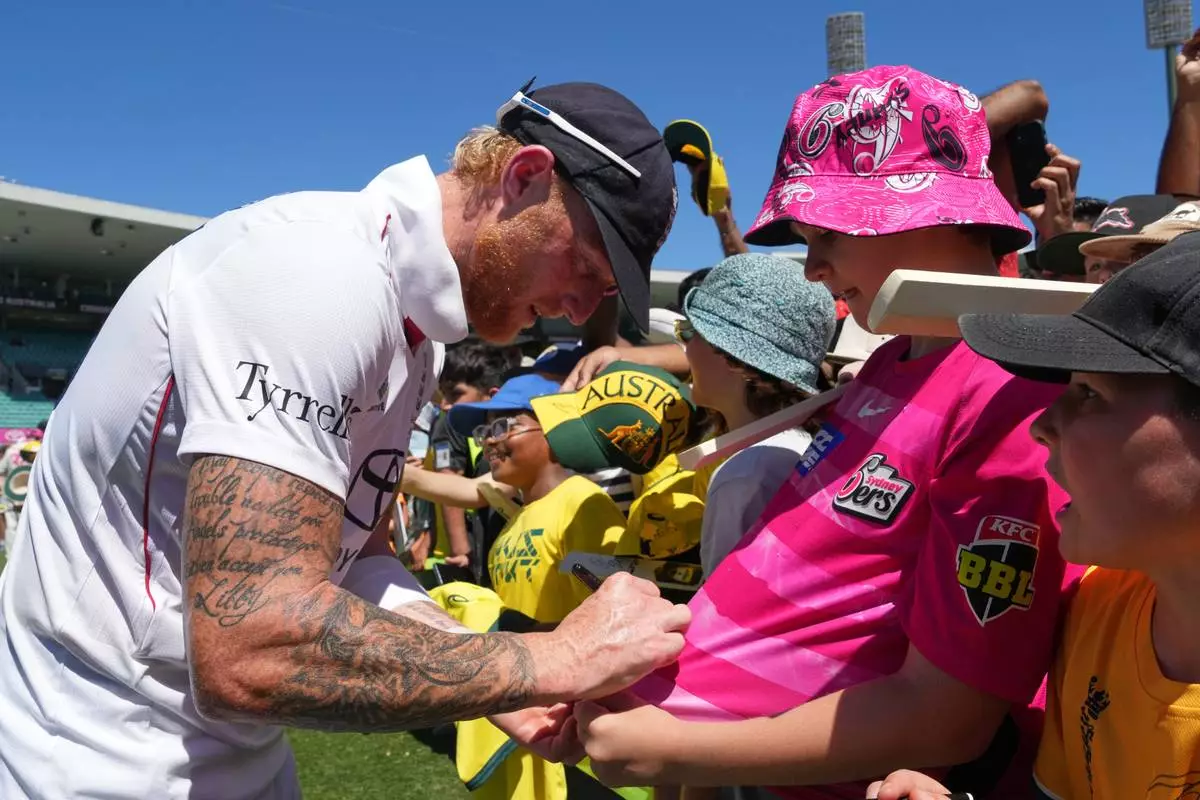
England's Ben Stokes signs his autograph for a fan following the fifth and final Ashes cricket test between England and Australia in Sydney, Thursday, Jan. 8, 2026. (AP Photo/Mark Baker)
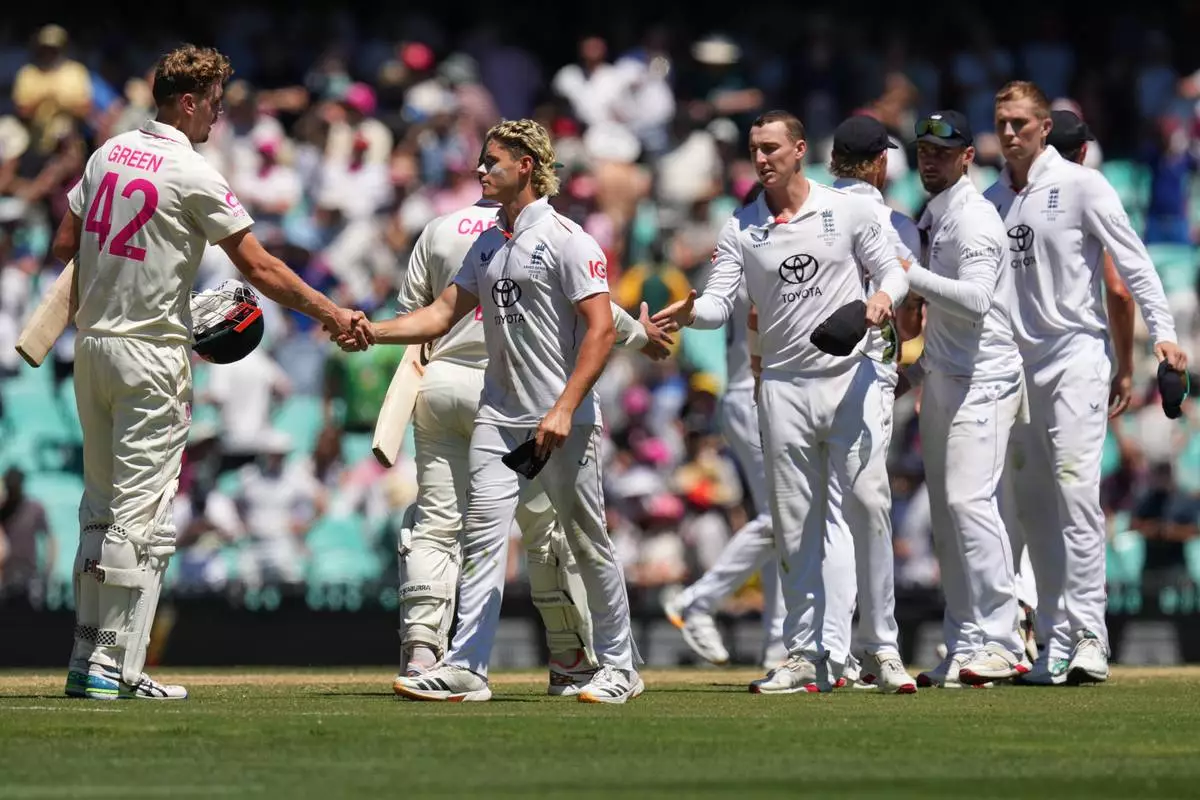
Australia's Cameron Green, left, is congratulated by England's Jacob Bethell following the fifth and final Ashes cricket test between England and Australia in Sydney, Thursday, Jan. 8, 2026. (AP Photo/Mark Baker)
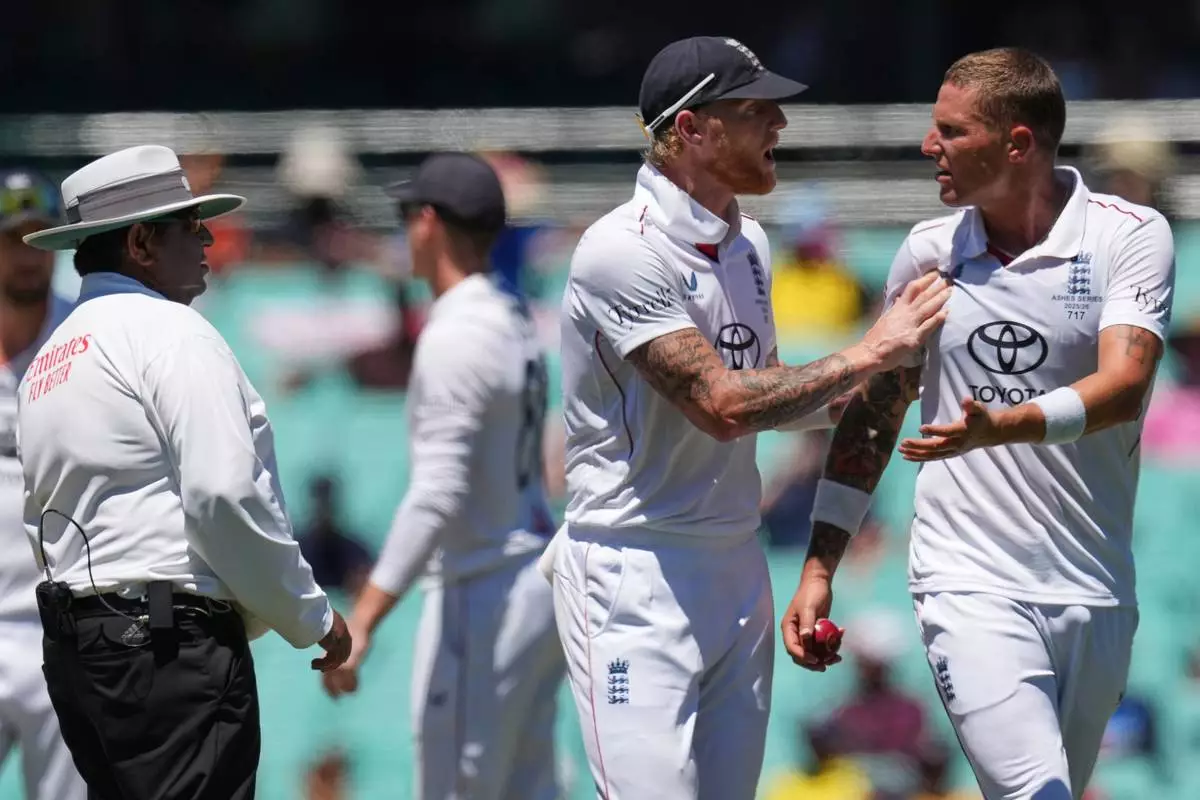
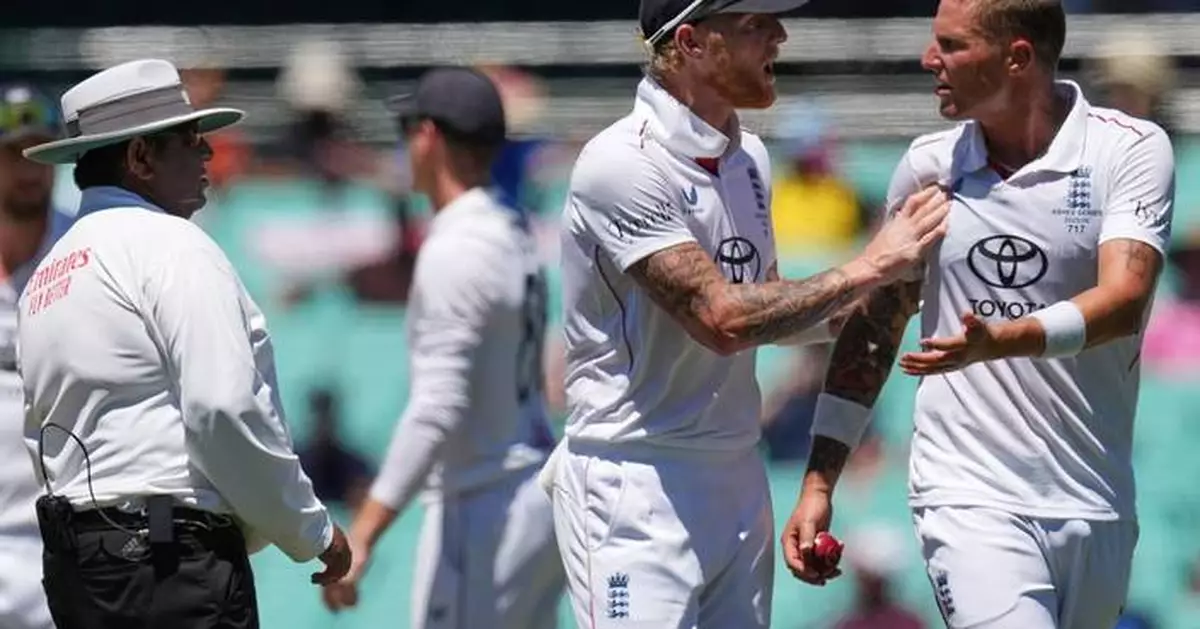
England's Ben Stokes, centre, gestures to teammate Brydon Carse, right, during play on the last day of the fifth and final Ashes cricket test between England and Australia in Sydney, Thursday, Jan. 8, 2026. (AP Photo/Mark Baker)
HELSINGBORG, Sweden (AP) — NATO allies and defense officials expressed bewilderment Friday at U.S. President Donald Trump’s announcement that he would send 5,000 U.S. troops to Poland just weeks after ordering the same number of forces pulled out of Europe.
The apparent change of mind came after weeks of statements from Trump and his administration about reducing — not increasing — the U.S. military footprint in Europe. Trump's initial order set off a flurry of action among military commanders and left allies already doubtful about America's commitment to Europe's security to ponder what forces they might have to backfill on NATO's eastern flank with Russia and Ukraine.
Earlier this month, the Trump administration said it was reducing levels in Europe by about 5,000 troops, and U.S. officials confirmed about 4,000 service members were no longer rotating into Poland from Germany. The dispatch to Germany of U.S. personnel trained to fire long-range missiles was also halted.
But in a post on Truth Social on Thursday, Trump said he would now send "an additional 5,000 Troops to Poland,” citing his strong ties with Polish President Karol Nawrocki, whom Trump endorsed in elections last year.
“It is confusing indeed, and not always easy to navigate,” Swedish Foreign Minister Maria Malmer Stenergard told reporters Friday at a meeting she was hosting of her NATO counterparts, including U.S. Secretary of State Marco Rubio.
Ministers from the Netherlands and Norway were sanguine about Trump’s latest move, as was Latvian Foreign Minister Baiba Braže, who said allies knew the U.S. troop “posture was being reconsidered, and now there is no change of posture. For now.”
U.S. defense officials also expressed confusion. “We just spent the better part of two weeks reacting to the first announcement. We don’t know what this means either,” said one of two officials who spoke on condition of anonymity to discuss sensitive military matters.
But Rubio said Washington’s allies understand that changes in the U.S. troop presence in Europe will come as the Trump administration reevaluates its force needs. “I think there’s a broad recognition that there are going to be eventually less U.S. troops in Europe than there has historically been for a variety of reasons,” he said.
The latest surprise came despite a U.S. pledge to coordinate troop deployments, including one from NATO’s top military officer, U.S. Lt. Gen. Alex Grynkewich, on Wednesday.
Trump's initial announcement that he would withdraw troops came as he fumed over remarks by German Chancellor Friedrich Merz, who said that the U.S. was being “humiliated” by the Iranian leadership and criticized what he called a lack of strategy in that war.
Trump told reporters that the U.S. would be cutting even more than 5,000 and also announced new tariffs on European cars. Germany is the continent’s biggest auto producer.
Rubio insisted that Trump’s decision “is not a punitive thing. It’s just something that’s ongoing.”
About 80,000 U.S. troops are stationed in Europe. The Pentagon is required to keep at least 76,000 troops and major equipment on the continent unless NATO allies are consulted and there is a determination that such a withdrawal is in U.S. interests.
The withdrawal of 5,000 troops might drop numbers below that limit.
But Trump's latest post suggests that troop numbers in Europe would not change. Polish Foreign Minister Radek Sikorski welcomed the decision to send more forces to his country, saying it ensures that “the presence of American troops in Poland will be maintained more or less at previous levels.”
NATO Secretary-General Mark Rutte also welcomed the move. On Thursday, before Trump took to Truth Social again, Rutte had underlined that it was important for Europe to take care of its own security. “We have a process in place. This is normal business,” he told reporters.
At NATO headquarters in Brussels, meanwhile, U.S. officials briefed the allies on the Pentagon's aims for its commitments to the NATO Force Model, which involves contingency planning for Europe’s defense in the event of serious security concerns. It was widely expected that a further reduction of U.S. forces would be coming.
Asked whether any cuts were announced, Rutte said: “I’m afraid it’s much more complicated than that.” He said the procedure “is highly classified” and declined to give details.
Rubio played down concerns about a shift in U.S. force levels in Europe, saying: "Every country has to constantly reevaluate what their needs are, what their commitments are around the world, and how to properly structure that.”
Cook reported from Brussels. Associated Press writer Emma Burrows in London contributed.
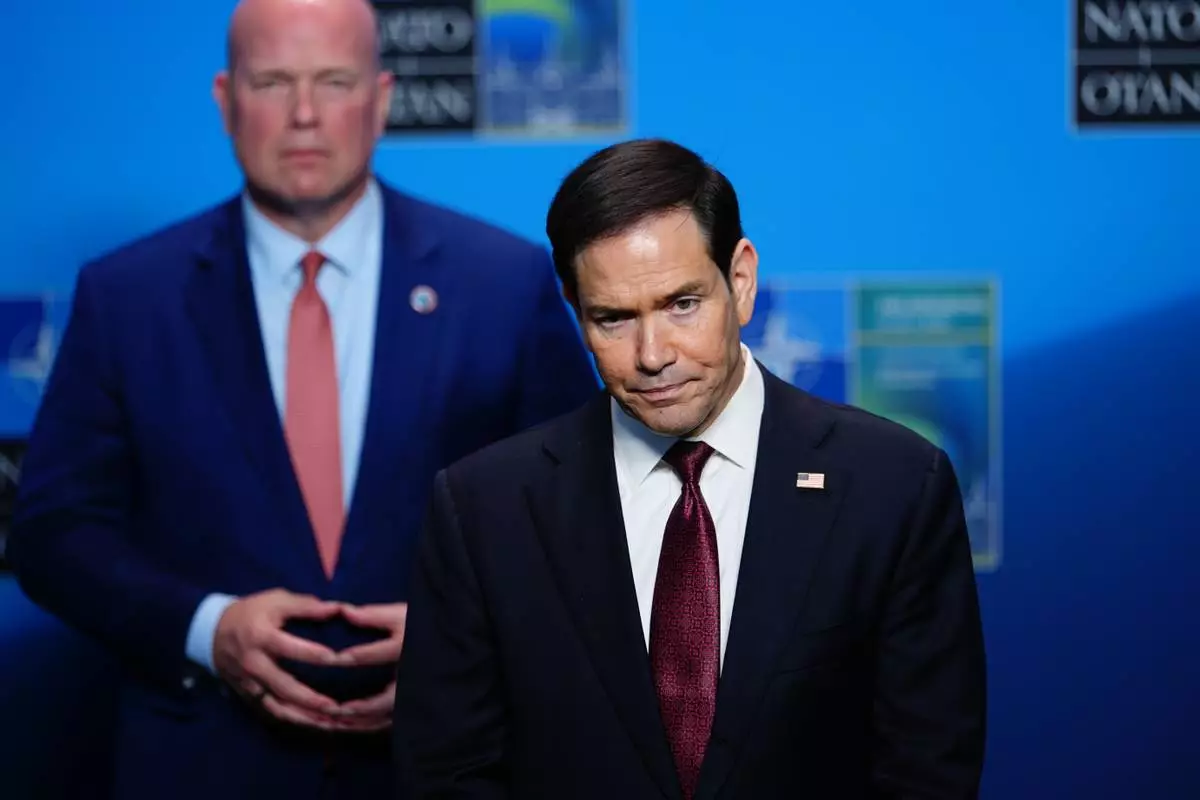
United States Secretary of State Marco Rubio speaks with journalists during a meeting of NATO foreign ministers in Helsingborg, Sweden, Friday, May 22, 2026. (AP Photo/Julia Demaree Nikhinson, Pool)
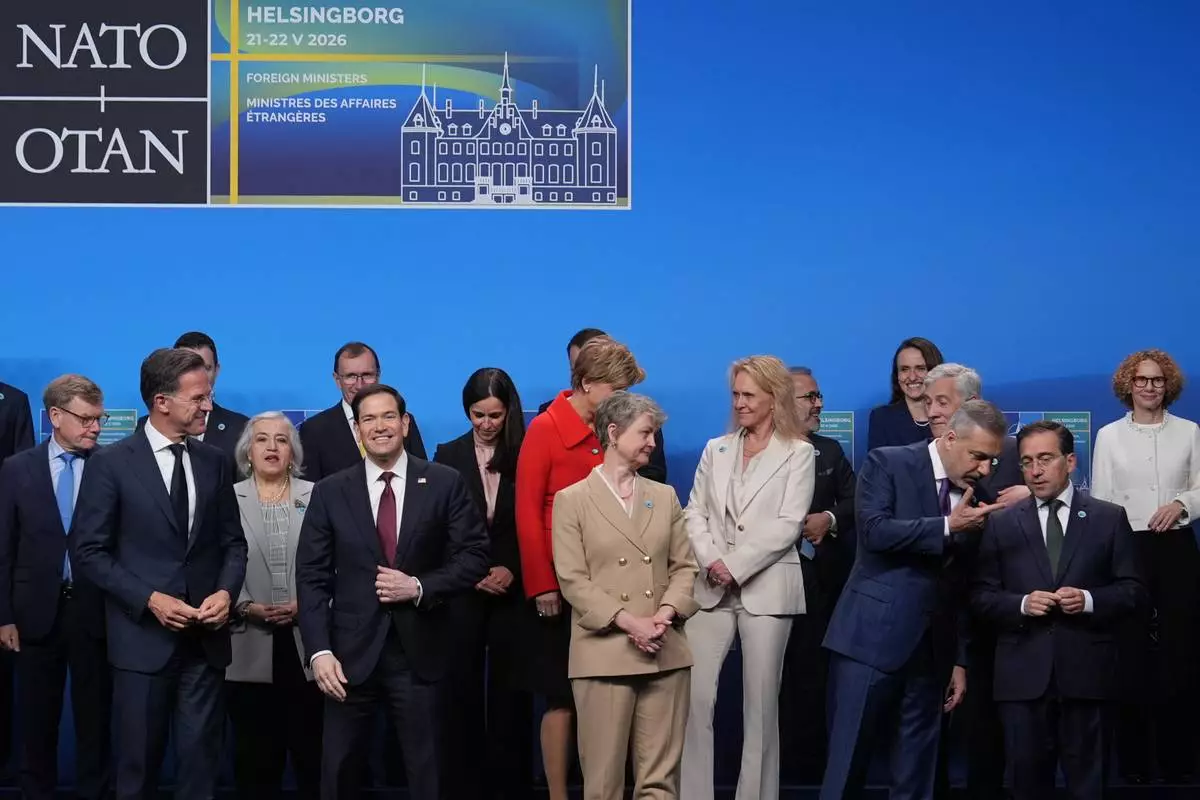
United States Secretary of State Marco Rubio, front second left, and NATO Secretary General Mark Rutte, front left, speak with each other during a group photo at a meeting of NATO foreign ministers in Helsingborg, Sweden, Friday, May 22, 2026. (AP Photo/Julia Demaree Nikhinson, Pool)
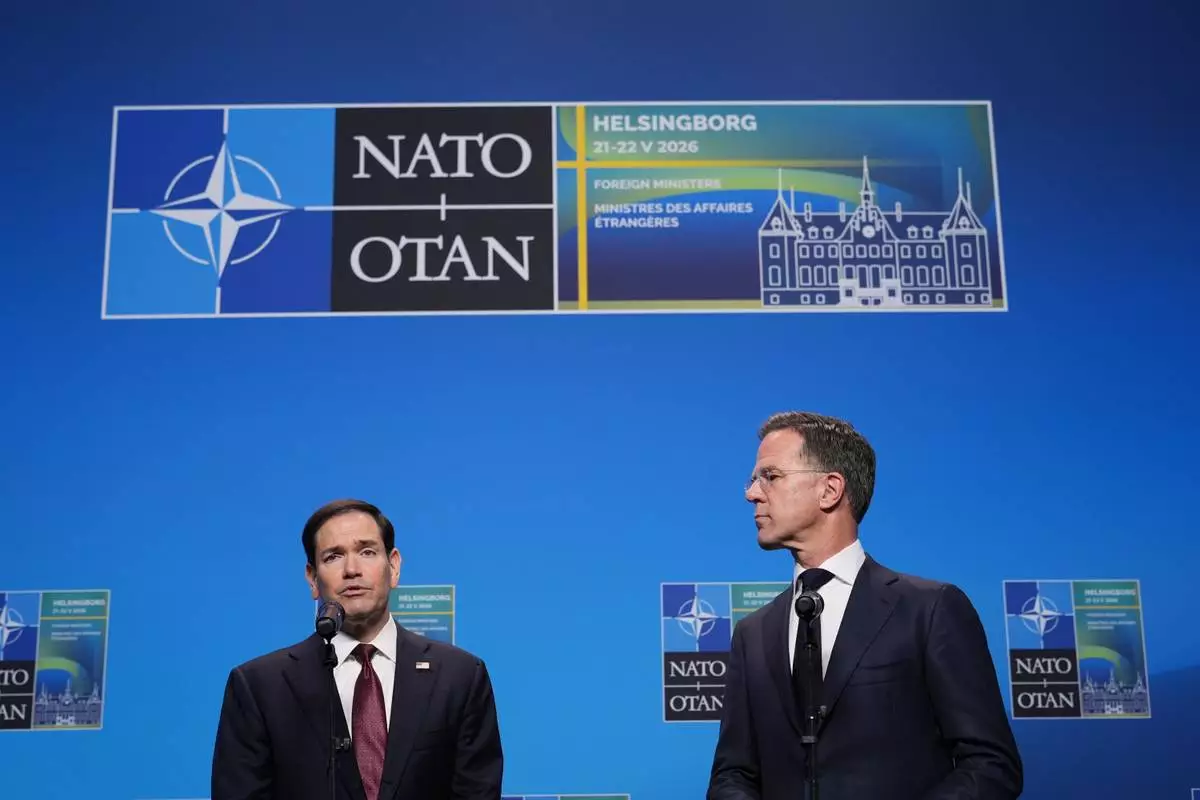
United States Secretary of State Marco Rubio, left, and NATO Secretary General Mark Rutte look at each other as they deliver a statement during a meeting of NATO foreign ministers in Helsingborg, Sweden, Friday, May 22, 2026. (AP Photo/Julia Demaree Nikhinson, Pool)
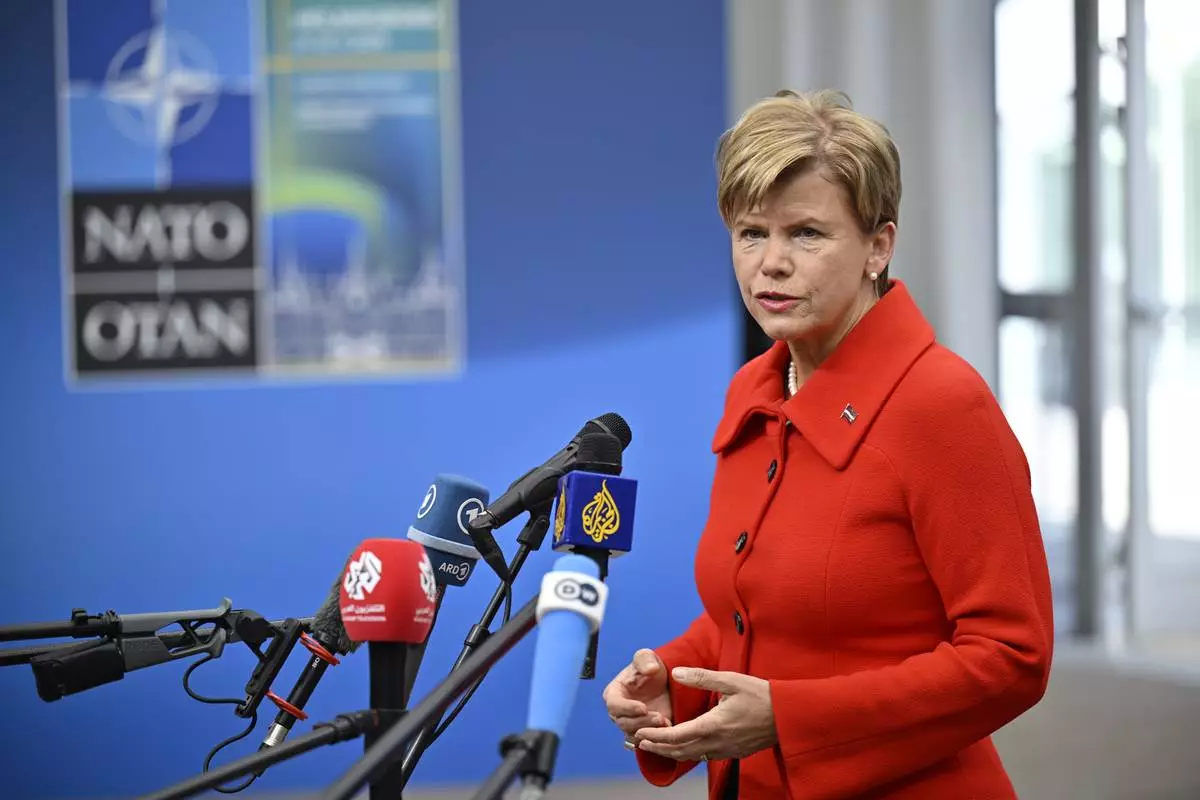
Latvian Foreign Minister Baiba Braže speaks at the doorstep of the NATO foreign ministers' meeting at Sea U in Helsingborg, Sweden, Friday, May 22, 2026. (Johan Nilsson/TT News Agency via AP)
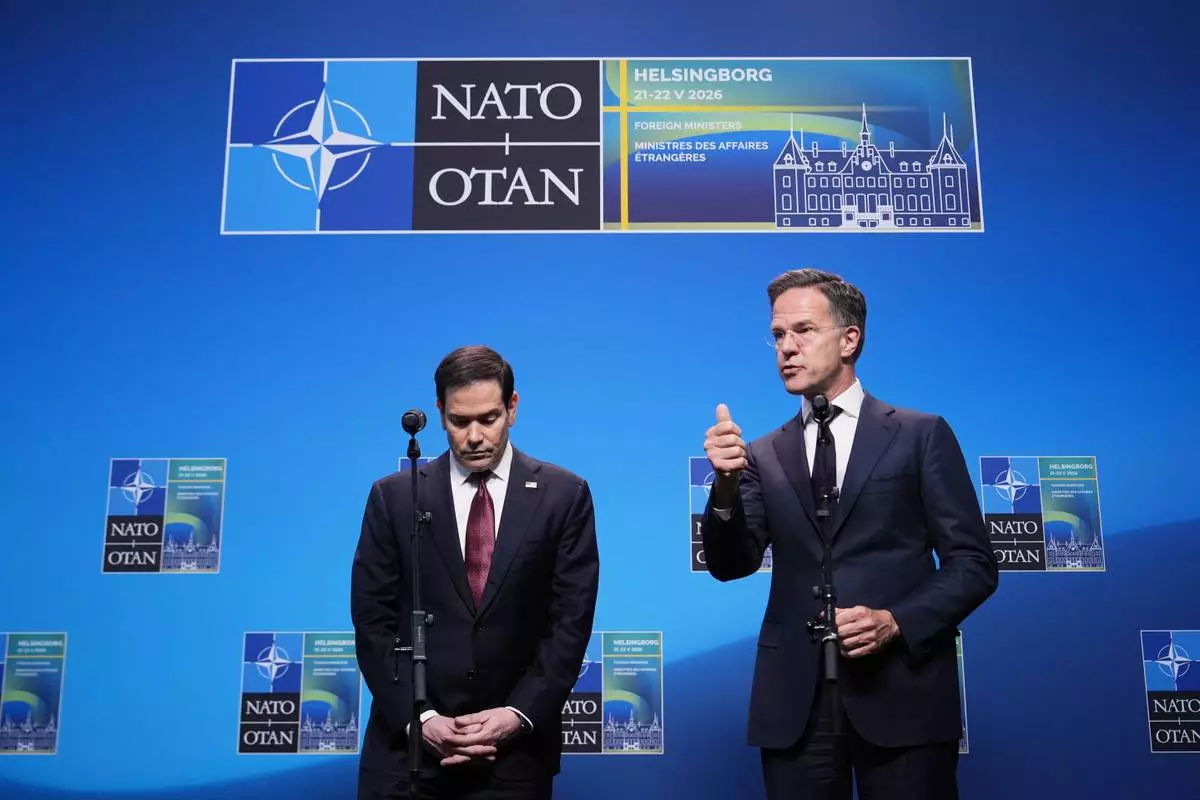
United States Secretary of State Marco Rubio, left, and NATO Secretary General Mark Rutte deliver a statement during a meeting of NATO foreign ministers in Helsingborg, Sweden, Friday, May 22, 2026. (AP Photo/Julia Demaree Nikhinson, Pool)
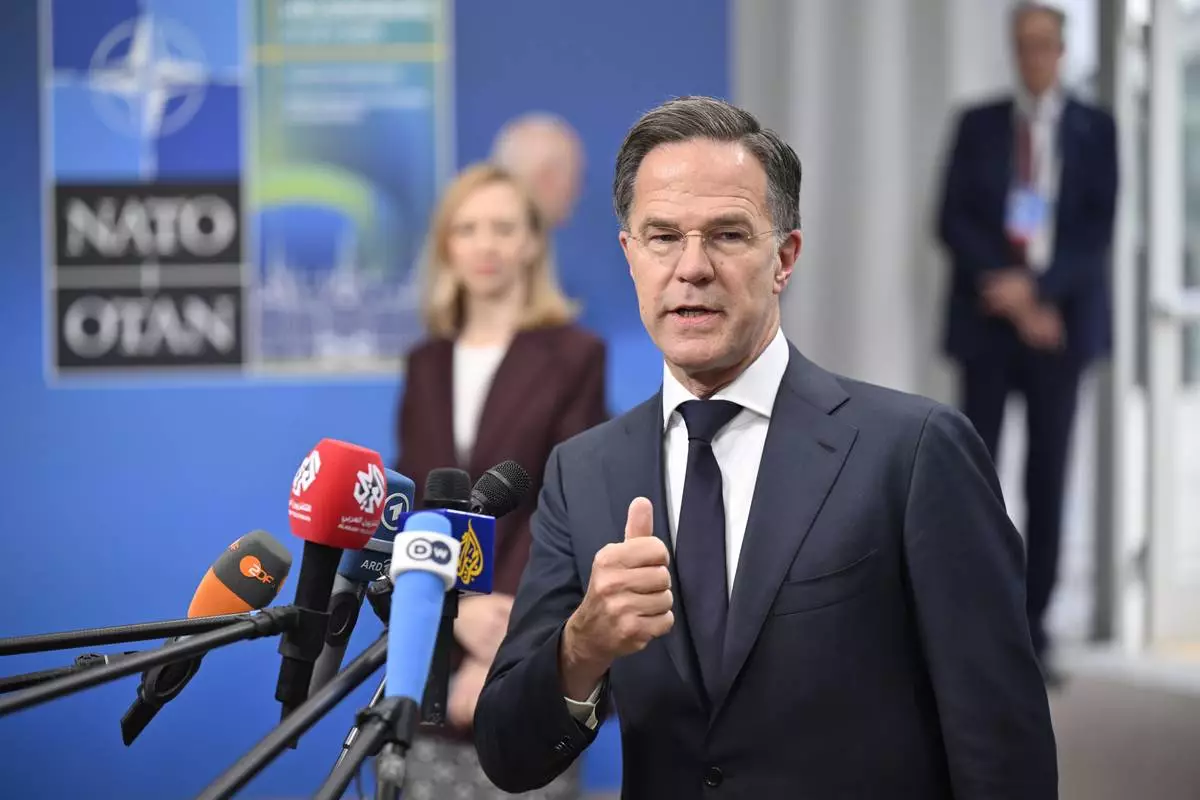
NATO Secretary General Mark Rutte speaks to media at the NATO Foreign Ministers' meeting in Helsingborg, Sweden, Friday, May 22, 2026. (Johan Nilsson/TT News Agency via AP)
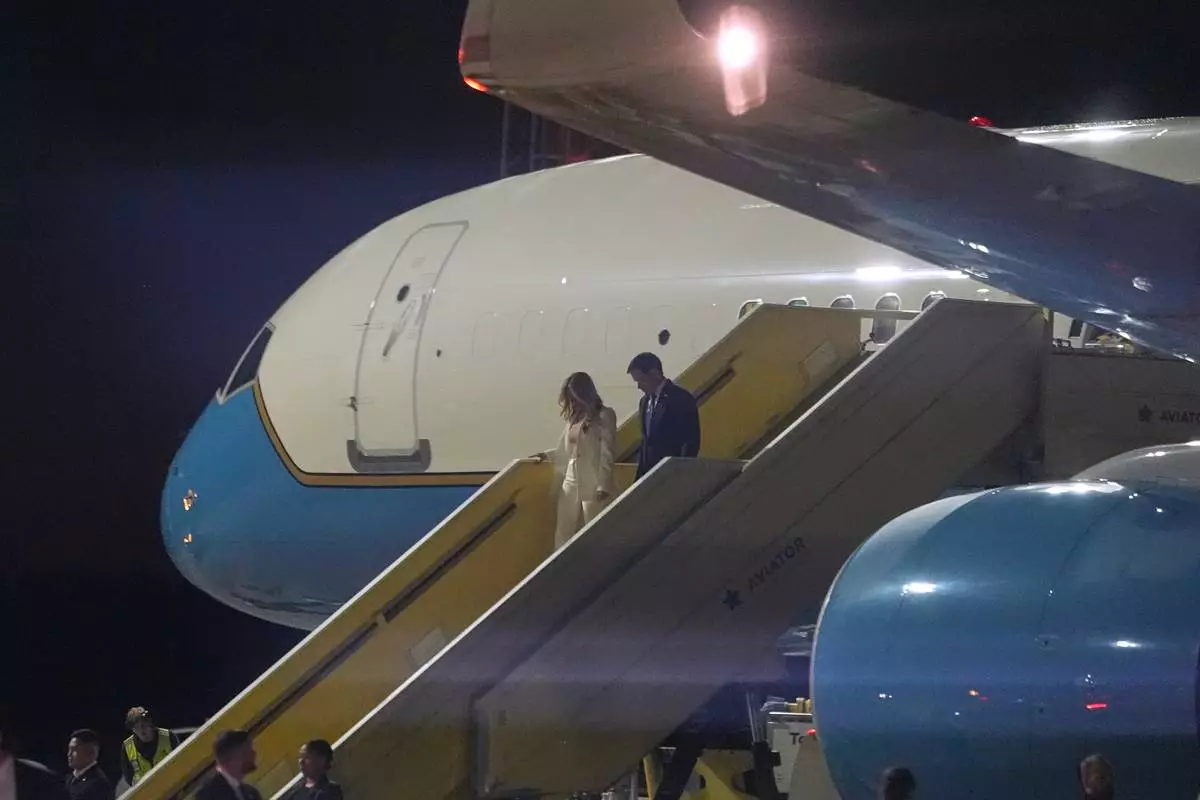
Secretary of State Marco Rubio arrives with his wife Jeanette at Malmo Airport, Friday, May 22, 2026, in Malmo-Sturup, Sweden, ahead of a NATO foreign ministers meeting. (AP Photo/Julia Demaree Nikhinson, Pool)
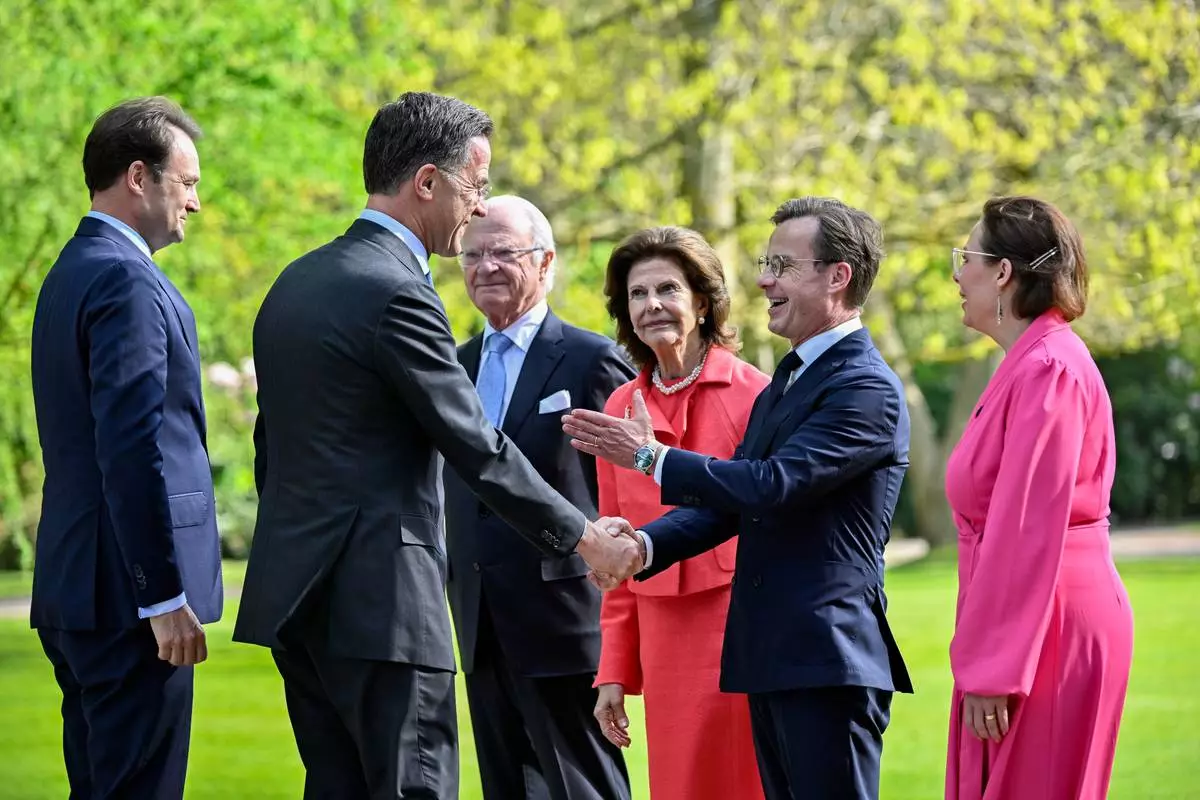
NATO Secretary General Mark Rutte, second from left, shakes hands with Prime Minister of Sweden Ulf Kristersson, as he is greeted by King Carl Gustaf of Sweden, Queen Silvia of Sweden and Minister for Foreign Affairs of Sweden Maria Malmer Stenergard, right, before a dinner at Sofiero Castle in Helsingborg, Sweden, Thursday May 21 2026. (Johan Nilsson/TT News Agency via AP)
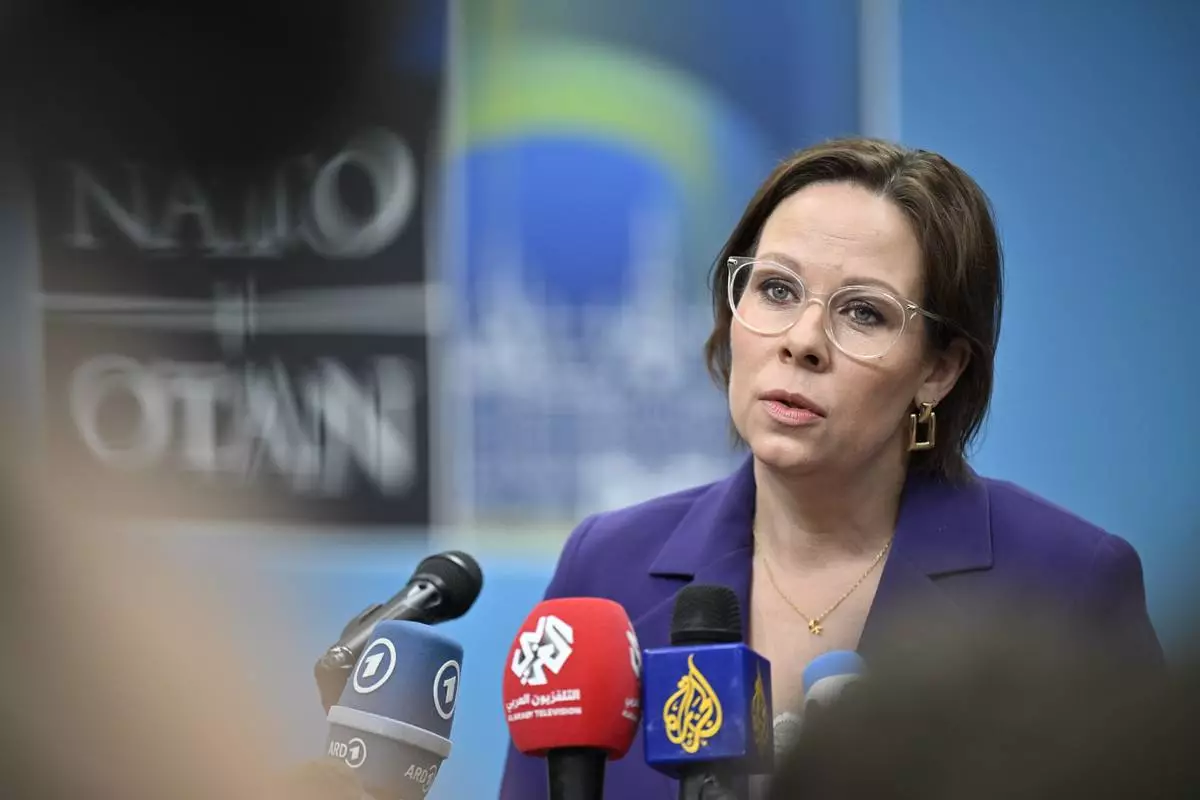
Swedish Foreign Minister Maria Malmer Stenergard speaks to media at the NATO Foreign Ministers' meeting in Helsingborg, Sweden, Friday, May 22, 2026. (Johan Nilsson/TT News Agency via AP)