RESEARCH TRIANGLE PARK, N.C.--(BUSINESS WIRE)--Jan 8, 2026--
Toshiba Global Commerce Solutions will showcase a broad range of retail technology solutions for retailers across all segments in booth #3623 at NRF 2026, including innovative AI-driven software, new mobile enterprise solutions, and industry-leading point-of-sale (POS). Created for ultimate flexibility, Toshiba's modular solutions, supported by AI, computer vision, and machine learning, give retailers the flexibility to choose, customize, and scale to meet their unique business goals.
This press release features multimedia. View the full release here: https://www.businesswire.com/news/home/20260108097669/en/
“Toshiba stands apart as the leading retail technology provider that delivers a complete portfolio of hardware, software, and services. Serving retailers across every segment, we combine our deep industry expertise with a powerful global partner ecosystem to meet the distinct needs of each retail environment,” said Rance Poehler, President and CEO of Toshiba Global Commerce Solutions. “Driven by our deep commitment to retail, we deliver flexible, future-ready solutions that empower retailers to build the technology stack that’s right for their business today and evolve with confidence for what’s next.”
Immersive Retail Experiences: Custom Solutions for Every Business
Retail is at a pivotal moment, and the path forward looks different for every retailer. Toshiba works alongside retailers and partners as a strategic collaborator to deliver practical, future-ready solutions that create lasting value across formats and markets. These solutions are made possible through the Toshiba Commerce Marketplace, a seamless, one-stop shop for scalable, cutting-edge solutions supported by Toshiba and a trusted network of industry-leading partners including Accuvia, Altaine, CBS Northstar, Intel, and Qualcomm.
Toshiba invites NRF guests to explore immersive hands-on demonstrations designed to reflect the way various retail environments actually run across different segments. Dedicated retail segment areas will showcase how Toshiba helps retailers move confidently into the future, with solutions and expert services that scale across formats while delivering meaningful impact where it matters most.
The future of retail won’t look the same for every business, and the Toshiba booth offers a starting place for retailers to explore what’s possible. From everyday efficiency to standout shopper experiences, NRF guests can experience how innovation, flexibility, and partnership come together to help retailers adapt faster, serve shoppers better, and move forward with purpose.
Industry Experts for Top Retail Trends
Toshiba experts will be available to provide detailed insights on key retail and technology trends. Proud to be selected as top retail and AI leaders, Toshiba experts are members of RETHINK Retail’s Top Retail Experts, RETHINK Retail’s Top AI Leaders, and the Forbes Technology Council, bringing unmatched expertise and practical knowledge to the conversation. Meetings with industry experts at NRF can be scheduled here.
Global Market Impact and Recognitions
Toshiba is honored to be recognized as a premier leader in innovation and retail technology by analysts and organizations. Recent recognitions and awards include:
About Toshiba Global Commerce Solutions:
Toshiba Global Commerce Solutions empowers retail to thrive and prosper through a dynamic ecosystem of smarter, more agile solutions and services that enable retailers to resiliently evolve with generations of consumers and adapt to market conditions. Supported by a global organization of devoted employees and partners, retailers gain more visibility and control over operations while enjoying the flexibility to build, scale, and transform retail experiences that anticipate and fulfill consumers’ ever-changing needs.
Visit commerce.toshiba.com and engage with us on:
LinkedIn / YouTube / Facebook / Instagram: @toshibacommerce / X/Twitter: @ToshibaCommerce
Toshiba Global Commerce Solutions is a wholly owned subsidiary of Toshiba Tec Corporation, which is traded on the Tokyo Stock Exchange.

Dedicated retail segment areas will showcase how Toshiba helps retailers move confidently into the future, with solutions and expert services that scale across formats while delivering meaningful impact where it matters most.
MINNEAPOLIS (AP) — In a city that often seems to be staggering from one crisis to the next, the sudden resignation of police Chief Brian O’Hara after a finding he likely interfered in a misconduct investigation has left Minneapolis searching again for a way forward.
O’Hara was an outsider brought in with a mandate to reform the police department after the 2020 killing of George Floyd, which led to federal and state investigative findings of excessive force and racist policing practices. O’Hara had spent most of his career in Newark, New Jersey, where he instituted changes after that department was put under a federal consent decree for patterns of excessive force and unconstitutional stops and searches.
The challenges in Minneapolis were clear before O'Hara arrived in late 2022. For a time, it had seemed the department itself might not survive. In 2021, more than 43% of voters supported disbanding the department as the city reeled from Floyd’s killing and the massive protests and widespread rioting that followed.
Policing experts had noted the monumental task that faced the city’s next police chief, who would have to rebuild community trust and a department whose morale had dipped so low that it was hemorrhaging officers.
“I don’t think there was a bigger challenge to any American city than what Minneapolis faced when he arrived,” said Chuck Wexler, executive director of a Washington think tank, the Police Executive Research Forum. “They had gone from 850 to 500 officers, violent crime was significantly up, trust with the community was broken, a police station had burned down and a federal consent decree would face the next chief. Then you had the politics of Minneapolis.”
Coming in as an outsider to lead a large department is daunting, even without being asked to reform and rebuild, said Renée Hall, president of the National Organization of Black Law Enforcement Executives who moved from Detroit to lead the Dallas Police Department from 2017 to 2020.
“It’s extremely challenging to walk into an organization, where you don’t even know where the light switches are, where the bathrooms are. And that’s just the basics,” Hall said. “You have to learn the officers, the community, the politics of that particular city, and try to learn and navigate the existing relationships, like unions or officer associations and who is tied to whom and who is fighting for whom.”
Hall said outside hires can face resentment from those within an organization who supported internal candidates. They also have to earn the trust of the community, which she said takes time.
After the police disbandment measure failed, O'Hara joined the bureaucracy of a deeply progressive city that is regularly buffeted by political battles between the mayor and the City Council, and among council members.
Those battles were on full display Wednesday, when a City Council news conference about O'Hara's resignation quickly turned into an opportunity for the council's resolute progressives to attack Mayor Jacob Frey, who has long portrayed himself as a “pragmatic progressive.”
The resignation “is a symptom of a much larger problem, which is simply that Mayor Frey continues to be unable to effectively manage the Minneapolis Police Department,” said Council member Robin Wonsley, a cornerstone of the council's progressive bloc.
Frey, who just weeks ago pushed to have O'Hara reappointed as chief, fired back at criticism that he didn’t move aggressively enough when allegations of the chief's potential misconduct emerged.
“I don’t make decisions based on rumors and anonymous complaints,” he said in a statement, adding that he would work with the council to find a replacement. “I took action promptly after receiving the investigative report. … Decisions this serious have to be grounded in facts, evidence and completed investigations. Anything less would be irresponsible.”
O'Hara did not return a message seeking comment Wednesday. His attorney, Doug Kelley, released a statement touting successes during O'Hara's tenure, including diversifying and increasing the department's ranks, the decreasing violent crime rate and mitigating violent clashes during the immigration crackdown.
“The circumstances of Chief O’Hara’s departure should not define his service," Kelley wrote. "He was proud to serve Minneapolis, remains grateful to the officers and community partners who did difficult work under extraordinary pressure, and hopes the city continues moving forward. He understandably looks forward to returning to his young family in New Jersey.”
The resignation came just months after Minneapolis was plunged into the national spotlight amid a federal immigration surge that left three civilians shot, two fatally. O'Hara faced criticism he hadn't done enough to stop the crackdown.
Violence plagued the city in 2025, including deadly attacks on state politicians in the Minneapolis suburbs; gunfire that erupted at a popular city picnic spot; and a shooting during Mass at the Church of the Annunciation that left two children dead and more than a dozen people injured. O’Hara called the church attack a “ truly unthinkable tragedy. ”
Critics say dozens of complaints were filed against O'Hara, from accusations that he was rude to the public to the recent investigation into an ultimately unproven allegation he had a sexual relationship with a city employee. Most of the complaints have not been made public, and 17 complaints are still being investigated. Investigators closed 17 more without any disciplinary actions.
An independent investigator did not find evidence to substantiate the alleged sexual relationship with a city employee, but a second report released this week said O'Hara likely deleted the employee's contact from his phone during the investigation and that he talked to another employee about the probe despite being told it was not to be discussed.
That recent report led to a written reprimand; Frey told O'Hara he would be disciplined and that he could be terminated. Frey said O'Hara chose to resign instead.
Lauer reported from Philadelphia.
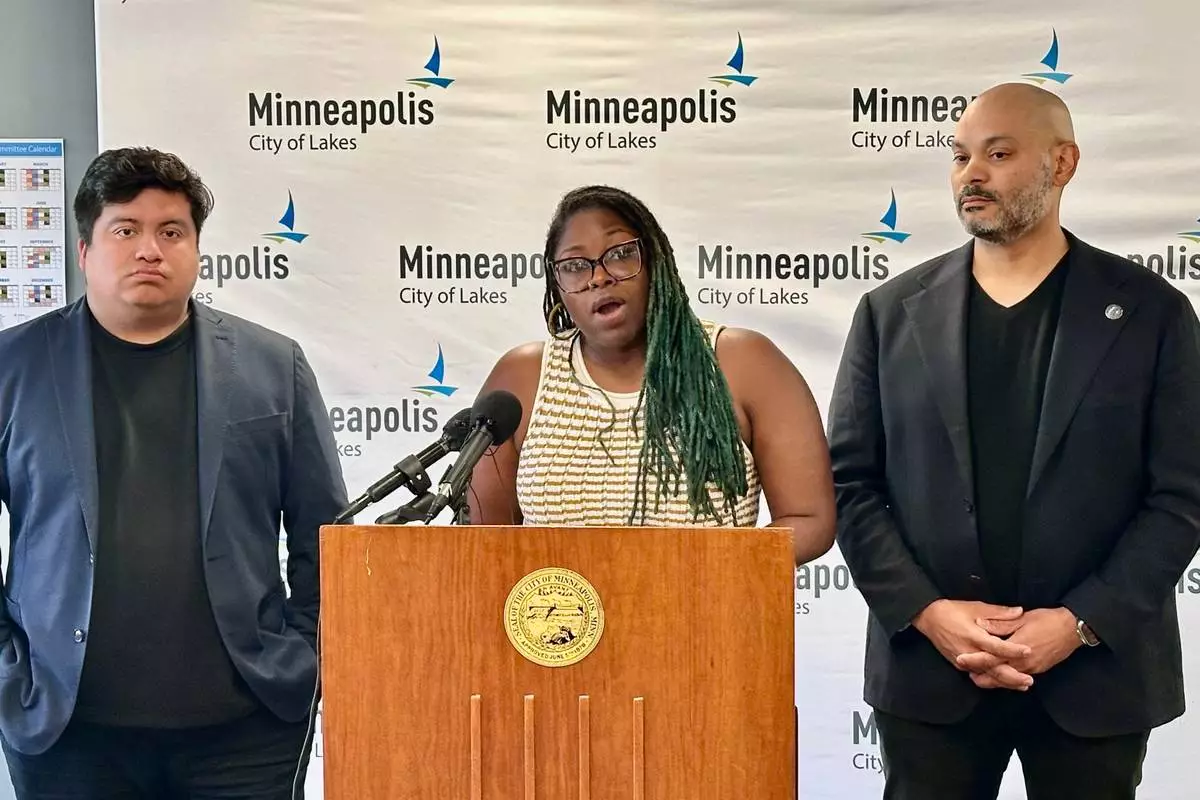
Minneapolis City Council Members, from left, Jason Chavez, Robin Wonsley and Council President Elliot Payne speak to reporters about the resignation of Police Chief Brian O'Hara on Wednesday, May 27, 2026 at City Hall in Minneapolis. (AP Photo/Mark Vancleave)
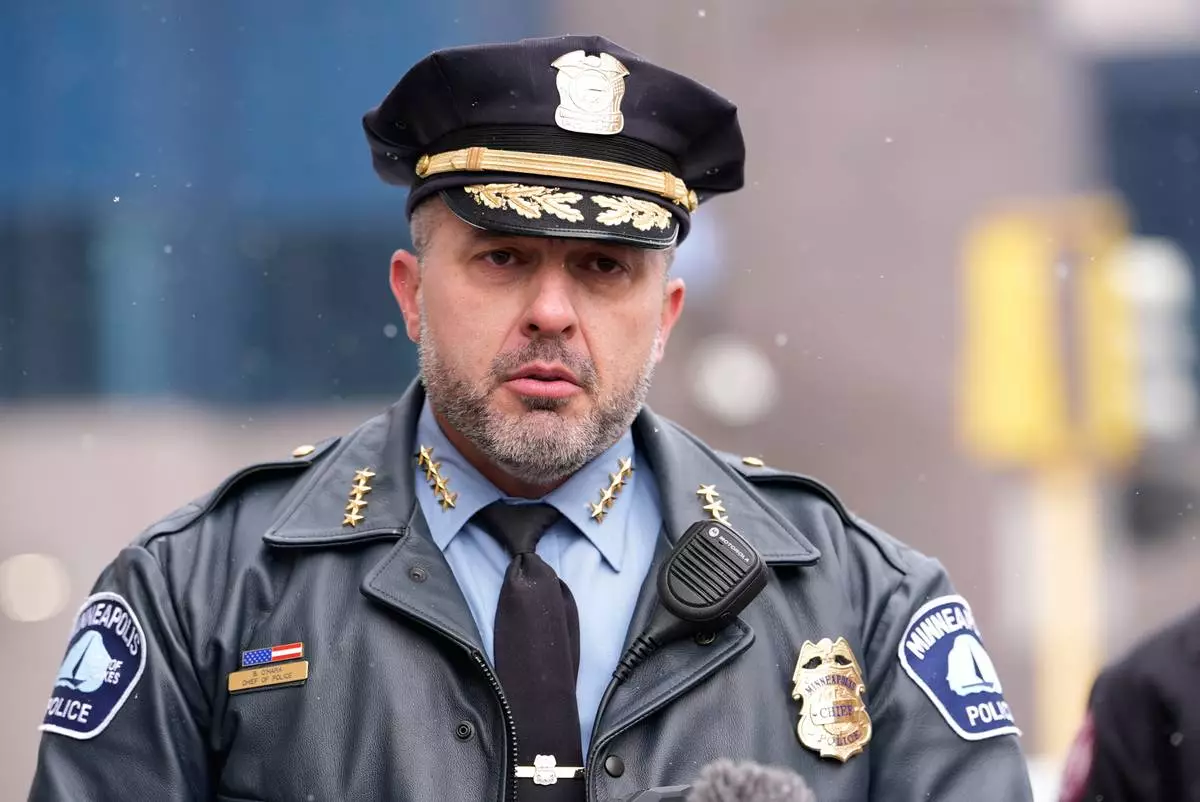
FILE - Minneapolis Police Chief Brian O'Hara speaks during a news conference, Jan. 10, 2026, in Minneapolis. (AP Photo/Jen Golbeck, File)