Skip to Content Facebook Feature Image

Public Healthcare Reform Enhances A&E Efficiency, Prioritizes Critical Patients

HK

Public Healthcare Reform Enhances A&E Efficiency, Prioritizes Critical Patients
HK

HK

Public Healthcare Reform Enhances A&E Efficiency, Prioritizes Critical Patients

2026-01-08 21:17 Last Updated At:01-09 13:25

Public healthcare fees and charges reform shows initial success Accident and Emergency Departments focus resources on critical care

The following is issued on behalf of the Hospital Authority:

The Hospital Authority (HA) spokesperson announced today (January 8) that since the implementation of the public healthcare fees and charges reform one week ago, operations in Accident and Emergency Departments (A&Es) of public hospitals have been functioning smoothly. The overall number of attendances has decreased. A&Es have been able to concentrate resources to serve critical and emergency patients, ensuring timely treatment for all critical and emergency patients and improving the efficiency of patient care.

During the past week (from January 1 to 7), a total of 32 147 patients attended the 18 A&Es under the HA. Among them, 1 807 patients were triaged as critical or emergency cases, 14 077 as urgent cases, while the remaining 16 263 as semi-urgent or non-urgent cases.

During this period, the daily average A&E attendances was 4 592, which included an average of 258 critical or urgent cases (5.6 per cent), 2 011 emergency cases (43.8 per cent), and 2 323 semi-urgent or non-urgent patients (50.6 per cent). Compared to the full year of 2025, the daily average A&E attendances was 5 210, comprising 228 critical or emergency cases (4.4 per cent), 2 156 emergency cases (41.4 per cent), and 2 826 semi-urgent or non-urgent cases (54.2 per cent).

The HA spokesperson said, "Over the past week, the number of A&E attendances and the proportion of patients of various triage categories at A&Es indicate that the public healthcare fees and charges reform has yielded initial results. Not only have the number and proportion of semi-urgent and non-urgent patients decreased, but all critical and emergency patients arriving at A&Es have been able to receive immediate treatment from healthcare staff. The vast majority of emergency patients received treatment within 15 minutes of arrival. Additionally, the proportion of urgent patients receiving treatment within 30 minutes has increased from 82.7 per cent last year to 88.8 per cent, while the average waiting time for urgent patients has decreased from 22 minutes to 19 minutes."

Following the implementation of the public healthcare fees and charges reform, the HA has regularised the A&E refund arrangements, which can facilitate less urgent patients in opting to other healthcare institutions after triage. From January 1 to 7 this year, a total of 257 A&E patients applied for refund, compared to 691 patients during the same period in 2025. The spokesperson reiterated that A&E is positioned to serve critical, emergency and urgent patients. Individuals with minor conditions or episodic illnesses, such as common colds, are encouraged to visit Family Medicine Clinics, private doctors, or 24-hour outpatient services of private hospitals. This enables A&E to concentrate resources on treating patients with urgent medical needs.

Currently, all A&Es are operating smoothly. While a small number of semi-urgent and non-urgent patients might experience longer waiting time when A&Es were handling a large volume of critical cases at certain period, the majority of these patients were treated and discharged within a few hours. All patients requiring admission after treatment in A&E can be admitted within four hours, with no patient remaining in the A&E for extended periods awaiting admission.

The HA will continue to closely monitor the operations of A&E to ensure that resources are focused on patients with urgent medical needs, in line with the objectives of the public healthcare fees and charges reform to strengthen support for "poor, acute, serious, critical" patients.
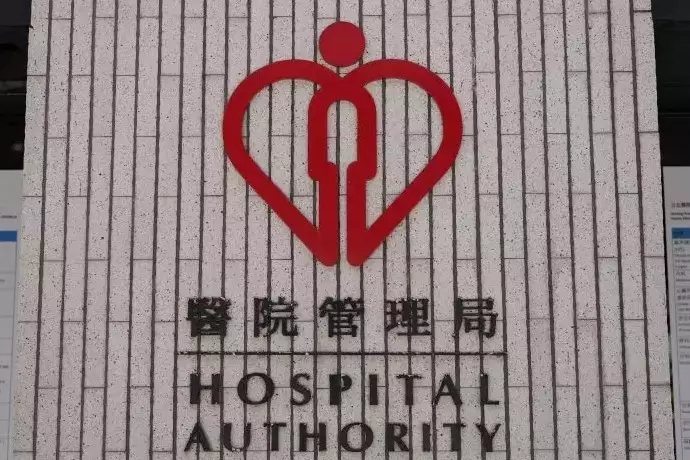
The Hospital Authority (HA), Photo source: reference image
The Hospital Authority (HA), Photo source: reference image
Collecting preferences of Wang Fuk Court flat owners to advance long-term rehousing work

A Government spokesman said today (January 9) that social workers under the "one social worker per household" service of the Social Welfare Department (SWD) are proactively contacting flat owners of Wang Fuk Court, who were affected by the fire. They are comprehensively and systematically gathering each owner's preliminary preferences regarding long-term rehousing to assist in formulating and implementing specific plans.

The Chief Executive previously instructed the Task Force on Emergency Accommodation Arrangements to co-ordinate relevant policy bureaux and departments in studying long-term rehousing solutions. Adhering to the principles of "empathy, reason, and law", with priority given to "empathy", the Task Force aims to address the individual circumstances and preferences of residents while ensuring the efficient use of resources to assist affected households in rebuilding their homes.

The spokesman said, "Social workers from the SWD have been in contact with the residents, listening to their views, understanding their actual situations and needs, and providing necessary assistance. Regarding long-term accommodation, we have noticed differing opinions among flat owners and the community. For example, some hope that the Government will acquire the properties or give priority to Wang Fuk Court flat owners to purchase Home Ownership Scheme flats. Some residents seek local rehousing, while others accept rehousing in different districts. Some propose in-situ redevelopment, but there are also concerns about the lengthy waiting times.

"We hope to systematically and comprehensively collect Wang Fuk Court flat owners' opinions, further listening to and summarising their preferences. This includes identifying key principles that the Government should consider when addressing long-term accommodation arrangements and noting the flat owners’ initial preferences for different long-term rehousing options. This information will serve as a reference for the Government's follow-up actions."

Starting today, social workers under the SWD's "one social worker per household" service will begin contacting flat owners of Wang Fuk Court to gather their initial preferences regarding various long-term rehousing arrangements. The goal is to collect responses from the flat owners by mid-to-late January for analysis.

The spokesman said, "The Task Force will carefully compile and study the different preferences of flat owners and will conduct a comprehensive assessment based on the actual conditions at Wang Fuk Court, including structural safety, technical feasibility, and community planning. We aim to provide affected flat owners with suggestions regarding long-term proposals as soon as possible for their consideration and decision-making."

He said, "The Government and affected flat owners share a same objective: to implement solutions promptly and reassure them as soon as possible."

Following the fire, the Government arranged emergency accommodation for the affected residents of Wang Fuk Court in a short time frame. As of today, more than 4 400 residents are staying in hotels, youth hostels/camps, transitional housing, units from the Hong Kong Housing Society or Po Tin Interim Housing in Tuen Mun. Since December 22 last year, the Support Fund for Wang Fuk Court in Tai Po has provided each flat owner, in tranches, with a two-year rental subsidy up to a maximum of $300,000, giving them more flexibility and options in their accommodation arrangements.

Recommended Articles