The promise of artificial intelligence was front and center at this year's CES gadget show. But spicing up a simple machine like a refrigerator with unnecessary AI was also a surefire way to win the “Worst in Show.”
The annual contest that no tech company wants to win announced its decisions Thursday. Among those getting the notorious “anti-awards” for invasive, wasteful or fragile products were an eye-tracking AI “soulmate” companion for combating loneliness, a musical lollipop and new AI features for Amazon's widely used doorbell cameras.
Samsung's “Bespoke AI Family Hub” refrigerator received the overall “Worst in Show” recognition from the group of consumer and privacy advocates who judged the contest.
Samsung invites users to speak to the refrigerator and command it to open or close the door, but a demonstration at the sprawling Las Vegas technology expo showed it didn't always detect what people were saying if there was too much ambient noise. That was just part of the complications and reliability concerns Samsung added to an appliance that's supposed to have one important job: keeping food cold, said Gay Gordon-Byrne of the Digital Right to Repair Coalition in a recorded video ceremony announcing the anti-awards.
“Everything is an order of magnitude more difficult,” she said of the fridge that also uses computer vision to track when food items are running low and can advertise replacements.
Samsung said in response that “a trade show floor is naturally very different from a consumer’s home environment. Our Bespoke AI experiences are designed to simplify decisions around the home, making life more convenient and enjoyable.”
The South Korean tech giant also said “security and privacy are foundational” to the AI experiences in the fridge.
The judges have no affiliation with CES or the trade group that runs the show.
They say they make the choices based on how uniquely bad a product is, what impact it could have if widely adopted and if it was significantly worse than previous versions of similar technology. The judges represent groups including Consumer Reports, the Electronic Frontier Foundation and right-to-repair advocates iFixit.
“We definitely intend some shame,” said iFixit's director of sustainability, Elizabeth Chamberlain, in an interview. “We do hope that manufacturers see this as a poke, as an impetus to do better next time. But our goal isn’t to really shame any particular manufacturer as such. We’re hoping that they’ll make changes as a result of it. We’re pointing to trends that we see in the industry as a whole. And a lot of the things that we’re calling out, we picked an individual product, but we could have picked a whole category.”
An array of new features for Amazon's Ring doorbell camera system won the “Worst in Show” for privacy for “doubling down on privacy invasion and supporting the misconception that more surveillance always makes us safer,” said Cindy Cohn, executive director of the Electronic Frontier Foundation.
Among the new Ring features is an “AI Unusual Event Alert” that is supposed to detect unexpected people or happenings like the arrival of a “pack of coyotes.”
“That includes facial recognition,” Cohn said of the new Ring features. “It includes mobile surveillance towers that can be deployed at parking lots and other places, and it includes an app store that’s going to let people develop even sketchier apps for the doorbell than the ones that Amazon already provides.”
Amazon didn't immediately respond to a request for comment.
Winning the “People's Choice” of worst products was an AI companion called Ami, made by Chinese company Lepro, which mostly sells lamps and lighting technology. Ami appears as a female avatar on a curved screen that is marketed as “your always-on 3D soulmate,” designed for remote workers looking for private and “empathetic” interactions during long days at the home office. It tracks eye movements and other emotional signals, like tone of voice.
The group says it is calling out Lepro “for having the audacity to suggest that an AI video surveillance device on a desk could be anyone’s soulmate.” Advocates acknowledged the device comes with a physical camera shutter but said they were unsettled by its “always-on” marketing.
Lepro didn't immediately respond to a request for comment.
Lollipop Star attracted attention early at CES as a candy that plays music while you eat it. Its creators say it uses bone induction technology to enable people to hear songs — like tracks from Ice Spice and Akon — through the lollipop as they bite it using their back teeth. But the sticks can't be recharged or reused after the candy is gone, leaving consumer advocate Nathan Proctor to give it a “Worst in Show” for the environment.
“We need to stop making so many disposable electronics, which are full of toxic chemicals, require critical minerals to produce and can burn down waste facilities,” said Proctor, who directs the Public Interest Research Group's right-to-repair campaign.
A spokesperson for Lollipop Star maker Lava Brand didn't immediately respond to a message seeking comment.
“Worst in Show” for security went to Merach's internet-connected treadmill that boasts of having the industry's first AI coach powered by a large language model that can converse with the user but also proactively adjust the speed and incline based on heart rate changes.
All that collection of biometric data and behavioral inferences raised concerns for security advocates, but so did the fine print of a privacy policy that stated: “We cannot guarantee the security of your personal information.”
China-based Merach didn't immediately respond to a request for comment.
German tech company Bosch received two “Worst in Show” awards, one for adding subscriptions and enhanced voice assistance from Amazon's Alexa to coffee-making with a “Personal AI Barista” espresso machine and another for a purported anti-theft and battery lock feature on an e-bike app.
Cory Doctorow, author of the book “Enshittification: Why Everything Suddenly Got Worse and What to Do About It” and himself a “Worst in Show” judge, criticized Bosch's “parts pairing” to digitally connect an e-bike with its parts, like motors and batteries, in a way that flags a part if it appeared on a database of stolen products.
Even if Bosch doesn't seek to prosecute its own customers for routine repairs, Doctorow said it could always change its deal with them later, in line with his theory of the decay of online platforms as companies exploit the customers they earlier won over.
Bosch countered that the “Worst in Show” commentators were misleadingly suggesting the company is forcing consumers to utilize features that are optional and, in the case of the espresso machine, already popular.
Bosch said in a statement Thursday “that earning and keeping trust with our consumers, especially in the areas of privacy and cybersecurity, is at the core of our company’s values. Both Bosch Home Appliances and Bosch eBike Systems protect their consumers against unauthorized tampering or control through a comprehensive security concept, using encryption and authentication.”
—-
AP video journalist James Brooks contributed to this report from Las Vegas.
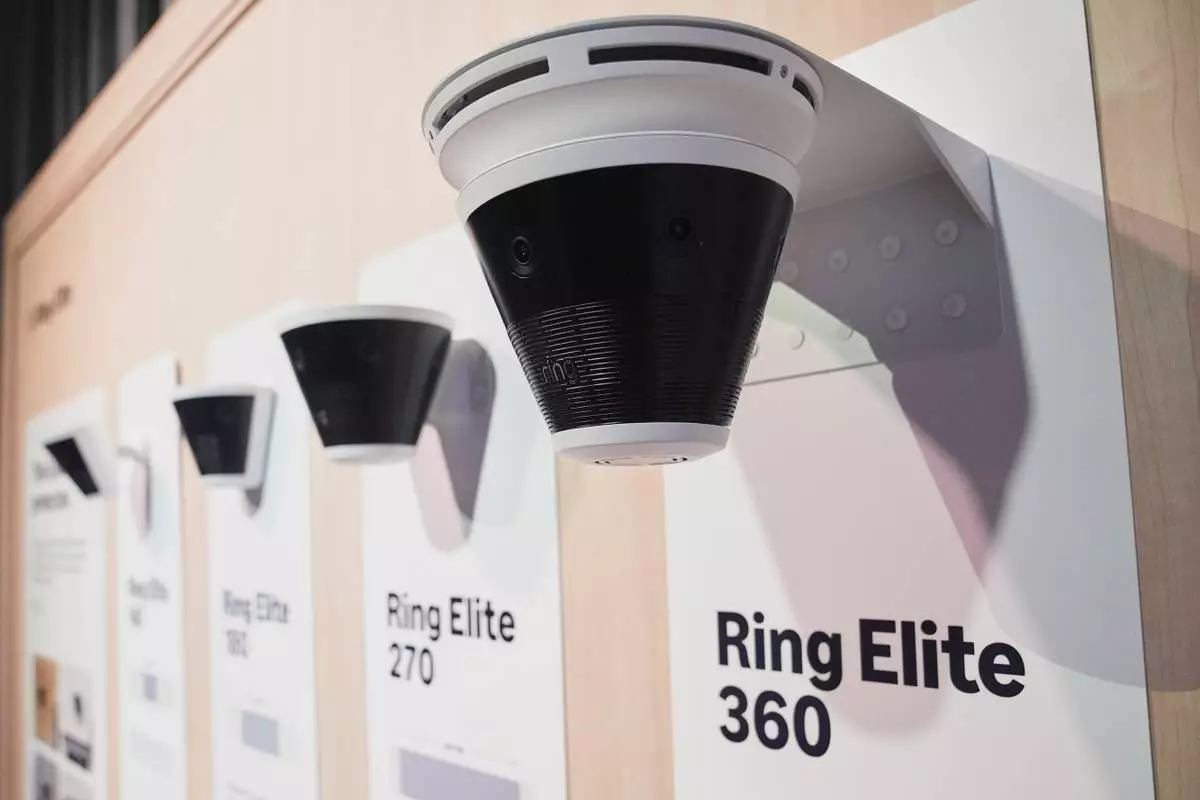
Ring doorbells are seen on display at the Amazon booth during the CES tech show Wednesday, Jan. 7, 2026, in Las Vegas. (AP Photo/Abbie Parr)
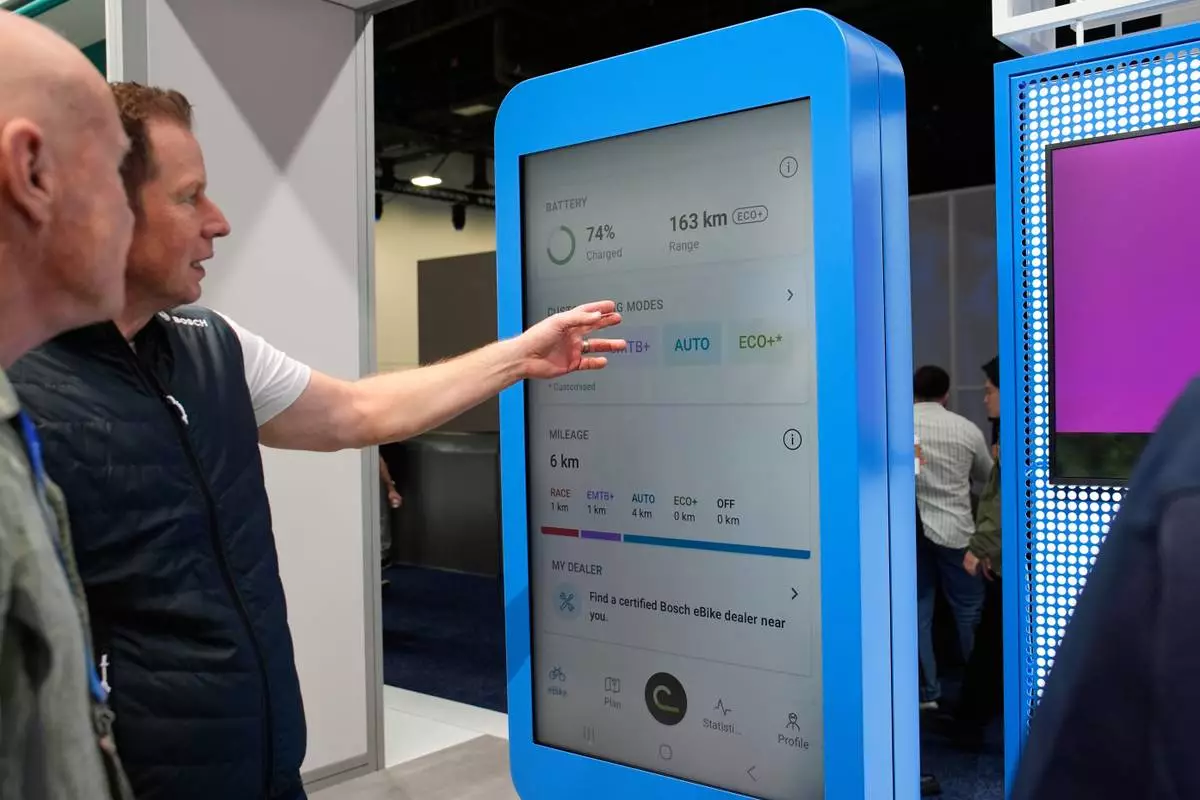
People look at a display of the Bosch eBike Flow app at the Bosch booth during the CES tech show Wednesday, Jan. 7, 2026, in Las Vegas. (AP Photo/John Locher)

A couple of Bosch 800 Series fully automatic espresso machines are seen on display at the Bosch booth during the CES tech show Wednesday, Jan. 7, 2026, in Las Vegas. (AP Photo/John Locher)
DUBAI, United Arab Emirates (AP) — Iran fired more missiles at Israel and Gulf Arab states Thursday, demonstrating Tehran’s continued ability to strike its neighbors even as U.S. President Donald Trump claimed the threat from the country was nearly eliminated.
Iran’s attacks on Gulf states along with its chokehold on the Strait of Hormuz have disrupted the world’s energy supplies with effects far beyond the Middle East. That has proved to be Iran’s greatest strategic advantage in the war. Britain held a call with nearly three dozen countries about how to reopen the strait once the fighting is over.
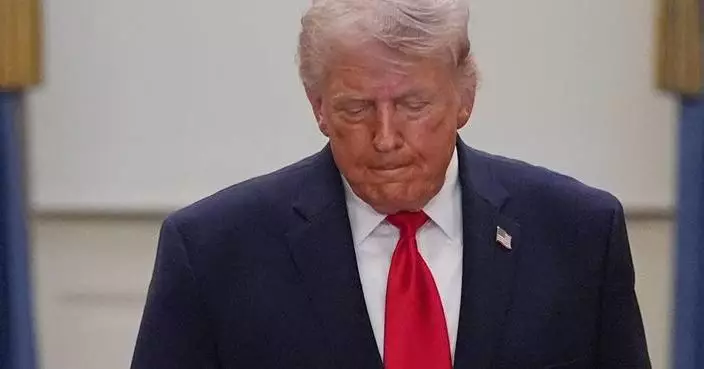
Trump has insisted the strait can be taken by force — but said it is not up to the U.S. to do that. In an address to the American people Wednesday night, he encouraged countries that depend on oil from Hormuz to “build some delayed courage” and go “take it.”
Before the U.S. and Israel started the war on Feb. 28 with strikes on Iran, the waterway was open to traffic and 20% of all traded oil passed through it.
Iran responded defiantly to Trump’s speech, in which the American president claimed U.S. military action had been so decisive that “one of the most powerful countries” is “really no longer a threat.”
A spokesman for Iran’s military, Lt. Col. Ebrahim Zolfaghari, insisted Thursday that Tehran maintains hidden stockpiles of arms, munitions and production facilities. He said facilities targeted so far by U.S. strikes are “insignificant.”
Just before Trump began his address — in which he said U.S. “core strategic objectives are nearing completion” — explosions were heard in Dubai as air defenses worked to intercept an Iranian missile barrage.
Less than a half-hour after the president was done, Israel said its military was also working to intercept incoming missiles. Sirens sounded in Bahrain, home to the U.S. Navy’s 5th Fleet, immediately after the speech.
Attacks continued across Iran on Thursday, with strikes reported in multiple cities.
Iran state media reported that strikes on the B1 bridge, which was still under construction, killed eight people and wounded 95. The outlet, citing authorities in Alborz province, said the victims had gathered under the bridge and along the riverbank for Nature Day, which Iranians celebrate by gathering outside.
In a post on X that included a picture of what appeared to be the same bridge, Iran’s Foreign Minister Abbas Araghchi wrote, “Striking civilian infrastructure only conveys the defeat and moral collapse of an enemy in disarray.”
Trump posted footage on social media showing what he said was the collapse of Iran's biggest bridge and threatening, “Much more to follow.” It was not immediately clear if the footage Trump shared was the B1 bridge, reportedly the tallest in the Middle East.
In Lebanon — where Israel has launched a ground invasion against Iran-backed Hezbollah militants — Israeli strikes have killed 27 people in the past 24 hours, the Health Ministry said.
More than 1,900 people have been killed in Iran during the war, while 19 have been reported dead in Israel. More than two dozen people have died in Gulf states and the occupied West Bank, while 13 U.S. service members have been killed.
More than 1,300 people have been killed and more than 1 million displaced in Lebanon. Ten Israeli soldiers have also died there.
Iranian attacks on about two dozen commercial ships, and the threat of more, have halted nearly all traffic in the waterway that connects the Persian Gulf to the open ocean.
Since March 1, traffic through the strait has dropped 94% over the same period last year, according to the Lloyds List Intelligence shipping data firm. Two ships are confirmed to have paid a fee, the firm said, while others were allowed through based on agreements with their home governments.
Saudi Arabia piped about 1 billion barrels of oil away from the Strait of Hormuz in March, according to maritime data firm Kpler, while Iraq said Thursday that it had started to truck oil across Syria to avoid the strait.
The 35 countries that spoke Thursday, including all G7 industrialized democracies except the U.S., as well as the United Arab Emirates and Bahrain, signed a declaration last month demanding Iran stop blocking the strait.
Thursday’s talks were focused on political and diplomatic measures, but British Foreign Secretary Yvette Cooper said military planners from an unspecified number of countries will also plot ways to ensure security once fighting ends, including potential mine-clearing work and “reassurance” for commercial shipping.
No country appears willing to try to open the strait by force while the war is raging. French President Emmanuel Macron, while on a visit to South Korea, called a military operation to secure the waterway “unrealistic.”
But there is a concern that Iran might limit traffic through the waterway even after U.S. and Israeli attacks cease.
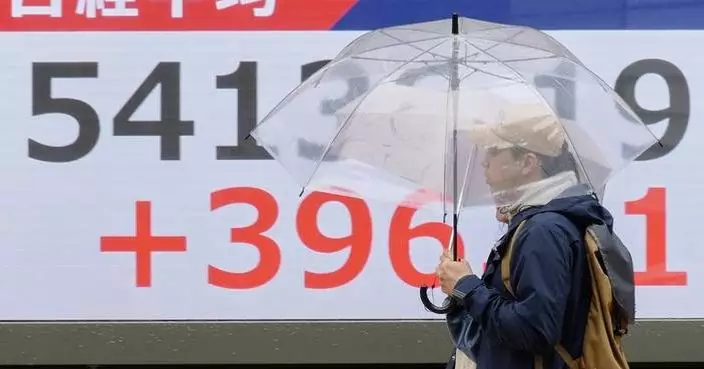
The conflict is driving up prices for oil and natural gas, roiling stock markets, pushing up the cost of gasoline and threatening to make a range of goods, including food, more expensive.
Oil prices remained elevated, however, at $111.54 for a barrel of U.S. crude, having soared following Trump’s address. That's up about 50% from Feb. 28.
Though the oil and gas that typically transits the strait is primarily sold to Asian nations, Japan and South Korea were the only two countries from the region joining Thursday's call about the strait. The supply of jet fuel has also been interrupted, with consequences for travel worldwide.
Rising from Bangkok and Corder reported from The Hague, Netherlands. Associated Press writers Will Weissert in Washington and David McHugh in Frankfurt, Germany, and Toqa Ezzidin in Cairo contributed to this story.
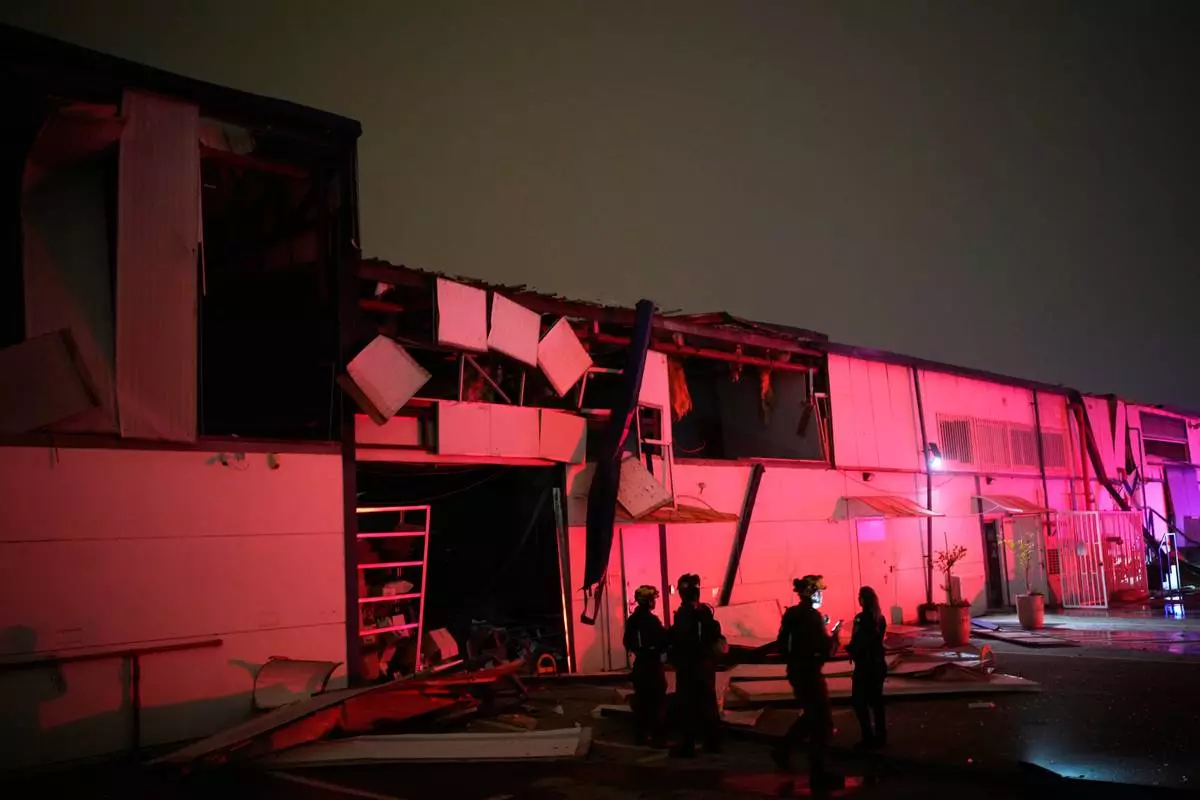
Israeli security forces and rescue teams inspect a site struck by an Iranian missile in Petah Tikva, Israel,Thursday, April 2, 2026. (AP Photo/Ohad Zwigenberg)
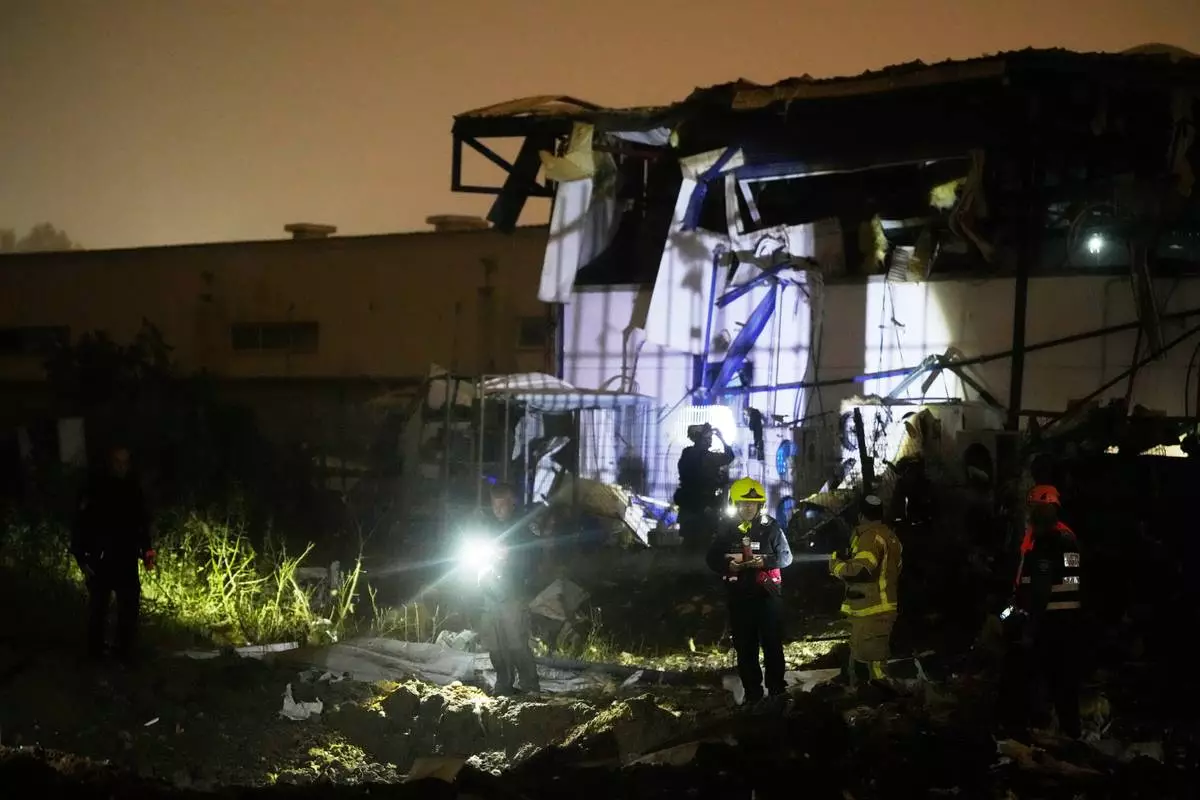
Israeli security forces and rescue teams inspect a site struck by an Iranian missile in Petah Tikva, Israel,Thursday, April 2, 2026. (AP Photo/Ohad Zwigenberg)
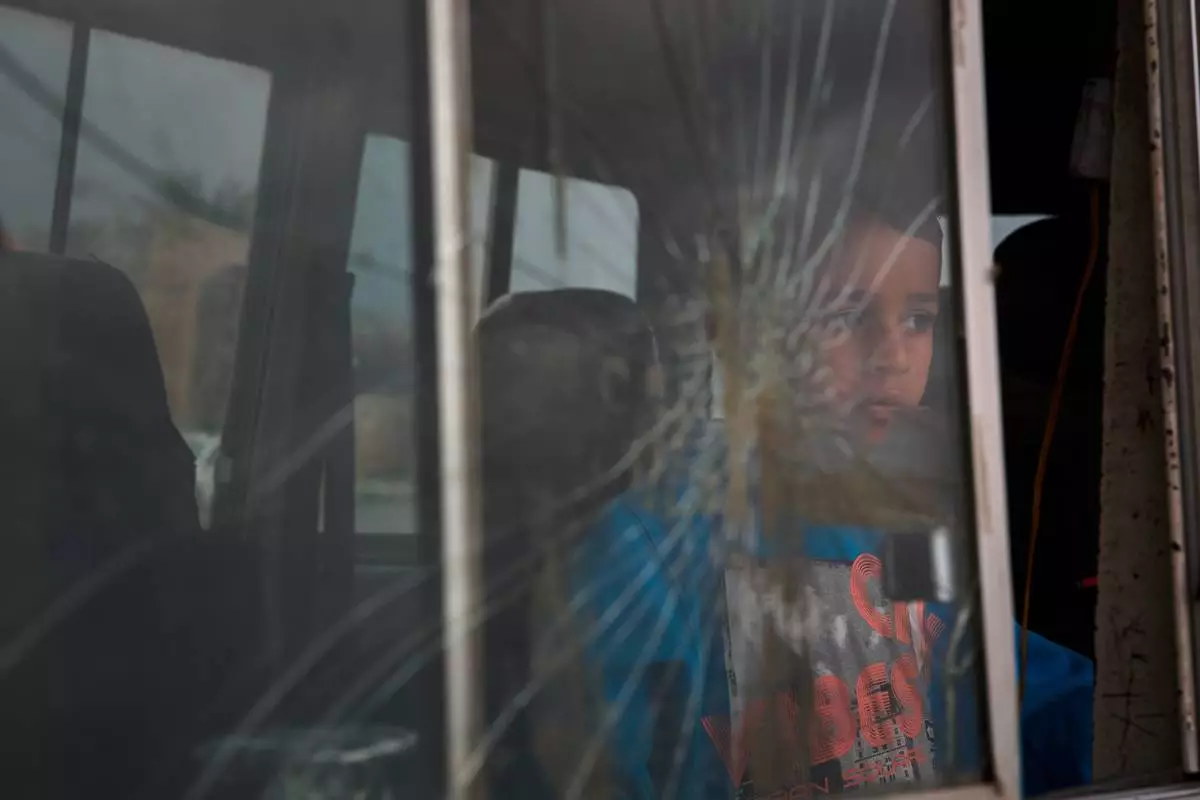
A boy who fled with his family following Israeli strikes in southern Lebanon sits inside the van they are using as shelter in Sidon, Lebanon, Thursday, April 2, 2026. (AP Photo/Emilio Morenatti)
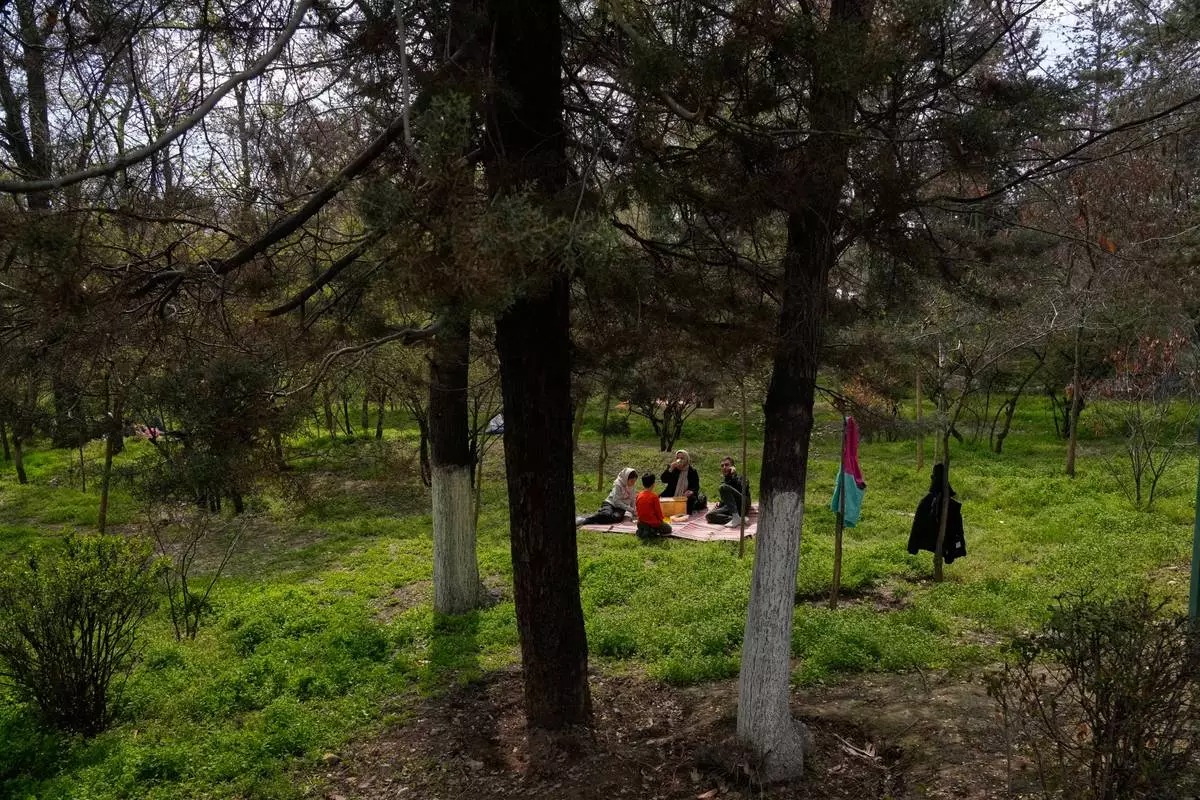
A family enjoys their time during the annual public picnic day, known as Sizdeh Bedar, an ancient tradition, marking the 13th and last day of Iranian New Year, or Nowruz, holidays, at Mellat park in Tehran, Iran, Thursday, April 2, 2026. (AP Photo/Vahid Salemi)
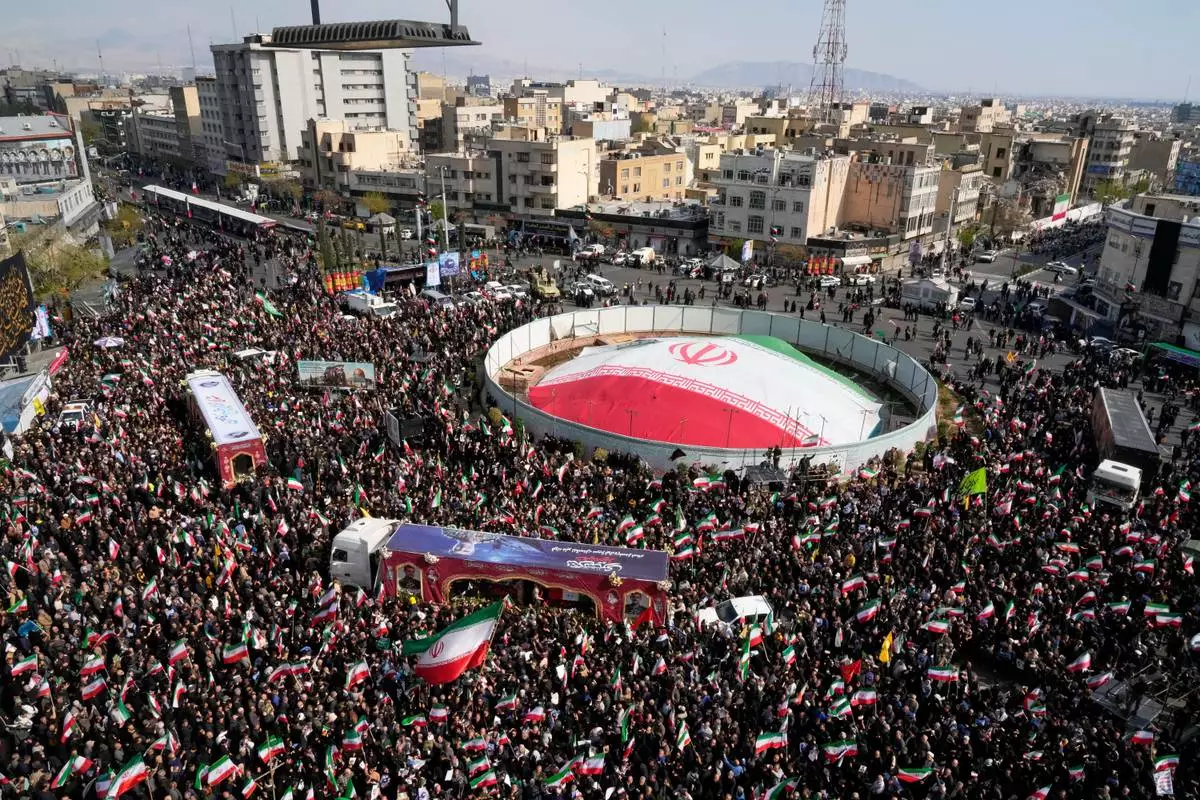
Mourners gather during a funeral procession for Alireza Tangsiri, head of Iran's Islamic Revolutionary Guard Corps Navy, and others killed in Israeli strikes in late March, in Tehran, Iran, Wednesday, April 1, 2026. (AP Photo/Vahid Salemi)
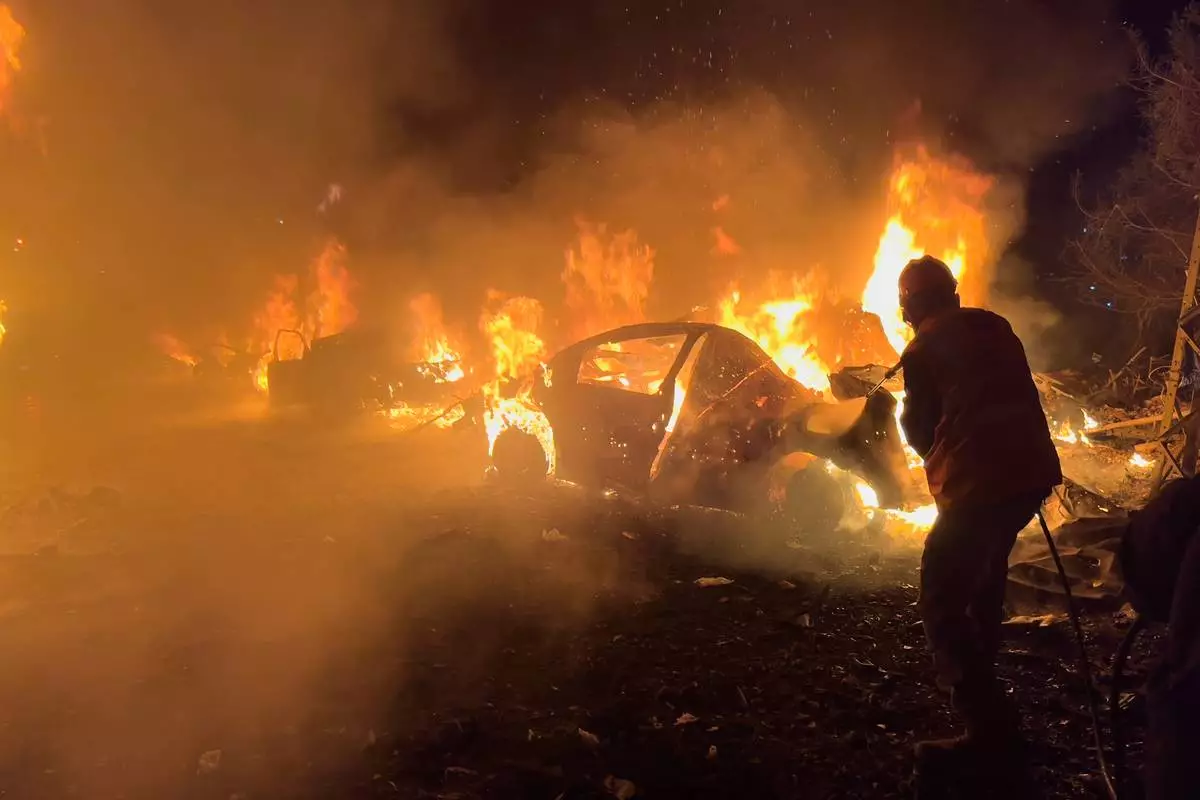
A firefighter extinguishes a car at the site of Israeli airstrikes, in Beirut, Lebanon, Wednesday, April 1, 2026. (AP Photo/Hussein Malla)
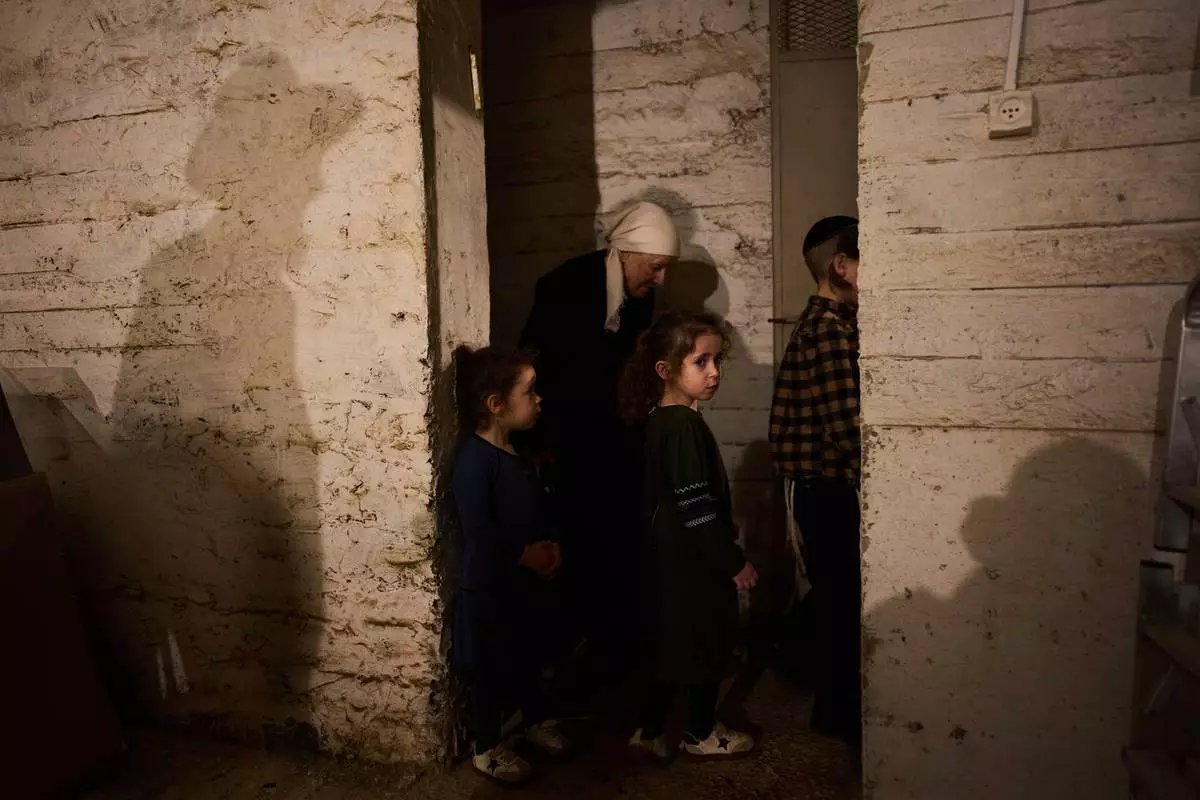
People take cover in a bomb shelter as air raid sirens warn of incoming Iranian missile strikes in Bnei Brak, Israel, Wednesday, April 1, 2026. (AP Photo/Oded Balilty)
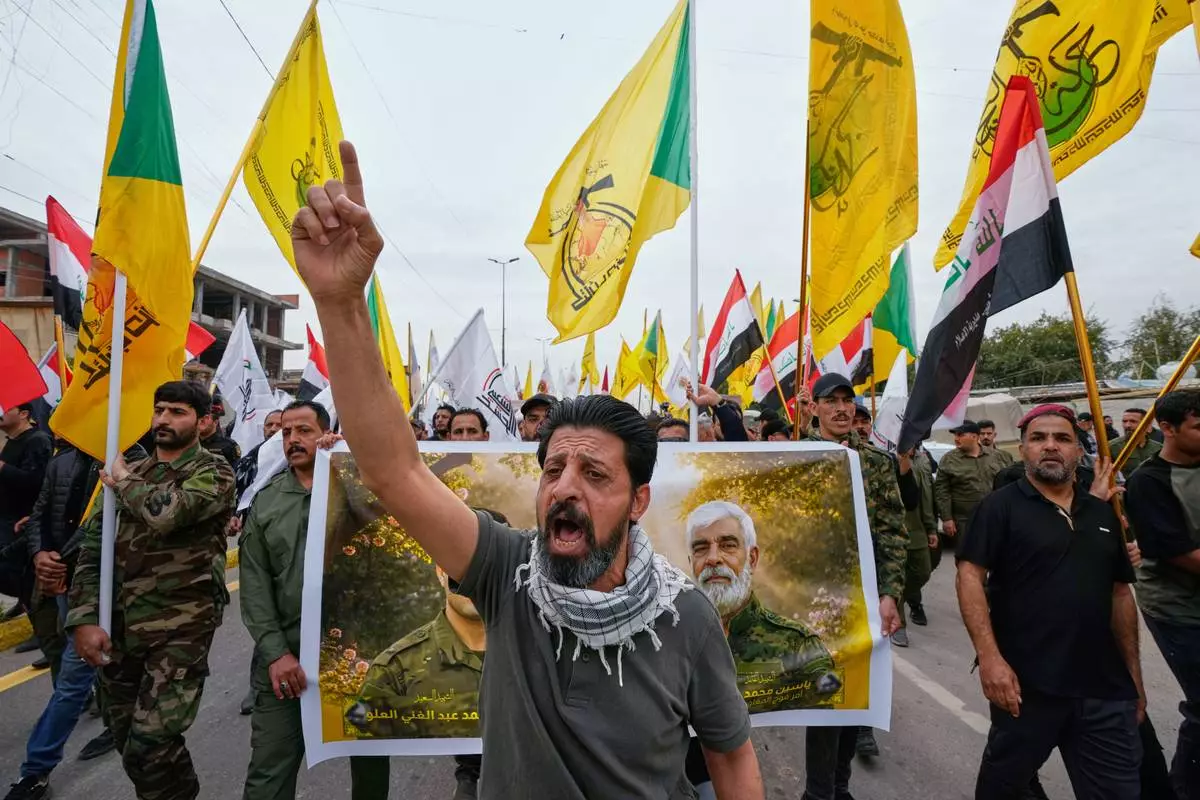
Members from the Popular Mobilization Forces attend a funeral of fighters who were killed in a U.S. airstrike, in Tal Afar, Nineveh province, north of Baghdad, Iraq, Thursday, April 2, 2026. (AP Photo/Hadi Mizban)
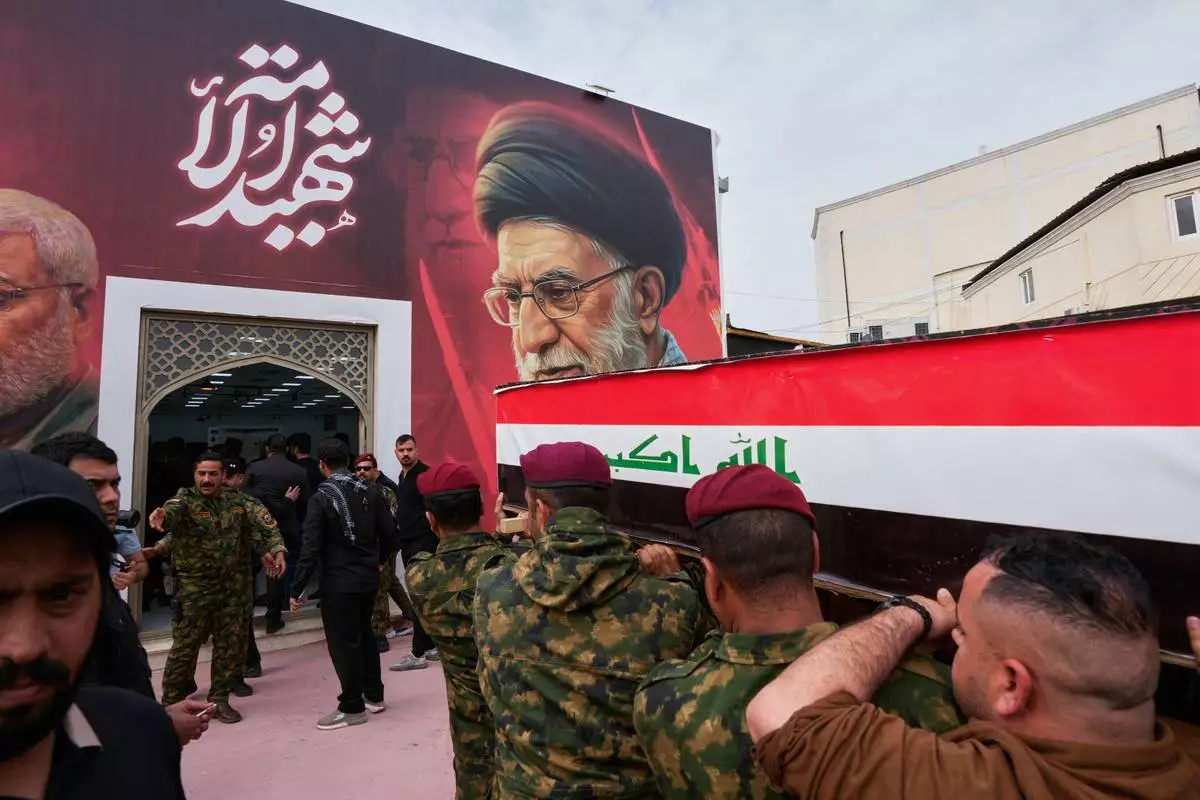
Members from the Popular Mobilization Forces attend a funeral of fighters who were killed in a U.S. airstrike, in Tal Afar, Nineveh province, north of Baghdad, Iraq, Thursday, April 2, 2026. (AP Photo/Hadi Mizban)
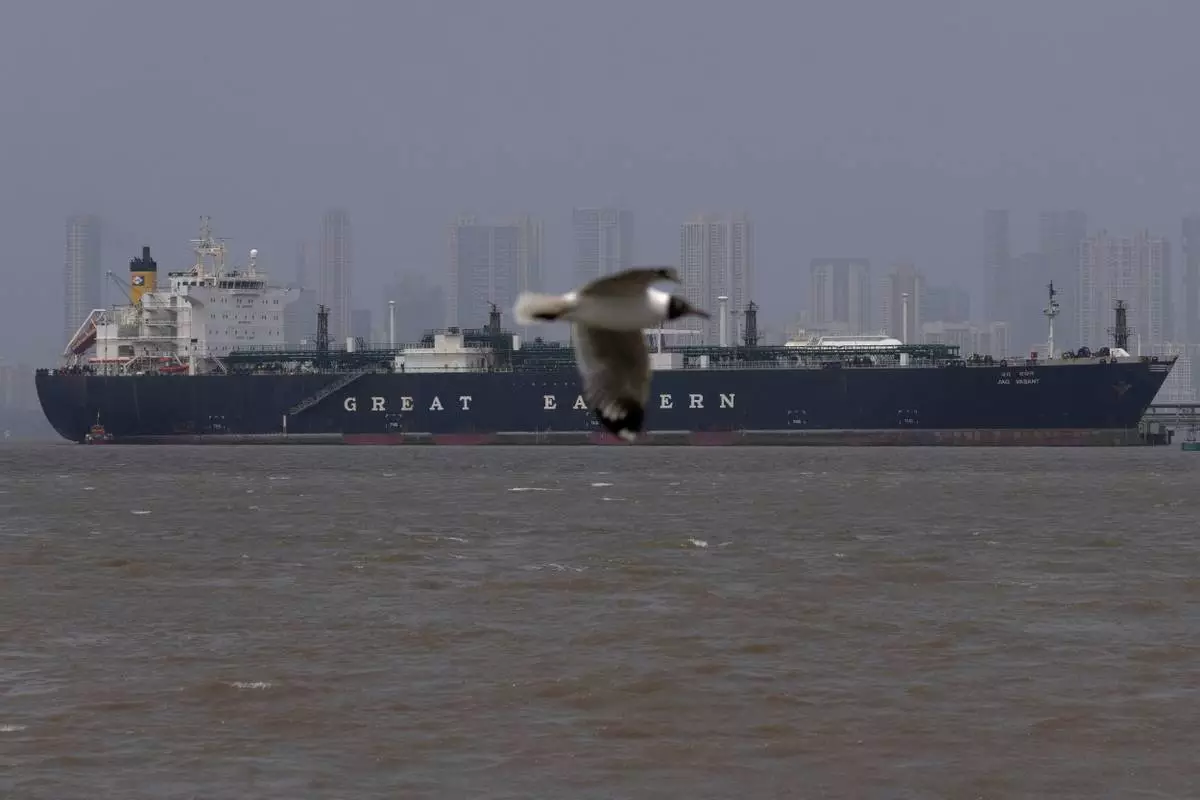
The Indian flagged LPG carrier Jag Vasant transporting liquefied petroleum gas, is seen at the Mumbai Port in Mumbai, India, after it arrived clearing the Strait of Hormuz, Wednesday, April 1, 2026. (AP Photo/Rafiq Maqbool)
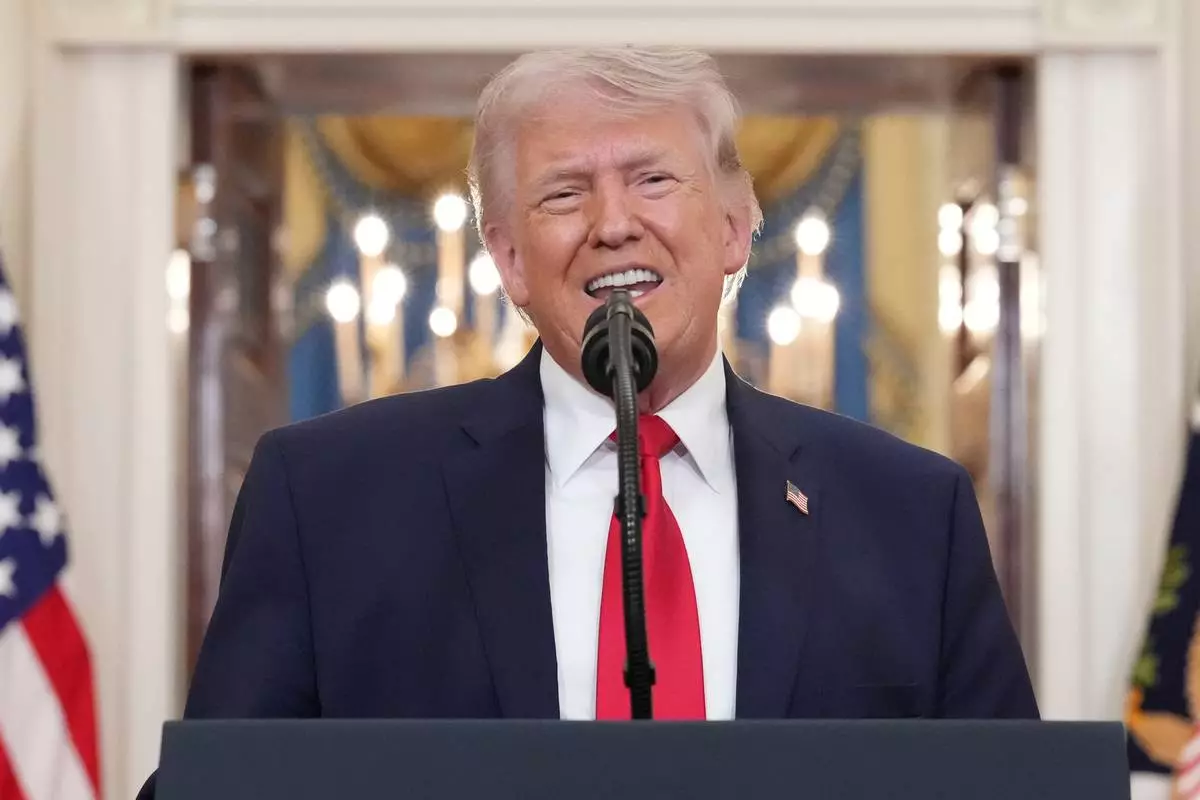
President Donald Trump speaks about the Iran war from the Cross Hall of the White House on Wednesday, April 1, 2026, in Washington. (AP Photo/Alex Brandon, Pool)
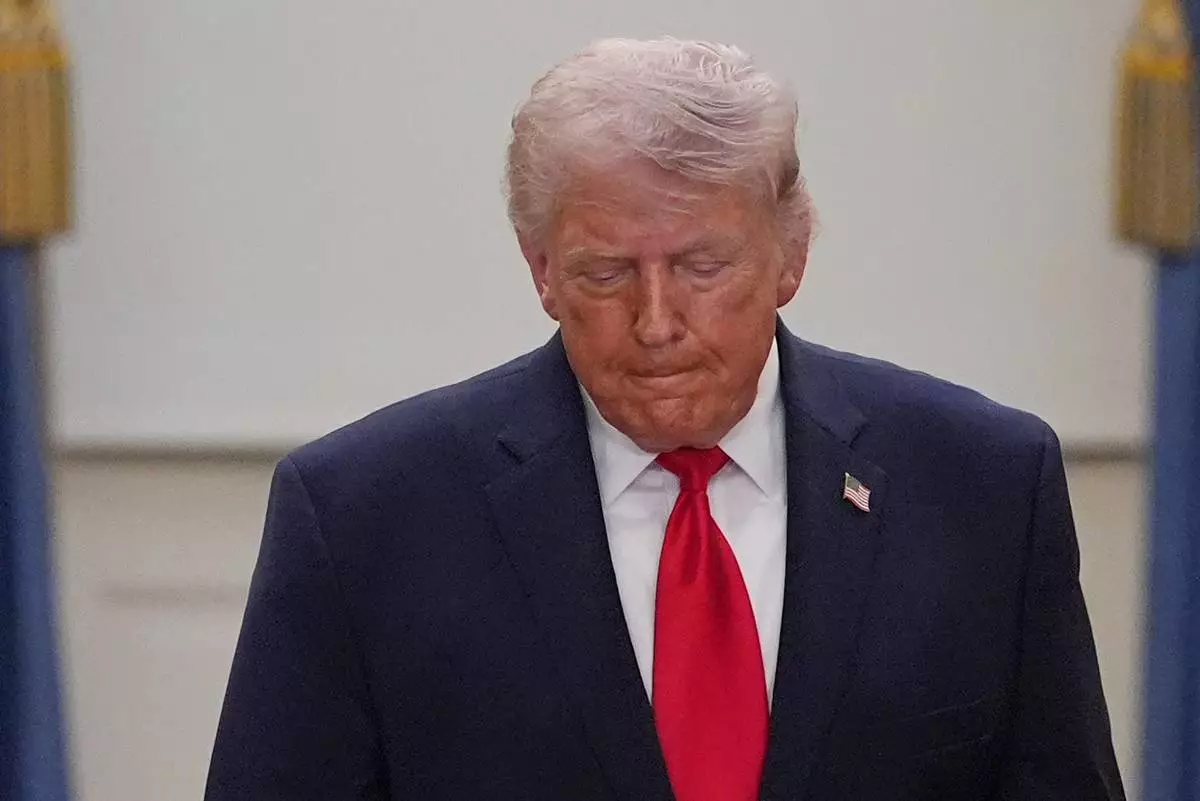
President Donald Trump walks from the Blue Room to speak about the Iran war from the Cross Hall of the White House on Wednesday, April 1, 2026, in Washington. (AP Photo/Alex Brandon, Pool)
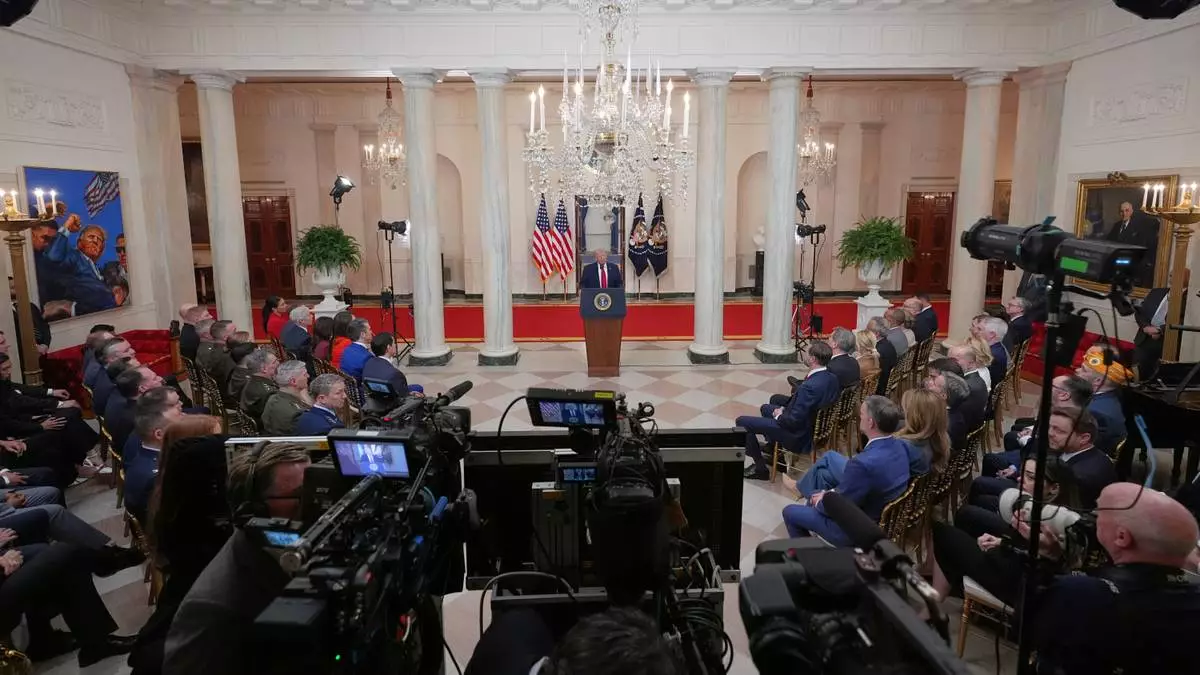
President Donald Trump speaks about the Iran war from the Cross Hall of the White House on Wednesday, April 1, 2026, in Washington. (AP Photo/Alex Brandon, Pool)
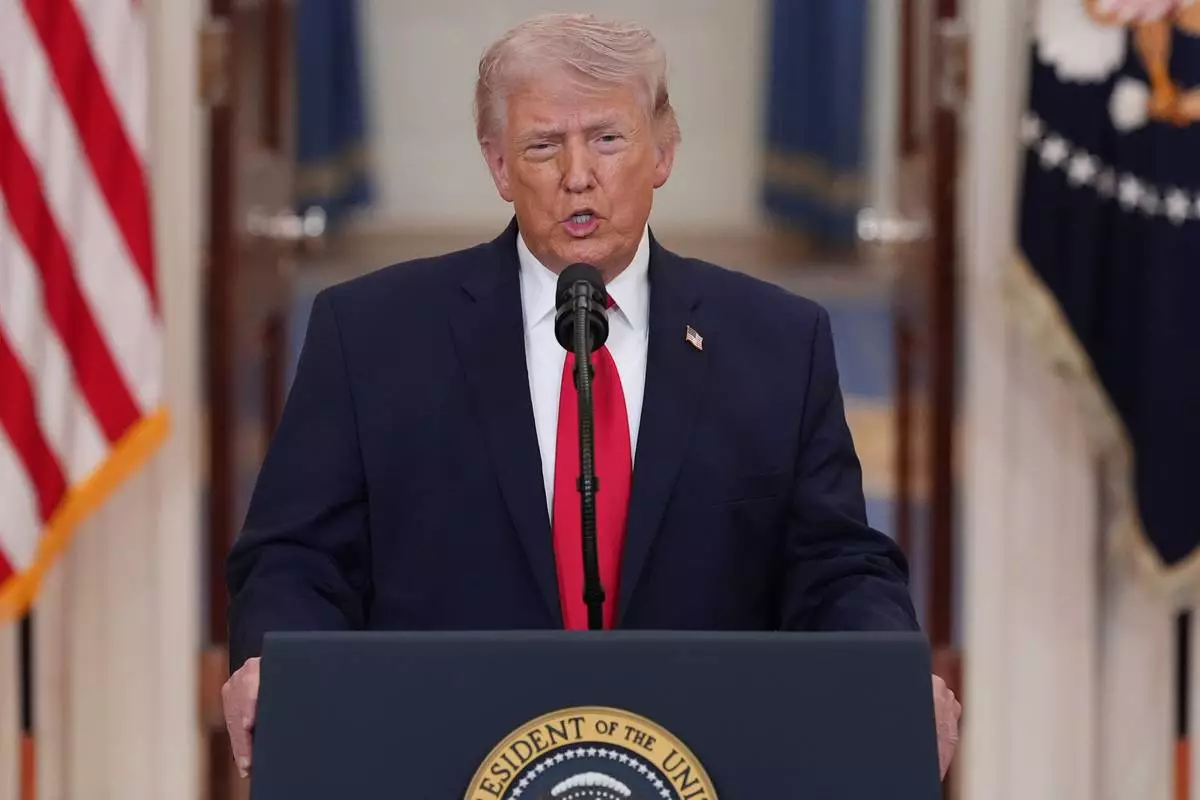
President Donald Trump speaks about the Iran war from the Cross Hall of the White House on Wednesday, April 1, 2026, in Washington. (AP Photo/Alex Brandon, Pool)