Skip to Content Facebook Feature Image

Home, sweet home for Canes: Miami to play for the CFP national championship at Hard Rock Stadium

Sport

Home, sweet home for Canes: Miami to play for the CFP national championship at Hard Rock Stadium
Sport

Sport

Home, sweet home for Canes: Miami to play for the CFP national championship at Hard Rock Stadium

2026-01-09 13:56 Last Updated At:14:10

MIAMI GARDENS, Fla. (AP) — Miami is flying home on Friday from the Fiesta Bowl. It'll be the last flight for the Hurricanes this season.

They'll get to the next game — the last game — by bus.

For the fifth time, Miami will be playing for a national championship on its home field. The first four of those games were at the now-demolished Orange Bowl; this one against either Oregon or Indiana in the College Football Playoff title game on Jan. 19 will be at Hard Rock Stadium, the Miami Dolphins' home field, where the Hurricanes have played their home games since 2008.

“We’re back in Hard Rock,” quarterback Carson Beck said after he produced the go-ahead touchdown — with his legs, not his arm — in Miami's 31-27 win over Mississippi in the Fiesta Bowl on Thursday night. “So, I think that’s all that needs to be said.”

Miami is 3-1 in its other national-title-game appearances at home — though it should be noted that in the Bowl Championship Series and now CFP era when there has been a designated “national championship game,” the Hurricanes have not gotten this far.

“This team knows they are the team and the time is now,” coach Mario Cristobal said during the on-field celebration Thursday night.

Other teams have won national championships close to home over the years. For example, Southern California claims national titles in the 1931 and 1932 seasons after winning Rose Bowls (it wasn't USC's home field, but not exactly a long road trip for the Trojans, either). Those came before The Associated Press began awarding a national championship trophy with the 1936 season.

In recent years, LSU won a BCS title (but not the AP title) for the 2003 season by winning the Sugar Bowl in nearby New Orleans — about 80 miles from Baton Rouge. LSU secured national championships for the 2007 and 2019 seasons by winning in New Orleans as well.

Being at home — or near home — hasn't guaranteed titles, though. Texas beat USC in the Rose Bowl to win the 2005 season's national championship. Alabama faced what might have been considered road games in the 2011 and 2017 seasons and won both, topping LSU in New Orleans and Georgia in Atlanta for national crowns.

And Miami's most recent home title game was a loss as well, when the Hurricanes fell to Oklahoma 24-17 to end the 1994 season.

Here's look at Miami's previous home title-game appearances.

The Hurricanes ran out to a 17-0 lead over the top-ranked, unbeaten and heavily favored Cornhuskers, who clawed within 31-30 with 48 seconds left. Nebraska coach Tom Osborne decided to try a 2-point conversion instead of playing for the tie; the pass fell incomplete and Miami finished atop the AP poll. “We're No. 1,” Hurricanes coach Howard Schnellenberger said. “No doubt about it.” He was right, and Miami had its first national title.

Oklahoma came in undefeated and ranked No. 1, Miami came in undefeated and ranked No. 2. The teams were tied 7-7 at halftime, but the Hurricanes scored 10 points in the fourth quarter and held on to win their second national championship.

Miami's fourth national title, and third won at the Orange Bowl, was no contest. The Hurricanes led 13-0 after just 11 minutes of play and the defense never let Nebraska — a double-digit underdog — get on track.

In the final year of the short-lived Bowl Coalition era, the Hurricanes ran out to a 10-0 lead after the first quarter. But the Cornhuskers wouldn't go away, and Cory Schlesinger ran for two touchdowns in the fourth quarter to cap the comeback and lead Nebraska to the win.

Get poll alerts and updates on the AP Top 25 throughout the season. Sign up here. AP college football: https://apnews.com/hub/ap-top-25-college-football-poll and https://apnews.com/hub/college-football
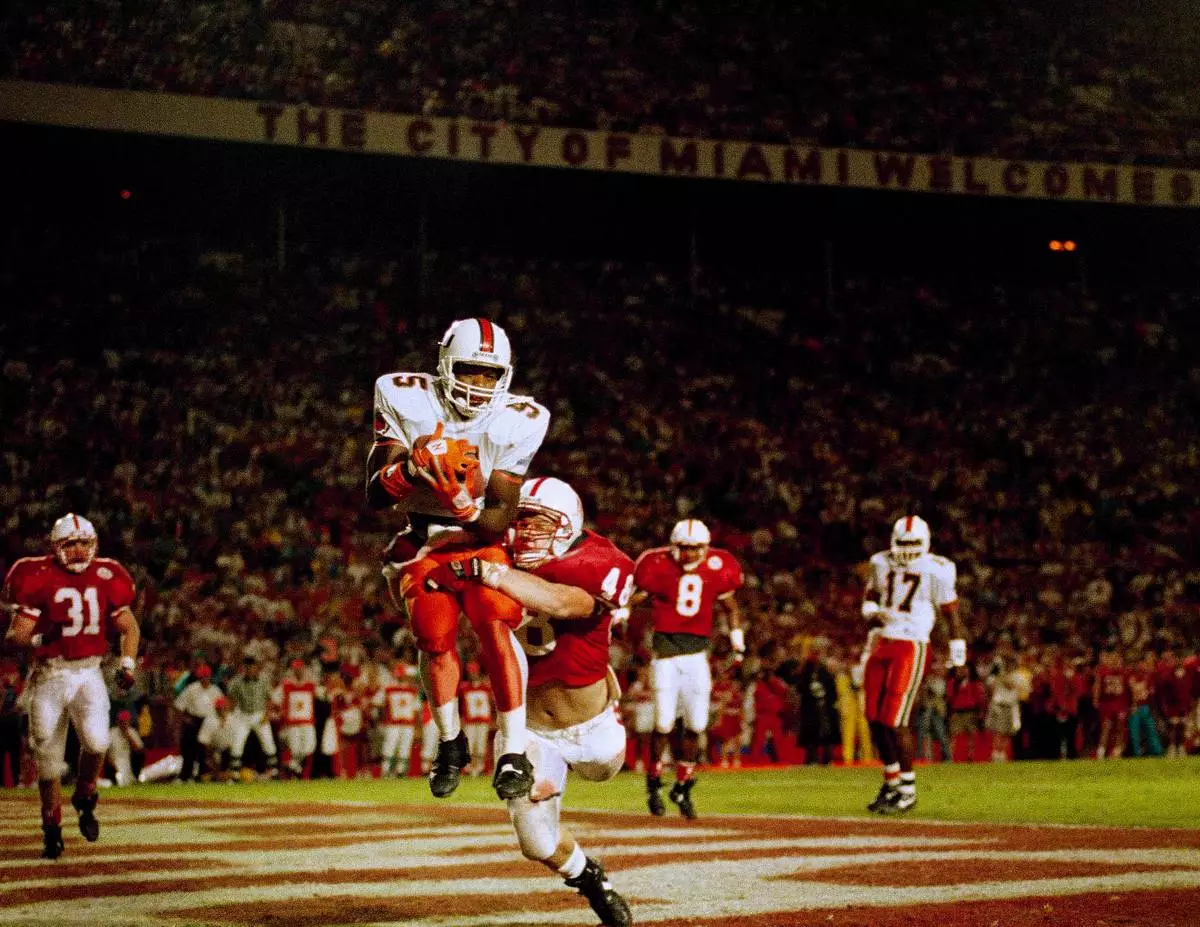
FILE -Miami wide receiver Kevin Williams (5) cradles a Gino Torretta pass in the end zone for a touchdown during first quarter action in the Orange Bowl in Miami Jan. 1, 1992. (AP Photo/Kathy Willens, File)

FILE -Miami wide receiver Kevin Williams (5) cradles a Gino Torretta pass in the end zone for a touchdown during first quarter action in the Orange Bowl in Miami Jan. 1, 1992. (AP Photo/Kathy Willens, File)

FILE -University of Miami's coach Howard Schnellenberger is carried from the field by jubilant Miami Hurricane players after they upset the Cornhuskers of Nebraska at Miami's Orange Bowl 31-30, Jan. 2, 1984. (AP Photo/Doug Jennings, File)
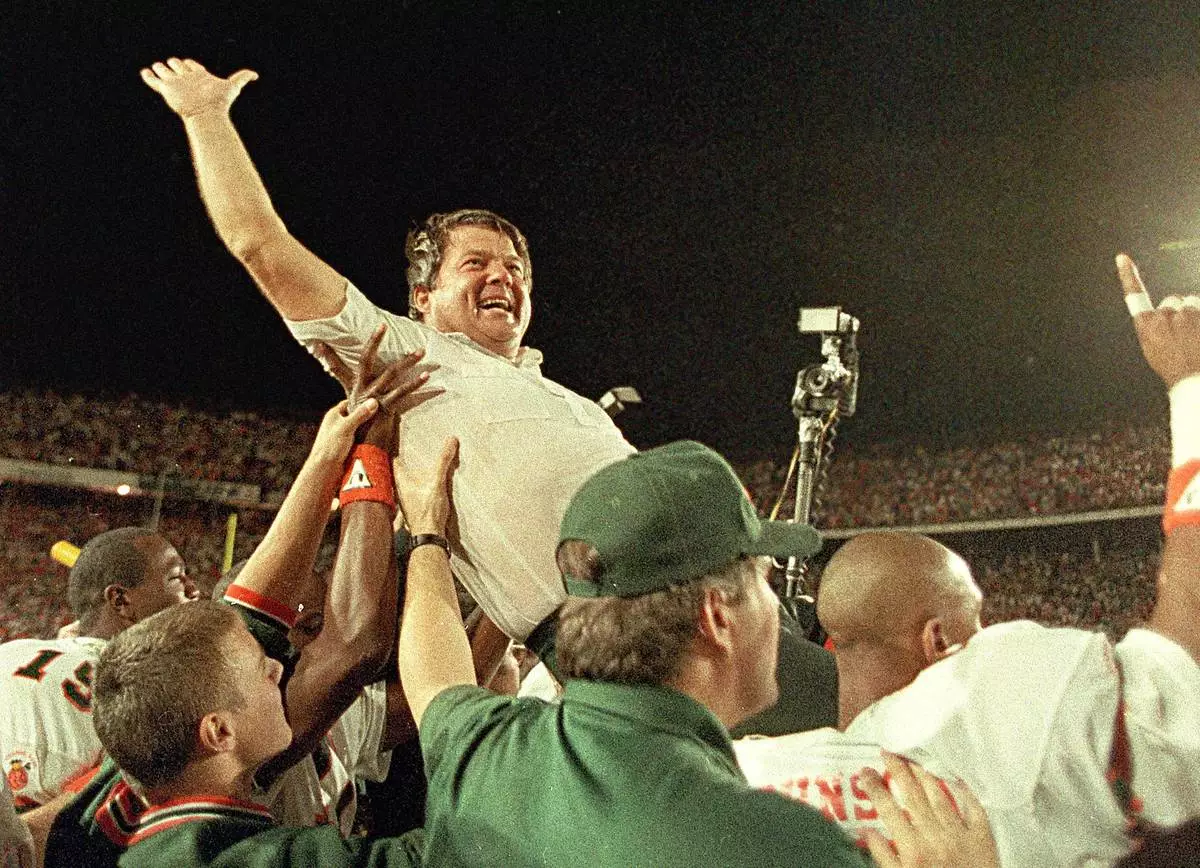
FILE -University of Miami's coach Howard Schnellenberger is carried from the field by jubilant Miami Hurricane players after they upset the Cornhuskers of Nebraska at Miami's Orange Bowl 31-30, Jan. 2, 1984. (AP Photo/Doug Jennings, File)

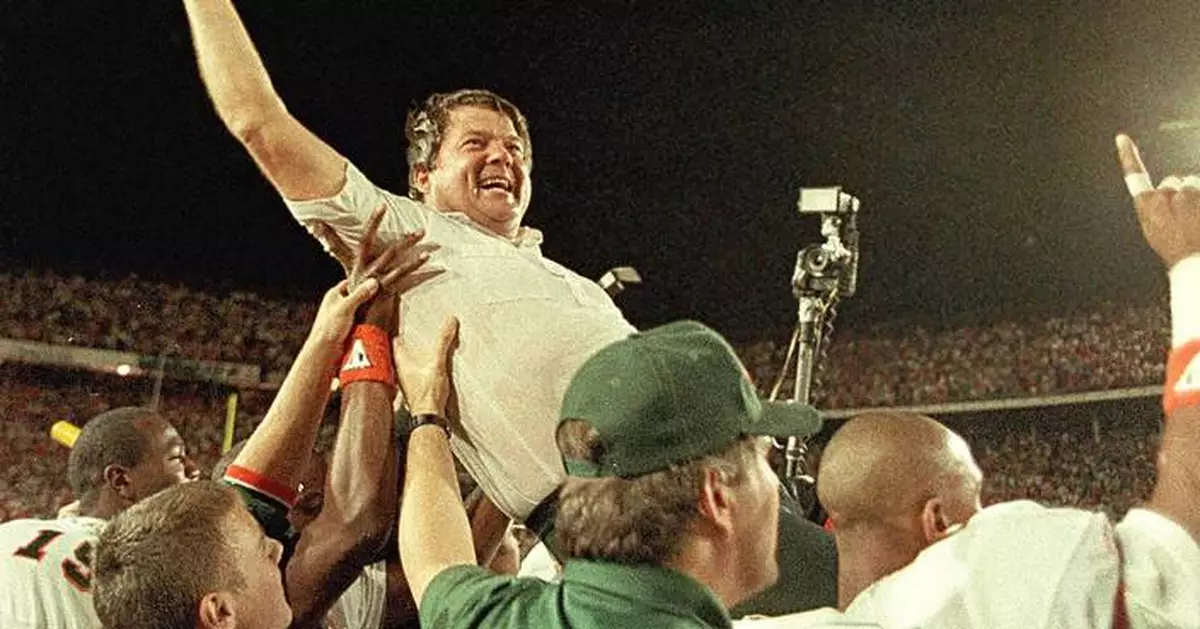
FILE - In this Jan. 1, 1988, file photo, University of Miami coach Jimmy Johnson is carried from the field by his players after the Hurricanes defeated the Oklahoma 20-14 in the Orange Bowl Classic, in Miami. (AP Photo/Raul Demolina, File)

FILE - In this Jan. 1, 1988, file photo, University of Miami coach Jimmy Johnson is carried from the field by his players after the Hurricanes defeated the Oklahoma 20-14 in the Orange Bowl Classic, in Miami. (AP Photo/Raul Demolina, File)
NEW YORK (AP) — U.S. flu infections showed signs of a slight decline last week, but health officials say it is not clear that this severe flu season has peaked.

New government data posted Friday — for flu activity through last week — showed declines in medical office visits due to flu-like illness and in the number of states reporting high flu activity.

However, some measures show this season is already surpassing the flu epidemic of last winter, one of the harshest in recent history. And experts believe there is more suffering ahead.

“This is going to be a long, hard flu season,” New York State Health Commissioner Dr. James McDonald said, in a statement Friday.

One type of flu virus, called A H3N2, historically has caused the most hospitalizations and deaths in older people. So far this season, that is the type most frequently reported. Even more concerning, more than 91% of the H3N2 infections analyzed were a new version — known as the subclade K variant — that differs from the strain in this year’s flu shots.

The last flu season saw the highest overall flu hospitalization rate since the H1N1 flu pandemic 15 years ago. And child flu deaths reached 289, the worst recorded for any U.S. flu season this century — including that H1N1 “swine flu” pandemic of 2009-2010.

So far this season, there have been at least 15 million flu illnesses and 180,000 hospitalizations, the U.S. Centers for Disease Control and Prevention estimates. It also estimates there have been 7,400 deaths, including the deaths of at least 17 children.

Last week, 44 states reported high flu activity, down slightly from the week before. However, flu deaths and hospitalizations rose.

Determining exactly how flu season is going can be particularly tricky around the holidays. Schools are closed, and many people are traveling. Some people may be less likely to see a doctor, deciding to just suffer at home. Others may be more likely to go.

Also, some seasons see a surge in cases, then a decline, and then a second surge.

For years, federal health officials joined doctors' groups in recommending that everyone 6 months and older get an annual influenza vaccine. The shots may not prevent all symptoms but can prevent many infections from becoming severe, experts say.

But federal health officials on Monday announced they will no longer recommend flu vaccinations for U.S. children, saying it is a decision parents and patients should make in consultation with their doctors.

“I can’t begin to express how concerned we are about the future health of the children in this country, who already have been unnecessarily dying from the flu — a vaccine preventable disease,” said Michele Slafkosky, executive director of an advocacy organization called Families Fighting Flu.

“Now, with added confusion for parents and health care providers about childhood vaccines, I fear that flu seasons to come could be even more deadly for our youngest and most vulnerable," she said in a statement.

Flu is just one of a group of viruses that tend to strike more often in the winter. Hospitalizations from COVID-19 and RSV, or respiratory syncytial virus, also have been rising in recent weeks — though were not diagnosed nearly as often as flu infections, according to other federal data.

The Associated Press Health and Science Department receives support from the Howard Hughes Medical Institute’s Department of Science Education and the Robert Wood Johnson Foundation. The AP is solely responsible for all content.

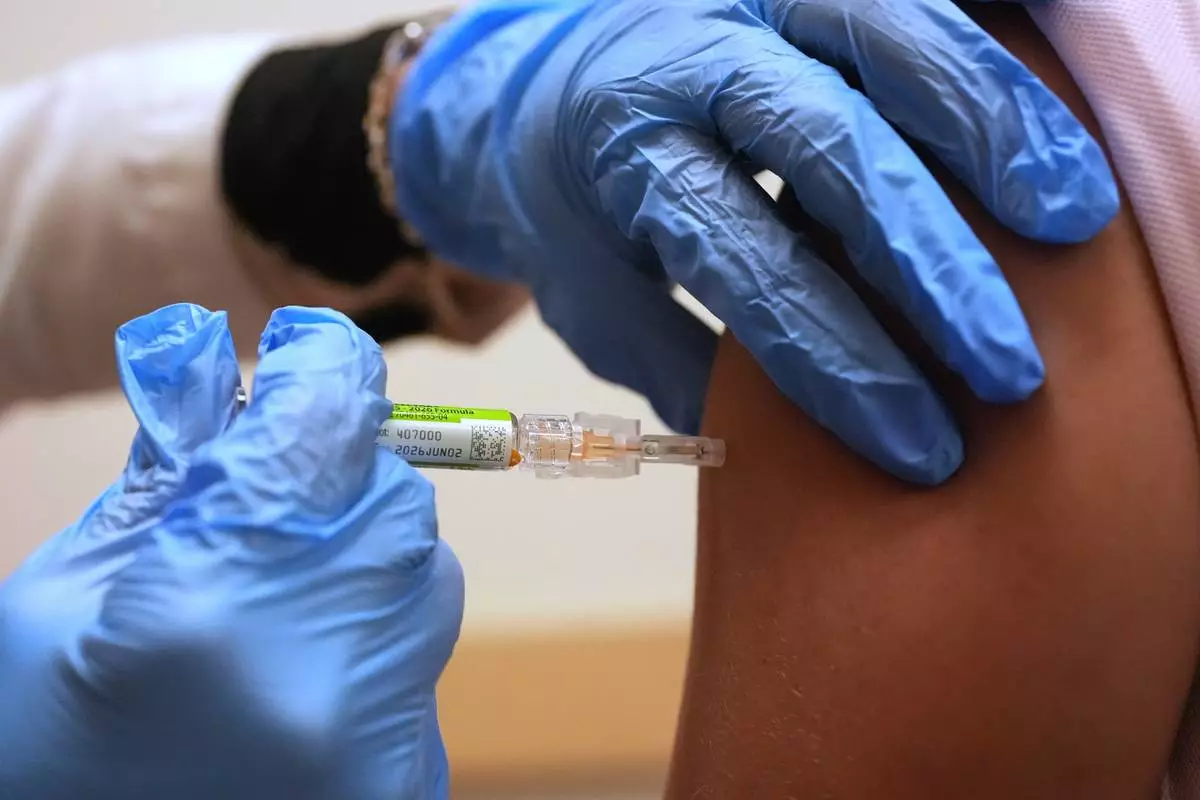
FILE - Pharmacy manager Aylen Amestoy administers a patient with a seasonal flu vaccine at a CVS Pharmacy in Miami, Tuesday, Sept. 9, 2025. (AP Photo/Rebecca Blackwell, File)

FILE - Pharmacy manager Aylen Amestoy administers a patient with a seasonal flu vaccine at a CVS Pharmacy in Miami, Tuesday, Sept. 9, 2025. (AP Photo/Rebecca Blackwell, File)

Recommended Articles