A research report titled "Nuclear Ambitions of Japan's Right-Wing Forces: A Serious Threat to World Peace" was released on Thursday morning in Beijing.
The report was jointly presented by the China Arms Control and Disarmament Association (CACDA) and China Institute of Nuclear Industry Strategy (CINIS).
The four-chapter report reviews the historical background of Japan's attempts to revise its non-nuclear principles of not possessing, not producing and not permitting nuclear weapons on its territory.
Experts pointed to recent negative developments, noting remarks by Japanese Prime Minister Sanae Takaichi suggesting the possibility of abandoning the principles, as well as statements by other senior Japanese officials advocating the idea of possessing nuclear weapons.
"These dangerous attempts, closely aligned with inflated ambitions to break free from the international order, revive militarism and speed up re-militarization, are by no means isolated incidents or personal views. Rather, they are the result of long-standing, carefully orchestrated efforts by Japan's right-wing forces, which send an extremely dangerous signal," said Dai Huaicheng, secretary-general of the CACDA.
Experts say the report also analyzed publicly available data, highlighting the long-standing fact that Japan has been producing and stockpiling sensitive nuclear materials well beyond the requirements for civilian nuclear energy.
They urged Japan to uphold its non-nuclear principles and honor its non-proliferation commitments.
"The report highlighted that the nuclear ambitions of Japan's right-wing forces challenge the post-war international order, undermine the authority of the Non-Proliferation Treaty, and escalate regional nuclear risks," Luo Qingping, chairman of the CINIS.
Experts also called for a responsible approach to security issues and for the international community to safeguard peace and stability.
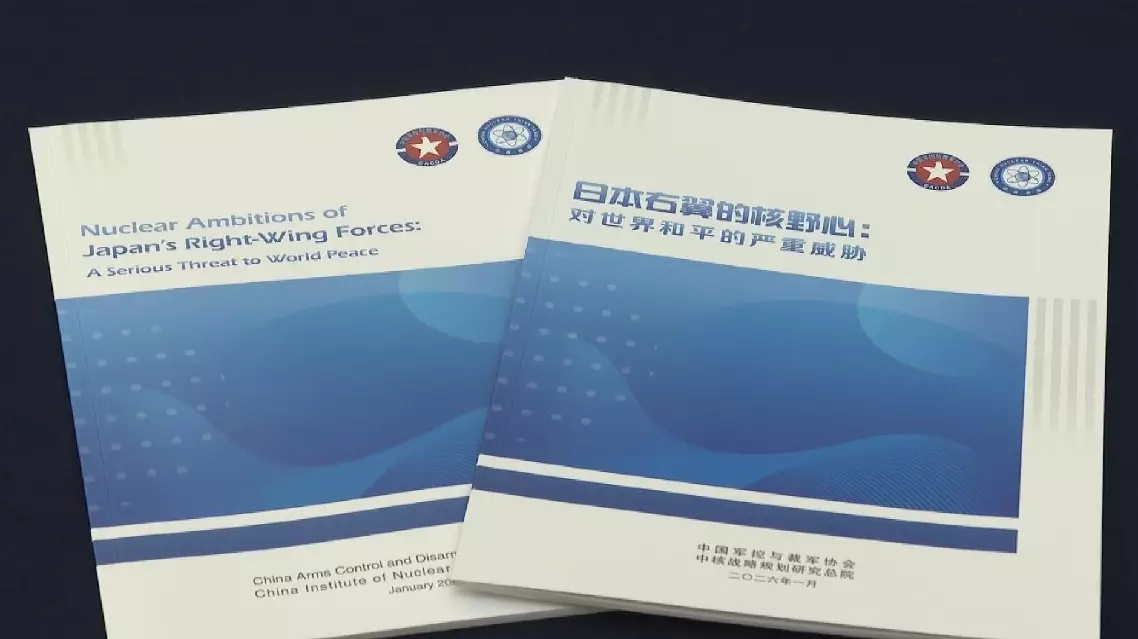
Research report on Japan's nuclear ambitions released in Beijing
China's two major power grid operators -- the State Grid Corporation of China (State Grid) and China Southern Power Grid (CSG) -- reported a surge in investment in the first quarter of 2026, underscoring efforts to strengthen infrastructure construction and support high-quality socioeconomic development in China.
The State Grid said it completed fixed-asset investment worth 129 billion yuan (about 18.77 billion U.S. dollars) in the first three months of this year, up 37 percent the corresponding period of the previous year. The spending has driven more than 250 billion yuan (36 billion U.S. dollars) of investment across the wider industrial chain.
Key projects such as the Panxi ultra-high-voltage (UHV) alternating current (AC) line and the Anhui-Hubei back-to-back direct current (DC) project have seen ground broken for their construction, while several west-to-east power transmission projects have been upgraded.
Investment in connecting renewable energy generation to the grid was reported to have exceeded 10 billion yuan (1.45 billion U.S. dollars) from January to March, a year-on-year rise of more than 50 percent.
The CSG also reported robust growth in investment in the three-month period, with fixed-asset investment reaching 38.45 billion yuan (5.58 billion U.S. dollars), up about 50 percent from a year earlier.
Among its achievements, the company completed and commissioned 80 key projects, including the 220 kV cross-sea power grid interconnection project, which was officially put into operation on March 20. The project ended years of grid isolation on the Weizhou Island in south China by linking it to the main power system of the Guangxi Zhuang Autonomous Region.
The construction of 17 other major energy projects, including one linking the power grid of the Xizang Autonomous Region in southwest China with that of Guangdong Province in south China, is advancing rapidly. These projects are expected to bolster regional industries, the maritime economy, digital collaboration and the transition to green energy.
"By accelerating major project construction, investment during the 15th Five-Year Plan period (2026-2030) is expected to approach 1 trillion yuan (145 billion U.S. dollars), driving a further 2 trillion yuan (290 billion U.S. dollars) of investment across upstream and downstream industries," said Dong Yanle, deputy general manager of the Engineering Construction Department under the China Southern Power Grid.
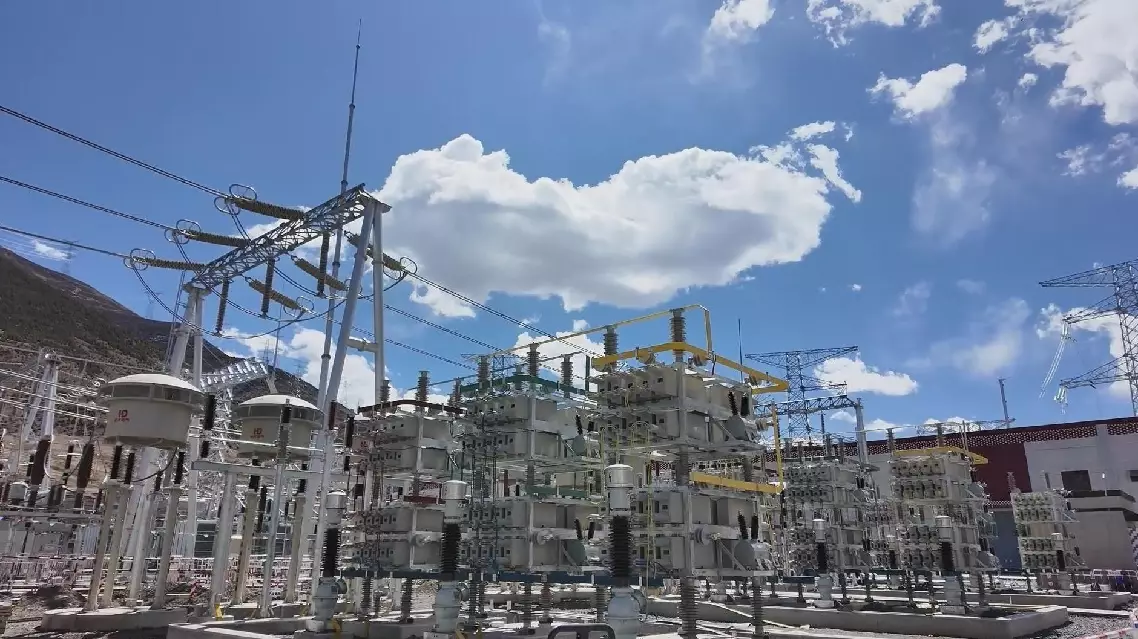
China ramps up power grid investment in January-March to boost growth