Cities across China have come to life with a surge of holiday shoppers, as consumption-boosting policies drive demand and lift confidence ahead of the Spring Festival.
The 2026 "Shopping in China" and Spring Festival Consumption Season was launched early this month, aiming to fuel a consumption boom through measures targeting goods, services, and diverse spending scenarios.
In downtown Xiamen City of east China's Fujian Province, a distinctive shopping district built on an old factory has become a popular new tourist attraction. It has introduced nearly 40 high-quality brands covering retail, entertainment, sports, and other fields, attracting a large number of citizens and tourists.
In north China's Tianjin Municipality, a newly built market space integrates cultural and creative product exhibitions, catering, leisure, and nearly 100 cultural performances, becoming a new choice for citizens and tourists during holidays. The city launched a three-month Spring Festival consumption season, creating a number of new consumption formats, models, and scenarios, such as exhibitions and ice and snow activities, to unleash consumption vitality.
In Liaoyang city, northeast China's Liaoning Province, an 80-hectare indoor temperature-controlled greenhouse garden brought a new cultural tourism format different from its iconic ice and snow season. Here, tourists can not only enjoy flowers and scenery but also buy local specialty agricultural products and watch Yangko dance performances.
This year, the eastern Chinese province of Anhui launched the 2026 Spring Festival consumption season for new energy vehicles (NEVs), reducing the cost of car purchases by issuing consumption vouchers together with trade-in subsidies.
In 2025, Anhui ranked first in the country in terms of automobile and NEV production, and maintained its leading position nationwide in vehicle exports which surpassed the one-million mark.
This year's Spring Festival begins on February 17, and heralds the Year of the Horse.
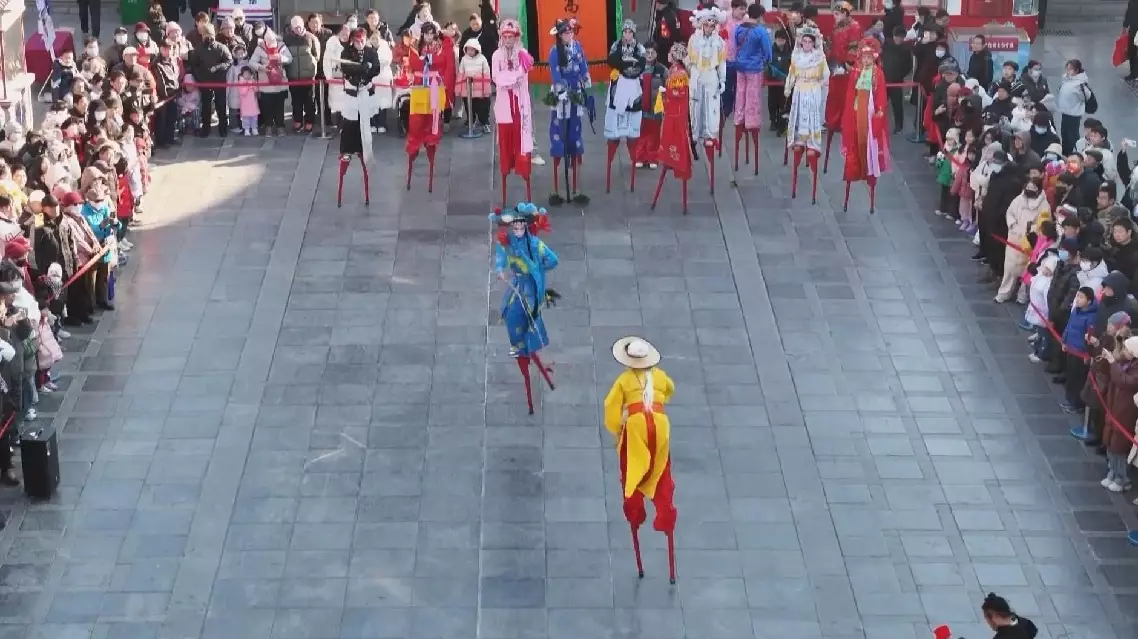
China’s 2026 consumption season fuels holiday shopping boom nationwide
China's two major power grid operators -- the State Grid Corporation of China (State Grid) and China Southern Power Grid (CSG) -- reported a surge in investment in the first quarter of 2026, underscoring efforts to strengthen infrastructure construction and support high-quality socioeconomic development in China.
The State Grid said it completed fixed-asset investment worth 129 billion yuan (about 18.77 billion U.S. dollars) in the first three months of this year, up 37 percent the corresponding period of the previous year. The spending has driven more than 250 billion yuan (36 billion U.S. dollars) of investment across the wider industrial chain.
Key projects such as the Panxi ultra-high-voltage (UHV) alternating current (AC) line and the Anhui-Hubei back-to-back direct current (DC) project have seen ground broken for their construction, while several west-to-east power transmission projects have been upgraded.
Investment in connecting renewable energy generation to the grid was reported to have exceeded 10 billion yuan (1.45 billion U.S. dollars) from January to March, a year-on-year rise of more than 50 percent.
The CSG also reported robust growth in investment in the three-month period, with fixed-asset investment reaching 38.45 billion yuan (5.58 billion U.S. dollars), up about 50 percent from a year earlier.
Among its achievements, the company completed and commissioned 80 key projects, including the 220 kV cross-sea power grid interconnection project, which was officially put into operation on March 20. The project ended years of grid isolation on the Weizhou Island in south China by linking it to the main power system of the Guangxi Zhuang Autonomous Region.
The construction of 17 other major energy projects, including one linking the power grid of the Xizang Autonomous Region in southwest China with that of Guangdong Province in south China, is advancing rapidly. These projects are expected to bolster regional industries, the maritime economy, digital collaboration and the transition to green energy.
"By accelerating major project construction, investment during the 15th Five-Year Plan period (2026-2030) is expected to approach 1 trillion yuan (145 billion U.S. dollars), driving a further 2 trillion yuan (290 billion U.S. dollars) of investment across upstream and downstream industries," said Dong Yanle, deputy general manager of the Engineering Construction Department under the China Southern Power Grid.
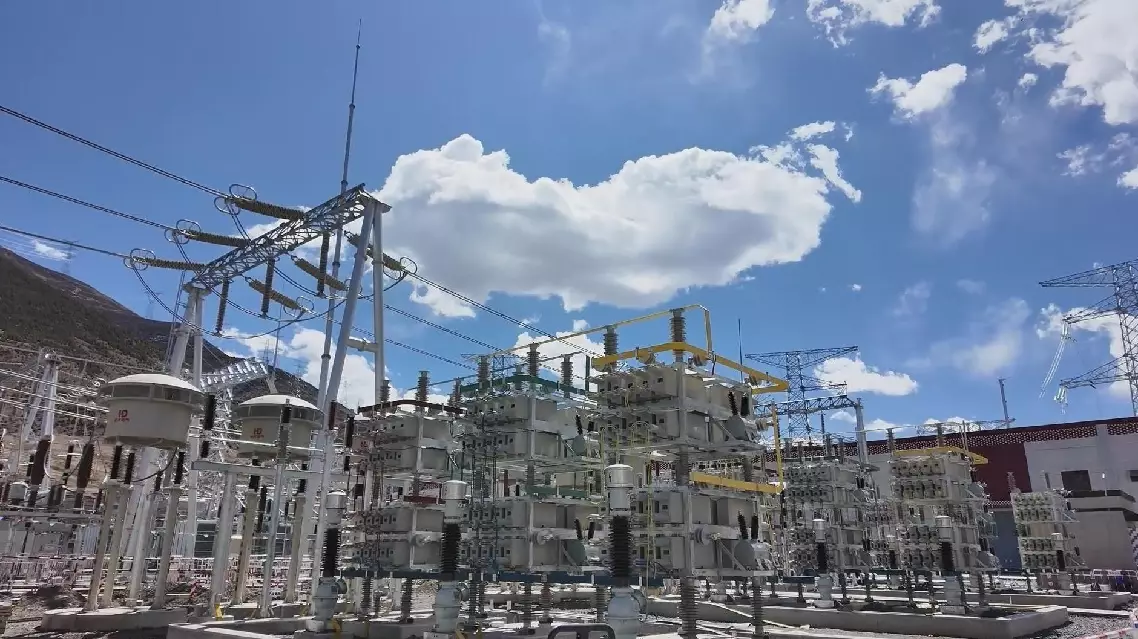
China ramps up power grid investment in January-March to boost growth