Skip to Content Facebook Feature Image

Venezuela's acting president says country not "subjugated" after U.S. assault

HotTV

HotTV

HotTV

Venezuela's acting president says country not "subjugated" after U.S. assault

2026-01-09 23:37 Last Updated At:01-10 12:26

Venezuela's acting president, Delcy Rodriguez, said Thursday that her country is not "subjugated" to the United States after last weekend's U.S. assault and the capture of President Nicolas Maduro.

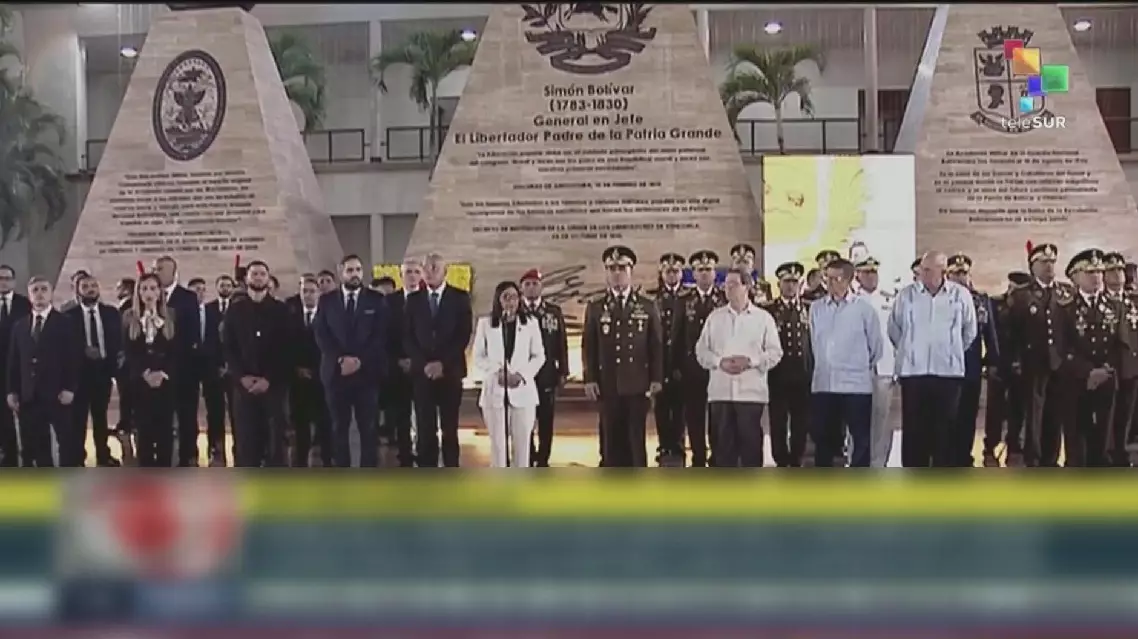
Venezuela remains autonomous and independent despite the military operation, and there was no passivity during the attacks, Rodriguez said during a ceremony at the National Guard Military Academy in Caracas, honoring soldiers and civilians killed or wounded in the January 3 invasion.

"No one surrendered here. There was combat, combat for our homeland, for our liberators," she said.

On the same day, the National Assembly of Venezuela passed a resolution recognizing all those who died defending Venezuelan territory during the U.S. military operation as heroes and martyrs of the nation. The National Assembly also supported the construction of a monument at the site of the incident.

On Wednesday, Venezuela's National Assembly President Jorge Rodriguez announced the establishment of a high-level committee to push for the release of President Maduro. The committee said it would use all means -- including diplomatic, legal, and political ones -- to ensure the return of Maduro and his wife as soon as possible.

On Thursday, a rally was held in Caracas where protesters strongly condemned U.S. airstrikes and demanded the immediate release of Maduro and his wife.

The U.S. Senate on Thursday advanced a resolution aimed at limiting President Donald Trump's ability to take further military action against Venezuela.

The vote was 52–47, with five Republican senators joining all Democrats in support of the measure.

A Senate floor vote to approve the resolution is expected next week.

Trump called the draft resolution "unconstitutional". In addition, he said that the U.S. would begin "land strikes" against drug cartels.

Brazilian President Luiz Inacio Lula da Silva and Colombian President Gustavo Petro held a phone conversation on Thursday to discuss the situation in Venezuela, the Brazilian government said.

According to a statement from the Brazilian government, both leaders expressed deep concern over the use of force against the South American country, in violation of international law, the UN Charter and Venezuela's sovereignty.

The statement said the leaders stressed that such actions constitute an extremely dangerous precedent for regional peace and security, as well as for the international order.
Venezuela's acting president says country not "subjugated" after U.S. assault
Venezuela's acting president says country not "subjugated" after U.S. assault
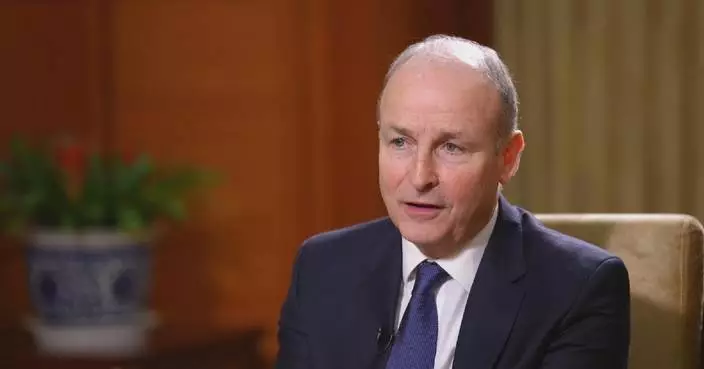
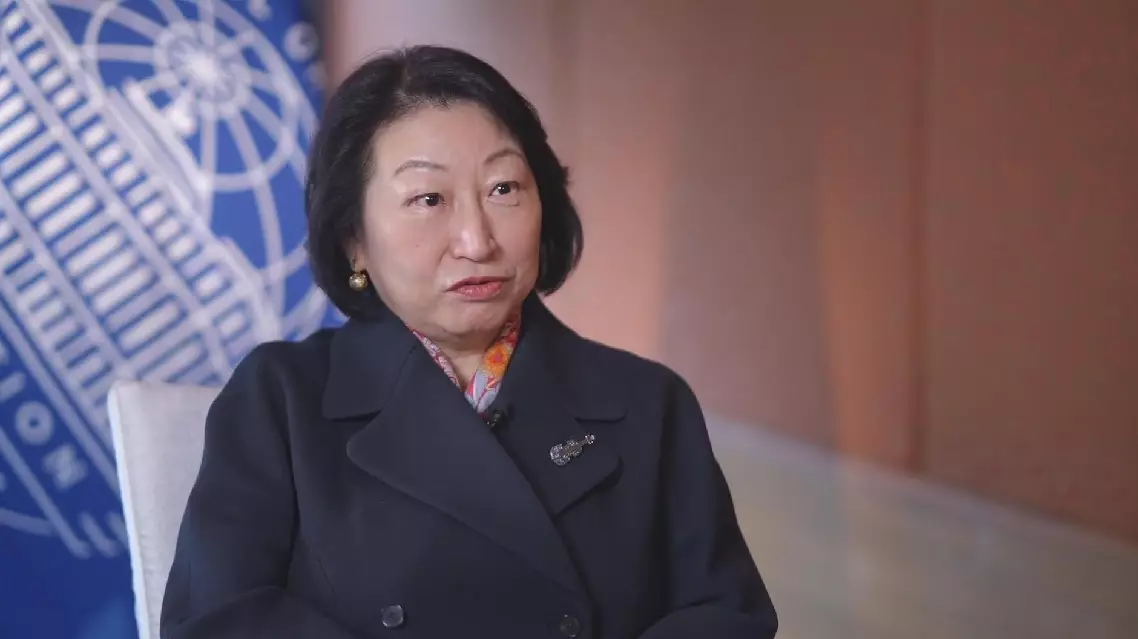
The International Organization for Mediation (IOMed), the world's first intergovernmental legal organization dedicated to resolving international disputes through mediation, fills an institutional gap in international mediation, the body's Secretary-General Teresa Cheng said.

In a recent interview with the China Global Television Network (CGTN) in Beijing, Cheng talked about the significance of IMOed's inauguration in October 2025.

"If we look at the United Nations Charter again, Article 33, we've provided for these forms of dispute resolution. Yet for 80 years, somehow there is not a body that is dedicated exclusively to mediation. And I think that triggered these 19 countries when they made their joint statement to say, let's establish such a body, so it is filling the institutional gap. The second thing is that it also complements the existing dispute resolution mechanisms. Litigation arbitration is at the moment still a prevailing form of dispute resolution, but the states see the need, also called upon by the UN Charter, to establish something exclusively for mediation to complement the existing systems," said Cheng. "There are a number of states, in particular those from the Global South, are very interested in having a say in the development of this new body. Therefore, through this organization, there are, as I said, 38 signatory states now. I think the world is in a very interesting stage at the moment. There are a lot of differences, sometimes views get entrenched. By having a body that brings into effect inclusivity multilateralism, and of course, accommodating and understanding each other through dialogue, is a very important feature." she said.

Housing the organization in the Hong Kong Special Administrative Region(HKSAR) also showed China's willingness to contribute to international mediation, said Cheng.

"The fact that we are housed and placed in the Hong Kong SAR, part of China, is because China is willing to contribute to this development, and Hong Kong very generously allows us to put our headquarters in one of the heritage buildings in Hong Kong," she added.

IOMed fills institutional gap in international mediation: secretary-general

IOMed fills institutional gap in international mediation: secretary-general

Recommended Articles