Skip to Content Facebook Feature Image

Lebanon residents say Israeli airstrikes are destroying their lives

HotTV

HotTV

HotTV

Lebanon residents say Israeli airstrikes are destroying their lives

2026-01-09 22:21 Last Updated At:01-10 12:25

Israel's recent airstrikes on Lebanon have instilled fear and despair among residents, shattering homes and disrupting livelihoods while leaving people to grapple with ongoing danger and economic hardship.

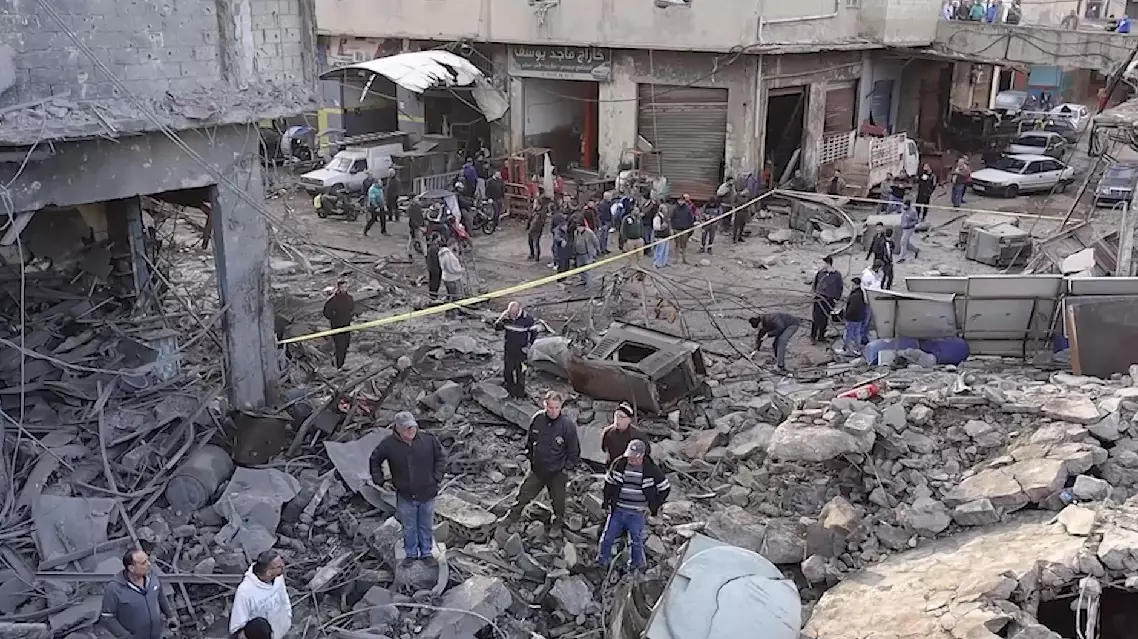
Israeli warplanes caused extensive damage when they targeted a three-story building in the industrial city of Sinik early Tuesday morning, following several strikes on locations north of the Litani River on Monday. The Israeli army said it targeted Hezbollah and Hamas sites to prevent them from rebuilding their military capabilities. It is reported that one person was injured in the attack.

The Lebanese army announced on Thursday that it had completed the first phase of the weapons inventory plan south of the Litani River, but noted that the Israeli occupation and delays in military aid were hindering its completion. In contrast, the Israeli army described the statement as unrealistic, asserting that Hezbollah and other factions were still present in the area.

Despite a ceasefire between Hezbollah and Israel that has been in effect since Nov. 27, 2024, the Israeli army still launches strikes in Lebanon from time to time, claiming they are aimed at removing Hezbollah "threats."

The attacks have drawn sharp condemnation from Lebanese officials and raised fears of further escalation. Some analysts suggest that the attacks are part of a broader Israeli strategy to exert pressure on Lebanon.

"We expect that Israel will put pressure on Lebanon in an attempt to extract further concessions, specifically in the geographical area between the Awali River in the north and the Litani River in the south, which may extend to the Lebanese interior, the Lebanese capital, and the suburbs. This escalation will manifest itself in more military operations and aerial bombardment," said Ghassan Melhem, head of the Political Science Department at the Lebanese University.

Meanwhile, many residents express deep concern for their livelihoods, as the bombings have decimated their workplaces. The destruction not only threatens their immediate economic stability but also creates an atmosphere of fear and uncertainty about the future.

"This attack on the industrial city where we are located is an act of sabotage against the people. This is a baklava factory, with a metal workshop above it and a blacksmith's workshop below it, as well as a plumber and a day laborer. If these people don't work, they have no means of support," said a local factory owner.
Lebanon residents say Israeli airstrikes are destroying their lives

Lebanon residents say Israeli airstrikes are destroying their lives

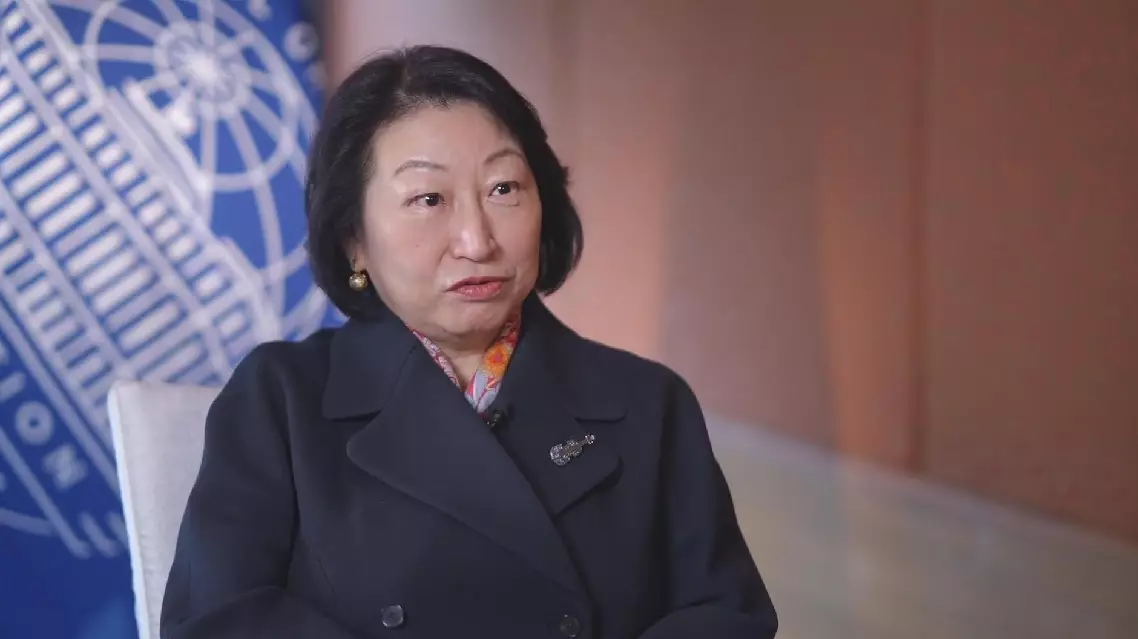
The International Organization for Mediation (IOMed), the world's first intergovernmental legal organization dedicated to resolving international disputes through mediation, fills an institutional gap in international mediation, the body's Secretary-General Teresa Cheng said.

In a recent interview with the China Global Television Network (CGTN) in Beijing, Cheng talked about the significance of IMOed's inauguration in October 2025.

"If we look at the United Nations Charter again, Article 33, we've provided for these forms of dispute resolution. Yet for 80 years, somehow there is not a body that is dedicated exclusively to mediation. And I think that triggered these 19 countries when they made their joint statement to say, let's establish such a body, so it is filling the institutional gap. The second thing is that it also complements the existing dispute resolution mechanisms. Litigation arbitration is at the moment still a prevailing form of dispute resolution, but the states see the need, also called upon by the UN Charter, to establish something exclusively for mediation to complement the existing systems," said Cheng. "There are a number of states, in particular those from the Global South, are very interested in having a say in the development of this new body. Therefore, through this organization, there are, as I said, 38 signatory states now. I think the world is in a very interesting stage at the moment. There are a lot of differences, sometimes views get entrenched. By having a body that brings into effect inclusivity multilateralism, and of course, accommodating and understanding each other through dialogue, is a very important feature." she said.

Housing the organization in the Hong Kong Special Administrative Region(HKSAR) also showed China's willingness to contribute to international mediation, said Cheng.

"The fact that we are housed and placed in the Hong Kong SAR, part of China, is because China is willing to contribute to this development, and Hong Kong very generously allows us to put our headquarters in one of the heritage buildings in Hong Kong," she added.

IOMed fills institutional gap in international mediation: secretary-general

IOMed fills institutional gap in international mediation: secretary-general

Recommended Articles