As the new year begins, naval aviation units of the Southern Theater Command of the Chinese People's Liberation Army (PLA) have launched training exercises to build a strong foundation for military readiness in the year ahead.
Multiple fixed-wing anti-submarine patrol aircraft swiftly took off and headed towards designated maritime airspace for training. Pilots, supported by navigators and flight engineers, maintained stable flight and successfully reached the mission area. Crew members across all stations coordinated closely, effectively identified targets and executed simulated attacks.
Simultaneously, a red-blue force confrontation exercise unfolded as several J-15 fighter jets took off following thorough ground preparations. Pilots from both sides used radar to search for targets and adjusted their formations based on ground control guidance, executing tactical maneuvers in the air. At an airfield in south China's Hainan Province, several fighter jets took off sequentially to conduct planned training missions. After completing the first round of exercises, ground crew immediately began aircraft maintenance operations. Pilots returned promptly to the tactical debrief room for comprehensive reviews and analyses of their performances. As dusk approached, multiple anti-submarine aircraft took off in succession, engaging in a series of training scenarios. Pilots continually adjusted their flight positions, skillfully maneuvering the aircraft to execute hovering, platform landings, and turning exercise to sharpen their flying proficiency.
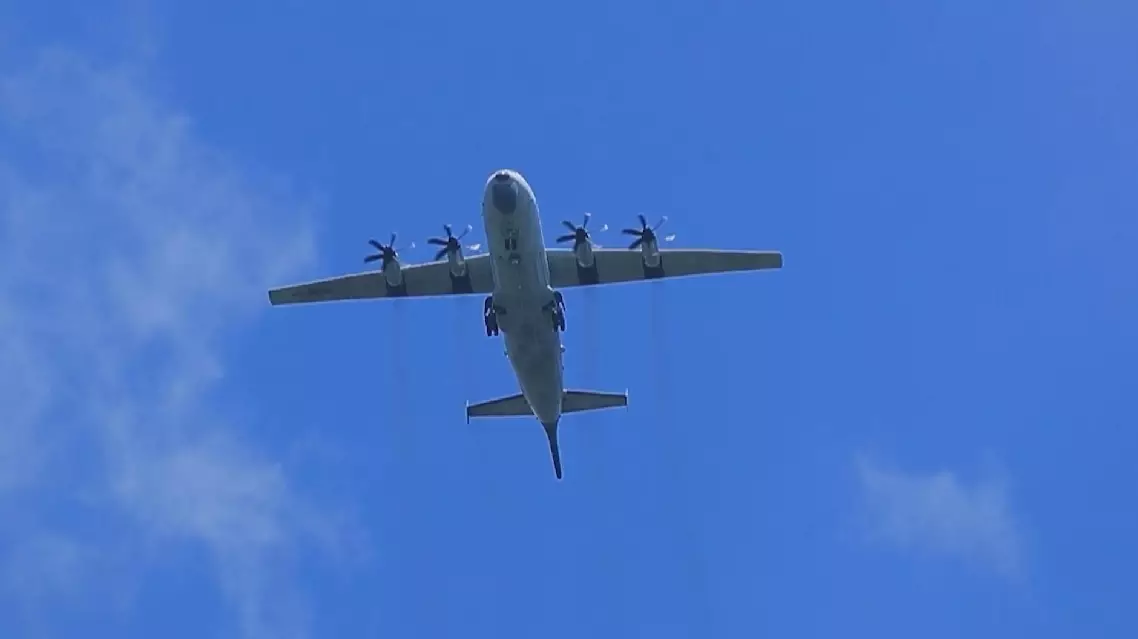
China’s southern theater command kicks off new year training
The International Organization for Mediation (IOMed), the world's first intergovernmental legal organization dedicated to resolving international disputes through mediation, fills an institutional gap in international mediation, the body's Secretary-General Teresa Cheng said.
In a recent interview with the China Global Television Network (CGTN) in Beijing, Cheng talked about the significance of IMOed's inauguration in October 2025.
"If we look at the United Nations Charter again, Article 33, we've provided for these forms of dispute resolution. Yet for 80 years, somehow there is not a body that is dedicated exclusively to mediation. And I think that triggered these 19 countries when they made their joint statement to say, let's establish such a body, so it is filling the institutional gap. The second thing is that it also complements the existing dispute resolution mechanisms. Litigation arbitration is at the moment still a prevailing form of dispute resolution, but the states see the need, also called upon by the UN Charter, to establish something exclusively for mediation to complement the existing systems," said Cheng. "There are a number of states, in particular those from the Global South, are very interested in having a say in the development of this new body. Therefore, through this organization, there are, as I said, 38 signatory states now. I think the world is in a very interesting stage at the moment. There are a lot of differences, sometimes views get entrenched. By having a body that brings into effect inclusivity multilateralism, and of course, accommodating and understanding each other through dialogue, is a very important feature." she said.
Housing the organization in the Hong Kong Special Administrative Region(HKSAR) also showed China's willingness to contribute to international mediation, said Cheng.
"The fact that we are housed and placed in the Hong Kong SAR, part of China, is because China is willing to contribute to this development, and Hong Kong very generously allows us to put our headquarters in one of the heritage buildings in Hong Kong," she added.
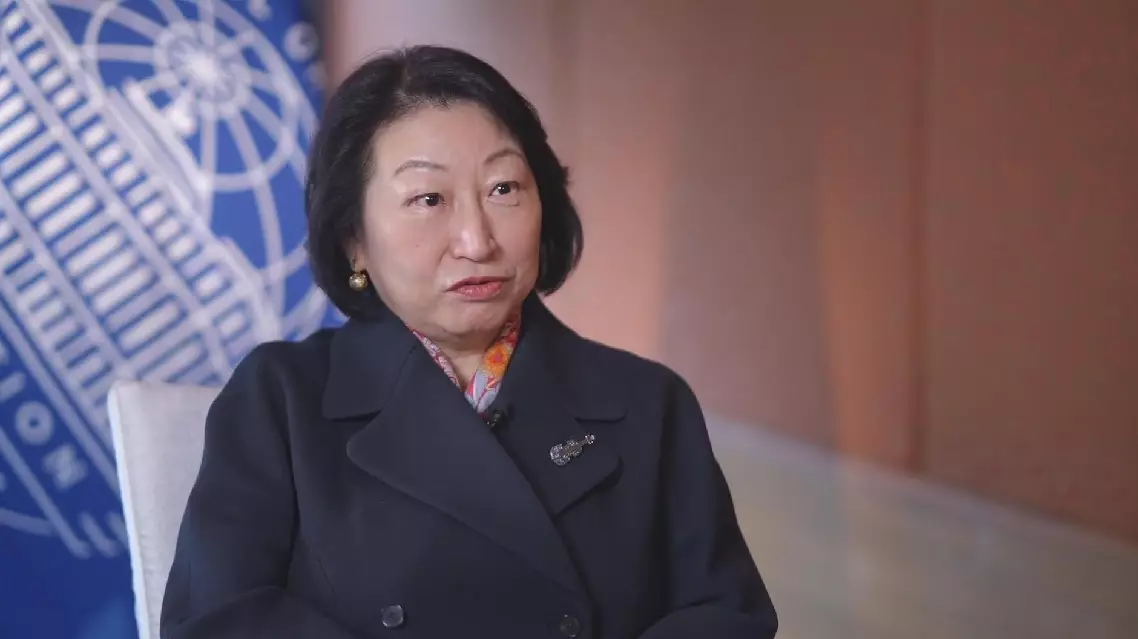
IOMed fills institutional gap in international mediation: secretary-general