A batch of Russian-provided evidence related to notorious Japanese Unit 731's wartime atrocities, made public by the China Central Archives, has revealed a clear chain of evidence proving the "special transfer" of living human beings for experiments during World War II.
The archive copies from Russia include trial records of Unit 731 members, investigation reports on the force's crimes, and internal official correspondence of former Soviet Union authorities, covering the period from May 11, 1939 to Dec 25, 1950.
During World War II, the Japanese aggression forces established a biological warfare network across multiple Asian countries, with Unit 731 located in Harbin, northeast China's Heilongjiang Province, serving as a top-secret base for biological weapons and human experiments.
The "special transfer" was the heinous system by which Unit 731 obtained live experimental subjects during World War II.
One key figure is Shinichi Tsujimoto, a Japanese war criminal who once served as the special commander of the Japanese Kwantung Military Police. According to his confession, Tsujimoto was responsible for selecting people across northeast China as experimental subjects and secretly transferring them to Unit 731. They were farmers, students, workers, and even children.
"Archival records show that individuals designated for special purposes included those suspected of engaging in intelligence activities against Japan, participants in anti-Japanese resistance, and members of China's national liberation movement. According to his interrogation records, more than 200 people were transferred from his unit to Unit 731 after he assumed command," said Fu Yuanyuan, a researcher of the China Central Archives.
The documents indicate that such transfers required Tsujimoto's personal approval, as well as authorization from the head of Unit 731's Third Division and the chief of the Military Police Headquarters. Five official seals were needed.
Among the archival materials is a hand-drawn sketch map of Unit 731 by another Japanese war criminal. The map identifies the General Affairs Division as the key link coordinating with the Japanese Kwantung Military Police, where Tsujimoto served.
Multiple confessions also describe how vehicles carrying living human experimental subjects entered Unit 731's internal prison through underground passages connected to the General Affairs Division.
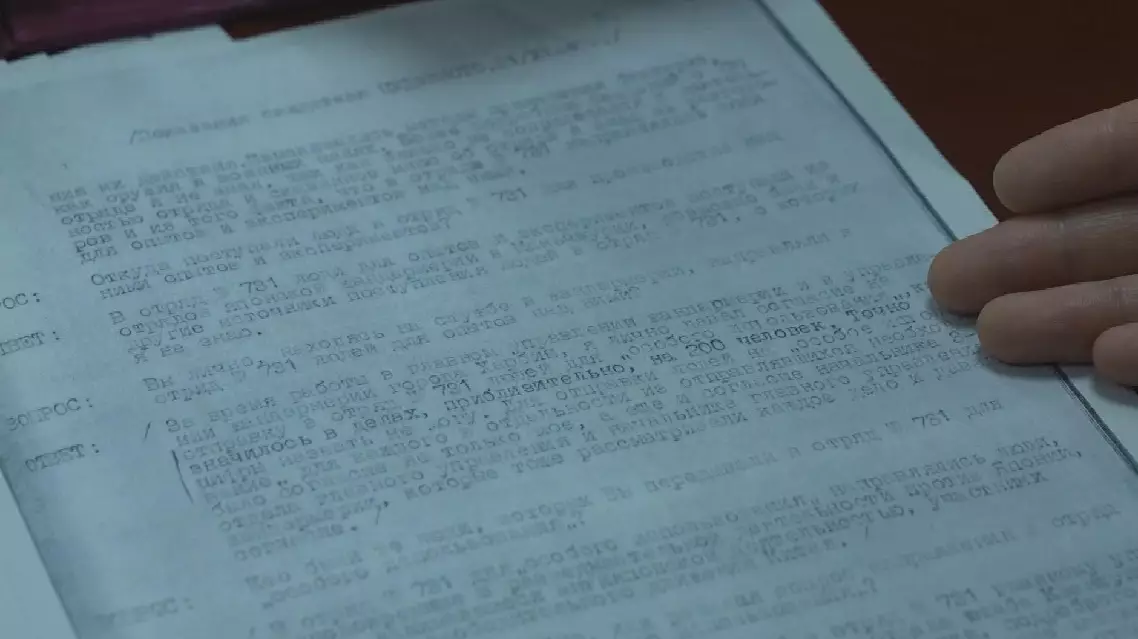
Evidence reveals transfer of live humans for experiments by Unit 731 of WWII Japanese forces
A major port in northern Venezuela came under U.S. airstrikes in the early hours of January 3, which caused extensive damage to civilian infrastructure, destroyed critical medical supplies in a warehouse, and severely impacted centuries-old cultural heritage sites, according to local residents.
The La Guaira Port, a vital hub for imports that support daily life in the region, was heavily damaged during the attack.
Large quantities of medical supplies stored at the port were destroyed. A historic cultural building dating back for some 300 years was also badly damaged by the bombardment.
Residents living near the port recalled the terrifying scenes as explosions shook nearby neighborhoods.
Humberto Bolivar, who lives in a community separated from the port by only a main road, said the blast waves shattered his home's windows, while stray shrapnel struck the water tank on his roof. According to reports, three missiles were fired at the port that night.
Bolivar said that beyond material losses, he is most concerned about the psychological impact on his children, who remain too frightened to leave their home days after the attack.
"The United States invaded our country. The children were frightened. This is not good for them, because it leaves some children with psychological trauma. They do not want to go to school or leave the house, because they are afraid that something worse might happen. We truly do not want this to happen to our country," he said.
Apart from civilian facilities, local cultural heritage site was also affected.
The La Guaira state government building, a structure with nearly 300 years of history and once served as the site of Venezuela's first national customs office, was struck by the force of the explosions.
Windows of the building were shattered, and furniture scattered across the floor.
"As people of La Guaira, we feel deep pain. Our cultural heritage has been bombed. We are living in constant anxiety and suffering, and life can no longer be the same as it was before," said a local named Henry Cumares.
The U.S. side has claimed the airstrikes targeted warehouses allegedly used to store narcotics. However, locals refuted such accusation.
"According to what Donald Trump said, they bombed this place using the excuse that the warehouses here were used to store drugs at the port. But based on the video released by our governor, these warehouses that were burned contained medicine for kidney patients and foods. Many people depend on these supplies to survive. I think the bombing is extremely despicable," said a local resident named Alejandro Capriles.
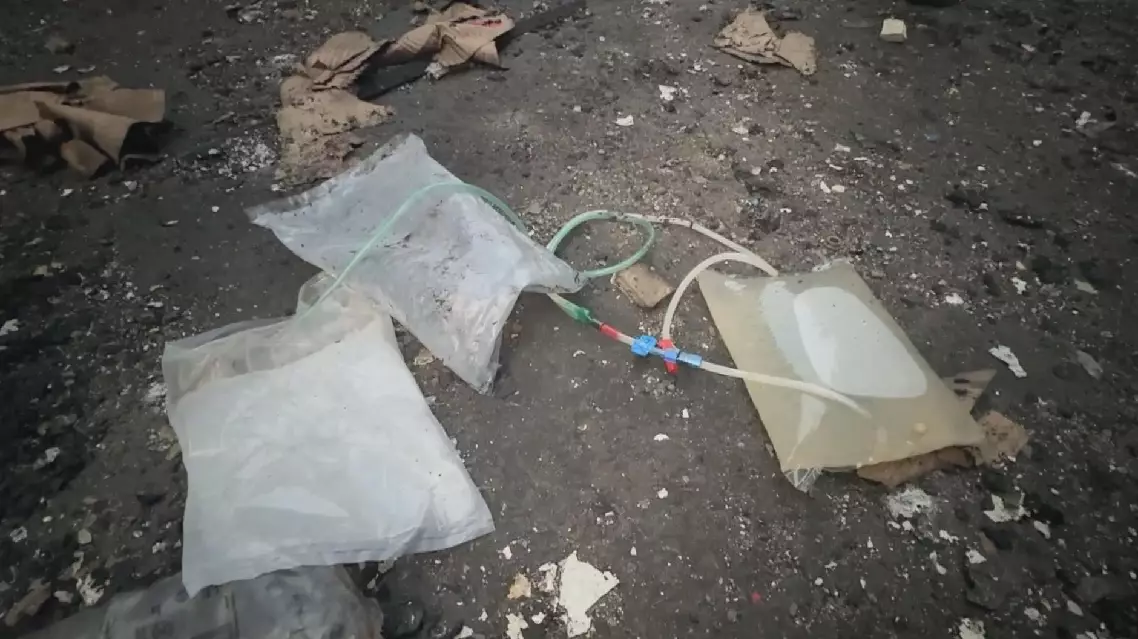
US strike hits Venezuelan port, wrecking medical supplies, heritage building