Two years after a series of strong earthquakes struck Japan's Noto Peninsula, Wajima City in Ishikawa Prefecture, one of the hardest-hit areas, continues to face a slow and complex recovery in both reconstruction and tourism.
On January 1, 2024, a series of strong earthquakes, including a major 7.6-magnitude quake, struck at shallow depth in the Noto region of Ishikawa Prefecture and triggered a tsunami. The Japan Meteorological Agency has officially named it the 2024 Noto Peninsula Earthquake.
The Wajima Lacquer Museum, a major tourist attraction before the disaster, still bears visible scars.
Kensei Sumi, secretary-general of the Wajima Lacquerware Commerce and Industry Cooperative Association, said the museum's first floor reopened to the public three months after the quake. However, the exhibition rooms on the second floor remain closed as they have not yet been restored from the damage.
"The violent shaking of the earthquake caused glass panels to fall, damaging the exhibits within. The building is publicly owned by the city of Wajima, and the municipal government had planned to repair it. Although a budget was allocated, no contractor willing to undertake the repairs has been found, leaving the structure in its current damaged state," said Sumi.
The museum, once a major attraction for visitors, is now far less frequented due to the broader downturn in local tourism. Sumi notes that current daily visitor numbers are only about one-tenth of pre-earthquake levels, attributing the decline primarily to the slow restoration of surrounding infrastructure rather than to the museum itself.
"Currently, this site is just one among many infrastructure projects in need of repair, including roads and buildings. The Wajima Municipal and Ishikawa Prefectural governments must address them sequentially, prioritizing the most urgent sites first. The sheer number of facilities requiring repair, coupled with a shortage of available construction companies, is the primary reason for the slow progress. Furthermore, the fact that most contractors have to travel from Kanazawa City, approximately 100 kilometers away, creates a logistical constraint that further hinders reconstruction," said Sumi.
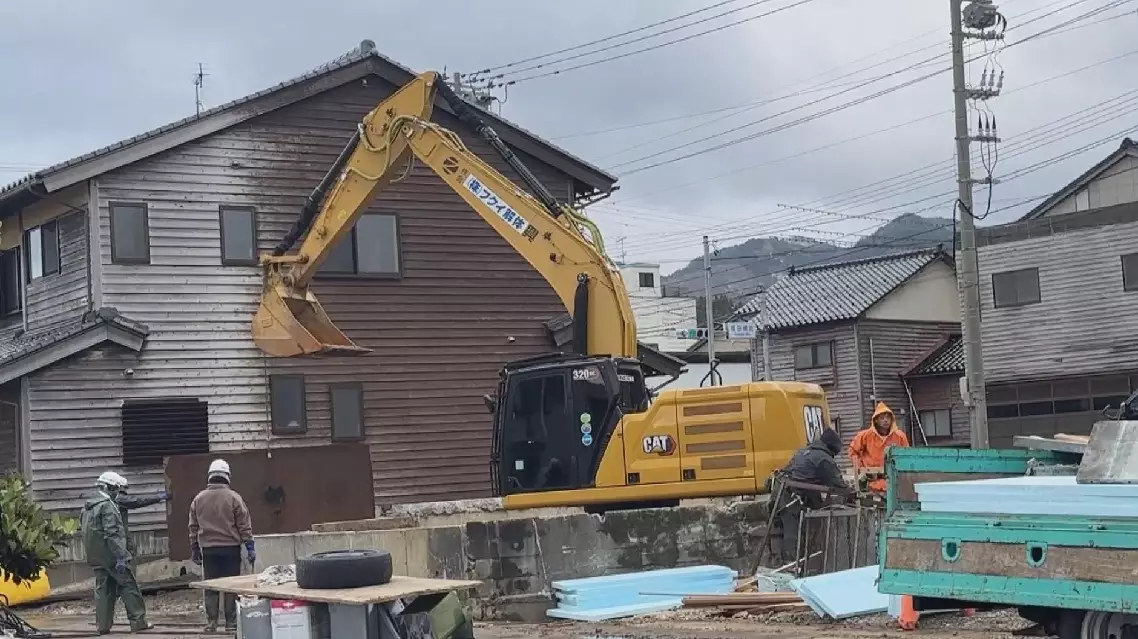
Two years on, Japan's Noto Peninsula still struggles with earthquake recovery