Skip to Content Facebook Feature Image

Expanded drone utilization boosts low-altitude economy in China's Greater Bay Area

China

China

China

Expanded drone utilization boosts low-altitude economy in China's Greater Bay Area

2026-01-11 16:45 Last Updated At:01-12 23:18

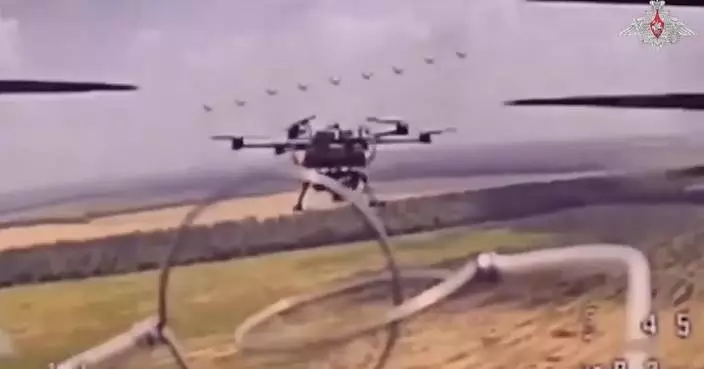
China's Guangdong–Hong Kong–Macao Greater Bay Area (GBA) is experiencing a boom in its low-altitude economy as companies continue to expand the range of applications for drones.

One very popular use of drones in recent years is drone-performed light shows.

At a drone show company in Shenzhen City, south China's Guangdong Province, formation designers are working hard to prepare for the upcoming Spring Festival season.

Designer Qin Haiqun said that during the recent New Year holiday period, the company simultaneously staged dozens of drone shows featuring tens of thousands of flights both domestically and internationally.

"After completing New Year's Eve shows in multiple locations at home and abroad, our schedule ahead is also very tight. We expect the number of drones deployed in a single performance to continue increasing, as many clients are now asking for shows featuring 5,000, 8,000 or more than 10,000 of drones," said Qin.

Xue Haoran is a drone flight path planner who leads a team of over ten members. As the industry continues to thrive, the team has traveled tirelessly across the country to survey sites and undertake various flight path planning projects.

"Initially, we were responsible for the entire Shenzhen area, but recently we've been taking on projects outside that scope. This year, we've taken on projects in Jiangsu, Zhejiang, Shanghai, Zhongshan, cities in Hainan Province, as well as cities near Zhuhai," said Xue.

Starting from planning flight routes of just over ten kilometers, Xue's team is now planing hundred-kilometer level routes while developing application plans for special scenarios such as cross-city and cross-sea operations.

"Initially, the drones were used primarily for standard courier services, essentially logistics using aircraft instead of cars. Now drones are transporting items like seafood and fruits with short shelf lives, significantly improving delivery times. They are also being used to transport confidential documents and urgently needed medical supplies for hospitals," said Xue.

To meet the growing demand for drones driven by increased use, manufacturers in the region have upgraded their production methods.

In Guangzhou, the world's first mass production facility for electric vertical takeoff and landing aircraft with an annual production capacity of more than 10,000 is now entering a critical trial production phase.

"We aim to produce ten thousand aircraft annually, which means delivering one every half hour. Such a high production efficiency makes it a must for us to build automated production lines similar to that of the automotive industry," said engineer Yang Qi.

Expanded drone utilization boosts low-altitude economy in China's Greater Bay Area
Expanded drone utilization boosts low-altitude economy in China's Greater Bay Area

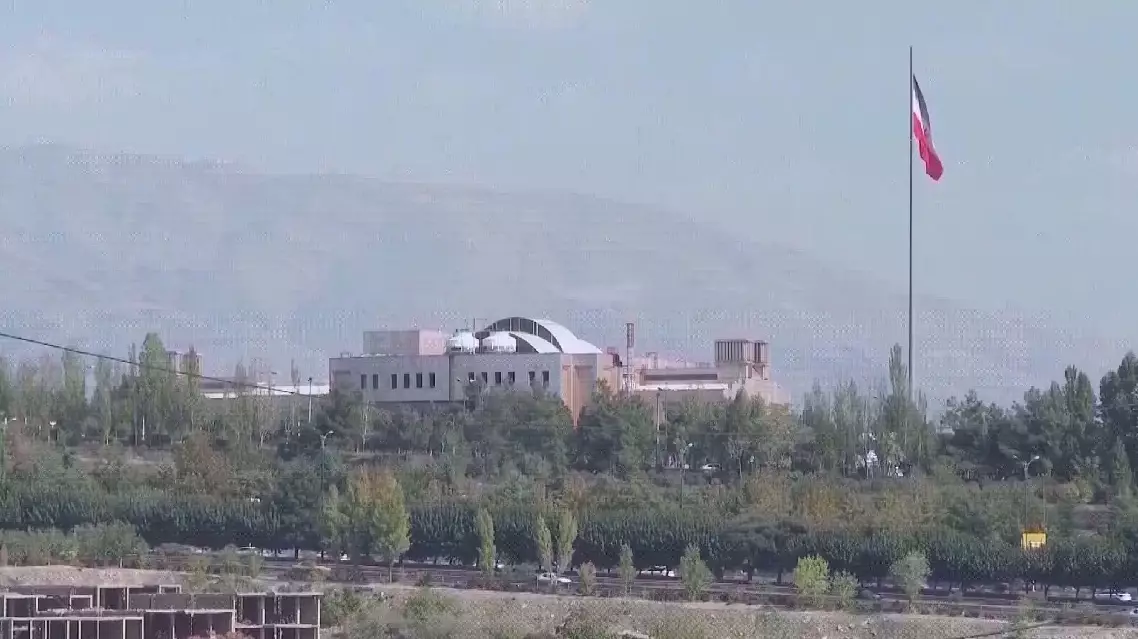
Iranian Foreign Minister Seyed Abbas Araghchi said that Tehran currently has no plans to meet with U.S. officials, while consultations with Qatari and Pakistani mediators continue over Iran's conditions for resolving the crisis, Qatar's Al Jazeera reported Saturday.

In an interview with Al Jazeera, Araghchi dismissed reports of possible meetings as media speculation, saying Iran saw no need to meet with American officials at present.

He said Tehran would decide whether to hold direct or indirect negotiations after Washington accepted Iran's conditions.

Araghchi said an Iranian delegation had traveled to Qatar for further discussions, adding that his aide was there to continue consultations with mediators.

According to Araghchi, Iran's conditions include recognition of a new shipping route through the Strait of Hormuz that Tehran had worked out with Oman, and the closure of other routes.

He said Tehran also sought the lifting of sanctions imposed after the Islamabad Memorandum of Understanding (MoU), a reduction in U.S. military forces in the region, the restoration of sanctions waivers for Iranian oil exports, and the release of all frozen Iranian funds, including those held in Qatar.

Iran also demanded an end to hostilities on all fronts, including Lebanon, he said.

Araghchi said mediators had presented proposals concerning Iran's nuclear program, which Tehran was reviewing as part of what he described as a second phase.

The Iranian foreign minister also said a letter from U.S. Vice President JD Vance had been reviewed at high-level meetings, describing the American effort to open the door to broader dialogue and understanding as a "positive step."

On Feb 28, Israel and the United States launched joint attacks on Tehran and other Iranian cities. Iran responded with waves of missile and drone attacks targeting Israel and U.S. bases and assets in the region, and tightened its grip on the Strait of Hormuz.

A ceasefire was achieved between the warring parties on April 8. On June 18, Iran and the United States signed the MoU on ending the war in the region on all fronts.

Under the MoU, the two countries were scheduled to hold negotiations within 60 days, ending on Aug 17, to reach a final agreement on Iran's nuclear program and the removal of sanctions. However, they failed to make sufficient progress toward a deal.

Iran says no plans to meet U.S. officials, consultations with mediators continue

Iran says no plans to meet U.S. officials, consultations with mediators continue

Iran says no plans to meet U.S. officials, consultations with mediators continue

Iran says no plans to meet U.S. officials, consultations with mediators continue

Recommended Articles