The Chinese People's Liberation Army (PLA) Navy's hospital ship, the Silk Road Ark, arrived in Rio de Janeiro, Brazil, on Thursday, beginning a seven-day friendly visit along with medical exchange activities.
This is one of the stops for the hospital ship during its 220-day "Harmony Mission 2025" mission, and also the first visit by a Chinese naval hospital ship to Brazil.
During the visit, the Chinese naval hospital ship Silk Road Ark will be open to the public and will dispatch expert teams to the Marcílio Dias naval hospital and Brazilian Navy Operational Medical Center for medical exchanges. Representatives from the Brazilian Navy's health services department will board the Chinese naval hospital ship for a visit and conduct medical exchanges. Brazilian naval combat officers will take part in the combat rescue demonstration of the Chinese naval hospital ship.
In addition, the Chinese naval hospital ship plans to conduct joint maritime exercises with the Brazilian Navy on topics such as formation navigation and joint search and rescue of individuals that had fallen into the water.
"This mission aims to enhance cooperation between China and its partners through medical services and cultural exchange activities. It is a journey of friendship, peace, and benevolence. We are willing to work with countries in the South Pacific and Latin America to provide more public security products to the international community and jointly practice the vision of building a community with a shared future for humanity," said Zhang Peng, a member of Harmony Mission 2025.

China's navy hospital ship arrives in Brazil for friendly visit
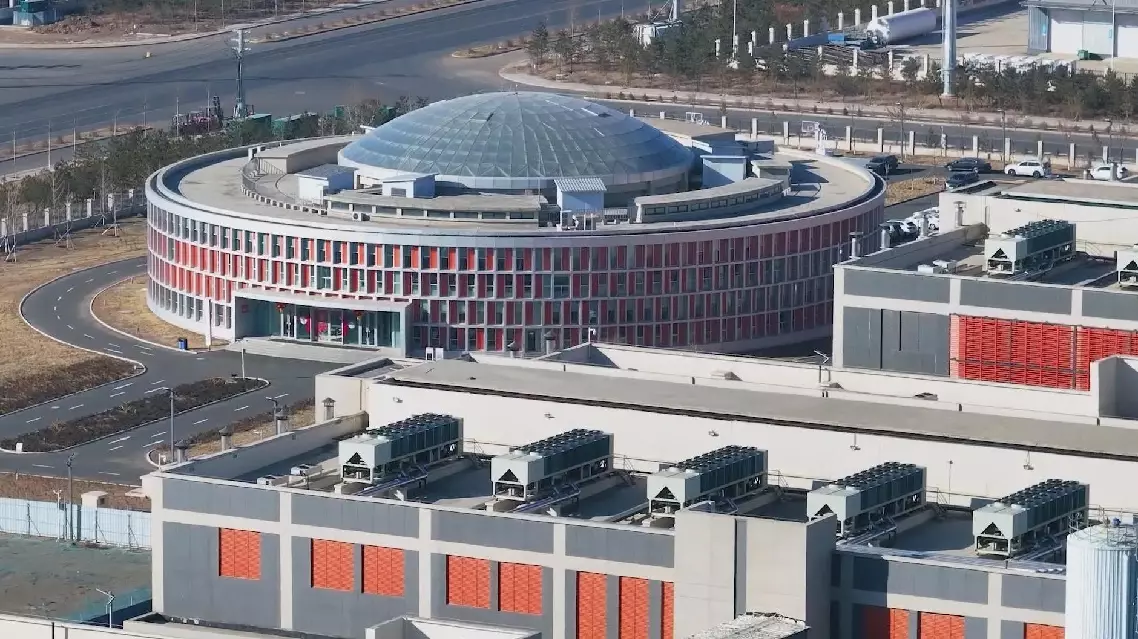
China's Inner Mongolia is bolstering its infrastructure network to drive growth in the green computing sector, seeking to capitalize on its energy resources and geographical advantages.
In the autonomous region's Ulanqab City, great efforts have been made to attract companies from various sectors such as big data and new energy with the scale of local computing power achieving an average annual growth rate of 195 percent over the past two years.
The city has signed contracts with eight companies and is set to launch a batch of intelligent computing center projects.
"By introducing leading enterprises in computing power and artificial intelligence applications, and gathering both upstream and downstream enterprises, we will build an AI industrial ecosystem that integrates computing power services, trading, and intelligent applications," said Liu Huansuo, deputy head at the Ulanqab Big Data Administration.
In Hohhot, another major city in the region, the proportion of green electricity used in the local computing power industry stands at 86 percent. The core zone of the city's computing power industry has gathered 50 large data centers, including operators, financial institutions and some leading enterprises.
"We will continue to improve green computing power infrastructure, make forward-looking arrangements for future industries such as quantum computing, constantly optimize the functions of the computing power deployment platform, and strive to build a national base for supporting green computing power," said Zhang Lei, director at the digital economy development division under the Government Service and Data Management Bureau of Inner Mongolia Autonomous Region.
Inner Mongolia boosts green computing power, hoping to foster AI industrial ecosystem