Over 400 shipping industry leaders and experts gathered in Shanghai on Wednesday for the 2026 Digitalization and Intelligence of Shipping and Trade Conference, which was themed "Digital Waves, Smart Trades".
Discussions focused on how cutting-edge technologies like AI can help streamline shipping data, standardize laws and regulations, and drive low-carbon growth.
With the global shipping industry facing geopolitical uncertainties, experts at the forum emphasized that data-driven "smart shipping" is no longer a choice, but a necessity for building a resilient and efficient future for global trade.
"We need to set common standards to get everyone on the same page. By working together on these rules, we can break down data barriers and let information flow freely. This will build a secure and efficient foundation for digital shipping and help upgrade the whole global system," said Zhu Bixin, board director and president of China COSCO Shipping Corporation Limited.
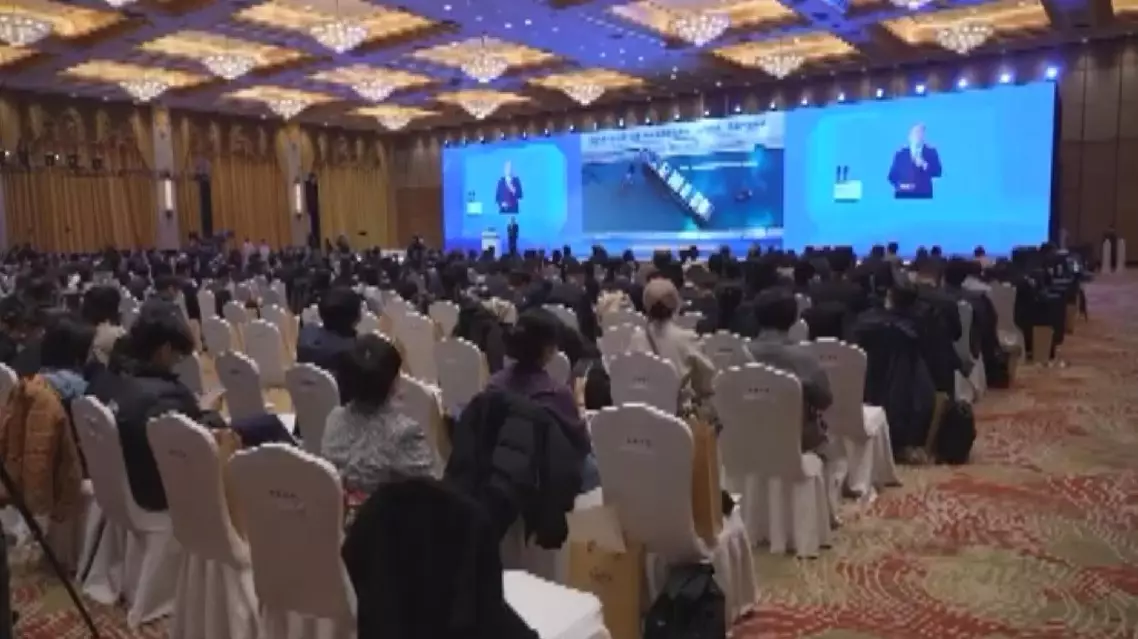
Over 400 maritime industry leaders gather in Shanghai to discuss smart shipping
An acclaimed Chinese vocational program is expanding its skills training in Africa beyond traditional sectors and into the digital realm.
The Luban Workshop, China's vocational workshop initiative training talent overseas, has for years served as a bridge for innovation and skills development between China and Africa.
Named after the ancient Chinese woodcraft master Lu Ban, the program offers a mutually beneficial model for vocational education cooperation.
In recent years, China-Africa cooperation has expanded from traditional infrastructure projects into emerging fields, and talent training efforts have followed suit.
At Machakos University in Kenya, one Luban Workshop has moved beyond textbook instruction to address the actual needs of the digital economy.
"Initially, we had students training mostly on theoretical aspects of computing or technology, but through the Luban Workshops, students are able to have more time to do their practicals," said Eric Omuya, Chairman of the Department of Computing and Information Technology, Machakos University.
The approach is known as EPIP: engineering provides the foundation, practice sharpens skills, innovation generates ideas, and projects tackle national challenges.
The EPIP training prioritizes practical skill acquisition, placing great emphasis on hands-on proficiency.
"We emphasize on 70 percent practical, hands-on skills, and then we let them do the 30 percent, which is actual theory coverage," said Humphrey Mwambaji, a technologist at the Luban Workshop, Machakos University.
That hands-on focus has led to initiatives such as "Swiftly Remit," where students apply blockchain technology to break through the billion-dollar bottleneck in international money transfers. Their work is receiving national recognition.
"The Ministry of ICT (Information, Communications and Technology) and Digital Economy in Kenya is trying to come up with the ICT policy on AI, and Machakos University staff, myself included, are participating in that process," said Omuya.
The model is expanding beyond Kenya. At the Tianjin Modern Vocational Technology College in north China, a separate but parallel initiative is taking root, sharing this high-level expertise with partners in Morocco and Tanzania.
"In many African countries, Chinese companies have established related enterprises or production lines. With the export of these production technologies, we have a situation where many local enterprises urgently need high-skilled technical talents in their industries," said Yue Kun, Dean of the School of Intelligent Engineering, Tianjin Modern Vocational Technology College.
The initiative goes beyond computers. In Tanzania and Morocco, specialized teams are using AI-powered drones to transform farming practices, boosting efficiency by up to 1,000 times.
"While expanding production efficiency, we can also reduce pesticide usage to 10-15 percent of the original amount. At the same time, we can reduce water usage to about one-third of the original. In this way, through the application of technology, we have both improved production efficiency and avoided waste of local resources, saved water, and reduced pesticide pollution," said Yue.
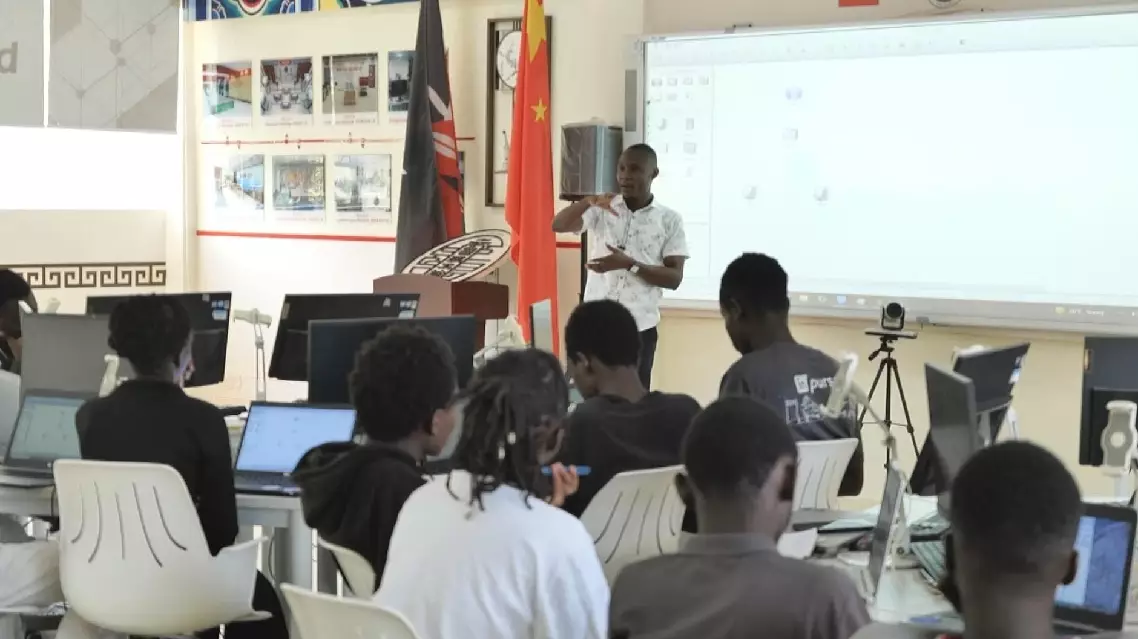
Luban Workshops in Africa venture into digital skills training