China's loan prime rate (LPR), a market-based benchmark lending rate, remained unchanged for the tenth straight month in March, the People's Bank of China (PBOC) announced on Friday.
The one-year LPR, which guides pricing for corporate and short-term loans, held at 3.0 percent, while the over-five-year rate, a key reference for mortgage lending, stayed at 3.5 percent, according to the Chinese central bank.
Market analysts said the decision aligned with expectations, driven by two key factors. First, the LPR's pricing anchor, the seven-day reverse repo rate, has remained stable recently. Second, commercial banks' net interest margins, along with real-economy financing costs, are already at low levels, leaving little incentive for lenders to voluntarily trim their LPR quotes.
Earlier this year, PBOC Deputy Governor Zou Lan said at a State Council press briefing that there is still room for reserve requirement ratio cuts and interest rate reductions in 2026.
On Thursday, the central bank reaffirmed its commitment to implementing a "moderately loose" monetary policy throughout the year to maintain adequate liquidity and keep overall social financing costs low.
Since the beginning of the year, China's economic performance has exceeded market expectations, reducing the immediate necessity for counter-cyclical monetary easing. This provides room to maintain a moderately loose policy stance later this year, said Wang Yifeng, deputy director of Everbright Securities Research Institute.
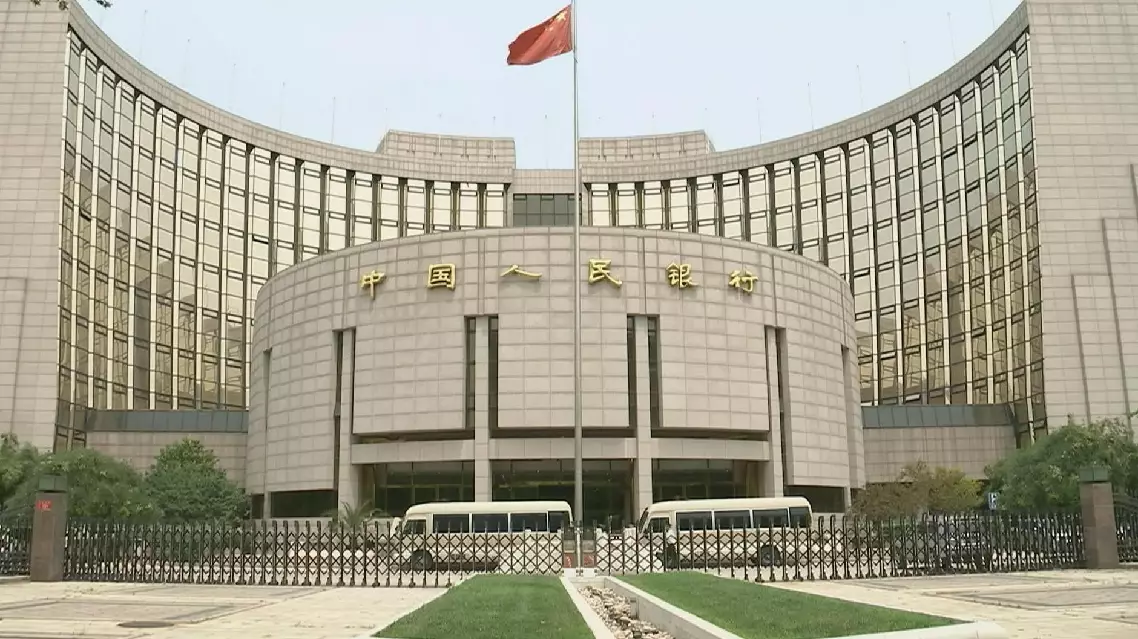
China's loan prime rates remain unchanged for 10th consecutive month
After its massive box office success in China, the tear-jerking film "Dear You" is now making waves across the Pacific, striking a powerful emotional chord with viewers across Canada since its North American release this month.
Known in Chinese as "Love Letters to Grandma," the low-budget, regional-dialect film has become one of China's most unexpected box office sensations, grossing over 2 billion yuan (about 300 million U.S. dollars) domestically.
The film follows a Teochew (Chaoshan) grandmother's decades-long wait for her husband, who left for Southeast Asia to make a living, and the grandson who journeys to Thailand to uncover the truth behind the letters that held the family together. Those letters, known as qiaopi, were the vital remittance notes that overseas Chinese sent home, carrying both financial support and personal messages on a single sheet of paper.
It hit theaters across 17 Canadian cities on Sept 4. In Vancouver, screenings are maintaining 60 to 70 percent occupancy, drawing audiences across generations.
At a screening on Thursday, audience members were moved to tears, particularly those of Chinese descent.
Young children said it reminded them of their own grandmothers. An elderly woman, originally from the Chaoshan region, said the film brought their ancestors' spirit to life on screen.
"I'm so proud to come from Chaoshan. I also want to thank these actors. They aren't acting at all. They have brought the spirit of our forebears, the early Chinese immigrants, vividly before our eyes. It was truly moving. I teared up several times," the viewer told CCTV.
Since its domestic release in late April, "Dear You" has taken its overseas run from Southeast Asia to Australia, New Zealand, Europe, and North America.

Chinese hit film 'Dear You' moves Canadian viewers to tears