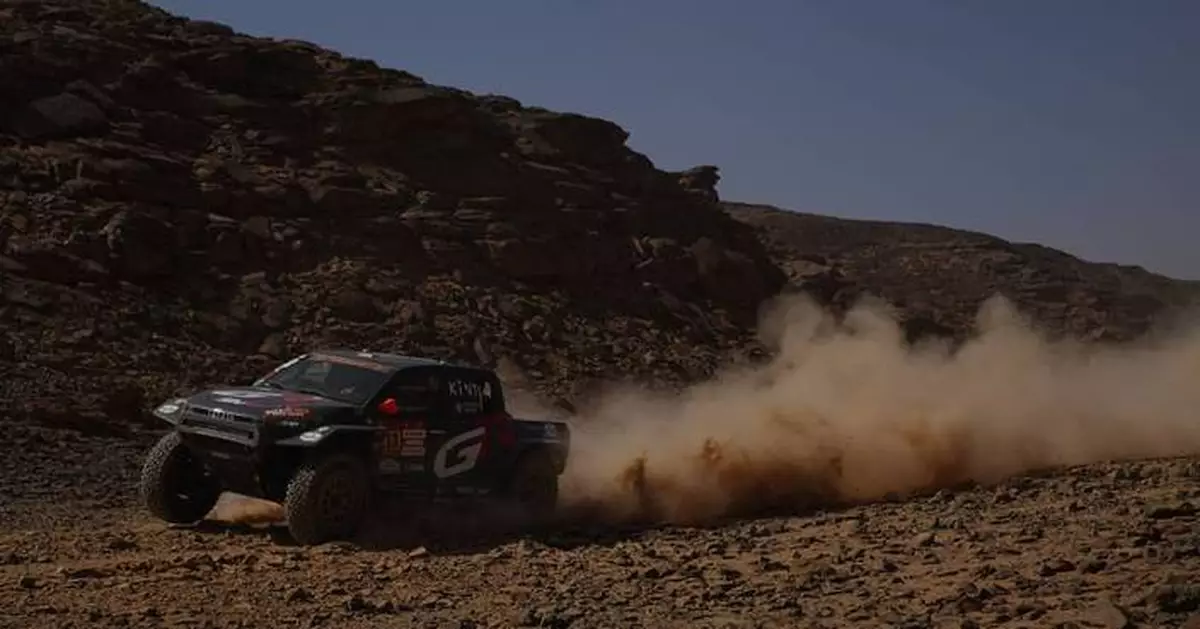
WADI AD-DAWASIR, Saudi Arabia (AP) — Saood Variawa snatched stage eight from South African compatriot Henk Lategan by three seconds after an impressive comeback drive in the Dakar Rally on Monday.
Variawa, only 20 and driving in his third Dakar, started 26th and was in sixth place with 100 kilometers to go in the 483-kilometer loop outside Wadi ad-Dawasir. Then he was third after 414 and second after 448.
Click to Gallery
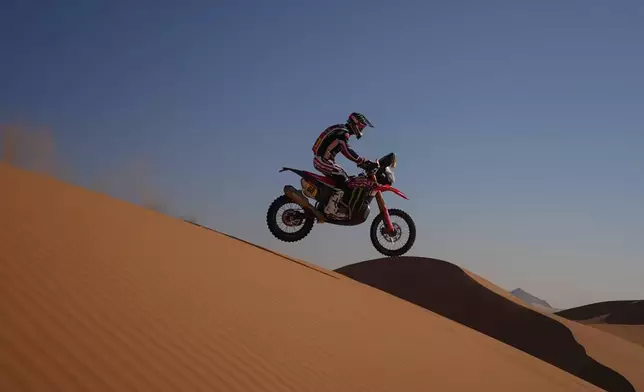
Rider Tosha Schareina competes during the eighth stage of the Dakar Rally with a start and finish at Wadi Ad Dawasir, Saudi Arabia, Monday, Jan.12, 2026. (AP Photo/Thibault Camus)
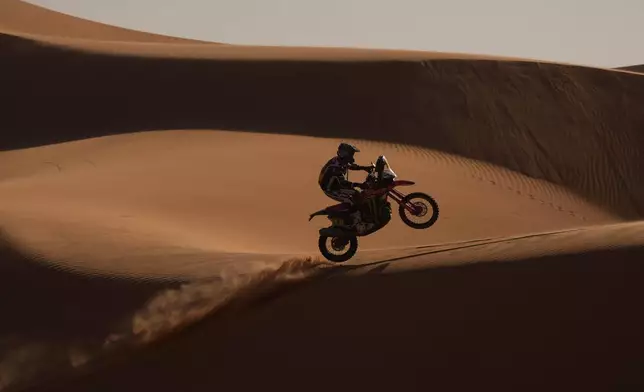
Rider Ricky Brabec competes during the eighth stage of the Dakar Rally with a start and finish at Wadi Ad Dawasir, Saudi Arabia, Monday, Jan.12, 2026. (AP Photo/Thibault Camus)
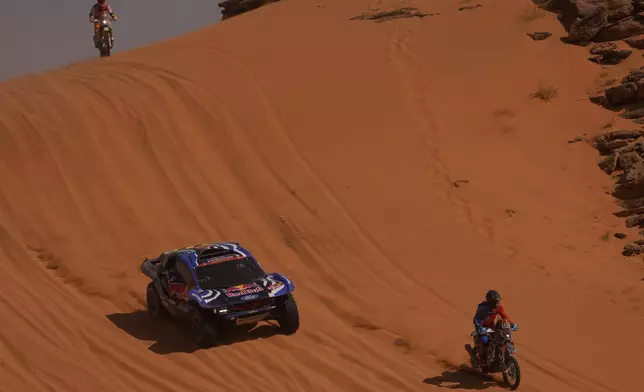
Driver Carlos Sainz and co-driver Lucas Cruz compete with riders David Brock, bottom right, and Fernando Dominguez, top left, during the eighth stage of the Dakar Rally with a start and finish at Wadi Ad Dawasir, Saudi Arabia, Monday, Jan.12, 2026. (AP Photo/Thibault Camus)
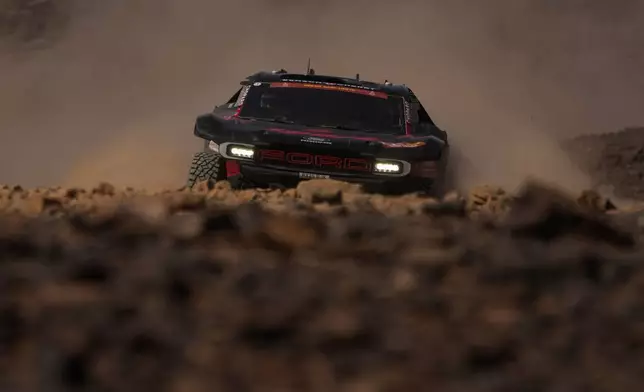
Driver Romain Dumas and co-driver Alex Winocq compete with riders David Brock, right, and Fernando Dominguez, in the background, during the eighth stage of the Dakar Rally with a start and finish at Wadi Ad Dawasir, Saudi Arabia, Monday, Jan.12, 2026. (AP Photo/Thibault Camus)
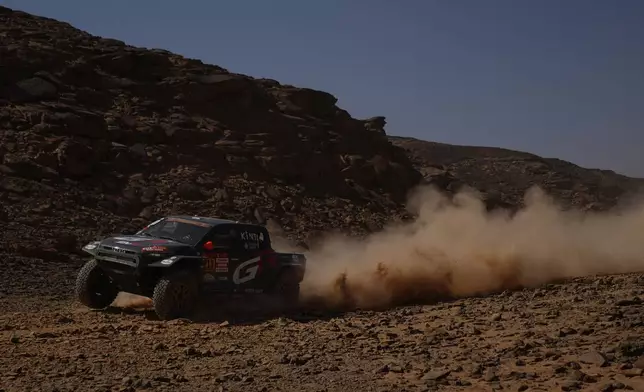
Driver Saood Variawa and co-driver Francois Cazalet compete during the eighth stage of the Dakar Rally with a start and finish at Wadi Ad Dawasir, Saudi Arabia, Monday, Jan.12, 2026. (AP Photo/Thibault Camus)
For the second straight day Lategan had a stage win ripped from his grasp. On Sunday his Toyota's rear damper broke 30 kilometers from the finish.
Meanwhile, Luciano Benavides became the overall motorbike leader for the first time in his ninth Dakar after winning a second straight stage and gobbling up all 7 1/2 minutes in bonus time for faultlessly opening the way.
Benavides won the stage by 4:50 over KTM teammate and defending champion Daniel Sanders and replaced Sanders atop the overall by 10 seconds going into the two-day marathon stage.
Monday's stage, the longest of the race, had a cocktail of dunes, valleys and rocks but navigation was easier than expected and it turned into a fast, wind-whipped special.
The top five cars — featuring main title contenders Lategan, Nasser Al-Attiyah and Mattias Ekström — were less than a minute apart for the first 400 kilometers until Al-Attiyah's navigation error suddenly dropped him two minutes behind.
Thanks to starting nearly an hour after the opener, Ekström, Variawa sneaked through for his second career stage win. The first last year at 19 made him the youngest stage winner in Dakar history.
“The car was perfect on a very long stage on which it was difficult to keep up with the pace,” Variawa said. “In the dunes we navigated well while a lot of others got lost. At times we went our own way and perhaps that's where we made a difference. I'm very happy and I can’t wait for tomorrow.”
Variawa, following his father Shameer as a Dakar racer, suffered tire, navigation and mechanical problems on Sunday but got his Toyota back up to 13th overall with the aim of a maiden top-10 finish.
Al-Attiyah's Dacia got about 45 seconds back in the closing section to finish fifth and limit his time losses to remain the overall leader by four minutes over Ekström, whose Ford was third on the stage, and six minutes over Lategan.
Nani Roma fell from third to fourth, 9 1/2 minutes back, and Ford teammate Carlos Sainz was another minute behind. It's the closest top five after eight stages in 26 years.
The motorbikes of Sanders and Ricky Brabec were quicker in real time but the seven-plus minutes in time bonuses for opening the dusty track helped Benavides win by the same margin he did on Sunday, nearly five minutes.
“These last two stages were a little bit more fast and in these conditions I can read the roadbook super, super good and make good decisions,” Benavides said.
He has eight career motorbike stage wins, three behind his brother Kevin, the champion in 2021 and 2023.
AP auto racing: https://apnews.com/hub/auto-racing
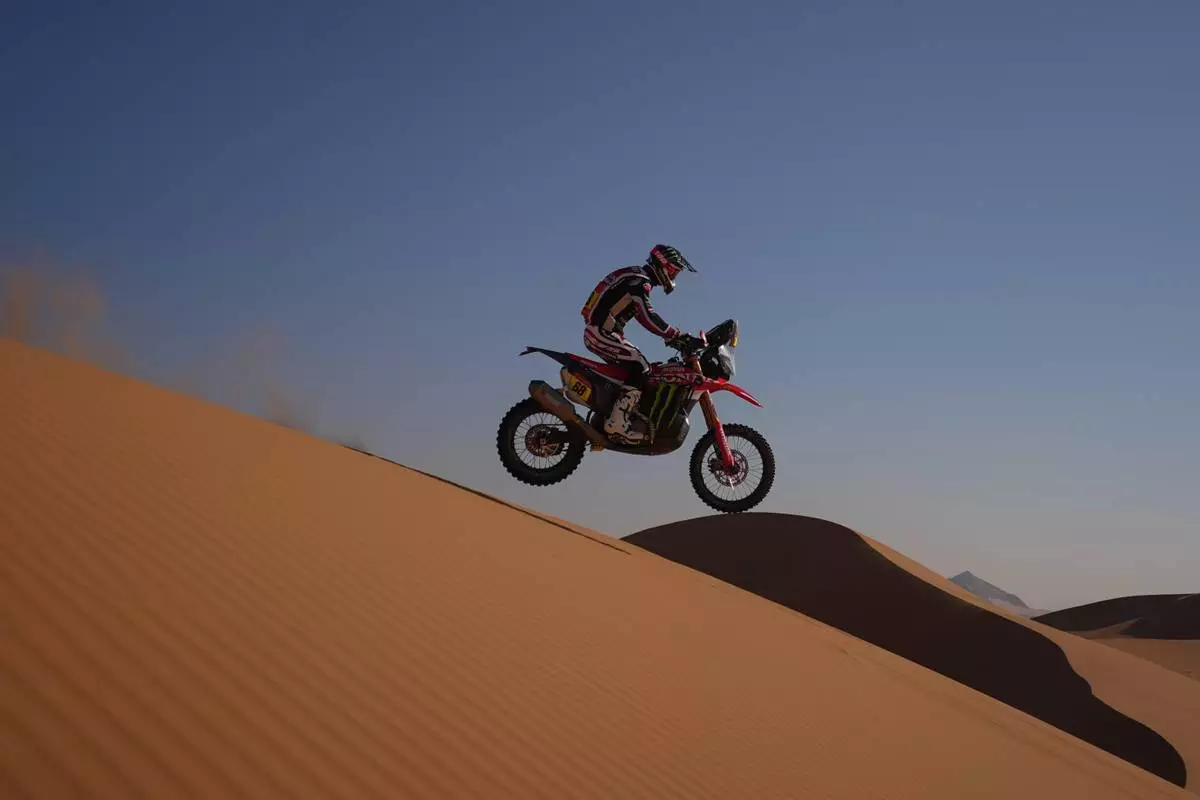
Rider Tosha Schareina competes during the eighth stage of the Dakar Rally with a start and finish at Wadi Ad Dawasir, Saudi Arabia, Monday, Jan.12, 2026. (AP Photo/Thibault Camus)
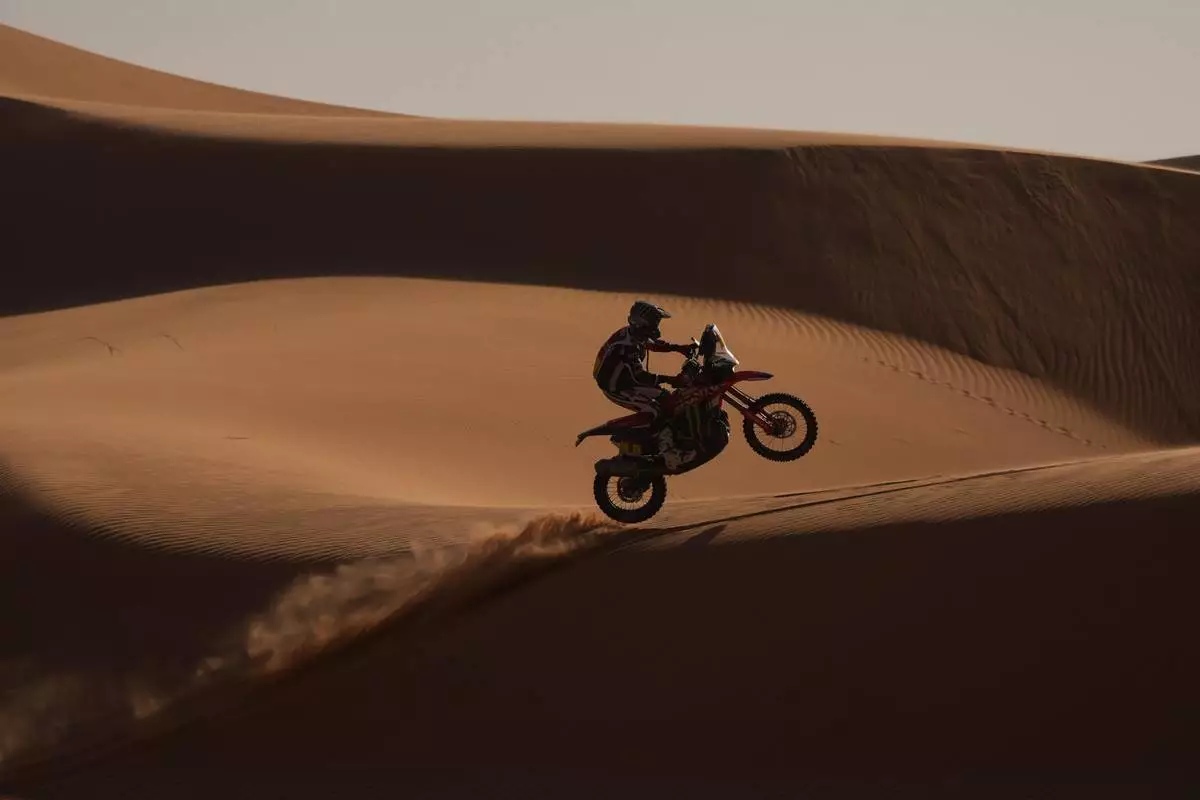
Rider Ricky Brabec competes during the eighth stage of the Dakar Rally with a start and finish at Wadi Ad Dawasir, Saudi Arabia, Monday, Jan.12, 2026. (AP Photo/Thibault Camus)
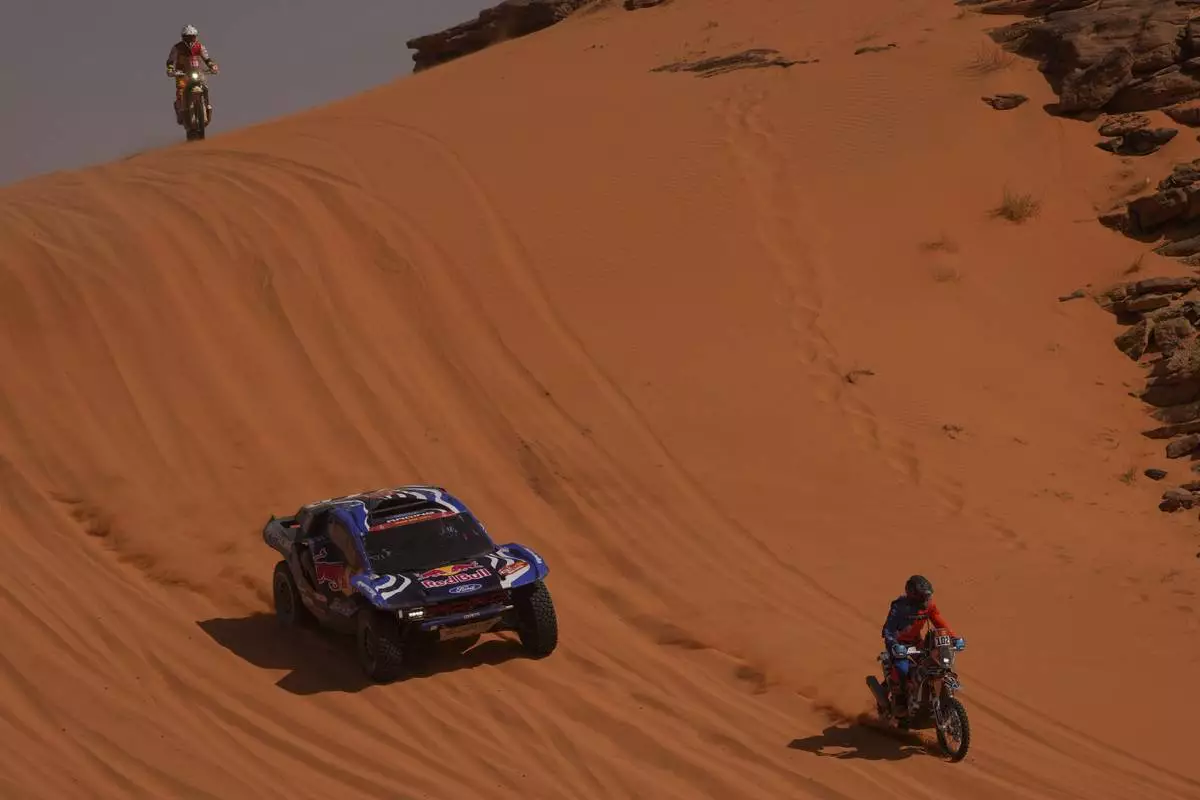
Driver Carlos Sainz and co-driver Lucas Cruz compete with riders David Brock, bottom right, and Fernando Dominguez, top left, during the eighth stage of the Dakar Rally with a start and finish at Wadi Ad Dawasir, Saudi Arabia, Monday, Jan.12, 2026. (AP Photo/Thibault Camus)
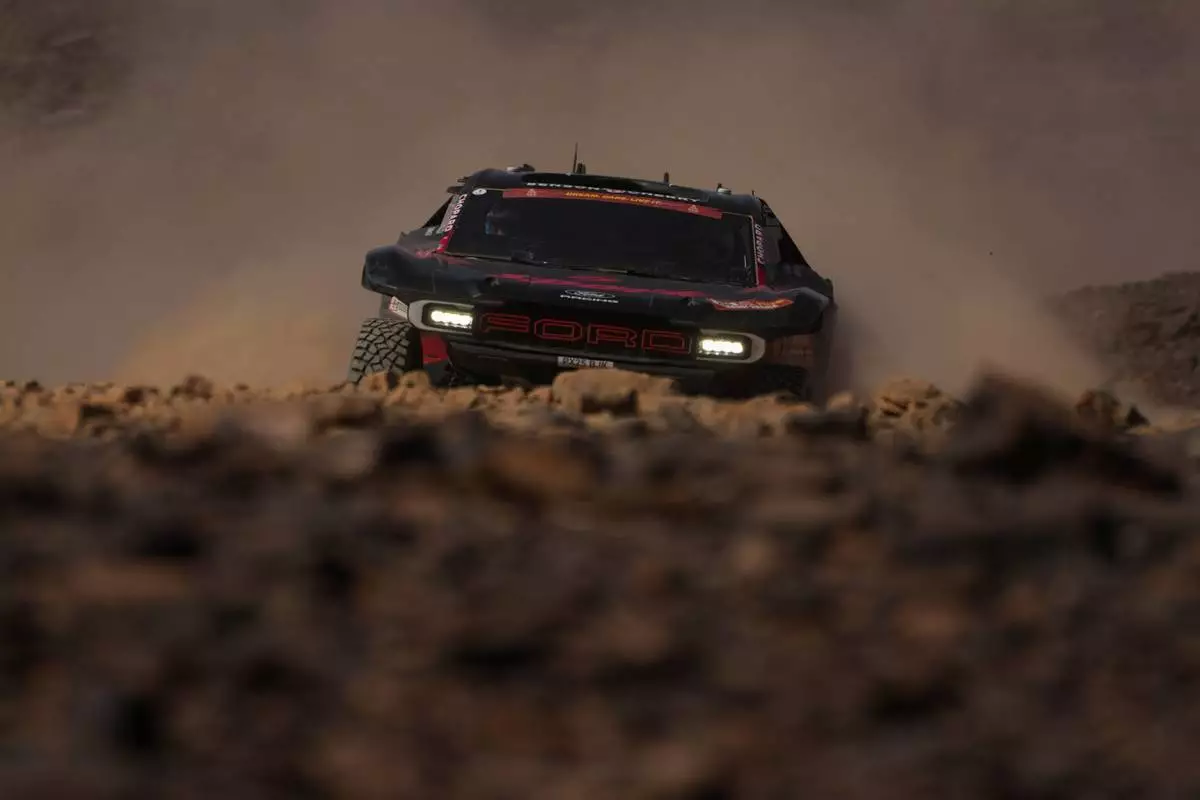
Driver Romain Dumas and co-driver Alex Winocq compete with riders David Brock, right, and Fernando Dominguez, in the background, during the eighth stage of the Dakar Rally with a start and finish at Wadi Ad Dawasir, Saudi Arabia, Monday, Jan.12, 2026. (AP Photo/Thibault Camus)
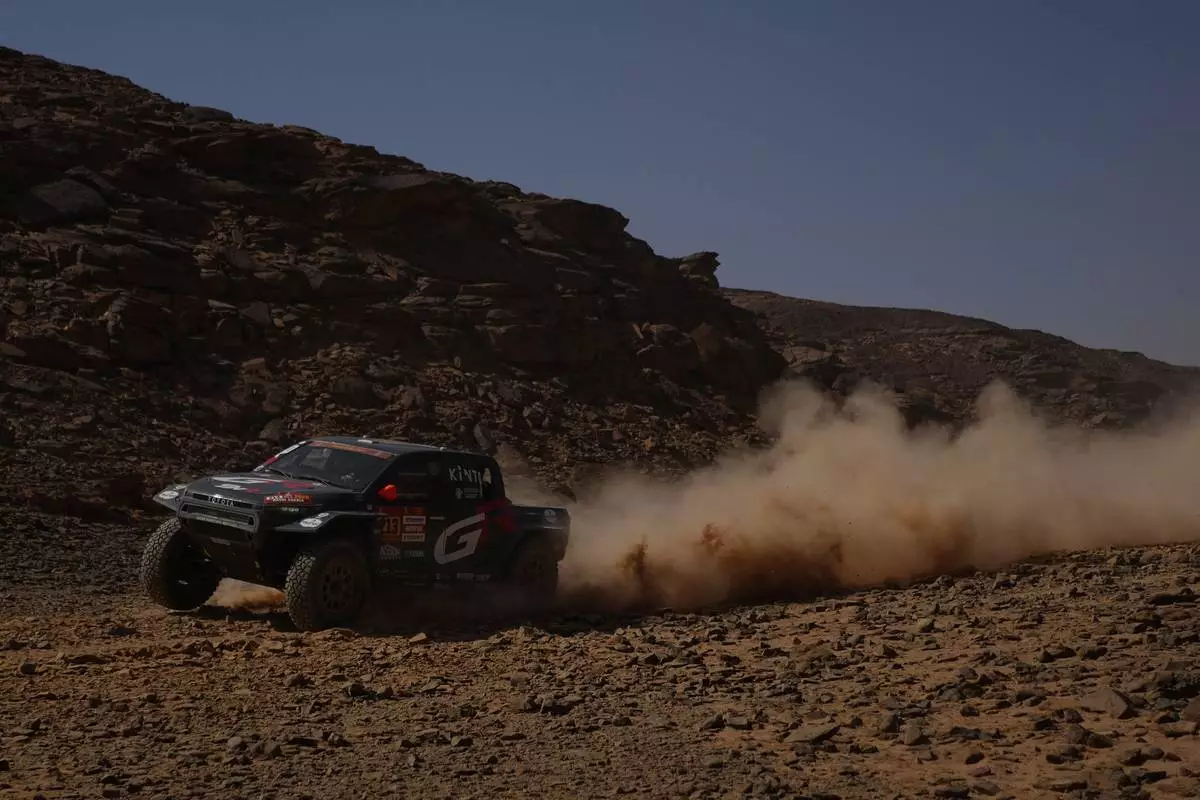
Driver Saood Variawa and co-driver Francois Cazalet compete during the eighth stage of the Dakar Rally with a start and finish at Wadi Ad Dawasir, Saudi Arabia, Monday, Jan.12, 2026. (AP Photo/Thibault Camus)