LANSING, Mich. (AP) — Michigan Lt. Gov. Garlin Gilchrist II announced Monday he is suspending his campaign for governor and instead joining the race for secretary of state of the battleground state.
Gilchrist, a progressive Democrat from Detroit, did not cite a specific reason for the change in his video announcement, but said he is not finished being a “public servant.” His departure clears up the Democratic primary and benefits the frontrunner, Jocelyn Benson, who is the current Secretary of State, in the race to replace term-limited Gov. Gretchen Whitmer.
The secretary of state is Michigan's top election official, a highly politicized and visible role since the 2020 presidential election.
“Michigan has been ground zero in the battle for free and fair elections before, and it will be again,” Gilchrist said.
As Whitmer’s second in command and her running mate in two elections, Gilchrist struggled to match Benson’s name recognition and fundraising. He reported having around $378,000 of cash on hand as of October compared to Benson’s $2.98 million.
Benson is now set to face only Genesee County Sheriff Chris Swanson in the Democratic primary in August.
The inclusion of a well-known independent candidate has created a new problem for Democrats this year. Former Detroit Mayor Mike Duggan is avoiding costly primaries altogether by running as an independent. The Michigan Democratic Party slammed the former Democrat last week for not standing up to President Donald Trump’s second term policies.
In the Republican primary, U.S. Rep. John James, former Michigan Attorney General Mike Cox, state Senate Leader Aaric Nesbitt and former Michigan House speaker Tom Leonard are jockeying for the nomination.
In his bid to become secretary of state, Gilchrist will face four other Democrats: Barb Byrum, Ingham County clerk; Aghogho Edevbie, deputy secretary of state; Suzanna Shkreli, a former Whitmer aide and commissioner of the Michigan State Lottery; and Adam Hollier, a former state senator from Detroit.
Michigan does not hold primary elections for the secretary of state position; the nominee is chosen by precinct delegates during party conventions. The Michigan Democratic Party convention is scheduled for April 19.
State Republicans plan to hold their nominating convention March 28 and GOP figures chasing the party's nomination for secretary of state include Anthony Forlini, Macomb County Clerk, and Monica Yatooma, an Oakland County executive.
In addition to the office of the governor and secretary of state, Michigan voters will be selecting a new state attorney general and a U.S. senator in November.
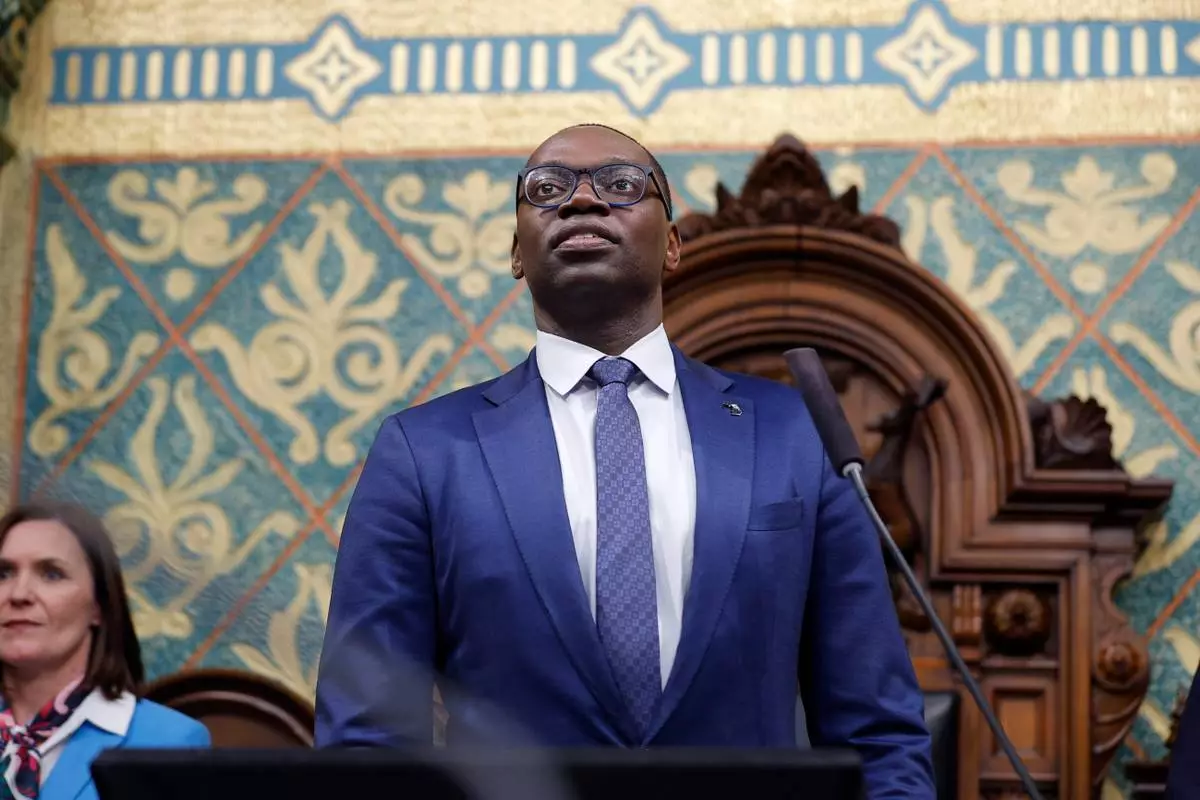
FILE - Michigan Lt. Gov. Garlin Gilchrist II waits before the State of the State address, Wednesday, Jan. 24, 2024, at the state Capitol in Lansing, Mich. (AP Photo/Al Goldis, file)
WASHINGTON (AP) — The Justice Department filed a new lawsuit Friday against Harvard University, saying its leadership failed to address antisemitism on campus, creating grounds for the government to freeze existing grants and seek repayment for grants already paid.
The lawsuit, filed in federal court in Massachusetts, is another salvo in a protracted battle between the administration of President Donald Trump and the elite university.
“The United States cannot and will not tolerate these failures," the Justice Department wrote in the lawsuit. It asked the court to compel Harvard to comply with federal civil rights law and to help it "recover billions of dollars of taxpayer subsidies awarded to a discriminatory institution.”
The lawsuit also asks a judge to require Harvard to call police to arrest protesters blocking parts of campus and to appoint an independent monitor, approved by the government, to ensure the university complies with court orders.
Harvard did not respond to a request for comment. But in a pair of lawsuits filed last year by the university, Harvard has said it’s being illegally penalized for refusing to adopt the administration's views. A federal judge sided with Harvard in September, reversing the funding cuts and calling the antisemitism argument a “smokescreen.”
The government's new lawsuit comes after negotiations appear to have bogged down in the year-long battle, which has tested the boundaries of the government’s authority over America’s universities. What began as an investigation into allegations of campus antisemitism escalated into an all-out feud. The Trump administration slashed more than $2.6 billion in Harvard's research funding, ended federal contracts and attempted to block Harvard from hosting international students.
Ted Mitchell, president of the American Council on Education, a major association of colleges and universities, accused the administration of launching a “full scale, multi-pronged” attack on Harvard. Friday's lawsuit, he said in an email, is just the latest attempt to pressure Harvard to agree to changes favored by the administration.
“When bullies pound on the table and don’t get what they want, they pound again,” Mitchell said.
The Trump administration's aggressive tactics toward Harvard mark an extraordinary departure from how previous administrations have enforced civil rights law at American colleges. In the past, the government investigated allegations of civil rights violations, produced findings and typically reached an agreement with the college to bring it into compliance. Occasionally, the government levied fines and could threaten to pull federal funding. The process typically took months or years.
In contrast, Trump had been in office fewer than three months before he had frozen billions of dollars in grants to Harvard, including money for medical research. He has since tried to press the school to pay the government to end the standoff.
The Trump administration's case has centered on allegations of discrimination against Harvard's Jewish and Israeli students during and after pro-Palestinian demonstrations related to the Israel-Hamas war.
Officials concluded Harvard did not adequately address concerns about antisemitism that some students said kept them from going to class. During protests of the war, Trump officials said, Harvard permitted students to demonstrate against Israel’s actions in the school library and allowed a pro-Palestinian encampment to remain on campus for 20 days, “in violation of university policy.”
In its lawsuit Friday, the Justice Department also accused Harvard of failing to discipline staff or students who protested or tacitly endorsed the demonstrations by canceling class or dismissing students early.
“Harvard University has failed to protect its Jewish students from harassment and has allowed discrimination to wreak havoc on its campus," White House press secretary Liz Huston said Friday on X. "President Trump is committed to ensuring every student can pursue their academic goals in a safe environment.”
Harvard, in turn, has said the government is violating its First Amendment rights, after it defied federal demands that it limit activism on campus and change some practices for hiring and enrollment.
“The tradeoff put to Harvard and other universities is clear: Allow the Government to micromanage your academic institution or jeopardize the institution’s ability to pursue medical breakthroughs, scientific discoveries, and innovative solutions,” attorneys for Harvard said in a lawsuit over the funding freeze.
Despite their bitter dispute, Harvard and the Trump administration have held some negotiations, and the two sides have reportedly been close to reaching an agreement on multiple occasions. Last year, they were reportedly approaching a deal requiring Harvard to pay $500 million to regain access to federal funding and end the investigations. Several months later, Trump upped that figure to $1 billion, saying Harvard has been “behaving very badly.”
At the same time, the administration was taking steps in a civil rights investigation that could jeopardize all Harvard's federal funding.
Last June, a federal task force said its investigation had found the university was a “willful participant” in antisemitic harassment of Jewish students and faculty. The task force threatened to refer the case to the Justice Department to file a civil rights lawsuit “as soon as possible,” unless Harvard came into compliance.
When colleges are found in violation of federal civil rights law, they almost always reach compliance through voluntary agreements. Friday's lawsuit by the Justice Department points to an extraordinarily rare impasse.
Last summer, Harvard responded that it strongly disagreed with the government's civil rights finding and was committed to fighting bias.
“Antisemitism is a serious problem and no matter the context, it is unacceptable,” the university said in a statement. “Harvard has taken substantive, proactive steps to address the root causes of antisemitism in its community.”
Harvard President Alan M. Garber says the school formed a task force to combat antisemitism. The university also hired a new provost and new deans and reformed its discipline policies to make them “more consistent, fair and effective,” Garber has said.
Since he took office, Trump has targeted elite universities he believes are overrun by left-wing ideology and antisemitism. His administration has frozen billions of dollars in research grants, which colleges have come to rely on for scientific and medical research.
Several universities have reached agreements with the White House to restore funding. Some deals have included direct payments to the government, including $200 million from Columbia University. Brown University agreed to pay $50 million toward state workforce development groups.
AP Education Writer Collin Binkley contributed to this report.
Editor's note: Previous versions of this story had incorrect timing for a federal judge's order that reversed the Trump administration's funding cuts at Harvard. The judge ordered the cuts reversed in September, not December.
The Associated Press’ education coverage receives financial support from multiple private foundations. AP is solely responsible for all content. Find AP’s standards for working with philanthropies, a list of supporters and funded coverage areas at AP.org.
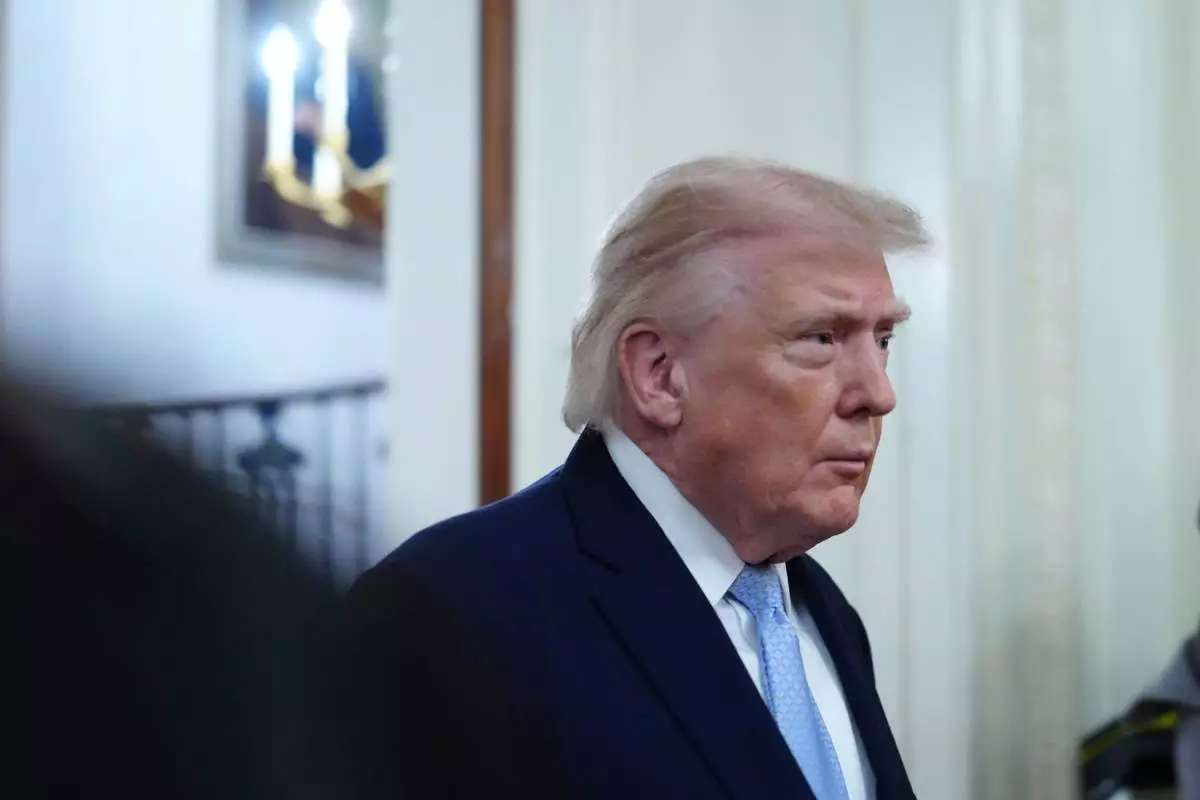
President Donald Trump arriving to speak at the Commander-in-Chief's Trophy presentation with the Navy Midshipmen football team in the East Room of the White House, Friday, March 20, 2026, in Washington. (AP Photo/Julia Demaree Nikhinson)
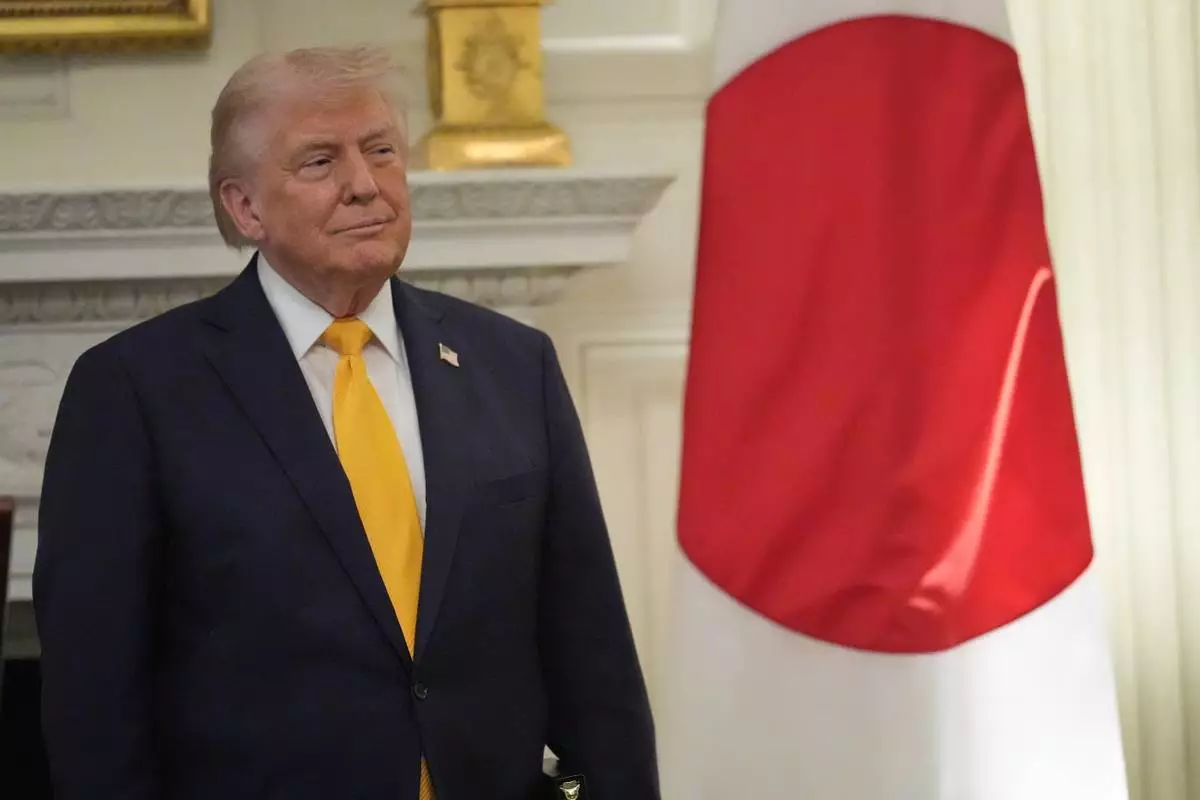
President Donald Trump listens as Japan's Prime Minister Sanae Takaichi speaks during a dinner in the State Dining Room of the White House, Thursday, March 19, 2026, in Washington. (AP Photo/Julia Demaree Nikhinson)