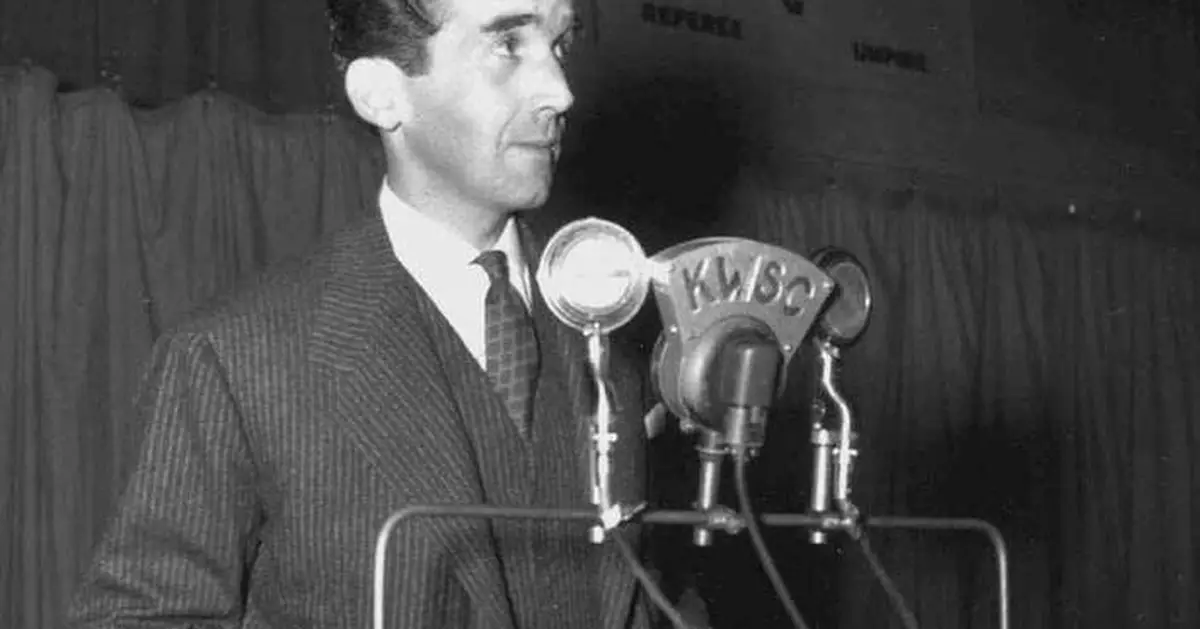
NEW YORK (AP) — CBS News said Friday it will shut down its storied radio news service after nearly 100 years of operation, ending an era and blaming challenging economic times as the world moves on to digital sources and podcasts. Said longtime CBS News anchor Dan Rather: “It’s another piece of America that is gone."
When it went on the air in September 1927, the service was the precursor to the entire network, giving a youthful William S. Paley a start in the business. Famed broadcaster Edward R. Murrow's rooftop reports during the Nazi bombing of London during World War II kept Americans listening anxiously.
Today, CBS News Radio provides material to an estimated 700 stations across the country and is known best for its top-of-the-hour news roundups. The service will end on May 22, the network said Friday.
“Radio is woven into the fabric of CBS News and that's always going to be part of our history,” CBS News editor-in-chief Bari Weiss said in delivering the news to the staff. “I want you to know that we did everything we could, including before I joined the company, to try and find a viable solution to sustain the radio operation.”
But with the radical changes in the media industry, she said, “we just could not find a way to make that possible."
CBS News cut some of its radio programming late last year, including its “Weekend Roundup” and “World News Roundup Late Edition,” in an attempt to keep the service going.
It was unclear how many people will lose their jobs because of the radio shutdown. CBS News was cutting about 6% of its workforce, or more than 60 people, on Friday. It's not the end of turmoil at the network, as parent company Paramount Global is likely to absorb CNN as part of its announced purchase of Warner Bros. Discovery.
“Given the way things are going, I was saddened but I wasn't surprised by it,” said Rather, who succeeded network legend Walter Cronkite in 1981 and anchored for 25 years.
When Rather covered the civil rights era for CBS News during the 1960s, he said he would file reports as frequently as a dozen times a day. Cronkite told America on television that President John F. Kennedy had been assassinated; Rather relayed the news for radio.
“Radio was considered an equal responsibility to television,” Rather, now 94, said in an interview.
Along with newspapers, radio was the dominant medium in how Americans got their news from shortly after the dawn of commercial radio in 1920 through the 1940s, with people in their living rooms listening to President Franklin Delano Roosevelt's “Fireside Chats” during the Depression. CBS News Radio's broadcast about Germany's invasion of Austria in 1938, the first time Murrow was heard on the air, was an historic marker for the service.
Broadcasters like Douglas Edwards, Dallas Townsend and Christopher Glenn were familiar voices on CBS News Radio. The beginning of the television era in the 1950s began a long slide for radio, often an afterthought today with the world online and on phones. Those seeking audio often turn to podcasts before radio.
“This is another part of the landscape that has fallen off into the sea,” said Michael Harrison, publisher of Talkers, a trade publication for radio talk shows. “It's a shame. It's a loss for the country and for the industry.”
CBS News Radio was a major force for generations of Americans. “Its heyday spanned decades,” Harrison said. “It was quality on every level. It sounded good. Its coverage was as objective as possible within the realm of human nature. Its resources were extensive. It had a very high trust factor that was considered the standard of the day.”
The front page of CBS News' website did not immediately carry news of the demise.
Weiss, founder of the Free Press website and without broadcast news experience before being hired by CBS parent Paramount’s new management, has quickly become a headline-maker and polarizing figure in journalism. She held a “60 Minutes” story critical of President Donald Trump’s deportation policy from being broadcast for a month and has critics watching to see if she’s moving the network in a Trump-friendly direction.
Addressing her staff in January, three months into her job as CBS News boss, she invoked Cronkite's name as a symbol of old thinking and said that if the network continues with its current strategy, “we’re toast.” She announced the hiring of 18 new contributors and said CBS News needs to do stories that will “surprise and provoke — including inside our own newsroom.”
David Bauder writes about the intersection of media and entertainment for the AP. Follow him at http://x.com/dbauder and https://bsky.app/profile/dbauder.bsky.social.
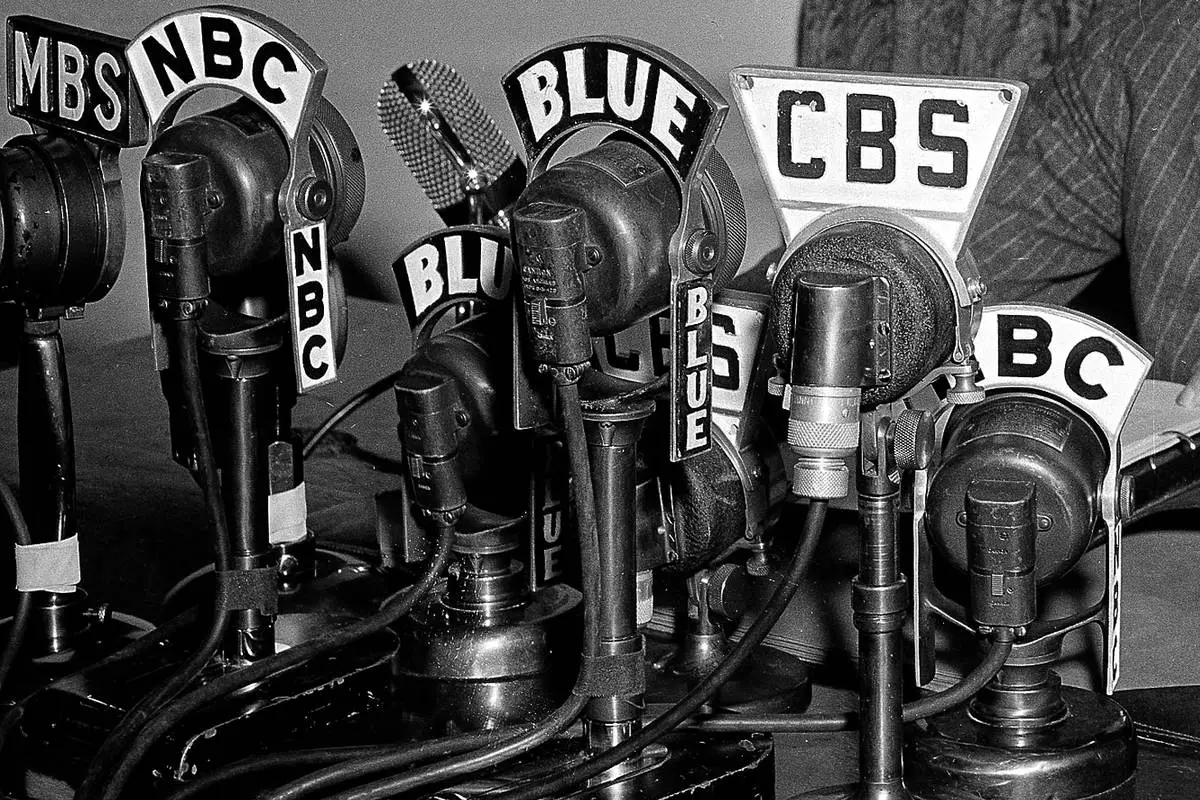
FILE - Network microphones on the desk as President Franklin D. Roosevelt addresses the nation from the White House in Washington on April 28, 1942. (AP Photo/File)
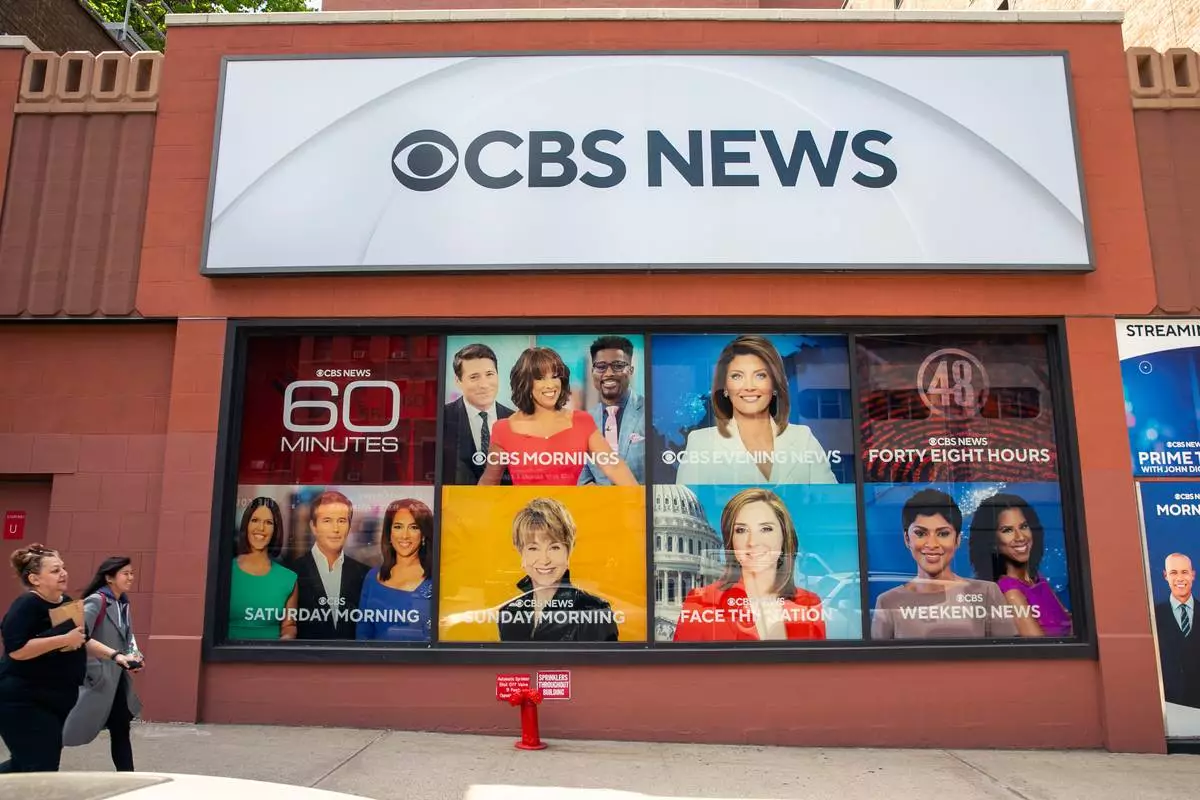
FILE - The CBS Broadcast Center on 57th Street in New York on April 20, 2023. (AP Photo/Ted Shaffrey, File)
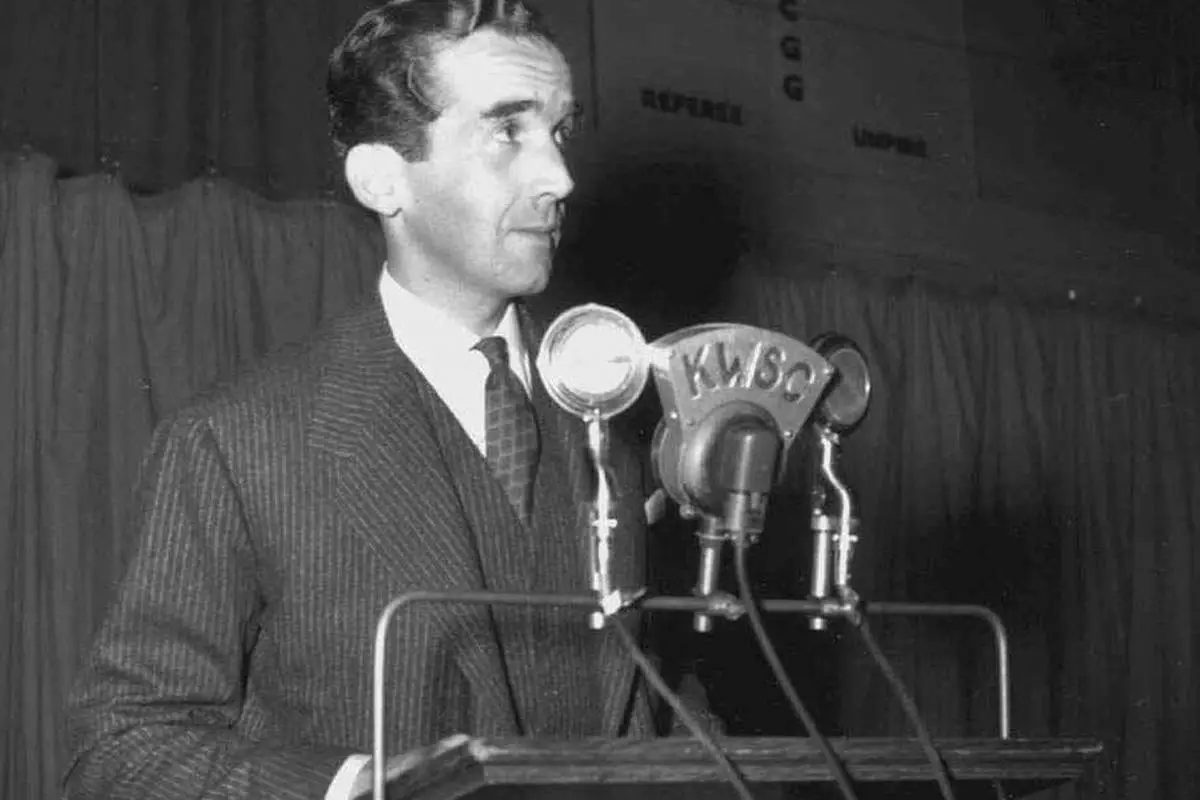
FILE--Edward R. Murrow, a CBS correspondent who made his name from the front lines of World War II and from confronting Sen. Joseph McCarthy during the 1950s Red Scare, during a speaking engagement. (AP Photo/Washington State University/The Columbian via AP)
NEW YORK (AP) — Another climb for oil prices shook stock markets on Friday, as hopes collapsed for a possible cut to interest rates this year by the Federal Reserve.
The S&P 500 fell 1.5% to close its fourth straight losing week, its longest such streak in a year. The Dow Jones Industrial Average dropped 443 points, or 1%, and the Nasdaq composite tumbled 2%.
The market’s losses deepened after oil prices erased an early dip and accelerated in the afternoon. Brent crude, the international standard, rose 3.3% to settle at $112.19 per barrel. Benchmark U.S. crude gained 2.3% to $98.32 per barrel.
Stocks also bent under the weight of leaping yields in the bond market. Higher yields make mortgage rates and other borrowing more expensive for U.S. households and companies, slowing the economy, and they grind down on prices for all kinds of investments. Treasury yields have been jumping on worries the war with Iran will cause a long-term spike in oil and natural gas prices that drives up inflation.
Worries have gotten so high that traders have canceled nearly all their bets that the Federal Reserve could cut interest rates this year, according to data from CME Group. Some even think the Fed could raise rates in 2026, a nearly unthinkable scenario before the war began.
“I think it would be market shaking,” Ann Miletti, head of equity investments at Allspring Global Investments, said about a rate hike. But she also said that if oil prices stay high for a long time, they would likely drag so much on the economy that the Fed would not raise rates.
Lower interest rates would give the economy and investment prices a boost, and they’re something President Donald Trump has angrily been calling for. Before the war, traders were betting heavily that the Fed would cut rates at least twice this year.
But lower rates risk worsening inflation. And investors now see little room for central banks worldwide to cut interest rates to help their economies. Besides the Federal Reserve, central banks in Europe, Japan and the United Kingdom also held their interest rates steady this past week.
The price of Brent crude has zigzagged sharply on its way from roughly $70 per barrel before the war began to as high as $119.50 this week. Big swings have struck hour to hour as financial markets try to handicap how long the war will last and how much damage it will do to oil and gas production in the Persian Gulf.
The U.S. stock market has a history of bouncing back relatively quickly from past conflicts in the Middle East and elsewhere, as long as oil prices don’t stay too high for too long. Oil prices aren’t at a red-flag point yet, Miletti said, but “we’re getting close if the duration is long enough.”
“If three months from now, we’re in a similar situation, not only myself but a lot of other investors will be much more cautious,” she said. While companies can adjust to gradual rises in oil prices, Miletti said they’re less able to quickly change their business models after a sudden spike becomes a new normal.
On Wall Street, Super Micro Computer lost a third of its value and tumbled 33.3% to help drag the U.S. stock market lower. The U.S. government accused a senior vice president of the company and two others affiliated with it of conspiring to smuggle billions of dollars of computer servers containing advanced Nvidia chips to China.
The company said it has been cooperating with the investigation and is not a defendant in the indictment. It placed its two accused employees on administrative leave and terminated its relationship with an accused contractor.
Roughly three out of every four stocks in the S&P 500 fell. Stocks of smaller companies, which can feel the pinch of higher interest rates more than their bigger rivals, led the way lower. The Russell 2000 index of smaller stocks fell a market-leading 2.3%.
Among the few winners was FedEx, which rose 0.8% after delivering a much stronger profit for the latest quarter than analysts expected.
All told, the S&P 500 fell 100.01 points to 6,506.48. The Dow Jones Industrial Average dropped 443.96 to 45,577.47, and the Nasdaq composite sank 443.08 to 21,647.61.
In the bond market, the yield on the 10-year Treasury jumped to 4.38% from 4.25% late Thursday and from just 3.97% before the war started. That’s a significant move for the bond market.
The two-year Treasury yield, which more closely tracks expectations for what the Fed will do, leaped to 3.88% from 3.79% late Thursday and is near its highest level since the summer.
When bonds are paying more in interest, they make other investments less attractive in comparison. That’s particularly the case for things like gold, which pay their investors nothing at all. Gold’s price finished the week at $4,574.90 per ounce, hurting its reputation as a safe place for money during uncertain times. Earlier this year, gold was setting records and briefly topped $5,400 per ounce.
Outside of Wall Street, stock indexes fell sharply in Europe following their wipeouts on Thursday. Indexes also sank in China, though South Korea’s Kospi added 0.3%.
AP Business Writers Chan Ho-him and Matt Ott contributed.

Traders work on the floor at the New York Stock Exchange in New York, Thursday, March 19, 2026. (AP Photo/Seth Wenig)
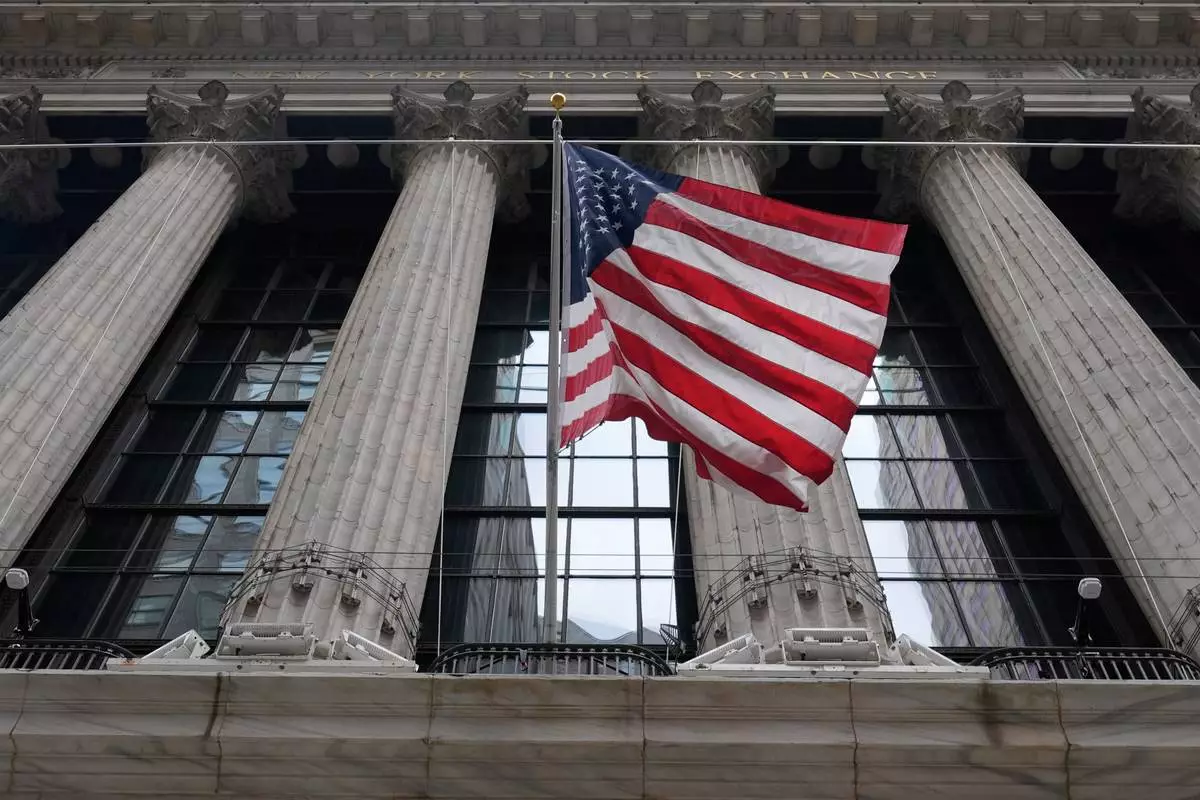
The New York Stock Exchange is seen in New York, Thursday, March 19, 2026. (AP Photo/Seth Wenig)
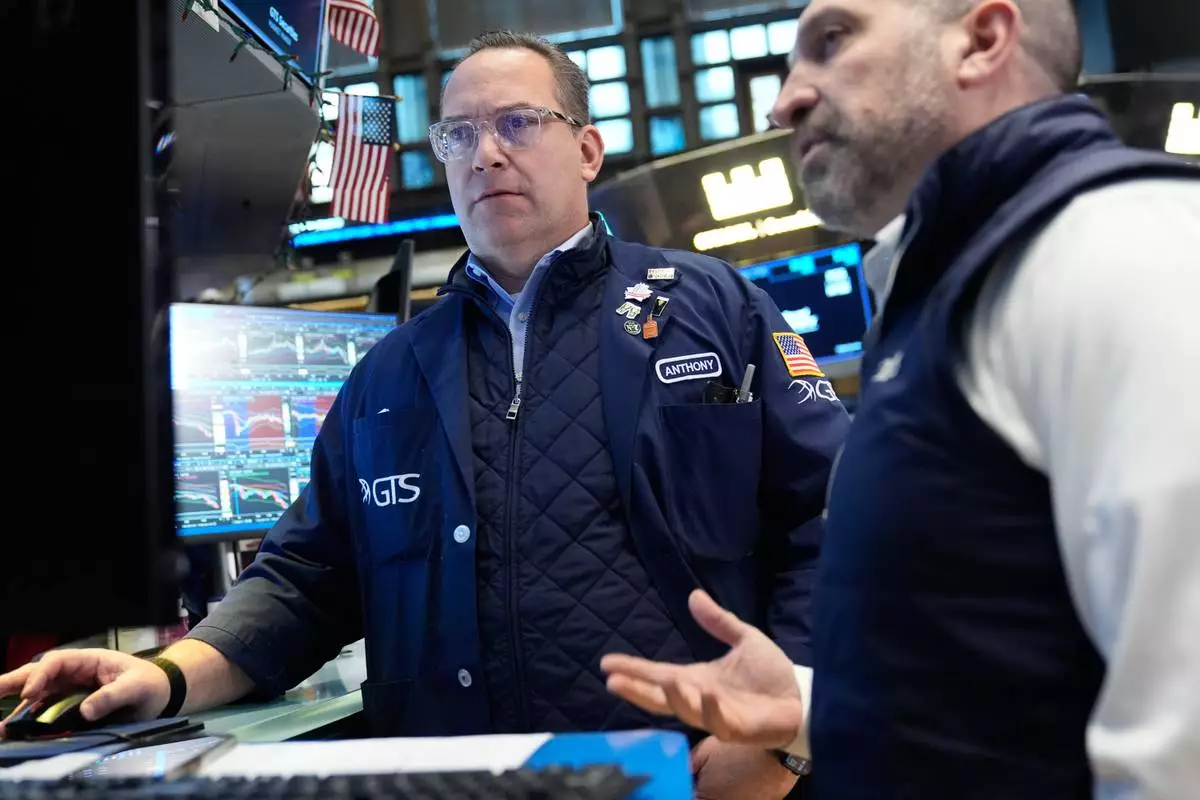
Anthony Matesic, left, and James Denaro work on the floor at the New York Stock Exchange in New York, Thursday, March 19, 2026. (AP Photo/Seth Wenig)