Skip to Content Facebook Feature Image

Displaced Aleppo residents return home after days of intense clashes

News

Displaced Aleppo residents return home after days of intense clashes
News

News

Displaced Aleppo residents return home after days of intense clashes

2026-01-13 01:27 Last Updated At:01:50

ALEPPO, Syria (AP) — Hundreds of displaced residents returned Monday to an Aleppo neighborhood in northern Syria after days of intense fighting between government forces and Kurdish fighters.

The clashes, which killed at least 23 people and displaced tens of thousands, broke out on Jan. 6 in the predominantly Kurdish neighborhoods of Achrafieh, Sheikh Maqsoud and Bani Zeid after the government and the Syrian Democratic Forces, the main Kurdish-led force in the country, failed to make progress on implementation of a deal that would merge the SDF into the national army. Security forces captured the three neighborhoods.

More Images
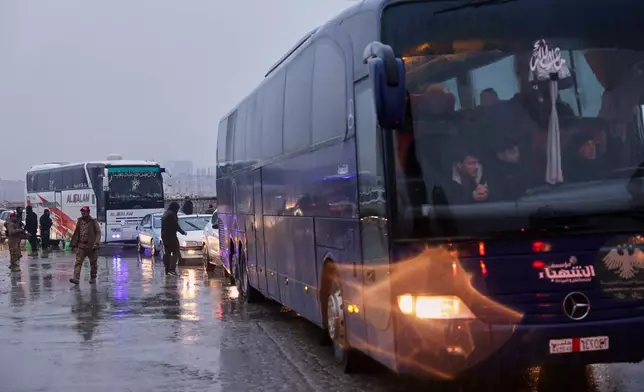
Buses carry displaced residents as they return to the Achrafieh neighborhood after days of fighting between government forces and Kurdish fighters in the northern city of Aleppo, Syria, Monday, Jan. 12, 2026. (AP Photo/Ghaith Alsayed)

Buses carry displaced residents as they return to the Achrafieh neighborhood after days of fighting between government forces and Kurdish fighters in the northern city of Aleppo, Syria, Monday, Jan. 12, 2026. (AP Photo/Ghaith Alsayed)

Displaced residents return to a the Achrafieh neighborhood after days of fighting between government forces and Kurdish fighters in the northern city of Aleppo, Syria, Monday, Jan. 12, 2026. (AP Photo/Omar Albam)
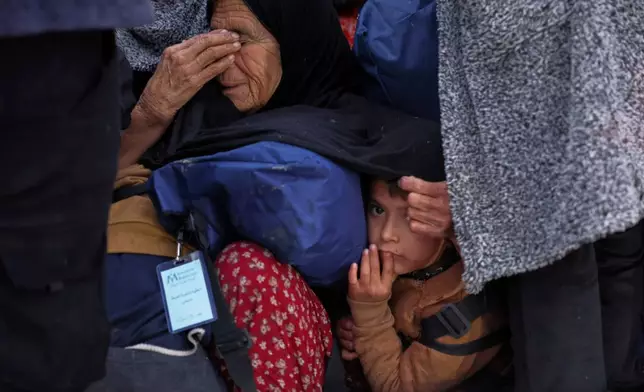
Displaced residents return to a the Achrafieh neighborhood after days of fighting between government forces and Kurdish fighters in the northern city of Aleppo, Syria, Monday, Jan. 12, 2026. (AP Photo/Omar Albam)

Displaced residents return to a the Achrafieh neighborhood after days of fighting between government forces and Kurdish fighters in the northern city of Aleppo, Syria, Monday, Jan. 12, 2026. (AP Photo/Ghaith Alsayed)
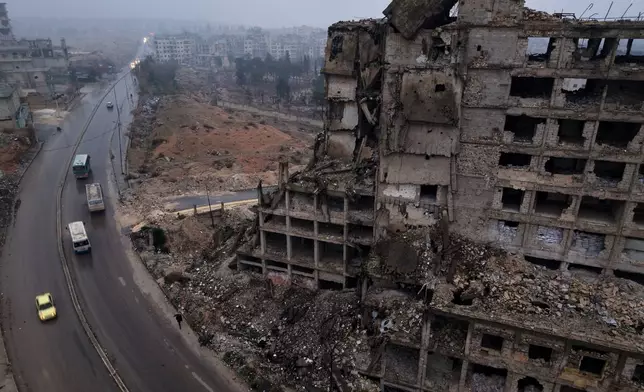
Displaced residents return to a the Achrafieh neighborhood after days of fighting between government forces and Kurdish fighters in the northern city of Aleppo, Syria, Monday, Jan. 12, 2026. (AP Photo/Ghaith Alsayed)

Buses carrying displaced residents drive past a building in ruins as they return to the Achrafieh neighborhood after days of fighting between government forces and Kurdish fighters in the northern city of Aleppo, Syria, Monday, Jan. 12, 2026. (AP Photo/Omar Albam)

Buses carrying displaced residents drive past a building in ruins as they return to the Achrafieh neighborhood after days of fighting between government forces and Kurdish fighters in the northern city of Aleppo, Syria, Monday, Jan. 12, 2026. (AP Photo/Omar Albam)

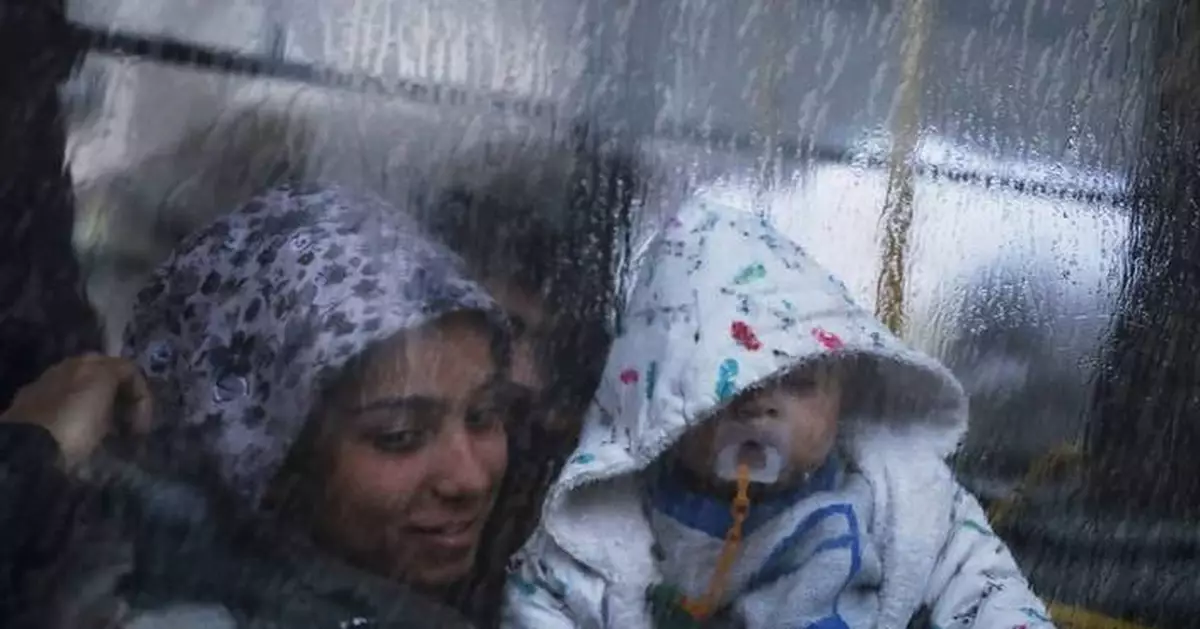
Displaced residents look out from a bus window as they return to the Achrafieh neighborhood after days of fighting between government forces and Kurdish fighters in the northern city of Aleppo, Syria, Monday, Jan. 12, 2026. (AP Photo/Omar Albam)

Displaced residents look out from a bus window as they return to the Achrafieh neighborhood after days of fighting between government forces and Kurdish fighters in the northern city of Aleppo, Syria, Monday, Jan. 12, 2026. (AP Photo/Omar Albam)

On Monday, armed security forces stood guard as traffic flowed normally through the streets of Achrafieh, while buses carried displaced families back to the neighborhood. Many shops had reopened, although residents complained about electricity cuts.

Jamal al-Youssef, an Arab resident, fled with his family for about four days because of the fighting. He said he welcomed the departure of the Kurdish fighters and the government’s exertion of control over the neighborhood.

“We’ve been waiting for this to happen for a long time, not just recently,” al-Youssef said, but added quickly that there was no issue between Arab and Kurdish civilians in the area. “We have three or four Kurdish families in my building and we don’t feel there’s any difference between us.”

The majority of some 148,000 displaced people had fled to the district of Afrin in the northwest of Aleppo province. About 10 buses carrying 700 families returned to Achrafieh on Monday, said Masoud Battal, director of the Afrin region for the Syrian government.

“I left Achrafieh five days ago. I was in Afrin and now we’re returning to our homes, thank God," said Mohammed Sheikho, who was on one of the buses.

Meanwhile, crews were combing through the neighborhood of Sheikh Maqsoud to decommission leftover explosives and tow away destroyed vehicles blocking the roads. Security forces were also inspecting tunnels under the neighborhood that appeared to have been used by fighters.

Some of the factions that make up the new Syrian army, formed after the ouster of former President Bashar Assad in a rebel offensive in December 2024, were previously Turkey-backed insurgent groups that have a long history of clashing with Kurdish forces.

The SDF has for years been the main U.S. partner in Syria in fighting against the Islamic State group, but Turkey considers the SDF a terrorist organization because of its association with the Kurdistan Workers’ Party, or PKK, which has waged a long-running insurgency in Turkey.

Last week's fighting between the two sides was the most intense since the fall of Assad to insurgents in December 2024. At least 23 people were killed in five days of clashes amid shelling and drone strikes.

Hundreds of Kurdish fighters evacuated from the contested area in Aleppo to northeastern Syria, which is under the control of the SDF, over the weekend under a deal reached between the SDF and government authorities.

However, tensions remained high between the two sides.

Syria's state-run news agency SANA reported Monday evening that the Syrian army sent reinforcements to the deployment line east of Aleppo after seeing a buildup of SDF forces in the eastern Aleppo countryside near the towns of Maskana and Deir Hafer.

The SDF said in a statement that “there are no military movements or troop buildups by our forces in the aforementioned areas, and that all circulating claims are entirely unfounded." It accused the government of an “attempt to manufacture tension and create pretexts for escalation.”
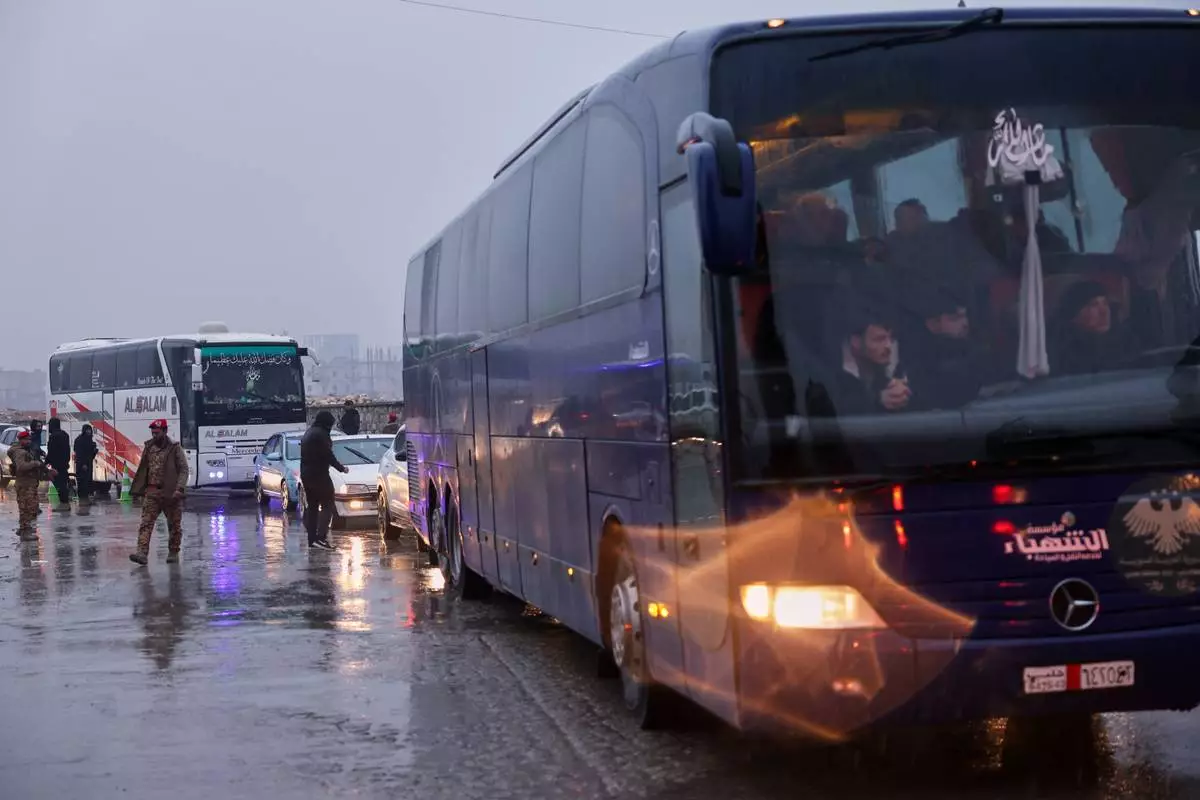
Buses carry displaced residents as they return to the Achrafieh neighborhood after days of fighting between government forces and Kurdish fighters in the northern city of Aleppo, Syria, Monday, Jan. 12, 2026. (AP Photo/Ghaith Alsayed)
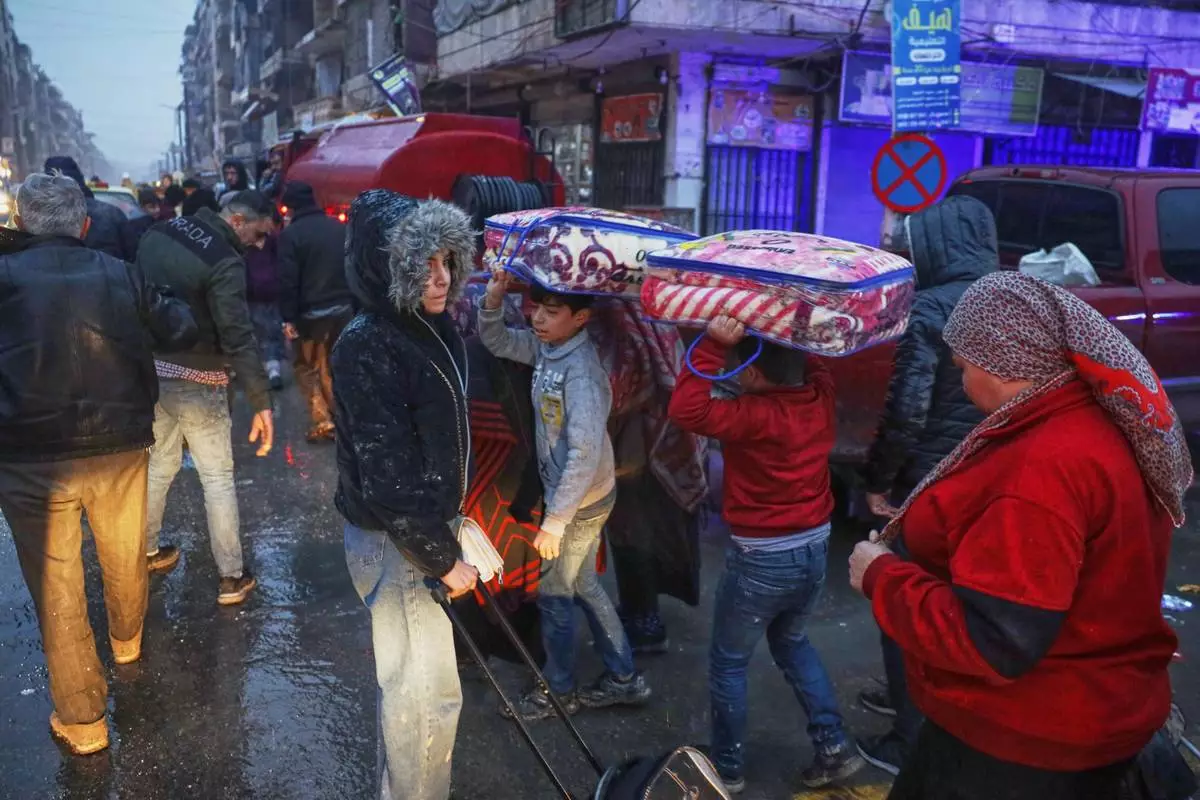
Buses carry displaced residents as they return to the Achrafieh neighborhood after days of fighting between government forces and Kurdish fighters in the northern city of Aleppo, Syria, Monday, Jan. 12, 2026. (AP Photo/Ghaith Alsayed)

Displaced residents return to a the Achrafieh neighborhood after days of fighting between government forces and Kurdish fighters in the northern city of Aleppo, Syria, Monday, Jan. 12, 2026. (AP Photo/Omar Albam)
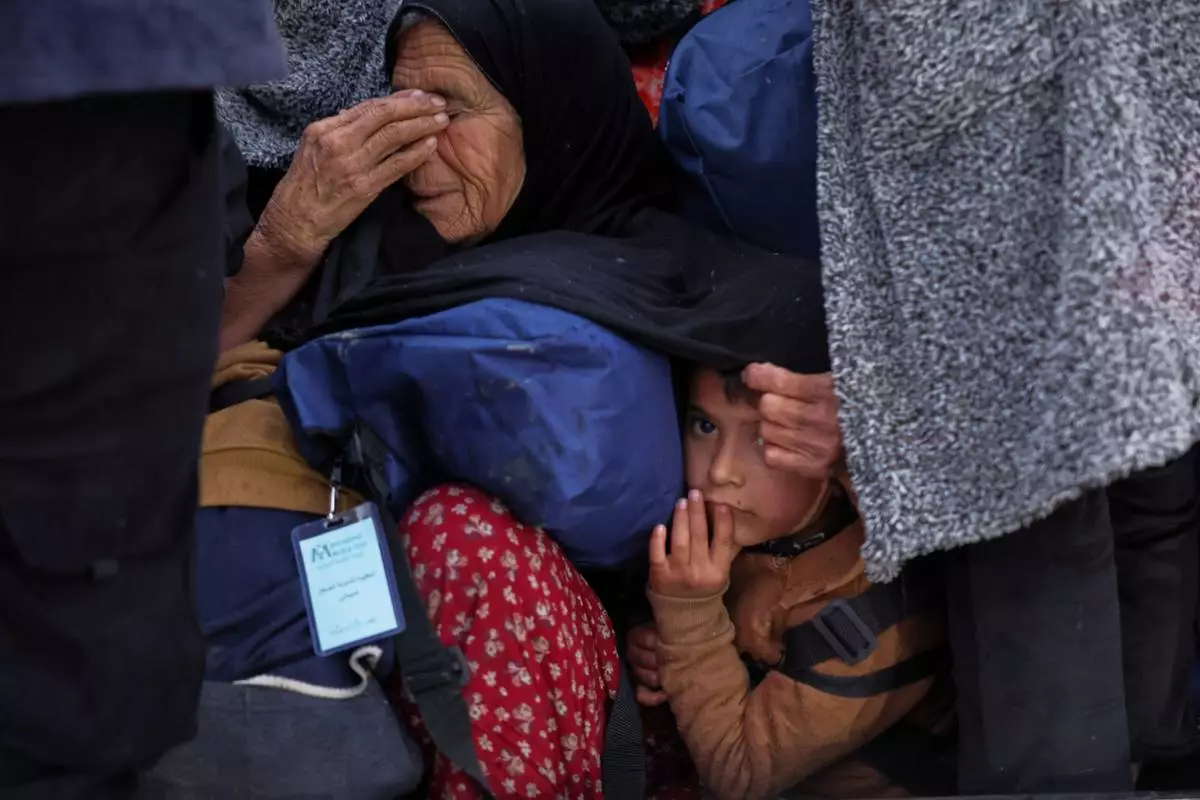
Displaced residents return to a the Achrafieh neighborhood after days of fighting between government forces and Kurdish fighters in the northern city of Aleppo, Syria, Monday, Jan. 12, 2026. (AP Photo/Omar Albam)

Displaced residents return to a the Achrafieh neighborhood after days of fighting between government forces and Kurdish fighters in the northern city of Aleppo, Syria, Monday, Jan. 12, 2026. (AP Photo/Ghaith Alsayed)
Displaced residents return to a the Achrafieh neighborhood after days of fighting between government forces and Kurdish fighters in the northern city of Aleppo, Syria, Monday, Jan. 12, 2026. (AP Photo/Ghaith Alsayed)

Buses carrying displaced residents drive past a building in ruins as they return to the Achrafieh neighborhood after days of fighting between government forces and Kurdish fighters in the northern city of Aleppo, Syria, Monday, Jan. 12, 2026. (AP Photo/Omar Albam)
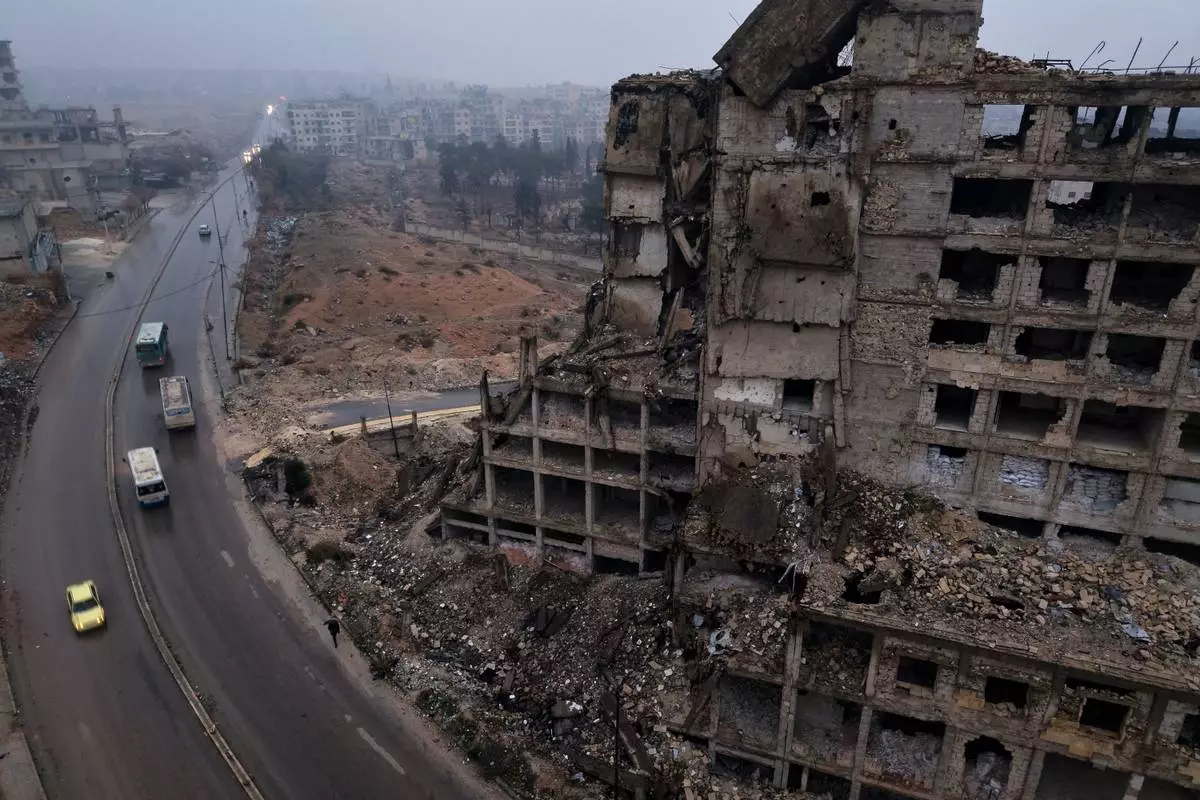
Buses carrying displaced residents drive past a building in ruins as they return to the Achrafieh neighborhood after days of fighting between government forces and Kurdish fighters in the northern city of Aleppo, Syria, Monday, Jan. 12, 2026. (AP Photo/Omar Albam)
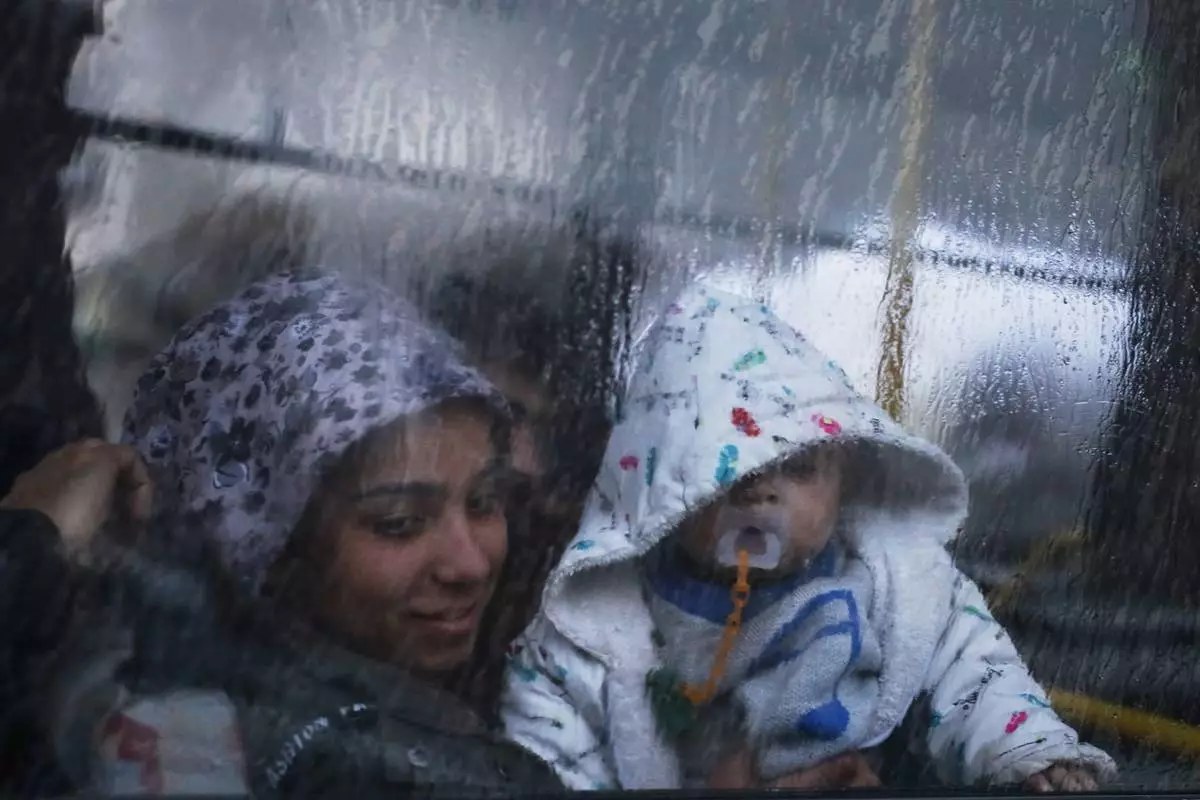
Displaced residents look out from a bus window as they return to the Achrafieh neighborhood after days of fighting between government forces and Kurdish fighters in the northern city of Aleppo, Syria, Monday, Jan. 12, 2026. (AP Photo/Omar Albam)
Displaced residents look out from a bus window as they return to the Achrafieh neighborhood after days of fighting between government forces and Kurdish fighters in the northern city of Aleppo, Syria, Monday, Jan. 12, 2026. (AP Photo/Omar Albam)
WASHINGTON (AP) — The Trump administration's criminal investigation of Federal Reserve Chair Jerome Powell appeared on Monday to be emboldening defenders of the U.S. central bank that President Donald Trump wants to bring under his sway.

The backlash reflected the bigger stakes of a contest about the fate of the Fed’s independence, the balance of power within the federal government, and the path of the U.S. economy. Trump has long publicly lashed out against Powell for not slashing the Fed's benchmark interest rates to his liking, but the prospect of a criminal indictment was a step too far for an institution that has an outsized influence on both inflation and the job market.

Several Republican senators have condemned the Department of Justice's subpoenas of the Fed, which Powell revealed Sunday and characterized as a “pretext” to pressure him to sharply cut interest rates as Trump has demanded. Powell also said the Justice Department has threatened criminal indictments over his June testimony to Congress about the cost and design elements of a building renovation.

A bipartisan group of former Fed chairs and top economists on Monday compared the Trump administration's actions to moves made in more impoverished countries. Some analysts said that the financial market's muted response reflects a widespread belief that Powell could successfully fend off the allegations that his description to lawmakers of the Fed's $2.5 billion project was criminal.

“I think this is ham-handed, counter-productive, and going to set back the president’s cause,” said Jason Furman, an economist at Harvard and former top advisor to President Barack Obama. It could also unify the Fed’s interest-rate setting committee in support of Powell, and means “the next Fed chair will be under more pressure to prove their independence.”

The subpoenas apply to the price tag of renovating Fed buildings, including its marble-clad headquarters in Washington, DC. They come at an unusual moment when Trump was teasing the likelihood of announcing his nominee this month to succeed Powell as the Fed chair, after Trump last summer played down the idea that the Fed's renovation costs were a fireable offense.

While Powell's term as chair ends in May, he has a separate term as a Fed governor until January 2028. Trump’s moves could make it more likely that Powell will stay on the Fed’s governing board after his term as chair ends in May in order to defend the Fed's independence from politics in making its decisions on interest rates, Furman said.

While an interest rate cut was already considered unlikely at the Fed’s next meeting in about two weeks, the news of the Justice Department investigation likely means that the Fed would avoid cuts at the next meeting in order to send the message that it cannot be pressured by politics, economists said.

Powell quickly found a growing number of defenders among Republicans in the Senate, who will have the choice of whether to confirm Trump's planned picks for Fed chair.

Sen. Thom Tillis, a North Carolina Republican and member of the Senate Banking panel, said late Sunday in response to the subpoenas that he would oppose any of the Trump administration’s nominees for the Fed, including to replace Powell.

“If there were any remaining doubt whether advisers within the Trump Administration are actively pushing to end the independence of the Federal Reserve, there should now be none,” Tillis said.

Sen. Lisa Murkowski, an Alaska Republican, backed Tillis’ approach Monday.

“After speaking with Chair Powell this morning, it’s clear the administration’s investigation is nothing more than an attempt at coercion,” Murkowski said. She voted against the White House’s nomination of Stephen Miran to the Fed’s board in September, which was barely approved by a 48-47 vote. Miran continues to be Trump's chair of the White House Council of Economic Advisers, although he is on leave due to his post at the Fed.

Trump has for the past year sought to pressure Powell into having the Fed slash its benchmark interest rates — a move that reflects a fundamental break over whether inflation still poses any risk to the U.S. economy.

Powell maintains that inflation is still elevated in the aftermath of Trump's tariffs and has moved cautiously, whereas Trump claims that inflation is no longer a worry and rates should be dramatically slashed.

“I have carried out my duties without political fear or favor, focused solely on our mandate of price stability and maximum employment,” Powell said in a Sunday night video disclosing the subpoenas. “Public service sometimes requires standing firm in the face of threats.”

If Powell stays on the board after his term as chair ends in May, the Trump administration would be deprived of the chance to fill another seat on the board.

Powell has declined at several press conferences to answer questions about his plans.

Asked on Monday by reporters if Powell planned to remain a Fed governor, Kevin Hassett, director of the White House National Economic Council and a leading candidate to become Fed chair, said he was unaware of Powell’s plans.

“I’ve not talked to Jay about that,” Hassett said.

Powell, jettisoning the cautious approach he has taken since Trump began attacking him last year for not cutting rates sharply enough, said on Sunday the subpoenas were a “pretext” to force the Fed to cut its key short-term interest rate.

Sen. Kevin Cramer, a Republican from North Dakota, a frequent Powell critic, said Monday that he does not think that the Fed chair is “a criminal” and said he hopes that “this criminal investigation can be put to rest quickly,” according to CNBC.

The bipartisan group of former Fed chairs and top economists said in their Monday letter that the White House’s legal actions and the possible loss of Fed independence.

“This is how monetary policy is made in emerging markets with weak institutions, with highly negative consequences for inflation and the functioning of their economies more broadly,” the statement said. “It has no place in the United States whose greatest strength is the rule of law, which is at the foundation of our economic success.”

The statement was signed by former Fed chairs Ben Bernanke, Janet Yellen, and Alan Greenspan, as well as former Treasury Secretaries Henry Paulson and Robert Rubin.

Still, Trump's pressure campaign had been building for some time. The president relentlessly criticized and belittled Powell, attempting to blame him for some of the discontent over the economy that followed the president's own tariff announcements.

Trump appeared to preview the shocking news of the subpoenas at a December 29 news conference. The president said his administration would “probably” sue Powell for “gross incompetence” on the cost of renovations, calling it the “highest price of construction per square foot in the history of the world.”

“He’s just a very incompetent man,” Trump said. “But we’re going to probably bring a lawsuit against him.”

FILE - Federal Reserve Chairman Jerome Powell, right, and President Donald Trump look over a document of cost figures during a visit to the Federal Reserve, July 24, 2025, in Washington. (AP Photo/Julia Demaree Nikhinson, File)

FILE - Federal Reserve Chairman Jerome Powell, right, and President Donald Trump look over a document of cost figures during a visit to the Federal Reserve, July 24, 2025, in Washington. (AP Photo/Julia Demaree Nikhinson, File)

Recommended Articles