Skip to Content Facebook Feature Image

Zayed Sustainability Prize Honours Global Pioneers Advancing Progress

Business

Zayed Sustainability Prize Honours Global Pioneers Advancing Progress
Business

Business

Zayed Sustainability Prize Honours Global Pioneers Advancing Progress

2026-01-14 09:35 Last Updated At:17:01

ABU DHABI, United Arab Emirates--(BUSINESS WIRE)--Jan 13, 2026--

The Zayed Sustainability Prize, the UAE’s pioneering award for innovative solutions to global challenges, today announced the cohort of 2026 winners, celebrating 18 years of empowering communities and driving inclusive, sustainable progress around the world.

This press release features multimedia. View the full release here: https://www.businesswire.com/news/home/20260113958706/en/

In a ceremony held during Abu Dhabi Sustainability Week (ADSW) and attended by Heads of State, Ministers, and business leaders, His Highness Sheikh Mohamed bin Zayed, President of the UAE, awarded the winners for their outstanding contributions to advancing sustainable development worldwide.

H.H. Sheikh Mohamed bin Zayed Al Nahyan said: “The UAE remains firmly committed to supporting efforts that enhance people’s well-being and strengthen the foundations of stability and progress around the world. The Zayed Sustainability Prize continues to encourage practical solutions that uplift communities and expand opportunity through innovation and cooperation. Through this enduring platform, we honour the legacy of Sheikh Zayed, whose vision of compassion, unity, and shared prosperity continues to shape a better future for all.”

H.E. Dr. Sultan Ahmed Al Jaber, UAE Minister of Industry and Advanced Technology and Director General of the Zayed Sustainability Prize, praised the winners for advancing scalable innovations that deliver tangible social and environmental benefits.

H.E. Dr. Sultan Ahmed Al Jaber said: “This year’s winners demonstrate how practical, real-world solutions can transform lives — from strengthening health and food systems to expanding access to clean energy and water. The UAE has long believed in connecting capability with need, and in building bridges across sectors and regions to deliver lasting, measurable impact. It is a conviction rooted in inclusive progress, and through the Zayed Sustainability Prize, this vision is translated into action by supporting innovations that put people first and open new pathways for growth.”

Since its establishment in 2008, the Prize has become a catalyst for impact, rewarding small and medium-sized enterprises, nonprofit organisations, and high schools that are addressing critical challenges across the six categories of Health, Food, Energy, Water, Climate Action, and Global High Schools. Through its 128 winners, the Prize has impacted over 411 million lives.

This cycle, a record 7,761 submissions were received from 173 countries, reviewed through a rigorous, multi-stage evaluation process by technical experts, the Selection Committee, and a distinguished Jury chaired by H.E. Ólafur Ragnar Grímsson, former President of Iceland.

H.E. Ólafur Ragnar Grímsson said: “The 2026 winners reflect a growing maturity in sustainability innovation — where technology, local knowledge, and execution come together. These solutions are designed to work in real-world conditions and to grow responsibly over time. They offer clear examples of how practical ingenuity, informed by experience, can strengthen access to essential services and improve everyday lives. As these approaches continue to expand, they point the way toward a more inclusive and effective path for sustainable development in the years ahead.”

In the Health category, Jade, an SME from the UAE, was honoured for reimagining neurodevelopmental screening through AI and play. Its gamified platform, combining cognitive assessments, eye-tracking, and personalised learning, is now used in over 450 institutions across 179 countries. By reducing diagnostic wait times and improving engagement, Jade has already supported more than 180,000 children worldwide and is setting a new benchmark for inclusive early intervention.

The Food category award went to N&E Innovations of Singapore, recognised for its breakthrough biodegradable antimicrobial packaging and coatings that extend food shelf life while tackling waste at its source. Made from upcycled food waste and plant-based ingredients, the company’s patented technology delivers 99.9% antimicrobial effectiveness, achieving bacterial counts 4.5 times lower than conventional materials. Food-safe, compostable, and circular by design, more than 400,000 sustainable packs have already reached consumers.

In the Energy category, Switzerland’s BASE Foundation was recognised for transforming how communities access sustainable cooling. Its Cooling-as-a-Service model eliminates upfront costs and makes low-carbon cooling both efficient and affordable. Operating in 68 countries, BASE has created 2,500 jobs, while its model saves 130 GWh of electricity and prevents 81,000 tonnes of CO₂ emissions per year, demonstrating how market-based innovation can scale environmental impact.

The Water category recognised Stattus4, an SME from Brazil, whose AI- and IoT-enabled technology helps utilities detect and fix leaks with unprecedented speed and precision. Monitoring more than 5,000 kilometres of distribution networks and identifying over 22,000 potential leak points, Stattus4 saves around 5.56 billion litres of water every day, strengthening water security for over four million people and transforming the efficiency of urban water systems.

In the Climate Action category, Build up Nepal, a nonprofit organisation from Nepal, was celebrated for reinventing brickmaking as a tool for climate resilience and economic empowerment. To date, the organisation has produced over 3.3 million earthquake-resistant eco-bricks and supported the construction of more than 12,000 resilient homes, creating nearly 2,000 green jobs, housing 58,000 people, and avoiding 110,000 tonnes of CO₂ emissions in the process.

Finally, the Zayed Sustainability Prize continues to empower the next generation of sustainability leaders through its Global High Schools category, enabling youth to turn local challenges into practical solutions that benefit their communities. Each year, six high schools representing the world’s regions receive up to US $150,000 to implement innovative, student-led projects that create meaningful social, economic, and environmental impact. To date, the Prize’s 56 previous Global High Schools winners have impacted the lives of over 56,599 students and 480,660 people across the globe.

The 2026 recipients of the Global High Schools awards are Mamawi Atosketan Native School (Canada), representing The Americas; Kyanja High School (Uganda), representing Sub-Saharan Africa; Al Rajaa School for the Deaf (Jordan), representing the Middle East & North Africa; Bodrum Anatolian High School (Türkiye), representing Europe & Central Asia; Faafu Atoll Education Center (Maldives), representing South Asia; and Ruamrudee International School (Thailand), representing East Asia & Pacific.

As the world accelerates its pursuit of sustainable development, the Zayed Sustainability Prize stands as a testament to the UAE’s holistic vision of progress driven by technological innovation and long-term economic growth. The Prize reflects the nation’s belief that true leadership lies in empowering others to lead, fostering collaboration among governments, enterprises, civil society, and youth to build a more prosperous and equitable world.

About the Zayed Sustainability Prize

The Zayed Sustainability Prize is the UAE’s pioneering award for innovative solutions to global challenges.

A tribute to the legacy and vision of the UAE’s founding father, Sheikh Zayed bin Sultan Al Nahyan, the Prize aims to drive sustainable development worldwide.

Each year, across the Health, Food, Energy, Water, Climate Action and Global High Schools categories, the Prize rewards organisations and high schools for groundbreaking solutions to our planet’s most pressing needs.

Through its 128 winners, in 18 years, the Prize has positively impacted over 411 million lives across the globe, inspiring innovators to amplify their impact, and chart a sustainable future for all.

Source:AETOSWire

The 2026 winners of the Zayed Sustainability Prize were recognised by the President of the UAE in Abu Dhabi on 13 January 2026 (Photo: AETOSWire)
The 2026 winners of the Zayed Sustainability Prize were recognised by the President of the UAE in Abu Dhabi on 13 January 2026 (Photo: AETOSWire)

CAPE CANAVERAL, Fla. (AP) — NASA’s Artemis II astronauts fired their engines and blazed toward the moon Thursday night, breaking free of the chains that have trapped humanity in shallow laps around Earth in the decades since Apollo.

The so-called translunar ignition came 25 hours after liftoff, putting the three Americans and a Canadian on course for a lunar fly-around early next week. Their Orion capsule bolted out of orbit around Earth right on cue and chased after the moon nearly 250,000 miles (400,000 kilometers) away.

“Ladies and gentlemen, I am so, so excited to be able to tell you that for the first time since 1972 during Apollo 17, human beings have left Earth orbit,” NASA’s Lori Glaze announced at a news conference.

The engine firing was flawless, she noted.

Canadian astronaut Jeremy Hansen said he and his crewmates were glued to the capsule's windows as they left Earth in the rearview mirror, taking in the “phenomenal” views. Their faces were pressed so tightly against the windows that they had to wipe them clean.

“Humanity has once again shown what we are capable of, and it’s your hopes for the future that carry us now on this journey around the moon,” Hansen said.

NASA had the Artemis II crew stick close to home for a day to test their capsule’s life-support systems before clearing them for lunar departure.

Now committed to the moon, the Artemis II test flight is the opening act for NASA’s grand plans for a moon base and sustained lunar living.

Commander Reid Wiseman, pilot Victor Glover, Christina Koch and Hansen will dash past the moon then hang a U-turn and zip straight home without stopping on land. In the process, they will go the farthest humans have ever traveled from Earth, breaking the Apollo 13 distance record set in 1970. They also may become the fastest during their reentry at flight’s end on April 10.

Glover, Koch and Hansen already have made history as the first Black person, the first woman and the first non-U.S. citizen to launch to the moon. Apollo’s 24 lunar travelers were all white men.

“Trust us, you look amazing. You look beautiful," Glover said in a TV interview after beholding the globe from pole to pole. "And from up here you also look like one thing: homo sapiens as all of us no matter where you’re from or what you look like, we’re all one people.”

To set the mood for the day’s main event, Mission Control woke up the crew with John Legend’s “Green Light” featuring Andre 3000 and a medley of NASA teams cheering them.

“We are ready to go,” Glover said.

Mission Control gave the final go-ahead minutes before the critical engine firing, telling the astronauts that they were embarking on “humanity’s lunar homecoming arc” to bring them back to Earth. The capsule is relying on the gravity of Earth and the moon — termed a free-return lunar trajectory — to complete the round-trip figure-eight loop. The engine accelerated their capsule to more than 24,000 mph (38,000 kph) to shove them out of Earth's orbit.

“I’ve got to tell you, there is nothing normal about this," Wiseman said. "Sending four humans 250,000 miles away is a herculean effort, and we are now just realizing the gravity of that.”

Flight director Judd Frieling said he and his team were all business while on duty but will likely reflect on the momentousness of it all once they go home.

“I suspect everybody understands that this is a once-in-a-lifetime moment," he told reporters.

The next major milestone will be Monday’s lunar flyby.

Orion will zoom 4,000 miles (6,400 kilometers) beyond the moon before turning back, providing unprecedented and illuminated views of the lunar far side, at least for human eyes. The cosmos will even treat the Artemis II astronauts to a total solar eclipse as the moon temporarily blocks the sun from their perspective.

While awaiting their orbital departure earlier Thursday, the astronauts savored the views of Earth from tens of thousands of miles high. Koch told Mission Control that they can make out the entire coastlines of continents and even the South Pole, her old stomping ground.

NASA is counting on the test flight to kickstart the entire Artemis program and lead to a moon landing by two astronauts in 2028.

The so-called lunar loo may need some design tweaks, however.

Orion's toilet malfunctioned as soon as the Artemis crew reached orbit Wednesday evening. Mission Control guided astronaut Koch through some plumbing tricks and she finally got it going, but not before having to resort to using contingency urine storage bags.

The urine pouches are serving double duty. Mission Control ordered the crew to fill a bunch of the empty bags with water from the capsule’s dispenser on Thursday. A valve issue arose with the dispenser following liftoff, and NASA wanted plenty of drinking water on hand for the crew in case the problem recurred. The astronauts used straws and syringes to fill the pouches with more than 2 gallons (7 liters) worth before pivoting to the moon.

The Associated Press Health and Science Department receives support from the Howard Hughes Medical Institute’s Department of Science Education and the Robert Wood Johnson Foundation. The AP is solely responsible for all content.

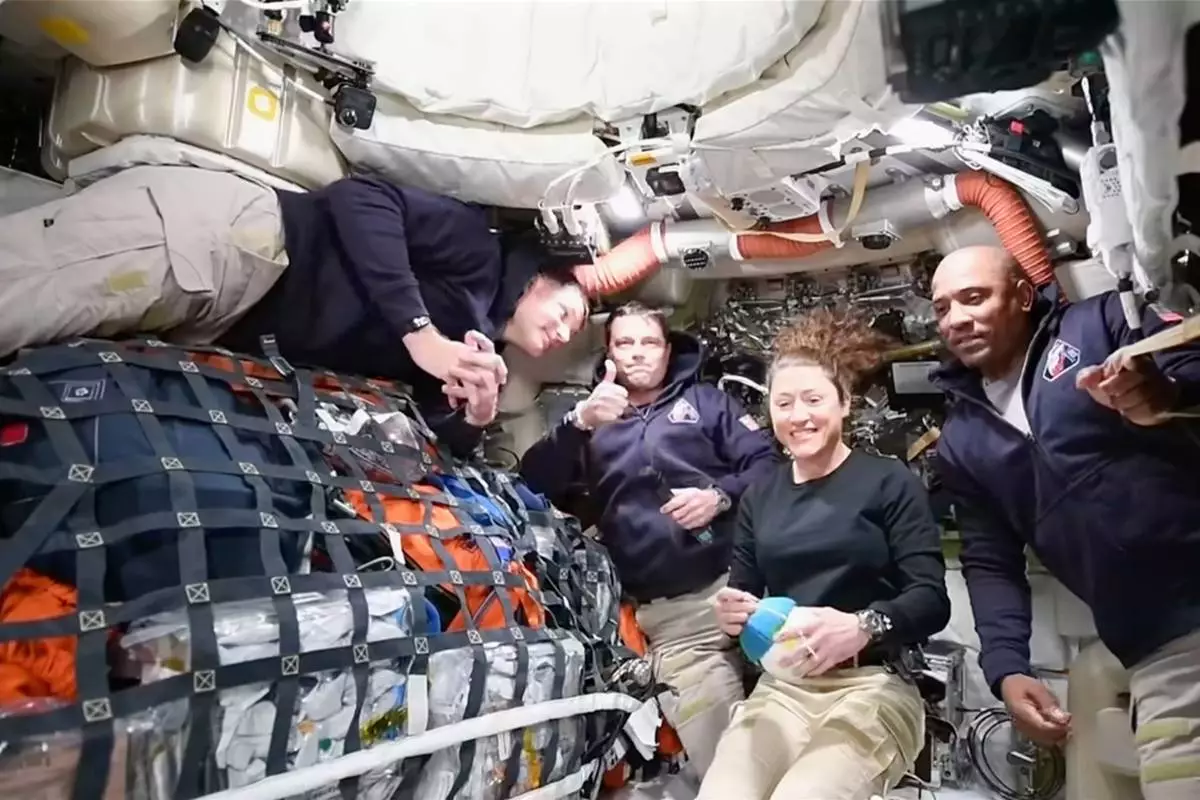
This image taken from video provided by NASA shows the Artemis II crew, from left, Canadien astronaut and mission specialist Jeremy Hansen, Commander Reid Wiseman, mission specialist Christina Koch and pilot Victor Glover as they speak with NASA Mission Control via video conference from the moon's orbit Thursday, April 2, 2026. (NASA via AP)

This image taken from video provided by NASA shows the Artemis II crew, from left, Canadien astronaut and mission specialist Jeremy Hansen, Commander Reid Wiseman, mission specialist Christina Koch and pilot Victor Glover as they speak with NASA Mission Control via video conference from the moon's orbit Thursday, April 2, 2026. (NASA via AP)

This image released by NASA on Thursday, April 2, 2026, shows NASA’s Orion spacecraft with Earth in the background. (NASA via AP)

This image released by NASA on Thursday, April 2, 2026, shows NASA’s Orion spacecraft with Earth in the background. (NASA via AP)

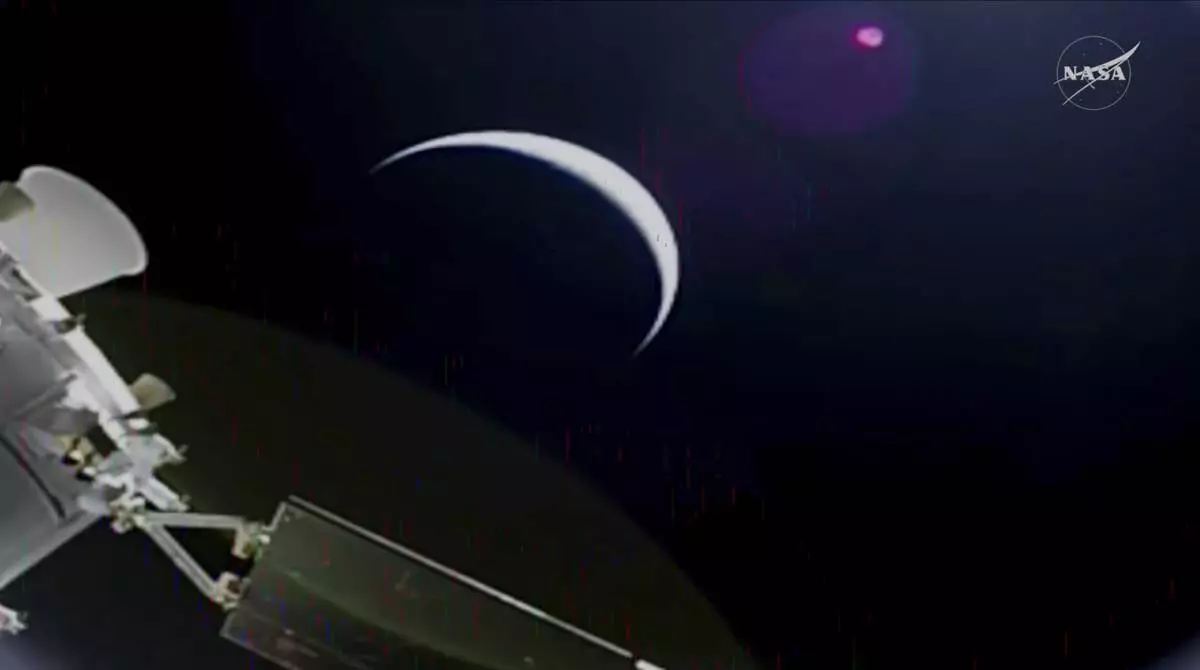
This image taken from video provided by NASA shows the Earth, left, from NASA's Orion spacecraft as it fired its engines heading toward the moon Thursday, April 2, 2026. (NASA via AP)

This image taken from video provided by NASA shows the Earth, left, from NASA's Orion spacecraft as it fired its engines heading toward the moon Thursday, April 2, 2026. (NASA via AP)

In this photo provided by NASA, a view of the Earth from NASA's Orion spacecraft as it orbits above the planet during the Artemis II test flight, on Thursday, April 2, 2026. (NASA via AP)

In this photo provided by NASA, a view of the Earth from NASA's Orion spacecraft as it orbits above the planet during the Artemis II test flight, on Thursday, April 2, 2026. (NASA via AP)

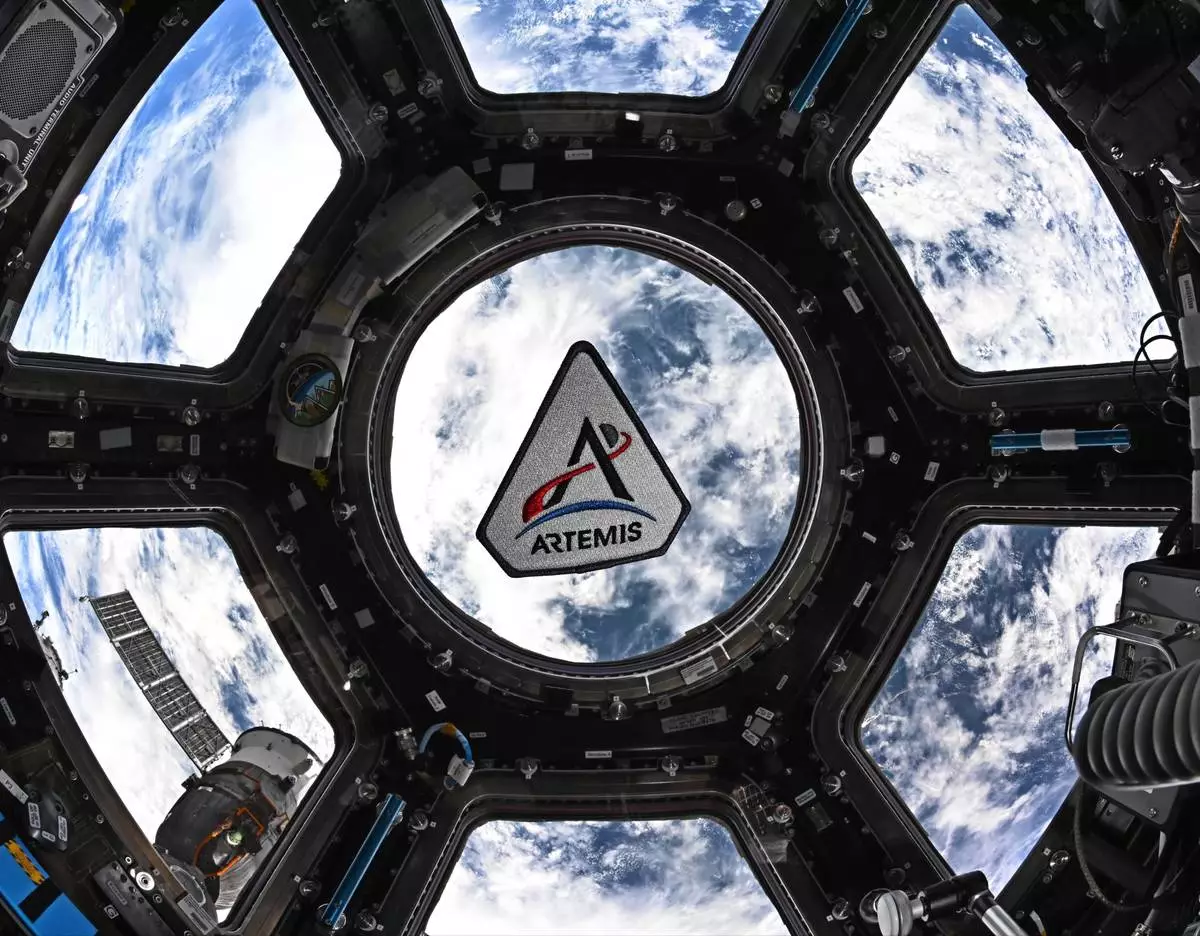
In this photo provided by NASA, an Artemis program patch floating in the International Space Station's cupola, on March 30, 2026. (Jessica Meir/NASA via AP)

In this photo provided by NASA, an Artemis program patch floating in the International Space Station's cupola, on March 30, 2026. (Jessica Meir/NASA via AP)

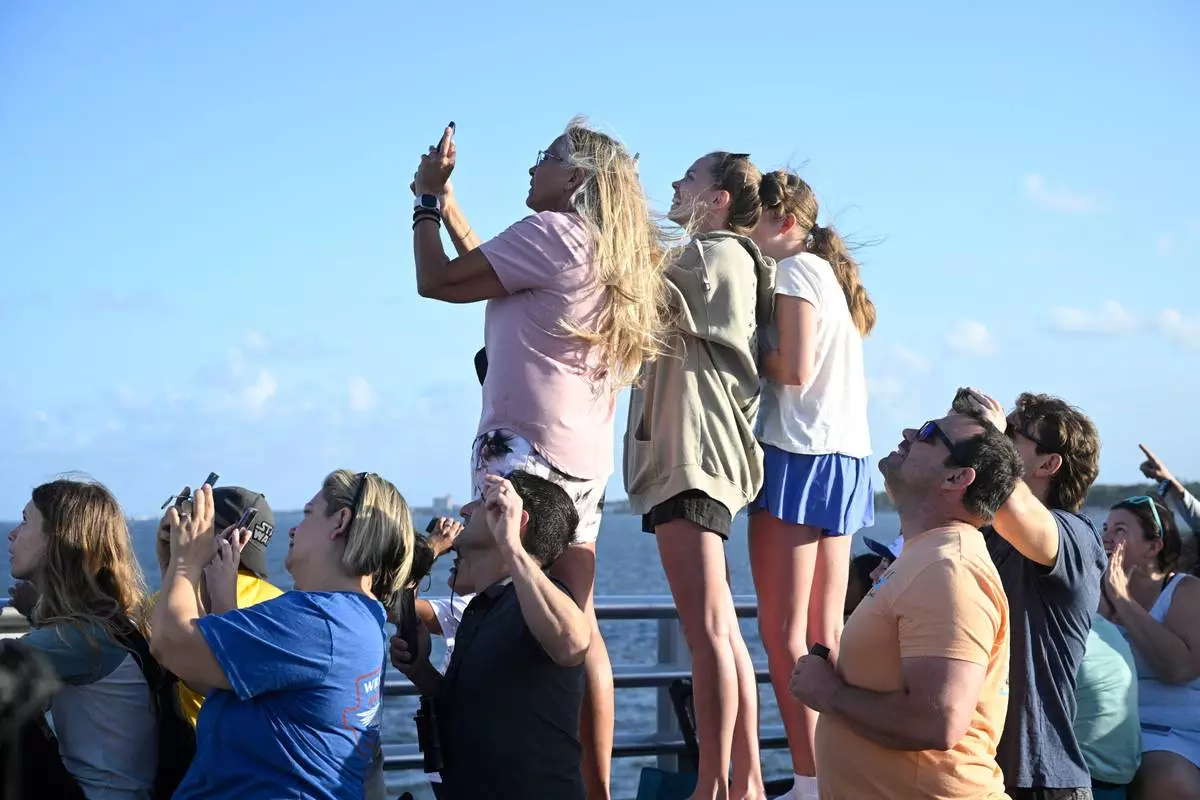
Spectators view NASA's Artemis II moon rocket launch from the A. Max Brewer Bridge, Wednesday, April 1, 2026, in Titusville, Fla. (AP Photo/Phelan M. Ebenhack)

Spectators view NASA's Artemis II moon rocket launch from the A. Max Brewer Bridge, Wednesday, April 1, 2026, in Titusville, Fla. (AP Photo/Phelan M. Ebenhack)

Spectators view NASA's Artemis II moon rocket launch from the A. Max Brewer Bridge, Wednesday, April 1, 2026, in Titusville, Fla. (AP Photo/Phelan M. Ebenhack)

Spectators view NASA's Artemis II moon rocket launch from the A. Max Brewer Bridge, Wednesday, April 1, 2026, in Titusville, Fla. (AP Photo/Phelan M. Ebenhack)

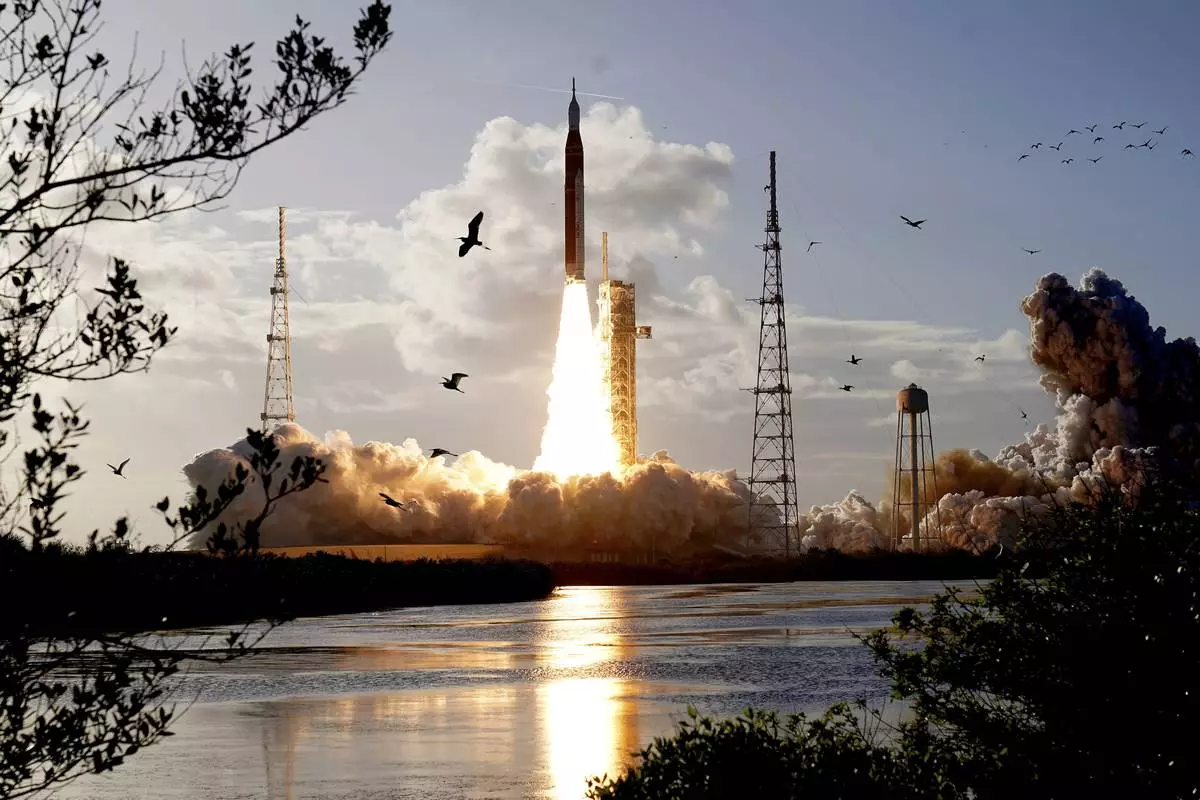
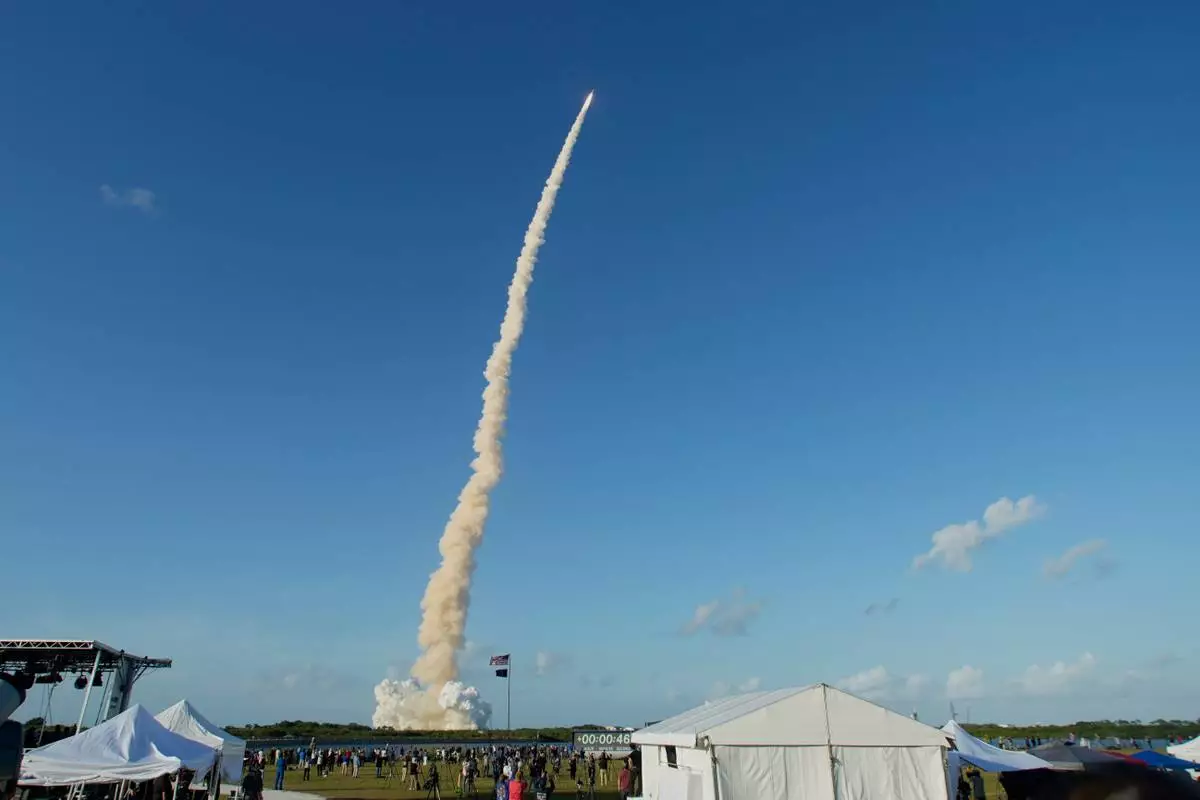
NASA's Artemis II moon rocket lifts off from the Kennedy Space Center's Launch Pad 39-B Wednesday, April 1, 2026, in Cape Canaveral, Fla. (AP Photo/Chris O'Meara)

NASA's Artemis II moon rocket lifts off from the Kennedy Space Center's Launch Pad 39-B Wednesday, April 1, 2026, in Cape Canaveral, Fla. (AP Photo/Chris O'Meara)

NASA's Artemis II moon rocket lifts off from the Kennedy Space Center's Launch Pad 39-B Wednesday, April 1, 2026, in Cape Canaveral, Fla. (AP Photo/Chris O'Meara)

NASA's Artemis II moon rocket lifts off from the Kennedy Space Center's Launch Pad 39-B Wednesday, April 1, 2026, in Cape Canaveral, Fla. (AP Photo/Chris O'Meara)

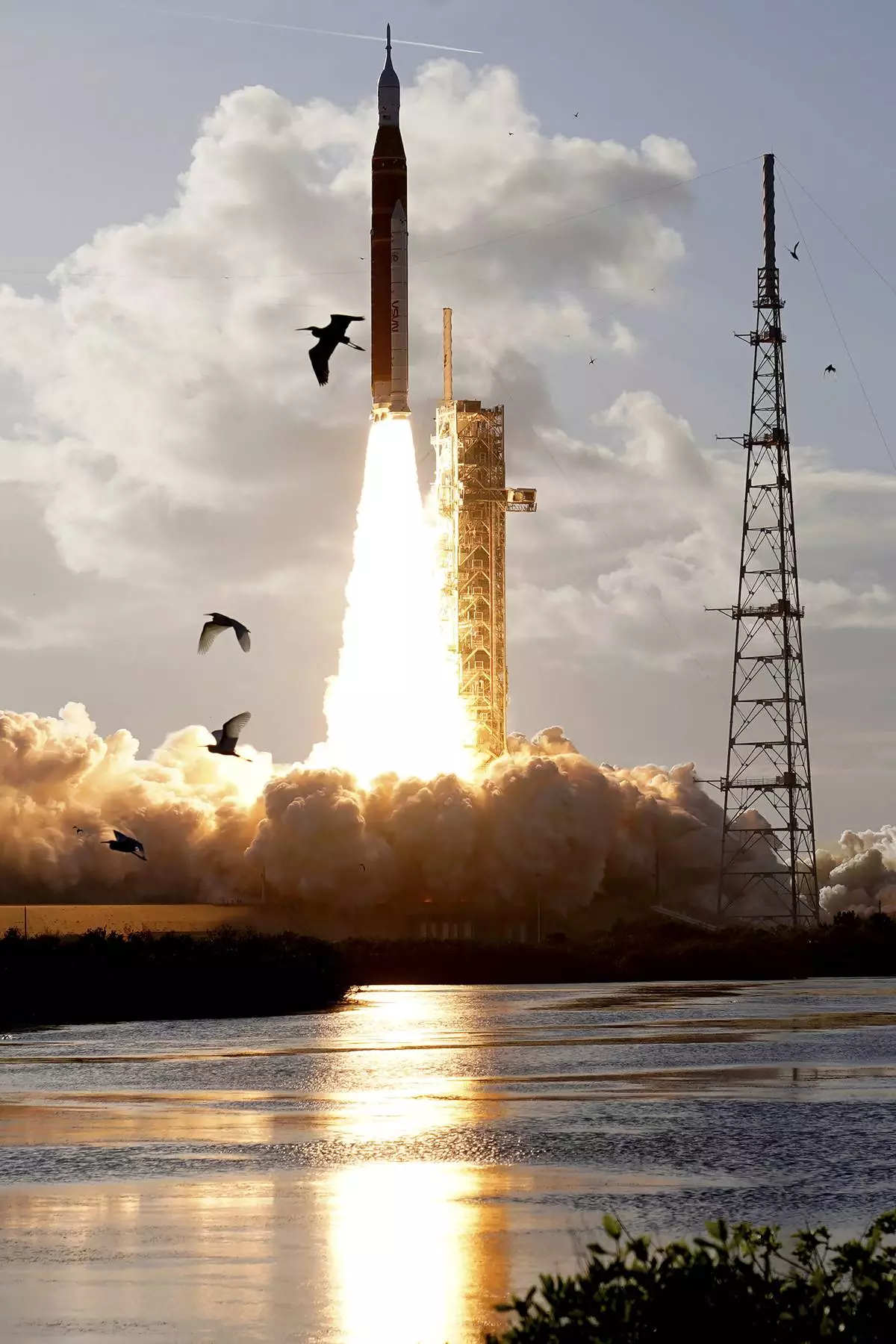
NASA's Artemis II moon rocket lifts off from the Kennedy Space Center's Launch Pad 39-B Wednesday, April 1, 2026, in Cape Canaveral, Fla. (AP Photo/John Raoux)

NASA's Artemis II moon rocket lifts off from the Kennedy Space Center's Launch Pad 39-B Wednesday, April 1, 2026, in Cape Canaveral, Fla. (AP Photo/John Raoux)

Recommended Articles