Nearly 1,000 households displaced by catastrophic wildfires on the Hawaiian island of Maui are anxiously awaiting word on whether federal assistance helping them stay housed will be left to expire, forcing them to find new housing or pay more for it in one of the tightest and most expensive rental environments in the country.
For 2 1/2 years, the Federal Emergency Management Agency has been key to assisting those residents. But FEMA, facing a broader Trump administration effort to diminish the agency's role and shift more responsibility to states, is set to choose in the coming weeks whether to end the funding.
Advocates say evicting renters and taking away financial assistance will undermine progress toward bringing residents back to Lahaina, the West Maui town that was largely razed by a massive fire on Aug. 8, 2023, and could lead to a new wave of homelessness and more departures from the island.
“All of them entering into our already impacted rental market in February scares me a lot,” said Nicole Huguenin, executive director and co-founder of the mutual aid organization Maui Rapid Response.
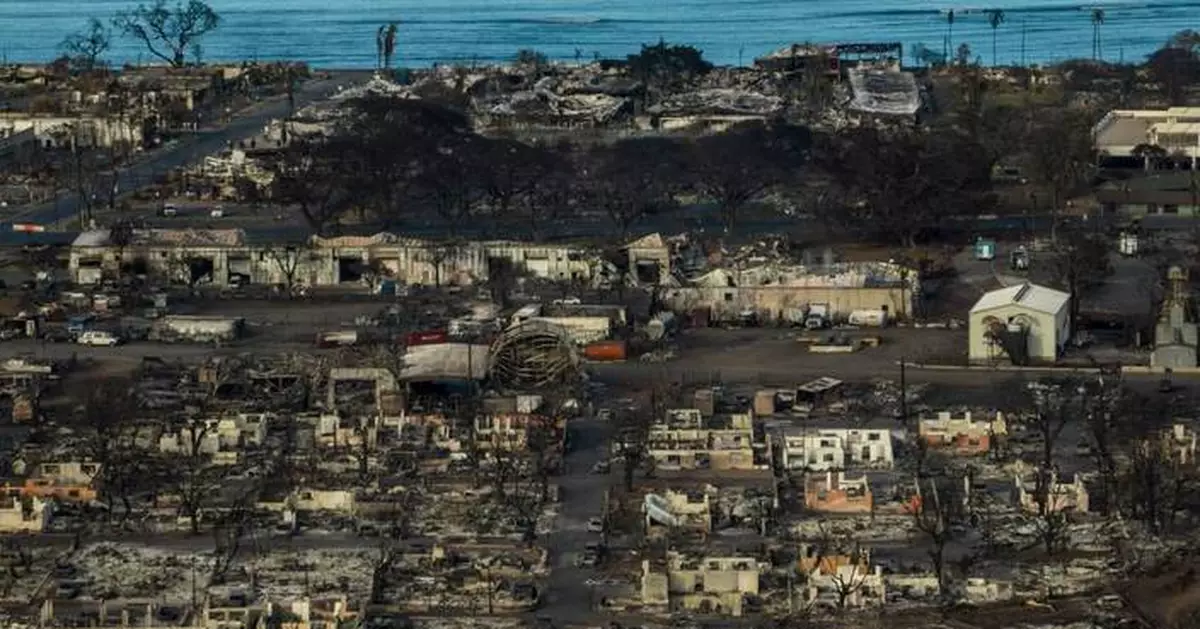
The fires in Lahaina and Kula, in Maui's upcountry region, destroyed 2,200 structures and killed 102 people. Then-President Joe Biden declared a major disaster, unlocking FEMA assistance to help 12,000 displaced people, 89% of whom were renters at the time of the fires. His administration eventually extended the 18-month program until February 2026.
But with few homes rebuilt and rental inventory nearing zero, the state requested another extension in May with a decision due before the end of January.
The uncertainty comes against the backdrop of greater upheaval surrounding FEMA’s future role in disaster recovery. President Donald Trump has frequently floated the idea of eliminating the agency, saying he wants states to take on more responsibility handling disasters.
While it’s not clear whether that change in approach will influence the decision on the housing assistance, it is weighing on residents.
“It falls into the hands of the current administration and I’m not sure if they’re fond of the amount of money we’ve had to use," said Kukui Keahi, a Lahaina fire survivor who rents an apartment through FEMA after living in her car and couch-surfing after the fire.
If the program expires, all housing-related financial assistance to fire survivors would cease and any units being leased directly through FEMA must be vacated, according to an agency notice.
The request is “currently under review,” according to FEMA spokesperson Daniel Llargues. Maui County spokesperson Laksmi Abraham said the county is “working with the state and FEMA toward an extension and is optimistic" it will be granted.
While megafires in other states have destroyed more homes, Maui's fires created a unique crisis. Limited housing stock and the island’s remote location from the mainland U.S. made relocating survivors and rebuilding exceptionally difficult.
FEMA, the state, county, and nonprofits all scrambled to find solutions to house the displaced, most of whom were desperate to stay near Lahaina to be close to work, schools and the community.
After working with the Red Cross to house 8,000 residents in hotels and other temporary shelters in the initial weeks, FEMA slowly transitioned families to other forms of housing assistance.
It offered money for rent, installed temporary shelters on burned properties, and leased thousands of units itself to rent back to survivors, though some complained of burdensome eligibility requirements and having to move several times.
The U.S. Army Corps of Engineers helped FEMA build Kilohana, a 167-unit modular housing complex on a lot overlooking Lahaina town. The investment required blasting hard rock to grade the state-owned land and installing new electric, water and sewer infrastructure. The first family moved in 14 months ago.
If rental assistance ends, the roughly 190 households living in modular units, 470 in the direct lease program and 280 relying on financial assistance will be thrust into an already stressed housing market that has seen little improvement since the fires.
Maui's rental vacancy rate is under 2% and as of mid-2025 there were zero available units priced at or below what the federal government deems fair market rent, according to the Hawaii Emergency Management Agency, or HIEMA.
Displaced survivors faced rent increases of 50-60% after the fires, according to the University of Hawaii Economic Research Organization. Two- and three-bedroom units still cost nearly double what they did before the fires.
Critics have partially blamed those increases on FEMA’s own housing programs, which often leased properties for well above fair-market prices to incentivize landlord participation, though the island's housing shortage predated the fires.
“My goal is to (pay) what I was before and I can’t, there’s no way," said Keahi, the displaced resident who is also program deputy at the Hawaiian Council, a nonprofit administering multiple recovery initiatives on Maui.
The slow recovery of Maui's tourism-dependent economy is also limiting what tenants can afford.
To confront the supply challenges, the county passed a bill last month banning short-term rentals in apartment-zoned properties beginning in 2029, despite strong opposition from some concerned about the impact to tourism and jobs.
Rebuilding is also gaining momentum, with 109 residential construction projects completed and about 300 in process.
“The tough part on the island is everything needs to be shipped in,” said HIEMA Administrator James Barros.
Barros said if an extension is granted, FEMA could impose some new “milestones” for the state to meet to speed along its recovery.
FEMA has taken on prolonged housing assistance missions in the past, for both large disasters like Hurricane Katrina and smaller events, depending on the needs. Extensions are typically based on factors like unit availability and the number of households in need, as well as progress made by both households and local governments to find alternative solutions.
The county and state have been working on contingency plans “for months” if FEMA assistance ended, including possibly taking over Kilohana, Barros said.
Next door to Kilohana is Ka La'i Ola, another community of 450 modular units created through a state-philanthropic partnership. Its residents do not pay rent yet, and they are allowed to stay up to five years.
Kimo Carvalho, CEO of the housing nonprofit Home Aid Hawaii which manages Ka La’i Ola, said a Kilohana resident recently called saying his housing might expire and asking if he could apply to Ka La'i Ola.
The community is already full, Carvalho told The Associated Press, with a long waitlist.
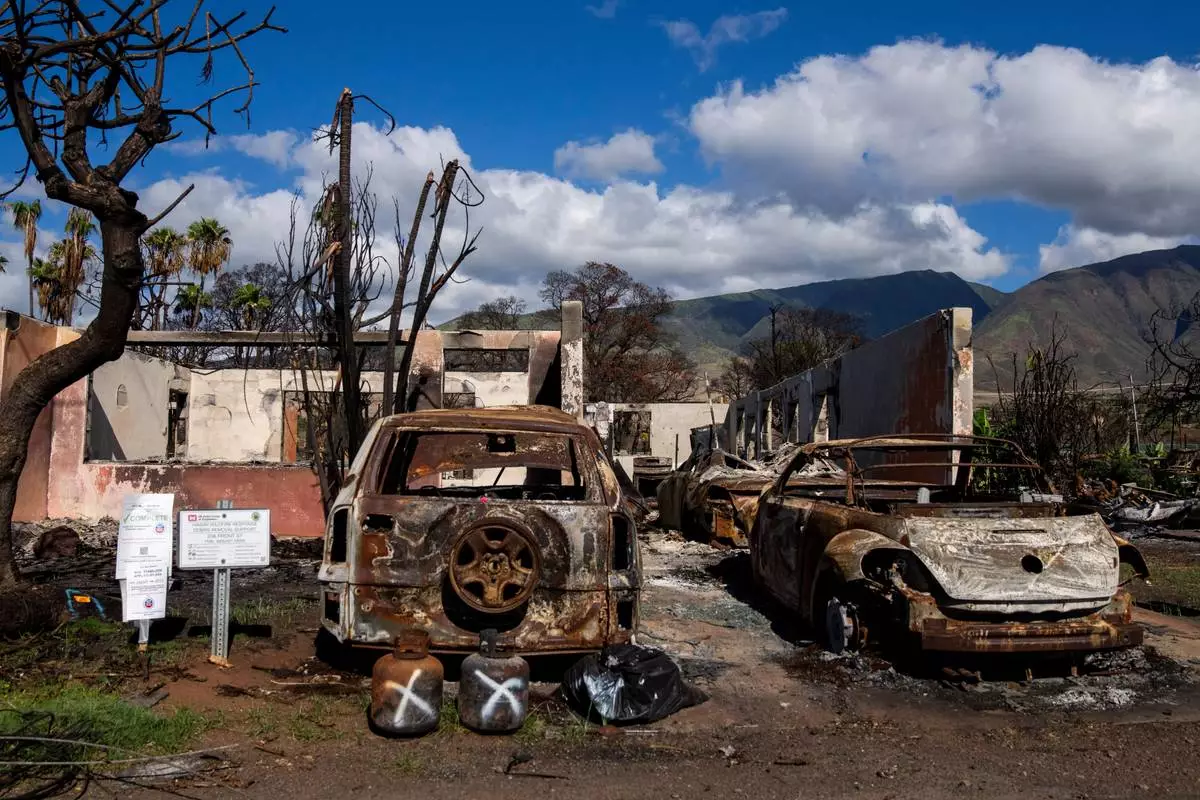
FILE - Burned cars and propane tanks with markings on them sit outside a house destroyed by wildfire, Friday, Dec. 8, 2023, in Lahaina, Hawaii. (AP Photo/Lindsey Wasson, File)
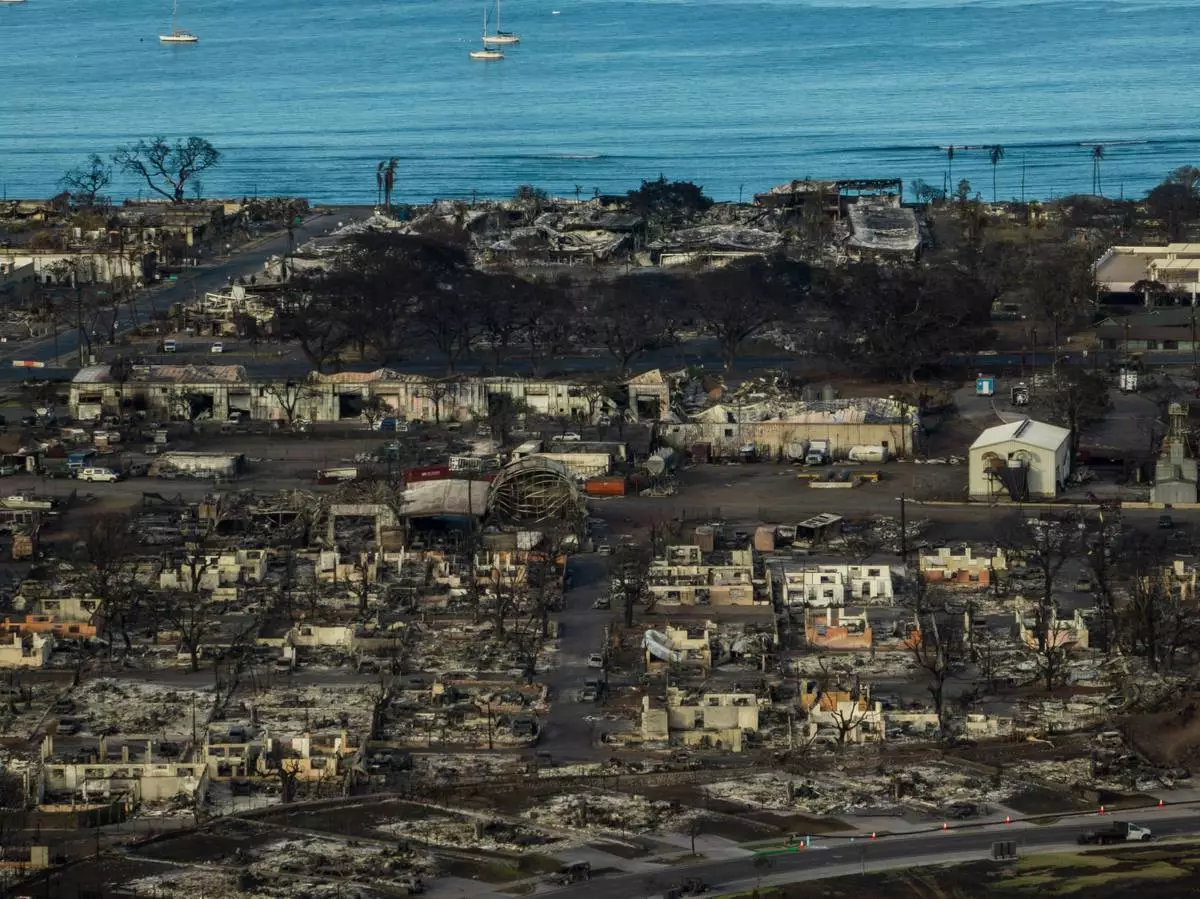
FILE - A general view of the aftermath of a wildfire in Lahaina on the Hawaiian island of Maui, Thursday, Aug. 17, 2023. (AP Photo/Jae C. Hong, File)