Skip to Content Facebook Feature Image

All 6 crew members on a US refueling plane that crashed in Iraq are dead, US military says

News

All 6 crew members on a US refueling plane that crashed in Iraq are dead, US military says
News

News

All 6 crew members on a US refueling plane that crashed in Iraq are dead, US military says

2026-03-14 07:17 Last Updated At:07:20

WASHINGTON (AP) — All six crew members of a KC-135 refueling aircraft that crashed while supporting operations against Iran are dead, the U.S. military said Friday.

U.S. Central Command, which oversees the Middle East, said the crash in western Iraq on Thursday followed an unspecified incident involving two aircraft in “friendly airspace” and that the other plane landed safely.

Ohio Gov. Mike DeWine said in a social media post that three of the six crew members were from his state and deployed with the Ohio Air National Guard’s 121st Air Refueling Wing. He did not identify them but offered condolences to their families.

The crash brings the U.S. death toll in Operation Epic Fury to at least 13 service members, with the seven others killed in combat. About 140 U.S. service members have been injured, including eight severely, the Pentagon said earlier this week.

The KC-135 has been in service for more than 60 years and has been involved in several fatal accidents, most recently in 2013. Adding to concerns about their reliability, the aircraft don't always carry parachutes.

Here’s what is known so far about the tanker, which is the fourth U.S. military aircraft publicly acknowledged to have crashed since the war against Iran began on Feb. 28:

U.S. Central Command said the circumstances of the crash are under investigation but that the loss of the aircraft was “not due to hostile or friendly fire.”

A U.S. official, who spoke on condition of anonymity to discuss the developing situation, said the other plane involved was also a KC-135. Yechiel Leiter, the Israeli ambassador to the U.S., wrote on X that the other plane landed safely in Israel.

Gen. Dan Caine, the chairman of the Joint Chiefs of Staff, told reporters at the Pentagon on Friday morning that the crash occurred “over friendly territory in western Iraq, while the crew was on a combat mission” and reiterated that hostile or friendly fire was not the cause.

Speaking at the same news conference, Defense Secretary Pete Hegseth called the crew heroes.

“War is hell. War is chaos,” Hegseth said. “And as we saw yesterday with the tragic crash of our KC-135 tanker, bad things can happen. American heroes, all of them.”

Hegseth and Caine spoke to reporters before the deaths of the six crew member had been made public.

Yang Uk, a security expert at South Korea’s Asan Institute for Policy Studies, said it would be rare for a refueling tanker to be downed by enemy fire because such operations are usually conducted in the rear of combat zones.

Last week, three U.S. F-15E fighter jets were mistakenly downed by friendly Kuwaiti fire. All six crew members ejected safely.

The KC-135 Stratotanker is a U.S. Air Force aircraft used to refuel other planes in midair, allowing them to fly longer distances and sustain operations without landing. The plane is also used to transport wounded personnel during medical evacuations or conduct surveillance missions, according to military experts.

“The last of these planes were produced in the 1960s,” Yang said.

Based on the same design as the Boeing 707 passenger plane, the KC-135 is set to be gradually phased out as more of the next-generation KC-46A Pegasus tankers enter service.

According to the Congressional Research Service, the Air Force last year had 376 KC-135s, including 151 on active duty, 163 in the Air National Guard and 62 in the Air Force Reserve.

A basic KC-135 crew consists of three people: a pilot, co-pilot and boom operator. Nurses and medical technicians are added in aeromedical evacuation missions.

Refueling typically happens at the back of the plane, where the boom operator is located. A fuel boom is lowered to connect with fighters, bombers or other aircraft. On many of the planes, the boom operator works lying face down while looking out of a window on the underside of the plane.

Some KC-135s can also refuel planes from pods on their wings. The tankers have room to carry cargo or passengers if needed.

Refueling tankers could play an increasingly important role if the Iran war drags on, as U.S. aircraft may need to fly longer missions to pursue Iranian forces retreating deeper into the country, said Yang.

KC-135s have been involved in several fatal accidents. The most recent occurred on May 3, 2013, when one crashed after takeoff south of Chaldovar, Kyrgyzstan, while supporting the war in Afghanistan.

In that crash, the crew experienced problems with the plane’s rudder, according to a U.S. Air Force investigation. While the crew struggled to stabilize the plane, the tail section broke away and the plane exploded midair, killing all three onboard.

The most serious midair collision involving the plane happened in 1966, when a B-52 bomber carrying nuclear bombs struck a tanker near Palomares, Spain.

The accident caused the tanker to crash, killing four onboard. The disaster led to an extensive decontamination effort to clean up nuclear material dispersed when conventional explosives in the hydrogen bombs detonated after hitting the ground.

The plane has a good safety record overall, is well-maintained and has been updated often with new equipment, said Alan Diehl, a former investigator for the Air Force Safety Center who examined mishaps that involved KC-135s.

But Diehl said an important question is whether this KC-135 was carrying any parachutes. The one that crashed in Kyrgyzstan was not, according to the investigation.

Diehl said the reasoning for not always requiring parachutes, at least in the 1980s and 1990s, included the expense of maintaining them and training to use them. He said K-135s are designed with an escape hatch on the flight deck and a spoiler to help airmen jump clear of the fuselage.

A 2008 news release from an air refueling unit said the Air Force was pulling parachutes from KC-135s, noting that it was statistically safer to stay with the aircraft, “especially when flying over enemy territory.”

“Removing parachutes from military aircraft may sound peculiar, but KC-135s are not like other aircraft,” the news release stated. “They seldom have mishaps, and the likelihood a KC-135 crew member would ever need to use a parachute is extremely low.”

Diehl stressed that it's unclear whether parachutes would have helped the crew over Iraq. But he said the second plane landing safety suggests the collision may not have been catastrophic.

When asked if the plane that crashed had parachutes, the military would say only that the cause of the incident was still under investigation.

As for why the KC-135 that crashed had six people on board, Diehl said some could have been backup crew, given that the aircraft can stay in the air for many hours.

Kim Tong-Hyung reported from Seoul, South Korea. Associated Press writer Adam Schreck in Bangkok contributed to this report.
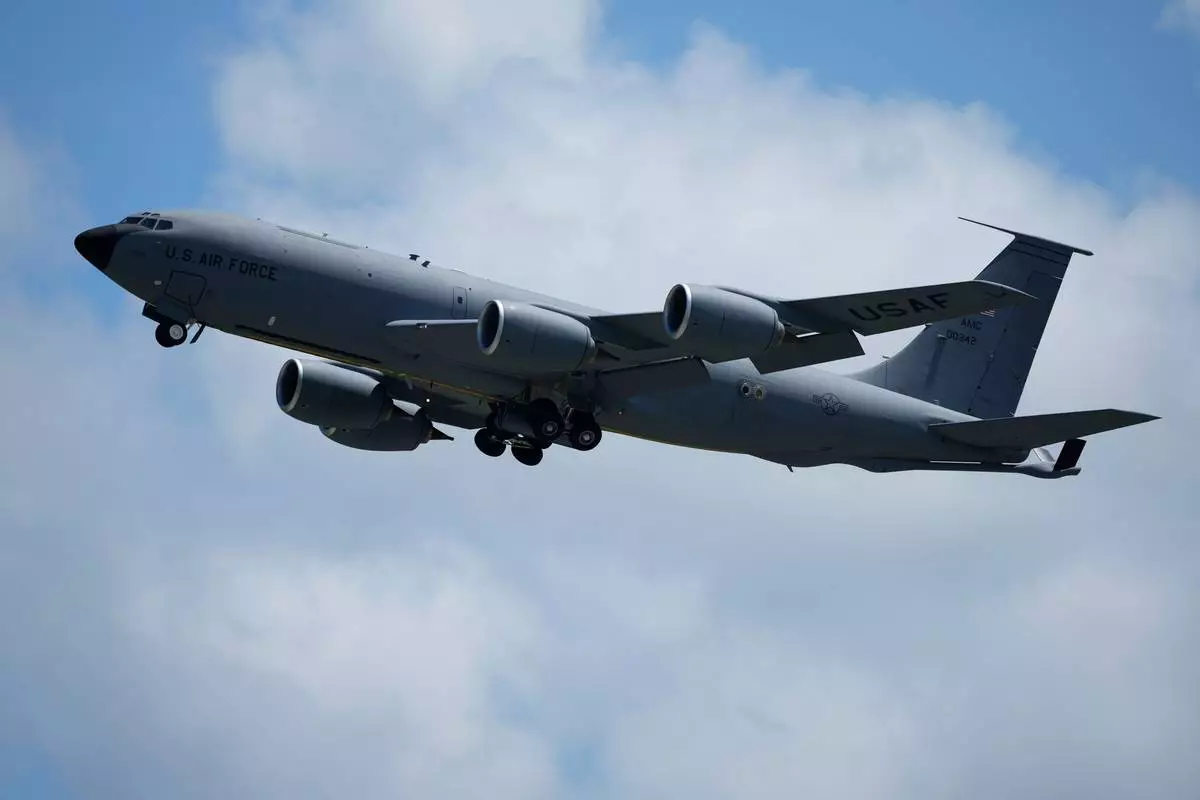
FILE - A U.S. Air Force KC-135 Stratotanker refueling tanker aircraft takes off from the Kadena Air Base airfield in Kadena town, west of Okinawa, southern Japan, Wednesday, Aug. 30, 2023. (AP Photo/Hiro Komae, File)
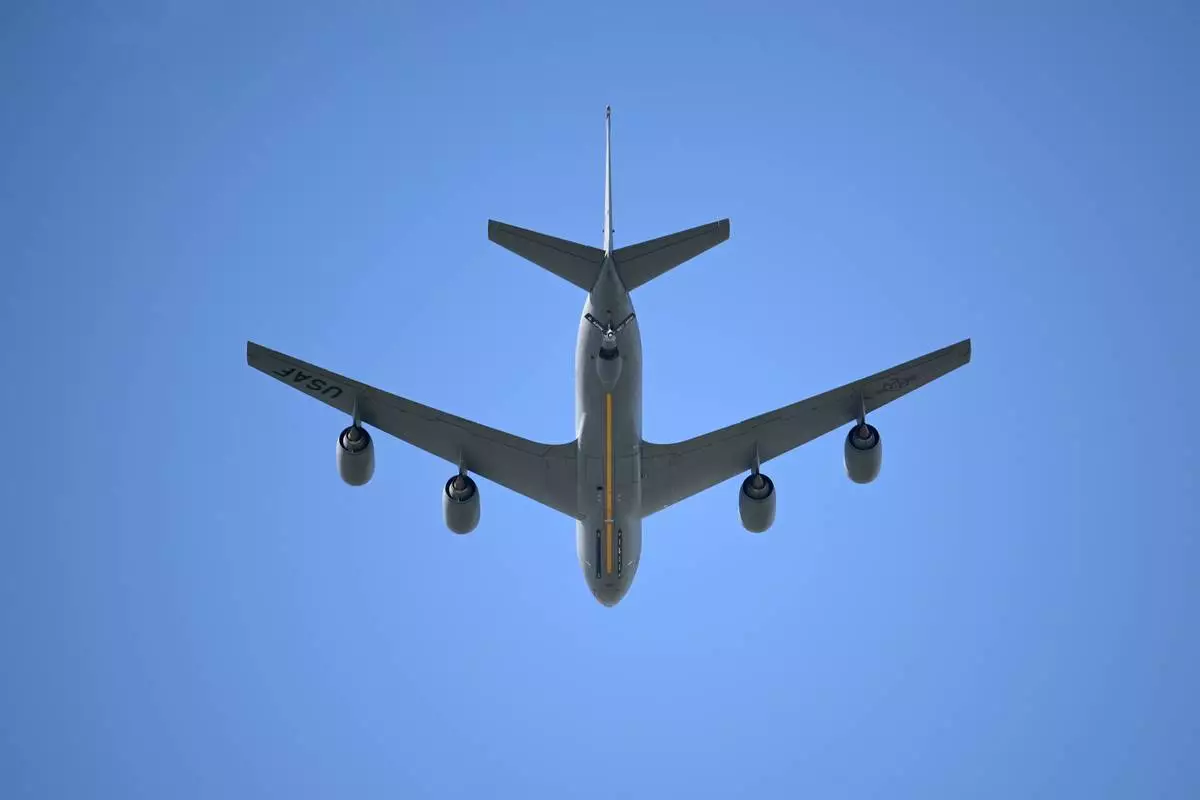
FILE - A U.S. Air Force KC-135 Stratotanker refueling tanker aircraft takes off from the Kadena Air Base airfield in Kadena town, west of Okinawa, southern Japan, Wednesday, Aug. 30, 2023. (AP Photo/Hiro Komae, File)

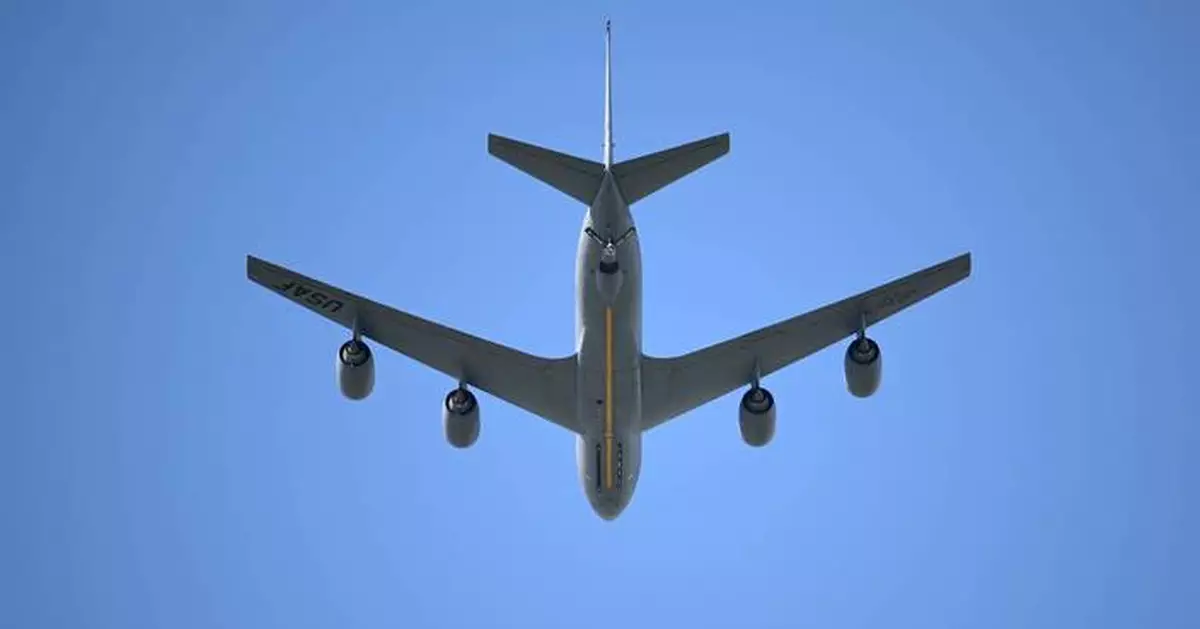
FILE - A U.S. Air Force KC-135 Stratotanker aerial refueling aircraft performs a flyover during the national anthem before an NCAA college football game between Central Florida and Georgia Tech, Sept. 24, 2022, in Orlando, Fla. (AP Photo/Phelan M. Ebenhack, File)
FILE - A U.S. Air Force KC-135 Stratotanker aerial refueling aircraft performs a flyover during the national anthem before an NCAA college football game between Central Florida and Georgia Tech, Sept. 24, 2022, in Orlando, Fla. (AP Photo/Phelan M. Ebenhack, File)
DUBAI, United Arab Emirates (AP) — Iran's supreme leader said Thursday that the Islamic Republic will protect its “nuclear and missile capabilities” as a national asset, likely seeking to draw a hard line as U.S. President Donald Trump seeks a wider deal to cement the shaky ceasefire now holding in the war.

Ayatollah Mojtaba Khamenei, speaking in a written statement read by a state television anchor as he has since taking over as Iran's supreme leader, struck a defiant tone, insisting the only place Americans belonged in the Persian Gulf is “at the bottom of its waters" and that a “new chapter” was being written in the region's history.

However, his remarks come as Iran's oil industry has begun to be squeezed by a U.S. Navy blockade halting its oil tankers from getting out to sea. Meanwhile, benchmark Brent crude for June delivery reached as much as $126 a barrel in trading on Thursday as Iran maintains its chokehold on the Strait of Hormuz, the narrow mouth of the Persian Gulf through which a fifth of all crude oil and natural gas traded passes.

All this is putting additional pressure on the world's economy as Trump likely weighs how to respond.

“By God’s help and power, the bright future of the Persian Gulf region will be a future without America, one serving the progress, comfort and prosperity of its people,” Khamenei said in the statement, read like all others since he reportedly was wounded in the Feb. 28 attack that killed his father, the 86-year-old Supreme Leader Ayatollah Ali Khamenei.

“We and our neighbors across the waters of the Persian Gulf and the (Gulf) of Oman share a common destiny. Foreigners who come from thousands of kilometers away to act with greed and malice there have no place in it — except at the bottom of its waters.”

With a fragile ceasefire in place, the U.S. and Iran are locked in a standoff over the strait. The U.S blockade is designed to prevent Iran from selling its oil, depriving it of crucial revenue while also potentially creating a situation where Tehran has to shut off production because it has nowhere to store oil.

The strait’s closure, meanwhile, has put pressure on Trump, as oil and gasoline prices have skyrocketed ahead of crucial midterm elections, and it has pressured his Gulf allies, which use the waterway to export their oil and gas.

A recent Iranian proposal would push negotiations on the country’s nuclear program to a later date. Trump said one of the major reasons he went to war was to deny Iran the ability to develop nuclear weapons. Iran long has maintained its program is peaceful, though it enriched uranium at near-weapons-grade levels of 60%.

Speaking to mark Persian Gulf Day in Iran, Khamenei's remarks signaled that nuclear issues and Iran's ballistic missile program wouldn't be traded away.

“Ninety million proud and honorable Iranians inside and outside the country regard all of Iran’s identity-based, spiritual, human, scientific, industrial and technological capacities — from nanotechnology and biotechnology to nuclear and missile capabilities — as national assets, and will protect them just as they protect the country’s waters, land and airspace,” Khamenei said.

He referred to America as the “Great Satan,” a long hurled insult by Iranian leaders toward the U.S. since the 1979 Islamic Revolution.

In his remarks, Khamenei seemed to signal Iran would maintain its control over the waterway, which sits in the territorial waters of Iran and Oman. Iran had been charging some ships reportedly $2 million apiece to travel through the strait.

“Islamic Iran, by giving practical thanks for the blessing of exercising control over the Strait of Hormuz, will make the Persian Gulf region secure and put an end to the hostile enemy’s abuses of this waterway,” Khamenei said. “The legal rules and new management of the Strait of Hormuz will bring comfort and progress for the benefit of all the region’s nations, and its economic gains will gladden the hearts of the people.”

However, the world considered the strait an international waterway, open to all without paying tolls. Gulf Arab nations, chief among them the United Arab Emirates, have decried Iran's control of the strait as akin to piracy.

Associated Press writer Amir Vahdat in Tehran, Iran, contributed to this report.

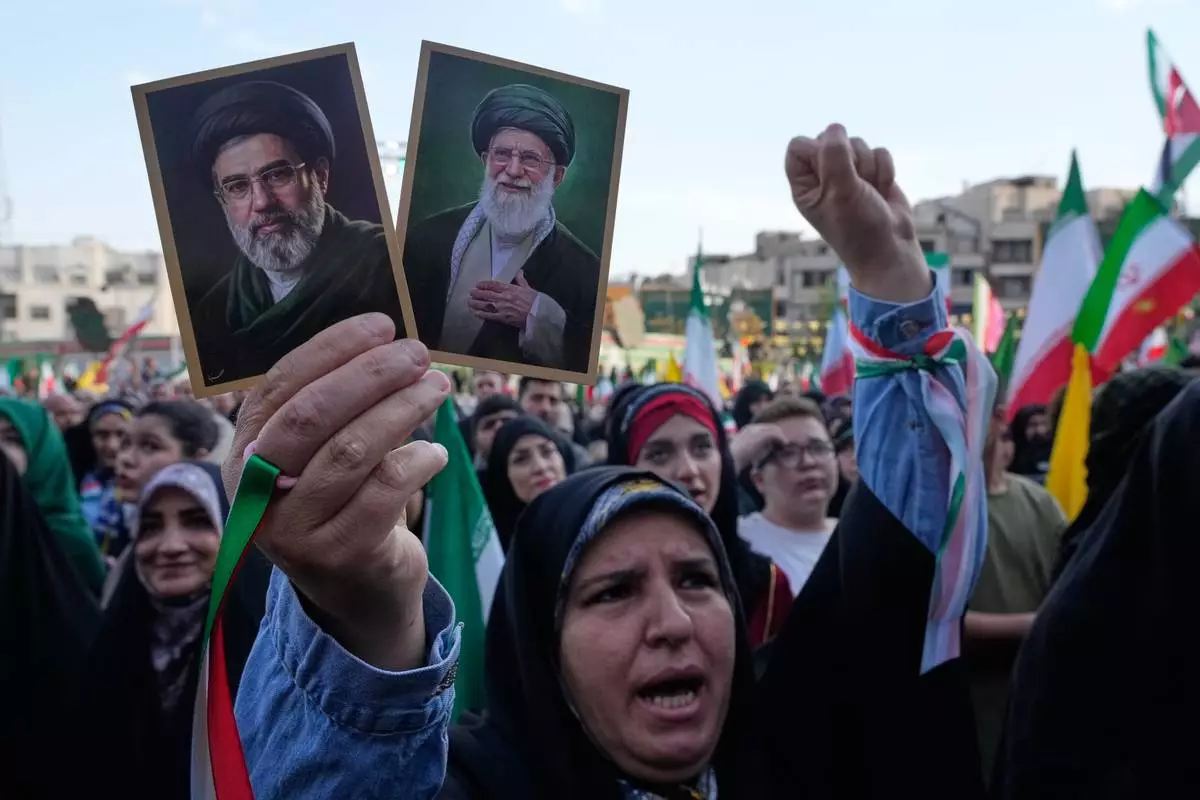
A woman holds up pictures of the Iranian Supreme Leader Ayatollah Mojtaba Khamenei, left, and his father, the slain Ayatollah Ali Khamenei in a state-organised rally celebrating the birthday of Imam Reza, the 8th Shiite Muslims' Imam, and supporting the supreme leader, in Tehran, Iran, Wednesday, April 29, 2026. (AP Photo/Vahid Salemi)

A woman holds up pictures of the Iranian Supreme Leader Ayatollah Mojtaba Khamenei, left, and his father, the slain Ayatollah Ali Khamenei in a state-organised rally celebrating the birthday of Imam Reza, the 8th Shiite Muslims' Imam, and supporting the supreme leader, in Tehran, Iran, Wednesday, April 29, 2026. (AP Photo/Vahid Salemi)

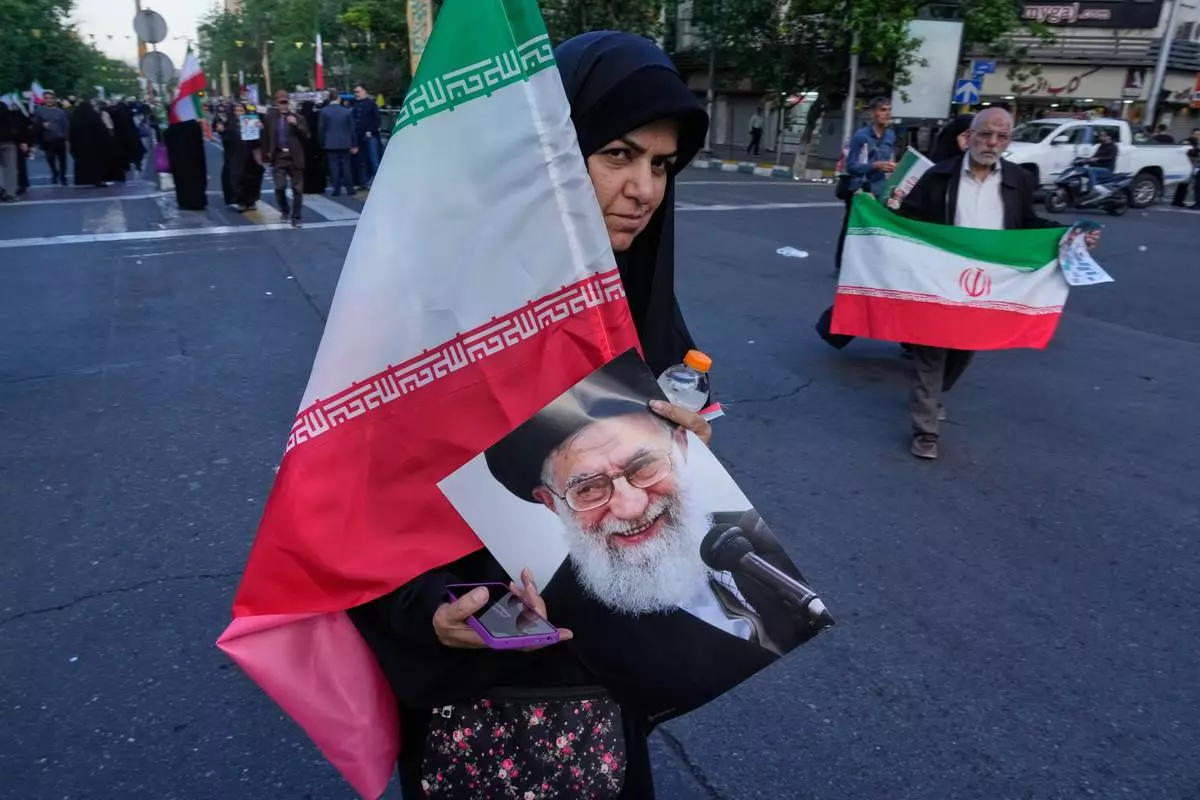
A woman carries an Iranian flag and a poster of the late Supreme Leader Ayatollah Ali Khamenei during a state-organised rally in Tehran, Iran, Wednesday, April 29, 2026, celebrating the birthday of Imam Reza, the 8th Shiite Muslims' Imam, and supporting Supreme Leader Ayatollah Mojtaba Khamenei. (AP Photo/Vahid Salemi)

A woman carries an Iranian flag and a poster of the late Supreme Leader Ayatollah Ali Khamenei during a state-organised rally in Tehran, Iran, Wednesday, April 29, 2026, celebrating the birthday of Imam Reza, the 8th Shiite Muslims' Imam, and supporting Supreme Leader Ayatollah Mojtaba Khamenei. (AP Photo/Vahid Salemi)

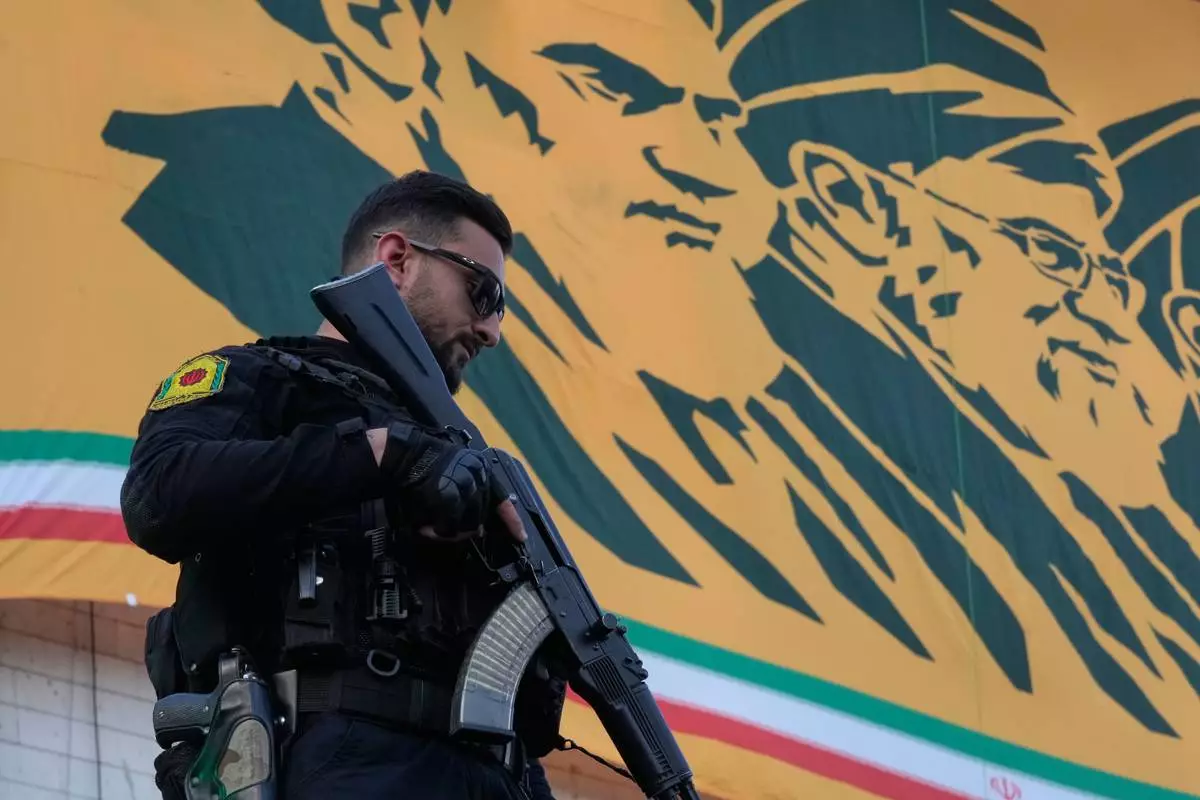
A police officer stands guard in front of a banner with portraits of the late Iranian revolutionary founder Ayatollah Khomeini, left, and late Supreme Leader Ayatollah Ali Khamenei in a state-organised rally celebrating the birthday of Imam Reza, the 8th Shiite Muslims' Imam, and supporting the supreme leader, in Tehran, Iran, Wednesday, April 29, 2026. (AP Photo/Vahid Salemi)

A police officer stands guard in front of a banner with portraits of the late Iranian revolutionary founder Ayatollah Khomeini, left, and late Supreme Leader Ayatollah Ali Khamenei in a state-organised rally celebrating the birthday of Imam Reza, the 8th Shiite Muslims' Imam, and supporting the supreme leader, in Tehran, Iran, Wednesday, April 29, 2026. (AP Photo/Vahid Salemi)

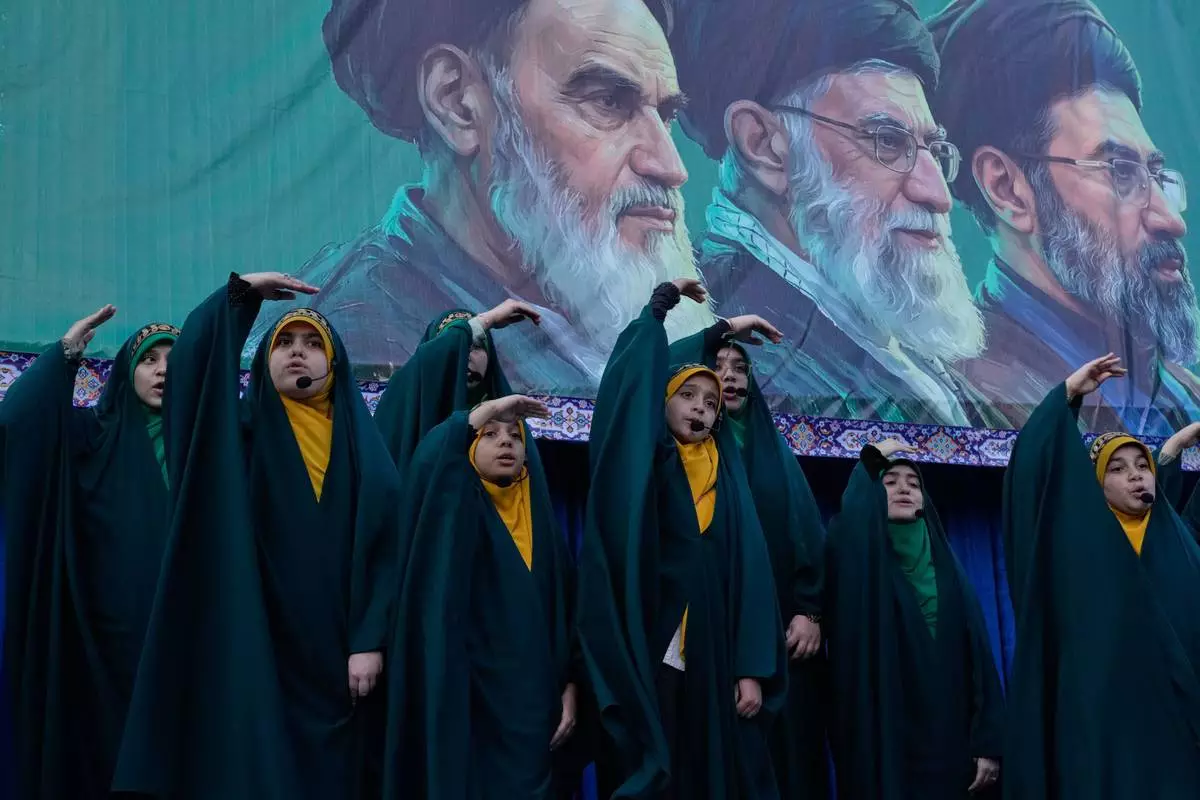
Girls sing a song as they show the movement of missiles with their hands next to the portraits of the late Iranian revolutionary founder Ayatollah Khomeini, left, late Supreme Leader Ayatollah Ali Khamenei, center, and Supreme Leader Ayatollah Mojtaba Khamenei, in a state-organised rally celebrating the birthday of Imam Reza, the 8th Shiite Muslims' Imam, and supporting the supreme leader, in Tehran, Iran, Wednesday, April 29, 2026. (AP Photo/Vahid Salemi)

Girls sing a song as they show the movement of missiles with their hands next to the portraits of the late Iranian revolutionary founder Ayatollah Khomeini, left, late Supreme Leader Ayatollah Ali Khamenei, center, and Supreme Leader Ayatollah Mojtaba Khamenei, in a state-organised rally celebrating the birthday of Imam Reza, the 8th Shiite Muslims' Imam, and supporting the supreme leader, in Tehran, Iran, Wednesday, April 29, 2026. (AP Photo/Vahid Salemi)

Recommended Articles