RAJKOT, India (AP) — Daryl Mitchell scored 131 not out off 117 balls as New Zealand beat India by seven wickets in the second one-day international to draw level in the three-match series Wednesday.
Mitchell’s eighth ODI hundred helped the Black Caps score 286-3 in 47.3 overs — in reply to India’s 284-7 (50 overs).
Click to Gallery
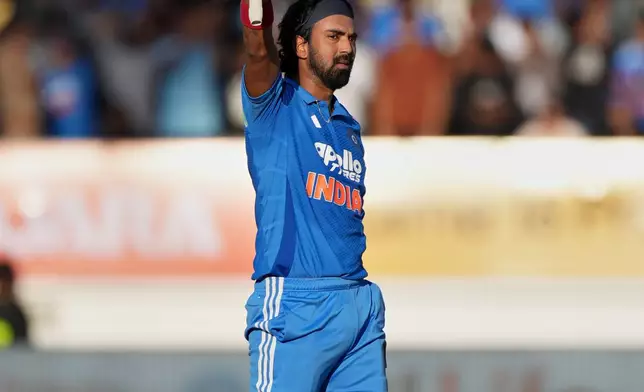
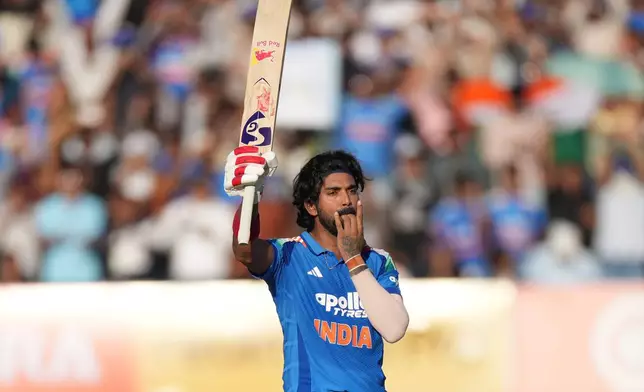
India's KL Rahul celebrates after scoring a century during the second One Day International cricket match between India and New Zealand in Rajkot, India, Wednesday, Jan. 14, 2026. (AP Photo/Ajit Solanki)
India's KL Rahul celebrates after scoring a century during the second One Day International cricket match between India and New Zealand in Rajkot, India, Wednesday, Jan. 14, 2026. (AP Photo/Ajit Solanki)
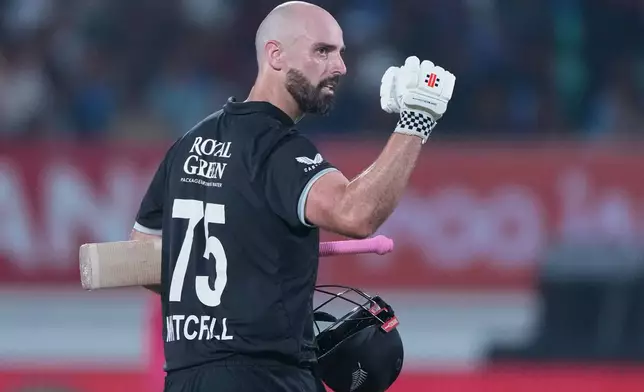
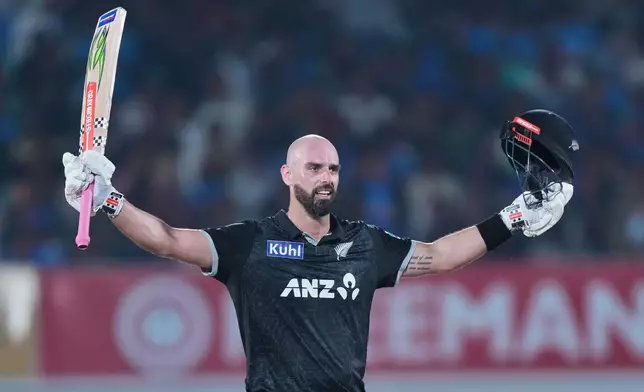
New Zealand's Daryl Mitchell celebrates after scoring a century during the second One Day International cricket match between India and New Zealand in Rajkot, India, Wednesday, Jan. 14, 2026. (AP Photo/Ajit Solanki)
New Zealand's Daryl Mitchell celebrates after scoring a century during the second One Day International cricket match between India and New Zealand in Rajkot, India, Wednesday, Jan. 14, 2026. (AP Photo/Ajit Solanki)
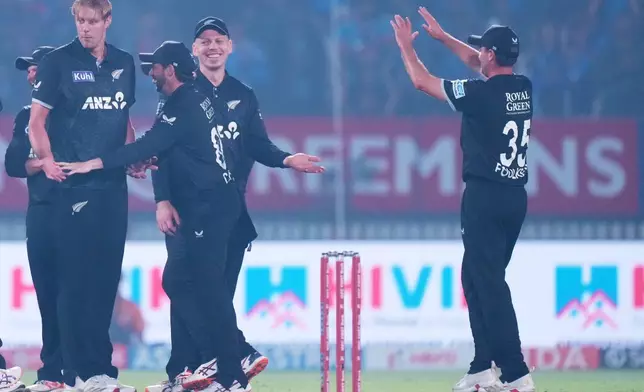
New Zealand's Kyle Jamieson, left, celebrates with teammates the wicket of India's Virat Kohli during the first One Day International cricket match between India and New Zealand in Vadodara, India, Sunday, Jan. 11, 2026. (AP Photo/Ajit Solanki)
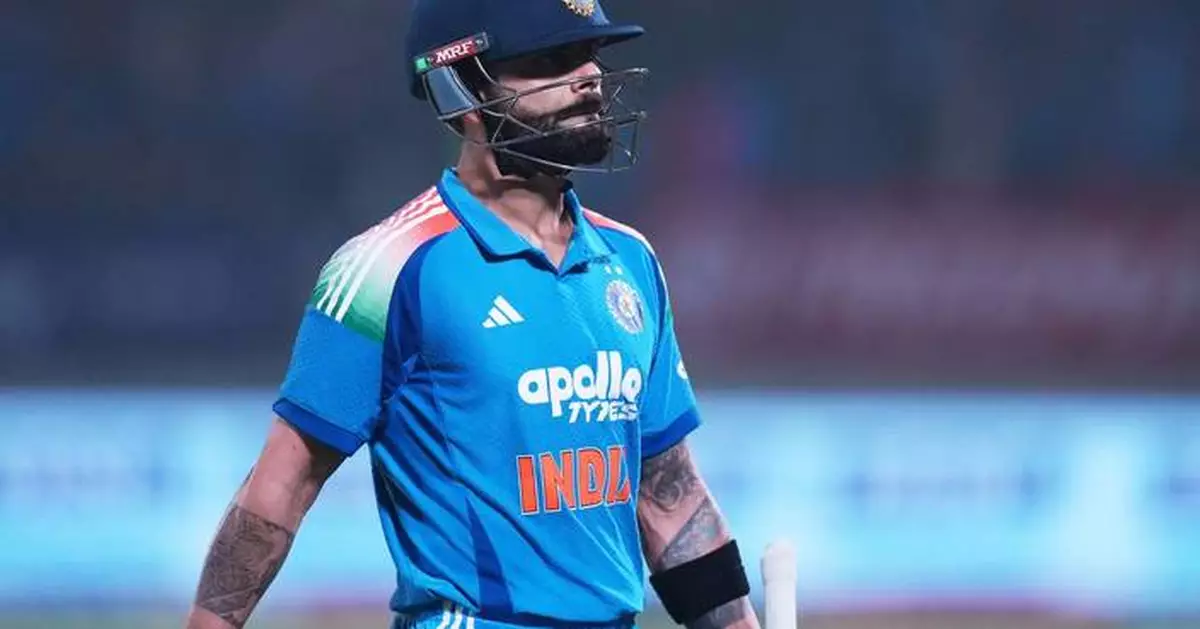
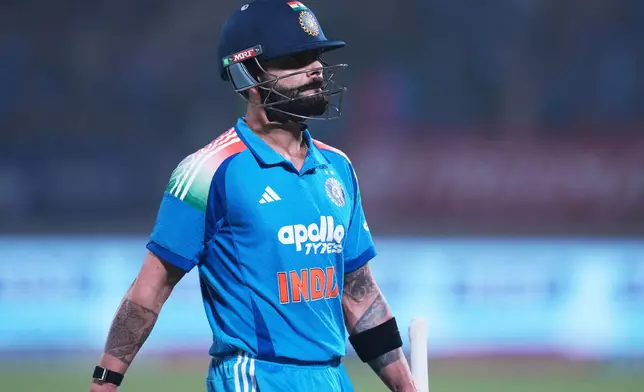
India's Virat Kohli reacts as he leaves the field after losing his wicket during the first One Day International cricket match between India and New Zealand in Vadodara, India, Sunday, Jan. 11, 2026. (AP Photo/Ajit Solanki)
Will Young also scored 87 off 98 balls, as he and Mitchell put on a match-winning 162 off 152 balls for the third wicket. It was the fourth-highest third-wicket partnership for the Black Caps in ODIs.
Mitchell's century topped Lokesh Rahul’s 112 not out off 92 balls. India — put into bat — was 118-4 at one stage, before Rahul played a rescuing hand with his eighth hundred in ODIs.
Medium pacer Kristian Clarke had picked 3-56 in eight overs for the Black Caps.
India won the first ODI in Vadodara by four wickets. Indore will host the decider Sunday.
Earlier, skipper Shubman Gill scored a second consecutive half-century as India made a decent start.
Gill scored 56 off 53 balls, with nine fours and a six, as he put on 70 off 74 balls with Rohit Sharma (24).
Clarke had Sharma caught off a miscue in the 13th over as India’s progress slowed down. Later, Virat Kohli (23) also chopped onto his stumps off Clarke.
In between, Gill failed to carry on from his start while vice-captain Shreyas Iyer (8) too was caught off Clarke in the 22nd over.
Rahul then shepherded the innings as he put on vital lower-order partnerships. He added 73 off 88 balls with Ravindra Jadeja (27) and then another 57 off 49 balls with Nitish Reddy (20).
The keeper-batter reached 50 off 52 balls, and then accelerated toward the end overs to score the next 50 off 35 balls. Overall, his hundred came off 87 balls even as India ended up with a below-par score.
In reply, New Zealand did not start well. Harshit Rana bowled Devon Conway for 16, while Prasidh Krishna bowled Henry Nicholls for 10. The Black Caps were down to 46-2 in 12.4 overs.
Mitchell and Young then came together and stitched together a dominant partnership.
Young scored 50 off 68 balls — his first against India in ODIs as also a first 50-plus score in 12 innings. Mitchell too scored 50 off 52 balls.
While the Indian attack struggled with evening dew, there were also a couple late reprieves for the two batters. The pair survived a run-out chance while Mitchell also gained from a dropped catch, both in the 36th over.
“The run-rate had crept up to seven but once we got into a rhythm, we felt there was an opportunity to put pressure back onto India,” Young said. “We timed it very well. After scoring 300 in the first game, 285 felt like a very chaseable number.”
Kuldeep Yadav — expensive on the day with 1-82 in 10 overs — finally got the breakthrough in the 38th over sending back Young.
It wasn’t enough — Mitchell scored 100 off 96 balls and then sped his way to the finish line, finishing with 11 fours and two sixes.
New Zealand won with 15 balls remaining and sealed its highest ODI chase on Indian soil.
AP cricket: https://apnews.com/hub/cricket
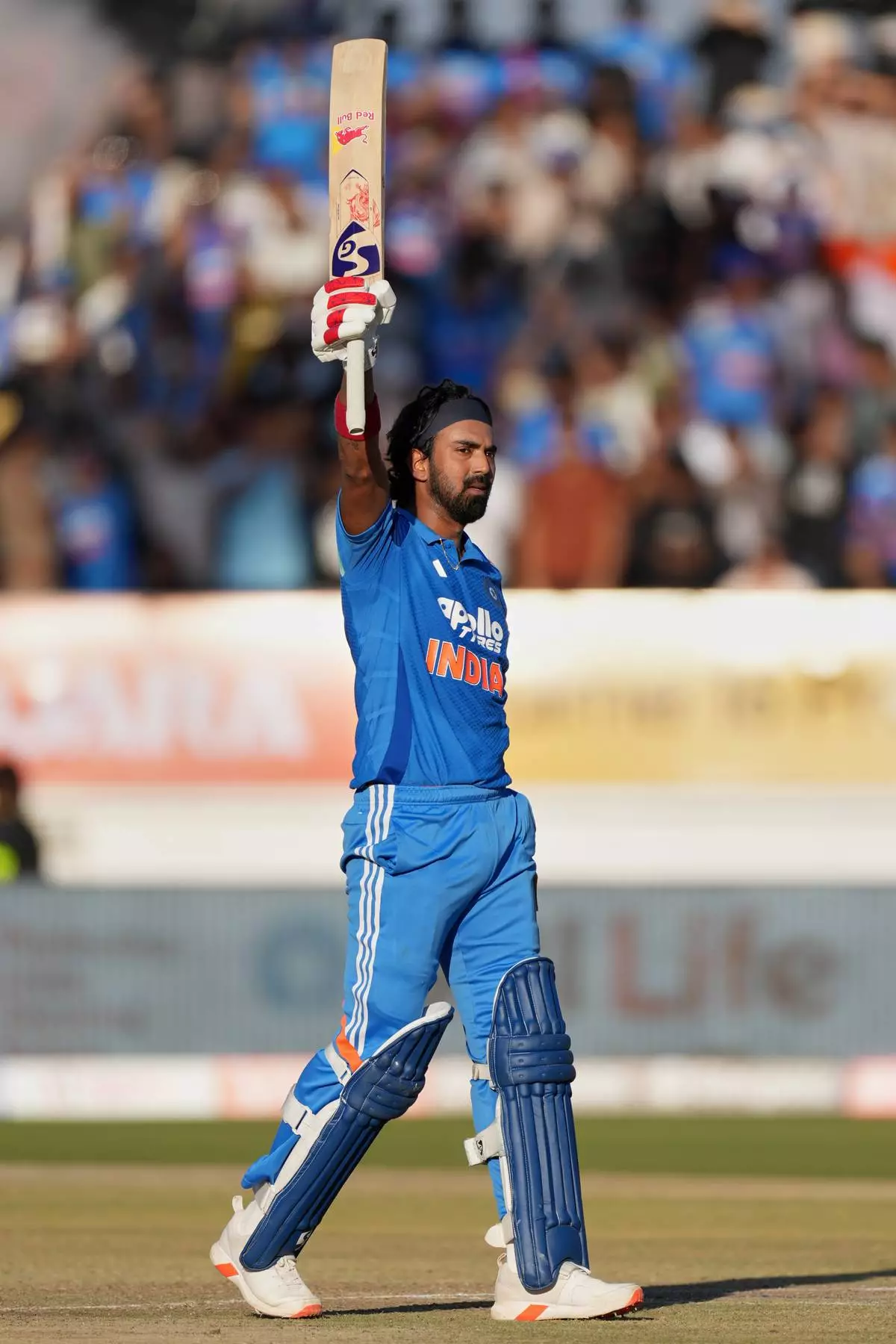
India's KL Rahul celebrates after scoring a century during the second One Day International cricket match between India and New Zealand in Rajkot, India, Wednesday, Jan. 14, 2026. (AP Photo/Ajit Solanki)
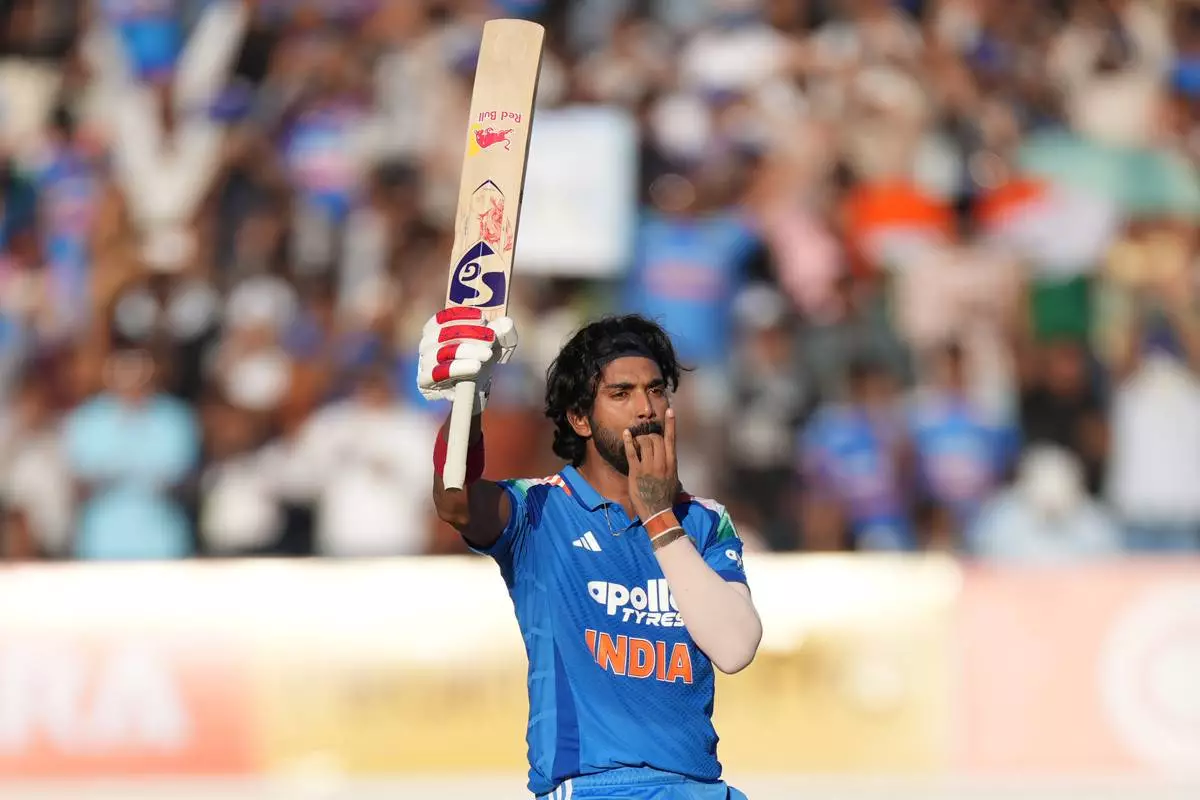
India's KL Rahul celebrates after scoring a century during the second One Day International cricket match between India and New Zealand in Rajkot, India, Wednesday, Jan. 14, 2026. (AP Photo/Ajit Solanki)
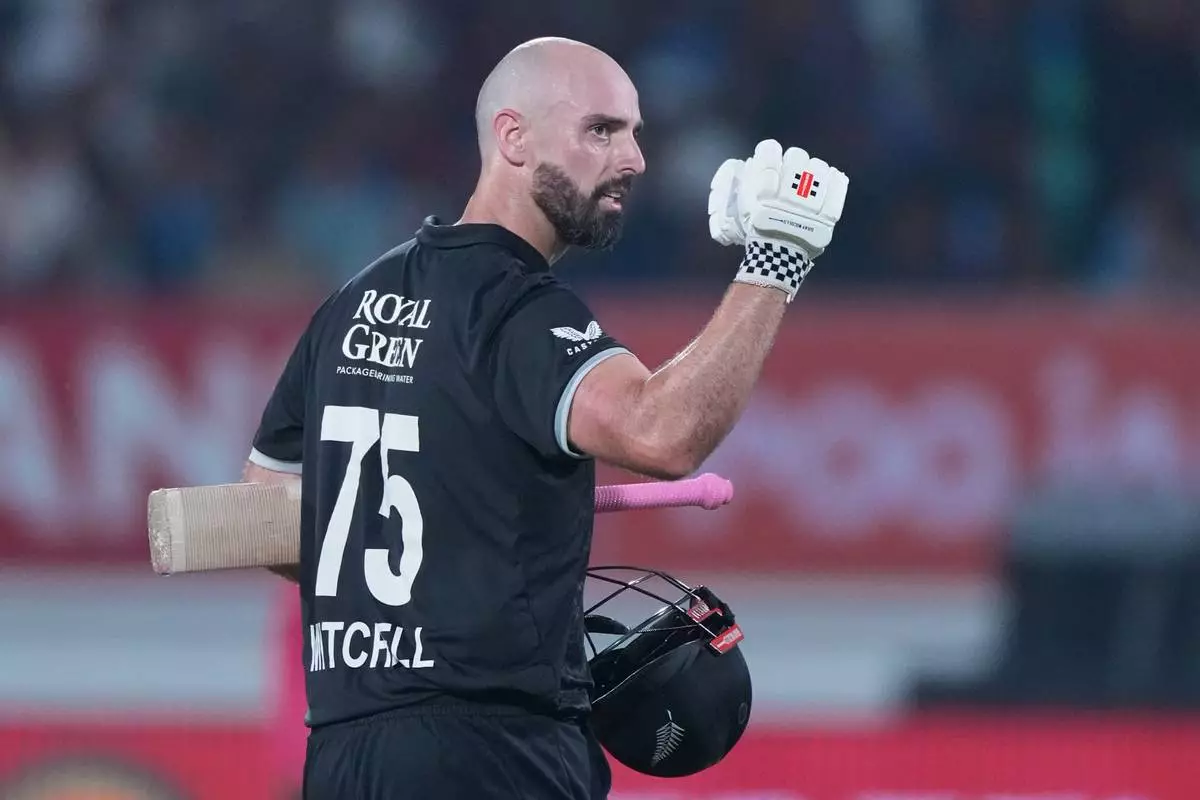
New Zealand's Daryl Mitchell celebrates after scoring a century during the second One Day International cricket match between India and New Zealand in Rajkot, India, Wednesday, Jan. 14, 2026. (AP Photo/Ajit Solanki)
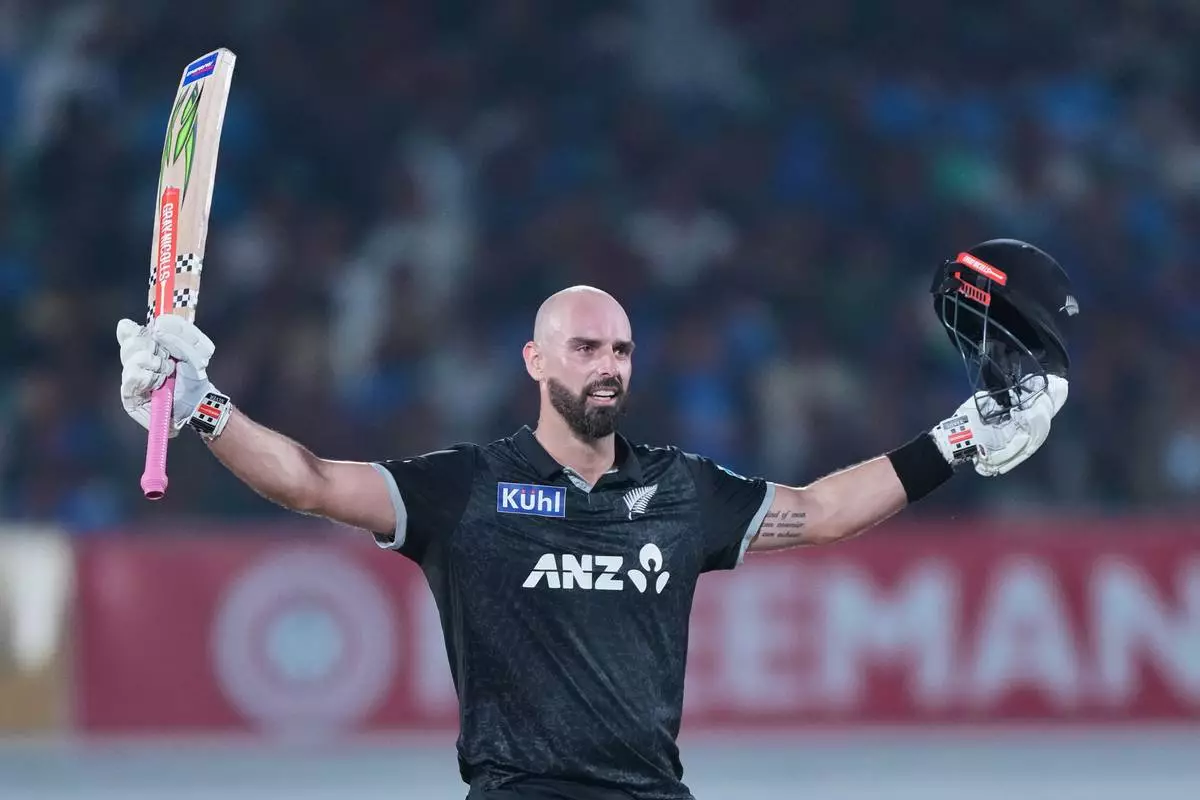
New Zealand's Daryl Mitchell celebrates after scoring a century during the second One Day International cricket match between India and New Zealand in Rajkot, India, Wednesday, Jan. 14, 2026. (AP Photo/Ajit Solanki)
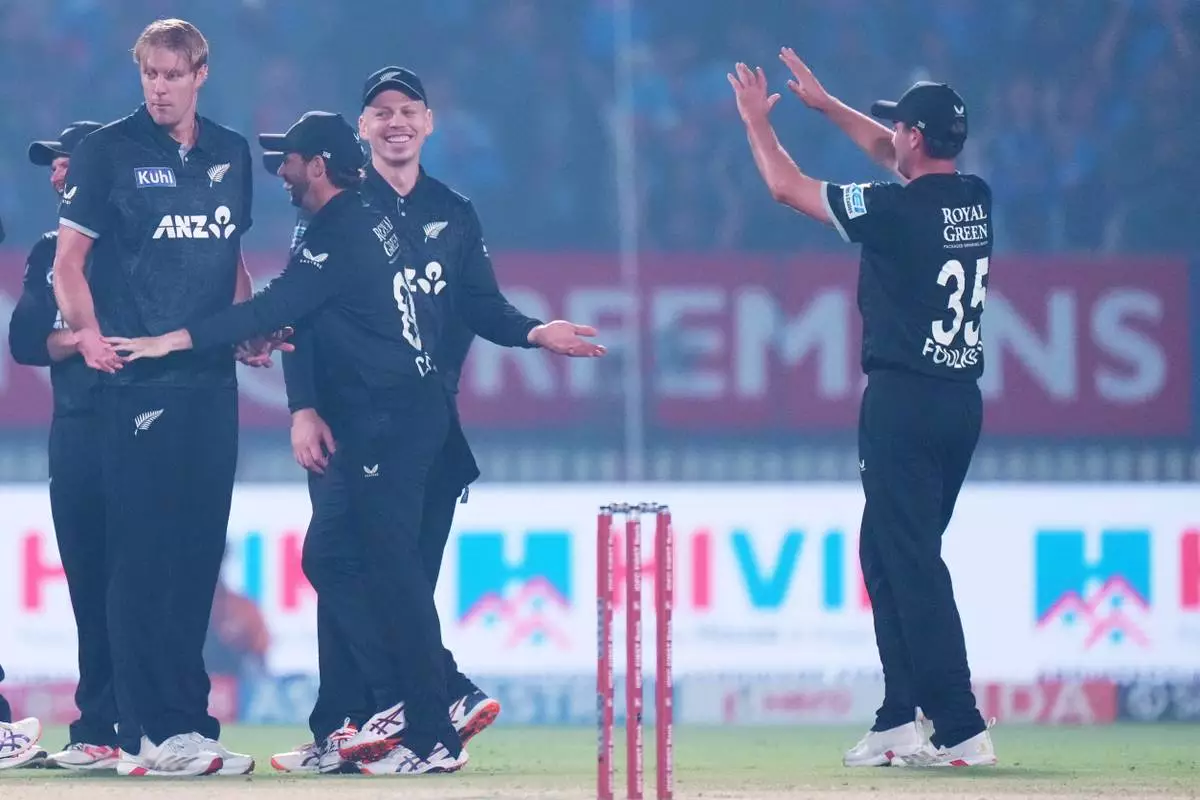
New Zealand's Kyle Jamieson, left, celebrates with teammates the wicket of India's Virat Kohli during the first One Day International cricket match between India and New Zealand in Vadodara, India, Sunday, Jan. 11, 2026. (AP Photo/Ajit Solanki)
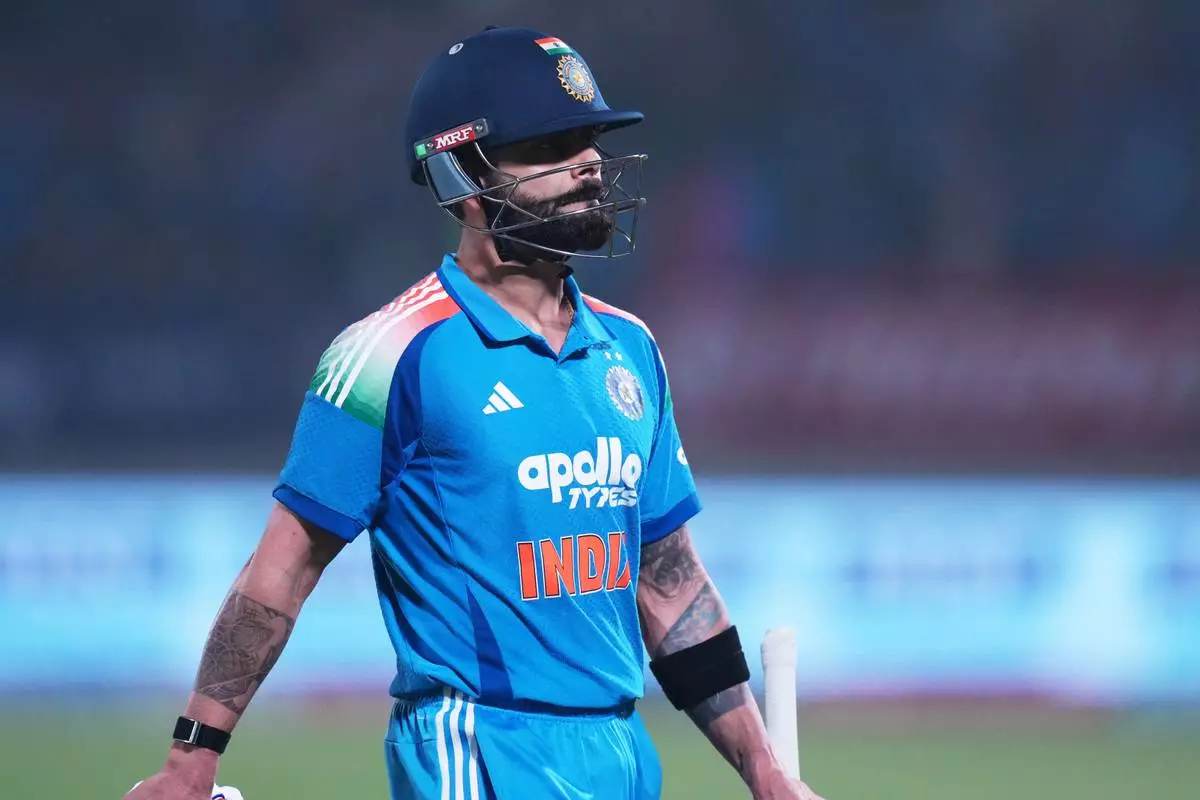
India's Virat Kohli reacts as he leaves the field after losing his wicket during the first One Day International cricket match between India and New Zealand in Vadodara, India, Sunday, Jan. 11, 2026. (AP Photo/Ajit Solanki)
U.S. Secretary of State Marco Rubio discussed “efforts to achieve a durable peace in the Middle East” in talks at the Vatican on Thursday aimed at easing tensions following U.S. President Donald Trump’s criticisms of Pope Leo XIV.
Rubio met with Leo and then Vatican Secretary of State Cardinal Pietro Parolin in a visit that lasted 2½ hours.
Also, Iran said it was reviewing the latest American proposals on ending the war, as Trump threatened the country with a new wave of bombing unless a deal is reached that includes reopening the crucial Strait of Hormuz to international shipping. The developments followed days of mixed messaging from the Trump administration over its strategy to end the war.
Here's the latest:
The official, who spoke on condition of anonymity to discuss plans for the closed-door talks, said the meeting would take place next week on May 14 and 15. The official did not specify the venue but the previous two rounds have taken place at the State Department and the White House.
The earlier rounds were led by the U.S. ambassador to Lebanon and the Israeli and Lebanese ambassadors to the United States, although Secretary of State Marco Rubio participated in both and President Trump greeted the participants at the second.
— Matthew Lee
The U.S. Treasury Department announced new sanctions on an Iraqi oil official, several Iraqi firms and leaders of Iran-backed militias accused of helping Iran evade U.S. sanctions and finance militants.
The Treasury Department alleges that Iraq’s deputy oil minister, Ali Maarij Al-Bahadly, helped divert Iraqi oil and falsify documents so Iranian oil could be sold as Iraqi oil, benefiting Iran and allied militias.
“Treasury will not stand idly by as Iran’s military exploits Iraqi oil to fund terrorism against the United States and our partners,” Treasury Secretary Scott Bessent said in a statement Thursday.
The Vatican said the “need to work tirelessly in favor of peace” was discussed in talks Thursday with U.S. Secretary of State Marco Rubio, who came to Rome on a fence-mending visit after President Trump’s criticisms of Pope Leo XIV.
During Rubio’s meeting with Leo, and the Vatican secretary of state, Cardinal Pietro Parolin, “the shared commitment to fostering good bilateral relations between the Holy See and the United States of America was reaffirmed,” the Vatican said.
In a statement, the Vatican said the two sides then exchanged views on current events “with particular attention to countries marked by war, political tensions, and difficult humanitarian situations, as well as on the need to work tirelessly in favor of peace.”
Republican lawmakers in Tennessee are debating a plan that could carve up a majority-Black congressional district, reshaping it to the GOP’s advantage as part of President Trump’s strategy to try to hold on to a slim House majority in the November midterm elections.
Protesters shouted “No Jim Crow” outside the House and Senate chambers as lawmakers convened to consider the legislation. The redistricting effort in Tennessee is one of several rapidly advancing plans in Southern states as Republicans try to leverage a U.S. Supreme Court ruling that weakened the federal Voting Rights Act.
▶ Read more
The U.S. stock market is holding near its records as oil prices keep dropping on hopes that a deal may be nearing to allow tankers to carry crude once again from the Persian Gulf.
The S&P 500 added 0.1% early Thursday to its all-time high set the day before. The Dow Jones Industrial Average rose 193 points, and the Nasdaq composite added 0.1%.
DoorDash jumped after reporting better results than expected. Whirlpool tumbled after reporting much weaker results than expected. The seller of home appliances said it would raise prices by at least 10% for some of its offerings, while accelerating cost cuts.
▶ Read more
Supreme Court justices are not “political actors,” Chief Justice John Roberts said Wednesday, insisting unpopular court decisions are based solely on the law.
“I think, at a very basic level, people think we’re making policy decisions, we’re saying we think this is how things should be, as opposed to what the law provides,” he said. “I think they view us as purely political actors, which I don’t think is an accurate understanding of what we do.”
His remarks to a conference of judges and lawyers from the 3rd U.S. Circuit in Pennsylvania came at a time of low public confidence in the court, and about a week after the court handed down a decision that hollowed out the Voting Rights Act.
▶ Read more
Republican lawmakers in Tennessee are poised to take up a plan Thursday that could carve up a majority-Black congressional district, reshaping it to the GOP’s advantage as part of President Trump’s strategy to try to hold on to a slim House majority in the November midterm elections.
The redistricting effort in Tennessee is one of several rapidly advancing plans in Southern states as Republicans try to leverage a U.S. Supreme Court ruling that weakened the federal Voting Rights Act.
The court ruled Louisiana relied too heavily on race when creating a second Black-majority House district as it attempted to comply with the federal law. The high court’s decision altered a decades-old understanding of the law, giving Republicans grounds to try to eliminate majority-Black districts that have elected Democrats.
▶ Read more
U.S. Secretary of State Marco Rubio met with Pope Leo XIV and then Vatican Secretary of State Cardinal Pietro Parolin in a visit that lasted 2½ hours.
U.S. State Department spokesperson Tommy Pigott said Rubio and Leo discussed the situation in the Middle East “and topics of mutual interest in the Western Hemisphere. The meeting underscored the strong relationship between the United States and the Holy See and their shared commitment to promoting peace and human dignity,” he said.
In a separate statement about the Parolin meeting, Pigott said the two diplomats discussed “ongoing humanitarian efforts in the Western Hemisphere and efforts to achieve a durable peace in the Middle East. The discussion reflected the enduring partnership between the United States and the Holy See in advancing religious freedom,” the statement said.
▶ Read more
Trump’s lawyer, hoping for an eventual Supreme Court victory, has asked a federal appeals court in New York to temporarily block a longtime columnist from collecting an $83 million defamation award.
The lawyer told the 2nd U.S. Circuit Court of Appeals in a filing Tuesday to stay its decision supporting the award so that Trump won’t have to pay writer E. Jean Carroll while he appeals to the high court.
A Manhattan jury awarded Carroll the payout in January 2024. Another jury in May 2023 awarded Carroll $5 million after concluding Trump sexually abused her in a Manhattan luxury department store dressing room in 1996 and then defamed her after she published her account of it in 2019.
Trump has vehemently denied sexually abusing Carroll or ever knowing her and has repeatedly accused her of making accusations against him for political purposes or to promote her memoir.
Attorney Roberta Kaplan, who represents Carroll, declined to comment through a spokesperson.
▶ Read more
Trump’s proposal to put a coat of white paint on the exterior of a 19th-century historic landmark building next to the White House is slated for a hearing Thursday by a key federal agency, which he expects to approve what would be a dramatic makeover.
The National Capital Planning Commission is scheduled to begin considering the plan on Thursday, according to its meeting agenda. Trump calls for painting all or most of the Eisenhower building’s gray granite exterior with white paint. He last year called the gray a “really bad color.”
But the proposal has alarmed preservationists, architects, historians and others who argue that granite is not meant to be painted and that paint would trap moisture, deteriorate the stone and not solve problems the administration wants to fix.
▶ Read more
The Trump administration’s approach to the Iran war over the past 24 hours has pinballed from declarations that a tenuous ceasefire was holding and military operations were over to new threats of bombing the Islamic Republic.
Tuesday started with Defense Secretary Pete Hegseth explaining how the U.S. military was protecting stranded ships so they could traverse the Strait of Hormuz.
That afternoon, Secretary of State Marco Rubio told reporters at the White House that the military operation was “concluded” and that the U.S. achieved its objectives. But in almost the same breath, he said Trump was still seeking a “path of peace” that required Iran to agree to a deal to reopen the vital oil shipping corridor.
By Tuesday evening, Trump announced that the effort to protect ships was paused to see if an agreement could be reached. Then on Wednesday morning, he again warned that bombing would resume if Tehran didn’t agree to U.S. terms.
▶ Read more
Iran said it was reviewing the latest American proposals on ending the war, as Trump threatened the country with a new wave of bombing unless a deal is reached that includes reopening the crucial Strait of Hormuz to international shipping.
Hope that the two-month conflict could soon end buoyed international markets on Thursday, even as the U.S. military fired on an Iranian oil tanker attempting to breach an American blockade of Iran’s ports hours earlier. The developments followed days of mixed messaging from the Trump administration over its strategy to end the war.
Trump posted on social media that the two-month war could soon end and that oil and natural gas shipments disrupted by the conflict could restart. But he said that depends on Iran accepting a reported agreement that he did not detail.
“If they don’t agree, the bombing starts,” Trump wrote.
▶ Read more
U.S. Secretary of State Marco Rubio opened a fence-mending visit to the Vatican on Thursday after President Donald Trump’s broadsides against Pope Leo XIV and the U.S.-Israeli war in Iran angered the Holy See and sparked ongoing sparring between the two American leaders.
Rubio, a practicing Catholic, had an audience scheduled with Leo, which was complicated at the last minute by Trump’s latest criticism of the Chicago-born pope. Leo has pushed back, calling out Trump’s misrepresentations of his views on Iran and nuclear weapons and insisting that he is merely preaching the biblical message of peace.
Rubio was also due to meet with the Vatican secretary of state, Cardinal Pietro Parolin, who on the eve of his visit strongly defended Leo and criticized Trump’s attacks in understated diplomatic terms. “Attacking him like that or criticizing what he does seems a bit strange to me, to say the least,” Parolin said Wednesday.
Parolin said Washington had requested Rubio’s audience, and that the pope was open to continued dialogue.
▶ Read more
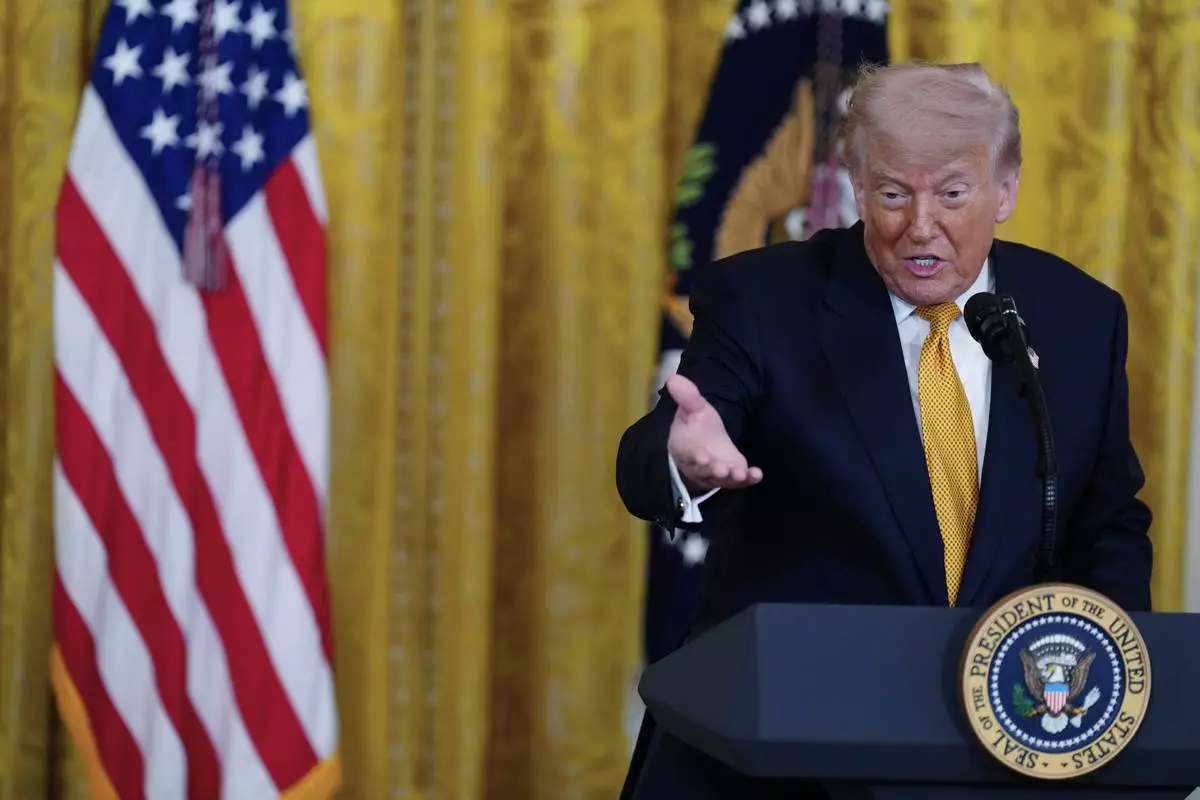
President Donald Trump speaks during a Mother's Day event for members of the military, Wednesday, May 6, 2026, in the East Room of the White House, in Washington. (AP Photo/Jacquelyn Martin)
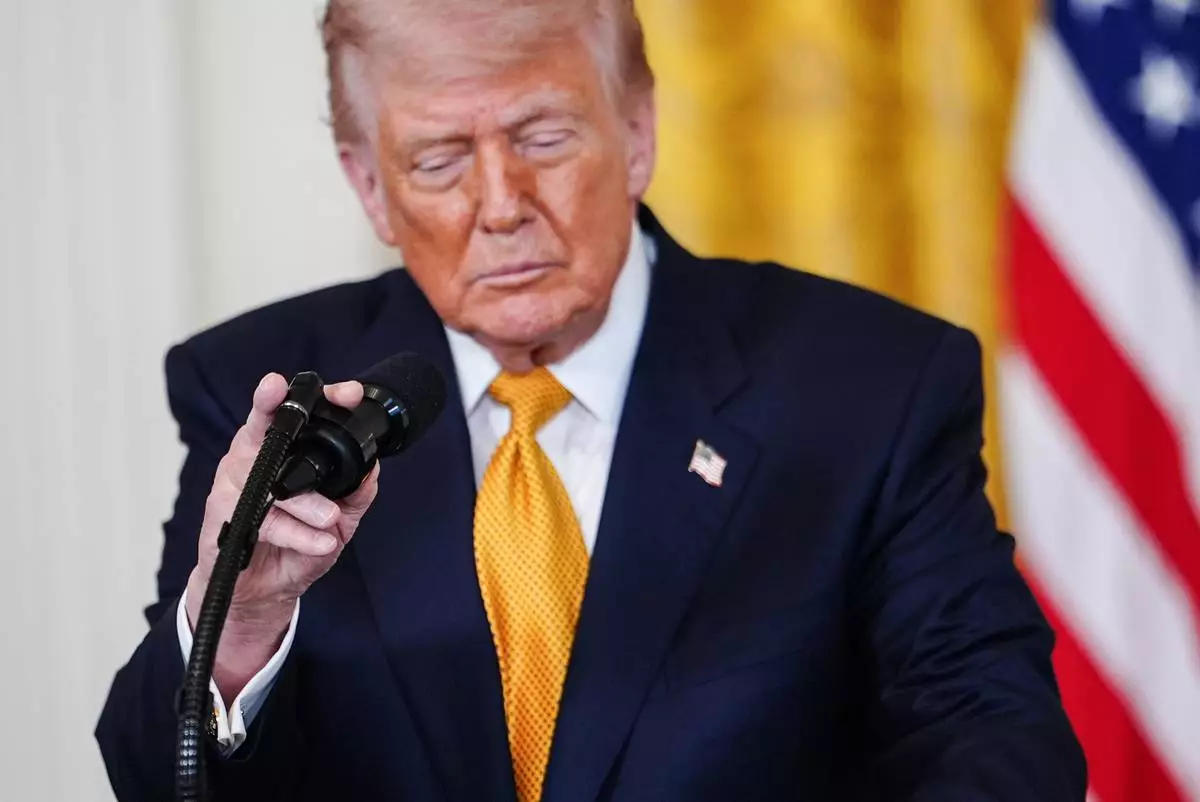
President Donald Trump adjusts his microphone while speaking during an event for military mothers in the East Room of the White House, Wednesday, May 6, 2026, in Washington. (AP Photo/Julia Demaree Nikhinson)