KAMPALA, Uganda (AP) — Ugandans are set to vote Thursday in an election that is likely to extend the rule of the long-term president while raising concerns about transparency, hereditary rule, military interference and an opposition strategy to prevent vote tampering at polling stations.
President Yoweri Museveni, who has held power since 1986, seeks a seventh term that would bring him closer to five decades in power. But he faces a strong challenge from the musician-turned-politician best known as Bobi Wine, a 43-year-old who represents those yearning for political change.
Click to Gallery
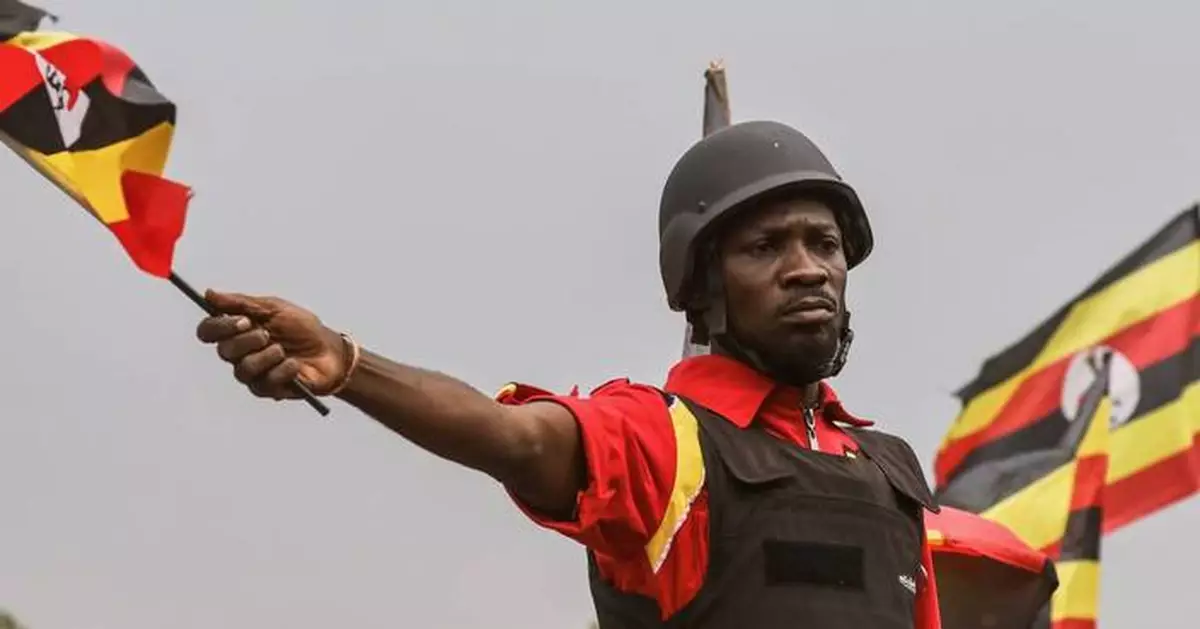
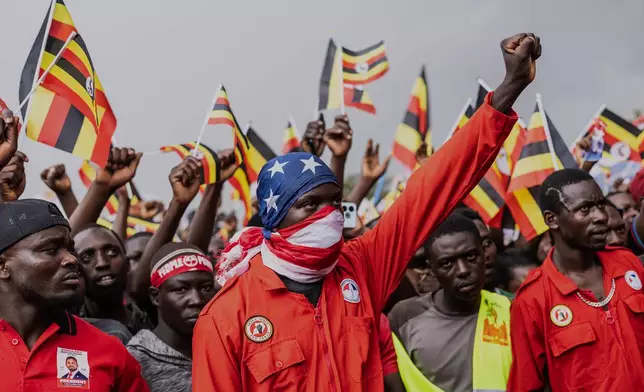
Supporters of Uganda opposition presidential candidate Robert Kyagulanyi Ssentamu, known as Bobi Wine, gesture as he arrives for his final campaign rally at Aga Khan Grounds in Kampala, Uganda, Monday, Jan. 12, 2026. (AP Photo/Samson Otieno)
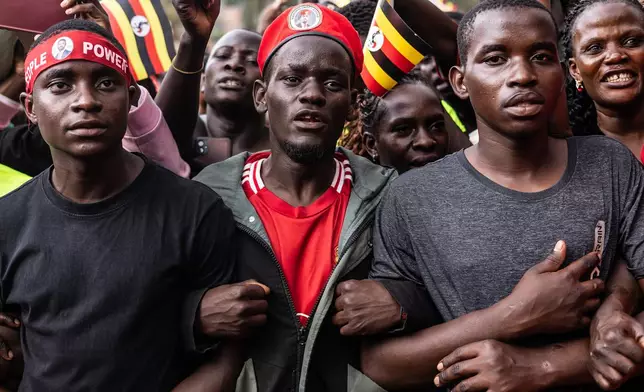
Supporters of Uganda opposition presidential candidate Robert Kyagulanyi Ssentamu, known as Bobi Wine, hold onto each other as they attend his final campaign rally at Aga Khan Grounds in Kampala, Uganda, Monday, Jan. 12, 2026. (AP Photo/Samson Otieno)
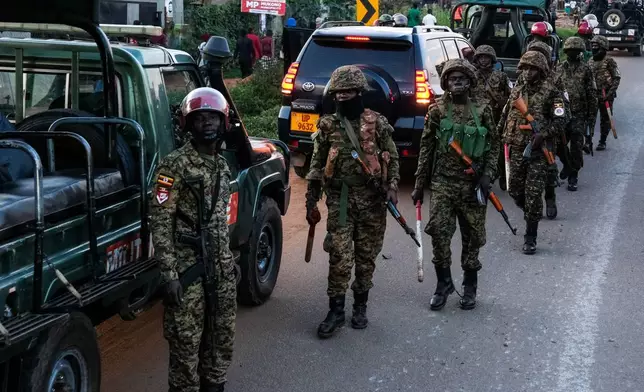
Ugandan security forces patrol a street during a campaign rally for opposition presidential candidate Robert Kyagulanyi Ssentamu who is known as Bobi Wine, ahead of elections, in Mukono, Uganda, Friday, Jan. 9, 2026. (AP Photo/Hajarah Nalwadda)
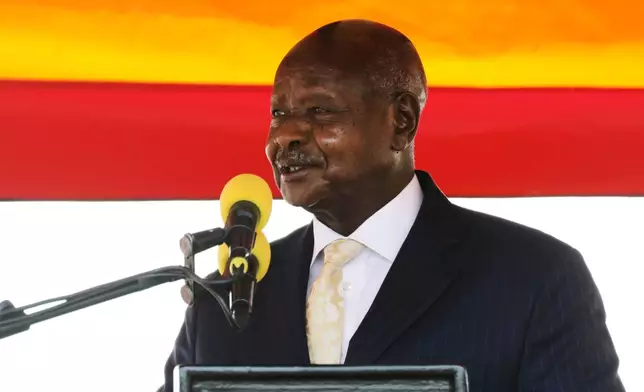
FILE - Ugandan President Yoweri Museveni speaks during the 60th Independence Anniversary Celebrations, in Kololo, Uganda, Sunday Oct. 9, 2022. (AP Photo/Hajarah Nalwadda, file)
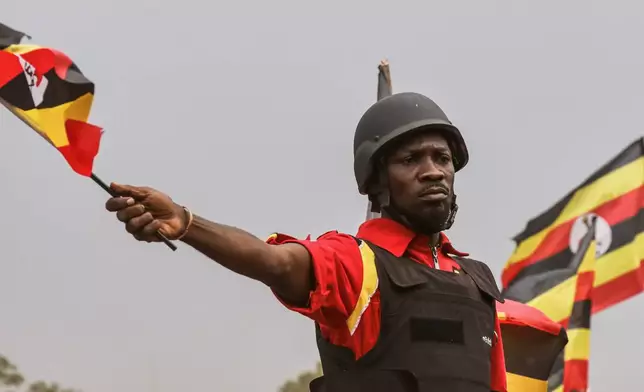
Uganda opposition presidential candidate Robert Kyagulanyi Ssentamu who is known as Bobi Wine waves to supporters at an election campaign rally in Mukono, Uganda, Friday, Jan. 9, 2026. (AP Photo/Hajarah Nalwadda)
Six other candidates are running for president in the East African nation of roughly 45 million people. Electoral authorities say there are 21.6 million registered voters.
Analysts say Museveni will almost certainly retain power, but at 81 he has become even more reliant on the nation's security forces to enforce his authority. His son and presumptive heir, Gen. Muhoozi Kainerugaba, is the top commander of the military, which Wine accuses of interfering in the electoral process.
Here is what to know about the issues dominating the election.
On Tuesday, less than 48 hours before the start of voting, the Uganda Communications Commission directed internet service providers to temporarily suspend the general public’s access to the internet, as well as the sale and registration of new SIM cards.
The government agency said the measure was “necessary to mitigate the rapid spread of online misinformation, disinformation, electoral fraud, and related risks.” It also cited a risk to national security stemming from possible violence.
The internet shutdown was a blow to pro-democracy activists and others who use the internet to share information about alleged electoral malpractices including ballot stuffing and other offenses that routinely plague Uganda's elections.
Wine’s party, the National Unity Platform, has urged followers to stay near polling stations and remain watchful after voting as part of an effort to prevent rigging.
Ugandan law allows voters to gather 20 meters (65 feet) from polling stations. Electoral officials are urging Ugandans to cast a ballot and then go home, perhaps returning later to witness vote counting.
The argument over whether voters should stay at polling stations as witnesses has animated public commentary and raised fears that the election could turn violent if security forces choose to enforce the electoral body’s guidance.
“The first step is for all of us to stay at the polling stations (while observing the 20-metre distance) and ensure that nothing criminal happens,” Wine wrote Tuesday on X. “We implore everyone to use their cameras and record anything irregular.”
In a New Year’s Eve address, the president said he recommended security forces use tear gas to break up crowds of what he called “the criminal opposition.”
Wine faced similar setbacks when he first ran for president in 2021. He often was roughed up by the police, clothes ripped from his body, and dozens of his supporters were jailed.
Wine told The Associated Press in a recent interview that at least three of his supporters have been killed in violent campaign events, claiming “the military has largely taken over the election.”
The Office of the United Nations High Commissioner for Human Rights in Geneva has cited “widespread repression,” including the abduction and disappearance of opposition supporters.
Ugandan authorities say the presidential campaigns have been mostly peaceful. Ugandan authorities began deploying troops on Saturday in parts of the capital, Kampala, with armored trucks spreading into different parts of the city and soldiers patrolling the streets.
Military spokesman Col. Chris Magezi said the deployment was meant to deter violence, rejecting concerns that the mobilization was anti-democratic.
Museveni has ruled Uganda for nearly 40 years by repeatedly rewriting the rules to stay in power. Term and age limits have been scrapped and rivals jailed or sidelined. But he has no recognizable successor in the upper ranks of the ruling party, the National Resistance Movement.
Kainerugaba, the president's son, has asserted a wish to succeed his father, raising fears of hereditary rule.
Kainerugaba is a four-star general who sparked controversy by writing social media messages widely seen as offensive including comments about beheading Wine. He also wrote about hanging Kizza Besigye, an opposition figure who has been jailed over treason charges that he says are politically motivated.
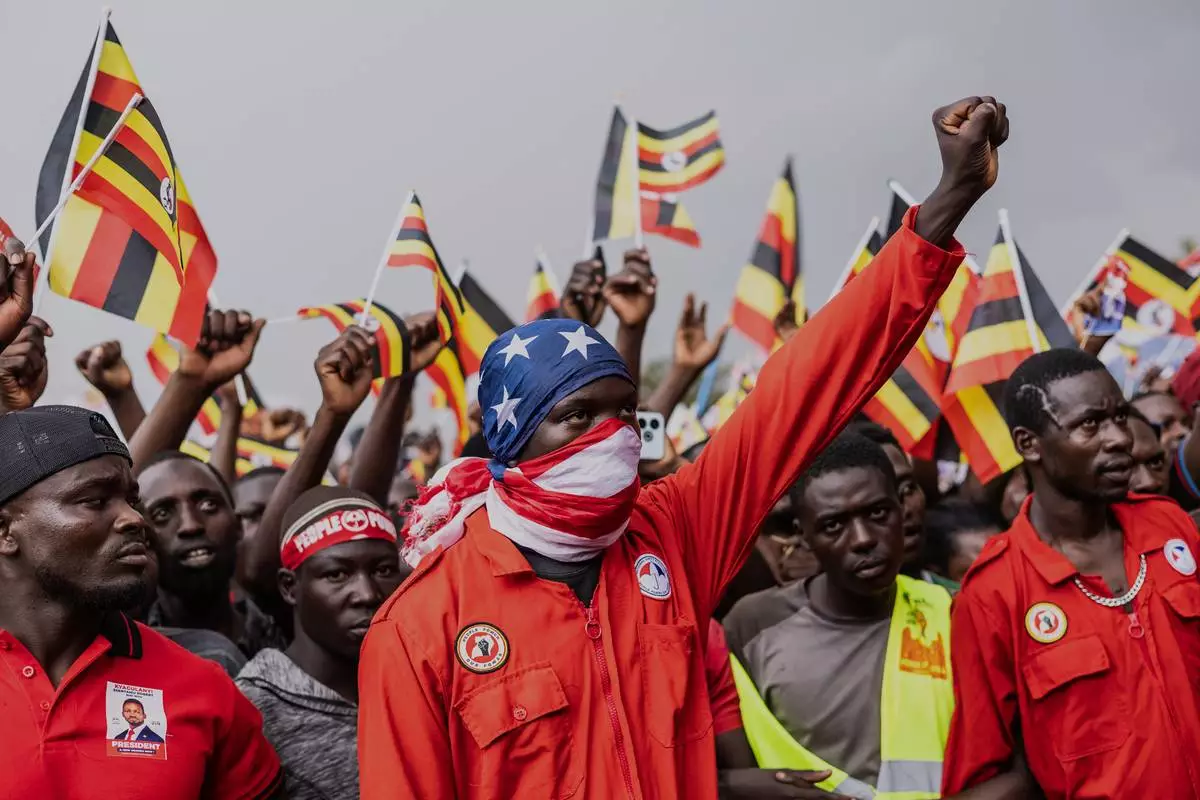
Supporters of Uganda opposition presidential candidate Robert Kyagulanyi Ssentamu, known as Bobi Wine, gesture as he arrives for his final campaign rally at Aga Khan Grounds in Kampala, Uganda, Monday, Jan. 12, 2026. (AP Photo/Samson Otieno)
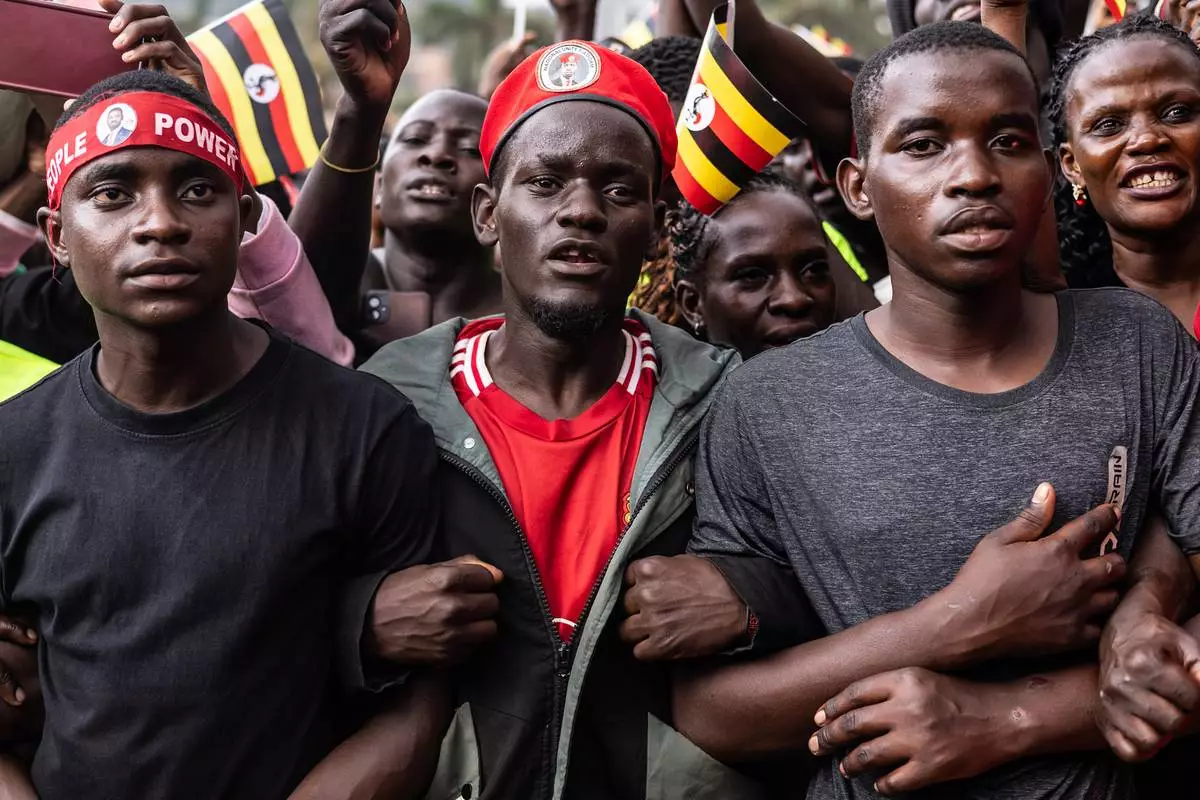
Supporters of Uganda opposition presidential candidate Robert Kyagulanyi Ssentamu, known as Bobi Wine, hold onto each other as they attend his final campaign rally at Aga Khan Grounds in Kampala, Uganda, Monday, Jan. 12, 2026. (AP Photo/Samson Otieno)
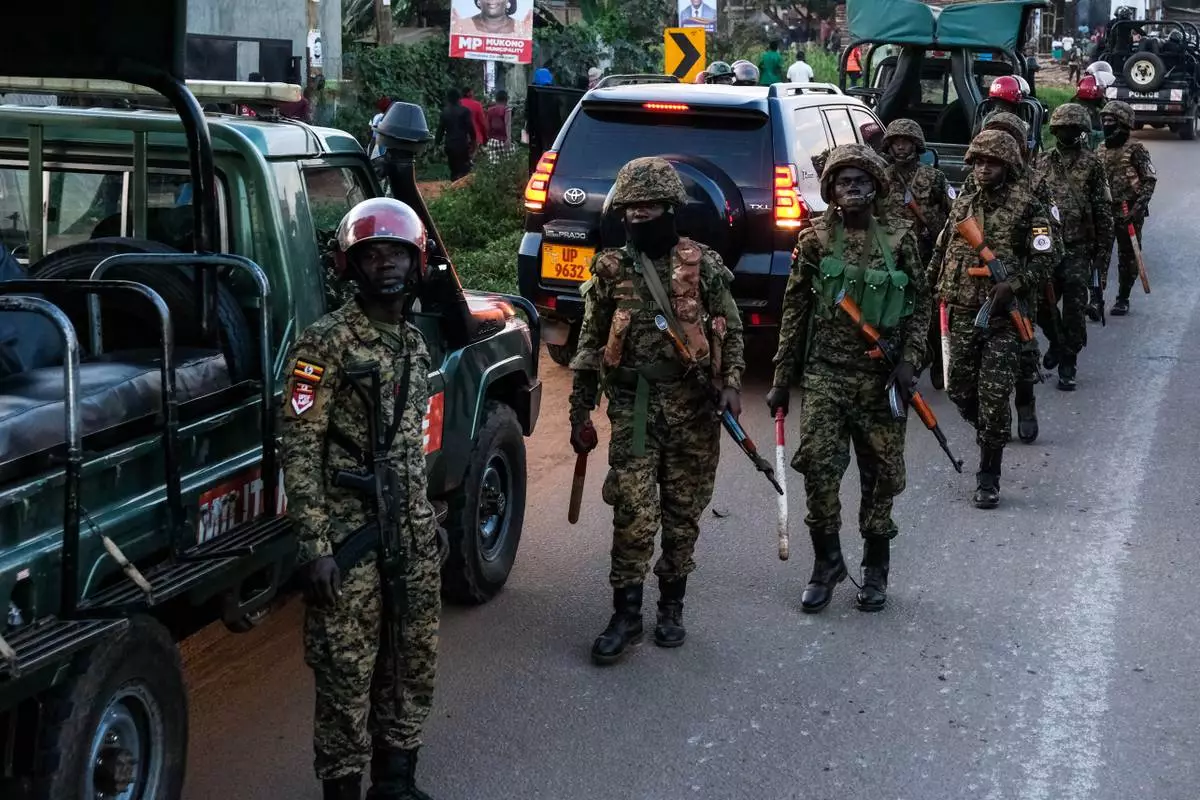
Ugandan security forces patrol a street during a campaign rally for opposition presidential candidate Robert Kyagulanyi Ssentamu who is known as Bobi Wine, ahead of elections, in Mukono, Uganda, Friday, Jan. 9, 2026. (AP Photo/Hajarah Nalwadda)
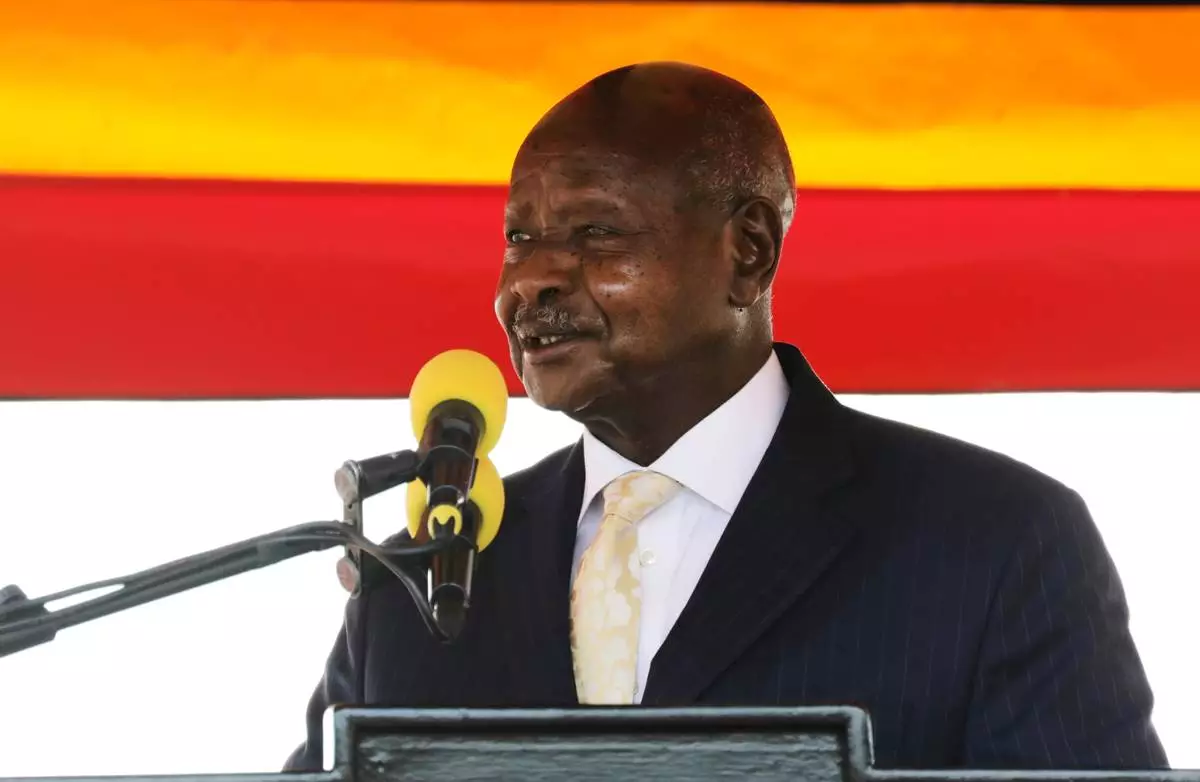
FILE - Ugandan President Yoweri Museveni speaks during the 60th Independence Anniversary Celebrations, in Kololo, Uganda, Sunday Oct. 9, 2022. (AP Photo/Hajarah Nalwadda, file)
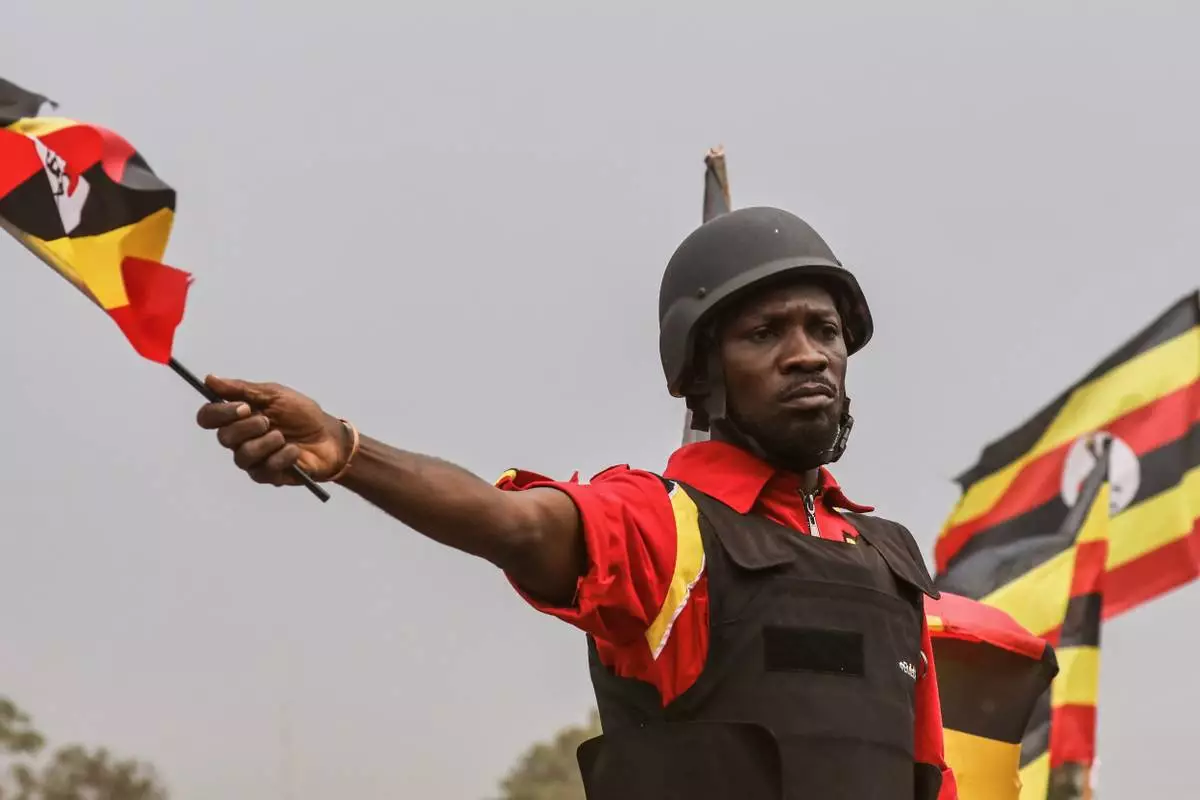
Uganda opposition presidential candidate Robert Kyagulanyi Ssentamu who is known as Bobi Wine waves to supporters at an election campaign rally in Mukono, Uganda, Friday, Jan. 9, 2026. (AP Photo/Hajarah Nalwadda)
CARACAS, Venezuela (AP) — Venezuela’s acting President Delcy Rodríguez said Wednesday her government would continue releasing prisoners detained under former President Nicolás Maduro's rule in what she described as “a new political moment” since his ouster by the United States earlier this month.
It appeared to be an understatement for the Maduro loyalist now tasked with placating an unpredictable American president who has said he will “run” Venezuela, while also consolidating power in a government that long has seethed against U.S. meddling.
Rodríguez opened her first press briefing since Maduro's capture by U.S. forces with a conciliatory tone. Addressing journalists from a red carpet at the presidential palace in the capital, Caracas, she offered assurances that the process of releasing detainees — a move reportedly made at the behest of the Trump administration — “has not yet concluded.”
The lawyer and veteran politician pitched a “Venezuela that opens itself to a new political moment, that allows for ... political and ideological diversity.”
A Venezuelan human rights organization estimates about 800 political prisoners are still being detained. That figure includes political leaders, soldiers, lawyers and members of civil society.
President Donald Trump said Wednesday he had a “great conversation” with Rodríguez, their first since Maduro was seized and flown to the U.S. on Jan. 3 to face drug-trafficking charges.
“We had a call, a long call. We discussed a lot of things,” Trump said during a bill signing in the Oval Office. “And I think we’re getting along very well with Venezuela.”
Unlike past speeches directed at her domestic audience that echoed Maduro’s anti-imperialist rhetoric, Rodríguez did not mention the U.S. — or the dizzying pace at which relations between both countries were evolving.
But she criticized organizations that advocate on behalf of prisoners’ rights. She pledged “strict” enforcement of the law and credited Maduro with starting the prisoner releases as a signal that her government meant no wholesale break from the past.
“Crimes related to the constitutional order are being evaluated,” she said, in apparent reference to detainees held on what human rights groups say are politically motivated charges. “Messages of hatred, intolerance, acts of violence will not be permitted.”
Flanked by her brother and National Assembly President Jorge Rodríguez, as well as hard-line Interior Minister Diosdado Cabello, she took no questions. Cabello, she said, was coordinating the prisoner releases, which have drawn criticism for being too slow and secretive.
Trump has enlisted Rodríguez to help secure U.S. control over Venezuela’s oil sales despite sanctioning her for human rights violations during his first term. To ensure she does his bidding, earlier this month, Trump threatened Rodríguez with a “situation probably worse than Maduro,” who is being held in a Brooklyn jail.
Maduro has pleaded not guilty to drug-related charges.
In endorsing Rodríguez, who served as Maduro’s vice president since 2018, Trump has sidelined María Corina Machado, the leader of Venezuela’s opposition who won a Nobel Peace Prize last year for her campaign to restore the nation’s democracy. Machado is scheduled to meet with Trump on Thursday at the White House.
After a lengthy career running Venezuela’s feared intelligence service, managing its crucial oil industry and representing the revolution started by the late Hugo Chávez on the world stage, Rodríguez now walks a tightrope, navigating pressures from both Washington and her hard-line colleagues who hold sway over the security forces.
“The regime, on one hand, wants to send a message within Venezuela that it still has complete control and the United States isn’t dominating,” said Ronal Rodríguez, a researcher at the Venezuela Observatory in Colombia’s Universidad del Rosario. “On the other hand, internationally it's sending a message of gradual progress with the release of political prisoners. ... They’re playing a game.”
Those tensions were on display in her speech Wednesday, which focused only on the issue of prisoner releases. Venezuela’s leading prisoner rights organization, Foro Penal, has verified at least 68 prisoners freed since her interim government raised hopes for a mass release with a promise to free a “significant number” of prisoners.
Foro Penal reported the release of at least a dozen prisoners on Wednesday, including political activist Nicmer Evans. Machado campaign staffers Julio Balza and Gabriel González, whose detentions were considered to be for political reasons, were also freed on Wednesday, the opposition leader’s party announced.
Earlier this week, Rodríguez's government released several U.S. citizens, as well as Italian and Spanish nationals and opposition figures.
But it was Maduro who first started the process of releasing prisoners, Rodríguez insisted, apparently pushing back on White House claims that the prisoners were being freed due to U.S. pressure. She said Maduro oversaw the release of 194 prisoners in December because he “was thinking precisely about opening spaces for understanding, for coexistence, for tolerance.”
She claimed her own caretaker government had released 212 detainees, without offering any evidence. Foro Penal estimates that over 800 prisoners were still held in Venezuela’s prison system on political grounds, and has criticized the government's lack of transparency.
Rodríguez did not address those complaints. Instead, she slammed “self-proclaimed nongovernmental organizations” as having “tried to sell falsehoods about Venezuela.”
“There will always be those who want to fish in troubled waters,” she said, trying to present her first press briefing as an effort to counter false narratives and “let the truth be reported.”
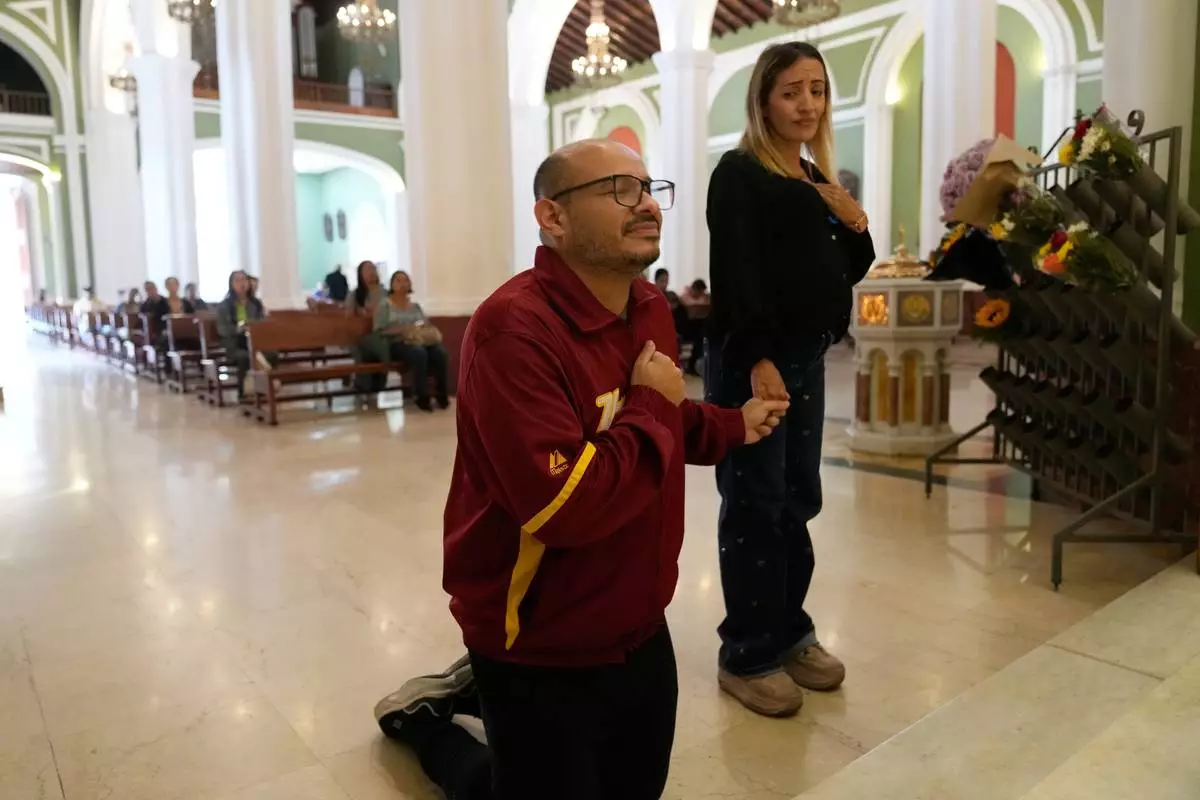
Carlos Rojas, a journalist freed after 18 months in jail, prays with his partner, Francy Fernandez, on the day of his release from prison at La Candelaria Church in Caracas, Venezuela, Wednesday, Jan. 14, 2026. (AP Photo/Ariana Cubillos)
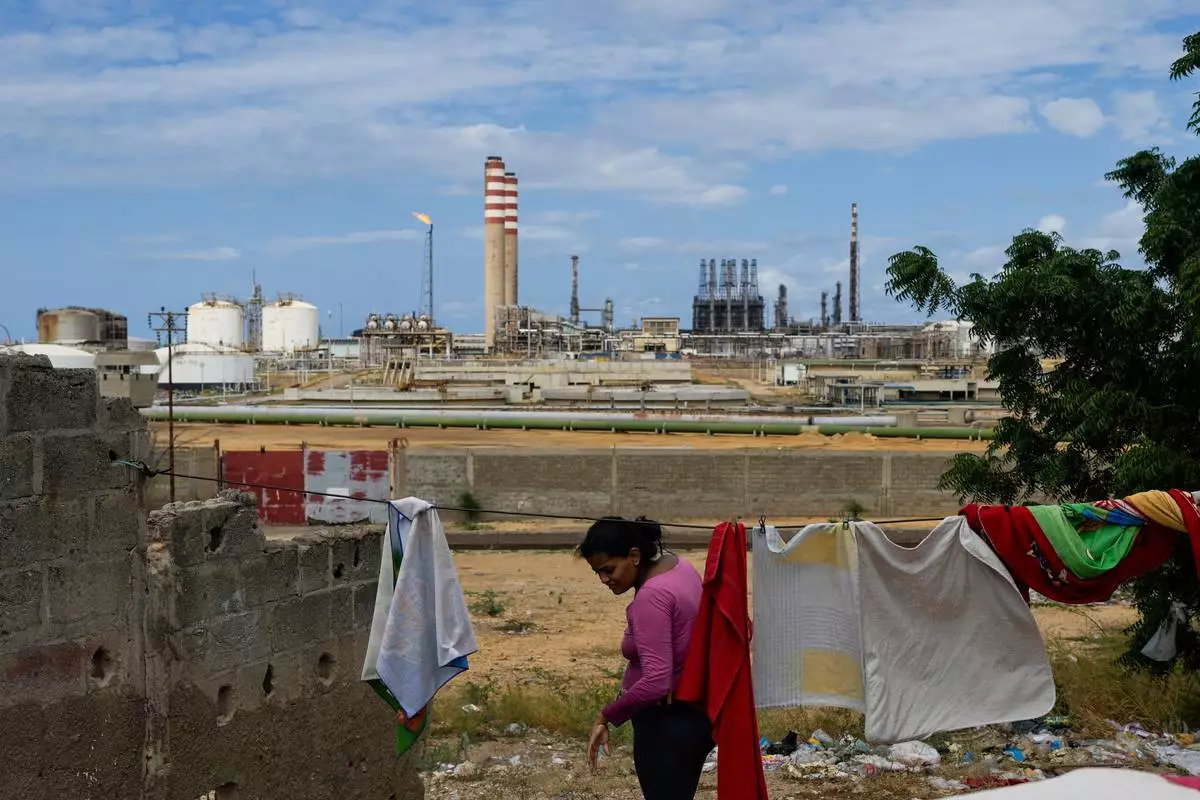
A woman who lives near the Cardon refinery hangs clothes to dry in Punto Fijo, Venezuela, Wednesday, Jan. 14, 2026. (AP Photo/Matias Delacroix)
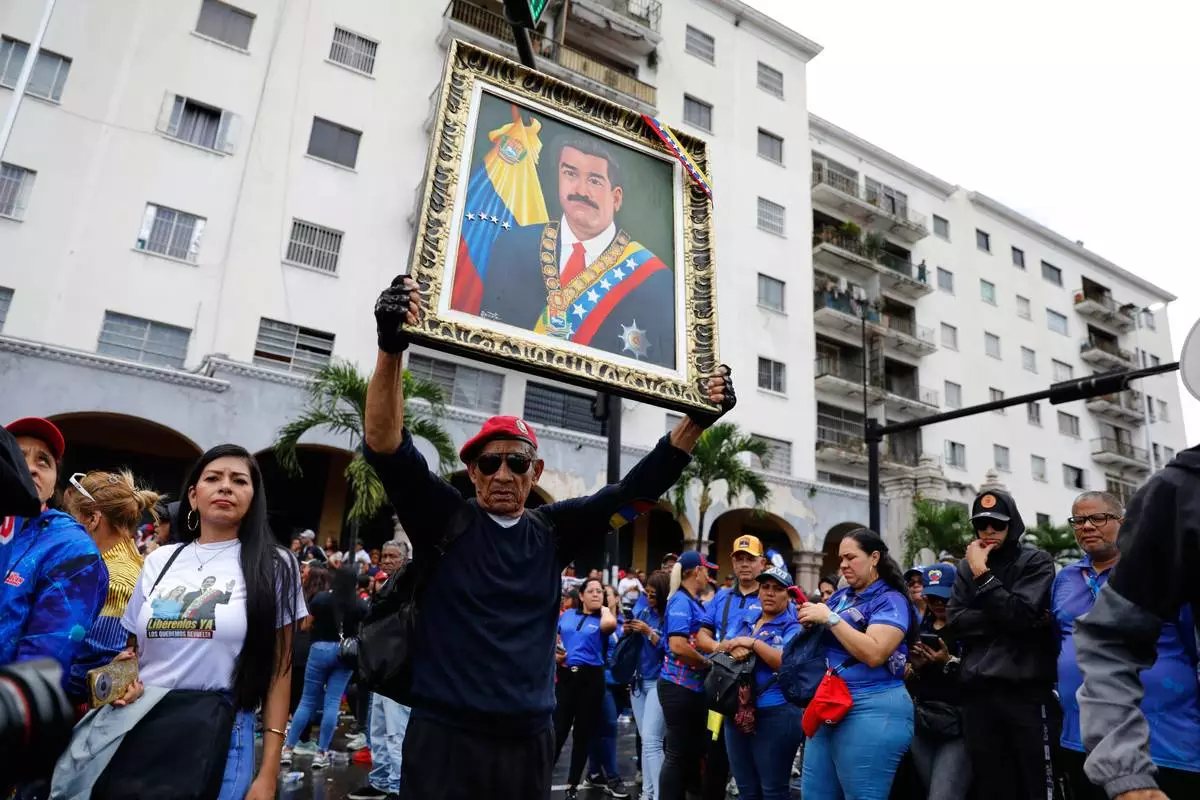
Supporters of former Venezuelan President Nicolas Maduro rally calling for his release as he faces trial in the United States after being captured by U.S. forces, in Caracas, Venezuela, Friday, Jan. 14, 2026. (AP Photo/Cristian Hernandez)
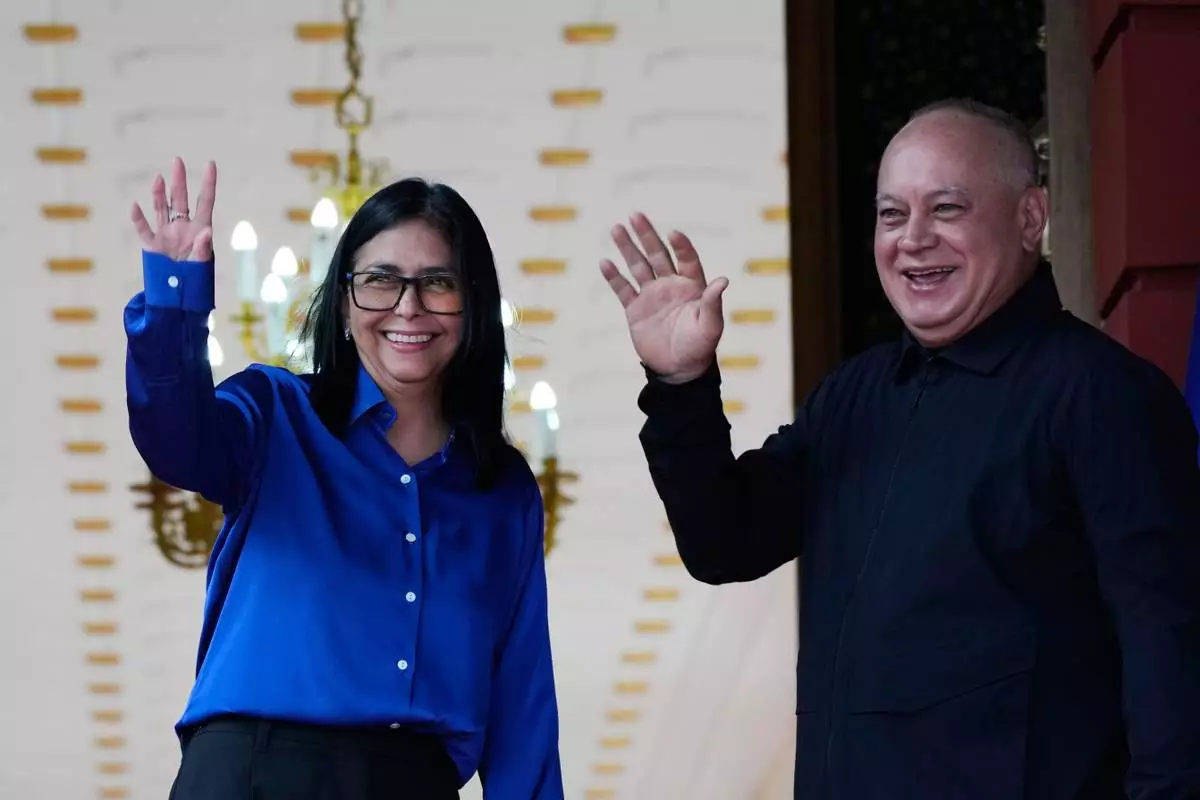
Venezuela's acting President Delcy Rodriguez and Interior Minister Diosdado Cabello, right, wave before making a statement at Miraflores presidential palace in Caracas, Venezuela, Wednesday, Jan. 14, 2026. (AP Photo/Ariana Cubillos)
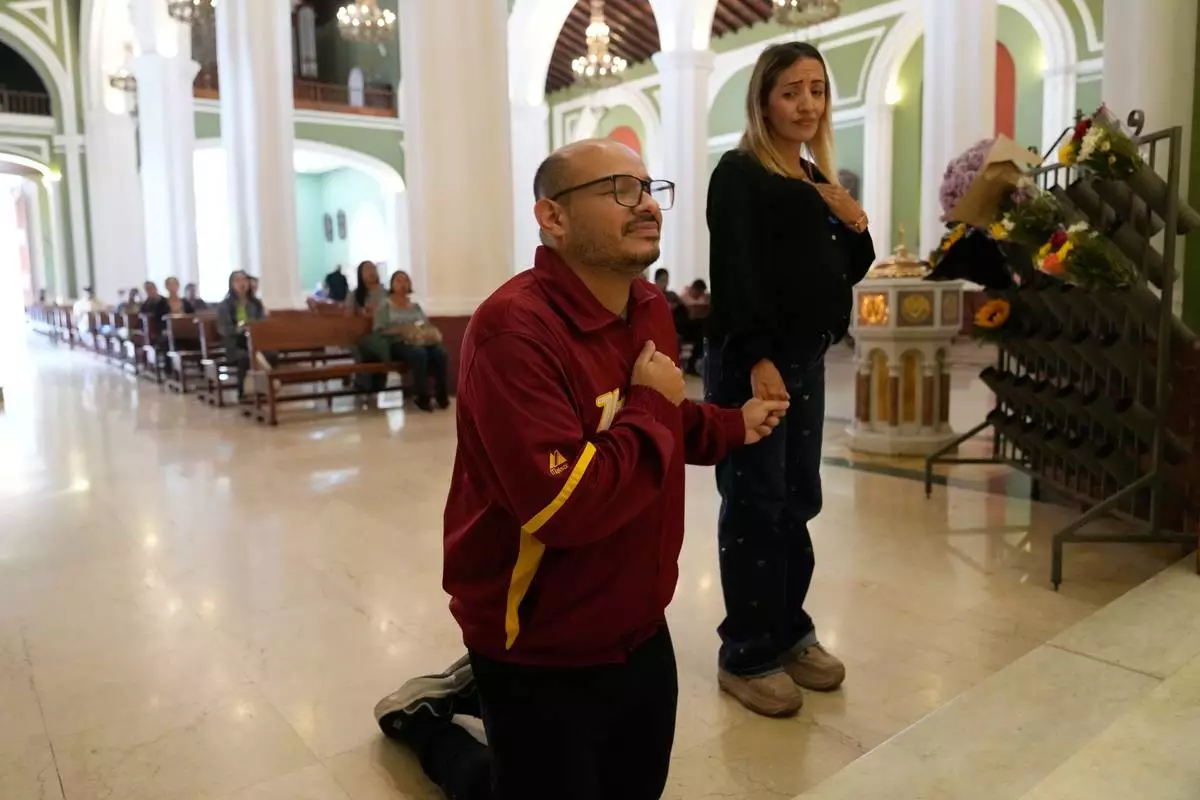
Carlos Rojas, a journalist freed after 18 months in jail, prays with his partner, Francy Fernandez, on the day of his release from prison at La Candelaria Church in Caracas, Venezuela, Wednesday, Jan. 14, 2026. (AP Photo/Ariana Cubillos)
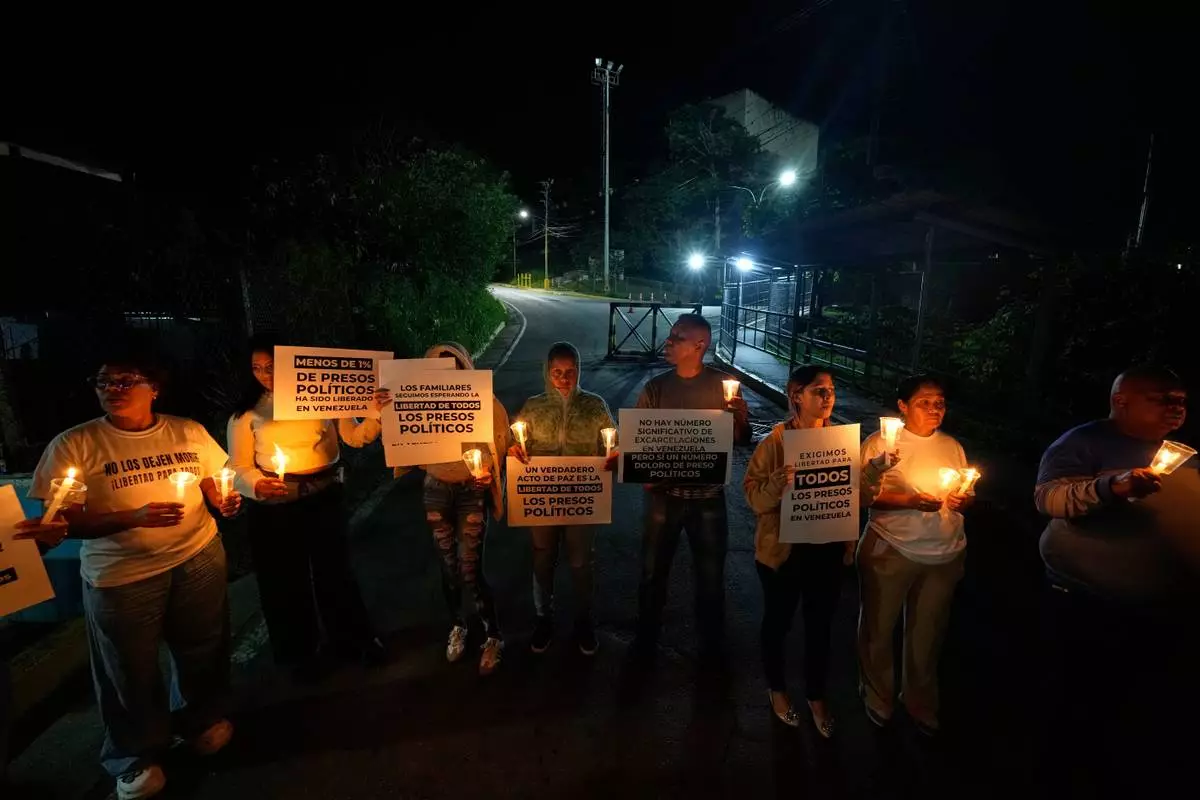
Relatives and friends of political prisoners hold banners and candles calling for their loved ones to be set free outside the Rodeo I prison in Guatire, Venezuela, Friday, Jan. 9, 2026 after the government announced prisoners would be released. (AP Photo/Matias Delacroix)
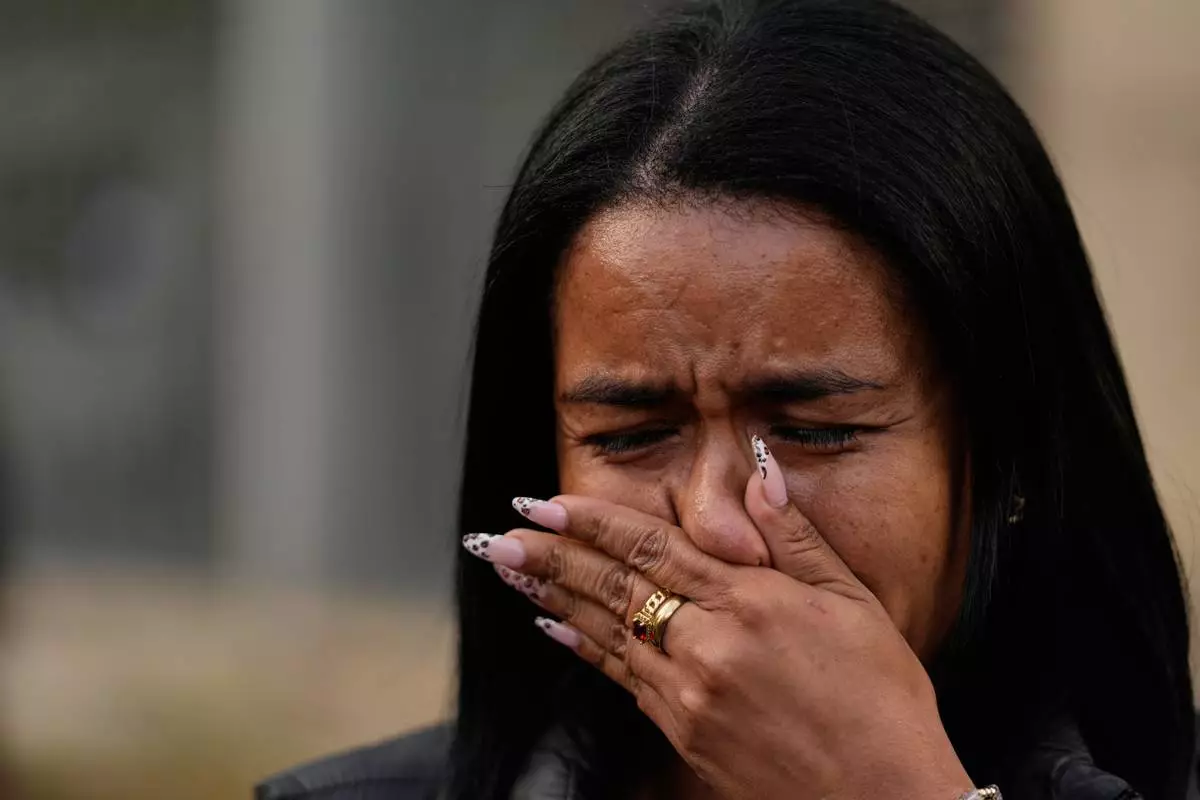
Narwin Gil cries as she waits for news of her detained sister, Marylyn Gil, outside El Helicoide, headquarters of Venezuela's intelligence service and a detention center, in Caracas, Venezuela, Saturday, Jan. 10, 2026. (AP Photo/Matias Delacroix)
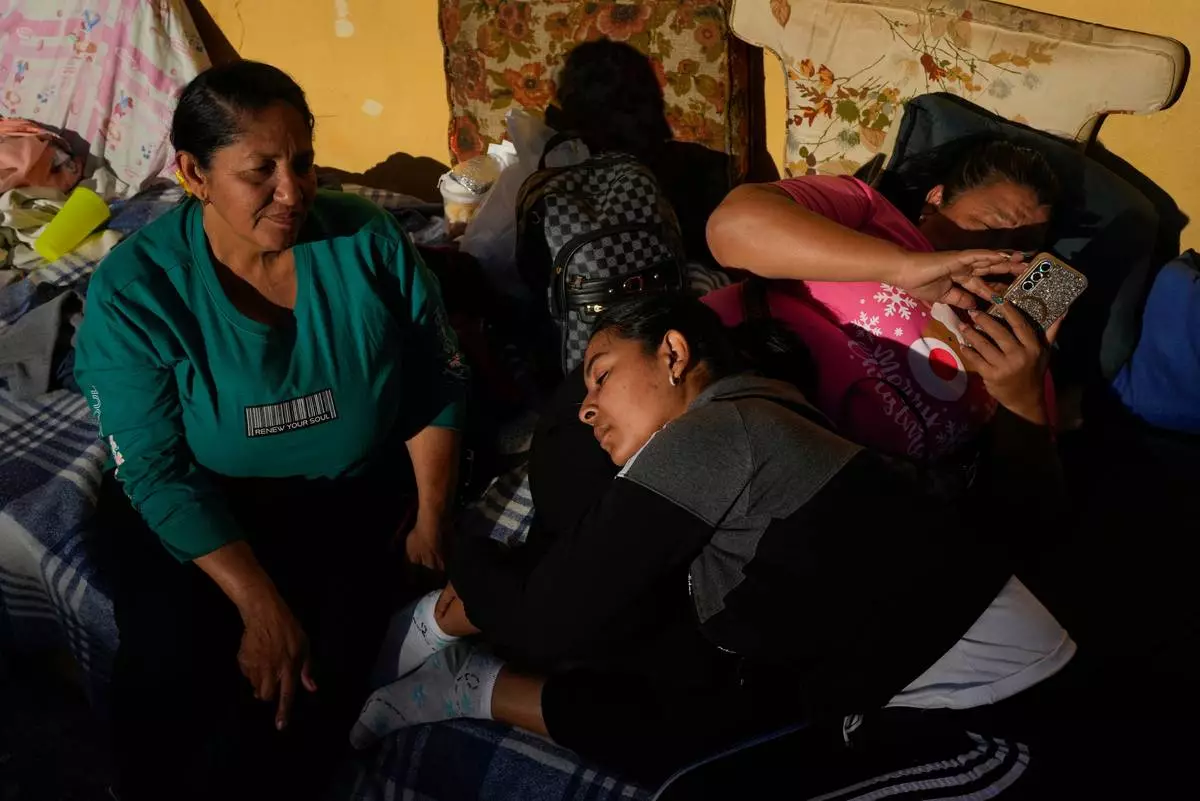
Mileidy Mendoza, center, waits at Zone 7 of the Bolivarian National Police, where her fiancé Eric Diaz is being held as a political detainee in Caracas, Venezuela, Sunday, Jan. 11, 2026, after the government announced prisoners would be released.(AP Photo/Matias Delacroix)
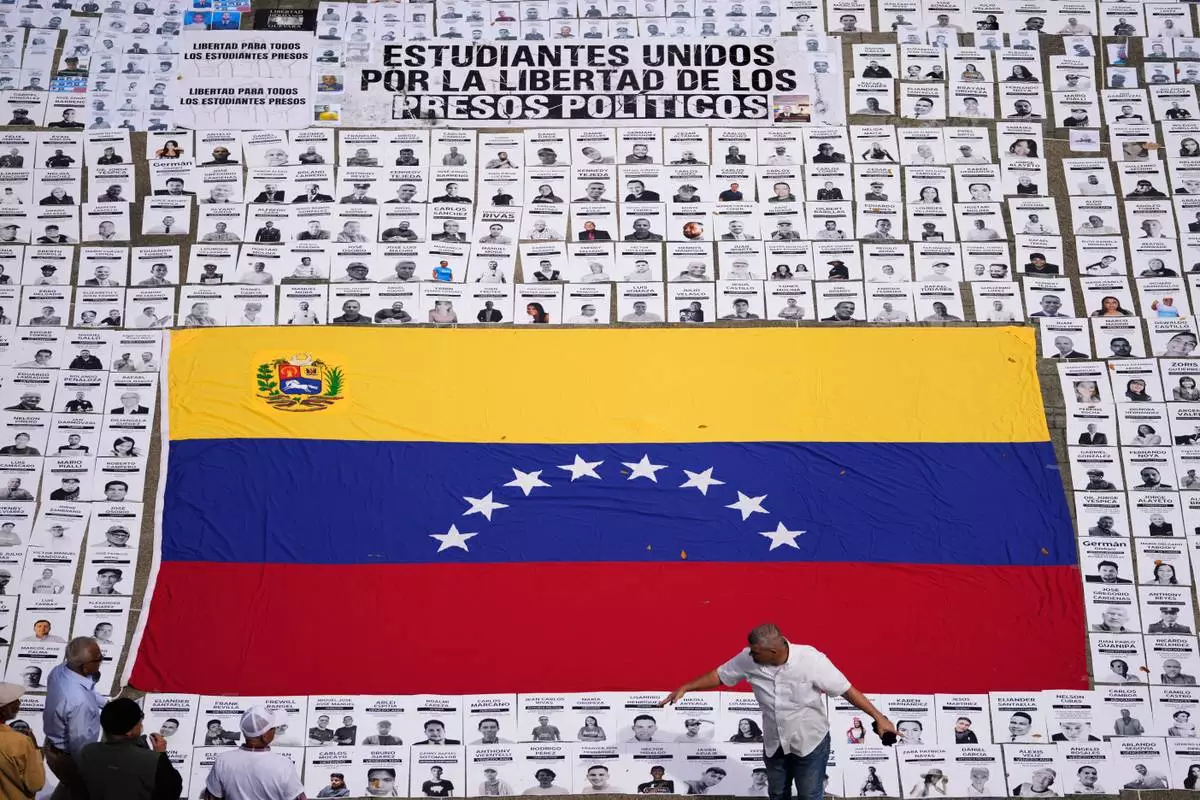
Students lay out photos of people they consider political prisoners at the Central University of Venezuela in Caracas, Venezuela, Tuesday, Jan. 13, 2026. (AP Photo/Matias Delacroix)
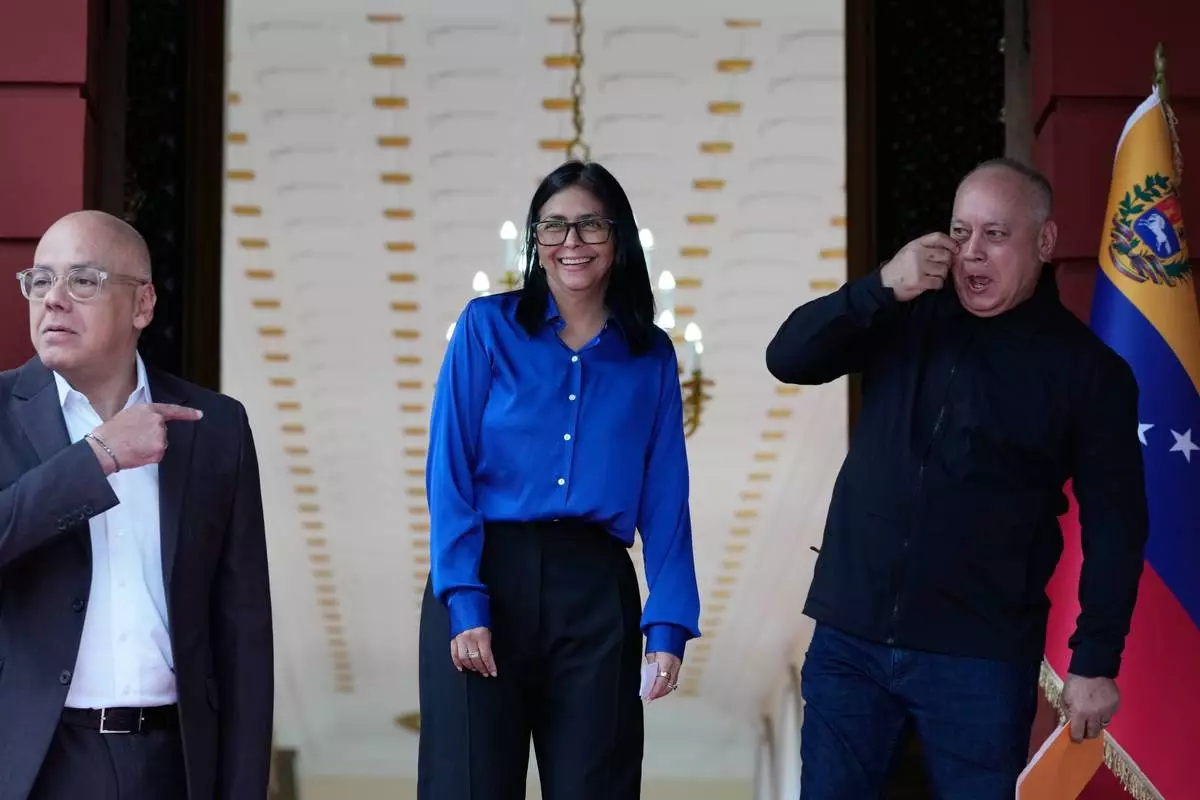
Venezuela's acting President Delcy Rodriguez, center, smiles flanked by Interior Minister Diosdado Cabello, right, and National Assembly President, her brother, Jorge Rodriguez, as they prepare to make a statement at Miraflores presidential palace in Caracas, Venezuela, Wednesday, Jan. 14, 2026. (AP Photo/Ariana Cubillos)