NEW YORK (AP) — Ten years ago, Kim Gordon — a revolutionary force in the alternative rock band Sonic Youth, the ’80s New York no wave scene and the space between art and noise — debuted solo music. At the time, she was already decades into a celebrated, mixed-medium creative career.
The midtempo “Murdered Out” was her first single, where clangorous, overdubbed guitars met the unmistakable rasp of her deadpan intonations. It was a surprise from an experimentalist well-versed in the unexpected: The song took inspiration from Los Angeles car culture, and its main collaborator was the producer Justin Raisen, then best known for his pop work with Sky Ferreira and Charli XCX. Their partnership has continued in the decade since, and on March 13, Gordon will drop her third solo album, “Play Me,” announced Wednesday alongside the release of a hazy, transcendent single, “Not Today.”
“It was a happy accident,” she says of her continued work with Raisen. “In the beginning, I was somewhat skeptical of working with a producer and collaborator, really. But it’s turned out to be incredibly freeing.”
“Play Me” follows Gordon's critically lauded, beat-heavy 2024 album “The Collective,” a noisy body of work that featured oddball trap blasts. It earned her two Grammy nominations — a career first — for alternative music album and alternative music performance. Those were for the song “Bye Bye,” with its eerie, dissonant beat originally written for rapper Playboi Carti. For “Play Me,” Gordon reimagined the track for the closer, “Bye Bye 25!” She says it was the result of her thinking about the rap world, where revisiting and remixing is commonplace.
“I came up with the idea of using these words that Trump had sort of ‘banned’ in his mind,” she says of the new song's lyrics. (An example: “Injustice / Opportunity / Dietary guidelines / Housing for the future.” President Donald Trump’s administration associates the terms with diversity, equity and inclusion initiatives, which it has vowed to root out across the government.) For Gordon, because it became “more conceptual … the remake doesn’t seem as anxiety-provoking as the original.”
There is a connective spirit between “The Collective” and “Play Me” — a shared confrontation, propulsive production and songs that possess a keen ability to process and reflect the world around Gordon. “It does feel kind of like an evolution,” she says of this album next to her last. “It’s sort of a more focused record, and immediate.” The songs are shorter and attentive.
Or, to put it more simply: “I like beats and that inspires me more than melodies,” she says. “Beats and space.”
That palette drives “Play Me,” a foundation in which staccato lyricism transforms and offers astute criticism. Consider the title track, which challenges passive listening and the devaluation of music in the age of streaming. She names Spotify playlist titles, imagined genres defined by mood rather than music. “Rich popular girl / Villain mode” she speak-sings, “Jazz and background / Chillin' after work.”
“It's just representative of, you know, this era we're in, this culture of convenience,” she says. “Music always represented a certain amount of freedom to me, and it feels like that’s kind of been blanketed over.”
Sonically, it is a message delivered atop a '70s groove, placing it in conversation with an era unshackled from these digital technologies.
The title, too, “is playing off the sort of passive nature of listening to music,” she says, “But also it could be seen as defiant. Like, I dare you to play me.”
There's also the blown-out “Subcon,” which examines the world's growing billionaire class and their fascination with space colonialization in a period of economic insecurity. In the song, Gordon's lyrical abstractions highlight the absurdity, taking aim at technocrats.
“I find reality inspirational, no matter how bad it is,” she says. Where some artists might veer away from the news, Gordon tackles truth. “I’m not sure what music is supposed to be. So, I’m just doing my version of it.”
In the end, she hopes listeners are “somewhat thrilled by” the album.
“'This is the music that I’ve wanted to hear,’ kind of feeling. Does that sound egotistical? I don’t know,” she laughs. If it is, it is earned.
1. “Play Me”
2. “Girl with a Look”
3. “No Hands”
4. “Black Out”
5. “Dirty Tech”
6. “Not Today”
7. “Busy Bee”
8. “Square Jaw”
9. “Subcon”
10. “Post Empire”
11. “Nail Bitter”
12. “Bye Bye 25!”

Kim Gordon poses for a portrait in New York on Tuesday, Dec. 9, 2025. (Photo by Taylor Jewell/Invision/AP)
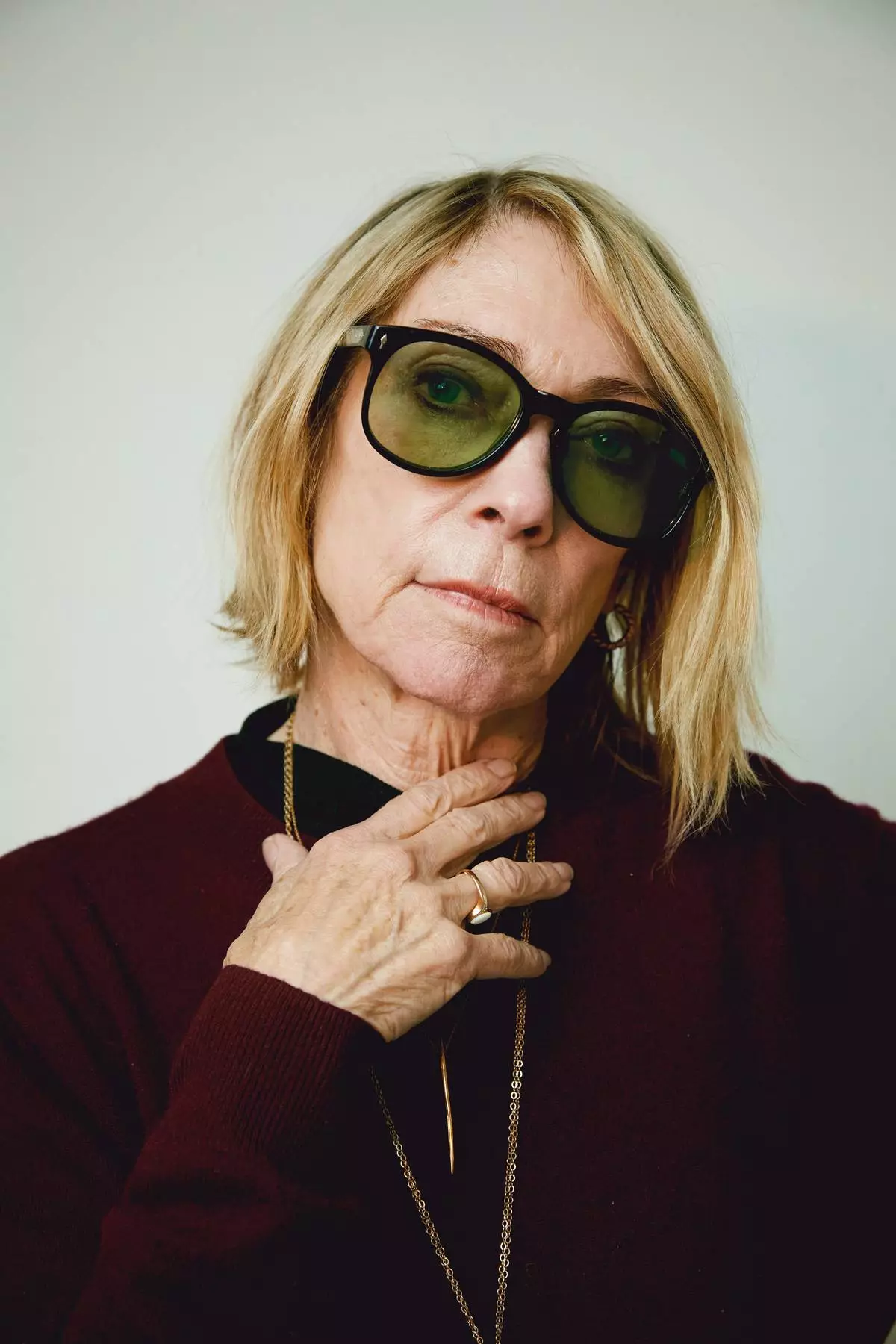
Kim Gordon poses for a portrait in New York on Tuesday, Dec. 9, 2025. (Photo by Taylor Jewell/Invision/AP)

Kim Gordon poses for a portrait on Tuesday, Dec. 9, 2025, in New York (Photo by Taylor Jewell/Invision/AP)
DUBAI, United Arab Emirates (AP) — Iran sent its response to the latest U.S. ceasefire proposal to end the Iran war via Pakistani mediators on Sunday, but U.S. President Donald Trump quickly rejected it in a social media post as “TOTALLY UNACCEPTABLE!” — the latest setback to efforts to resolve the standoff in the Persian Gulf that has throttled shipping and sent energy prices soaring.
Iranian state media reported that Tehran rejected the U.S. proposal as amounting to surrender, insisting instead on “war reparations by the U.S., full Iranian sovereignty over the Strait of Hormuz, an end to sanctions, and the release of seized Iranian assets.”
Washington’s latest proposal addressed a deal to end the war, reopen the strait and roll back Iran’s nuclear program.
Trump's rejection of the Iranian response included no details. In an earlier post, he accused Tehran of “playing games” with the United States for nearly 50 years, adding: "They will be laughing no longer!"
Trump is giving diplomacy “every chance we possibly can before going back to hostilities,” the U.S. ambassador to the United Nations, Mike Waltz, told ABC earlier.
Iran's new supreme leader, Mojtaba Khamenei, who has not been seen or heard publicly since the war began, “issued new and decisive directives for the continuation of operations and the powerful confrontation with the enemies” while meeting with the head of the joint military command, the state broadcaster reported, with no details.
The fragile ceasefire was tested when a drone ignited a small fire on a ship off Qatar and the United Arab Emirates and Kuwait reported drones entering their airspace. The UAE said it shot down two drones and blamed Iran. No casualties were reported, and no one immediately claimed responsibility.
Qatar's Foreign Ministry called the ship attack a “dangerous and unacceptable escalation that threatens the security and safety of maritime trade routes and vital supplies in the region." The United Kingdom Maritime Trade Operations Center gave no details about the ship's owner or origin.
Kuwait Defense Ministry spokesperson Brig. Gen. Saud Abdulaziz Al Otaibi said forces responded to drones but did not say where they came from.
Iran and armed allied groups such as the Lebanese militant Hezbollah group have used drones to carry out hundreds of strikes since the war began with U.S. and Israeli attacks on Feb. 28.
Trump has reiterated threats to resume full-scale bombing if Iran does not accept an agreement to reopen the strait and roll back its nuclear program. Iran has largely blocked the strategic waterway that's key to the global flow of oil, natural gas and fertilizer since the war began, rattling world markets.
The U.S. military in turn has blockaded Iranian ports since April 13, saying it has turned back 61 commercial vessels and disabled four. On Friday, it struck two Iranian oil tankers it said were trying to breach the blockade. Iran’s Revolutionary Guard navy says any attack on Iranian oil tankers or commercial vessels would be met with a “heavy assault” on U.S. bases in the region and enemy ships.
Another sticking point in negotiations is Iran’s highly enriched uranium. The U.N. nuclear agency says Iran has more than 440 kilograms (970 pounds) enriched up to 60% purity, a short, technical step from weapons grade.
In an interview posted late Saturday, an Iranian military spokesperson said forces were on “full readiness” to protect sites where uranium is stored.
“We considered it possible that they might intend to steal it through infiltration operations or heli-borne operations,” Brig. Gen. Akrami Nia told the IRNA news agency.
Israeli Prime Minister Benjamin Netanyahu in an excerpt of an interview with CBS airing Sunday said the war isn't over because the enriched uranium needs to be taken out of Iran. “Trump has said to me, ‘I want to go in there,’ and I think it can be done physically,” he said.
Russian President Vladimir Putin said Saturday that Moscow’s proposal to take enriched uranium from Iran to help negotiate a settlement remains on the table.
The majority of Iran’s highly enriched uranium is likely at its Isfahan nuclear complex, the International Atomic Energy Agency director-general told The Associated Press last month. The facility was hit by U.S.-Israeli airstrikes in the 12-day war last year and faced less intense attacks this year.
Iran's deputy foreign minister warned against a planned French-British effort that aims to support maritime security in the Strait of Hormuz after hostilities are over.
“The presence of French and British vessels, or those of any other country, for any possible cooperation with illegal U.S. actions in the Strait of Hormuz that violate international law will be met with a decisive and immediate response from the armed forces,” Kazem Gharibabadi said on social media.
French President Emmanuel Macron responded by saying it won't be a military deployment but an international mission to secure shipping once conditions allow.
Several attacks against ships in the Persian Gulf have occurred over the past week, and a U.S. effort to “guide” ships through the strait was quickly paused.
South Korea announced initial findings from an investigation that said two unidentified objects struck the South Korean-operated vessel HMM NAMU about one minute apart while it was anchored in the strait last week, causing an explosion and fire. Officials have yet to determine who was responsible.
Magdy reported from Cairo. Associated Press writers Munir Ahmed in Islamabad; Melanie Lidman in Tel Aviv, Israel; Tong-hyung Kim in Seoul, South Korea; Julia Frankel in Jerusalem and Josh Boak in Washington contributed to this report.

Women walk in northern Tehran, Iran, Sunday, May 10, 2026. (AP Photo/Vahid Salemi)
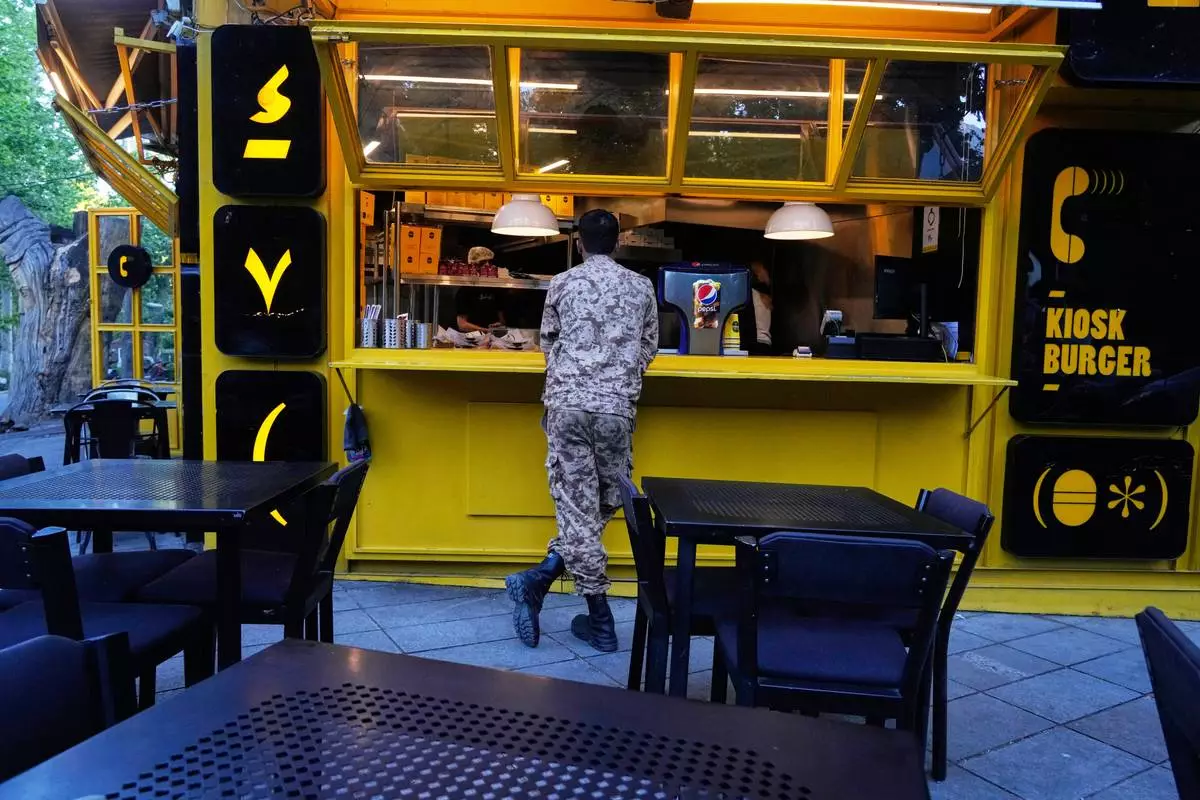
A Revolutionary Guard soldier stands at the counter of a fast food restaurant in northern Tehran, Iran, Sunday, May 10, 2026. (AP Photo/Vahid Salemi)
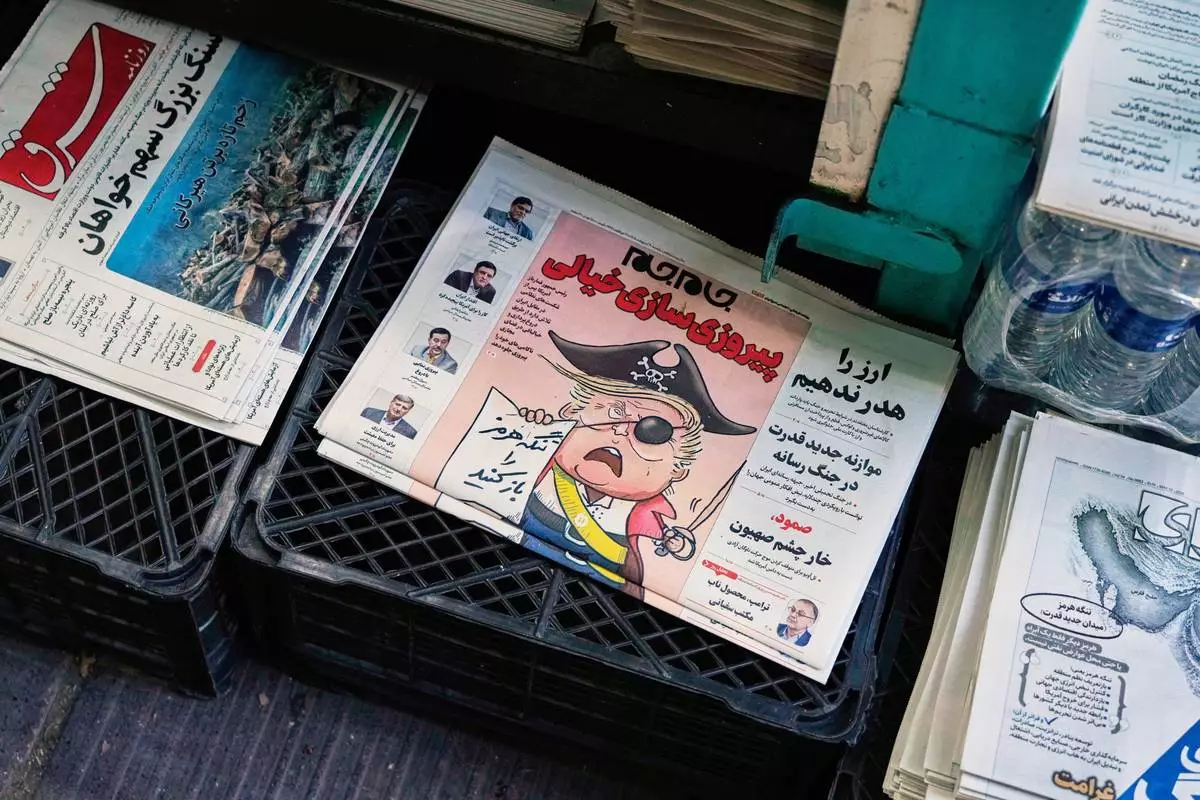
The front page of the Sunday May 10, 2026, edition of Iranian newspaper, Jamejam, is seen with a cartoon satirizing the U.S. President Donald Trump that asks: "Open the the Strait of Hormuz" on a news stand in northern Tehran, Iran, Sunday, May 10, 2026. (AP Photo/Vahid Salemi)
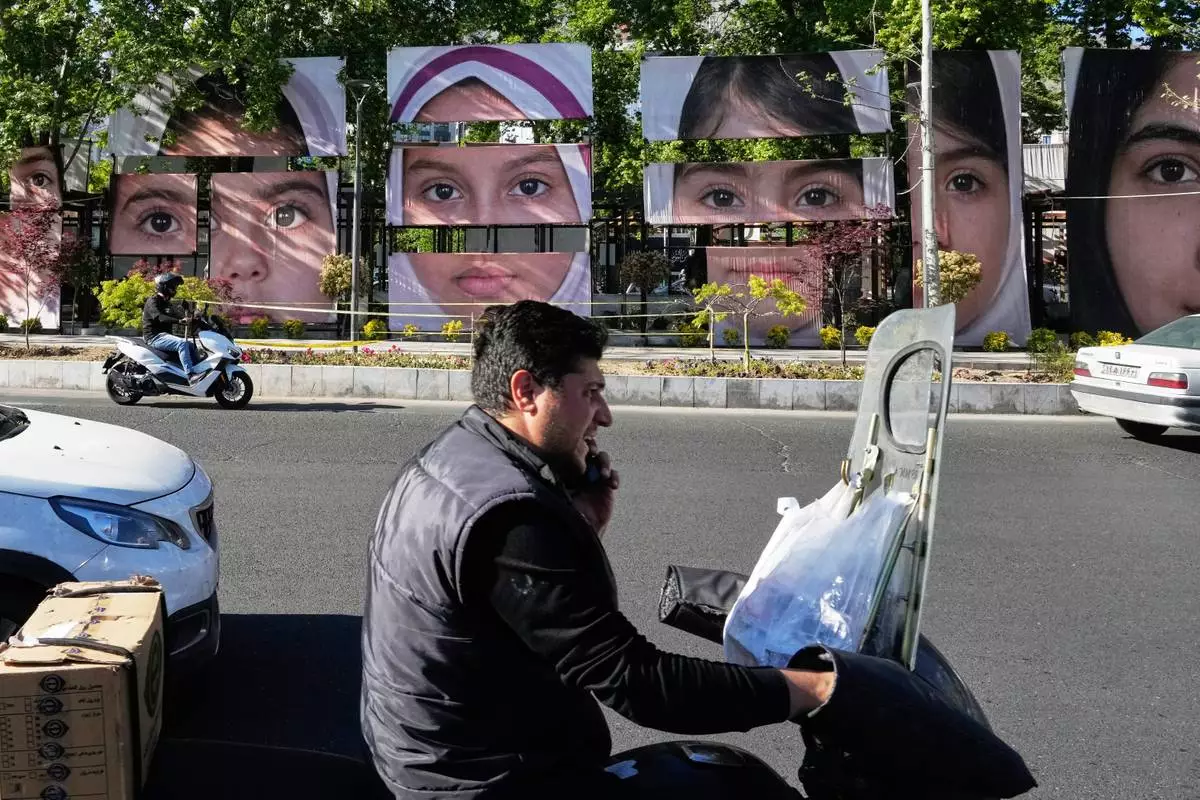
Vehicles drive past banners showing portraits of the school children who were killed during a strike on a school in southern town of Minab on Feb. 28, at Tajrish square in northern Tehran, Iran, Sunday, May 10, 2026. (AP Photo/Vahid Salemi)
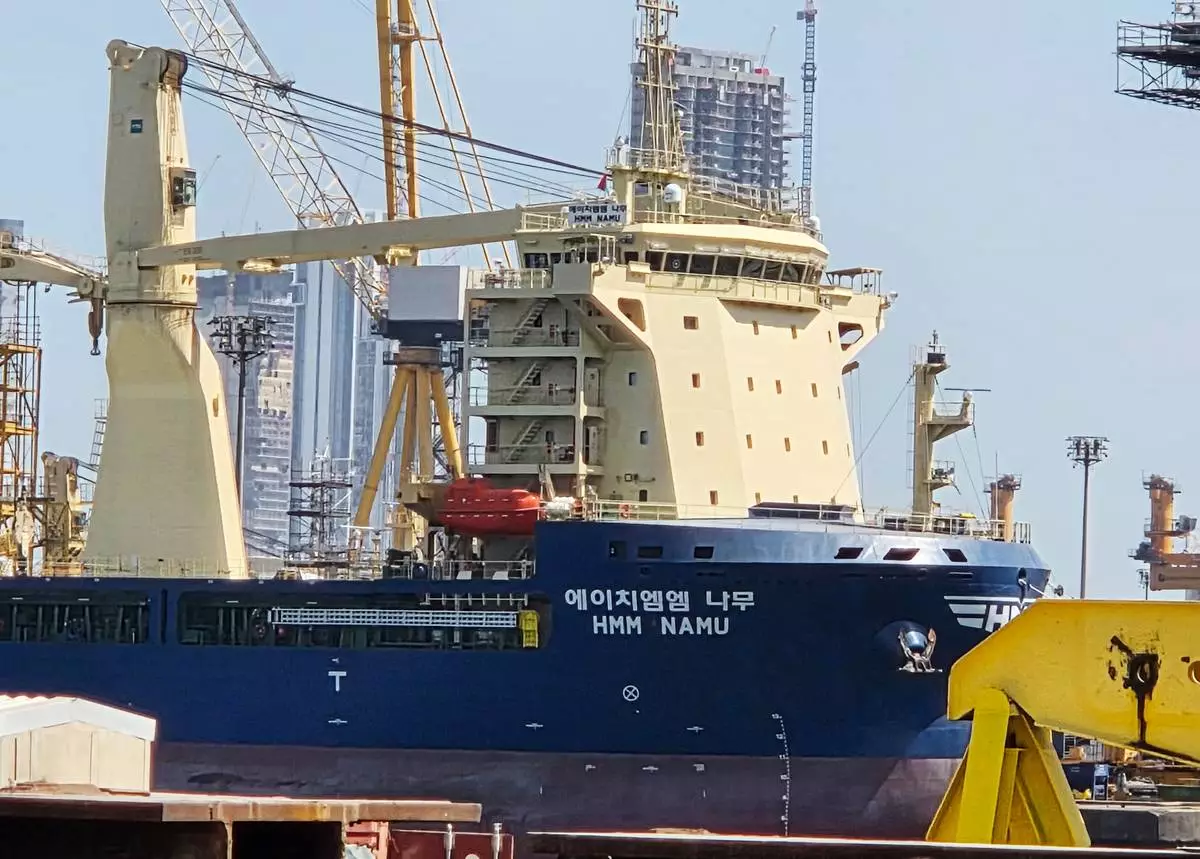
The South Korean-operated vessel HMM NAMU is docked after being damaged from a fire following an explosion in the Strait of Hormuz, at a port in Dubai, United Arab Emirates, Friday, May 8, 2026. (Kim Sang-hun/Yonhap via AP)
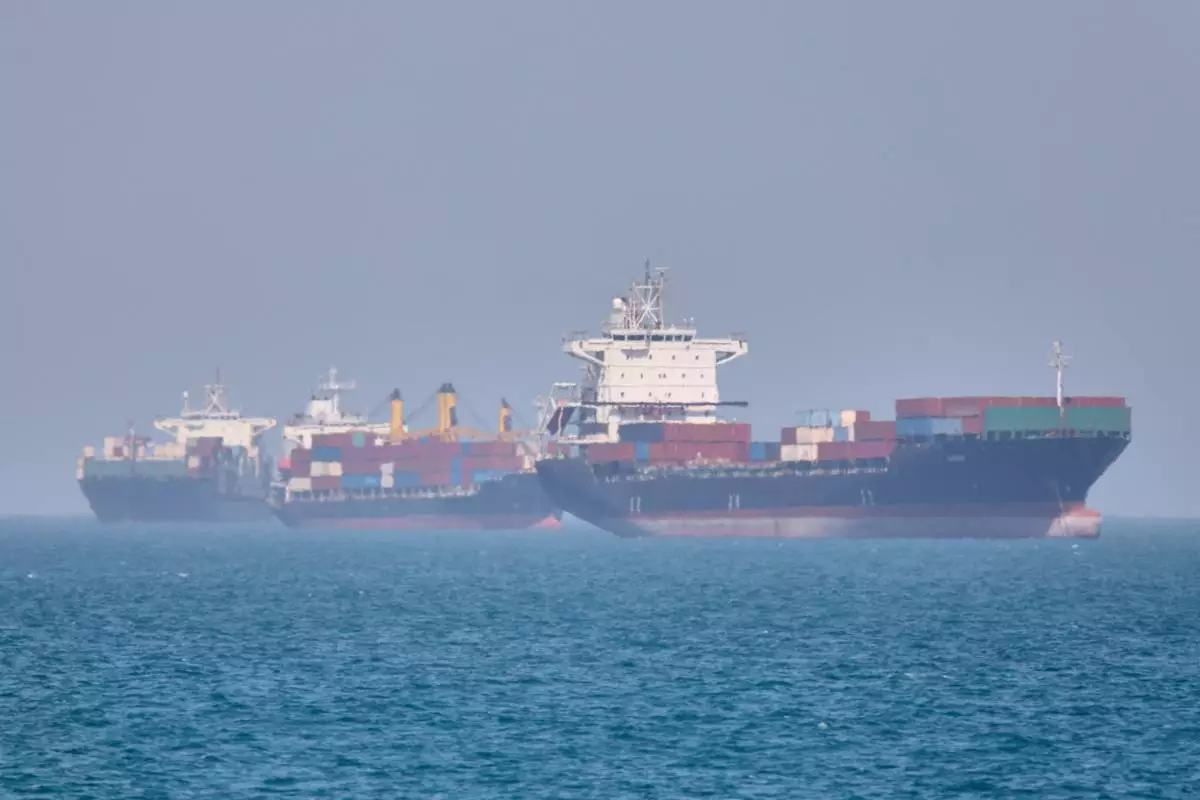
Container ships sit at anchor in the Strait of Hormuz off Bandar Abbas, Iran, Saturday, May 2, 2026.(Amirhosein Khorgooi/ISNA via AP)