You have to become a little crafty at this time of year about getting vegetables onto the table in ways that still feel interesting. In many places, the cold has settled in, farmers’ market offerings have thinned out, and we’re left with the hardiest of fruits and vegetables.
Root vegetables are the stars now, but they do benefit from a bit of inspiration when figuring out how to use them.
Enter soup. Even the most stoic vegetables can be coaxed into something soft, sweet and yielding. In this Creamy Rutabaga, Parsnip and Cheddar Soup, they're simmered until ready to be puréed into a smooth potage that warms the soul and happily anchors a meal.
This is the kind of soup you can’t stop spooning up, full of earthy flavor from rutabagas and parsnips — the kind of vegetables that linger in the produce drawer, quietly daring us to figure out their fate. But if you ignore them long enough… well, then the rutabaga wins.
Not this time. And yes, I see you too, parsnips.
The color of the cheddar cheese — white, yellow or deep orange — will affect the hue of the soup. There’s no right or wrong, just something to keep in mind. The parsley is optional, and the sour cream adds a lovely creaminess, but it shouldn't be a deal breaker. This soup is forgiving, flexible and very much on your side.
If you have an immersion blender you can puree the soup right in the pot, which saves time, skips having to pull out the blender or food processor, and eliminates the need to transfer hot contents back and forth.
This could certainly be a first course, but it’s substantial and comforting enough to be the main event, especially when paired with a crisp green salad.
First, some tips on choosing, storing and cooking the rutabagas:
• Pick rutabagas that feel heavy for their size with firm, smooth skin.
• Medium-size rutabagas tend to be sweeter and less woody.
• A food-grade waxy coating is normal, often added to rutabagas to extend their shelf life. Just peel it off before cooking.
• Store unpeeled, unwashed rutabagas in the refrigerator crisper. They’ll keep well for several weeks.
• If greens are attached, remove them before storing.
Prepping Rutabagas
• Trim the ends, then peel with a sharp knife or sturdy vegetable peeler.
• Cut into evenly sized pieces so they cook at the same rate.
• Rutabagas take a bit longer than potatoes to cook, but they soften beautifully.
Serves 6
3 tablespoons unsalted butter
1 cup chopped onion
2 stalks celery, sliced
2 large rutabagas, peeled and diced
2 parsnips, peeled and sliced
5 cups less-sodium chicken or vegetable broth
1 tablespoon pureed chipotles in adobo
1 ½ cups shredded sharp cheddar cheese
1 cup sour cream
To serve (optional):
Chopped parsley
Sour cream or crème fraiche
1. In a large pot, melt the butter over medium heat. Add the shallots and the celery and sauté for about 4 minutes, until tender. Add the rutabagas and parsnips and stir, then pour in the broth, raise the heat to high and bring to a simmer. Lower the heat to medium and simmer, partially covered, for about 30 minutes until the vegetables are tender.
2. Use an immersion blender to puree the vegetables right in the pot, or carefully transfer the vegetables and some of the liquid in batches to a food processor or blender and puree until smooth. Return the soup to the pot, if needed, and over low heat stir in the chipotles in adobo and sprinkle in the cheese slowly, stirring as you do, until the cheese is melted. Add the sour cream and heat until heated through. Serve hot, with chopped parsley and a bloop of sour cream or crème fraiche if desired.
Katie Workman writes regularly about food for The Associated Press. She has written two cookbooks focused on family-friendly cooking, “Dinner Solved!” and “The Mom 100 Cookbook.” She blogs at https://themom100.com/. She can be reached at Katie@themom100.com.
For more AP food stories, go to https://apnews.com/hub/recipes

A recipe for a creamy rutabaga, parsnip and cheddar soup is displayed in New York on Aug. 31, 2018. (Cheyenne M. Cohen via AP)



MINNEAPOLIS (AP) — A judge on Wednesday gave the Trump administration time to respond to a request to suspend an immigration crackdown in Minnesota, while the Pentagon looked for military lawyers to join what has become a chaotic law enforcement effort in the state.
Plumes of tear gas, bursts of chemical irritants and the screech of protest whistles have become common on the streets of Minneapolis, especially since an immigration agent fatally shot Renee Good in the head on Jan. 7 as she drove away.
Agents have yanked people from cars and homes and been confronted by angry bystanders who are demanding that officers pack up and leave.
“What we need most of all right now is a pause. The temperature needs to be lowered," state Assistant Attorney General Brian Carter said during the first hearing in a lawsuit filed by Minnesota and the cities of Minneapolis and St. Paul.
Local leaders say the government is violating free speech and other constitutional rights with the surge of law enforcement. U.S. District Judge Katherine Menendez promised to keep the case “on the front burner” and gave the U.S. Justice Department until Monday to file a response to a request for a restraining order.
The judge said these are "grave and important matters,” and that there are few legal precedents to apply to some of the key points in the case.
Justice Department attorney Andrew Warden suggested the approach set by Menendez was appropriate.
The judge is also handling a separate lawsuit challenging the tactics used by Immigration and Customs Enforcement and other federal officers when they encounter protesters and observers. A decision could be released this week.
During a televised speech Wednesday evening, Gov. Tim Walz described Minnesota as being in chaos, saying what's happening in the state “defies belief.”
“Let’s be very, very clear, this long ago stopped being a matter of immigration enforcement," he said. "Instead, it’s a campaign of organized brutality against the people of Minnesota by our own federal government.”
Walz added that “accountability” will be coming through the courts.
The Department of Homeland Security says it has made more than 2,000 arrests in the state since early December and is vowing to not back down. The Pentagon is preparing to send military lawyers to Minneapolis to assist.
CNN, citing an email circulating in the military, says Defense Secretary Pete Hegseth is asking the branches to identify 40 lawyers known as judge advocate general officers or JAGs, and 25 of them will serve as special assistant U.S. attorneys in Minneapolis.
Pentagon spokesperson Kingsley Wilson appeared to confirm the CNN report by posting it on X with a comment that the military “is proud to support” the Justice Department.
The Pentagon did not immediately respond to emails from The Associated Press seeking more details.
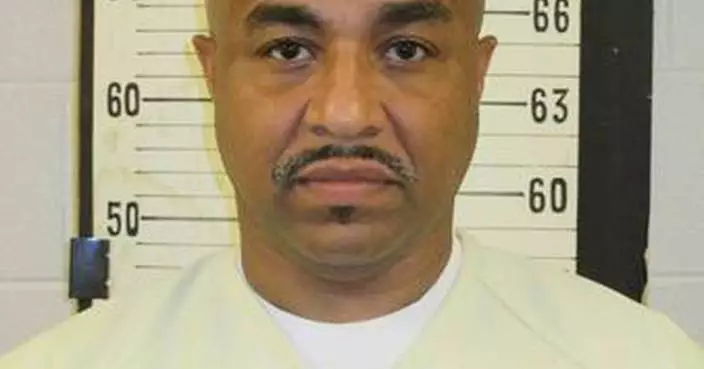
It’s the latest step by the Trump administration to dispatch military and civilian attorneys to areas where federal immigration operations are taking place. The Pentagon last week sent 20 lawyers to Memphis, U.S. Attorney D. Michael Dunavant said.
Mark Nevitt, an associate professor at Emory University School of Law and a former Navy JAG, said there's concern that the assignments are taking lawyers away from the military justice system.
“There are not many JAGs but there are over one million members of the military, and they all need legal support,” he said.
Jonathan Ross, the Immigration and Customs Enforcement officer who killed Good, suffered internal bleeding to his torso during the encounter, a Homeland Security official told The Associated Press.
The official spoke to AP on condition of anonymity in order to discuss Ross’ medical condition. The official did not provide details about the severity of the injuries, and the agency did not respond to questions about the extent of the bleeding, exactly how he suffered the injury, when it was diagnosed or his medical treatment.
There are many causes of internal bleeding, and they vary in severity from bruising to significant blood loss. Video from the scene showed Ross and other officers walking without obvious difficulty after Good was shot and her Honda Pilot crashed into other vehicles.
She was killed after three ICE officers surrounded her SUV on a snowy street a few blocks from her home.
Bystander video shows one officer ordering Good to open the door and grabbing the handle. As the vehicle begins to move forward, Ross, standing in front, raises his weapon and fires at least three shots at close range. He steps back as the SUV advances and turns.
Homeland Security Secretary Kristi Noem has said Ross was struck by the vehicle and that Good was using her SUV as a weapon — a self-defense claim that has been deeply criticized by Minnesota officials.
Chris Madel, an attorney for Ross, declined to comment on any injuries.
Good’s family, meanwhile, has hired a law firm, Romanucci & Blandin, that represented George Floyd’s family in a $27 million settlement with Minneapolis. Floyd, who was Black, died after a white police officer pinned his neck to the ground in the street in May 2020.
The firm said Good was following orders to move her car when she was shot. It said it would conduct its own investigation and publicly share what it learns.
“They do not want her used as a political pawn,” the firm said, referring to Good and her family, “but rather as an agent of peace for all.”
Waving signs reading “Love Melts ICE” and “DE-ICE MN,” hundreds of teenagers left school in St. Paul and marched in freezing temperatures to the state Capitol for a protest and rally.
The University of Minnesota, meanwhile, informed its 50,000-plus students that there could be online options for some classes when the new term starts next week. President Rebecca Cunningham noted that “violence and protests have come to our doorstep.” The campus sits next to the main Somali neighborhood in Minneapolis.
Associated Press reporters Julie Watson in San Diego, California; Rebecca Santana in Washington, D.C.; Ed White in Detroit; Giovanna Dell’Orto in Minneapolis; Graham Lee Brewer in Oklahoma City, Oklahoma; and Hallie Golden in Seattle contributed.
Federal immigration officers are seen Wednesday, Jan. 14, 2026, in Minneapolis. (AP Photo/Abbie Parr)
Hundreds of protesters gather in front of the Minnesota State Capitol in response to the death of Renee Good, who was fatally shot by an ICE officer last week, Wednesday, Jan. 14, 2026, in St. Paul, Minn. (AP Photo/John Locher)
Protesters gather in front of the Minnesota State Capitol in response to the death of Renee Good, who was fatally shot by an ICE officer last week, Wednesday, Jan. 14, 2026, in St. Paul, Minn. (AP Photo/John Locher)
Federal officers stand guard after detaining people outside of Bishop Henry Whipple Federal Building, Tuesday, Jan. 13, 2026, in Minneapolis. (AP Photo/Adam Gray)
People visits a makeshift memorial for Renee Good, who was fatally shot by an ICE officer last week, Tuesday, Jan. 13, 2026, in Minneapolis. (AP Photo/John Locher)
A person is detained by federal agents near the scene where Renee Good was fatally shot by an ICE officer last week, Tuesday, Jan. 13, 2026, in Minneapolis. (AP Photo/Adam Gray)