NEW YORK (AP) — Shoppers increased their spending in November from October as holiday shopping kicked into full gear.
Retail sales rose a better-than-expected 0.6% in November, following a revised 0.1% decline October, according to the Commerce Department. The report on Wednesday was delayed more than a month because of the 43-day government shutdown.
Retail sales rose 0.1% increase in September, but jumped 0.6% in July and August and 1% in June.
The federal government is gradually catching up on economic reports that were postponed by the shutdown.
The retail sales figures, which are not adjusted for inflation, showed that in most cases shoppers focused on gifts and pulled away from other areas.
Sales at clothing and accessories stores rose 0.9%, while online businesses had a 0.4% increase. Business at sporting goods and hobby stores was up 1.9%. But furniture and home furnishing stores posted a 0.1% dip, while consumer electronics and appliance stores saw their business unchanged in November from October.
The snapshot offers only a partial look at consumer spending and doesn’t include many services, including travel and hotel lodges. But the lone services category – restaurants – registered an uptick of 0.6%.
A category of sales that excludes volatile sectors such as gas, cars, and restaurants rose in November by a solid 0.4%, a sign that consumers are still spending on discretionary items.
“Consumers are gloomy, but they are still spending," said Heather Long, chief economist at Navy Federal Credit Union. "The only areas they are pulling back in are home improvement, home furnishings and some electronics and appliances. Outside of those areas, consumers continue to spend and they are likely to keep that up in early 2026 as they receive larger-than-normal tax refunds. ”
The report comes as 41,000 attendees from retailers, brands and technology companies gathered for the annual three-day National Retail Federation convention. Shoppers have been growing anxious about high prices and impact of President Donald Trump’s tariffs, as well as a souring job market. So the outlook for shopping for this year was a key issue that dominated discussions.
The industry wrapped up a solid holiday shopping season, based on early data, but many consumers, particularly from the lower income households, remain financially strained.
Hiring has generally been weak, which could hurt consumer spending and the broader economy for 2026.
Inflation cooled a bit last month as prices for gas and used cars fell, a sign that stubbornly elevated cost pressures are slowly easing, according to a report from the Labor Department Tuesday.
Consumer prices rose 0.3% in December from the prior month, the same as in November. Excluding the volatile food and energy categories, core prices rose 0.2%, also matching November’s figure. Increases at that pace, over time, would bring inflation closer to the Federal Reserve’s target of 2%.
Many economists had predicted inflation to jump last month as the government resumed normal data collection after the six-week shutdown last fall, so the modest increases that matched the November figures came as a relief. The price of manufactured goods was flat in December, a sign that the impact of tariffs may be starting to fade.
The National Retail Federation predicts that retail sales in November and December grew between 3.7% and 4.2% over 2024. That translates to a range between $1.01 trillion and $1.02 trillion. By comparison, holiday sales for 2024 rose 4.3% over 2023 to reach $976.1 billion.
The trade group will not be report final results for the November and December period until next month when the government reports December retail data.
Lululemon Athletica said on Monday that it anticipates fourth-quarter profit and revenue to come in at the high end of its previously released outlook, helped by a solid holiday shopping season. And Abercrombie & Fitch Co. said on Monday that both its Hollister and Abercrombie fared well during the holiday season.
A better picture of holiday spending will come next month when Walmart, Macy's and other major retailers report fiscal fourth-quarter results.
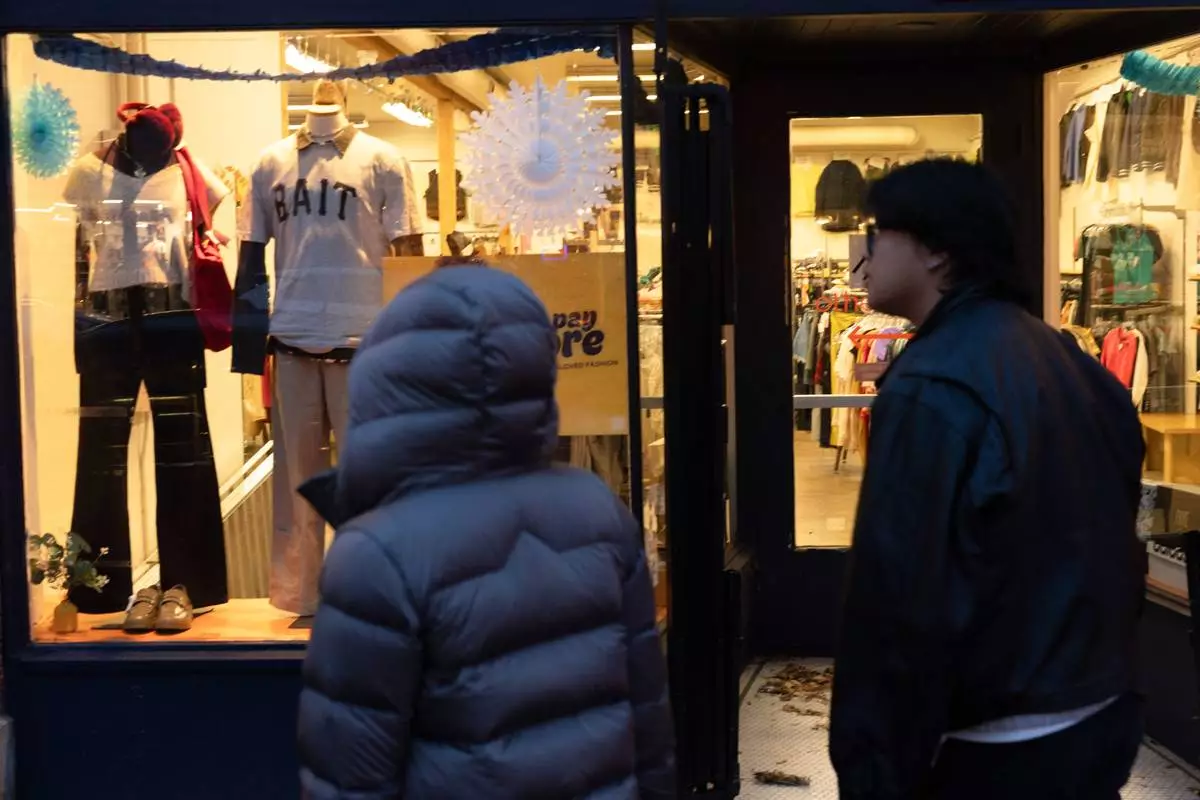
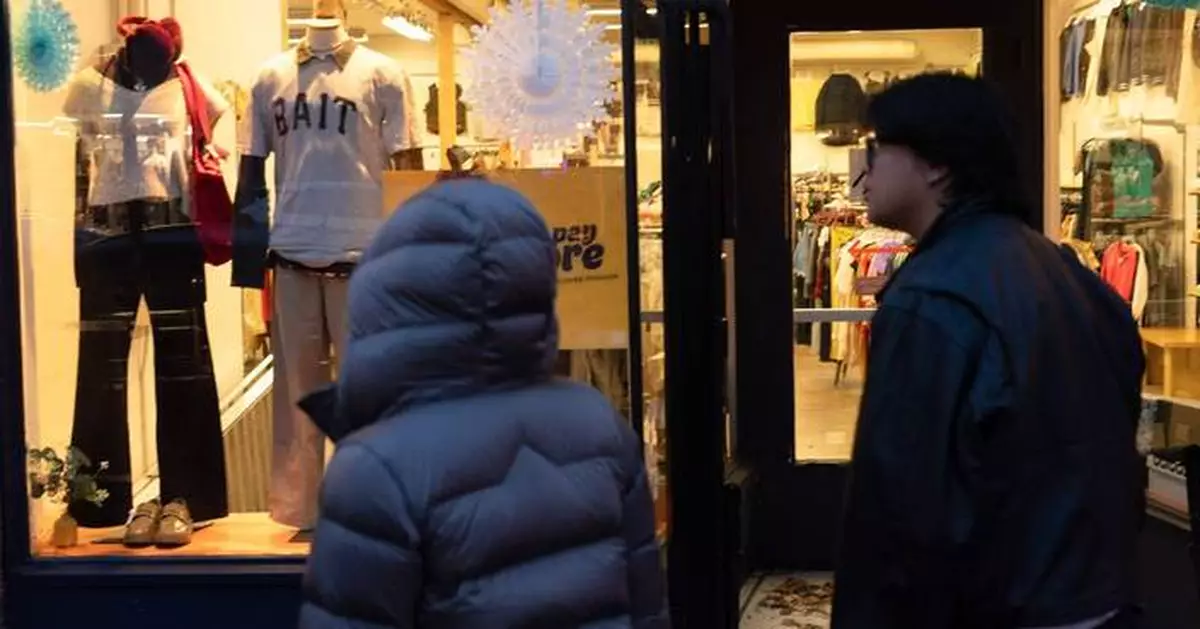
People walk by a shop on Tuesday, Jan. 6, 2026, in Portland, Ore. (AP Photo/Jenny Kane)
PROVO, Utah (AP) — The man accused of killing Charlie Kirk on a Utah college campus was back in court Friday as a state judge denied some efforts by his attorneys to limit public access to certain documents while not ruling out the possibility of closing portions of an upcoming hearing.
The outcome sets the stage for an April hearing in which attorneys for Tyler Robinson will make their case to exclude TV cameras, microphones and photographers from the courtroom.
Judge Tony Graf has been weighing the public’s right to know details about the case against concerns by defense attorneys that the media attention could undermine Robinson’s right to a fair trial. Prosecutors, Kirk’s widow and attorneys for news organizations have urged Graf to keep the proceedings open.
Prosecutors intend to seek the death penalty for Robinson, 22, who is charged with aggravated murder in the Sept. 10 shooting of the conservative activist on the Utah Valley University campus in Orem. They have said DNA evidence connects Robinson to the killing.
Robinson has not yet entered a plea.
Attorneys on Friday debated whether the defense's written request to exclude cameras, which was classified by the court as private, should be made public.
Graf said the defense failed to make its case to keep the motion private but that he will continue “balancing all the factors” when deciding which portions of the upcoming hearing may be closed.
Staci Visser, an attorney for Robinson, told the judge that the defense is not arguing in the court of public opinion.
“There seems to be an idea that flooding the public sphere with information from this courtroom will somehow dispel conspiracy theories or shift public narratives. That, in and of itself, is concerning to the defense,” Visser said. “All we should be worried about is protecting what happens in this courtroom.”
Robinson’s defense team went on to say that the April hearing will involve discussions about prejudicial pretrial publicity — for example, evidence that has yet to be admitted, confessions, personal opinions about guilt or public statements that would otherwise be inadmissible in court.
“We don’t want to be in that position of bringing in front of the court all of this prejudicial information and having the press regurgitate it yet one more time, and reinflicting a wound that we’re seeking to avoid,” defense attorney Michael Burt said.
Christopher Ballard, a prosecutor with the Utah County Attorney’s Office, dismissed those arguments. He said careful questioning during jury selection and tools like expanding the jury pool can ensure a defendant gets a fair trial.
“So just saying that this a content tornado or there's been a barrage of media coverage doesn't necessarily mean that there is going to be prejudice to the defendant,” Ballard said.
Ballard noted that most of the evidence that will be discussed at the April 17 hearing is already public, so most of it should be open.
Coalitions of national and local news organizations, including The Associated Press, are fighting to preserve media access in the case.
Media access has been a focal point of several recent hearings, with the judge placing temporary restrictions on local TV stations for showing Robinson's shackles in violation of a court order and filming close-up shots that might allow viewers to interpret what he was discussing with his attorneys.
The judge also has prevented full video recordings of Kirk’s shooting from being shown in court after defense attorneys argued the graphic footage would interfere with a fair trial. An estimated 3,000 people attended the outdoor rally to hear Kirk, a co-founder of Turning Point USA who helped mobilize young people to vote for President Donald Trump.
Defense attorney Staci Visser, left, and defendant Tyler Robinson, accused in the fatal shooting of conservative activist Charlie Kirk, attend a hearing in 4th District Court, Friday, March. 13, 2026, in Provo, Utah. (Laura Seitz/The Deseret News via AP, Pool)
Prosecuting and defense attorneys and defendant Tyler Robinson, right, accused in the fatal shooting of conservative activist Charlie Kirk, attend a hearing in 4th District Court, Friday, March. 13, 2026, in Provo, Utah. (Laura Seitz/The Deseret News via AP, Pool)
Prosecutor Chad Grunander, center, listens, Friday, March. 13, 2026, in 4th District Court in Provo, Utah, during a hearing for Tyler Robinson, who is accused in the fatal shooting of conservative activist Charlie Kirk. (Laura Seitz/The Deseret News via AP, Pool)
Attorney Richard Novak, left, and defendant Tyler Robinson, accused in the fatal shooting of conservative activist Charlie Kirk, attend a hearing, in 4th District Court, Friday, March. 13, 2026, in Provo, Utah. (Laura Seitz/The Deseret News via AP, Pool
Fourth District Court Judge Tony Graf presides, Friday, March. 13, 2026, in 4th District Court in Provo, Utah, during a hearing for Tyler Robinson, who is accused in the fatal shooting of conservative activist Charlie Kirk. (Laura Seitz/The Deseret News via AP, Pool)
FILE - Tyler Robinson, who is accused of fatally shooting Charlie Kirk, appears during a hearing in Fourth District Court, in Provo, Utah, Dec. 11, 2025. (Rick Egan/The Salt Lake Tribune via AP, Pool, File)
FILE - Fourth District Court Judge Tony Graf presides over a hearing for Tyler Robinson, accused in the fatal shooting of conservative activist Charlie Kirk, in 4th District Court, Feb. 3, 2026, in Provo, Utah. (Trent Nelson/The Salt Lake Tribune via AP, Pool, File)