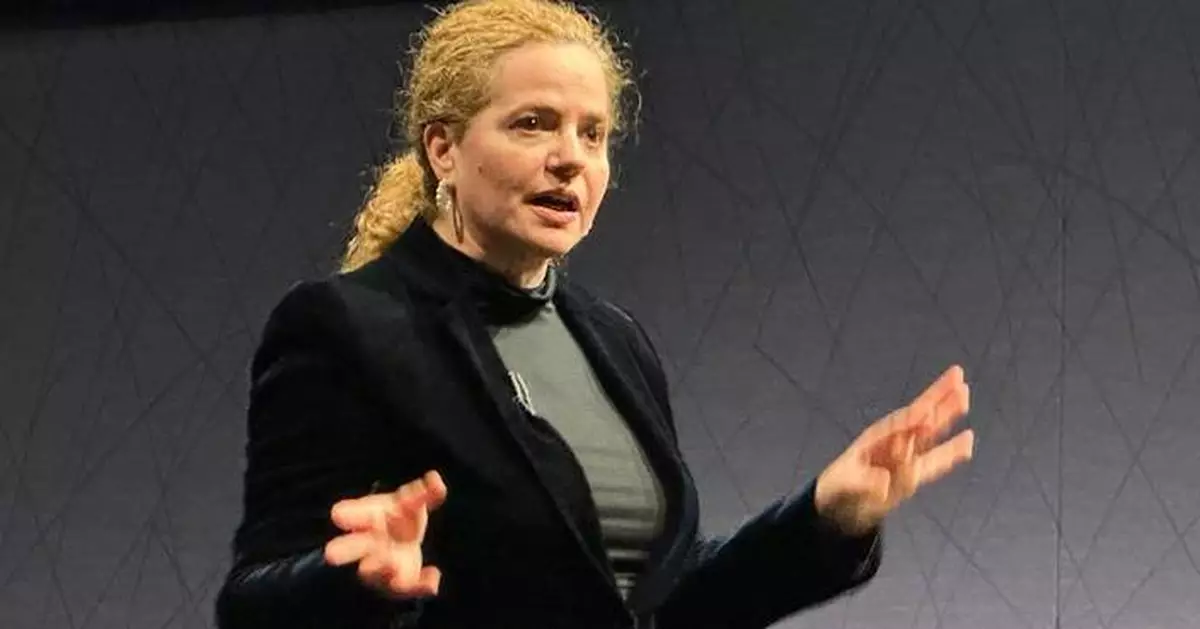
LONDON (AP) — There’s a new generation this season at the Royal Opera in London, where Jakub Hrůša took over after Antonio Pappano’s 22-year reign as music director, and Speranza Scappucci became the first principal guest conductor in three decades.
Hrůša led the company’s first new staging of Puccini’s “Tosca” since 2006 and its first production of Janáček’s “The Makropulos Case” this fall while Scappucci conducted a revival of Verdi’s “Les Vêpres Siciliennes” in the rarely performed original French version. Hrůša conducts a revival of Britten’s “Peter Grimes” in May.
“Every little bit counts,” Hrůša said. “It’s almost every nonverbal gesture you do in every rehearsal leads in a sum to a successful career, if you know what I mean. I very much believe this is much more important than proclamations of fantastically sounding visions on paper.”
Pappano, 66, led Covent Garden from 2002-24, succeeding Bernard Haitink and starting as the youngest music director in the company’s history. He left and became music director of the London Symphony Orchestra.
Now 44, Hrůša was born in the Czech city of Brno and studied at Prague’s Academy of Performing Arts. He was chief conductor of the Prague Philharmonia from 2008-15, has been chief conductor of Germany’s Bamberg Symphony since 2016-17 and is to replace Semyon Bychov as chief conductor of the Czech Philharmonic in 2028-29.
He made his Royal Opera debut in 2018 leading Bizet’s “Carmen” and is to conduct three productions per season. While his primary residence is in London and he maintains a home in Prague, he stores his scores at a study in Bamberg.
“I usually go there in the way of a hermit, if you allow, alone, without family and just focused,” he said.
Scappucci, 52, grew up in Rome, attended the Conservatorio di Musica Santa Cecilia and then The Juilliard School, thinking she would work in opera as a rehearsal pianist and coach. After assisting Riccardo Muti, she became a conductor, was music director of Belgium’s Opéra Royal de Wallonie from 2017-22 and became the first Italian woman to conduct at Milan's Teatro alla Scala.
She first led the Royal Opera in Verdi’s “Attila” in 2022 and was hired as its first principal guest conductor since Daniele Gatti from 1994-97, committing to at least one production each season and sometimes two. She is also artistic director in 2026 and 2027 MITO SettembreMusica, an annual festival in Milan and Turin.
Scappucci is among the women conductors breaking through in classical music. She frequently thinks back to Maria Borzatti, a childhood piano teacher in the Rome building where her parents still live.
“Speranza, remember, people will come and go in your life,” Scappucci recalled her saying. “You will have big loves, relationships. A boyfriend will dump you or things will work out or not work out, but music will never abandon you. It’s something that will always stay with you.”
Hrůša and Pappano plan with Covent Garden director of opera Oliver Mears, director of casting Peter Katona and associate director Netia Jones.
“I love working with Jakub because he has a great vision for the future and he’s a great musician and a really, really warm human being,” Scappucci said.
Hrůša says his goals include “a beautiful openness of everyone to be kind of ready to do anything which feels a stimulating discovery.”
Big opera companies tend to pivot slowly, like ocean liners, with scheduling starting five years in advance. Performances, directors and co-productions with other companies are factors.
And there are practical considerations.
“Of course, the opera house has to live well financially and therefore we have to guarantee that the most favorite and beloved opera pieces which always draw attention of general public are performed regularly,” Hrůša said.
Hrůša’s selections will include Czech operas, and Scappucci’s will lean toward bel canto, Verdi and Puccini.
Scappucci also has a major upcoming work at Paris’ Opéra-Comique, where she will lead the seldom-heard French version of Donizetti’s “Lucie de Lammermoor” starting April 30, followed by the more familiar Italian “Lucia di Lammermoor” at La Scala beginning June 26.
Carnegie Hall executive director Clive Gillinson, a former LSO head, said the change provides an opportunity for programming initiatives.
“It redefines who they are. Of course they’ll miss Tony — he’s had an extraordinary impact there,” Gillinson said. “Are there any different things one is wanting to say, wanting to do? One has to keep redefining our art and never stand still.”
While orchestras have different programs each week, by its nature, staged opera can lead to deeper relationships among cast, stage crew, singers, conductors and production teams.
“I like the idea of going in every day and being at the stagings and seeing what happens because this way you can build,” Scappucci said in a coffee shop by the opera house ahead of her first performance in her new role. “We arrive tonight at our opening night knowing that for a month we’ve done everything possible to make it the best we can.”
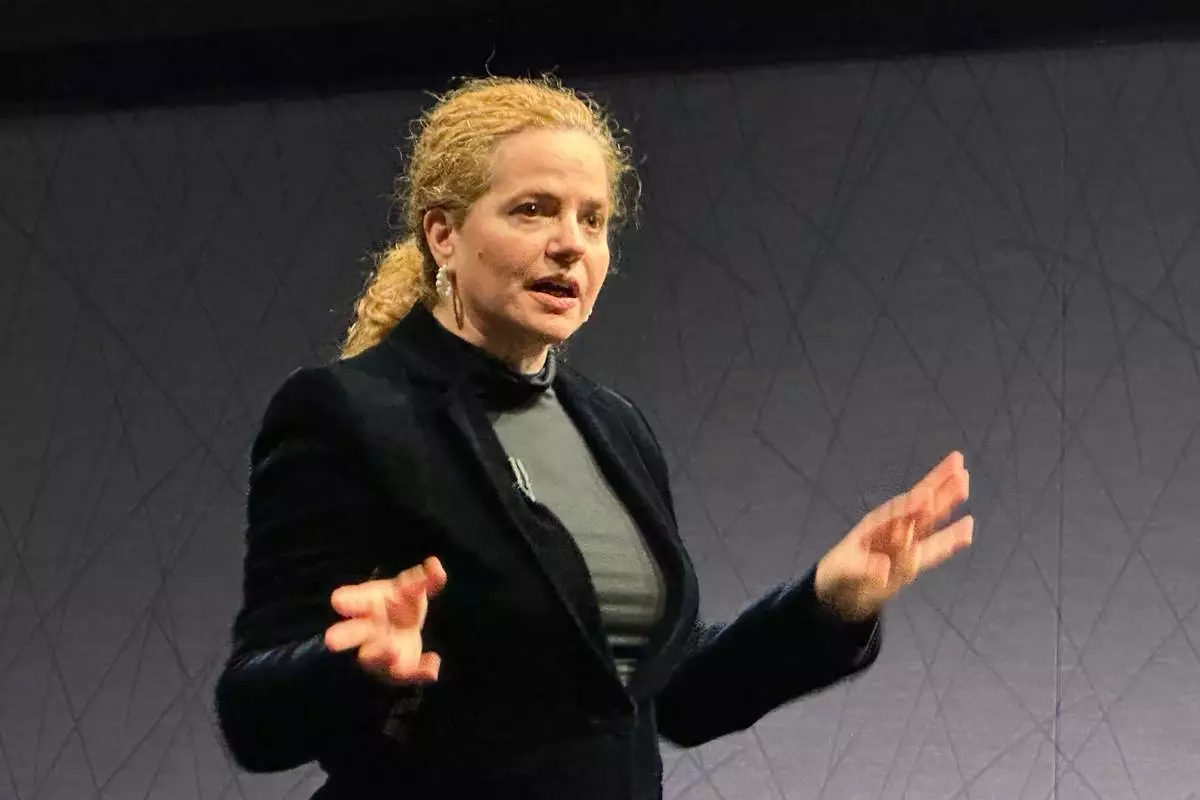
Speranza Scappucci conducts a masterclass at The Juilliard School in New York on Tuesday, Dec. 2, 2025. (AP Photo/Ron Blum)
PROVIDENCE, R.I. (AP) — Catholic priests in Rhode Island preyed on hundreds of children for decades, getting away with sexual abuse largely due to a system where bishops prioritized minimizing scandal as the diocese maintained a secret archive to conceal the revelation of more victims.
These findings were among the many sobering details released Wednesday as part of a multiyear investigation into the Catholic Diocese of Providence, Rhode Island, led by Attorney General Peter Neronha.
The report was designed to spark a “full reckoning” of the abuse that had long remained elusive inside the smallest state in the U.S., home to the country’s largest Catholic population per capita, with nearly 40% of the state identifying as Catholic. Neronha, himself a Catholic, sided with the victims who have argued that not enough has yet been done to address the problem, more than two decades after it was widely exposed in the nearby Boston diocese.
“Not until now has there been a comprehensive review of this painful chapter in our state’s history, with a view toward offering transparency, accountability, and systemic reforms that will, I hope, lessen the likelihood of future child sexual abuse, not just within the Diocese of Providence, but in our community as a whole,” Neronha wrote in the report.
The investigation found that 75 Catholic clergy molested more than 300 victims since 1950, but officials stressed that the number of victimized children and abusive priests is likely much higher.
The diocesan records, described as “damning” in the report, revealed that the diocese often transferred accused priests to new assignments without thoroughly investigating complaints or contacting law enforcement.
This includes the Diocese of Providence opening a “spiritual retreat-style facility” in the early 1950s, where several accused priests were sent for treatmentwith the goal of returning to work. This practice evolved into sending accused priests to more formal “treatment centers” after determining clergy abuse may be a mental health problem.
The report said the diocese’s “overreliance and misplaced faith” in the treatment centers was at best “absurdly pollyannaish.”
By the 1990s, accused priests were sometimes placed on sabbatical leave.
For example, the report says priest Robert Carpentier was accused in 1992 of sexual abuse by the family of a 13-year-old victim. Carpentier confirmed the abuse took place in the 1970s and resigned.
Carpentier was sent to a treatment center in Connecticut and eventually went on sabbatical at Boston College. He remained on a “leave of absence” until his official retirement in 2006 and received support from the diocese until he died in 2012.
Overall, the majority of cases involving accused priests avoided accountability from both law enforcement and the diocese.
Neronha said his office has charged four current and former priests for sexual abuse they allegedly committed while serving in the diocese between 2020 and 2022. Three of those priests are still awaiting trial. The fourth priest died after being deemed incompetent to stand trial in 2022.
In total, only 20, or about 26% of the clergy identified in the report, ever faced criminal charges, and just 14 clergy were convicted. A dozen accused clergy were laicized or dismissed from the clerical state.
One survivor in the report shared that he was groomed before he was sexually abused by Monsignor John Allard, who served at Immaculate Conception Church in Cranston in 1981.
The survivor, who is not named in the report, said Allard gave him attention and physical affection between seventh and eighth grade. By ninth grade, Allard brought the young teenager to the priest’s bed, took off the victim’s clothing and began fondling his penis.
“He never asked me for a hug, he never asked me if I wanted a hug, his comment to me was always, ‘You need a hug,’ and that’s something that I can hear him saying very clearly to this very day,” the survivor told officials in 2013.
While a review board deemed the victim’s abuse credible, then-Providence Bishop Thomas Tobin intervened, asking the Vatican’s powerful doctrine office to allow Allard to retire without being removed from the priesthood. The Vatican agreed.
Sometimes, even those tasked with reviewing abuse cases were also abusers. In 2021, priest Francis Santilli received a child sexual abuse complaint after serving on Rhode Island’s diocese review board. Santilli stepped down, but remained in active ministry even after receiving additional abuse complaints in 2014 and 2021. Santilli wouldn’t be removed until 2022.
“Only the Diocese can explain why this plainly necessary action took so long,” the report says.
Neronha first launched the investigation in 2019, nearly a year after a Pennsylvania grand jury report found more than 1,000 children had been abused by an estimated 300 priests in that state since the 1940s. The 2018 report is considered one of the broadest inquiries into child sexual abuse in U.S. history.
However, unlike Pennsylvania, Rhode Island law doesn’t allow grand jury reports to become public — a hurdle that Neronha has long fought to change.
Instead, Neronha had to enter into an agreement with the diocese to access hundreds of thousands of records of abuse that spanned decades.
While Neronha said the church cooperated, handing over 70 years of what became known as the “secret archive,” or files containing internal investigations, civil settlement records of sexual abuse cases, treatment costs and more.
Yet Neronha says the arrangement “was not without important limits, or without delays.”
“It repeatedly refused my team’s requests for interviews of Diocesan personnel responsible for overseeing the Diocese’s investigations and response to child sexual abuse allegations,” Neronha wrote about the diocese.
Furthermore, an unknown number of victims likely died before coming forward, while some church records have been lost or even destroyed surrounding possible abusive priests. It’s also common for child sexual abuse victims to take decades before coming forward with their stories.
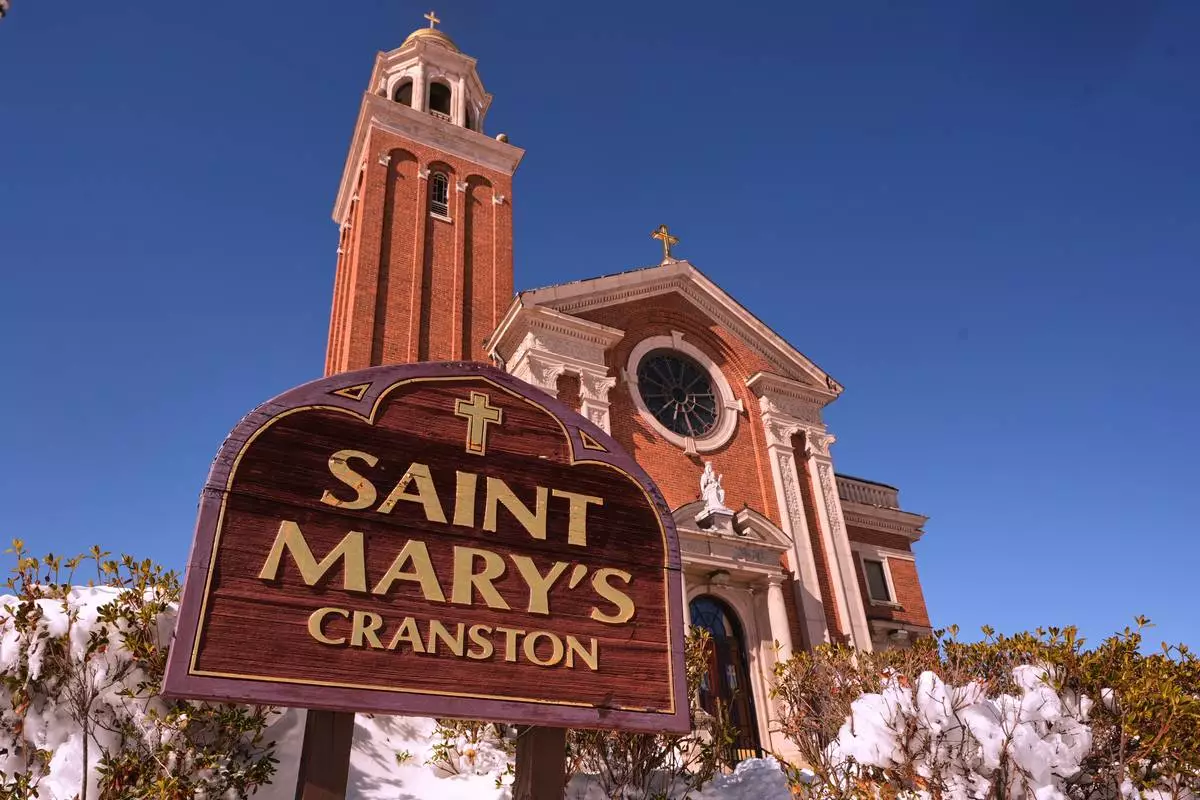
St. Mary's Church is seen Tuesday, Feb. 24, 2026, in Cranston, R.I. (AP Photo/Charles Krupa)
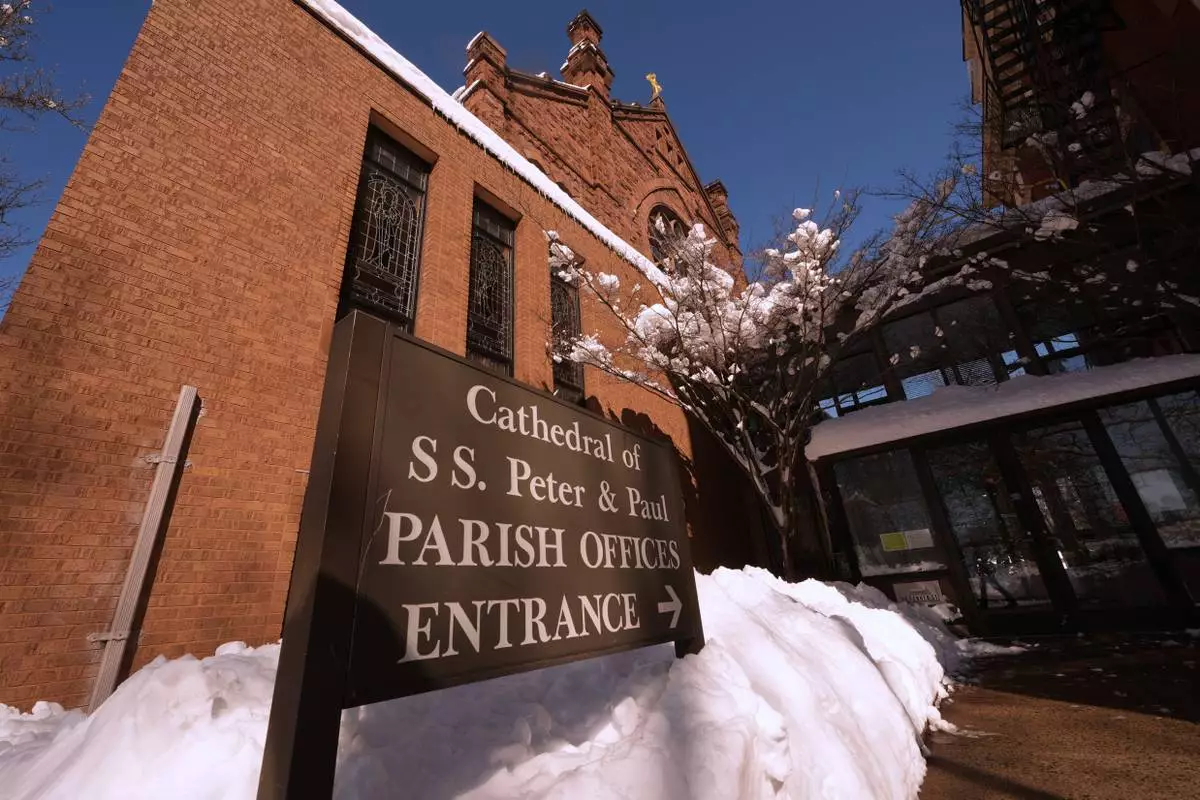
Cathedral of Saints Peter and Paul, which serves as the home church of the Roman Catholic Diocese of Providence, is seen Tuesday, Feb. 24, 2026, in Providence, R.I. (AP Photo/Charles Krupa)
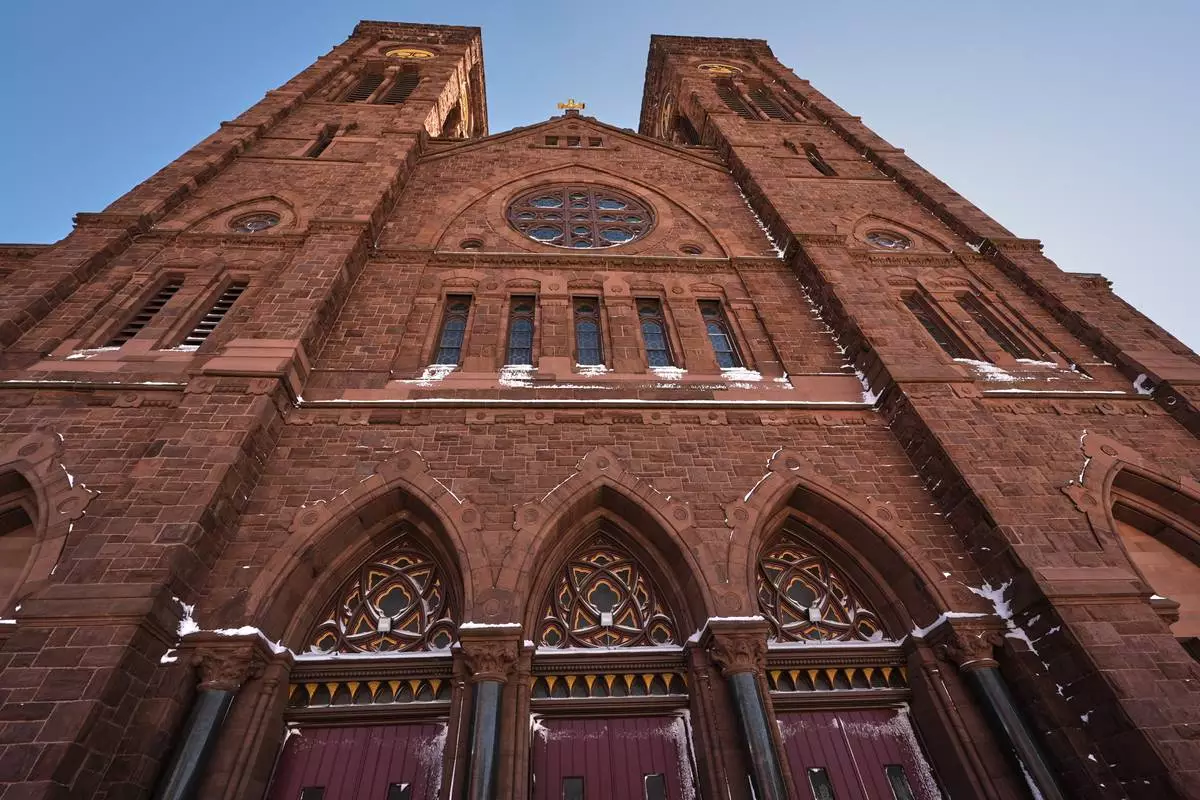
Cathedral of Saints Peter and Paul, which serves as the home church of the Roman Catholic Diocese of Providence, is seen Tuesday Feb. 24, 2026, in Providence, R.I. (AP Photo/Charles Krupa)
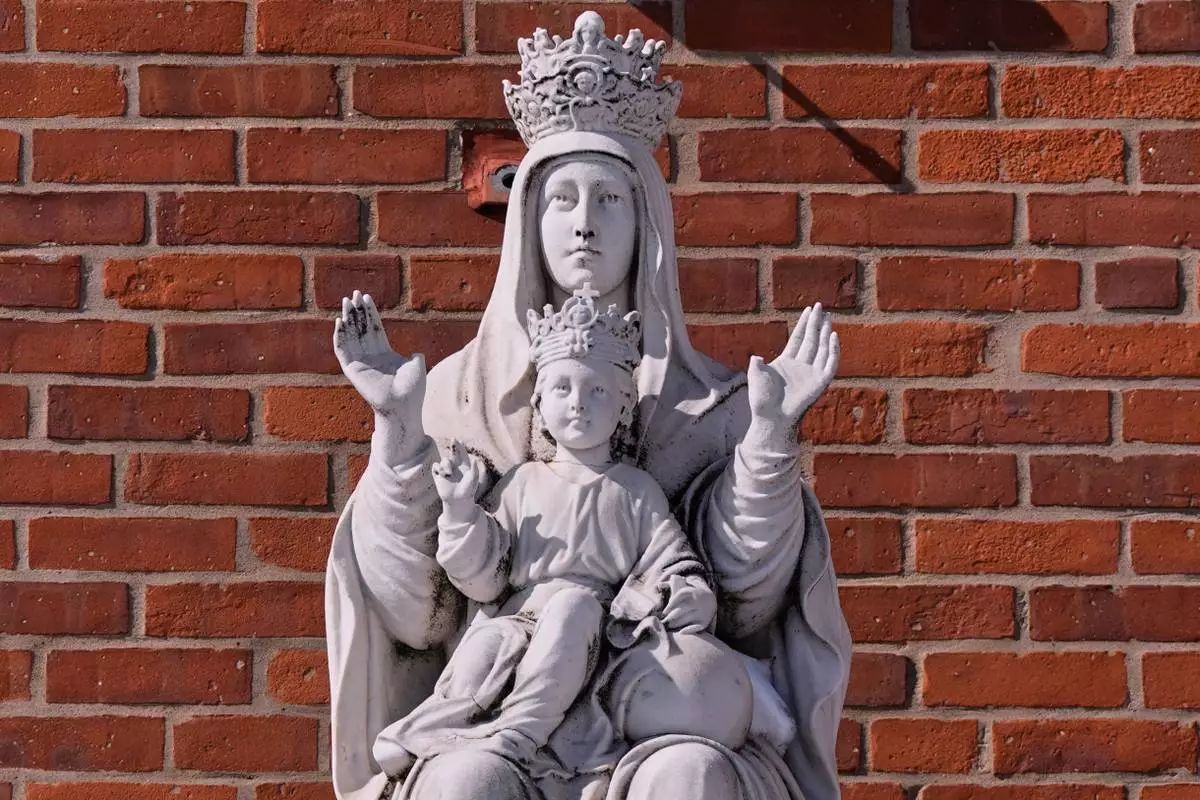
A statue of the Virgin Mary and baby Jesus is displayed outside St. Mary's Church, Tuesday, Feb. 24, 2026, in Cranston, R.I. (AP Photo/Charles Krupa)

FILE - Attorney General Peter Neronha gives a victory speech after winning a second term, during an election-night gathering of Rhode Island Democratic candidates and supporters on Nov. 8, 2022, in Providence, R.I. . (AP Photo/Mark Stockwell, File)