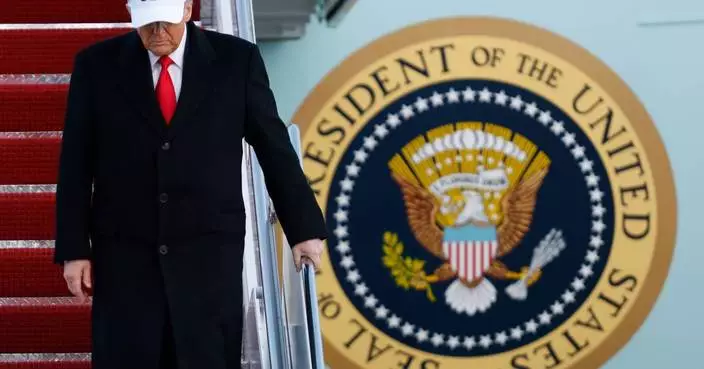
WASHINGTON (AP) — President Donald Trump said Wednesday made a vague statement that he’s been told “on good authority” that plans for executions in Iran have stopped, even as Tehran has indicated fast trials and executions ahead in its crackdown on protesters.
The U.S. president’s claims, which were made with few details, come as he’s told protesting Iranians in recent days that “help is on the way” and that his administration would “act accordingly” to respond to the Iranian government. But Trump has not offered any details about how the U.S. might respond and it wasn’t clear if his comments Wednesday indicated he would hold off on action.
“We’ve been told that the killing in Iran is stopping -- it’s stopped -- it’s stopping,” Trump said at the White House while signing executive orders and legislation. “And there’s no plan for executions, or an execution, or executions -- so I’ve been told that on good authority.”
Trump did not specify where he had received that information but only described it as “very important sources on the other side.”
Trump said he would “find out” later if it was true, but he didn't explain how.
“I hope it’s true," he said. "Who knows?”
When asked if that meant he was not planning to take any action against the Iranian government, Trump said: “We’re going to watch it and see what the process is. But we were given a very good statement by people that are aware of what’s going on.”
The president on Tuesday consulted with his national security team about next steps after telling reporters he believed the killing in Iran was “significant.”
Vice President JD Vance, Secretary of State Marco Rubio and key White House National Security Council officials began meeting last Friday to develop options for Trump, ranging from a diplomatic approach to military strikes.
The Iranian security force crackdown on the demonstrations has killed at least 2,586, the U.S.-based Human Rights Activists News Agency reported.
On Wednesday, Iranian officials signaled that suspects detained in nationwide protests would face fast trials and executions while the Islamic Republic promised a “decisive response” if the U.S. or Israel intervene in the domestic unrest.
The threats emerged as some personnel at a key U.S. military base in Qatar were advised to evacuate by Wednesday evening following Trump’s escalated warnings of potential military action over the killing of peaceful demonstrators.
Mohammad Pakpour, commander of Iran’s paramilitary Revolutionary Guard, reiterated Iranian claims, without providing evidence, that the U.S. and Israel have instigated the protests and that they are the real killers of protesters and security forces who have died in the turmoil, according to Iran’s semiofficial Tasnim news agency.
He added that those countries will “receive the response in the appropriate time.”
Earlier Wednesday, Gholamhossein Mohseni-Ejei, Iran’s judiciary chief, said the government must act quickly to punish more than 18,000 people who have been detained through rapid trials and executions. Mohseni-Ejei’s comments about rapid trials and executions were made in a video shared by Iranian state television online.
“If we want to do a job, we should do it now. If we want to do something, we have to do it quickly,” he said. “If it becomes late, two months, three months later, it doesn’t have the same effect. If we want to do something, we have to do that fast.”
The comments stand as a direct challenge to Trump, who warned Iran about executions in an interview with CBS aired Tuesday. “If they do such a thing, we will take very strong action,” Trump said.
Amiri reported from New York.
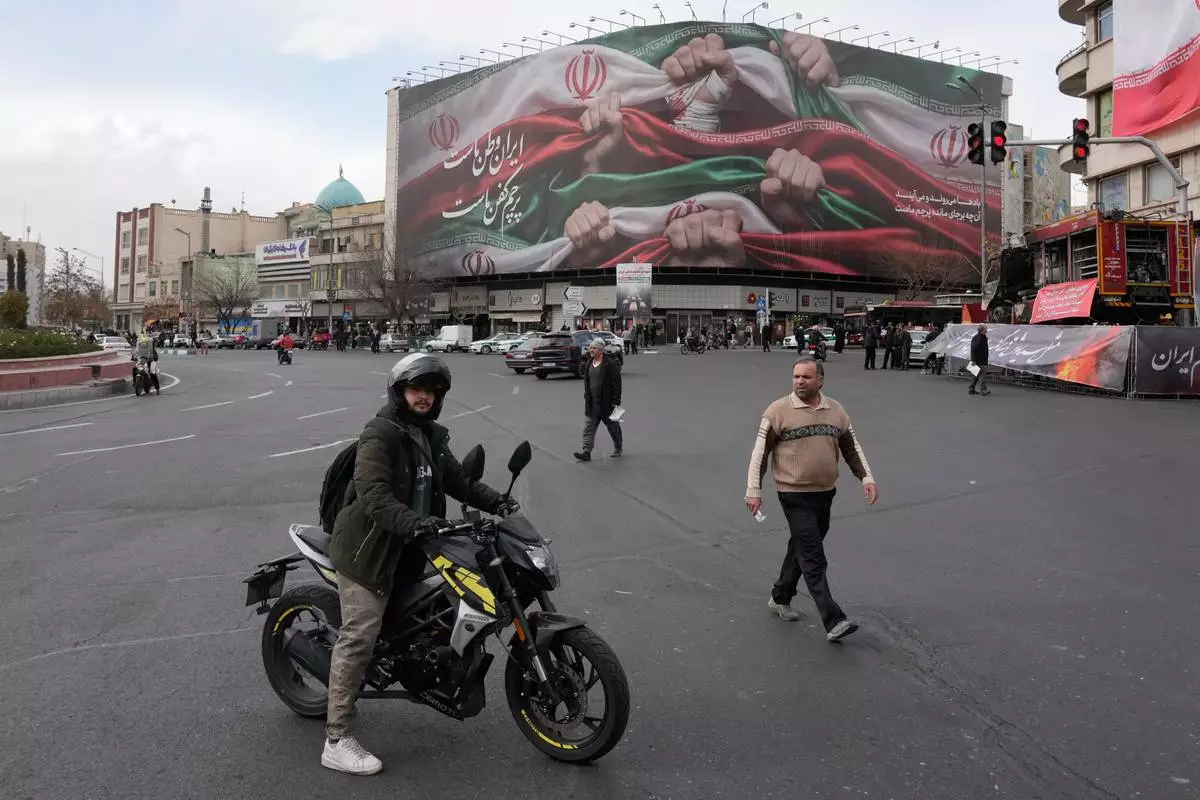
A man stands with his motorbike in front of a huge banner showing hands holding Iranian flags as a sign of patriotism, in Tehran, Iran, Wednesday, Jan. 14, 2026. (AP Photo/Vahid Salemi)
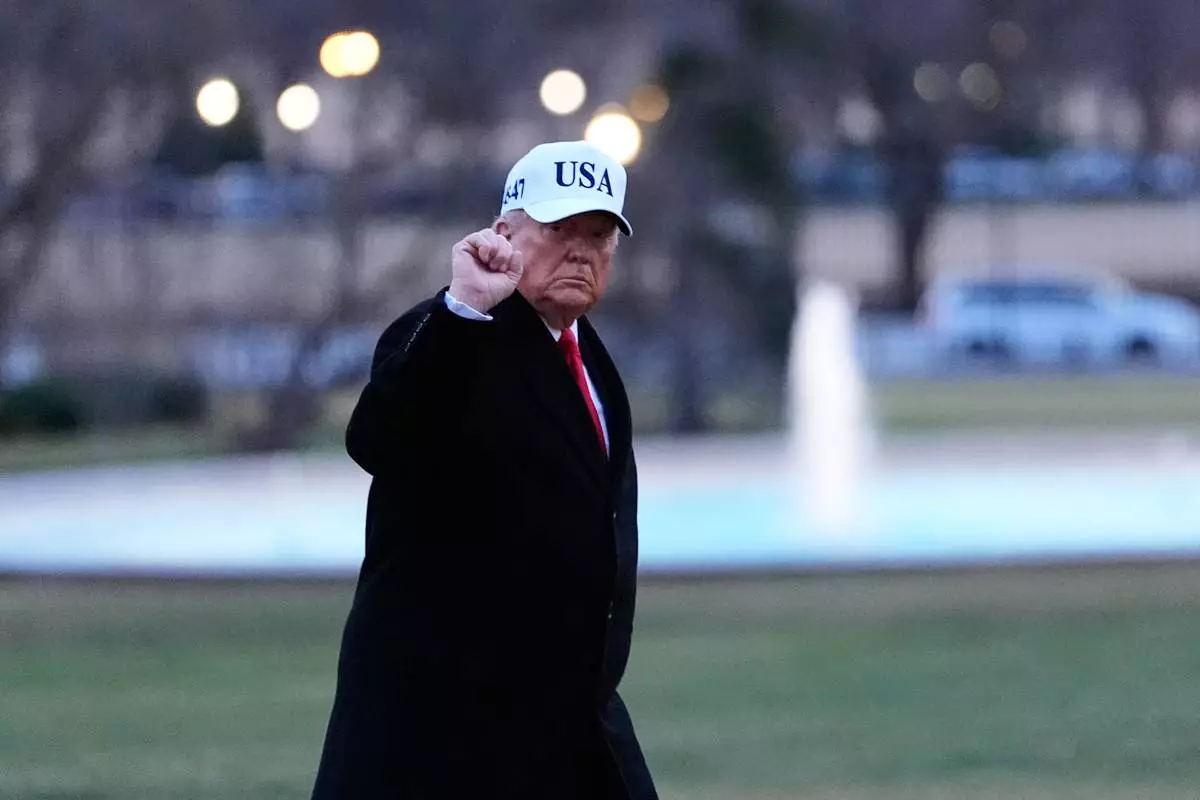
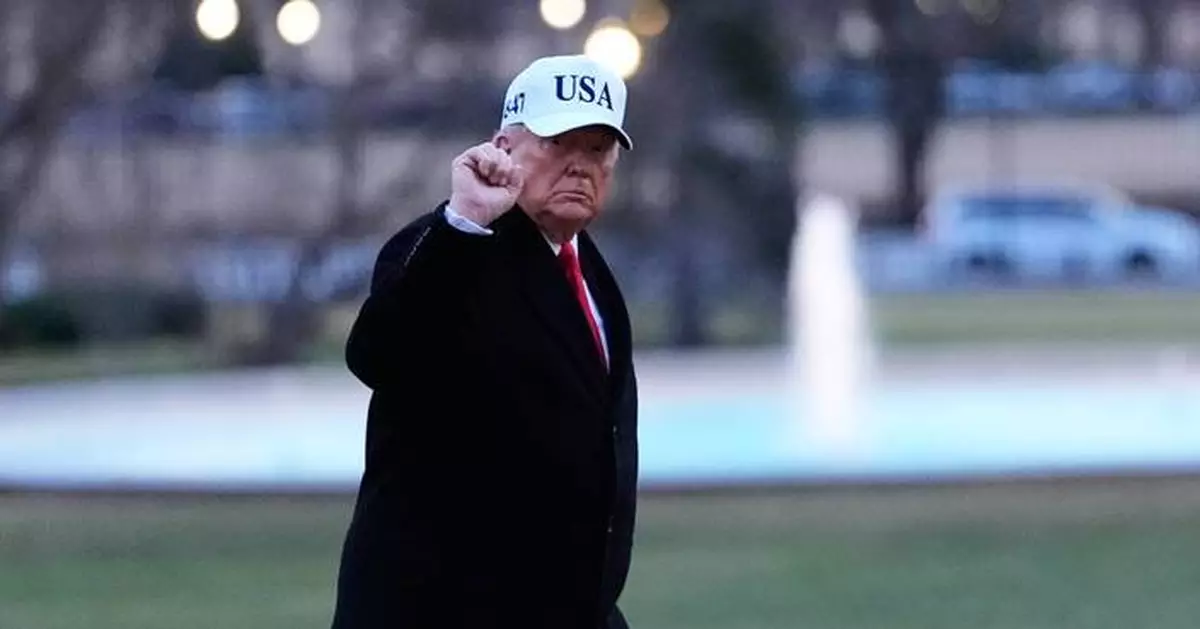
President Donald Trump gestures as he walks from Marine One after arriving on the South Lawn of the White House, Tuesday, Jan. 13, 2026, in Washington. (AP Photo/Alex Brandon)
CARACAS, Venezuela (AP) — Venezuela’s acting President Delcy Rodríguez signaled Wednesday that the country would continue releasing prisoners detained under former President Nicolás Maduro in what she described as “a new political moment” since his ouster by the United States earlier this month.
It appeared to be an understatement for the former Maduro loyalist now tasked with placating an unpredictable American president who says he’ll “run” Venezuela, while also consolidating power in a government that long has seethed against U.S. meddling.
Rodríguez opened her first press briefing since Maduro's arrest by U.S. forces with a conciliatory tone. Addressing journalists from a red carpet at the presidential palace, she offered assurances that the process of releasing detainees — a move reportedly made at the behest of the Trump administration — “has not yet concluded.” A Venezuelan human rights organization estimates about 800 political prisoners are still being detained.
The 56-year-old lawyer and political veteran pitched a “Venezuela that opens itself to a new political moment, that allows for ... political and ideological diversity.”
Unlike past speeches directed at her domestic audience that echoed Maduro’s anti-imperialist rhetoric, Rodríguez did not mention the U.S. — or the dizzying pace at which Venezuela-U.S. relations were evolving.
But she criticized organizations that advocate on behalf of prisoners’ rights. She pledged “strict” enforcement of the law and credited Maduro with starting the prisoner releases as a signal that her government meant no wholesale break from the past.
“Crimes related to the constitutional order are being evaluated,” she said, in apparent reference to detainees held on what human rights groups say are politically motivated charges. “Messages of hatred, intolerance, acts of violence will not be permitted.”
Flanked by her brother and National Assembly President Jorge Rodríguez, as well as hard-line Interior Minister Diosdado Cabello, she took no questions. Cabello, she said, was coordinating the prisoner releases, which have drawn criticism for being too slow and secretive.
Despite sanctioning her for human rights violations during his first term, President Donald Trump has enlisted Rodríguez to help secure U.S. control over Venezuela’s oil sales. To ensure the former Maduro loyalist does his bidding, he threatened Rodríguez with a “situation probably worse than Maduro,” who faces federal drug-trafficking charges from a Brooklyn jail.
In endorsing Rodríguez, who served as Maduro’s vice president since 2018, Trump has sidelined María Corina Machado, the leader of Venezuela’s opposition who won a Nobel Peace Prize last year for her campaign to restore the nation’s democracy. Machado is scheduled to meet with Trump at the White House on Thursday.
After a lengthy career running Venezuela’s feared intelligence service, managing its crucial oil industry and representing the revolution started by the late Hugo Chávez on the world stage, Rodríguez now walks a tightrope, navigating pressures from both Washington and her hard-line colleagues who hold sway over the security forces.
Those tensions were on display in her speech Wednesday, which focused only on the issue of prisoner releases. Venezuela’s leading prisoner rights organization, Foro Penal, has verified at least 68 prisoners freed since her interim government raised hopes for a mass release with a promise to free a “significant number” of prisoners.
Caracas-based Foro Penal reported the release of at least a dozen prisoners on Wednesday, including political activist Nicmer Evans. Machado campaign staffers Julio Balza and Gabriel González, whose detentions were considered to be for political reasons, were also freed on Wednesday, the opposition leader’s party announced.
Earlier this week her interim government released several U.S. citizens, as well as Italian and Spanish nationals and opposition figures.
But it was Maduro who first started the process of releasing prisoners, Rodríguez insisted, apparently pushing back on White House claims that the prisoners were being freed due to U.S. pressure. She said Maduro oversaw the release of 194 prisoners in December of last year because he “was thinking precisely about opening spaces for understanding, for coexistence, for tolerance.”
She claimed her own caretaker government had released 406 detainees, without offering any evidence. Foro Penal estimates that over 800 prisoners were still held in Venezuela’s prison system on political grounds, and has criticized the government's lack of transparency.
Rodríguez did not address those complaints. Instead, she slammed “self-proclaimed nongovernmental organizations” as having “tried to sell falsehoods about Venezuela.”
“There will always be those who want to fish in troubled waters,” she said, trying to present her first press briefing as an effort to counter false narratives and “let the truth be reported.”
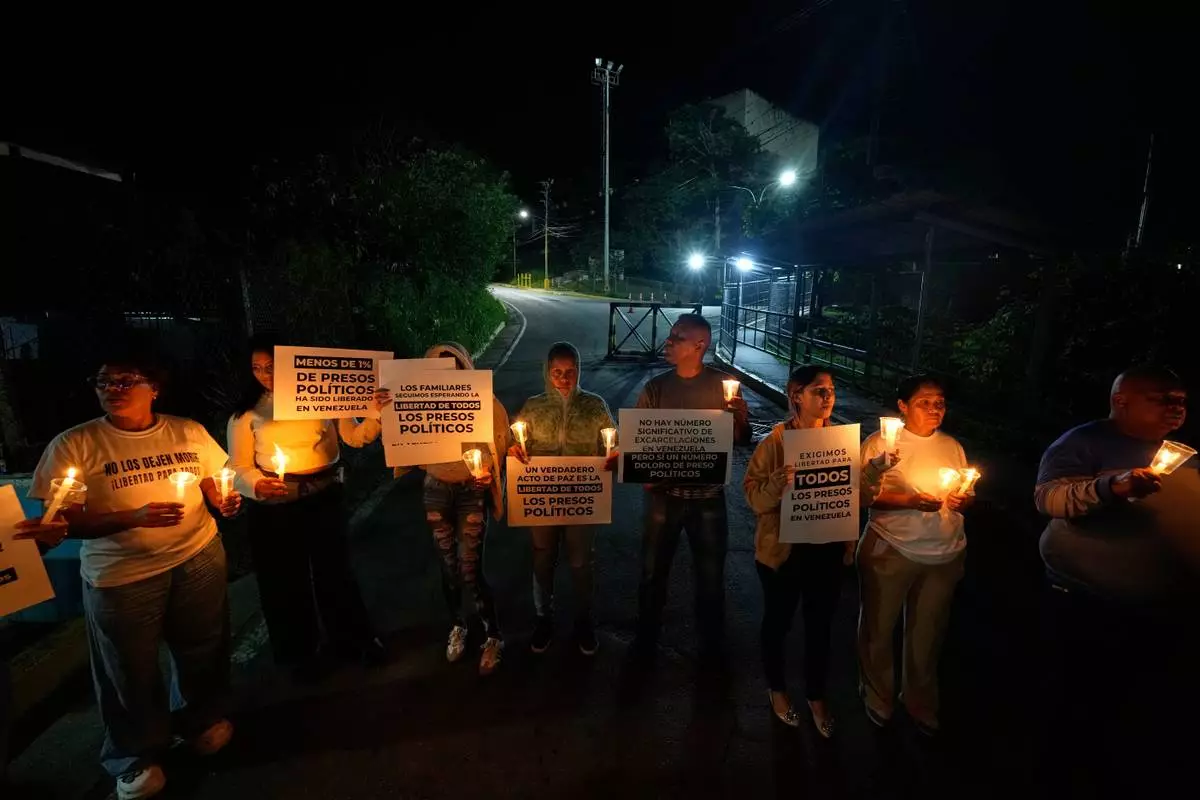
Relatives and friends of political prisoners hold banners and candles calling for their loved ones to be set free outside the Rodeo I prison in Guatire, Venezuela, Friday, Jan. 9, 2026 after the government announced prisoners would be released. (AP Photo/Matias Delacroix)
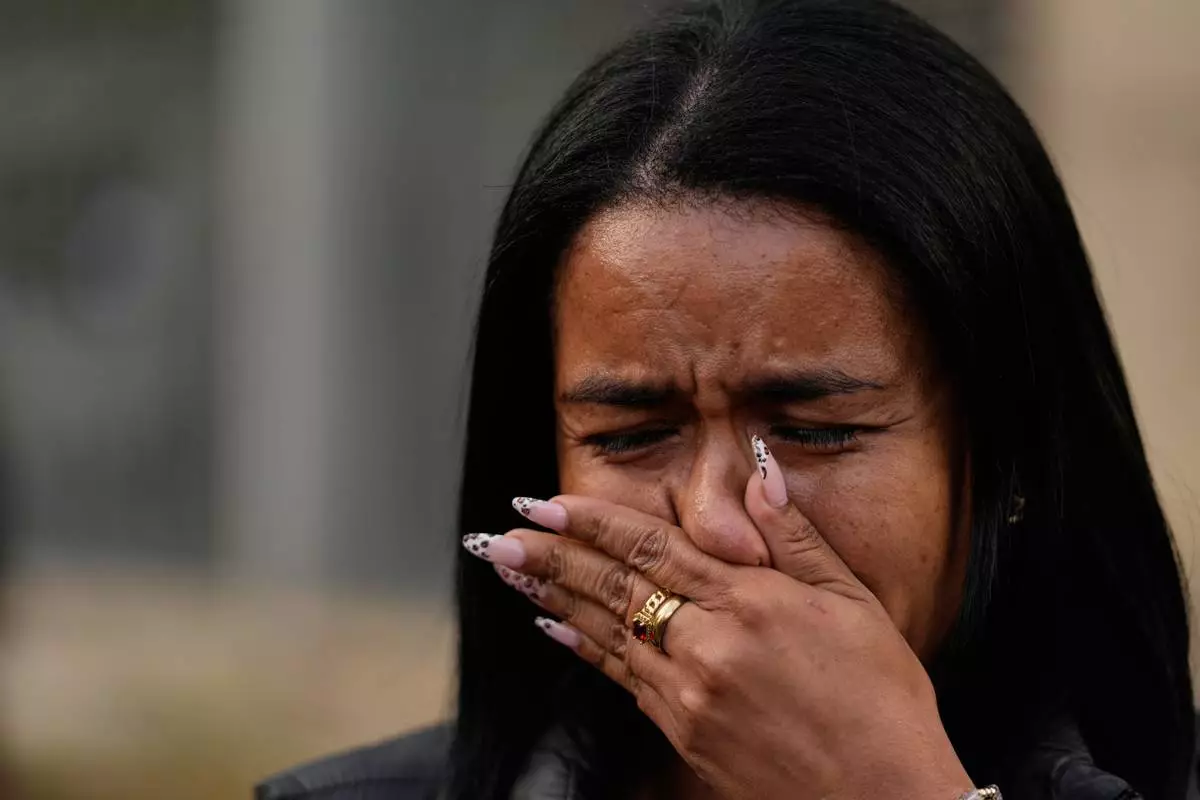
Narwin Gil cries as she waits for news of her detained sister, Marylyn Gil, outside El Helicoide, headquarters of Venezuela's intelligence service and a detention center, in Caracas, Venezuela, Saturday, Jan. 10, 2026. (AP Photo/Matias Delacroix)
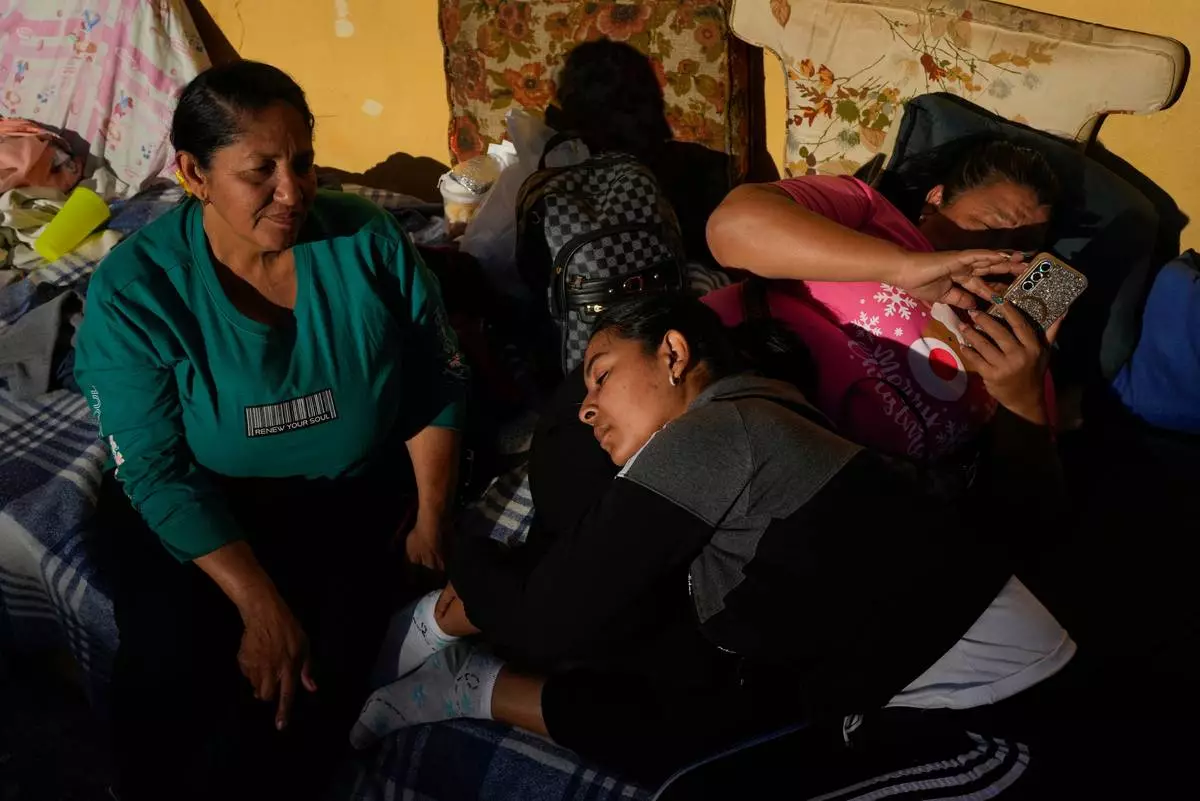
Mileidy Mendoza, center, waits at Zone 7 of the Bolivarian National Police, where her fiancé Eric Diaz is being held as a political detainee in Caracas, Venezuela, Sunday, Jan. 11, 2026, after the government announced prisoners would be released.(AP Photo/Matias Delacroix)
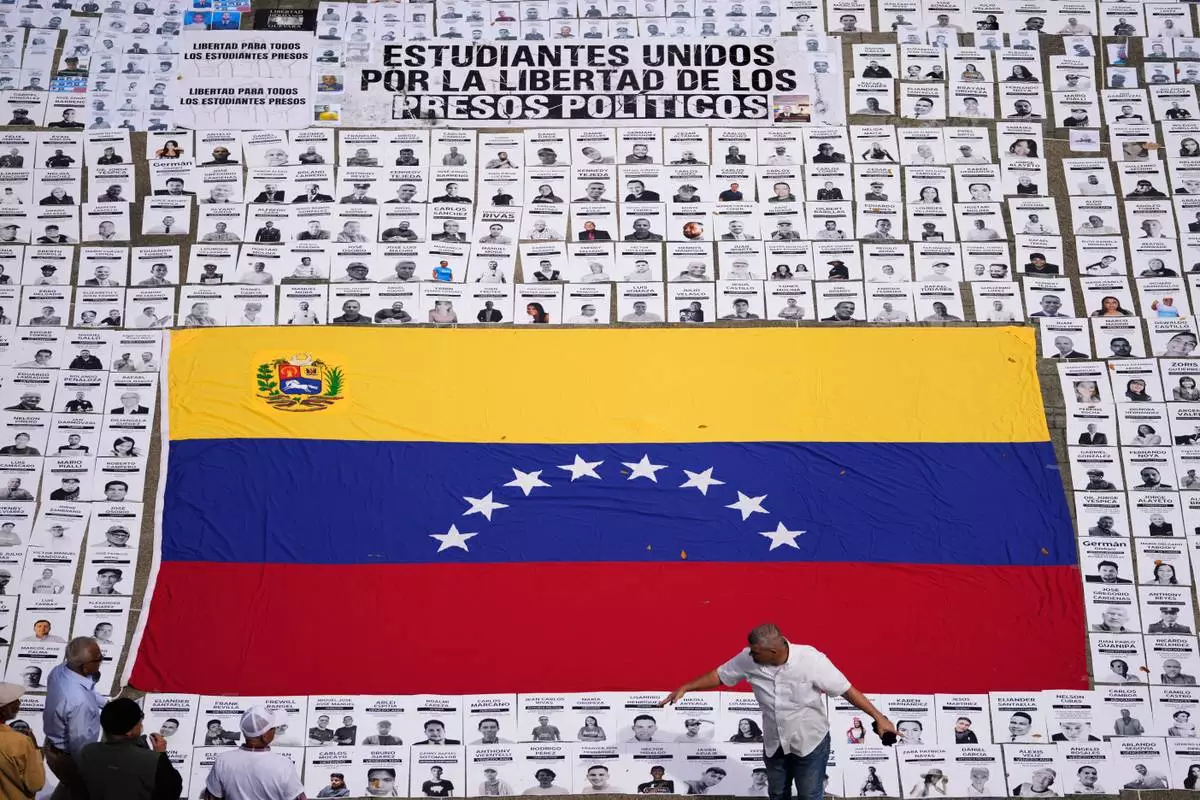
Students lay out photos of people they consider political prisoners at the Central University of Venezuela in Caracas, Venezuela, Tuesday, Jan. 13, 2026. (AP Photo/Matias Delacroix)
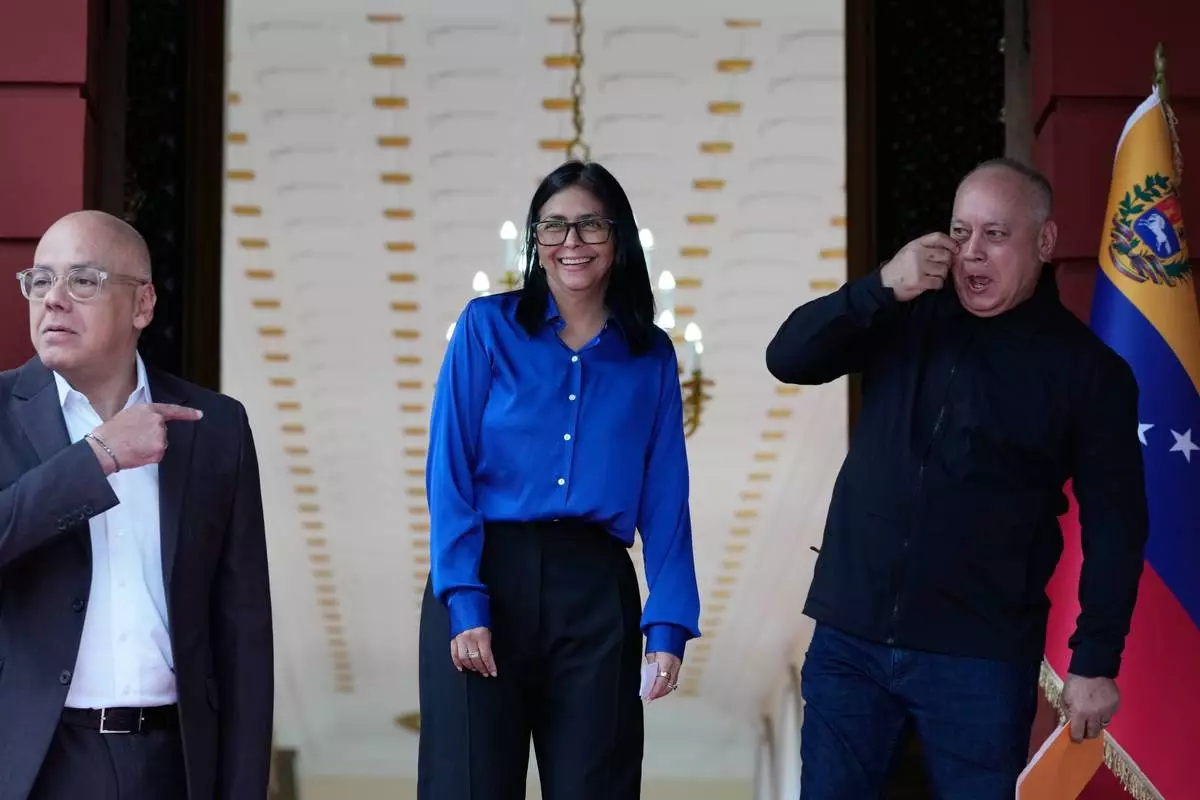
Venezuela's acting President Delcy Rodriguez, center, smiles flanked by Interior Minister Diosdado Cabello, right, and National Assembly President, her brother, Jorge Rodriguez, as they prepare to make a statement at Miraflores presidential palace in Caracas, Venezuela, Wednesday, Jan. 14, 2026. (AP Photo/Ariana Cubillos)