Peaceful protests originally driven by economic conditions in Iran spiraled into more volatile and violent unrests as a result of foreign agents infiltrating the demonstrations, Iranian professor Foad Izadi has said.
Protests have erupted in several Iranian cities since late December over the sharp fall in the national currency, the rial, and long-standing economic hardships. The reported death toll from the unrest on both sides of the security forces and civilians is mounting.
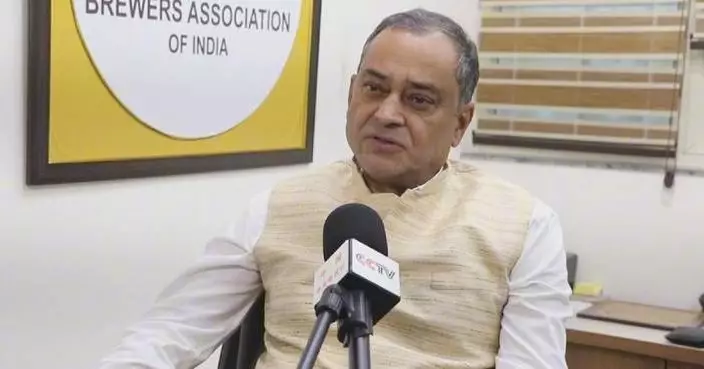
During an interview with China Global Television Network (CGTN), Izadi, a professor of world studies at the University of Tehran, said that what began as peaceful demonstrations in the Iranian capital and across the country soon grew into something far worse as a result of outside interference.
"Initially, we had legitimate protests. Iran's currency fluctuated, and a number of shopkeepers were affected negatively by because of this fluctuation. It was a peaceful protest, nothing happened, no injuries, nothing. But quickly, we had organized opposition, generally led by the former Shah's son, that took over these demonstrations. So in the last 10 days or so, we have had no real demonstrations," he said.
Izadi said that there are signs that certain foreign countries are responsible for fomenting unrest on the ground.
Writing on social media earlier this month, former U.S. Secretary of State Mike Pompeo, who is also a former director of the Central Intelligence Agency, did acknowledge the presence of Israeli agents operating on the ground in Iran, wishing "Happy New Year to every Iranian in the streets. Also to every Mossad agent walking beside them."
"We have had riots. We have had Mossad agents infiltrating these riots and shooting at the police. We have had over 100 police casualties in the last 10 days or so. How do we know that? The former CIA director and former Secretary of State, Mike Pompeo, sent these Mossad agents New Year's message greeting, saying that alongside protesters you have Mossad agents walking, which is true, because Iranian authorities have arrested a number of Mossad agents," Izadi said.
The scholar said the infiltration is an attempt to provoke riots by Israel, which he views as a violent agitator, noting that the country killed over 70,000 Palestinians in the Gaza Strip during its assault on the besieged enclave.
"So we have confirmation on the American side, and we have confirmation on the Iranian side, that this is not a protest. When you have intelligence services of a regime that finished killing 70,000 people just a few months ago infiltrating demonstrations, that is not demonstrations. That's going to be riots," he said.
U.S. President Donald Trump has repeatedly threatened military action against Iran if the country's leadership continued to crack down on protests.
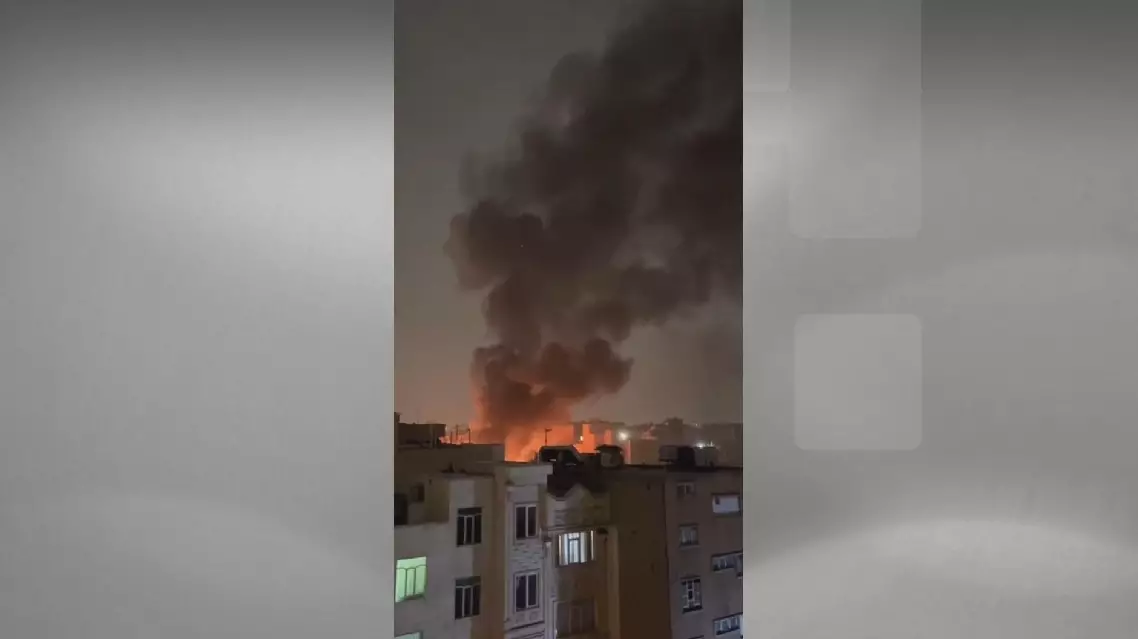
Peaceful protests turned violent with foreign infiltration: Iranian political scholar

U.S. President Donald Trump's administration on Wednesday announced the launch of the second phase of the Gaza peace plan, shifting the focus from ceasefire to demilitarization, technocratic governance and reconstruction.
"Today, on behalf of President Trump, we are announcing the launch of Phase Two of the President's 20-Point Plan to End the Gaza Conflict, moving from ceasefire to demilitarization, technocratic governance, and reconstruction," U.S. presidential special envoy Steve Witkoff posted on social media platform X.
"Phase Two establishes a transitional technocratic Palestinian administration in Gaza, the National Committee for the Administration of Gaza (NCAG), and begins the full demilitarization and reconstruction of Gaza, primarily the disarmament of all unauthorized personnel," he said.
The announcement reiterated the U.S. side's expectation that Hamas would comply fully with its obligations, including the immediate return of the final deceased hostage. The envoy warned that failure to comply "will bring serious consequences."
Following the announcement, Israeli Prime Minister Benjamin Netanyahu said it will not affect Israel's demand that Hamas must make a full effort to return the last body of an Israeli hostage held in Gaza.
Egypt, Qatar and Türkiye announced on Wednesday the completion of forming a Palestinian technocratic committee to administer Gaza, according to a joint statement issued by the Egyptian Foreign Ministry.
The three mediators described the move as "an important development" toward enhancing stability and improving humanitarian conditions in the enclave, noting that the committee is headed by Ali Abdel Hamid Shaath, a veteran engineer and former deputy planning minister in the Palestinian Authority.
The mediators voiced hope that the formation of the committee would pave the way for the implementation of the second phase of the Gaza ceasefire agreement, in line with the U.S.-proposed plan, and help to cement calm and prevent a return to escalation.
The announcement followed a meeting held earlier in the day in Cairo among Palestinian factions and political forces, which affirmed in a statement their full commitment to implementing the Gaza ceasefire agreement and called on Israel to halt its aggression and open border crossings.
A delegation of senior leaders from Hamas arrived in Cairo on Tuesday evening, headed by Khalil al-Hayya, the movement's leader in Gaza.
Hamas said in a statement that the delegation would hold talks with Egyptian officials on completing the implementation of the ceasefire agreement, accelerating the transition to its second phase, including the formation of an independent administrative committee to manage Gaza, and completing the withdrawal of Israeli forces from the enclave.
The Gaza ceasefire agreement continues to face challenges amid mutual accusations between Hamas and Israel of violations, with casualties still being reported since its entry into force.
Brokered by Egypt, Qatar, Türkiye, and the United States, an ongoing ceasefire between Israel and Hamas took effect on Oct. 10, 2025, following two years of conflict. However, Gaza's health authorities said Wednesday that at least 449 people have been killed and 1,246 injured since the ceasefire began.
Since Oct. 7, 2023, Israel's military campaign in Gaza has killed 71,439 Palestinians and wounded 171,324 others, while causing widespread destruction and worsening humanitarian conditions in the enclave, the authorities added.
U.S. announces launch of phase 2 of Gaza peace plan