WASHINGTON (AP) — It’s starting to look like an exodus.
Dozens of U.S. House members have announced they are not running for reelection, putting a record number of seats up for grabs at this point in the midterm election cycle.
Some are seeking other offices, while others are retiring after decades of service. A few members are departing instead of running in unfamiliar districts after their state’s leaders redrew the boundaries during an unusual flurry of redistricting.
More than 10% of incumbents plan to leave, which is the highest percentage at this point in the calendar since at least President Barack Obama's administration, according to an Associated Press analysis of House retirements going back to 2013.
Forty-seven current representatives — 21 Democrats and 26 Republicans — have announced they will retire from the House after this year, as of Wednesday. That total doesn’t include the nine members who resigned or died this term and whose seats will be filled before the November general election.
Members of the current Congress have announced departure plans earlier than in years past. In the first half of 2025, 15 representatives announced they were planning on leaving the House. In the previous decade, an average of nine representatives announced retirements in the first six months of a term.
These early retirement announcements have come as President Donald Trump and Republican leadership try to preserve a narrow House majority. The president’s party usually loses congressional seats in midterm elections. In recent years, that’s meant more members of the party in power have headed for the exits. This year, slightly more Republicans than Democrats have announced retirements.
Three factors have contributed to the spike in retirements this year.
The first is that a large number of Senate seats and governors’ offices are open or competitive. Eleven senators have announced they would vacate their seats at the end of the term, either to seek other office or to retire. And 36 states have governors’ elections this year, 15 of which have term-limited incumbents.
In total, 27 — a majority of retiring House members — said they would seek another office. Fourteen said they would seek Senate seats, and 12 announced campaigns for governor. Some have since dropped out of those races.
The second is systemic: A larger number of older lawmakers are retiring because Congress itself is older. As the national population has aged and long-running trends have made incumbents increasingly likely to win reelection, Congress has steadily gotten older, especially this century.
As of Jan. 1, the median age of all voting members of the 119th Congress is just under 59 years old. The median House member is 57 and the median senator is almost 65 — both slightly below the record highs reached in the 118th Congress. By contrast, from 1919 to 1999, the median senator never eclipsed 60 years old, and the median representative never surpassed 55.
That age shift is especially evident among retiring legislators. Among all lawmakers leaving after the 119th Congress — including those running for other offices — the median retiring senator is over 68, and the median retiring representative is about 57. When limited to politicians who are not seeking other offices, both groups skew older: The median retiring senator is over 70, and the median retiring representative is 67. Four of the 10 oldest members of Congress are retiring after this term, as of Wednesday.
And the third is unique to 2026. Six states have adopted new congressional maps since the last general election, with more entertaining redistricting in response to Trump’s desire to redraw lines to be more favorable to the Republican Party.
Incumbents in states ranging from California to Texas have been drawn into districts together or have opted out of running in new versions of their districts that are much less favorable.
Only a small number of representatives — two in Texas — have specifically cited redistricting as the reason for their departure. But as more states finalize their lines, others could find themselves running against colleagues or eying the exits.
Current congressional retirement and party makeup data comes from the U.S. House of Representatives Press Gallery’s official casualty list and party breakdown page. Historical retirement data through the 113th Congress (2013-15) was compiled from earlier versions of that webpage, accessed via the Internet Archive.
The Press Gallery distinguishes between members who are retiring and those who die in office or resign. Members who died in office and most members who resigned during their terms are excluded. Representatives who announced their retirement but resigned in that term are classified as “resigned” and therefore excluded. This includes, for example, former representatives like Adam Schiff, D-Calif., and Kelly Armstrong, R-N.D., who retired to seek other offices and resigned several weeks before their final term officially ended. Five representatives are classified as “retiring” because they announced retirements during their final term but resigned three days before that term officially expired: Candice Miller, R-Mich., in the 114th; Michelle Lujan Grisham, D-N.M., in the 115th; Mike Doyle, D-Pa., and G.K. Butterfield, D-N.C., in the 117th; and Jeff Jackson, D-N.C., in the 118th.
Announcement dates were manually collected, based on news reports and official press releases. Representatives who announced plans to run for another office are recorded as running for that office even if they later withdrew from that race.
Associated Press writer Leah Askarinam in Washington contributed to this report.
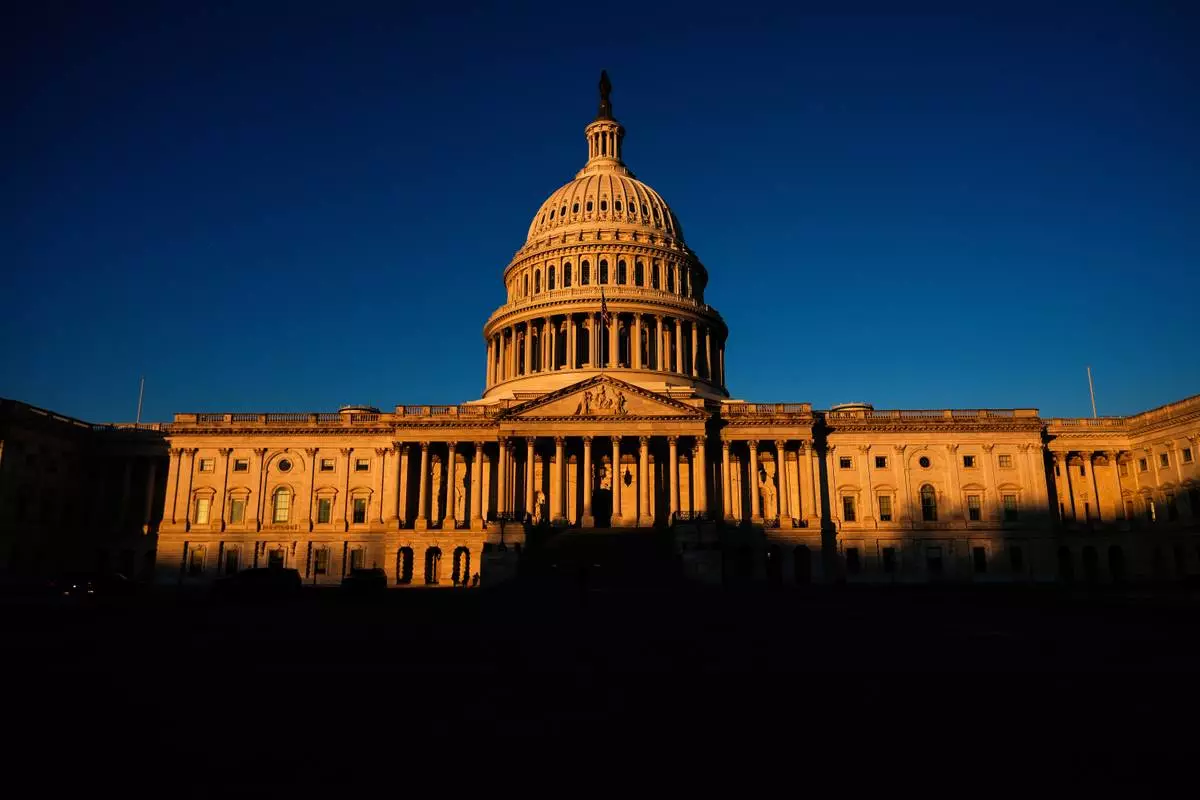
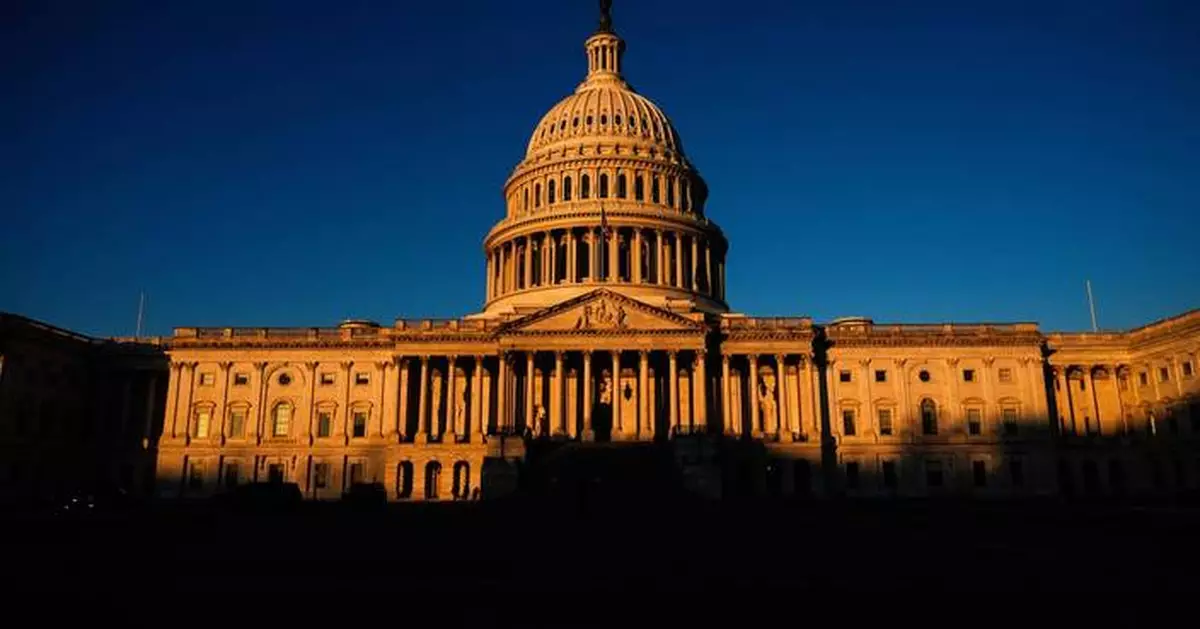
FILE - The U.S. Capitol is seen shortly after sunrise, Dec. 16, 2025, in Washington. (AP Photo/Julia Demaree Nikhinson, File)