A U.S. citizen on her way to a medical appointment in Minneapolis was dragged out of her car and detained by immigration officers, according to a statement released by the woman on Thursday, after a video of her arrest drew millions of views on social media.
Aliya Rahman said she was brought to a detention center where she was denied medical care and lost consciousness. The Department of Homeland Security said she was an agitator who was obstructing ICE agents conducting arrests in the area.
That video is the latest in a deluge of online content that documents an intensifying immigration crackdown across the midwestern city, as thousands of federal agents execute arrests amid protests in what local officials have likened to a "federal invasion.”
Rahman said that she was on her way to a routine appointment at the Traumatic Brain Injury Center when she encountered federal immigration agents at an intersection. Video appears to show federal immigration agents shouting commands over a cacophony of whistles, car horns and screams from protesters.
In the video, one masked agent smashes Rahman's passenger side window while others cut her seatbelt and drag her out of the car through the driver's side door. Numerous guards then carried her by her arms and legs towards an ICE vehicle.
“I'm disabled trying to go to the doctor up there, that's why I didn't move,” Rahman said, gesturing down the street as officers pulled her arms behind her back.
Rahman was caught in a “terrible and confusing position” and had “no where to go,” according to Alexa Van Brunt, Rahman's attorney and director of the MacArthur Justice Center.
“Her only options were to move her car forward in the direction of ICE officers and risk being accused of trying to harm them—which led to Renee Good’s death—or stay stationary, which in the end led to physical violence and abuse,” Van Brunt wrote in a statement.
A spokesperson for the Department of Homeland Security disputed that account in an emailed statement on Thursday, saying that Rahman was an agitator who “ignored multiple commands by an officer to move her vehicle away from the scene.” She was arrested along with six other people the department called agitators, one of whom was accused of jumping on an officer's back.
The department did not specify if Rahman was charged or respond to questions about her assertion that she was denied medical treatment.
The video of Rahman's arrest is one of many that have garnered millions of views in recent days — and been scrutinized amid conflicting accounts from federal officials and civilian eyewitnesses.
Often, what's in dispute pertains to what happened just before or just after a given recording. But many contain common themes: Protesters blowing whistles, yelling or honking horns. Immigration officers breaking vehicle windows, using pepper spray on protesters and warning observers not to follow them through public spaces. Immigrants and citizens alike forcibly pulled from cars, stores or homes and detained for hours, days or longer.
In one video, heavily armed immigration agents used a battering ram to break through the front door of Garrison Gibson’s Minneapolis home, where his wife and 9-year-old child also were inside. The video shot inside the home captures a woman’s voice asking, “Where is the warrant?” and, “Can you put the guns down? There is kids in this house.”
Another video shows ICE agents, including Border Patrol Cmdr. Gregory Bovino, detain two employees at a Target store in Richfield, Minnesota. Both are U.S. citizens who were later released, according to social media posts from family members.
Monica Bicking, 40, was leaving the homeless shelter where she works as a nurse when she took a video that appears to show a federal agent kneeing a man at least five times in the face while several other agents pin him facedown on the pavement in south Minneapolis.
Bicking works full time, so she says she doesn’t intentionally attend organized protests or confrontations with ICE. But she has started to carry a whistle in case she encounters ICE agents on her way to work or while running errands, which she says has become commonplace in recent weeks.
“We’re hypervigilant every time we leave our houses, looking for ICE, trying to protect our neighbors, trying to support our neighbors, who are now just on lockdown,” Bicking said.
Rahman said in her statement that after her detainment, she felt lucky to be alive.
“Masked agents dragged me from my car and bound me like an animal, even after I told them that I was disabled," Rahman said.
While in custody, Rahman said she repeatedly asked for a doctor, but was instead taken to the detention center.
“It was not until I lost consciousness in my cell that I was finally taken to a hospital,” Rahman said.
Rahman was treated for injuries consistent with assault, according to her counsel, and has been released from the hospital.
She thanked the emergency department staff for their care.
“They gave me hope when I thought I was going to die.”
—
Associated Press journalist Rebecca Boone reported from Boise, Idaho.

A person is detained by federal agents near the scene where Renee Good was fatally shot by an ICE officer last week, Tuesday, Jan. 13, 2026, in Minneapolis. (AP Photo/Adam Gray)

CORRECTS FROM A PROTESTER TO A PERSON - A person is detained by federal agents near the scene where Renee Good was fatally shot by an ICE officer last week, Tuesday, Jan. 13, 2026, in Minneapolis. (AP Photo/Adam Gray)
Iran fired missiles and drones at targets across the Gulf including oil infrastructure in Saudi Arabia and a ship off the coast of the Emirates, while Israeli and the United States struck targets across the Islamic Republic. Saudi Arabia and other states said they intercepted multiple drone attacks.
Six members of the Iranian women’s soccer team will remain in Australia, Home Affairs Minister Tony Burke said Wednesday, while one of the squad members who was previously granted asylum changed her mind and planned to return to Iran.
U.S. President Donald Trump said in social media posts there were no reports of Iran planting explosives in the Strait of Hormuz, through which 20% of the world’s oil is shipped. The U.S. said it took out more than a dozen minelaying Iranian vessels Tuesday to help prevent any attempt to close the waterway.
Iran's vow not to allow any oil through the strategic strait has led to market volatility and fears of shortages, especially in Asia, which is dependent on oil shipped from the region.
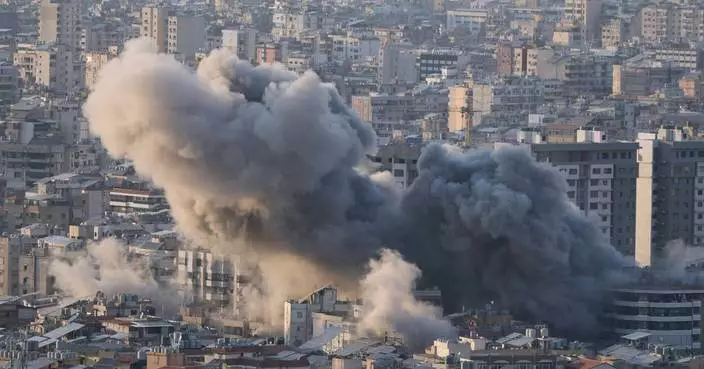
Israel struck a building in the center of the Lebanese capital Beirut as part of its campaign against Hezbollah. The Lebanese group has been carrying out attacks against Israel in support of Iran.
Here is the latest:
The Iranian women’s soccer team is in a hotel in Malaysia awaiting travel arrangements to return home, officials said Wednesday.
Iran’s embassy in Malaysia confirmed the squad members landed in the capital Kuala Lumpur early Wednesday and are expected to depart when flights are available and Iran’s airspace reopens, according to the Bernama news agency.
“They want to return home,” the embassy told Bernama.
The Asian Football Confederation said the team is staying at a Kuala Lumpur hotel in the meantime and will receive support from the confederation until their travel arrangements are confirmed, a spokesperson said.
Six women from the Iranian squad will remain in Australia on humanitarian visas after accepting offers of asylum shortly before their scheduled return home.
Some tankers, believed linked to Iran, are continuing to get through the Strait of Hormuz, the narrow mouth of the Persian Gulf.
Some of the ships getting through are so-called “dark” transits, meaning they aren’t turning on their Automatic Identification System tracks, which show where vessels are.
Vessels carrying sanctioned Iranian crude often turn off their AIS trackers.
The security firm Neptune P2P Group said Wednesday that seven ships had passed through the strait since March 8. Of those, five were linked to Iranian-associated shipping, it said.
The commodity-tracking firm Kpler said Iran has restarted crude exports through its Jask oil terminal on the Gulf of Oman.
A tanker loaded roughly 2 million barrels at Jask on March 7, the firm said.
A projectile hit a cargo ship Wednesday in the Strait of Hormuz, setting the vessel ablaze after the United States targeted Iranian minelaying vessels that could target the narrow mouth of the Persian Gulf.
The United Kingdom Maritime Trade Operations center, run by the British military, said the vessel had been hit just north of Oman in the strait.
It said the crew was evacuating the ship.
Iran did not immediately claim the attack though it has been targeting ships in and around the strait, disrupting a waterway that sees a fifth of all oil and natural gas traded pass through it.
The UKMTO earlier reported on another attack targeting a vessel off Ras al-Khaimah in the United Arab Emirates.
Qatar issued a warning to the public Wednesday morning of a possible Iranian attack.
An Associated Press journalist in Qatar heard explosions as air defenses intercepted incoming fire over Doha, the country’s capital.
Qatar says it won’t serve as a mediator for Iran as it remains under attack from Tehran.
Mohammed bin Abdulaziz al-Khulaifi, Qatar’s minister of state for foreign affairs, made the statement to the Qatari-funded satellite news network Al Jazeera in an interview aired Wednesday.
He noted both Qatar and Oman had been attacked even though they worked to “build bridges between Iran and the West.”
“We will not be able to fulfill that role under attack, and that’s something the Iranians need to understand,” al-Khulaifi said. "The regional countries are not an enemy of Iran, and the Iranians are not understanding that idea.”
Russia said its consulate in the Iranian city of Isfahan was damaged in airstrikes targeting the central Iranian city.
The state-run Tass news agency quoted Russian Foreign Ministry Spokeswoman Maria Zakharova saying there were “no casualties or serious injuries” in the strike Sunday, which targeted the nearby governor’s office in the city.
“Windows were shattered in the office building and residential apartments, and several employees were thrown back by the blast wave. Fortunately, there were no casualties or serious injuries,” Zakharova said.
Videos circulating online and broadcast by local news channels from an apparent strike site in the densely populated Aicha Bakkar area of central Beirut show two floors of a multistory building engulfed in flames.
The strike came without warning. There were no immediate reports concerning who was targeted or the number and extent of casualties.
The structure that was hit is several buildings away from Dar al-Fatwa, the country’s highest Sunni Muslim religious authority.
The strike was in an area far from Beirut’s southern suburbs, where the Israeli military had issued evacuation warnings earlier in the renewed conflict with Hezbollah.
Saudi Arabia’s Defense Ministry said early Wednesday it destroyed five drones heading toward the kingdom’s vast Shaybah oil field in the Empty Quarter desert. It added that it intercepted and destroyed two drones in the Eastern Province.
Kuwait said it downed eight drones over the tiny, oil-rich nation.
Two more members of the Iranian women’s soccer team were granted asylum in Australia before their teammates departed the country, Home Affairs Minister Tony Burke said Wednesday, but one of the women changed her mind and plant to return to Iran.
Six women from the Iranian squad will remain in Australia on humanitarian visas after accepting offers of asylum shortly before their scheduled return home, Burke said. The names and photographs of the team members initially granted asylum have been widely published, including by Burke, and it was not immediately clear which of the women reversed her decision.
The rest of the team’s departure from Sydney, Australia, happened late Tuesday during fraught and outraged protests at the delegation’s hotel and the airport. Iranian Australians sought to prevent the women from leaving the country, citing fears for their safety in Iran.
A projectile hit a container ship early Wednesday morning off the coast of the United Arab Emirates in the Strait of Hormuz, the British military said.
The United Kingdom Maritime Trade Operations center issued the warning, saying the attack happened off Ras al-Khaimah, the UAE’s northernmost emirate on the strait.
The center said the “extent of the damage is currently unknown but under investigation by the crew.”
Ships have effectively halted movement through the strait, the narrow mouth of the Persian Gulf through which a fifth of all oil and natural gas traded passes.
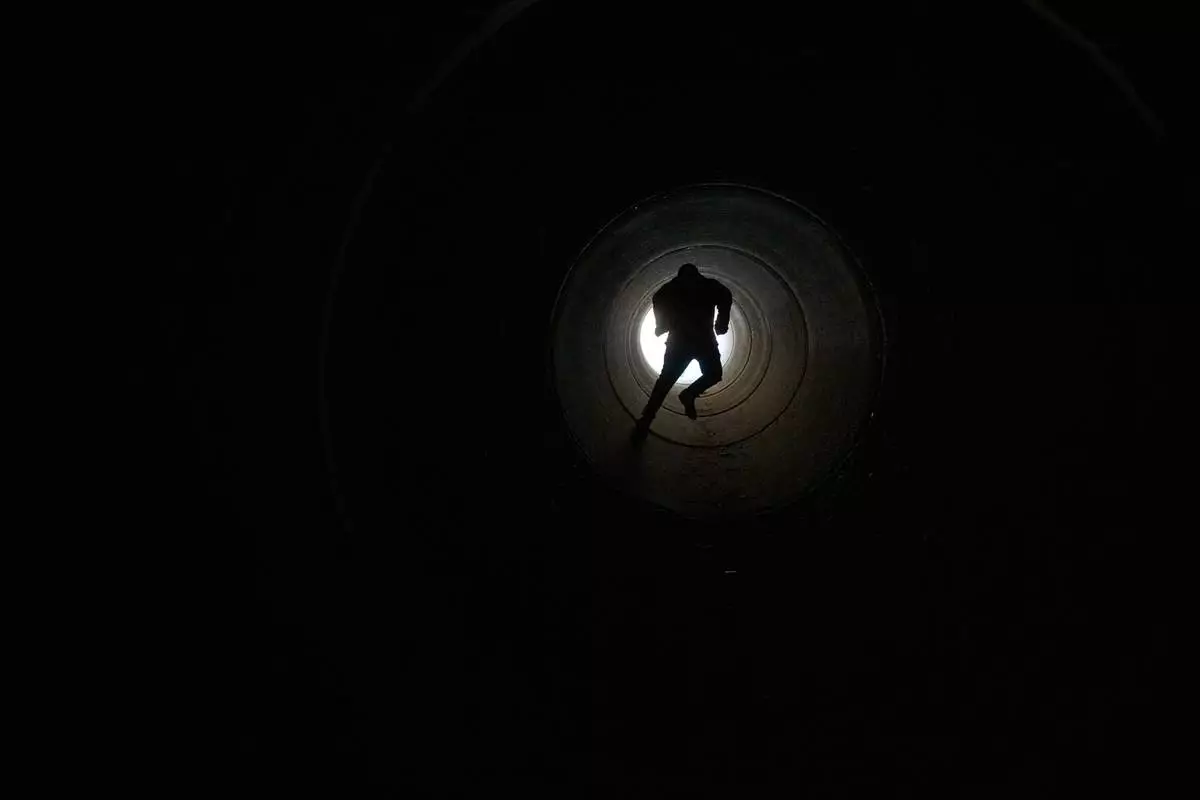
A boy runs inside cement pipe turned into a bomb shelter as air raid sirens warn of incoming Iranian missile strike in Michmoret, Israel, Tuesday, March 10, 2026. (AP Photo/Ariel Schalit)
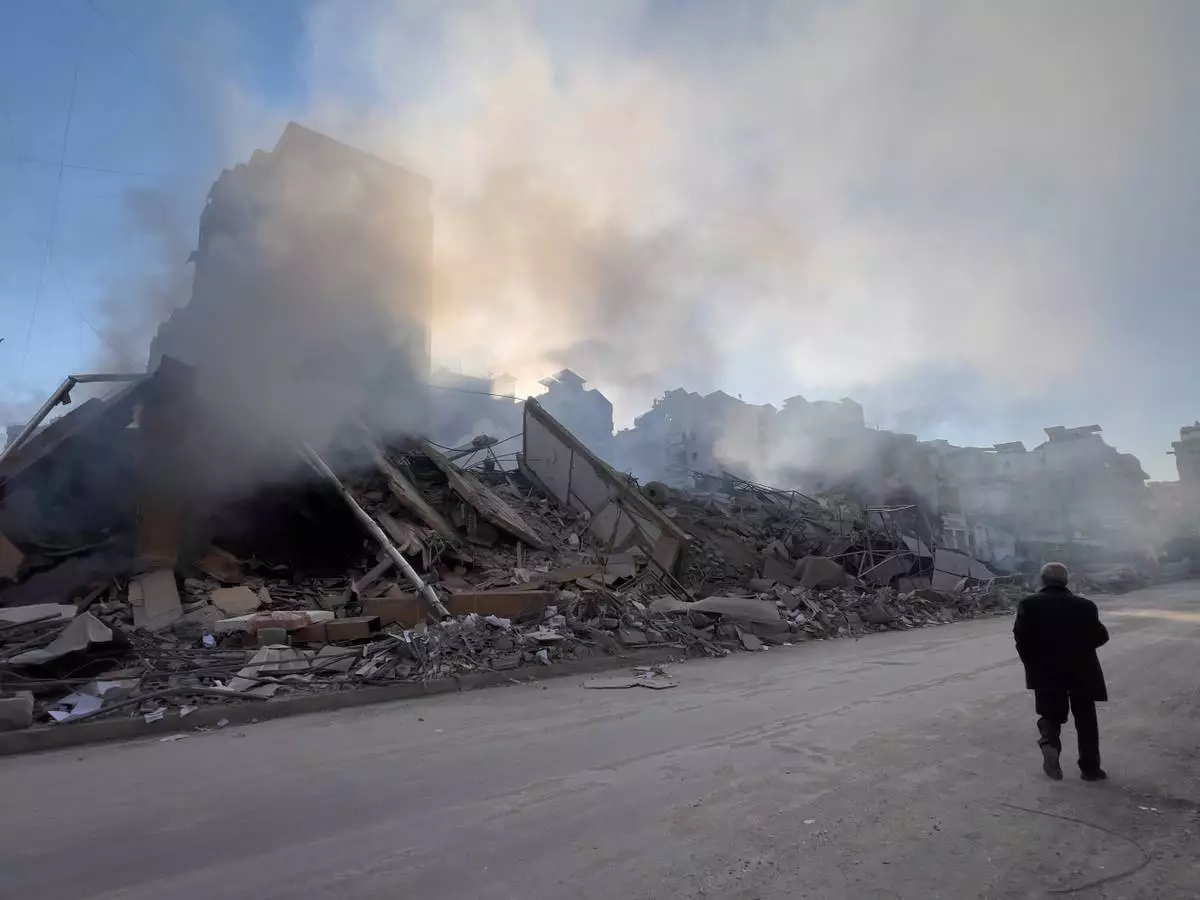
A man passes in front of a destroyed building that housed a branch of Al-Qard Al-Hassan, a non-bank financial institution run by Hezbollah, which was hit by an Israeli airstrike in Dahiyeh, Beirut's southern suburbs, Lebanon, Tuesday, March 10, 2026. (AP Photo/Hussein Malla)
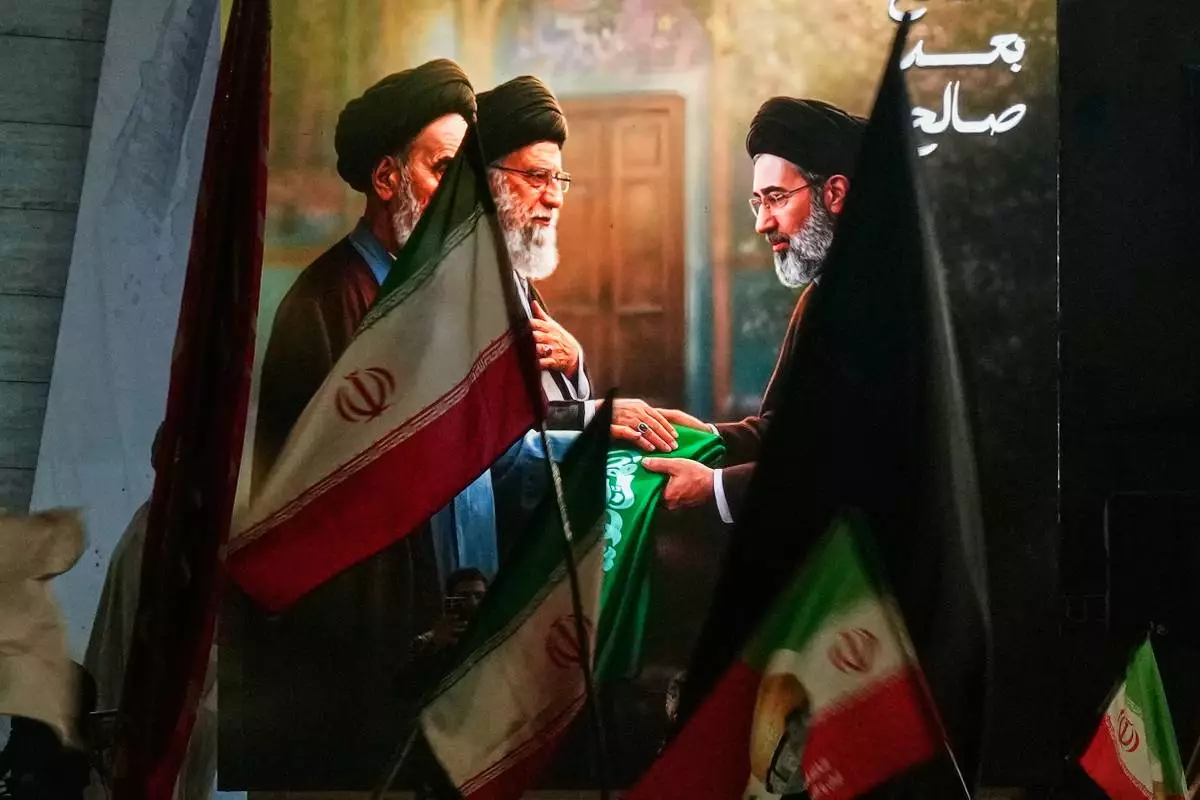
Protesters wave Iranian flags and hold a portrait of the late Iran's Supreme Leader Ayatollah Ali Khamenei and his son Ayatollah Mojtaba Khamenei to support his selection as the new Iran's Supreme Leader in Baghdad, Monday, March 9, 2026. (AP Photo/Hadi Mizban)
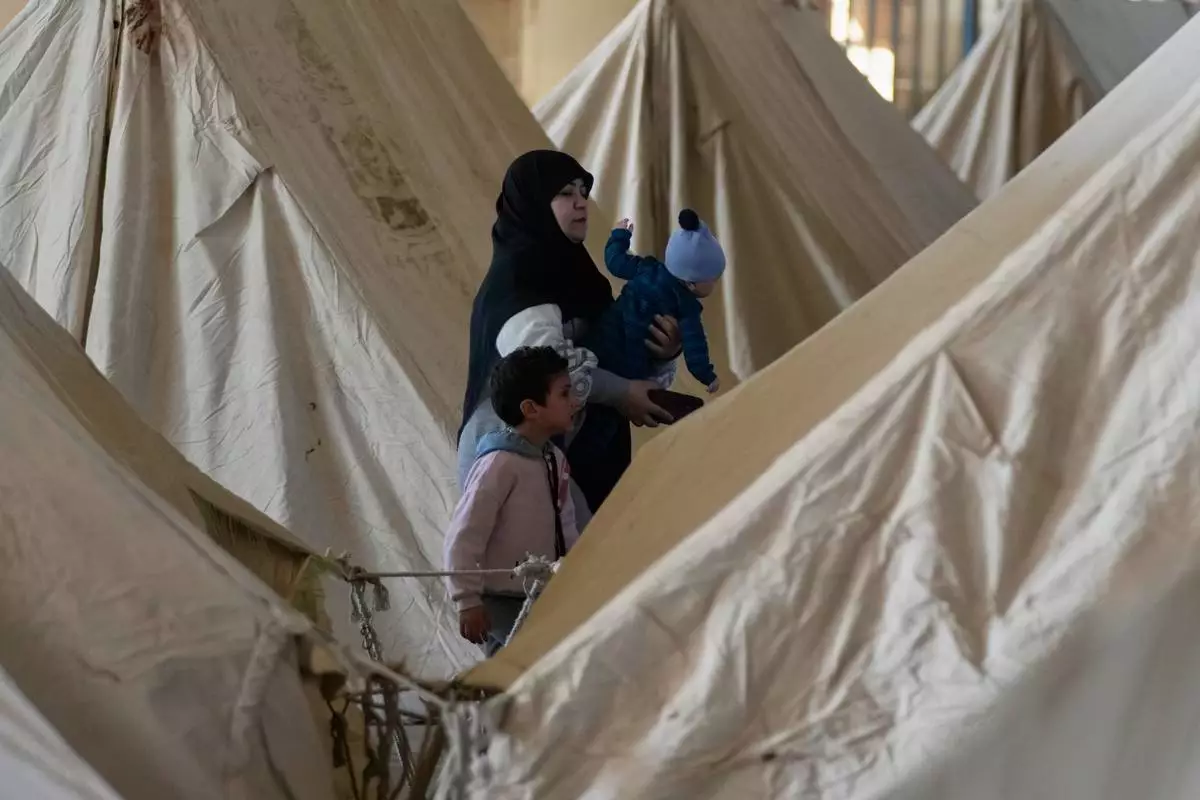
A displaced woman holds a child as another stands beside her between rows of tents at the Camille Chamoun Sports City Stadium, which has been turned into a shelter for people displaced by Israeli airstrikes in southern Lebanon and Dahiyeh, Beirut's southern suburbs, in Beirut, Lebanon, Tuesday, March 10, 2026. (AP Photo/Hassan Ammar)
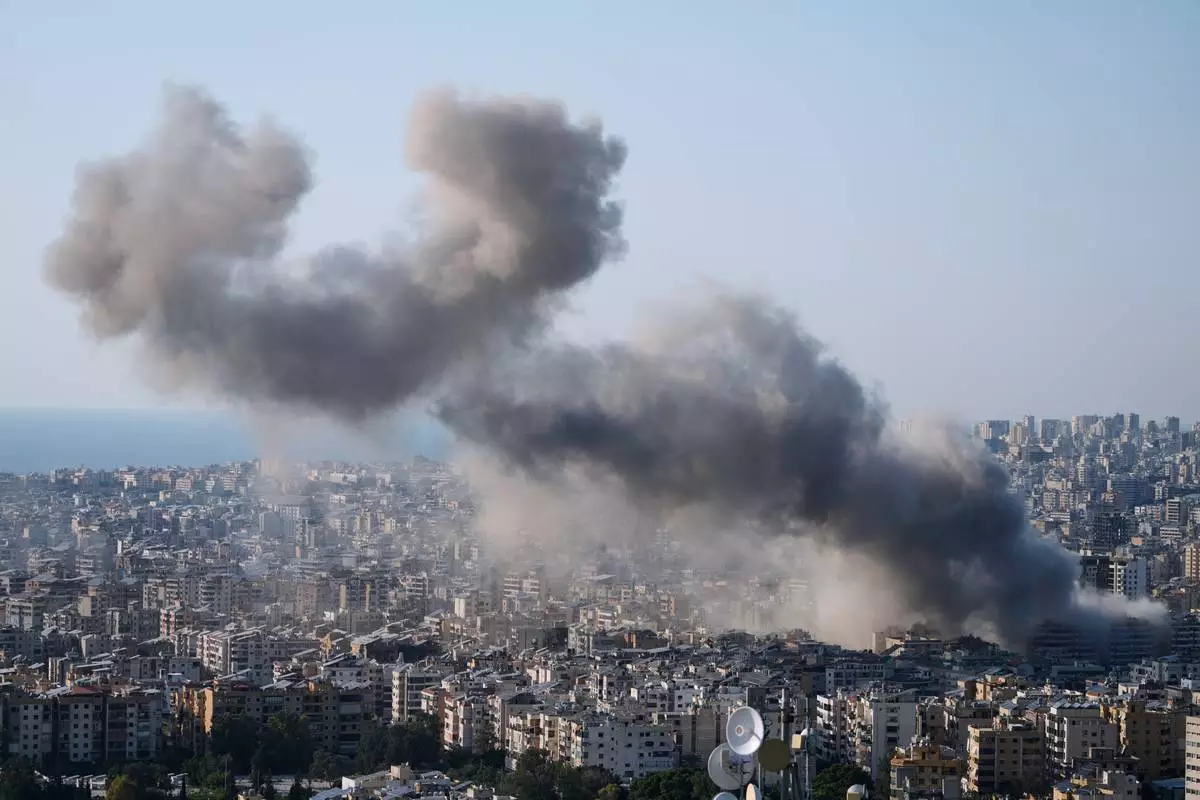
Smoke rise from an Israeli airstrike in Dahiyeh, Beirut's southern suburbs, Lebanon, Tuesday, March 10, 2026. (AP Photo/Bilal Hussein)