Skip to Content Facebook Feature Image

Takeaways from the AP's report on turmoil surrounding the FDA's new fast-track drug program

News

Takeaways from the AP's report on turmoil surrounding the FDA's new fast-track drug program
News

News

Takeaways from the AP's report on turmoil surrounding the FDA's new fast-track drug program

2026-01-16 22:39 Last Updated At:22:40

WASHINGTON (AP) — A plan to slash drug review times at the Food and Drug Administration is sparking deep concerns among agency staffers and outside experts, with some saying the poorly defined effort is taking key decisions away from career scientists and placing them in the hands of political leadership.

The initiative by FDA Commissioner Marty Makary promises ultra-fast reviews for drugs that align with “U.S. national priorities.” It’s at the center of Makary’s stated goal to “cut red tape” and “challenge assumptions” at the agency tasked with assuring the safety of food, medicines, medical devices and other consumer goods.

But FDA staffers say the push for faster approvals is contributing to a climate of anxiety, fear and confusion within the agency’s drug center, which has lost nearly 20% of its staff to recent layoffs, buyouts, retirements and resignations.

Concerns about the legality of the program have also contributed to the recent departure of several leaders of the FDA drug center, which is now being led by its fifth director in the past year.

FDA drug reviews have traditionally been handled by FDA career scientists who spend months analyzing data to determine whether drugs meet federal standards for safety and effectiveness.

But the effort to truncate certain drug approvals has become intertwined with White House efforts to secure pricing concessions for drugmakers, an unprecedented shift in the agency’s longstanding science-based approach that staffers fear could damage the FDA's reputation and endanger patients.

Health and Human Services spokesman Andrew Nixon said the voucher program prioritizes “gold standard scientific review” and aims to deliver “meaningful and effective treatments and cures.”

Here’s what to know:

Questions remain among top FDA officials over who has the appropriate legal authority to sign off on drugs cleared under the Commissioner’s National Priority Voucher program, according to several people with direct knowledge of the matter who spoke to The Associated Press on the condition of anonymity because they were not authorized to discuss confidential agency matters.

The FDA’s then-drug director, Dr. George Tidmarsh, declined to sign off on approvals under the pathway. Tidmarsh resigned from the agency in November over a lawsuit challenging his conduct on issues unrelated to the voucher program.

After his departure, Sara Brenner, the FDA’s principal deputy commissioner, was set to be the final decider on the approval decisions, but she also declined the role after looking further into the legal issues, according to the people. Currently the agency’s deputy chief medical officer, Dr. Mallika Mundkur, is taking on the responsibility.

Giving final approval to a drug carries significant legal weight, essentially certifying the medicine’s safety and effectiveness meet FDA standards. If unexpected side effects or other problems later emerge, both the agency and individual officials could be pulled into investigations or lawsuits.

Despite such concerns, the program remains popular at the White House, where pricing concessions announced by President Donald Trump, a Republican, have repeatedly been accompanied by FDA vouchers for drugmakers that agree to cut their prices.

For instance, when the White House announced that Eli Lilly and Novo Nordisk would reduce prices on their popular obesity drugs, FDA staffers had to scramble to vet and announce new vouchers for both companies in time for the press conference, according to multiple people involved in the process.

That’s sparked widespread concern that FDA drug reviews have become malleable and open to political interference.

FDA approval decisions have nearly always been handled by agency scientists and their immediate supervisors, rather than political appointees and senior leaders.

But under the voucher program, approval comes through a committee vote by senior agency officials, according to multiple people familiar with the situation. Staff reviewers don’t get a vote.

Current and former staffers say the new approach flips FDA precedent on its head, minimizing the input of FDA scientists who have the greatest expertise and familiarity with the drug safety and effectiveness data.

Because of the ambiguity around the program’s workings, some drugmakers have had their own interpretation of the timeline for review — creating further confusion and stress among FDA staff.

Two people involved in the ongoing review of Eli Lilly’s anti-obesity pill said company executives initially told the FDA they expected the drug approved within two months.

The timeline alarmed FDA reviewers because it did not include the agency’s standard 60-day prefiling period, when staffers check the application to ensure it isn’t missing essential information.

But Lilly pushed for a quicker filing turnaround, demanding one week. Eventually the agency and the company agreed to a two-week period.

When reviewers raised concerns about some gaps in the application, one person involved in the process said, they were told by a senior FDA official that it was OK to overlook the regulations if the science is sound.

Former reviewers and outside experts say that approach is the opposite of how FDA reviews should work: It’s by following the regulations that staffers scientifically confirm the safety and effectiveness of drugs.

Nixon declined to comment on the specifics of Lilly’s review but said FDA reviewers can “adjust timelines as needed.”

The Associated Press Health and Science Department receives support from the Howard Hughes Medical Institute’s Department of Science Education and the Robert Wood Johnson Foundation. The AP is solely responsible for all content.
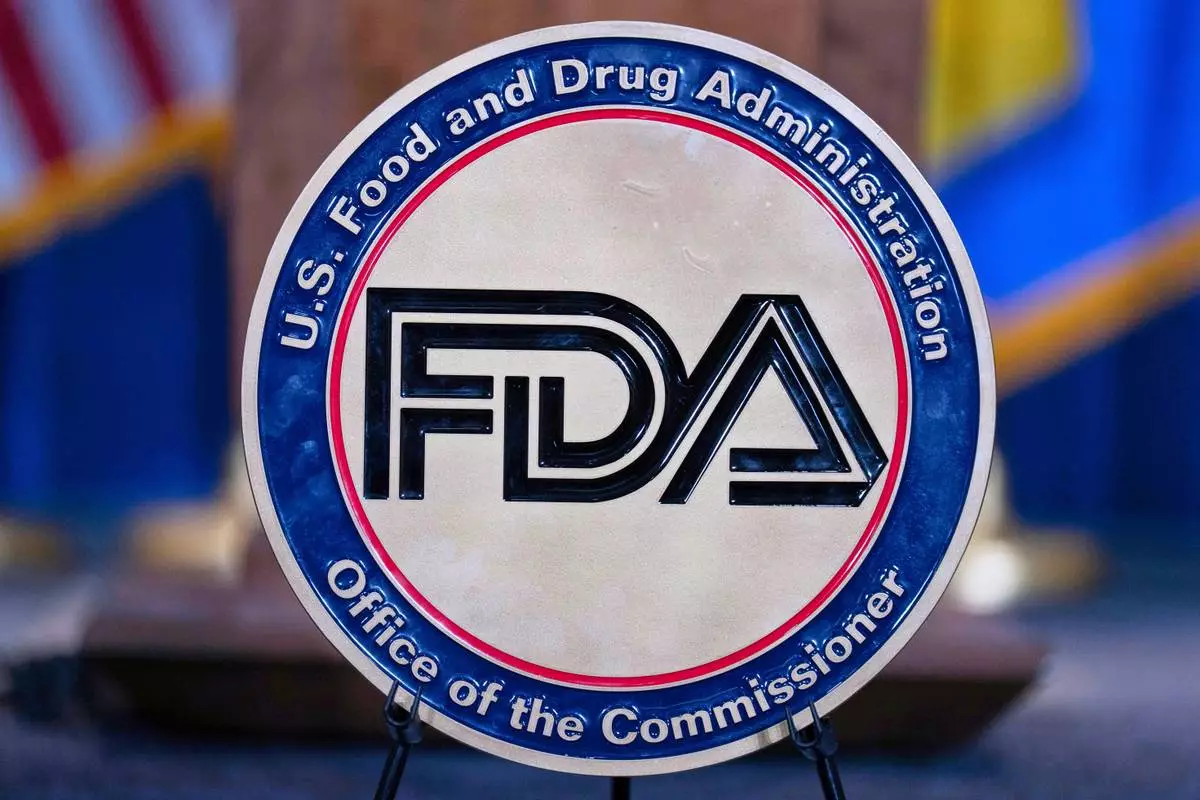
FILE - The Food and Drug Administration seal is seen at the Hubert Humphrey Building Auditorium in Washington, April 22, 2025. (AP Photo/Jose Luis Magana, File)
FILE - The Food and Drug Administration seal is seen at the Hubert Humphrey Building Auditorium in Washington, April 22, 2025. (AP Photo/Jose Luis Magana, File)
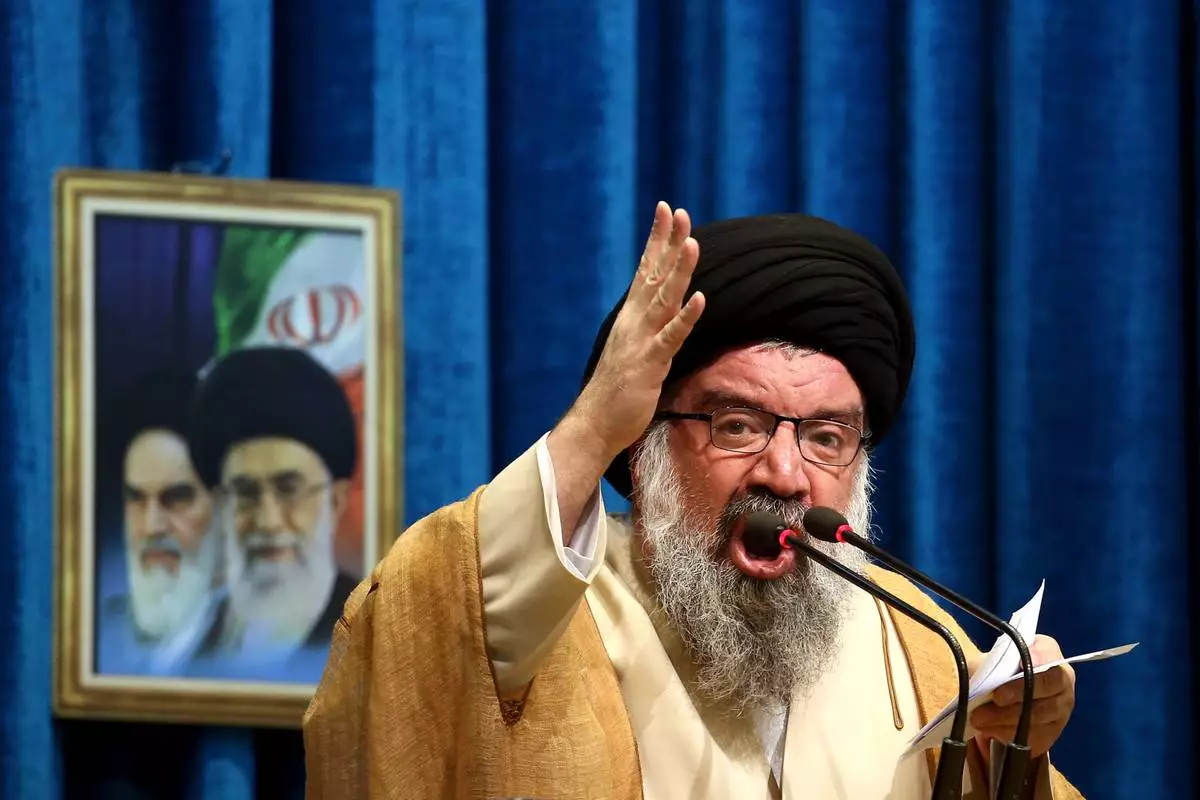
DUBAI, United Arab Emirates (AP) — A hard-line cleric leading Friday prayers in Iran's capital demanded the death penalty for protesters detained in a nationwide crackdown and directly threatened U.S. President Donald Trump, showing the rage gripping authorities in the Islamic Republic over demonstrations that have challenged their authority.

Ayatollah Ahmad Khatami's sermon, carried by Iranian state radio, sparked chants from those gathered for prayers, including: “Armed hypocrites should be put to death!” Executions, as well as the killing of peaceful protesters, are two of the red lines laid down by Trump for possible military action against Iran over the protests, which began Dec. 28 over Iran's ailing economy and soon morphed into protests directly challenging the country's theocracy.

Iranian authorities cut off access to the internet Jan. 8 and intensified a bloody crackdown on all dissent, which the U.S.-based Human Rights Activists News Agency reports has killed at least 2,677 people.

Khatami, appointed by Supreme Leader Ayatollah Ali Khamenei and a member of both the country’s Assembly of Experts and its Guardian Council, described the protesters as the “butlers” of Israeli Prime Minister Benjamin Netanyahu and “Trump’s soldiers.” He insisted their plans “imagined disintegrating the country.”

“They should wait for hard revenge from the system,” Khatami said of Netanyahu and Trump. “Americans and Zionists should not expect peace.”

Khatami long has been known for his hard-line views in Iran, including in 2007, when he said a fatwa calling for the death of writer Salman Rushdie remained in effect. He also threatened Israel in a 2018 speech by saying Iran could “raze Tel Aviv and Haifa to the ground” with its missile arsenal.

His fiery speech came as allies of Iran and the United States alike sought to defuse tensions. Russian President Vladimir Putin spoke Friday to both Iranian President Masoud Pezeshkian and Israel's Netanyahu, Kremlin spokesman Dmitry Peskov said.

Peskov said “the situation in the region is quite tense, and the president is continuing his efforts to help de-escalate it.”

Days after Trump pledged “help is on its way” for the protesters, both the demonstrations and the prospect of imminent U.S. retaliation appeared to have receded. One diplomat told The Associated Press that top officials from Egypt, Oman, Saudi Arabia and Qatar had raised concerns with Trump that a U.S. military intervention would shake the global economy and destabilize an already volatile region.

Yet the Trump administration has warned it will act if Iran executes detained protesters. Iran and the U.S. traded angry accusations Thursday at a session of the United Nations Security Council, with U.S. ambassador Mike Waltz saying that Trump “has made it clear that all options are on the table to stop the slaughter.”

Gholam Hossein Darzi, the deputy Iranian ambassador to the U.N., blasted the U.S. for what he said was American “direct involvement in steering unrest in Iran to violence.”

Khatami, the hard-line cleric, also provided the first overall statistics on damage from the protests, claiming 350 mosques, 126 prayer halls and 20 other holy places had sustained damage. Another 80 homes of Friday prayer leaders — an important position within Iran's theocracy — were also damaged, likely underlining the anger demonstrators felt toward symbols of the government.

He said 400 hospitals, 106 ambulance, 71 fire department vehicles and another 50 emergency vehicles also sustained damage.

As a cleric in the public positions, Khatami would have access to such data from authorities, and mentioning it at Friday prayers likely meant Iran's government wanted the information to be communicated without having to formally address the public.

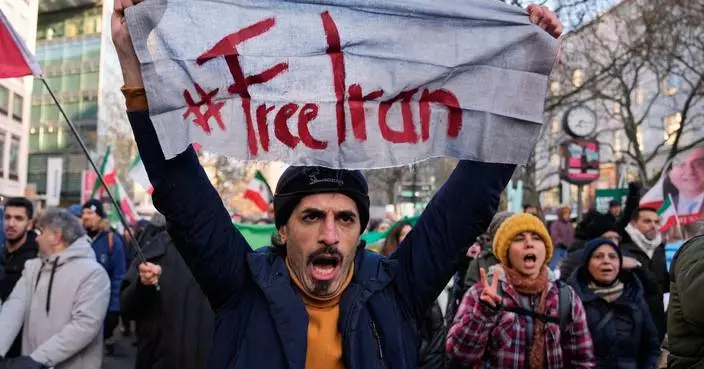
Even as protests appeared to have been smothered inside Iran, thousands of exiled Iranians and their supporters have taken to the streets in cities across Europe to shout out their rage at the government of the Islamic Republic.

More than a week into the nationwide internet shutdown, some Iranians crossed borders to communicate with the outside world. A border crossing with Iran in Turkey’s eastern province of Van has not seen a major influx of Iranians fleeing the unrest, but a number of Iranians crossing the border Friday said they have been making short jaunts to the neighboring country to get around the communications blackout.

“I will go back to Iran after they open the internet,” said a traveler who gave only his first name, Mehdi, out of security concerns.

The death toll of at least 2,677, provided by the U.S.-based Human Rights Activists News Agency, exceeds that of any other round of protest or unrest in Iran in decades and recalls the chaos surrounding the country’s 1979 Islamic Revolution.

The agency has been accurate throughout years of demonstrations, relying on a network of activists inside Iran that confirms all reported fatalities.

The AP has been unable to independently confirm the group’s toll. The Iranian government has not provided casualty figures.

FILE - Iranian senior cleric Ahmad Khatami delivers his sermon during Friday prayer ceremony in Tehran, Iran, Friday, Jan. 5, 2018. (AP Photo/Ebrahim Noroozi, File)

FILE - Iranian senior cleric Ahmad Khatami delivers his sermon during Friday prayer ceremony in Tehran, Iran, Friday, Jan. 5, 2018. (AP Photo/Ebrahim Noroozi, File)

Recommended Articles