Mississippi quarterback Trinidad Chambliss sued the NCAA in state court on Friday for an additional year of eligibility so he can play for the Rebels next season.
The suit filed in Lafayette County came a week after the NCAA denied Ole Miss' request for an extra year, saying the university and Chambliss' previous school — Ferris State — failed to provide adequate medical documentation to back up the request.
The lawsuit filed Friday called the NCAA's denial in “bad-faith, unreasonable and arbitrary,” and detailed Chambliss' history of illness and included letters from physicians.
“Despite the duty of good faith and fair dealing it owes to Trinidad, the NCAA insists on considering the evidence in Trinidad's case in an isolated, rather than comprehensive manner; interpreting its rules to impose requirements not contained therein; taking unreasonable if not irrational positions; and acting in an arbitrary and capricious manner in its decision-making and ruling," the suit says.
Ole Miss' arguments revolve around the fact that the 23-year-old Chambliss, although he has been in college for five years, has only played three years of college football because of that medical history.
“Trinidad first enrolled in Ferris State in the fall of 2021, but medical and physical incapacity prevented his ability to adequately train and condition and develop athletically,” the suit says.
After taking a redshirt his first season at Ferris State in 2021-22, Chambliss was held out in his second season for medical reasons.
“Obviously, Trinidad's medical conditions, which rendered him incapable of competing in any game during these years, were beyond his or Ferris State's control,” the suit says.
He played two more seasons at the Division II school in Michigan, leading the Bulldogs to a national championship before transferring to Ole Miss before the start of this season.
Chambliss completed 294 of 445 passes (66.1%) for 3,937 yards with 22 touchdowns and three interceptions for Ole Miss (13-2), which set a school record for wins, including two after making the College Football Playoff for the first time. He ran for 527 yards and eight more TDs.
The Rebels lost 31-27 to Miami in the College Football Playoff semifinals on Jan. 8.
The NCAA, when contacted Friday, did not have a new statement, but referred to its statement from a week ago saying “This decision aligns with consistent application of NCAA rules.”
The NCAA said in that week-old statement that approval of such waivers requires schools to submit medical documentation from a treating physician at the time of a student’s incapacitating injury or illness.
“The documents provided by Ole Miss and the student’s prior school include a physician’s note from a December 2022 visit, which stated the student-athlete was ‘doing very well’ since he was seen in August 2022," the NCAA said. "Additionally, the student-athlete’s prior school indicated it had no documentation on medical treatment, injury reports or medical conditions involving the student-athlete during that time frame and cited ‘developmental needs and our team’s competitive circumstances’ as its reason the student-athlete did not play in the 2022-23 season.”
Ole Miss athletic director Keith Carter previously said the school will appeal the NCAA’s ruling.
Get poll alerts and updates on the AP Top 25 throughout the season. Sign up here. AP college football: https://apnews.com/hub/ap-top-25-college-football-poll and https://apnews.com/hub/college-football
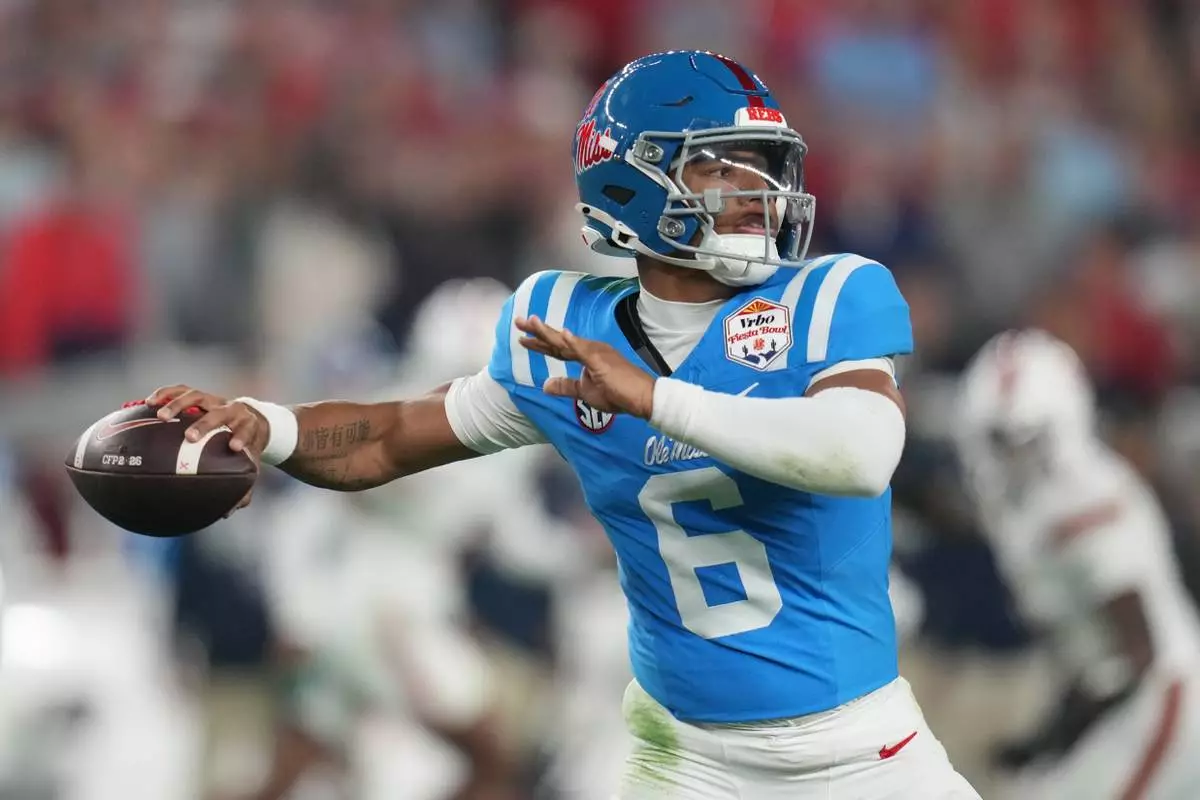
Mississippi quarterback Trinidad Chambliss throws during the first half of the Fiesta Bowl NCAA college football playoff semifinal game against Miami, Thursday, Jan. 8, 2026, in Glendale, Ariz. (AP Photo/Rick Scuteri)
NEW YORK (AP) — Oil prices rose Monday following the latest fighting to threaten the U.S.-Iran ceasefire, but Wall Street isn’t very worried, and U.S. stocks ticked to more records.
The S&P 500 added 0.3% to its prior all-time high set on Friday. The Dow Jones Industrial Average rose 46 points, or 0.1%, and the Nasdaq composite climbed 0.4% to likewise set records.
A slight majority of U.S. stocks actually fell, including companies with big fuel bills hurt by higher oil prices. United Airlines lost 2.6%, and Alaska Air Group fell 3.3% after the price for a barrel of Brent crude oil climbed 4.2% to settle at $94.98. That clawed back a chunk of Brent’s loss from last week and means it’s still well above its price of roughly $70 from before the war.
Expensive oil has already sent inflation higher, which increases not only bills for households but also yields in the bond market. High yields worldwide recently have threatened to slow economies and undercut prices for stocks and all kinds of other investments.
But yields regressed during the day after oil prices came off their highest levels. That eased some of the pressure on Wall Street, and the Russell 2000 index of the smallest U.S. stocks went from a loss of 1.3% back to roughly even before finishing with a dip of 0.5%. Small companies can feel the pinch of higher borrowing costs in particular because of the need for many to borrow to grow.
Hope, meanwhile, seems to remain on Wall Street that the United States and Iran will ultimately reach an agreement to reopen the Strait of Hormuz, allow deliveries of oil to resume from the Persian Gulf and ease the upward pressure on inflation.
Strength from several market heavyweights also helped to power Wall Street.
Nvidia was the strongest force lifting the market and rose 6.2% after CEO Jensen Huang announced several product updates at a conference. What Nvidia does matters immensely for the U.S. stock market because it’s the biggest in terms of overall market value. That means the movements for its stock carry more weight on the S&P 500 than any other’s.
And Wall Street’s biggest companies have been growing so much that they’re dominating the market. The top 10 stocks control nearly half the S&P 500’s total market value, a 40-year high, according to Thomas Carroll, equity market strategist at Stifel.
That worked well as Big Tech stocks shot higher thanks to exuberance around artificial intelligence. But it could also weigh on the index if the market’s leadership broadens, Carroll warns. Even if most stocks end up rising in such a rotation, stagnation or declines for Big Tech heavyweights could drag on S&P 500 index funds.
A key indicator Carroll follows about market breadth “is signaling a rotation is coming,” he wrote in a report.
Elsewhere on Wall Street, Science Applications International Corp. jumped 10.4% after becoming the latest U.S. company to report bigger profit for the latest quarter than analysts expected. SAIC also raised forecasts for upcoming financial results.
A cavalcade of such better-than-expected profit reports has helped the U.S. stock market push to records despite the uncertainty created by the war with Iran.
Berkshire Hathaway fell 0.9% after saying it would buy homebuilder Taylor Morrison Home for $6.8 billion. It’s one of the first big acquisitions announced by the company since Greg Abel took over as its leader from famed investor Warren Buffett. Taylor Morrison Home jumped 22.3%.
MGM Resorts International leaped 16.1% after People Inc., Barry Diller’s business that was formerly known as IAC, offered to buy the rest of the company it doesn’t already own for $48.30 per share in cash.
All told, the S&P 500 rose 19.90 points to 7,599.96. The Dow Jones Industrial Average added 46.42 to 51,078.88, and the Nasdaq composite rose 114.19 to 27,086.81.
In the bond market, Treasury yields climbed with oil prices and after a report said growth in U.S. manufacturing accelerated by more last month than economists expected. The yield for the 10-year Treasury briefly approached 4.52% before regressing to 4.46%, up from 4.45% late Friday.
High yields have already forced the average long-term U.S. mortgage rate to its most expensive level in nine months, and they could curtail companies’ borrowing to build the AI data centers that have supported the U.S. economy’s growth recently.
In stock markets abroad, indexes fell in Europe following a stronger finish in Asia.
Tokyo’s Nikkei 225 rose 0.9% to an all-time high. SoftBank Group, the investment company that focuses heavily on AI, soared 21.2% and surpassed Toyota to become Japan’s most valuable listed company.
In South Korea, the Kospi index jumped 3.7% to a record after data showed the country’s exports surged 53% in May from a year earlier, buoyed by global demand for semiconductors.
AP Business Writers Chan Ho-him and Matt Ott contributed.
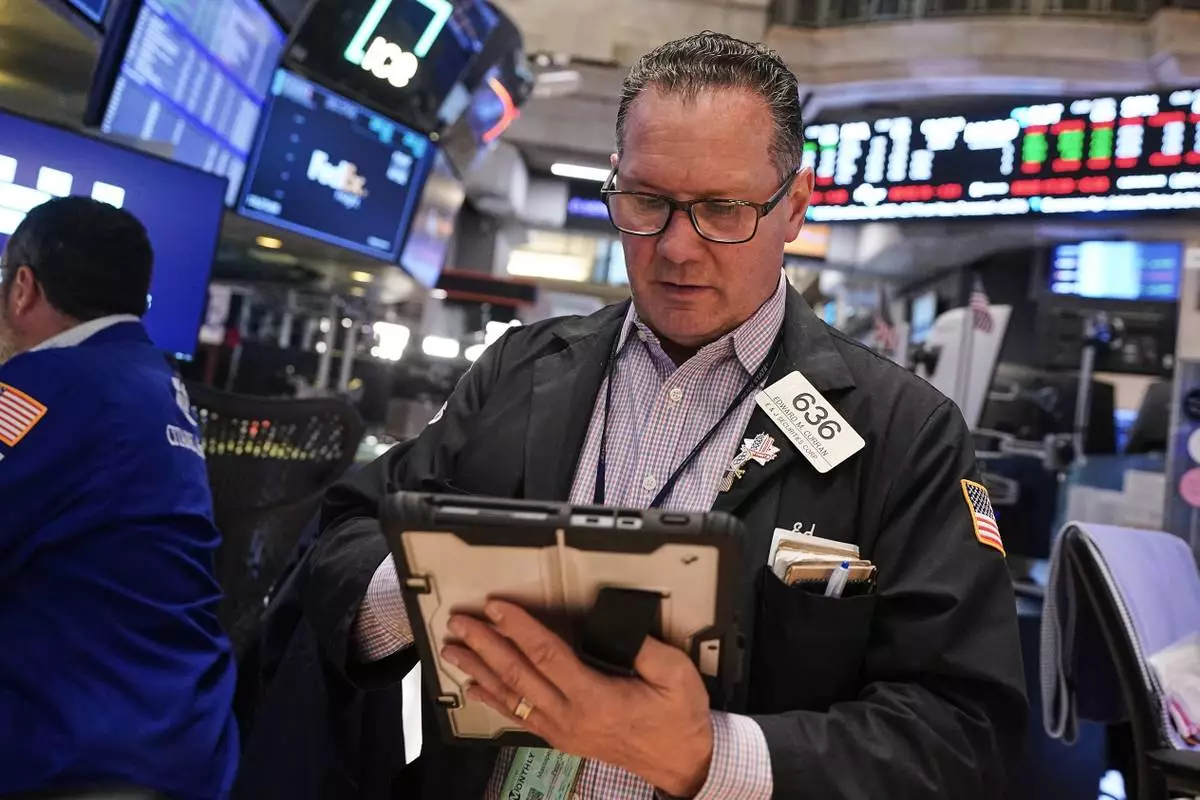
Trader Edward Curran works on the floor of the New York Stock Exchange, Monday, June 1, 2026. (AP Photo/Richard Drew)
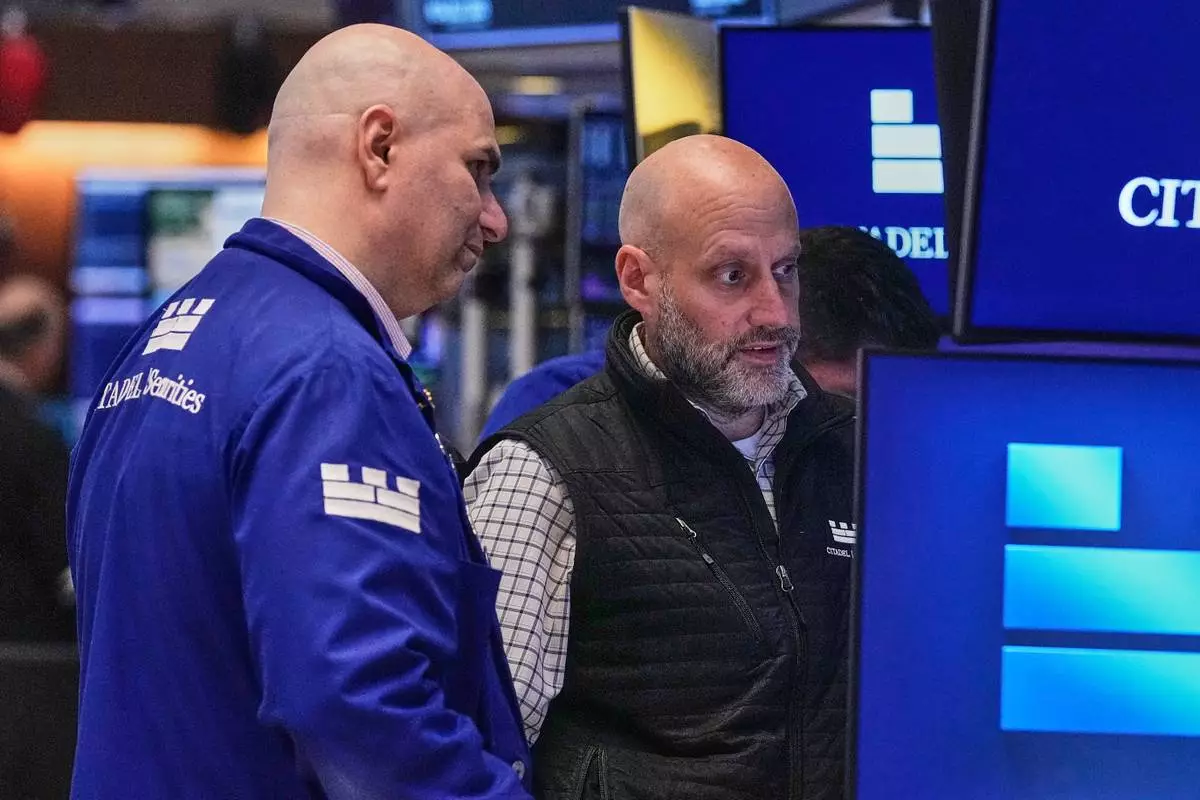
Specialists Philip Finale, left, and Meric Greenbaum work on the floor of the New York Stock Exchange, Friday, May 29, 2026. (AP Photo/Richard Drew)
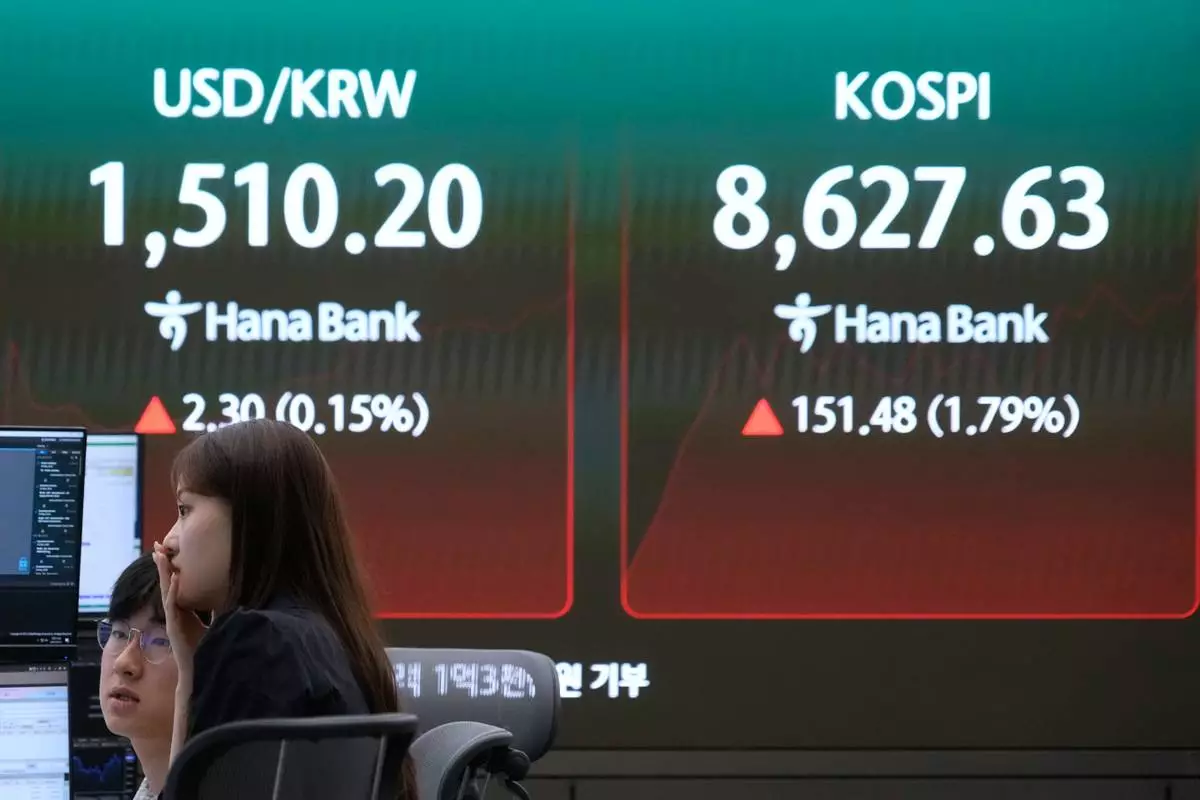
Currency traders watch monitors near a screen showing the Korea Composite Stock Price Index (KOSPI) and the foreign exchange rate between U.S. dollar and South Korean won at the foreign exchange dealing room of the Hana Bank headquarters in Seoul, South Korea, Monday, June 1, 2026. (AP Photo/Ahn Young-joon)
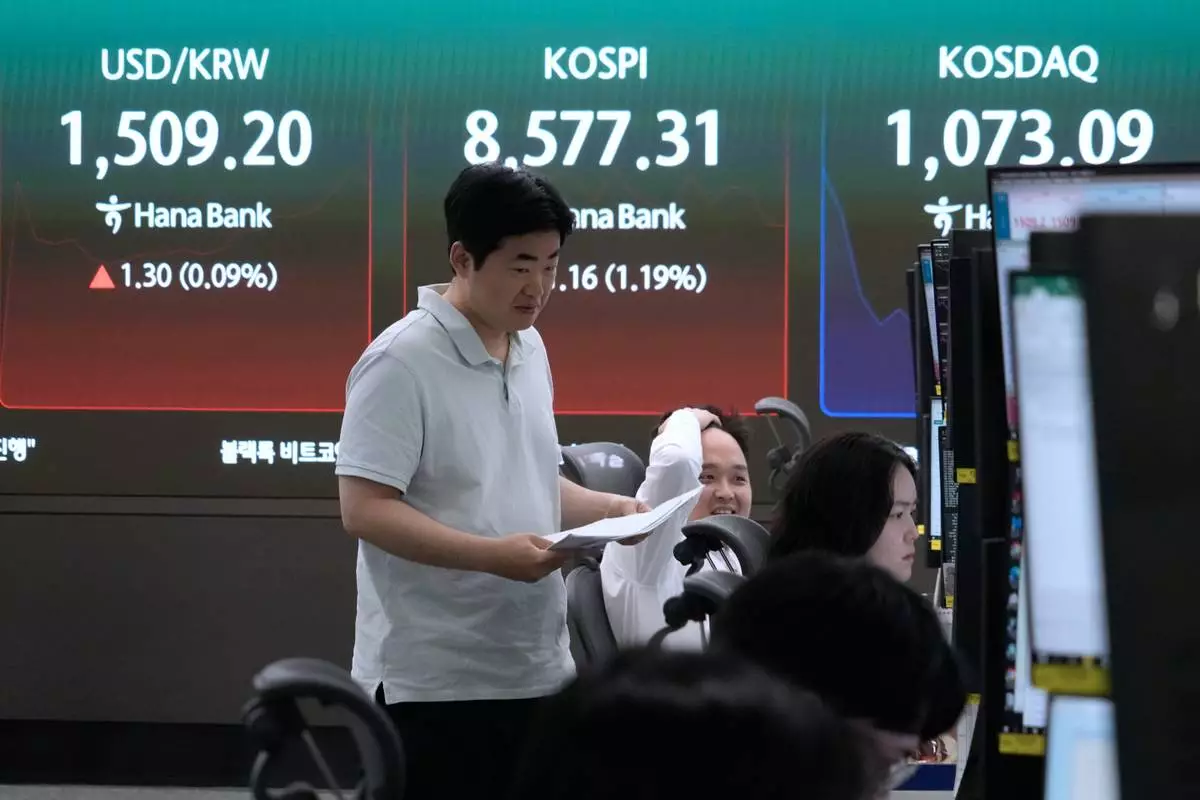
Currency traders work near a screen showing the Korea Composite Stock Price Index (KOSPI) and the foreign exchange rate between U.S. dollar and South Korean won at the foreign exchange dealing room of the Hana Bank headquarters in Seoul, South Korea, Monday, June 1, 2026. (AP Photo/Ahn Young-joon)
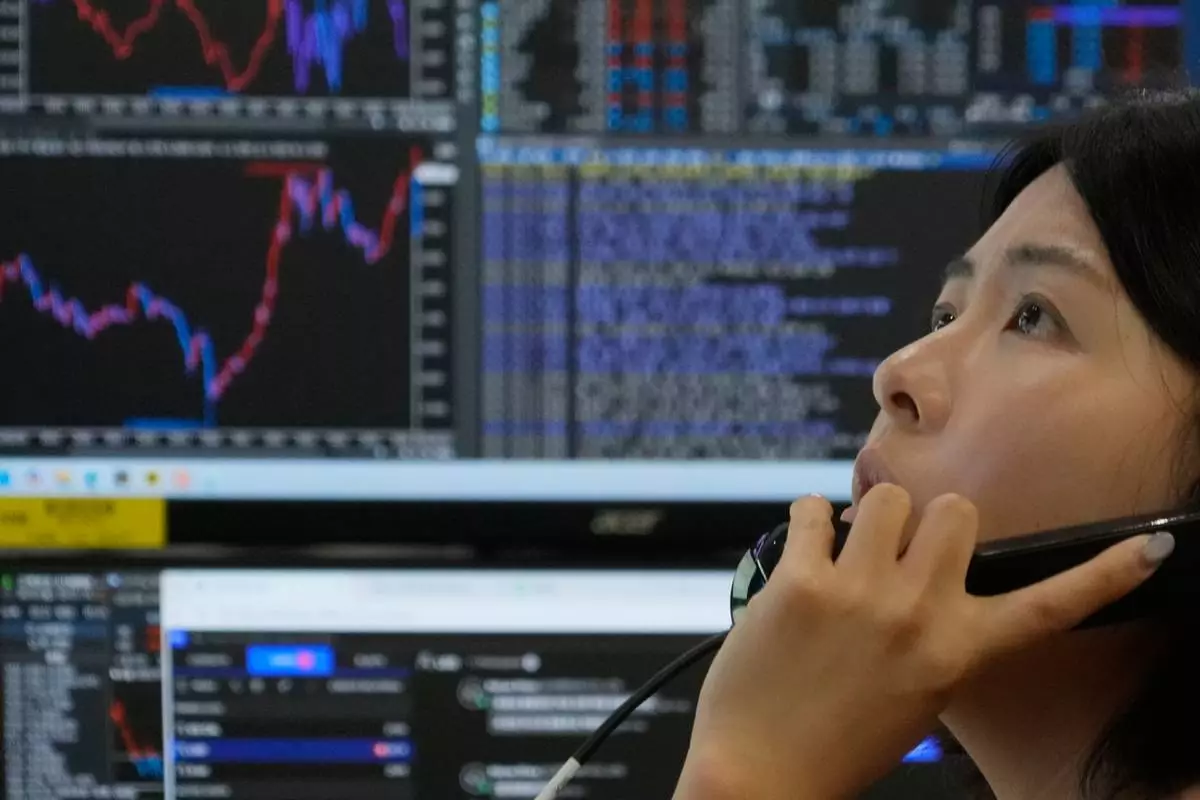
A currency trader talks on the phone at the foreign exchange dealing room of the Hana Bank headquarters in Seoul, South Korea, Monday, June 1, 2026. (AP Photo/Ahn Young-joon)