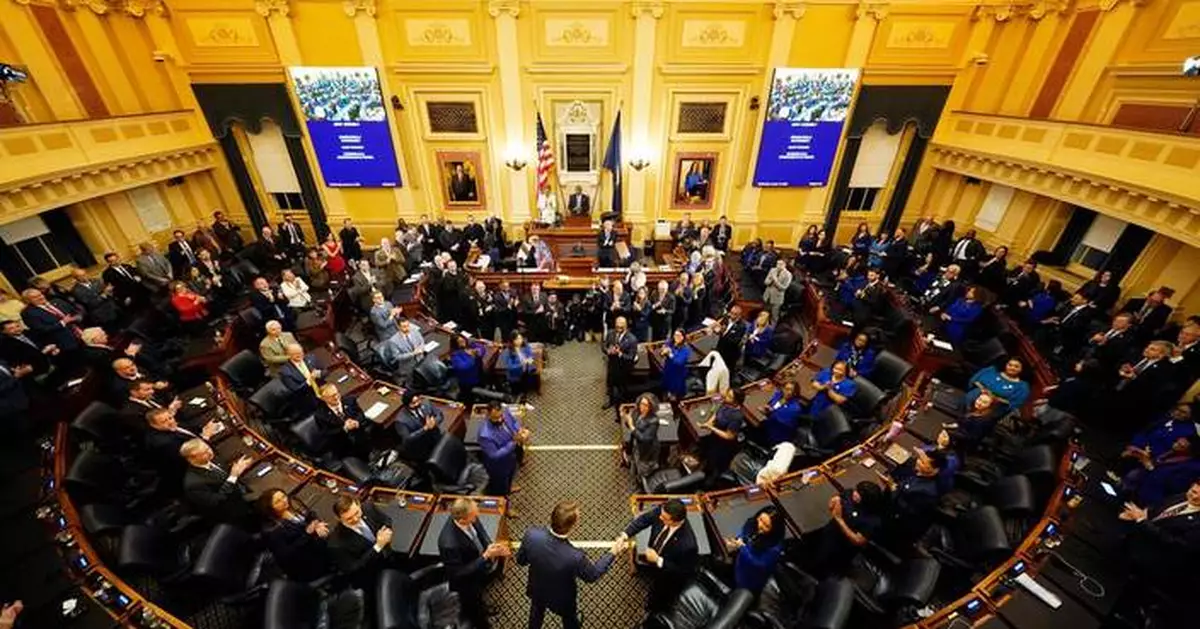
RICHMOND, Va. (AP) — Virginia voters will decide whether to back a redrawn district map that favors Democrats in the tit-for-tat battle for the U.S. House after the left-leaning Senate advanced a proposed constitutional amendment on Friday that supports mid-decade congressional redistricting.
Such a congressional map has not been publicly released, though lawmakers say that will change by the end of the month. Officials have repeatedly vowed that voters would see a proposed map before the referendum is held, likely in April.
“Because this is a Virginian-led process and we’re asking for their permission, voters will be able to see the maps prior to their vote,” Democratic Del. Cia Price said Wednesday.
The closely divided state Senate, where Democrats hold a slim majority, voted along party lines on Friday afternoon, following a similar vote by House Democrats earlier this week.
Trump teed up an unusual redistricting plan last year and pushed Texas Republicans to create more favorable districts for the party by way of new congressional maps. That triggered something of a mid-decade redistricting dogfight.
Since then, Texas, Missouri and North Carolina all approved new Republican-friendly House districts. Ohio also enacted a more favorable House map for Republicans.
On the Democratic side, California voters approved new House districts helping Democrats, and a Utah judge adopted a new House map that benefits Democrats.
There have been some defections in the nationwide redistricting battle. Top Kansas Republicans said this week that they don't expect the GOP-supermajority Legislature to consider redistricting this year because there's too little support in the House. Indiana’s Republican-led Senate also defeated a plan that could have helped the GOP win all of the state’s U.S. House seats.
It’s still up in the air as to whether new maps will be created in other states, such as Republican-leaning Florida, and Democratic-led Illinois and Maryland.
The redistricting battle has resulted, so far, in nine more seats that Republicans believe they can win and six more seats that Democrats think they can win, putting the GOP up by three. However, redistricting is being litigated in several states, and there is no guarantee that the parties will win the seats they have redrawn.
In Virginia, the redistricting resolution sparked raucous debate among lawmakers on the merits of gerrymandering a battleground state known to have independent voters, particularly after a recent years-long push for fair maps in the state.
Senate Majority Leader Scott Surovell said when Republican-led states “rig elections in their favor, our commitment to fairness that we made — that our voters made — effectively becomes unilateral disarmament.”
Virginia Republicans have admonished Democrats' redistricting efforts, arguing gerrymandering isn't the answer. Republican Senate Minority Leader Ryan McDougle said, “Republicans in Indiana stood up to political pressure and said, ‘We’re not going to play these political games.’ And they stopped.”
The state currently is represented in the U.S. House by six Democrats and five Republicans who ran in districts whose boundaries were imposed by a court after a bipartisan redistricting commission failed to agree on a map after the census.
That commission came about following a 2020 referendum, in which voters supported a change to the state's constitution aimed at ending legislative gerrymandering.
The new proposed constitutional amendment, if backed by voters, would only be in effect until 2030. The resolution also has trigger language, meaning Virginia lawmakers can only redraw congressional maps if such action is taken by other states.
In January, Democratic Gov.-elect Abigail Spanberger backed Democrats' redistricting effort but has not committed to a particular plan.
“Ultimately, it’s up to the people of Virginia to choose whether or not to move forward with the referendum,” she said.
Late Friday, remaining portions of lawsuits filed in North Carolina federal court by the state NAACP and others still seeking to overturn the state's latest U.S. House map — a plan designed to flip a seat to Republicans — were being dismissed, a court document said. A three-judge panel hearing the lawsuits had already refused in November to block the use of the new boundaries for the 2026 elections.
Associated Press writers John Raby in Charleston, West Virginia, and Gary D. Robertson in Raleigh, North Carolina, contributed to this report.
Olivia Diaz is a corps member for The Associated Press/Report for America Statehouse News Initiative. Report for America is a nonprofit national service program that places journalists in local newsrooms to report on undercovered issues.
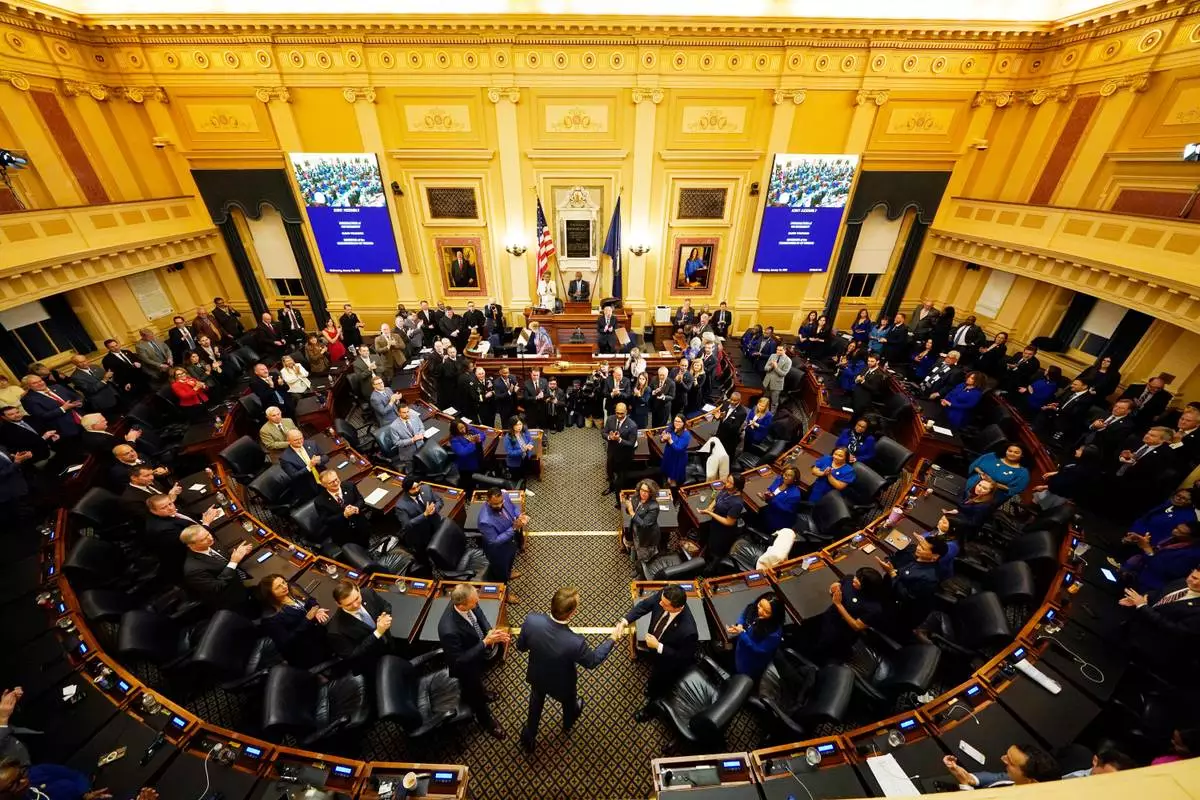
Virginia Gov. Glenn Youngkin, center, arrives to deliver his State of the Commonwealth Address during the opening of the 2026 session of the General Assembly at the Capitol in Richmond, Va., Wednesday Jan. 14, 2026. (AP Photo/Steve Helber)
DALLAS (AP) — The mess in Texas may be just beginning.
Four-term Sen. John Cornyn and his allies spent nearly $70 million to survive the first round of the party’s nomination fight on Tuesday. He was slightly ahead of conservative firebrand Ken Paxton, the state attorney general, with more votes still being counted on Wednesday.
Both now advance to a May 26 runoff election that Republicans fear could be even uglier and more expensive than the first contest.
“It's judgment day for Ken Paxton,” Cornyn said on Tuesday night.
But whether any level of attacks can stop Paxton — who has long been shadowed by allegations of corruption and infidelity — remains unclear, especially as he fashions himself as the kind of Make America Great Again warrior President Donald Trump needs in Washington.
Paxton was defiant when speaking to a few hundred supporters at a Dallas hotel ballroom, a far different scene than Cornyn's small press conference.
“We just sent a message, loud and clear, to Washington,” he said. “We are not going to go quietly, and we are not going to let you buy the seat.”
Republicans are sweating the runoff because the 83-day sprint takes place as operatives in both major political parties acknowledge that Democrats have an unusually solid chance of winning a Senate seat in Texas this year, something that hasn't happened in nearly four decades.
Democrats nominated state Rep. James Talarico, who Republicans immediately attacked as a far-left extremist — even though they privately consider the 36-year-old Christian progressive to be a stronger general election candidate than his primary opponent, Rep. Jasmine Crockett.
The Texas contest is playing out as Trump fights to maintain control of Congress for his final two years in the White House. Republicans are more confident about keeping their majority in the Senate than the House, but a competitive race in Texas could scramble the map, or at least consume resources that the party needs in more competitive states like North Carolina, Maine, Ohio and Alaska.
Republican leaders in Washington insist that Cornyn has the best shot, especially after he finished ahead of Paxton in Tuesday's primary, with U.S. Rep. Wesley Hunt finishing a distant third and conceding. Cornyn's campaign argued that a runoff wouldn't even be necessary if it wasn't for “Wesley Hunt's vanity campaign.”
“Paxton’s problems aren’t just an issue in a Republican primary; they also threaten to put the Senate seat at risk due to his lack of strength against Democrat nominee Talarico," a memo from Cornyn's team said.
But Paxton and his allies are showing no signs of backing down.
“The D.C. establishment has done its job: it rallied around its wounded incumbent, opened the fundraising spigot, and flooded the airwaves. But the results, the data, and the reality on the ground all point to the same conclusion: John Cornyn has no viable path to the Republican nomination,” the pro-Paxton Lone Star PAC wrote in a memo. “Cornyn should suspend his campaign, concede the nomination to Ken Paxton, and refuse to allow another $100+ million in Republican resources to be burned in a race that is already decided.”
The only person who might be able to forestall the intraparty fight, or at least limit its fallout, is Trump. But the president has declined to endorse a candidate in the primary, describing all of them as “great,” and it was unclear if anything would change in the runoff.
Without Trump's support, Cornyn made it clear that he would make the case himself. He told reporters that Paxton would be “a dead weight at the top of the ticket for Republicans" in November.
“I’ve worked for decades to build the Republican Party, both here in Texas and nationally,” Cornyn said. “I refuse to allow a flawed, self-centered and shameless candidate like Ken Paxton to risk everything we’ve worked so hard to build over these many years.”
Cornyn will face intense fundraising pressure, having already spent so much money in the first round of the primary. Aides said he had some small fundraisers planned but nothing in the days immediately after this week's vote as he returns to Washington.
In addition, Paxton's allies are confident that the political landscape will tilt in the attorney general's favor.
“The casual and moderate Republican voters who are most likely to support an establishment incumbent are the least likely to return for a runoff,” said the memo from the Lone Star PAC. “The committed conservative activists who form Paxton’s base are the most likely to show up.”
Follow the AP's coverage of the 2026 elections at https://apnews.com/hub/elections.
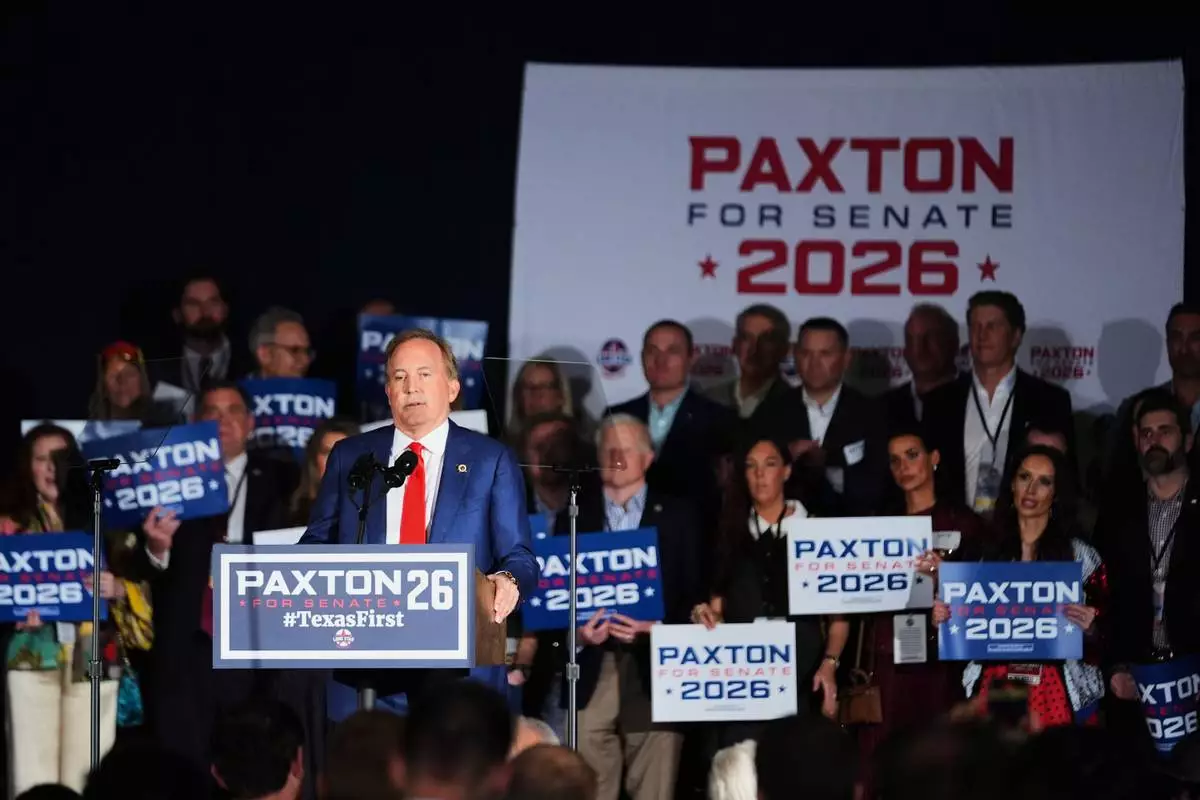
Texas Attorney General Ken Paxton, a Republican candidate for the U.S. Senate, speaks during a primary election night watch party Tuesday, March 3, 2026, in Dallas. (AP Photo/Julio Cortez)
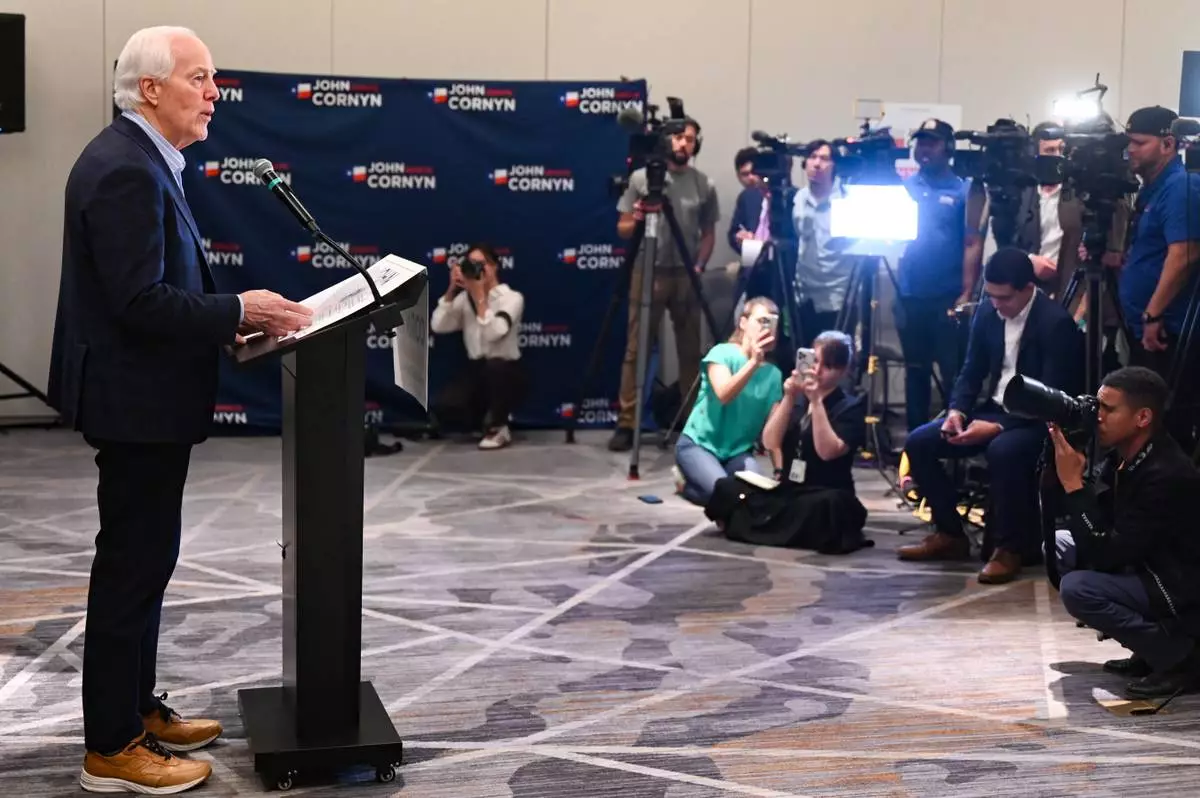
Sen. John Cornyn, R-Texas, speaks to the media Tuesday, March 3, 2026, in Austin, Texas. (AP Photo/Jack Myer)
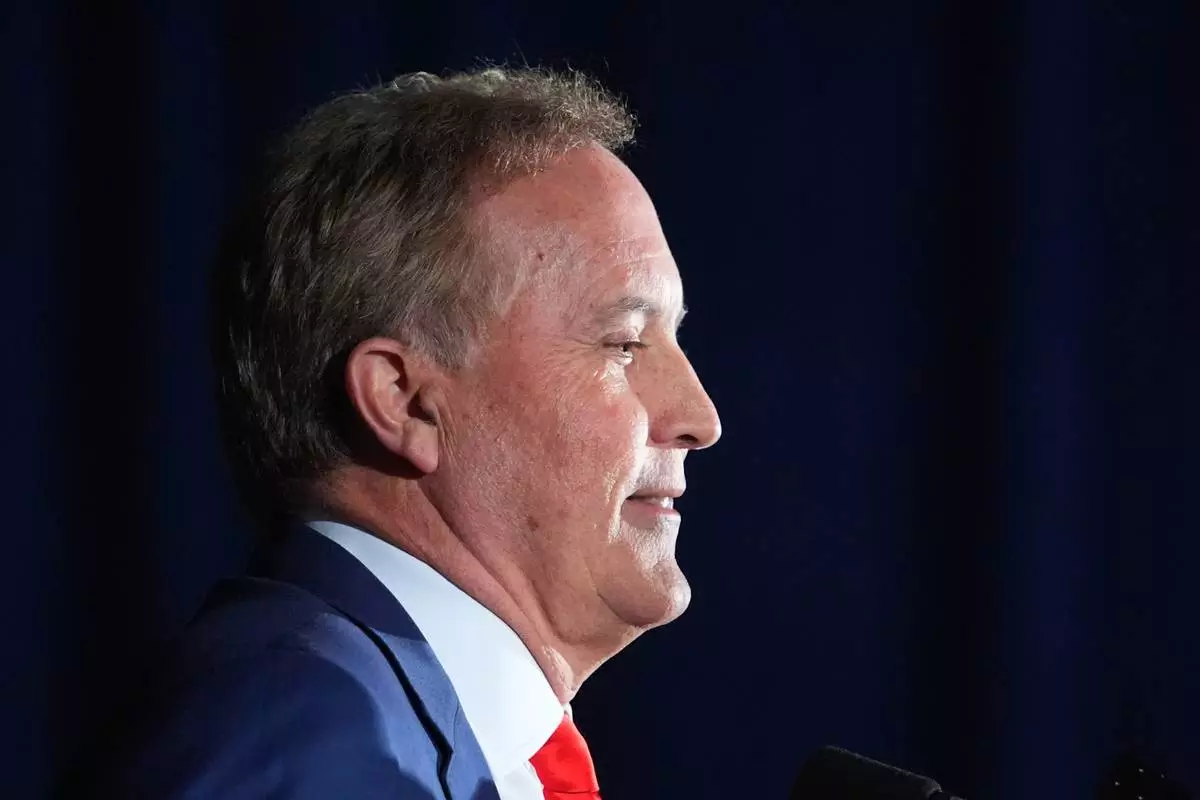
Texas Attorney General Ken Paxton, a Republican candidate for the U.S. Senate, speaks during a primary election night watch party Tuesday, March 3, 2026, in Dallas. (AP Photo/Julio Cortez)
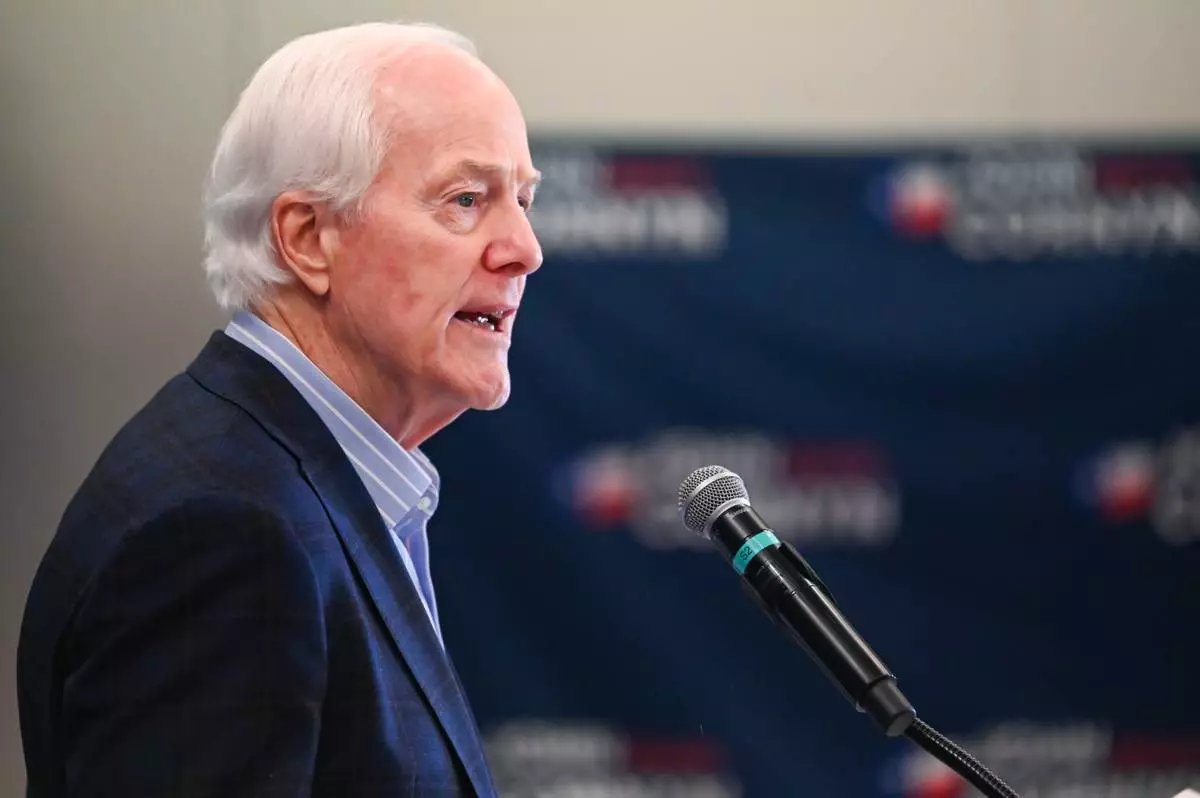
Sen. John Cornyn, R-Texas, speaks to the media Tuesday, March 3, 2026, in Austin, Texas. (AP Photo/Jack Myer)