DALLAS & HOUSTON & CHICAGO--(BUSINESS WIRE)--Jan 16, 2026--
Fourth- and fifth-grade students from Dallas, Houston, and Chicago reimagined Dr. Martin Luther King Jr.’s call for hope today at Foley & Lardner LLP’s annual MLK Jr. Oratory Competitions. Twenty-five students shared original speeches responding to the question: “As a student of Dr. King’s life, what message of hope do you think he would have for the world today?”
This press release features multimedia. View the full release here: https://www.businesswire.com/news/home/20260116421907/en/
Each year, participants deliver passionate three- to five-minute speeches that demonstrate their understanding of Dr. King’s principles while showcasing their writing and public speaking skills. Competitors advance through preliminary and semifinal rounds and are evaluated on their delivery, stage presence and decorum, content interpretation, and memorization.
“Dr. King’s vision continues to inspire new generations, and more than ever, messages of hope and belief in the future are critical in our communities. This event provides a meaningful platform for students to bring that message to life,” said Daljit Doogal, Foley Chairman and CEO. “For over 30 years, the Foley MLK Jr. Oratory Competition has been a cherished way for the firm to showcase its commitment to citizenship while amplifying Dr. King’s legacy and the voices of these incredible students.”
Winners included Blen Teklu from Preston Hollow Elementary in Dallas, Otis Marks III from Windsor Village Elementary in Houston, and Alanna Atwood from Wendell Smith Elementary in Chicago.
Dallas student delivers powerful reminder: “The world can still be better — because of YOU”
Fourth-grader Blen Teklu delivered an uplifting speech, reminding the audience that Dr. Martin Luther King Jr.’s legacy is rooted in choosing “love over hate, peace over violence, and hope over fear.” Blen shared that if Dr. King were here today, he would encourage us to keep going and keep loving, that “change is possible” even though unfairness and division still exist. Highlighting Dr. King’s commitment to nonviolence and everyday leadership, she noted that young people can help carry the dream forward through kindness and courage. She closed with an original poem and a clear call to action to not just look for the good, but to be the good: “Don’t lose hope...The world can still be better — because of you.”
Cameron Kinder, a fourth-grade student from Clara Oliver Elementary, earned second place in the 34th annual Dallas competition, and fifth-grader Kennedy King, a student at Solar Preparatory School for Girls, was awarded third place.
Houston student honors grandmother’s civil rights courage, urges community to carry the torch toward Dr. King’s dream
Otis Marks III, a fifth-grade student, earned first place with a personal speech honoring his late grandmother Marie Marks, whose courage during the civil rights movement inspired his own commitment to Dr. King’s message of hope and equality. Motivated by her legacy, Otis shared with the audience that if Dr. King were alive today, he would challenge the next generation, calling for a world “where equality is not just spoken, but lived every day,” where there are “no labels that divide us,” and where people come together at “the table of brotherhood.” He encouraged his peers and community to take action, reminding them that “dreams don’t just build themselves,” and closed with an uplifting call for unity and justice: “Carry this torch with me...carry it until flames light up every corner of injustice, and let us walk side-by-side and step-by-step toward the world Dr. King knew was possible.”
Stormii Olezene, a fourth-grade student from Blackshear Elementary, and Juelz Phipps, a fifth-grader from Bonham Elementary, tied for second place in the 30th annual Houston competition. Fifth-grader Ailani Briceno from Crespo Elementary was awarded third place.
Chicago student calls on community: “Change always starts with us”
Fifth-grader Alanna Atwood delivered a moving speech connecting Dr. King’s legacy to the work she believes is still needed today. Alanna emphasized the transformative influence of the late civil rights leader’s teachings, noting their foundation in “dedication, drive, positivity, and most importantly, hope.” She went on further, stating that “the freedom we have today is the freedom Dr. King fought for, not so we could be mean, not so we could disrespect one another, but so we could live together with dignity and love.” Alanna encouraged her peers to use “the power of our words…to heal, to help and to unite,” ending with a reminder that progress is possible because “change always starts with us.”
Kaiden Phelps, a fifth-grade student from Arthur L. Dixon Elementary, earned second place in the seventh annual Chicago competition, and fourth-grader Anjolaoluwa Ekemode, a student at Joseph Warren Elementary placed third in the competition.
Foley’s annual MLK Jr. Oratory Competition was established in Dallas in 1993, leading to the creation of the Houston competition in 1997 and the Chicago competition in 2020. More than 260 students participated in this year’s competitions across all three cities.
To learn more about Foley’s annual MLK Jr. Oratory Competition, click here.
Photographs Available Upon Request
About Foley & Lardner LLP
Foley & Lardner LLP is a preeminent law firm that stands at the nexus of the Energy & Infrastructure, Health Care & Life Sciences, Innovative Technology, and Manufacturing Sectors. We look beyond the law to focus on the constantly evolving demands facing our clients and act as trusted business advisors to deliver creative, practical, and effective solutions. Our 1,100 lawyers across 27 offices worldwide partner on the full range of engagements from corporate counsel to intellectual property work and litigation support, providing our clients with a one-team solution to all their needs. For nearly two centuries, Foley has maintained its commitment to the highest level of innovative legal services and to the stewardship of our people, firm, clients, and the communities we serve.
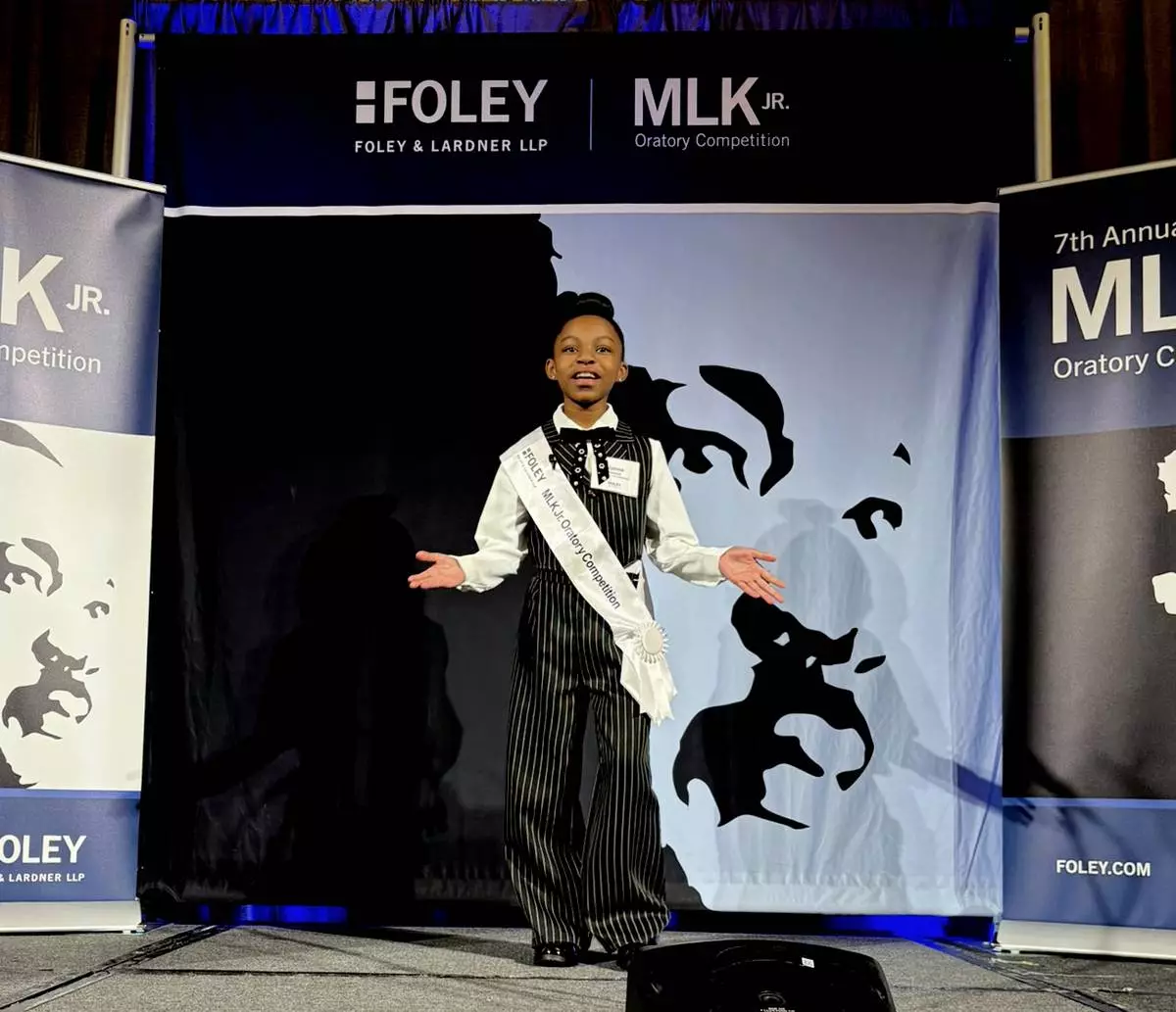
Alanna Atwood, a fifth grader at Wendell Smith Elementary in Chicago, performed her winning speech at the 7th annual Foley MLK Jr. Oratory Competition on January 16, 2026. Photo credit: Debbie Vyskocil

Otis Marks III, a fifth-grade student at Windsor Village Elementary School in Houston ISD, delivers his winning speech at the 30th annual Foley MLK Jr. Oratory Competition held at the historic Antioch Missionary Baptist Church on January 16, 2026. Photo credit: Katy Anderson
PROVIDENCE, R.I. (AP) — Catholic priests in Rhode Island preyed on hundreds of children for decades, getting away with sexual abuse largely due to a system where bishops prioritized minimizing scandal as the diocese maintained a secret archive to conceal the revelation of more victims.
These findings were among the many sobering details released Wednesday as part of a multiyear investigation into the Catholic Diocese of Providence, Rhode Island, led by Attorney General Peter Neronha.
The report was designed to spark a “full reckoning” of the abuse that had long remained elusive inside the smallest state in the U.S., home to the country’s largest Catholic population per capita, with nearly 40% of the state identifying as Catholic. Neronha, himself a Catholic, sided with the victims who have argued that not enough has yet been done to address the problem, more than two decades after it was widely exposed in the nearby Boston diocese.
“Not until now has there been a comprehensive review of this painful chapter in our state’s history, with a view toward offering transparency, accountability, and systemic reforms that will, I hope, lessen the likelihood of future child sexual abuse, not just within the Diocese of Providence, but in our community as a whole,” Neronha wrote in the report.
The investigation found that 75 Catholic clergy molested more than 300 victims since 1950, but officials stressed that the number of victimized children and abusive priests is likely much higher.
The diocesan records, described as “damning” in the report, revealed that the diocese often transferred accused priests to new assignments without thoroughly investigating complaints or contacting law enforcement.
This includes the Diocese of Providence opening a “spiritual retreat-style facility” in the early 1950s, where several accused priests were sent for treatmentwith the goal of returning to work. This practice evolved into sending accused priests to more formal “treatment centers” after determining clergy abuse may be a mental health problem.
The report said the diocese’s “overreliance and misplaced faith” in the treatment centers was at best “absurdly pollyannaish.”
By the 1990s, accused priests were sometimes placed on sabbatical leave.
For example, the report says priest Robert Carpentier was accused in 1992 of sexual abuse by the family of a 13-year-old victim. Carpentier confirmed the abuse took place in the 1970s and resigned.
Carpentier was sent to a treatment center in Connecticut and eventually went on sabbatical at Boston College. He remained on a “leave of absence” until his official retirement in 2006 and received support from the diocese until he died in 2012.
Overall, the majority of cases involving accused priests avoided accountability from both law enforcement and the diocese.
Neronha said his office has charged four current and former priests for sexual abuse they allegedly committed while serving in the diocese between 2020 and 2022. Three of those priests are still awaiting trial. The fourth priest died after being deemed incompetent to stand trial in 2022.
In total, only 20, or about 26% of the clergy identified in the report, ever faced criminal charges, and just 14 clergy were convicted. A dozen accused clergy were laicized or dismissed from the clerical state.
One survivor in the report shared that he was groomed before he was sexually abused by Monsignor John Allard, who served at Immaculate Conception Church in Cranston in 1981.
The survivor, who is not named in the report, said Allard gave him attention and physical affection between seventh and eighth grade. By ninth grade, Allard brought the young teenager to the priest’s bed, took off the victim’s clothing and began fondling his penis.
“He never asked me for a hug, he never asked me if I wanted a hug, his comment to me was always, ‘You need a hug,’ and that’s something that I can hear him saying very clearly to this very day,” the survivor told officials in 2013.
While a review board deemed the victim’s abuse credible, then-Providence Bishop Thomas Tobin intervened, asking the Vatican’s powerful doctrine office to allow Allard to retire without being removed from the priesthood. The Vatican agreed.
Sometimes, even those tasked with reviewing abuse cases were also abusers. In 2021, priest Francis Santilli received a child sexual abuse complaint after serving on Rhode Island’s diocese review board. Santilli stepped down, but remained in active ministry even after receiving additional abuse complaints in 2014 and 2021. Santilli wouldn’t be removed until 2022.
“Only the Diocese can explain why this plainly necessary action took so long,” the report says.
Neronha first launched the investigation in 2019, nearly a year after a Pennsylvania grand jury report found more than 1,000 children had been abused by an estimated 300 priests in that state since the 1940s. The 2018 report is considered one of the broadest inquiries into child sexual abuse in U.S. history.
However, unlike Pennsylvania, Rhode Island law doesn’t allow grand jury reports to become public — a hurdle that Neronha has long fought to change.
Instead, Neronha had to enter into an agreement with the diocese to access hundreds of thousands of records of abuse that spanned decades.
While Neronha said the church cooperated, handing over 70 years of what became known as the “secret archive,” or files containing internal investigations, civil settlement records of sexual abuse cases, treatment costs and more.
Yet Neronha says the arrangement “was not without important limits, or without delays.”
“It repeatedly refused my team’s requests for interviews of Diocesan personnel responsible for overseeing the Diocese’s investigations and response to child sexual abuse allegations,” Neronha wrote about the diocese.
Furthermore, an unknown number of victims likely died before coming forward, while some church records have been lost or even destroyed surrounding possible abusive priests. It’s also common for child sexual abuse victims to take decades before coming forward with their stories.
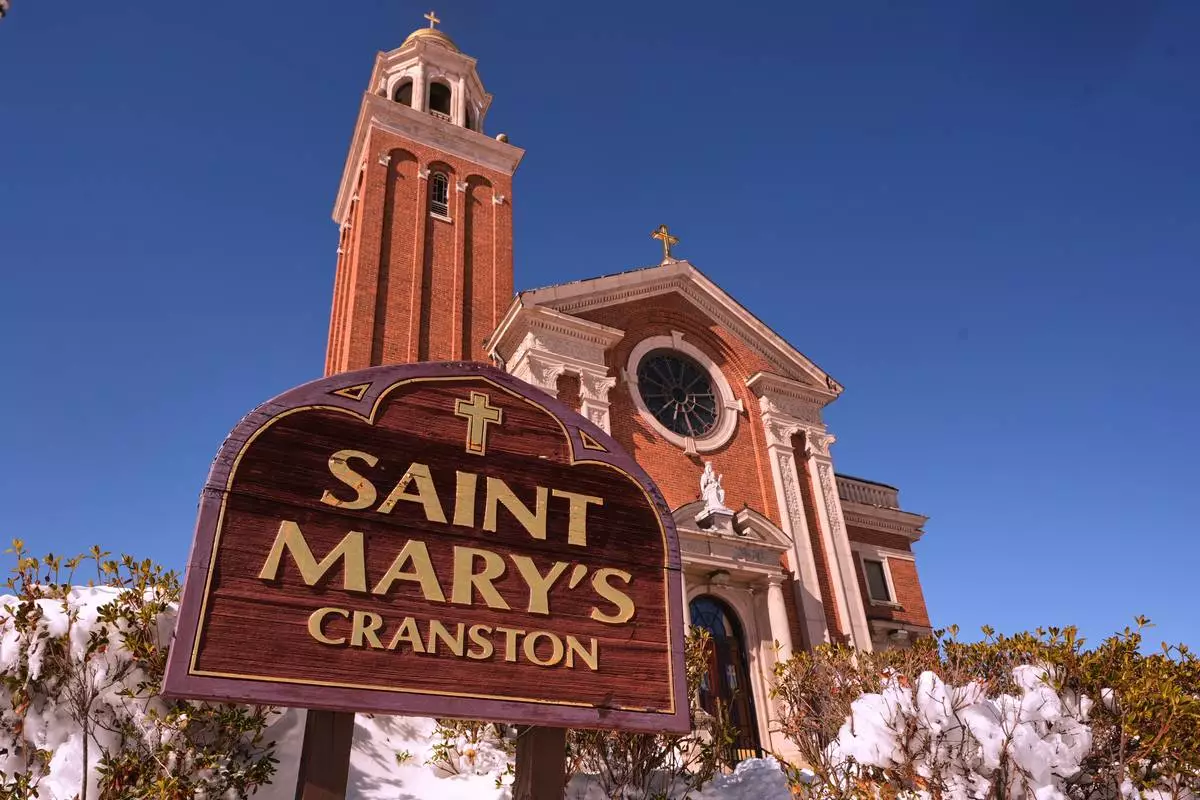
St. Mary's Church is seen Tuesday, Feb. 24, 2026, in Cranston, R.I. (AP Photo/Charles Krupa)
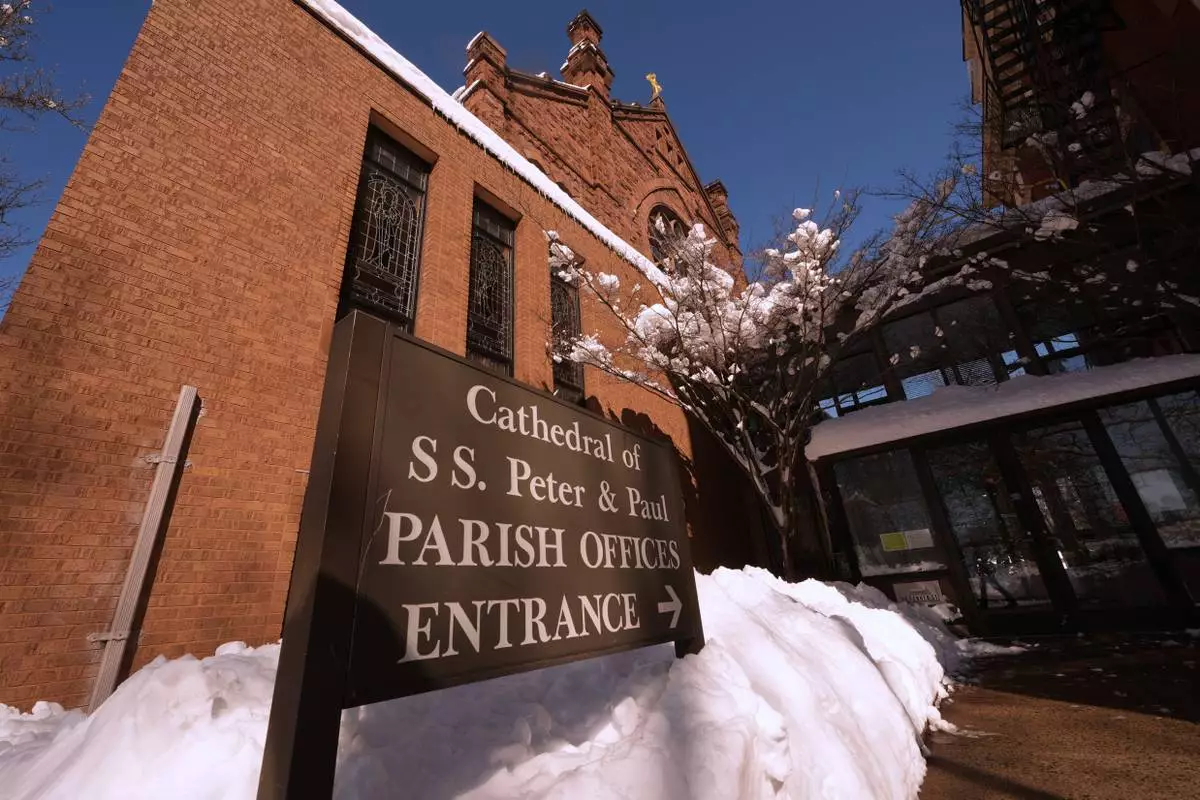
Cathedral of Saints Peter and Paul, which serves as the home church of the Roman Catholic Diocese of Providence, is seen Tuesday, Feb. 24, 2026, in Providence, R.I. (AP Photo/Charles Krupa)
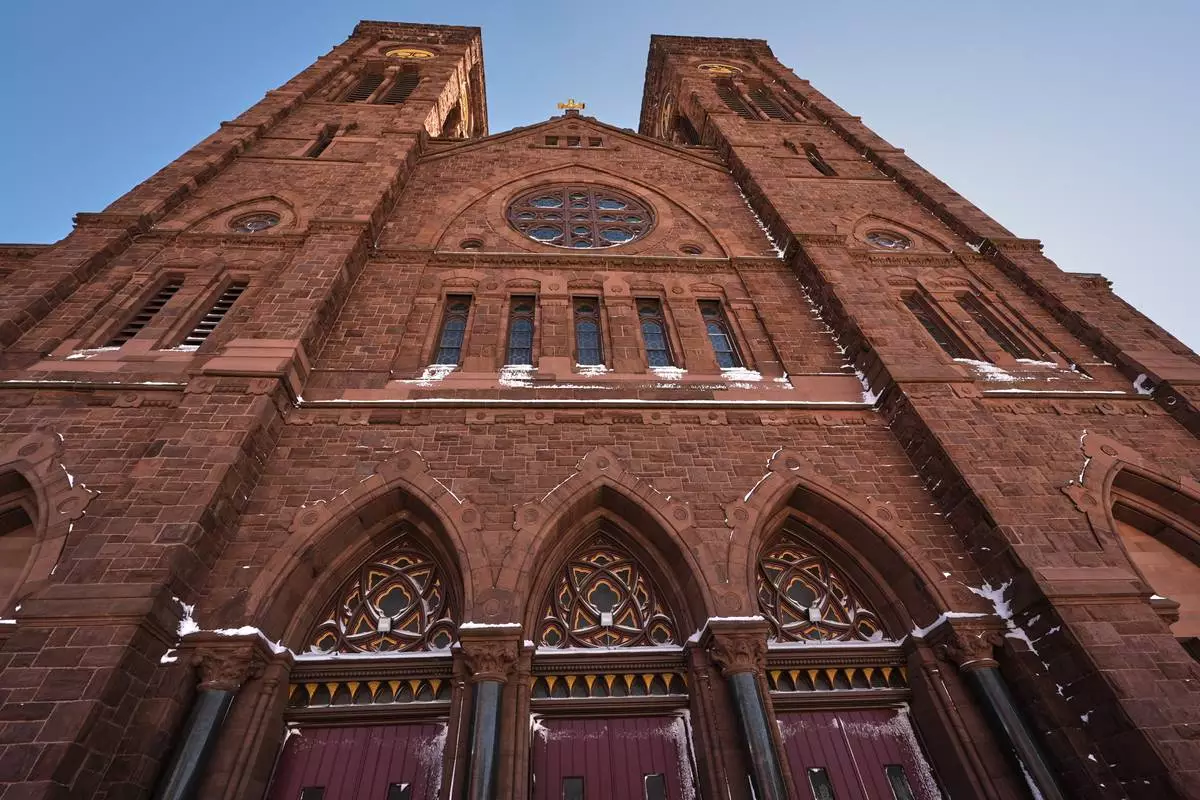
Cathedral of Saints Peter and Paul, which serves as the home church of the Roman Catholic Diocese of Providence, is seen Tuesday Feb. 24, 2026, in Providence, R.I. (AP Photo/Charles Krupa)
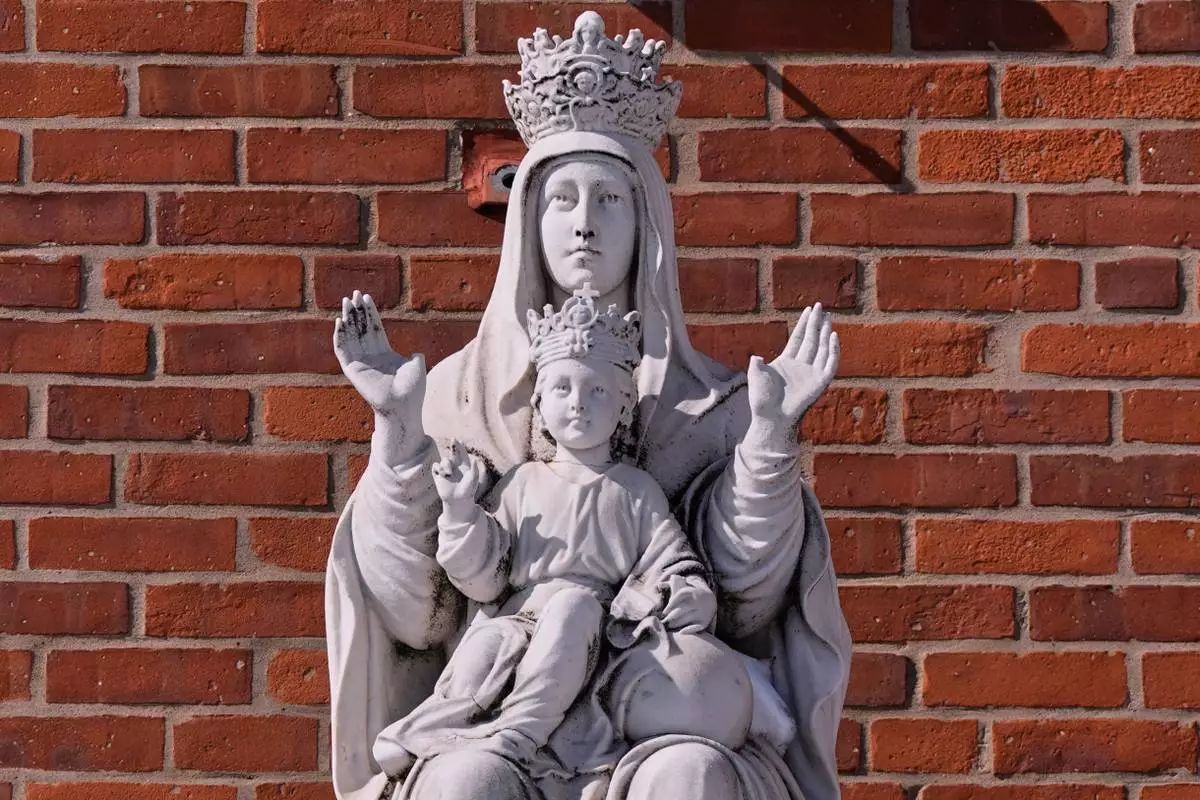
A statue of the Virgin Mary and baby Jesus is displayed outside St. Mary's Church, Tuesday, Feb. 24, 2026, in Cranston, R.I. (AP Photo/Charles Krupa)
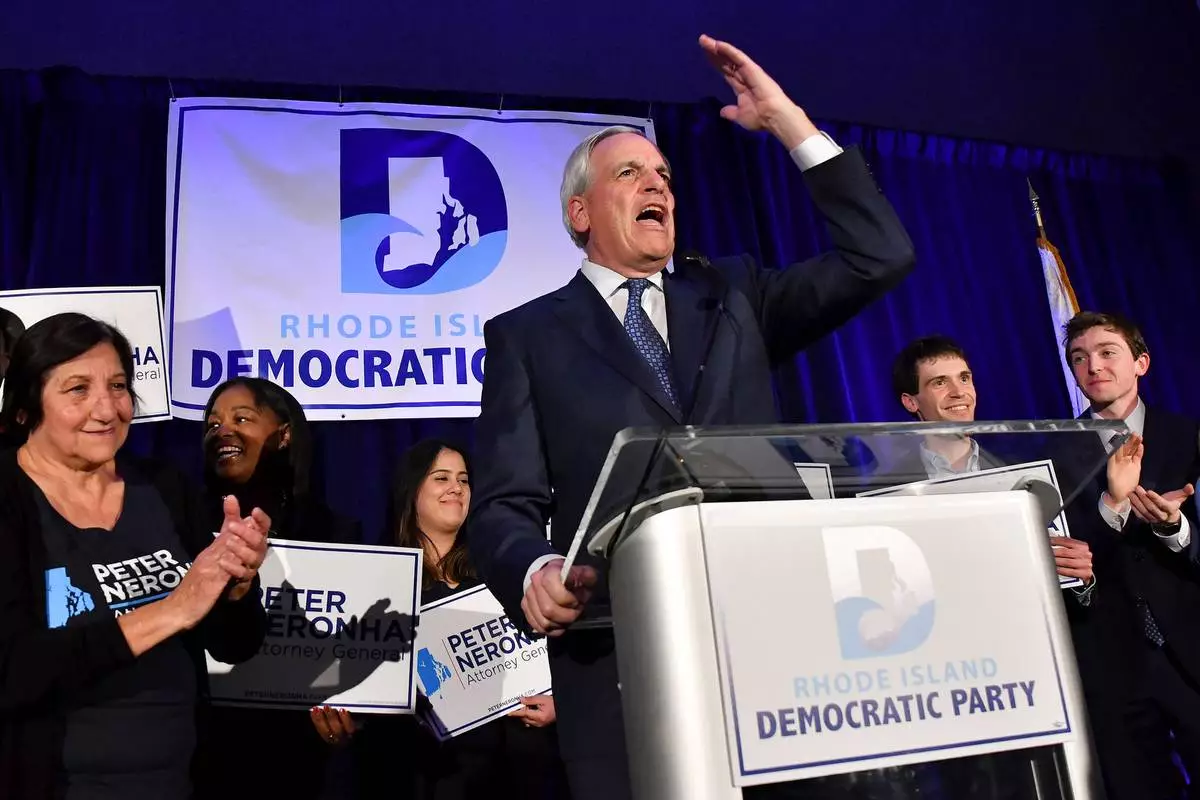
FILE - Attorney General Peter Neronha gives a victory speech after winning a second term, during an election-night gathering of Rhode Island Democratic candidates and supporters on Nov. 8, 2022, in Providence, R.I. . (AP Photo/Mark Stockwell, File)