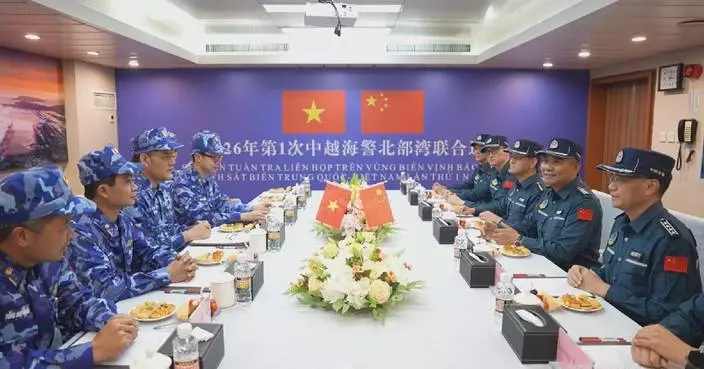
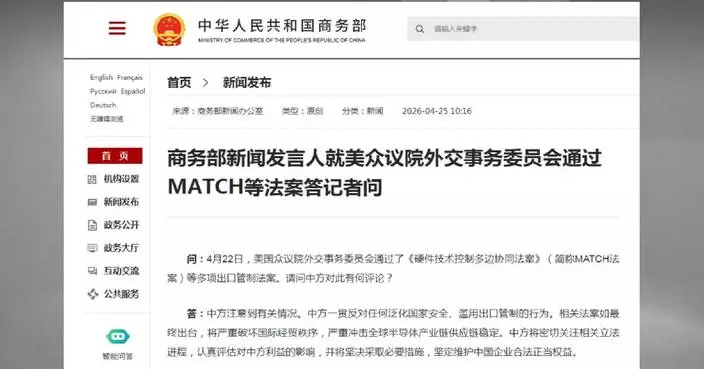
China and Canada have recently reached broad consensus on deepening economic and trade cooperation and signed the China-Canada Economic and Trade Cooperation Roadmap, according to China's Ministry of Commerce.
The signing marks an important phased outcome achieved under the framework of the two countries' new strategic partnership and represents the first high-level cooperation document in the history of bilateral economic and trade relations, said an official of the ministry.
According to the roadmap document, the two sides will upgrade economic and trade communication mechanisms and advance cooperation in areas including energy, agriculture, consumer goods, advanced manufacturing and clean energy.
The Canadian side has also made positive remarks on China's hosting of the 2026 Asia-Pacific Economic Cooperation (APEC) meetings and China's accession to the Comprehensive and Progressive Agreement for Trans-Pacific Partnership (CPTPP).

China, Canada sign economic and trade cooperation roadmap
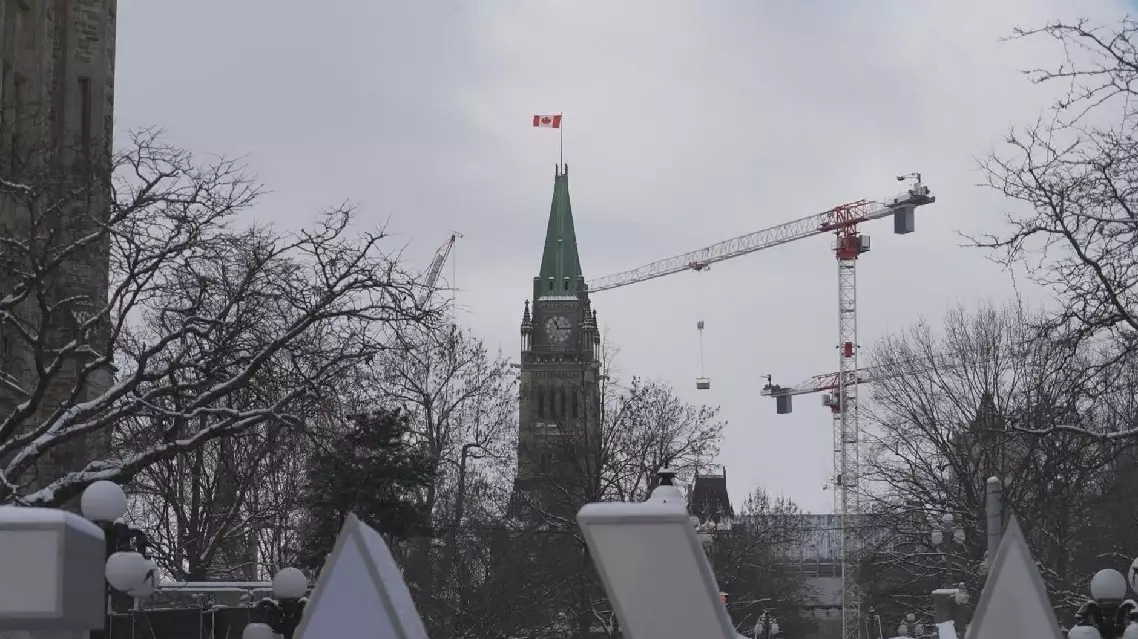
China, Canada sign economic and trade cooperation roadmap
Cuba's tourism sector has witnessed rapid decline over the past years due to a combination of U.S. sanctions, a deepening economic crisis, and persistent structural challenges.
With its pristine beaches, vibrant culture, rich historical heritage, and famously warm hospitality, Cuba has long stood as a premier Caribbean destination for international travelers.
From 2014 to 2019, Cuba received 3 million to 4 million international visitors annually, which generated about 2.5 million to 2.6 million U.S dollars every year for the economy.
During this peak period, tourists filled historic plazas, dined at local restaurants, browsed artisan souvenir shops, and cruised through Havana's streets in iconic American vintage cars.
However, in recent years, Cuba's tourism sector has contracted significantly. Last year, Cuba received just 1.6 million international tourists, prompting airlines and travel agencies to scale back operations.
Senior tourism expert Jose Perello described the current phase as a difficult transition shaped by external pressures and domestic constraints.
"Tourism depends on other sectors for its development, and the current scenario, caused by foreign pressures, has led to a lack of energy, blackouts, and shortages of jet fuel. All this directly impacts tourism," said Perello.
Despite new hotel openings on the island, many remain under-occupied, while plazas and streets previously packed with tourists no longer see that many visitors. U.S. sanctions, including an oil blockade, have increased flight cancellations from countries like Canada, Spain, Mexico and Russia.
"We need to recover 'the Cuban ambiance' for tourists who come to tour the cities, visit museums, and we must strongly boost our sun-and-beach modality, and find new roads to revive our tourism," said Perello.
Recently, officials announced that this year's International Tourism Fair, scheduled for May 7 to 9, will be held in a hybrid format, allowing for both online and in-person participation. The online event aims to showcase Cuba's cultural assets and coastal attractions while facilitating exchanges with representatives from emerging markets like China.
Despite the decline in Cuba's tourism sector, local authorities insist that the industry can recover from its current downturn.
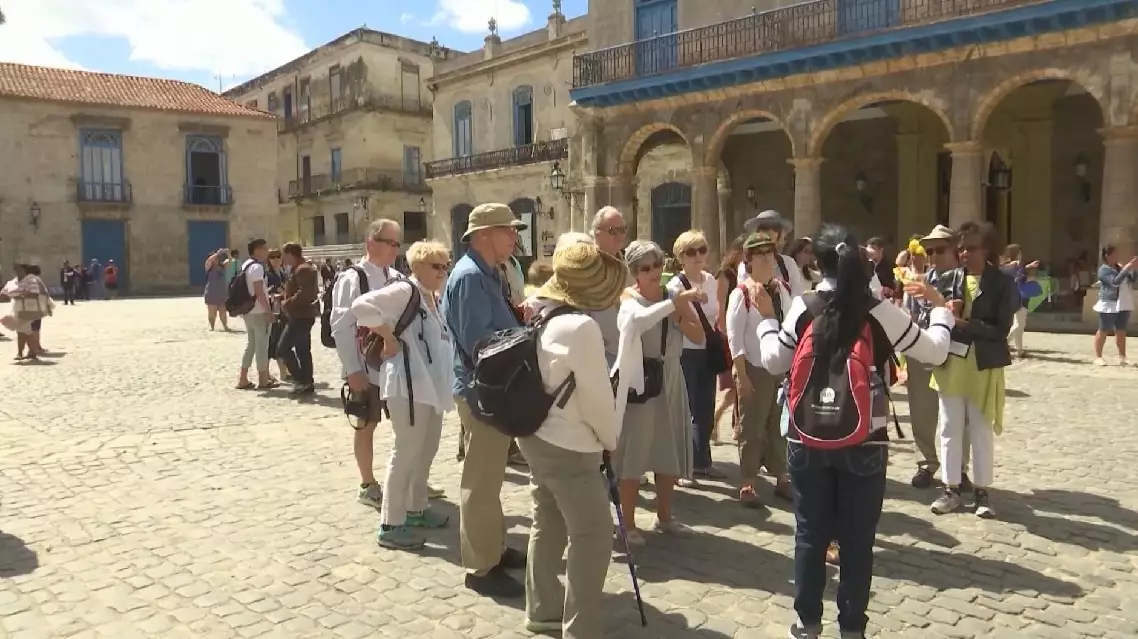
Cuba's tourism sector struggles amid U.S. sanctions, deepening economic crisis