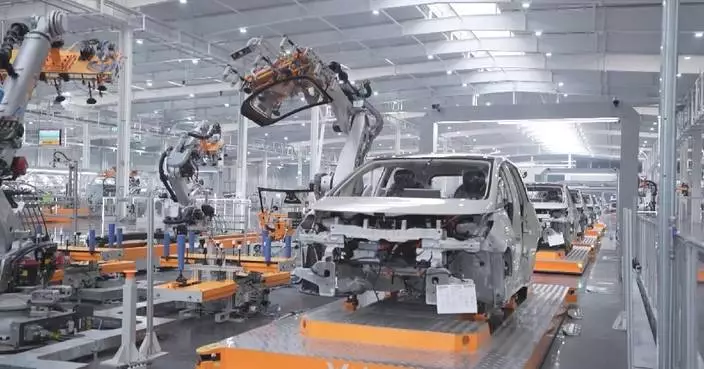
Canada will grant an annual quota of 49,000 Chinese-made electric vehicles (EVs), under which imports will enjoy a most-favored-nation tariff rate of 6.1 percent and will no longer be subject to the additional 100-percent surcharge, with the quota set to increase year by year at a certain proportion, China's Ministry of Commerce said.
A ministry official said the move represents a positive step taken by the Canadian side in the right direction and is also good news for Chinese EVs seeking to expand their presence in the Canadian market.
China hopes that Canada will actively fulfill its relevant commitments and continue to work in the same direction with China, the official said, adding that the two sides should, through friendly consultations, create a fairer, more stable and non-discriminatory environment for further expanding bilateral trade and investment cooperation in the EV sector.
The ministry also noted that China and Canada have recently conducted multiple rounds of intensive consultations at various levels on economic and trade issues of mutual concern.
According to the ministry official, the two sides have reached preliminary arrangements in areas including EVs, steel and aluminum products, rapeseed, and agricultural and aquatic products.
At the same time, positive consensus has been reached on issues such as increasing direct flights between the two nations, improving the business environment, and inspection and quarantine of agricultural products.
This marks not only an important step taken by both sides toward addressing each other's economic and trade concerns, but also a new starting point for deepening bilateral economic and trade cooperation, according to the ministry.

Canada to grant tariff quota for Chinese EVs: Commerce Ministry


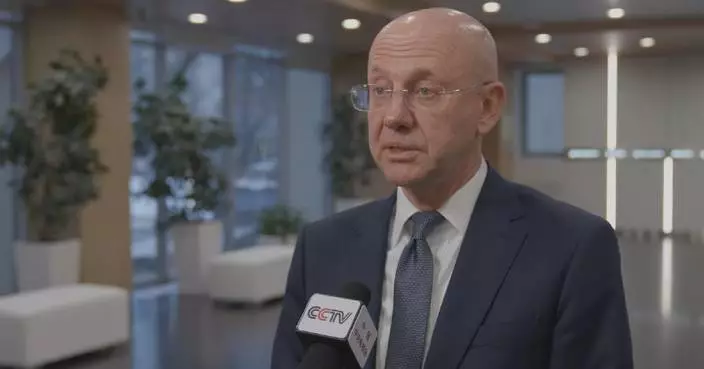
Canada and China can achieve a win-win situation as the two economies are structurally complementary, said a think-tank expert in an interview with the China Global Television Network (CGTN) on Saturday.
Paul Samson, president of the Center for International Governance Innovation (CIGI), an independent, non-partisan think-tank on global governance based in Canada, said despite that there are also some irritants in the Canada-China relations, he believes that the strategic dialogue between the two countries can solve the problems.
"The two economies are complementary structurally. They complement each other -- natural resources, energy, finished products. There's an easy win-win space there for Canada and China. We have some irritants, as well, that I think the strategic dialogue can start solving as well," he said.
Samson also said that he believes the government of Canadian Prime Minister Mark Carney will roll back some of the tariffs imposed by Canada, which is in the interest of the country.
"The Carney government has the guts and the desire to do what's in Canada's interest. I think they will be willing to roll back tariffs. Right now, we've got tariffs imposed on Canadian goods from the United States and we have them imposed by China. Canada has got to find a way to negotiate with both simultaneously," he said.
Carney, who was on an official visit to China from Wednesday through Saturday, said on Friday that his visit to China had been "historic and productive" and that the two sides had made significant progress in several key areas, underscoring the importance of trade ties between the two countries.
China and Canada have reached specific arrangements to properly address trade issues related to electric vehicles, steel and aluminum products, canola, and agricultural and aquatic products, China's Commerce Ministry said on Friday.
The two sides have also reached positive consensus on increasing direct flights, improving the business environment, and inspection and quarantine of agricultural products, it said.
Canada, China can achieve win-win situation: think-tank expert