U.S. stocks registered material losses on Tuesday, though major indices recovered from a steep early sell-off, as investors grappled with concerns over the military operation in the Middle East.
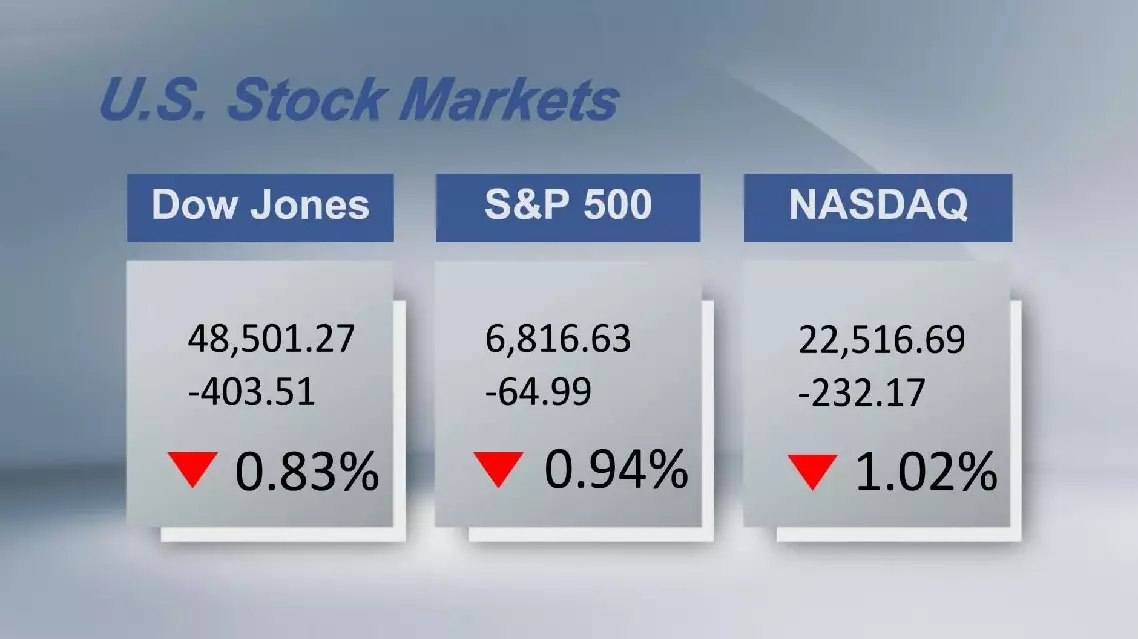
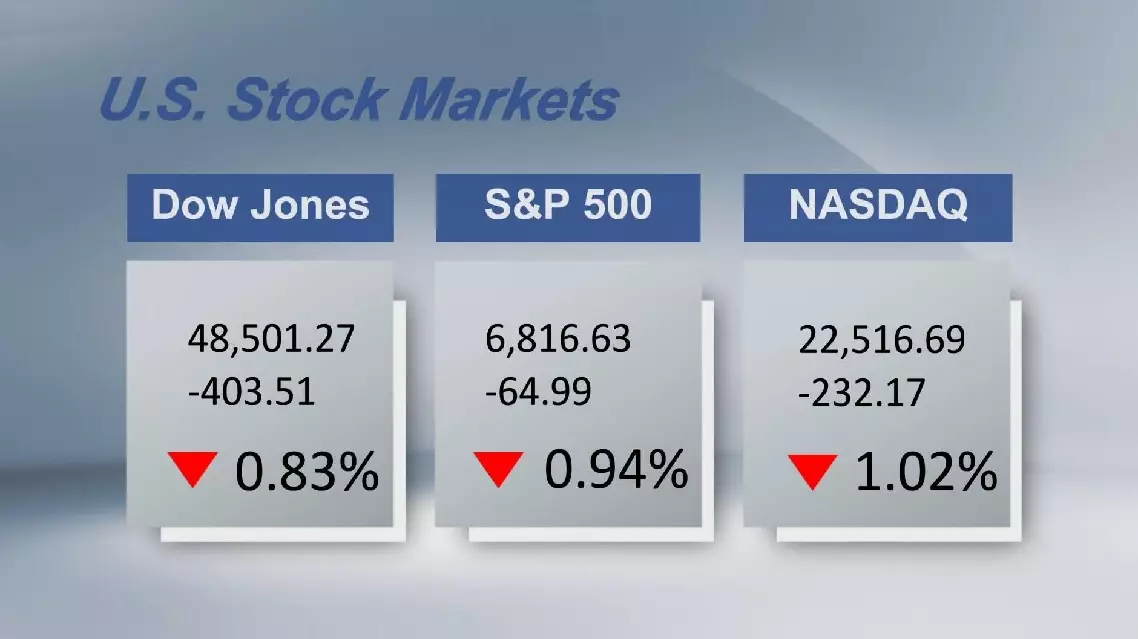
The Dow Jones Industrial Average fell 403.51 points or 0.83 percent to 48,501.27. The S and P 500 sank 64.99 points or 0.94 percent to 6,816.63. The Nasdaq Composite Index shed 232.17 points or 1.02 percent to 22,516.69.
All 11 primary S and P 500 sectors ended in the red. The materials and industrials sectors led the laggards, dropping 2.69 percent and 1.96 percent, respectively. The financials sector recorded the narrowest decline, shedding 0.18 percent.
Market anxiety intensified as investors worried that the widening conflict could draw in further military involvement. Wall Street's primary fear gauge, the Cboe Volatility Index, surged 9.93 percent to reach its highest level in three months.
In the energy markets, global benchmark Brent crude and U.S. West Texas Intermediate crude both finished the session over 4.5 percent higher, marking a significant retreat from their intraday highs.
The initial jump in energy prices briefly pushed the U.S. Treasury yields higher on fears that a sustained energy shock could cause inflation to flare back up, complicating the Federal Reserve's anticipated interest rate cuts. However, yields later pared their advances as oil prices cooled.
Despite the volatility, some analysts suggested the market reaction reflects a recalibration rather than outright panic. Catalyst Funds CIO David Miller noted that the current market movements do not indicate a belief in a significant, long-term impact.
"Those aren't moves that suggest investors believe this will have a significant long-term impact on equity markets," he said. "If that were the case, you'd likely see 5 percent types of decline. It seems more like investors are adjusting expectations from a very short conflict, something that wraps up quickly, to one that could last several weeks."
U.S. energy firms, including Exxon Mobil, Chevron, Marathon Petroleum, Occidental Petroleum, and Phillips 66, reversed their previous session's gains to close lower. Similarly, defense contractors such as Lockheed Martin, RTX, and Northrop Grumman experienced mild declines after rising sharply on Monday.
In corporate earnings news, Target shares advanced 6.74 percent after the retail giant issued a full-year profit and revenue guidance that exceeded market expectations. In other notable post-earnings movements, Plug Power jumped 23.2 percent, while MongoDB plummeted 22.24 percent as a management shakeup and cautious near-term guidance triggered a dramatic selloff that does not match the underlying results.
US stocks sink as Wall Street fears prolonged conflict in Middle East
US stocks sink as Wall Street fears prolonged conflict in Middle East