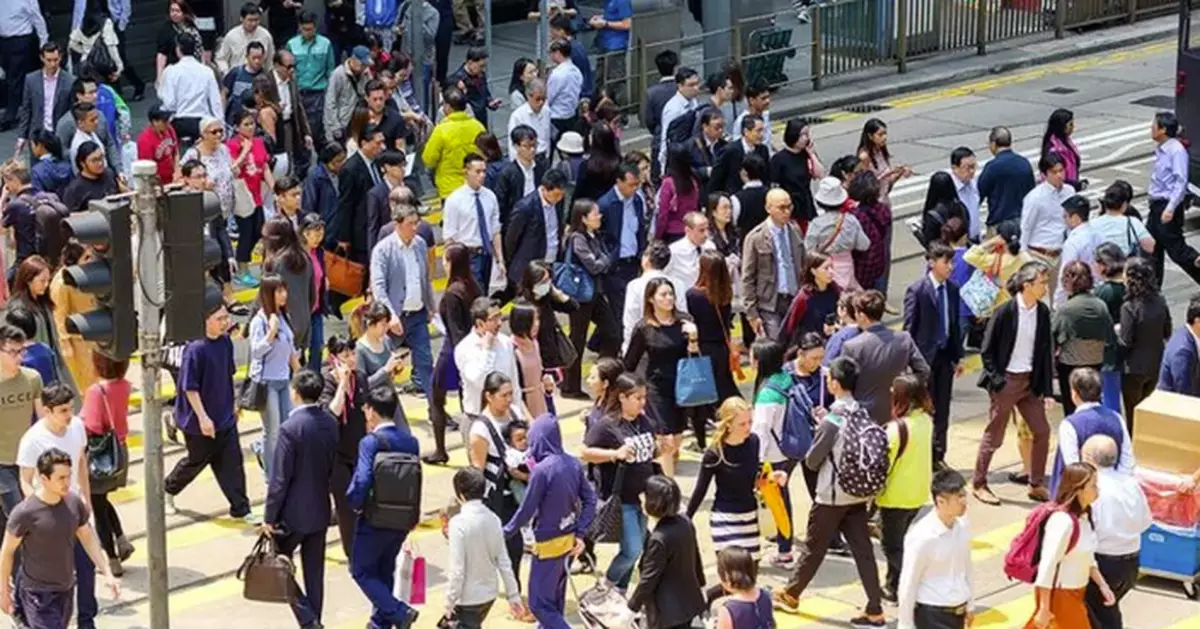
The new "468" rule for continuous employment will take effect from 18 January and is expected to benefit over 10,000 employees. The "468" rule is more lenient than the current "418" rule. The new rule stipulates that if an employee works for the same employer for four weeks, accumulating no less than 68 hours of work within those four weeks, they will be considered employed under a "continuous contract" and entitled to benefits such as paid annual leave and sickness benefit, etc.

Mr. Lam Chun-sing, Photo by Bastille Post
Mr. Lam Chun-sing, the chairman of the Federation of Hong Kong and Kowloon Labour Unions and the Legislative Council Member, stated that the revised rule can benefit more employees by lowering the threshold for working hours. Nevertheless, he also mentioned that some workmates have reported that their companies intend to reduce working hours to less than 68 hours, which is mostly the case in the food and beverage industry or club service sectors. Some workmates also reported that the same position might be employed by two different companies for the companies to evade the requirement of a continuous contract.
Mr. Lam emphasized that employers cannot unilaterally change contracts and urged employees to be aware of their rights.
Mr. Ricky Chan, the Executive Deputy Chairman of the Federation of Hong Kong Industries and one of the Employer Delegates of the Labour Advisory Board, stated that the implementation of the "468" rule under the current economic conditions will present employers with certain difficulties. He expected a greater impact would be on the industries with a large number of part-time or temporary employees, such as retail, catering, logistics and transportation, and tutoring, etc.
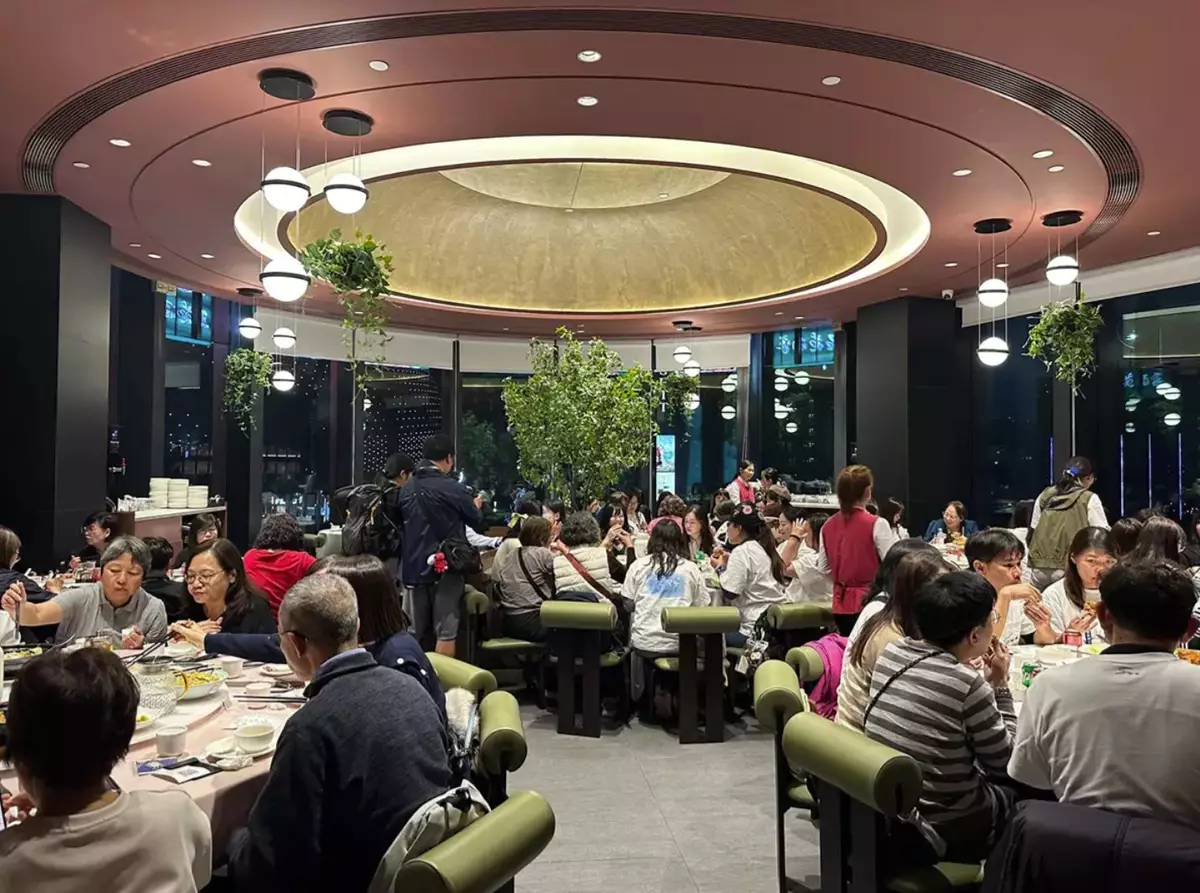
Mr. Ricky Chan expected a greater impact would be on the industries with a large number of part-time or temporary employees, such as retail, catering, logistics and transportation, and tutoring, etc. Photo source: reference image
Nevertheless, Mr. Chan was confident that most employers would not deliberately violate the law or engage in any behavior of "crossing the line". He believed that the "468" rule can attract more people back to the labor market and suggested that employers learn about the rule details as soon as possible and make appropriate staffing arrangements based on the economic situation.
Hong Kong Customs detects two dangerous drugs cases and seizes suspected drugs worth about $7.95 million
Hong Kong Customs detected two dangerous drugs cases in Tseung Kwan O and Hong Kong International Airport respectively yesterday (May 21) and today (May 22), and seized a total of about 21.8 kilograms of assorted drugs with a total estimated market value of about $7.95 million. Two men and one woman, aged between 38 and 49, were arrested.
In the first case, Customs officers intercepted a 48-year-old man and a 49-year-old woman in Tseung Kwan O during an anti-narcotics operation yesterday afternoon. About 3.8kg of suspected drugs, including ketamine, methamphetamine, etomidate capsules, psilocybin mushrooms, MDMA and a batch of suspected drug packaging paraphernalia were found in their residence in the same district. They were then arrested.
In the second case, a 38-year-old male passenger arrived in Hong Kong from Amsterdam, the Netherlands, today. During customs clearance, Customs officers found about 18kg of suspected ketamine inside his check-in suitcase and 33 sticks of duty-not-paid cigarette inside his carry-on baggage. The man was subsequently arrested.
The arrested man and woman in the first case have been jointly charged with one count of trafficking in a dangerous drug and one count of possession of apparatus fit and intended for the inhalation of a dangerous drug. The case will be brought up at the Kwun Tong Magistrates' Courts tomorrow (May 23), while an investigation is ongoing for the second case.
Customs will continue to step up enforcement against drug trafficking activities through intelligence analysis. The department also reminds members of the public to stay alert and not participate in drug trafficking activities for monetary return. They must not accept hiring or delegation from another party to carry controlled items into and out of Hong Kong. They are also reminded not to carry unknown items for other people.
Customs will continue to apply a risk assessment approach and focus on selecting passengers from high-risk regions for clearance to combat transnational drug trafficking activities.
Under the Dangerous Drugs Ordinance, trafficking in a dangerous drug is a serious offence. The maximum penalty upon conviction is a fine of $5 million and life imprisonment.
Under the Dutiable Commodities Ordinance, cigarettes are dutiable goods to which the DCO applies. Any person who imports, deals with, possesses, sells or buys illicit cigarettes commits an offence. The maximum penalty upon conviction is a fine of $2 million and imprisonment for seven years.
Members of the public may report any suspected drug trafficking activities to Customs' 24-hour hotline 182 8080 or its dedicated crime-reporting email account (crimereport@customs.gov.hk) or online form (eform.cefs.gov.hk/form/ced002).
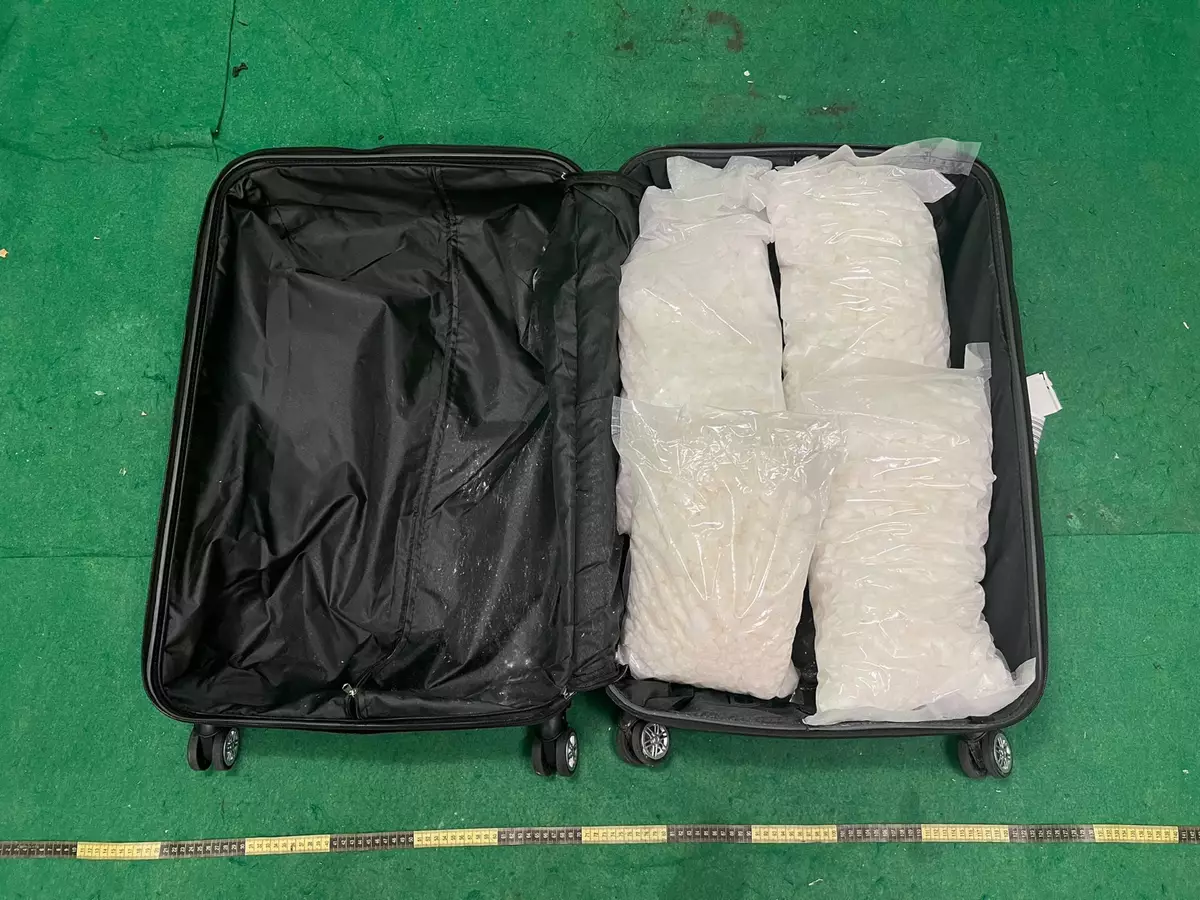
Hong Kong Customs detects two dangerous drugs cases and seizes suspected drugs worth about $7.95 million Source: HKSAR Government Press Releases
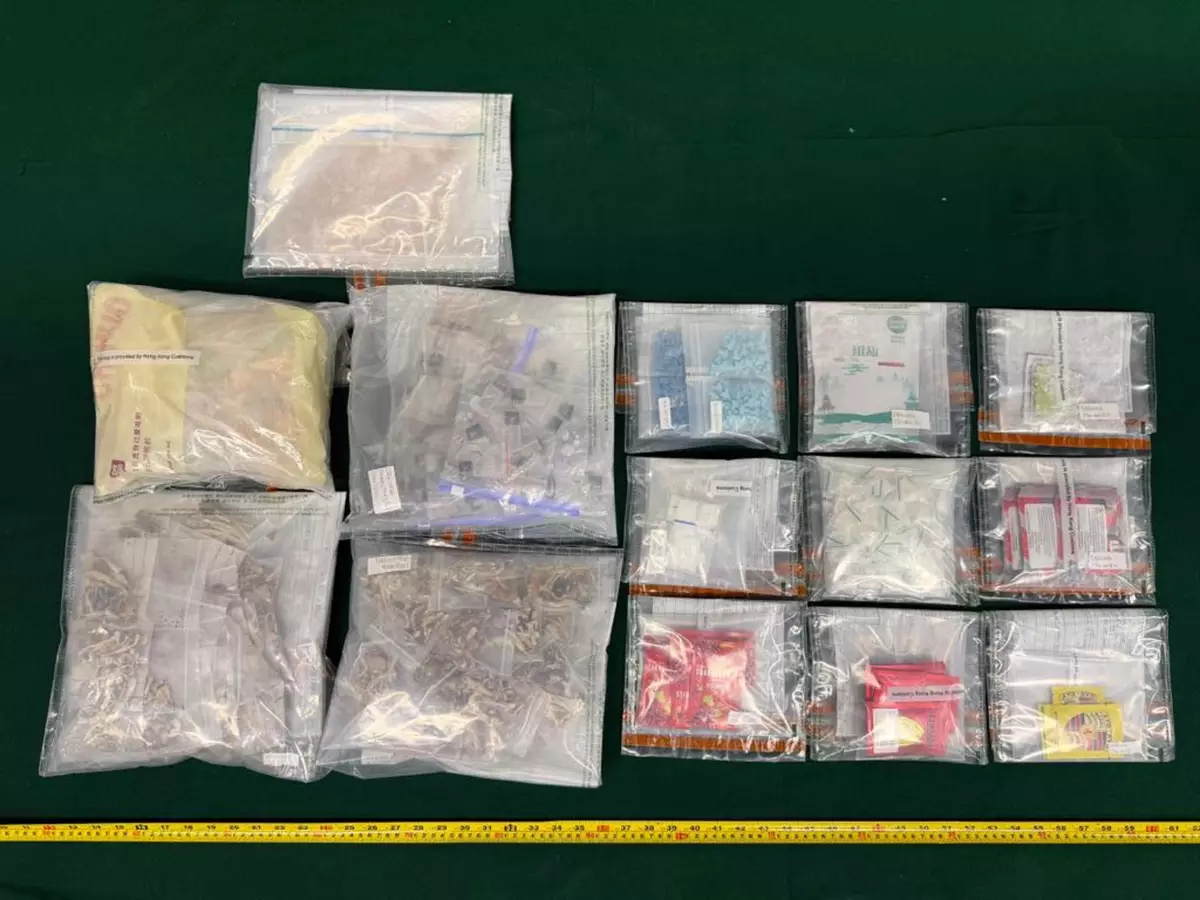
Hong Kong Customs detects two dangerous drugs cases and seizes suspected drugs worth about $7.95 million Source: HKSAR Government Press Releases