The U.S. has never won an Olympic medal in biathlon, the only winter sport where that's the case.
The drought could come to an end next month at the Winter Olympics.
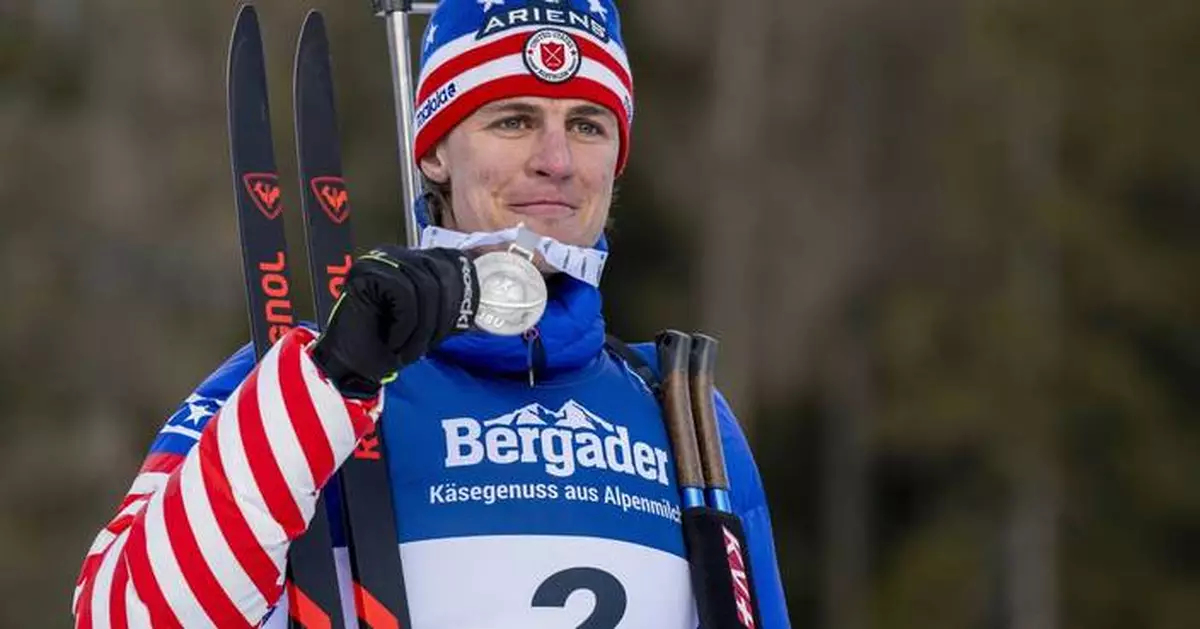
The team brought on Campbell Wright, a rising star and dual citizen from New Zealand who combined fast skiing and precision shooting to win two world championship silver medals last year and has had strong results this season.
In addition, the team has a homecourt advantage, of sorts: Their Italian head coach, Armin Auchentaller, grew up in Antholz, the village that's hosting the Olympic biathlon competitions. His assistant coach and support staff are also from the region, ensuring the team has the inside scoop on the ski trails, snow, climate, food and housing.
“We feel Antholz is almost a second home to us," said U.S. Biathlon CEO Jack Gierhart. "Armin made it easy for us to operate there. That will enable our athletes to focus and feel relatively relaxed, which is really important in this level of competition.”
Wright said he trusts his fitness and training as he heads to the Games, where the pressure will be on him to perform.
“I think having success in the past just gives me confidence because I’ve already done more than I thought I could do in this sport, so the way I see it anything extra is just cream,” he told The Associated Press.
Auchentaller said working with Wright has been one of the most rewarding experiences of his career.
“From the very start, you could tell he had something special — not just raw talent, but that spark of joy when he moved, competed, trained. That early talent was obvious,” Auchentaller said. “But what made working with him truly remarkable was how quickly he combined that talent with professionalism.”
Wright will be joined by Olympic newbie Maxime Germain and Paul Schommer, who is competing in his second Games, while Sean Doherty will race in his fourth. On the women’s side, Joanne Reid returns to competition after two years off and heads to her third Olympics. Teammate Deedra Irwin returns for her second and two new members, Margie Freed and Lucinda Anderson, will make their Olympic debut.
Wright, a 23-year-old from Wanaka, New Zealand, was born and raised Down Under by American parents who emigrated there in the 1990s. He spent his early years at the Snow Farm cross-country ski center, learned biathlon in Europe and raced for New Zealand at the Beijing Olympics. Seeking support from a seasoned team, his dual citizenship allowed him to join the U.S. in 2023.
That support has helped him to thrive.
In February 2025, he became the first U.S. biathlete to win two medals at one world championship event, taking home back-to-back silvers in the sprint and pursuit competitions in Lenzerheide, Switzerland. They were the first U.S. world medals since Susan Dunklee won silver in 2020. She also won silver and Lowell Bailey gold in 2017.
Auchentaller said he was proud but not surprised by Wright's performance.
“I knew that beneath his talent lay a core of grit, a fearless heart, and a grounded, simple work ethic,” Auchentaller said. “His success didn’t feel like luck or a one-off; it felt like the natural outcome of years of hard, intelligent work, fueled by genuine love for what he does. Watching him step onto that podium, I saw a young man’s passion and dedication pay off — and I felt fortunate to have witnessed his growth from early promise to world-class performer.”
Wright's Kiwi accent and light-hearted nature has endeared him to fans around the world. He often smiles and waves at adoring supporters who call his name from the stands, looking like his having the time of his life.
Wright's multiple top-10 finishes on the World Cup circuit last season secured him the the U23 Globe for the best athlete 23 years old or younger, another first for a U.S. biathlete. He said his youth helps makes racing less stressful.
“I’m hopefully at the start of a long career and I think that also helps take the pressure off,” he said. “If this season goes poorly, there are a lot more years for me to try again.”
Early in the World Cup season, Wright made his presence known by skiing to the front of the pack and consistently shooting well even in high-stress head-to-head battles. He said his training plan worked for him last season, so he has no intention of changing things, even though it's an Olympic year.
“I think it’s a good one,” he said. “I think a lot of athletes tie themselves in knots trying to reinvent the wheel, but what we do isn’t complicated, it’s just hard.”
Auchentaller said what makes Wright special as a biathlete goes beyond a single skill. He has speed, focus, a positive attitude, sure, “but the real difference lies in his simplicity.” He doesn't overthink things and maintains a calm confidence even when things don't go as planned, which is inevitable in biathlon.
Suddenly the wind changes direction, you miss the first two shots, you drop your sunglasses, someone crashes in front of you, you drop a magazine. Every race has the potential for mishaps.
“Instead of panicking or doubting himself, he stays grounded, believes in the work he’s done, and keeps moving forward,” Auchentaller said. “That trust, combined with his simplicity and adaptability, is what makes him truly stand out in the sport.”
If Wright can keep it up, it could fulfill a dream that has eluded the U.S. for decades.
AP Winter Olympics: https://apnews.com/hub/milan-cortina-2026-winter-olympics
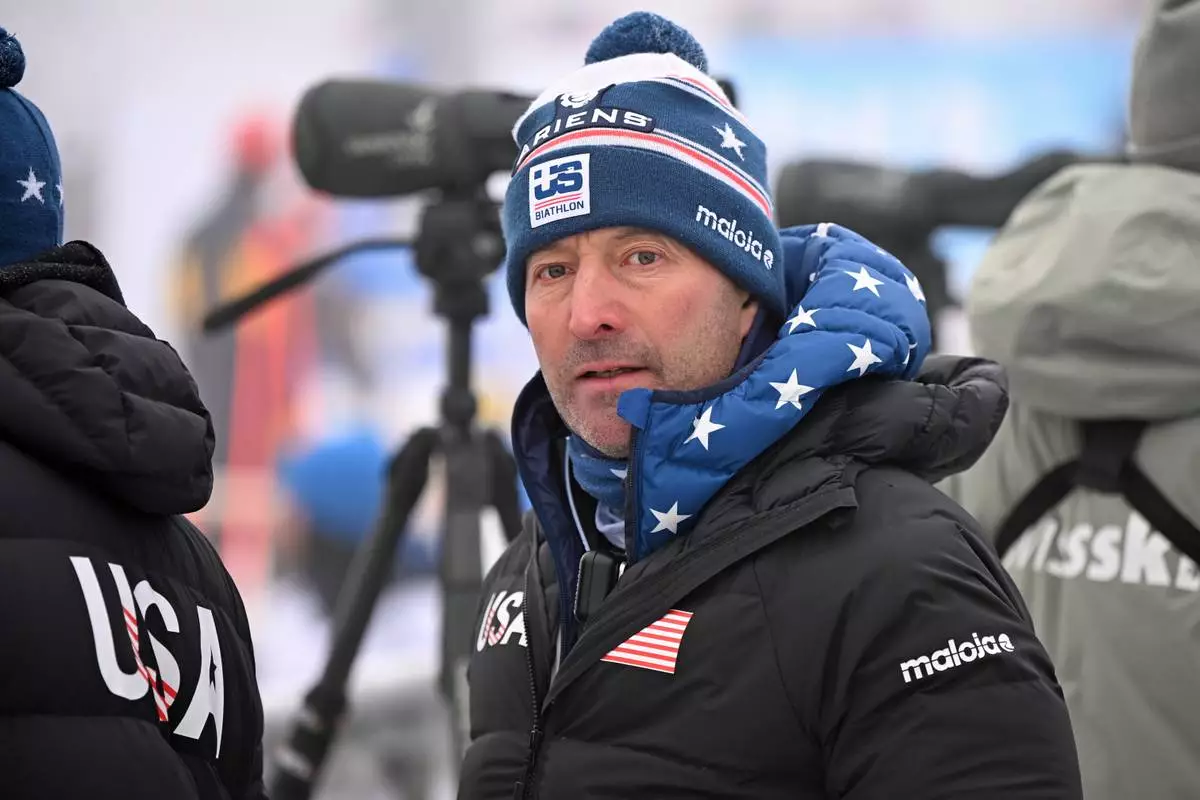
FILE - U.S. Coach Armin Auchentaller looks on at the shooting range of the World Cup of Biathlon in Oberhof, Germany, Thursday Jan. 8, 2026. (Jennifer Brückner/dpa via AP, File)

FILE - Silver medallist Campbell Wright of the United States poses after the podium ceremony for the men's 12.5k pursuit race at the IBU Biathlon World Championships in Lenzerheide, Switzerland, Sunday, Feb. 16, 2025. (Gian Ehrenzeller/Keystone via AP, File)
ISLAMABAD (AP) — Pakistan moved ahead Monday with preparations for a new round of talks between the United States and Iran two days before a tenuous ceasefire is set to expire, even as renewed conflict around the Strait of Hormuz raised questions about whether the meeting would take place.
Over the weekend, the U.S. attacked and seized an Iranian-flagged cargo vessel that it said had tried to evade its blockade of Iranian ports. Iran’s joint military command vowed to respond, and its foreign minister, Abbas Aragchi, told his Pakistani counterpart that American threats to Iranian ships and ports were “clear signs” of Washington’s disingenuousness ahead of the planned talks, Iran state media reported.
With tensions flaring and the ceasefire due to expire midweek, Pakistan pushed for talks to resume Tuesday as planned. Pakistan said Monday that Interior Minister Mohsin Naqvi held separate meetings in Islamabad with the Iranian ambassador and the acting U.S. ambassador to discuss arrangements.
Iran throttled traffic through the strait, which connects the Persian Gulf to the open seas, shortly after the U.S. and Israel attacked Iran on Feb. 28 to start the war. The U.S. has also instituted a blockade of Iranian ports. Roughly one-fifth of the world’s oil trade normally passes through the strait.
Meanwhile, historic diplomatic talks between Israel and Lebanon were set to resume Thursday in Washington, an Israeli official and a U.S. official said. Both spoke on condition of anonymity to discuss the behind-the-scenes talks.
There was no immediate confirmation from Lebanon.
The Israeli and Lebanese ambassadors met last week for the first direct diplomatic talks in decades. Israel says the talks are aimed at disarming Hezbollah and reaching a peace agreement with Lebanon.
A 10-day ceasefire began Friday in Lebanon, where fighting between Israel and Iran-backed Hezbollah militants broke out two days after the U.S. and Israel launched their war on Iran.
Mediators said fighting in Lebanon, which has killed more than 2,290 people, was undermining efforts to end the conflict between Iran and the U.S.
Hezbollah opposes the talks but has observed the ceasefire.
U.S. President Donald Trump indicated that American negotiators were traveling Monday to the Pakistani capital.
“They’re heading over now,” Trump told the New York Post in an interview. “They’ll be there tonight.”
Trump told the newspaper the delegation included Vice President JD Vance, special envoy Steve Witkoff and Jared Kushner, Trump’s son-in-law. Administration officials declined to confirm whether Vance was en route to Islamabad.
Trump told Bloomberg News that he was “highly unlikely” to renew the ceasefire with Iran.
Iranian Foreign Ministry spokesperson Esmail Baghaei told reporters in Tehran on Monday that there were no plans yet to attend the talks with the U.S. But at the same time, he did not rule it out.
Two Pakistani officials said Monday that Iran has expressed a willingness to send a delegation to Islamabad. They spoke on condition of anonymity because they were not authorized to speak to the press.
Over the weekend, Iran said it had received new proposals from the U.S. but suggested that a wide gap remained between the sides. Issues that derailed the last round of negotiations included Iran’s nuclear enrichment program, its regional proxies and the Strait of Hormuz.
Since the war started, at least 3,375 people have been killed in Iran, according to a new toll released Monday in official Iranian media by Abbas Masjedi, the head of Iran’s Legal Medicine Organization. He did not break down casualties among civilians and security forces, instead just saying that 2,875 were male and 496 were female. Masjedi said 383 of the dead were children 18 years old and under.
Additionally, 23 people have died in Israel and more than a dozen in Gulf Arab states. Fifteen Israeli soldiers in Lebanon and 13 U.S. service members throughout the region have been killed.
Iran’s grip on the strait has also sent oil prices skyrocketing and given rise to one of the worst global energy crises in decades.
Oil prices recovered slightly following Iran’s announcement that the strait was being reopened following the Lebanon ceasefire announcement.
But then Trump said the U.S. blockade “will remain in full force” until Tehran reaches a deal with Washington. The U.S. military said Monday it has directed 27 ships to return to Iranian ports since the blockage began last week. The U.S. seizure of an Iranian cargo ship Sunday was the first interception under the blockade.
Iran’s joint military command called the armed boarding an act of piracy and a ceasefire violation, the state broadcaster said, and vowed to again enforce restrictions imposed early in the war. Iran on Saturday fired at ships trying to transit.
Oil prices were up again in trading on Monday, with Brent crude, the international standard, at about $93 a barrel — up from about $70 a barrel before the war started.
Iran early Monday warned it could keep up the global economic pain as ships remained unable to transit the strait, with hundreds of vessels waiting at each end for clearance.
“The choice is clear: either a free oil market for all, or the risk of significant costs for everyone,” Mohammad Reza Aref, first vice president of Iran, said in a social media post.
In other developments, Israeli Prime Minister Benjamin Netanyahu condemned the defacing of a statue of Jesus Christ by an Israeli soldier in Lebanon, saying he was “stunned and saddened.”
Photos surfaced over the weekend of the soldier using a sledgehammer to smash the head of a toppled Jesus statue. The Israeli military confirmed the images were genuine, setting off a wave of condemnation.
Gambrell reported from Dubai, United Arab Emirates, and Rising from Bangkok. Associated Press journalists Melanie Lidman in Tel Aviv, Israel; Josef Federman in Jerusalem; Joshua Boak and Matthew Lee in Washington and Russ Bynum in Savannah, Georgia, contributed to this report.
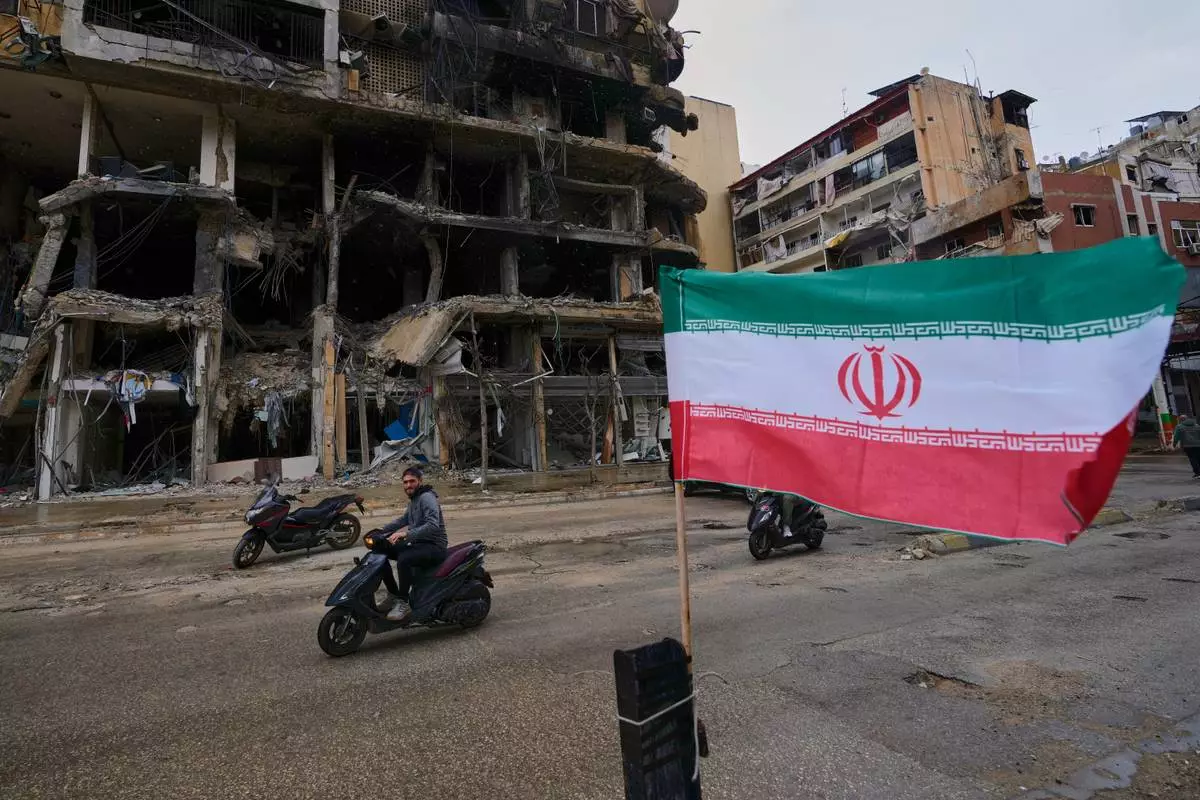
A man on his scooter passes next to an Iranian flag placed in front of a destroyed building, following a ceasefire between Hezbollah and Israel, in Dahiyeh, Beirut's southern suburbs, Lebanon, Monday, April 20, 2026. (AP Photo/Hussein Malla)
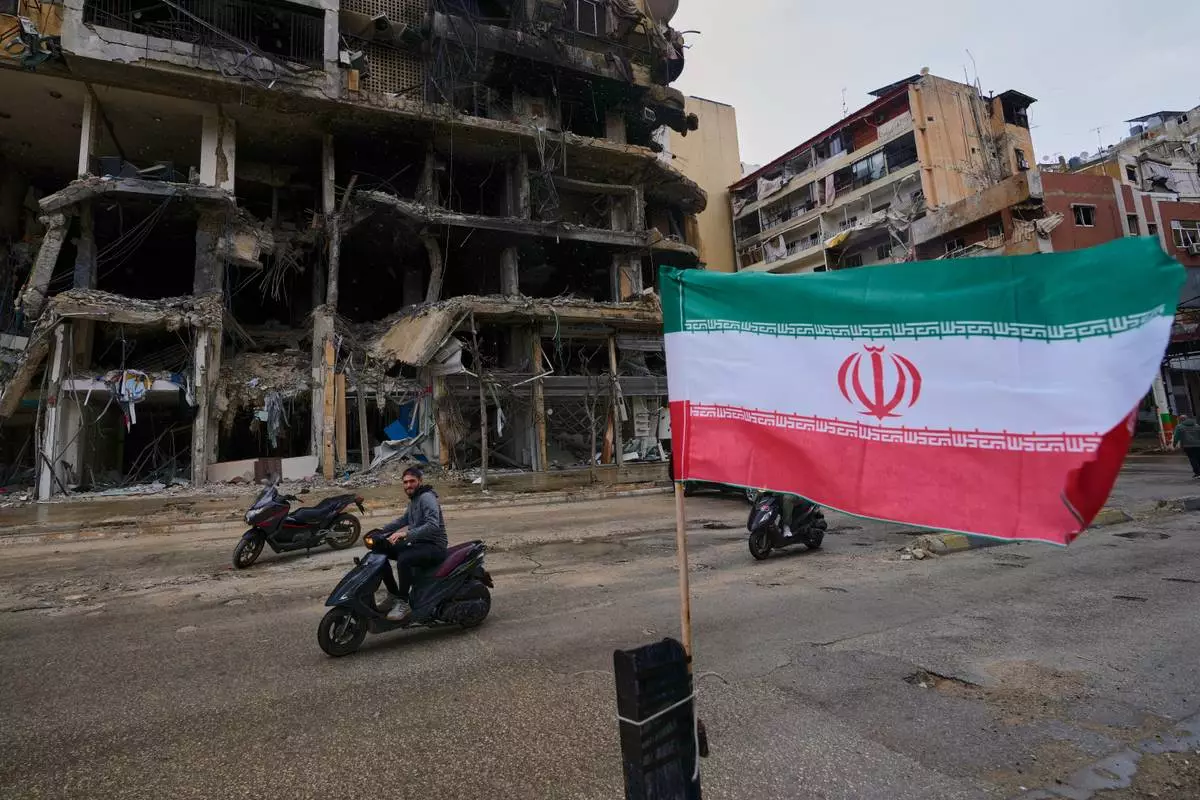
A man on his scooter passes next to an Iranian flag placed in front of a destroyed building, following a ceasefire between Hezbollah and Israel, in Dahiyeh, Beirut's southern suburbs, Lebanon, Monday, April 20, 2026. (AP Photo/Hussein Malla)
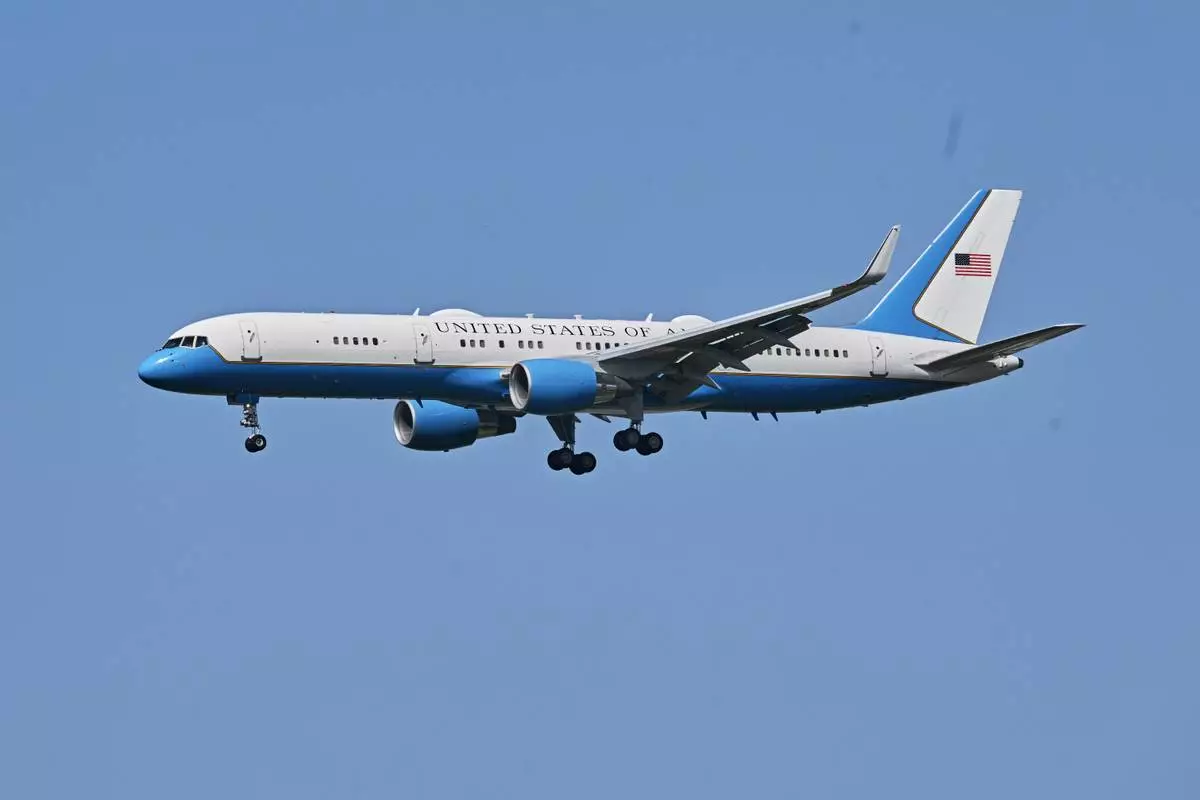
A U.S. Air Force Boeing C-32 plane approaches landing at Nur Khan airbase ahead of second round of negotiations between the U.S. and Iran, in Rawalpindi, Pakistan, Monday, April 20, 2026. (AP Photo/Ehsan Shahzad)
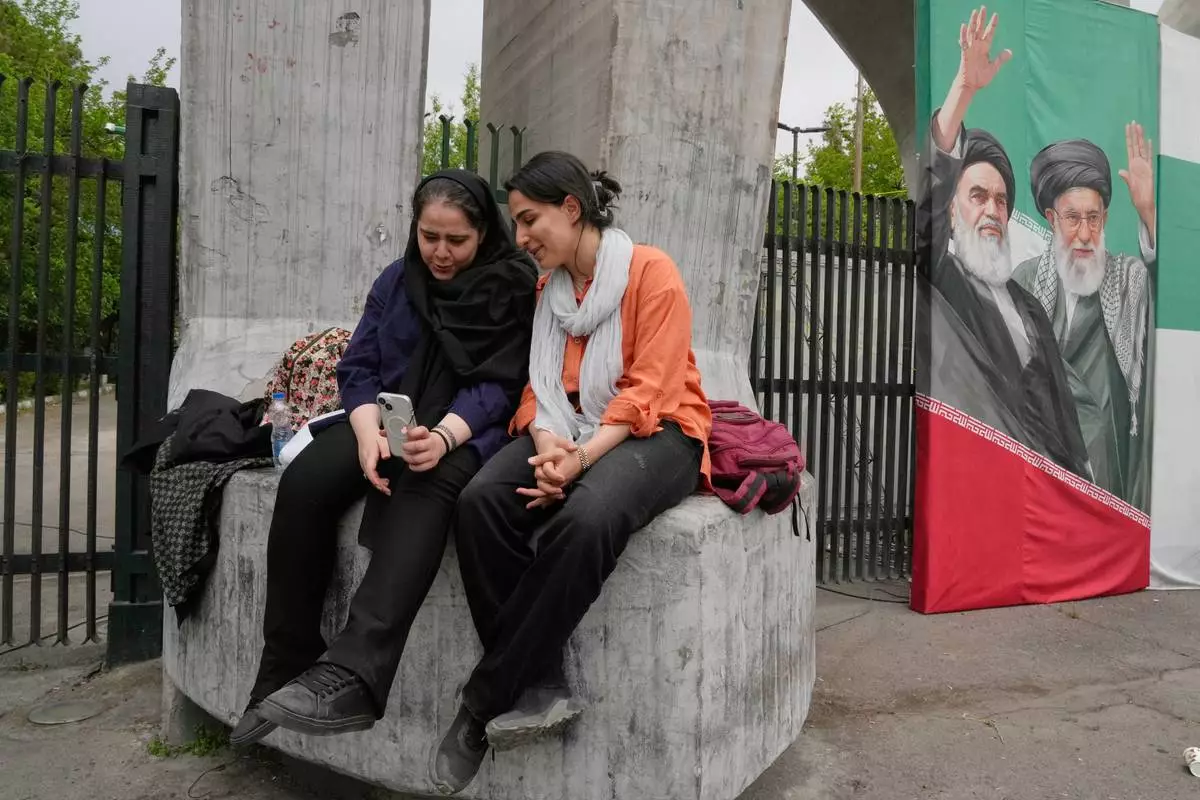
Women share a moment as they look at a smartphone at the main gate of the Tehran University as a banner shows portraits of the late Supreme Leader Ayatollah Ali Khamenei, right, and the late revolutionary founder Ayatollah Khomeini in Tehran, Iran, Sunday, April 19, 2026. (AP Photo/Vahid Salemi)
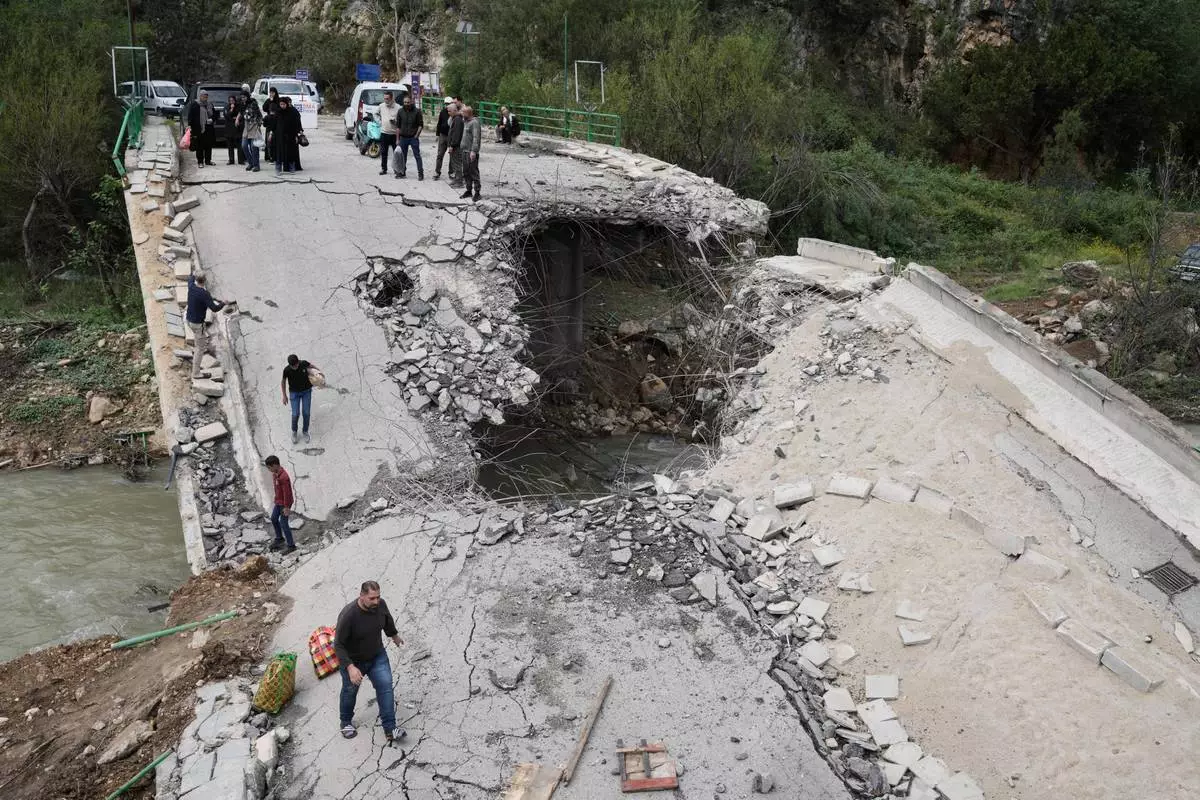
Displaced people cross a destroyed bridge as they return to their villages, following a ceasefire between Hezbollah and Israel, in Tayr Felsay village, southern Lebanon, Sunday, April 19, 2026. (AP Photo/Bilal Hussein)
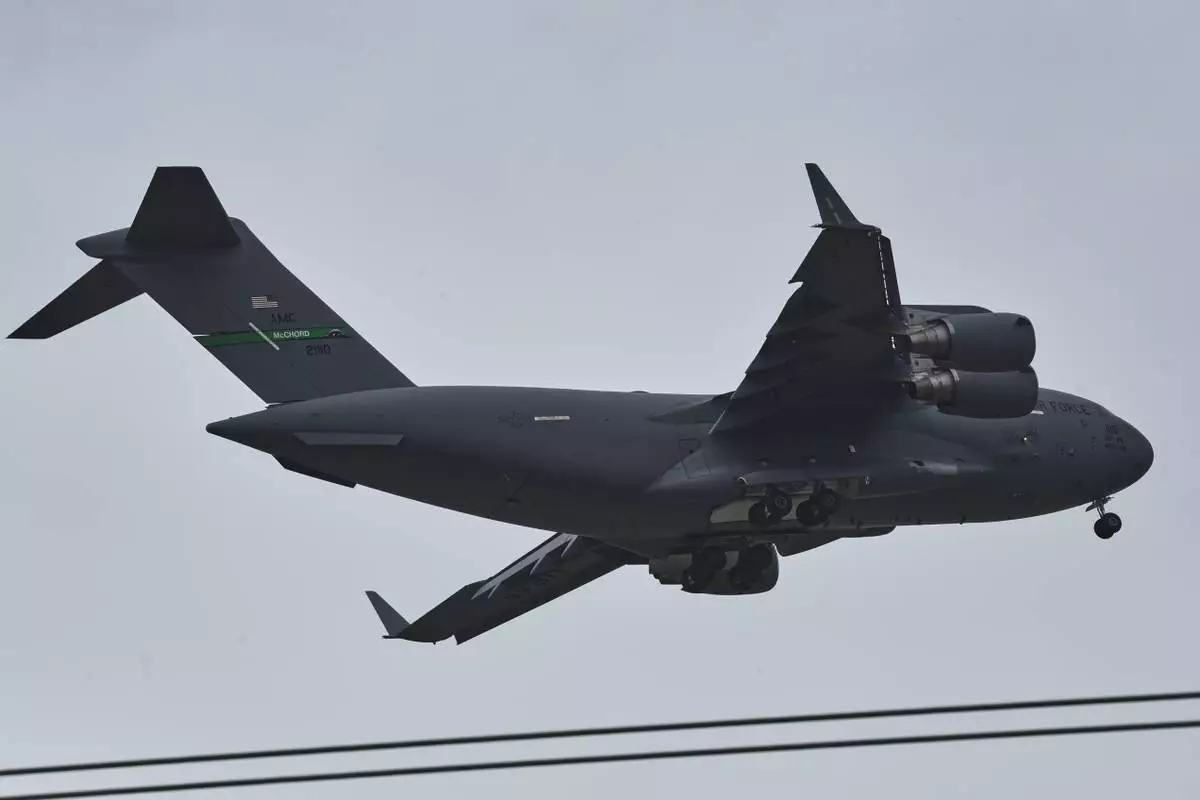
A U.S. Air Force Boeing C-17 Globemaster III transport aircraft prepares to land at Nur Khan airbase, ahead of second round of negotiations between the U.S. and Iran, in Rawalpindi, Pakistan, Monday, April 20, 2026. (AP Photo/Ehsan Shahzad)
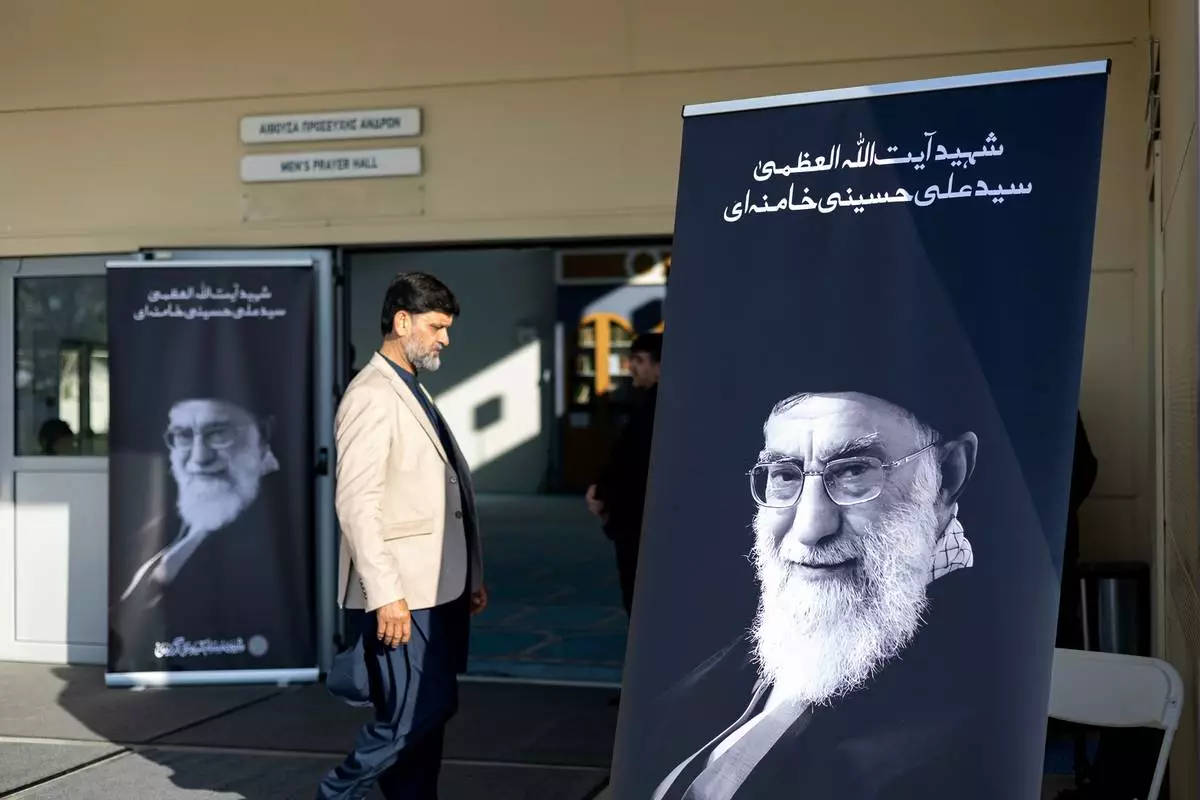
A muslim walks outside a mosque where a commemorative religious event in honor of late Supreme Leader Ayatollah Ali Khamenei is taking place, organized by the Shiite Muslim Community of Greece in Athens, on Sunday, April 19, 2026. (AP Photo/Yorgos Karahalis)
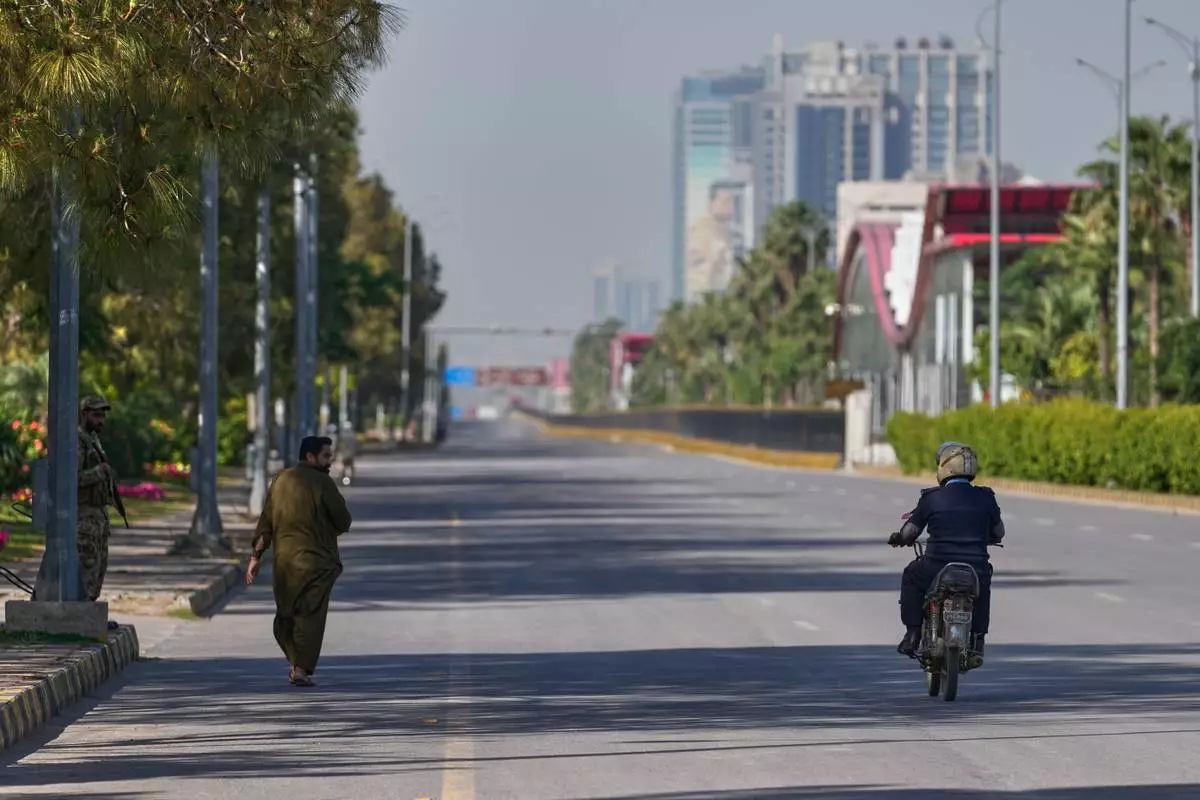
An army soldier, left, walks as police officer drives motorcycle on an empty road ahead of second round of negotiations between the U.S. and Iran, in Islamabad, Pakistan, Monday, April 20, 2026. (AP Photo/Anjum Naveed)