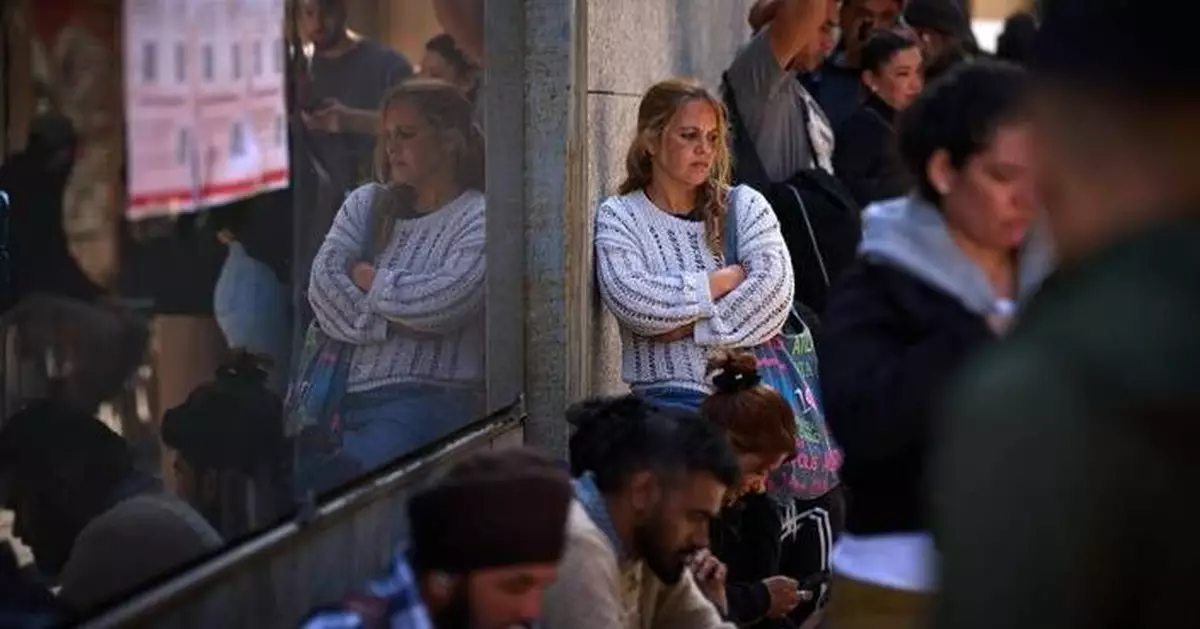
MADRID (AP) — Migrants in Spain on Monday began applying in person to legalize their status after the Southern European nation launched an amnesty measure that could affect hundreds of thousands of foreigners living and working in the country without authorization.
The program was announced in January and finalized this month. It offers immigrants without legal status a one-year, renewable residence permit if they have spent five months living in the country and have a clean criminal record. They have until the end of June to apply.
There have been questions about the short window to process what Spain's government has said could include 500,000 migrants, and which Spanish think tank Funcas estimates is around 840,000 people.
Over 370 post offices opened their doors to applicants and the government has said they also can apply at 60 social security offices and a handful of migration offices. Online applications started last Thursday.
Applicants at post offices in the capital, Madrid, and Barcelona described a process without incident, though some criticized long wait times even with appointments.
“It's pretty simple since I made an appointment online and I was given one for this morning,” said Nubia Rivas, a 47-year-old Venezuelan migrant who filed her application at a post office in downtown Madrid. “The process here is a little slow, but it's fluid.”
Venezuelan migrant Johana Moreno showed up to a post office in central Madrid with her husband. She said she was an archivist in Venezuela but now works cleaning homes.
“It's what we want,” Moreno said about legalizing her status. “To be well, to work, to contribute, all those things. To pay our taxes. We know that we’ll have rights, but also we’ll have obligations.”
Prime Minister Pedro Sánchez, a progressive, has called the measure “an act of justice and a necessity,” arguing that those already living and working in Spain should “do so under equal conditions” and pay taxes.
With an aging population, the government says Spain needs more workers to maintain its growing economy and contribute to social security.
Spain’s position sharply differs from prevailing attitudes on immigration in Europe, where many governments have been trying to curb arrivals and step up deportations. The Spanish government has defended the legalization measure as an economic one that has the support of business owners and unions.
In recent years, Spain’s population has grown considerably to include around 10 million people who were born outside the country — or one in every five residents. Many are from Colombia, Venezuela and Morocco, having fled poverty, violence or political instability.
Key sectors of the Spanish economy, including agriculture, tourism and the service sector, depend on immigrants from Latin America and Africa.
It’s not the first time Spain has granted amnesty to immigrants living in the country without authorization. It did so six times before between 1986 and 2005, including under conservative governments.
On Thursday, 25-year-old Moroccan migrant Mourad El-Shaky described waiting in line outside Barcelona's City Hall for four hours to obtain the paperwork needed to apply.
El-Shaky said he came to Spain via Turkey, having journeyed all the way west by foot despite the short distance between Spain and Morocco. The legalization measure, he said, would “solve many things.”
“Without papers (work and residency permits), your hands are tied,” El-Shaky said. “You’re like a bird that can’t fly, with broken wings.”
This story corrects a previous version that wrongly stated the day that Spain began accepting online applications for its migrant legalization program. It began last Thursday, not Friday.
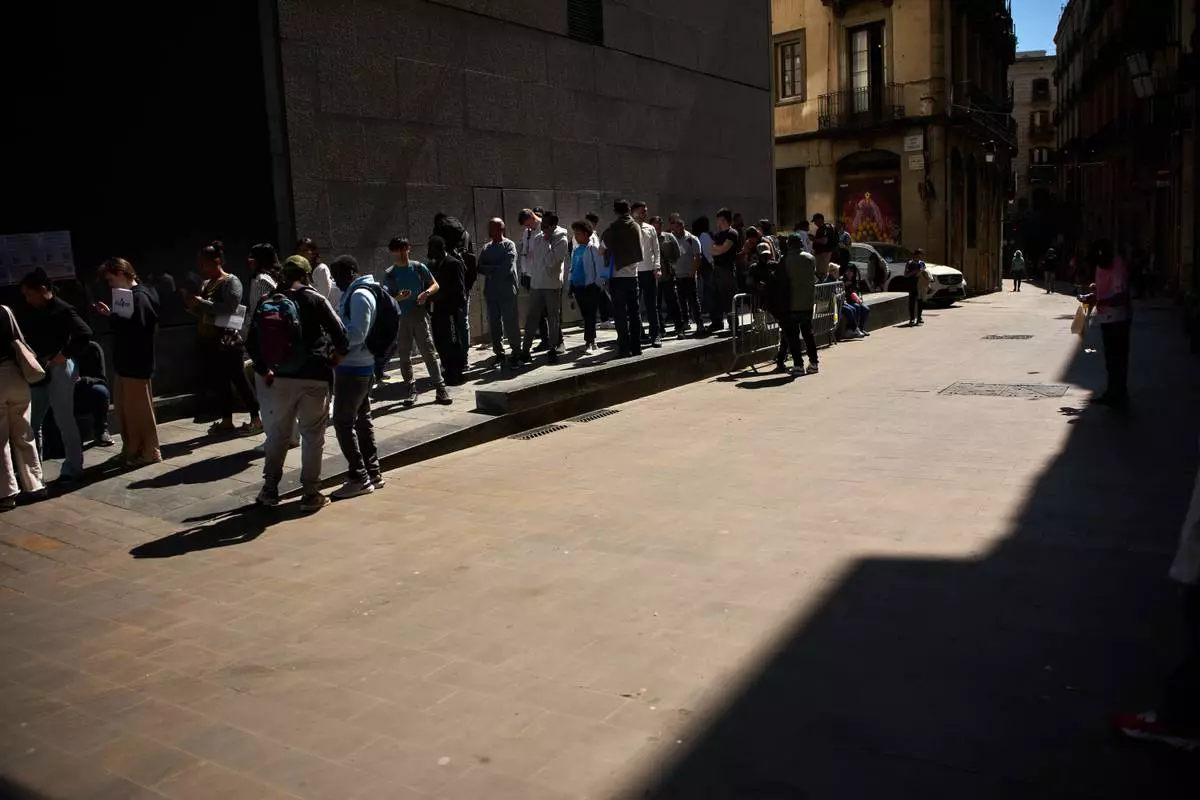
Migrants queue outside Barcelona City Hall to obtain paperwork needed to apply for Spain's immigration amnesty, which could allow hundreds of thousands of people to obtain legal status, in Barcelona, Spain, Monday, April 20, 2026. (AP Photo/Emilio Morenatti)
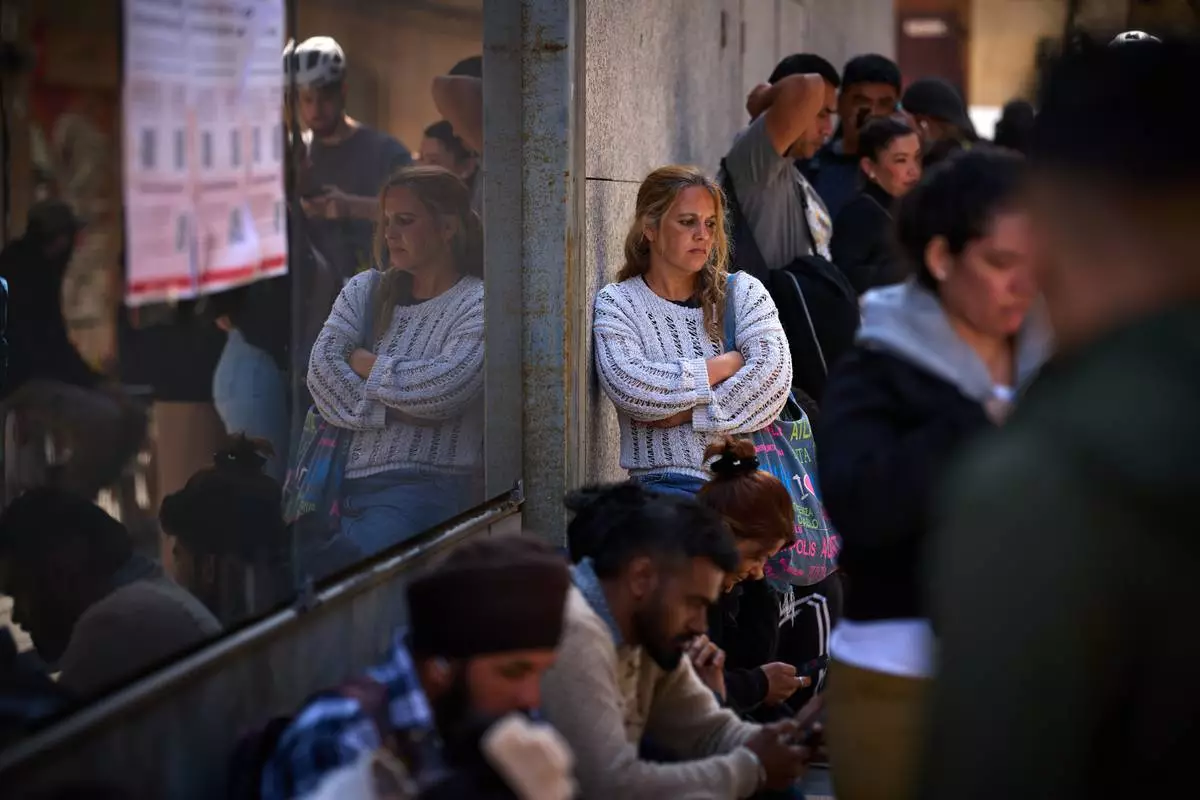
Migrants queue outside Barcelona City Hall to obtain paperwork needed to apply for Spain's immigration amnesty, which could allow hundreds of thousands of people to obtain legal status, in Barcelona, Spain, Monday, April 20, 2026. (AP Photo/Emilio Morenatti)
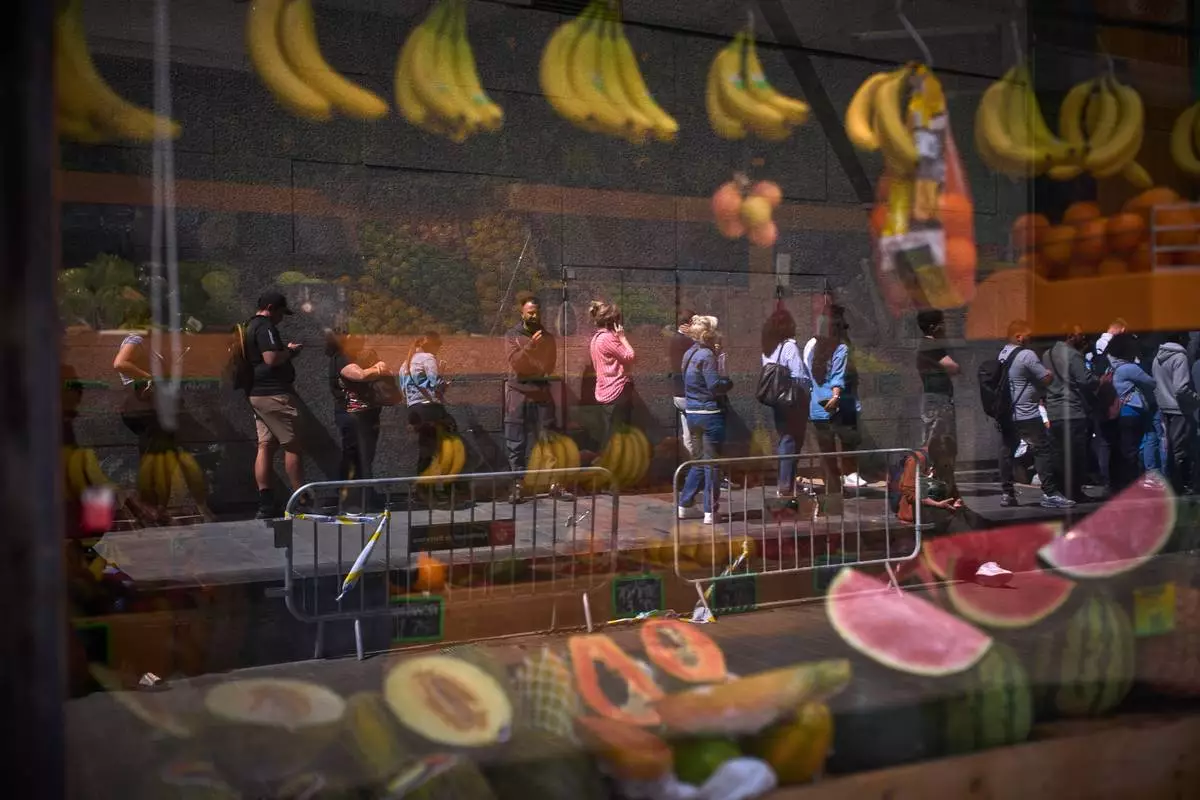
Migrants queue outside Barcelona City Hall to obtain paperwork needed to apply for Spain's immigration amnesty, which could allow hundreds of thousands of people to obtain legal status, in Barcelona, Spain, Monday, April 20, 2026. (AP Photo/Emilio Morenatti)
ISLAMABAD (AP) — Pakistan moved ahead Monday with preparations for a new round of talks between the United States and Iran two days before a tenuous ceasefire is set to expire, even as renewed conflict around the Strait of Hormuz raised questions about whether the meeting would take place.
Over the weekend, the U.S. attacked and seized an Iranian-flagged cargo vessel that it said had tried to evade its blockade of Iranian ports. Iran’s joint military command vowed to respond, and its foreign minister, Abbas Aragchi, told his Pakistani counterpart that American threats to Iranian ships and ports were “clear signs” of Washington’s disingenuousness ahead of the planned talks, Iran state media reported.
With tensions flaring and the ceasefire due to expire midweek, Pakistan pushed for talks to resume Tuesday as planned. Pakistan said Monday that Interior Minister Mohsin Naqvi held separate meetings in Islamabad with the Iranian ambassador and the acting U.S. ambassador to discuss arrangements.
Iran throttled traffic through the strait, which connects the Persian Gulf to the open seas, shortly after the U.S. and Israel attacked Iran on Feb. 28 to start the war. The U.S. has also instituted a blockade of Iranian ports. Roughly one-fifth of the world’s oil trade normally passes through the strait.
Meanwhile, historic diplomatic talks between Israel and Lebanon were set to resume Thursday in Washington, an Israeli official and a U.S. official said. Both spoke on condition of anonymity to discuss the behind-the-scenes talks.
There was no immediate confirmation from Lebanon.
The Israeli and Lebanese ambassadors met last week for the first direct diplomatic talks in decades. Israel says the talks are aimed at disarming Hezbollah and reaching a peace agreement with Lebanon.
A 10-day ceasefire began Friday in Lebanon, where fighting between Israel and Iran-backed Hezbollah militants broke out two days after the U.S. and Israel launched their war on Iran.
Mediators said fighting in Lebanon, which has killed more than 2,290 people, was undermining efforts to end the conflict between Iran and the U.S.
Hezbollah opposes the talks but has observed the ceasefire.
U.S. President Donald Trump told Bloomberg News he was “highly unlikely” to renew the two-week ceasefire with Iran.
The New York Post reported that Trump said in a phone interview that Vice President JD Vance, special envoy Steve Witkoff and Jared Kushner, Trump’s son-in-law, were returning to the Pakistani capital on Monday.
“They’re heading over now,” Trump was quoted as saying.
However, Vance's motorcade pulled up to the White House late Monday morning after Trump's comments were published, indicating the vice president had not left left Washington.
Iranian Foreign Ministry spokesperson Esmail Baghaei told reporters in Tehran on Monday that there were no plans yet to attend the talks with the U.S. But at the same time, he did not rule it out.
Two Pakistani officials said Monday that Iran has expressed a willingness to send a delegation to Islamabad. They spoke on condition of anonymity because they were not authorized to speak to the press.
Over the weekend, Iran said it had received new proposals from the U.S. but suggested that a wide gap remained between the sides. Issues that derailed the last round of negotiations included Iran’s nuclear enrichment program, its regional proxies and the Strait of Hormuz.
Since the war started, at least 3,375 people have been killed in Iran, according to a new toll released Monday in official Iranian media by Abbas Masjedi, the head of Iran’s Legal Medicine Organization. He did not break down casualties among civilians and security forces, instead just saying that 2,875 were male and 496 were female. Masjedi said 383 of the dead were children 18 years old and under.
Additionally, 23 people have died in Israel and more than a dozen in Gulf Arab states. Fifteen Israeli soldiers in Lebanon and 13 U.S. service members throughout the region have been killed.
Iran’s grip on the strait has also sent oil prices skyrocketing and given rise to one of the worst global energy crises in decades.
Oil prices recovered slightly following Iran’s announcement that the strait was being reopened following the Lebanon ceasefire announcement.
But then Trump said the U.S. blockade “will remain in full force” until Tehran reaches a deal with Washington. The U.S. military said Monday it has directed 27 ships to return to Iranian ports since the blockage began last week. The U.S. seizure of an Iranian cargo ship Sunday was the first interception under the blockade.
Iran’s joint military command called the armed boarding an act of piracy and a ceasefire violation, the state broadcaster said, and vowed to again enforce restrictions imposed early in the war. Iran on Saturday fired at ships trying to transit.
Oil prices were up again in trading on Monday, with Brent crude, the international standard, at about $93 a barrel — up from about $70 a barrel before the war started.
Iran early Monday warned it could keep up the global economic pain as ships remained unable to transit the strait, with hundreds of vessels waiting at each end for clearance.
“The choice is clear: either a free oil market for all, or the risk of significant costs for everyone,” Mohammad Reza Aref, first vice president of Iran, said in a social media post.
In other developments, Israeli Prime Minister Benjamin Netanyahu condemned the defacing of a statue of Jesus Christ by an Israeli soldier in Lebanon, saying he was “stunned and saddened.”
Photos surfaced over the weekend of the soldier using a sledgehammer to smash the head of a toppled Jesus statue. The Israeli military confirmed the images were genuine, setting off a wave of condemnation.
Gambrell reported from Dubai, United Arab Emirates, and Rising from Bangkok. Associated Press journalists Melanie Lidman in Tel Aviv, Israel; Josef Federman in Jerusalem; Joshua Boak and Matthew Lee in Washington and Russ Bynum in Savannah, Georgia, contributed to this report.
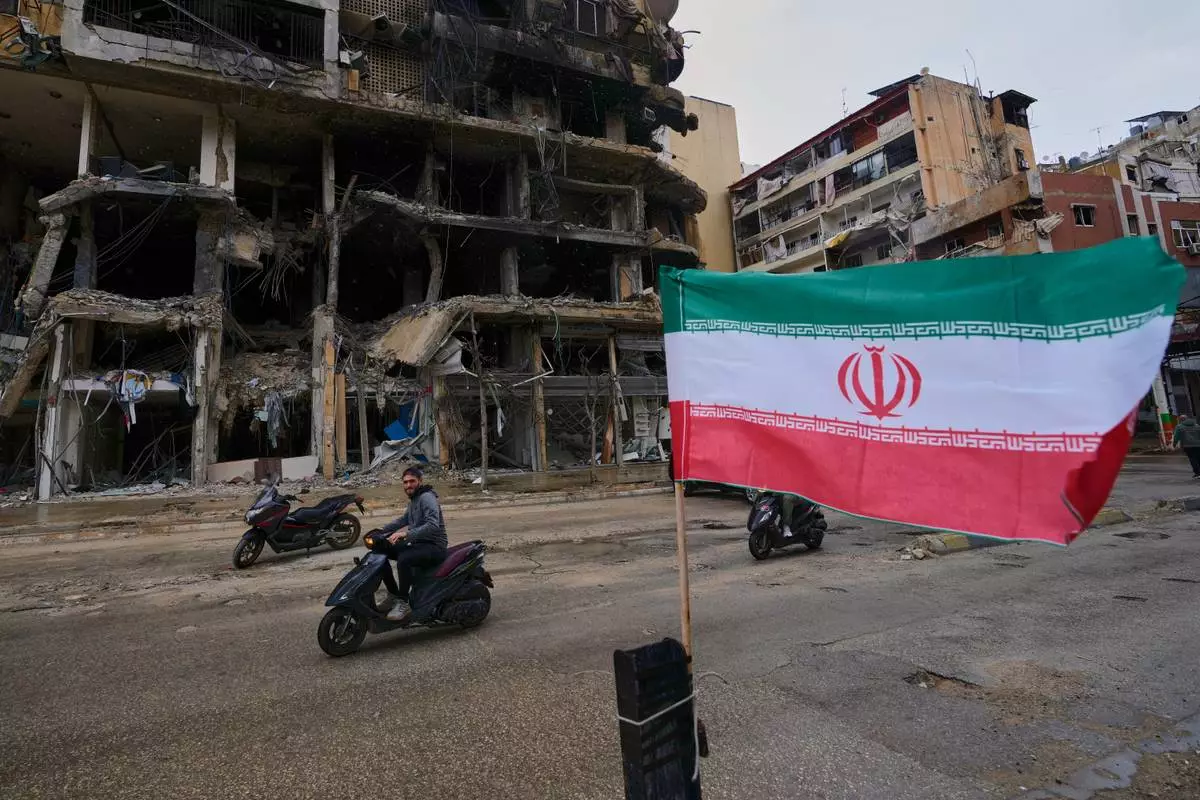
A man on his scooter passes next to an Iranian flag placed in front of a destroyed building, following a ceasefire between Hezbollah and Israel, in Dahiyeh, Beirut's southern suburbs, Lebanon, Monday, April 20, 2026. (AP Photo/Hussein Malla)
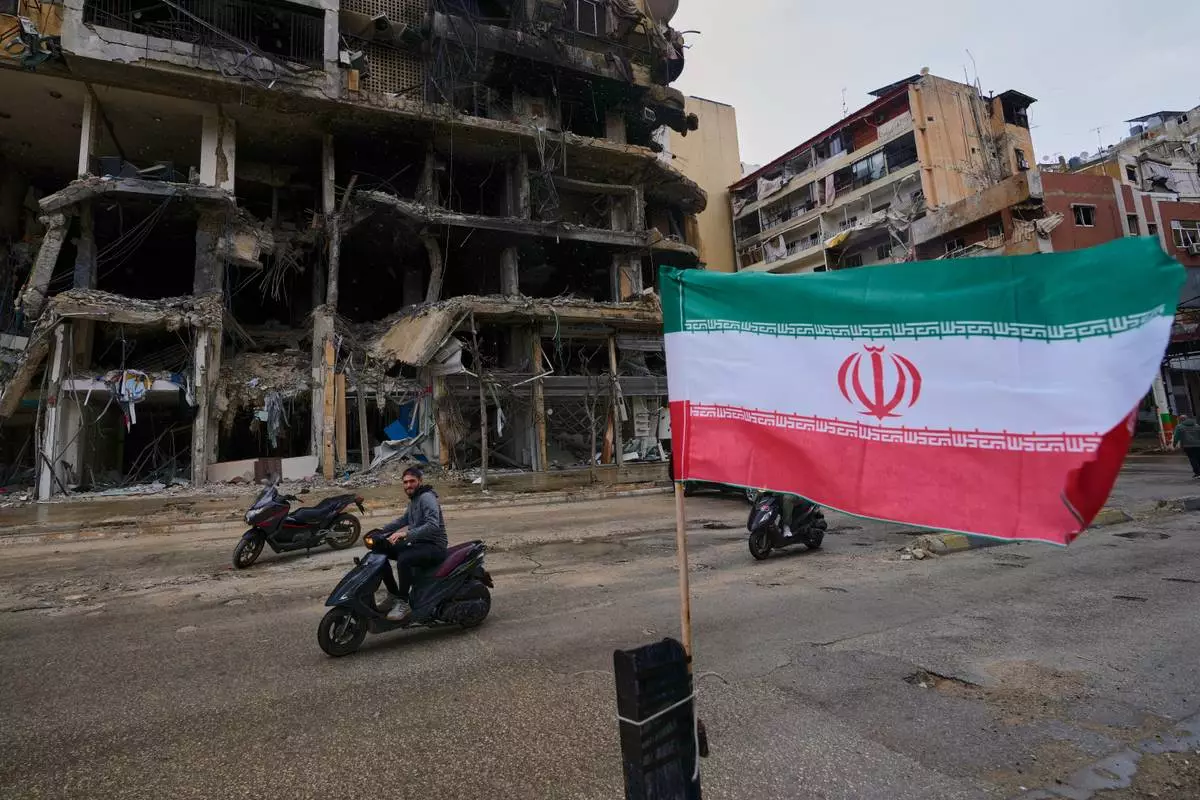
A man on his scooter passes next to an Iranian flag placed in front of a destroyed building, following a ceasefire between Hezbollah and Israel, in Dahiyeh, Beirut's southern suburbs, Lebanon, Monday, April 20, 2026. (AP Photo/Hussein Malla)
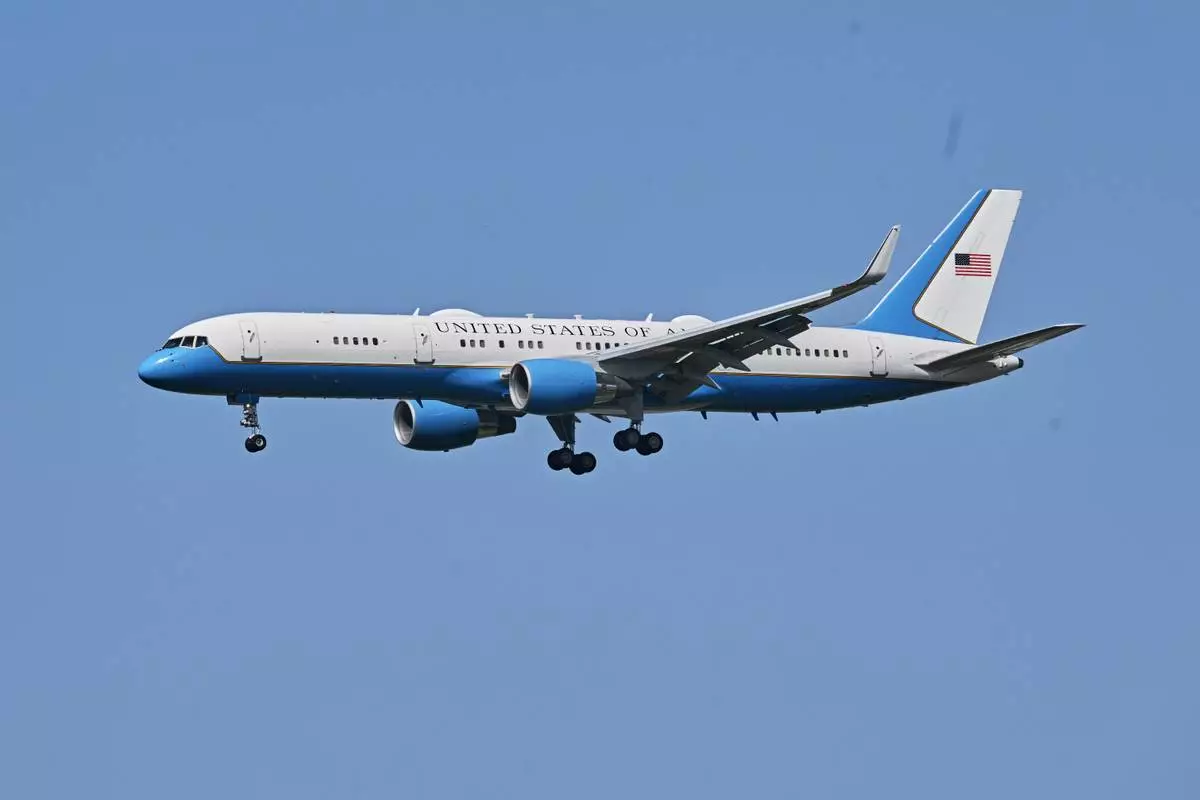
A U.S. Air Force Boeing C-32 plane approaches landing at Nur Khan airbase ahead of second round of negotiations between the U.S. and Iran, in Rawalpindi, Pakistan, Monday, April 20, 2026. (AP Photo/Ehsan Shahzad)
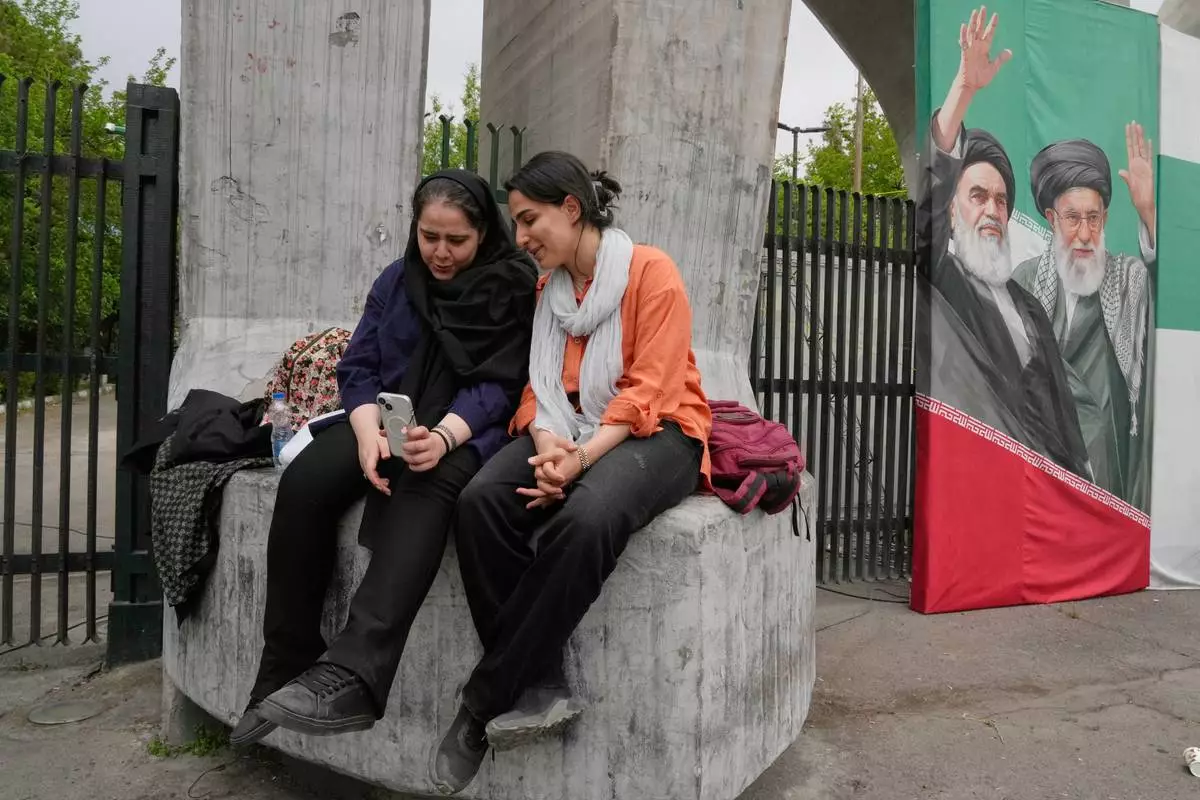
Women share a moment as they look at a smartphone at the main gate of the Tehran University as a banner shows portraits of the late Supreme Leader Ayatollah Ali Khamenei, right, and the late revolutionary founder Ayatollah Khomeini in Tehran, Iran, Sunday, April 19, 2026. (AP Photo/Vahid Salemi)
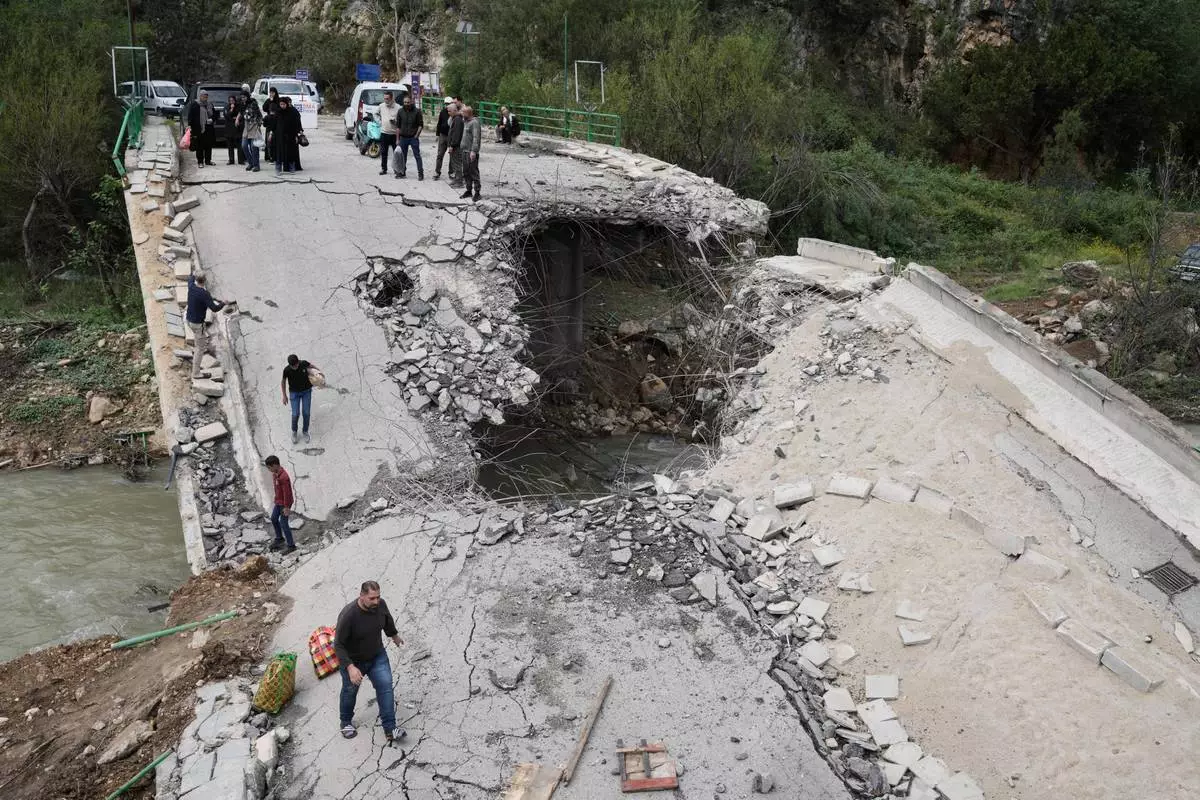
Displaced people cross a destroyed bridge as they return to their villages, following a ceasefire between Hezbollah and Israel, in Tayr Felsay village, southern Lebanon, Sunday, April 19, 2026. (AP Photo/Bilal Hussein)
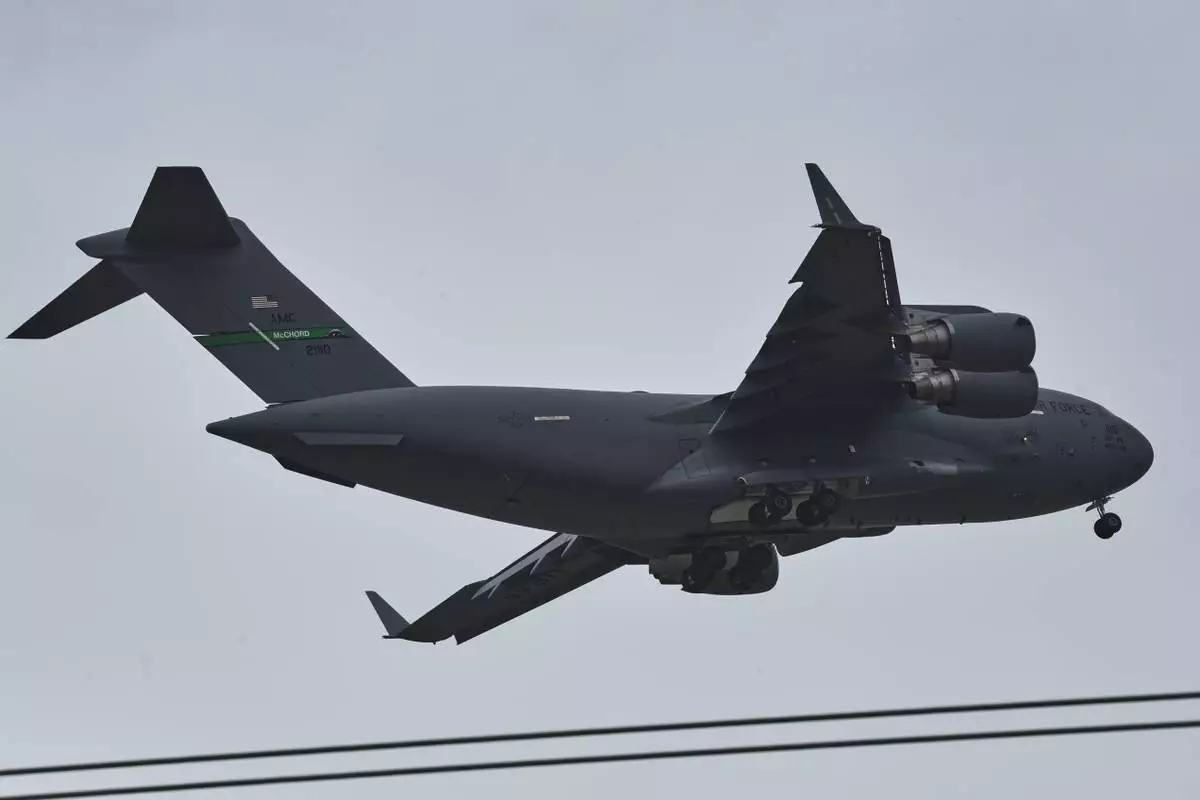
A U.S. Air Force Boeing C-17 Globemaster III transport aircraft prepares to land at Nur Khan airbase, ahead of second round of negotiations between the U.S. and Iran, in Rawalpindi, Pakistan, Monday, April 20, 2026. (AP Photo/Ehsan Shahzad)
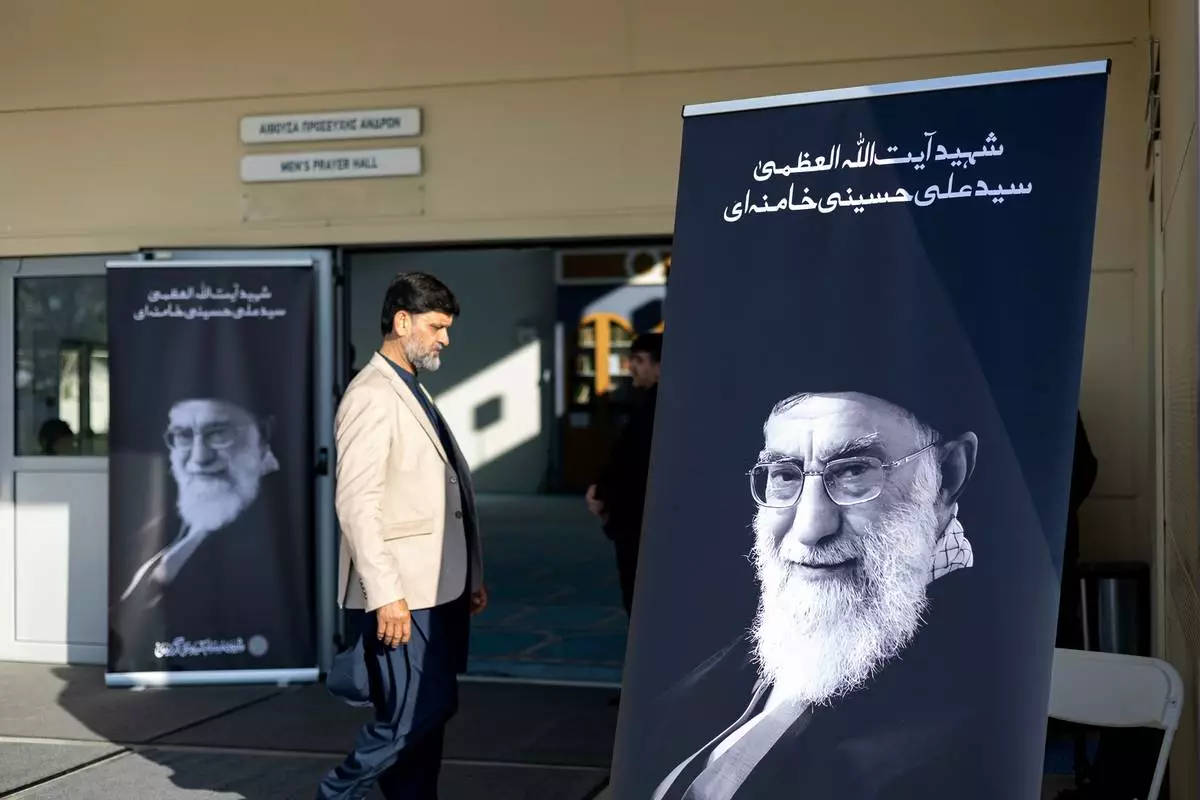
A muslim walks outside a mosque where a commemorative religious event in honor of late Supreme Leader Ayatollah Ali Khamenei is taking place, organized by the Shiite Muslim Community of Greece in Athens, on Sunday, April 19, 2026. (AP Photo/Yorgos Karahalis)
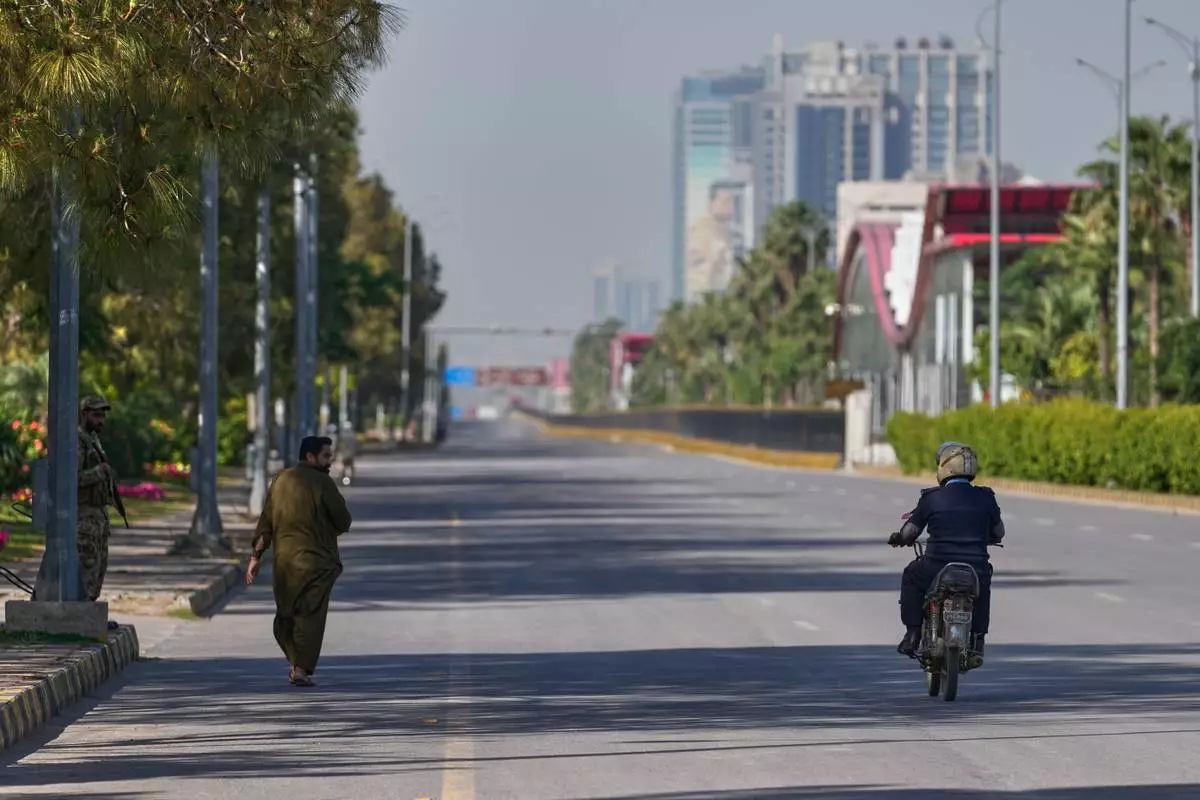
An army soldier, left, walks as police officer drives motorcycle on an empty road ahead of second round of negotiations between the U.S. and Iran, in Islamabad, Pakistan, Monday, April 20, 2026. (AP Photo/Anjum Naveed)